Get me outta here!

Michael Fisher's News

© Michael Fisher MMXXII

Menu

Skip to content
  • Home
  • About

Author Archives

borderroamerhttps://fisherbelfast.wordpress.comThe Northern Standard, Monaghan. Reporter.
borderroamer's avatar

ROYAL MUNSTER FUSILIERS

27/09/2019 by borderroamer

Royal Munster Fusiliers Memorial Ieper

Behind St Martin’s Cathedral in Ieper there is a Celtic cross that forms a memorial for the Royal Munster Fusiliers soldiers who died in World War One.

Royal Munster Fusiliers Memorial Ieper

A tricolour flies from a flagpole alongside the monument to mark its connection with Ireland and Co. Cork in particular. The plaque contains the coat of arms for Munster (the three antique crowns of the medieval lordships).

The symbol of Munster engraved on the memorial in Ieper

It reads: “In memory of those men of Munster who died fighting for freedom. A tribute erected by the people of the province and Cork its capital city.”

A tribute from Cork and Munster

There is also a similar inscription in Irish and one in French, where two wreaths had been laid.

Inscription in French

The Irish version of the English inscription reads as follows:

Irish inscription, Royal Munster Fusiliers Memorial
Share this:

  • Click to share on Facebook (Opens in new window) Facebook
  • Click to share on X (Opens in new window) X
Like Loading...
MILITARY NEWS UNCATEGORISED CorkIeperMemorialRoyal Munster FusiliersWWI Leave a comment

ST MARTIN’S CATHEDRAL

26/09/2019 by borderroamer

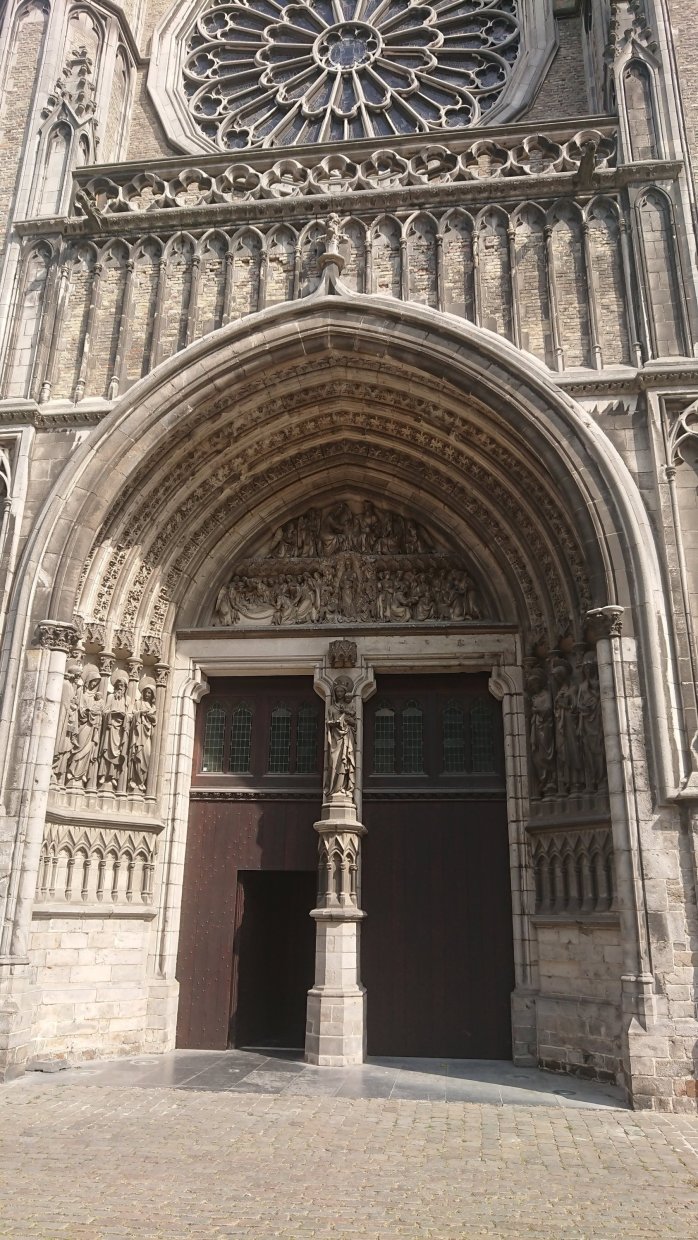
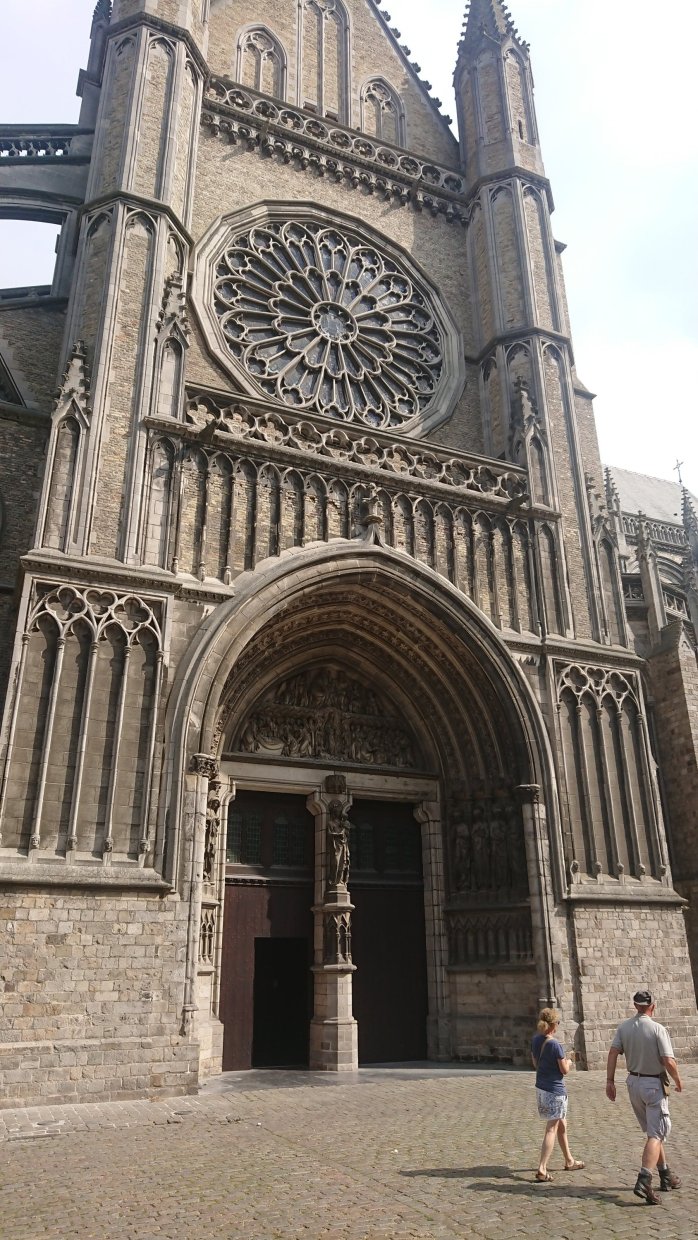
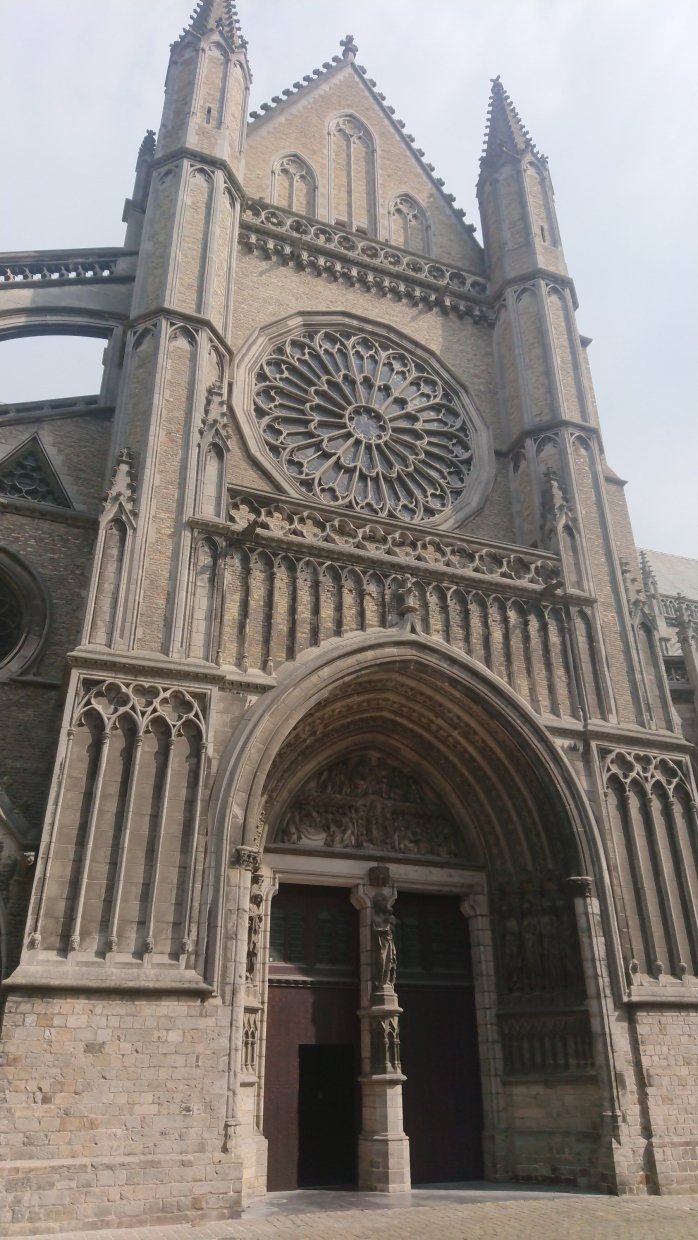
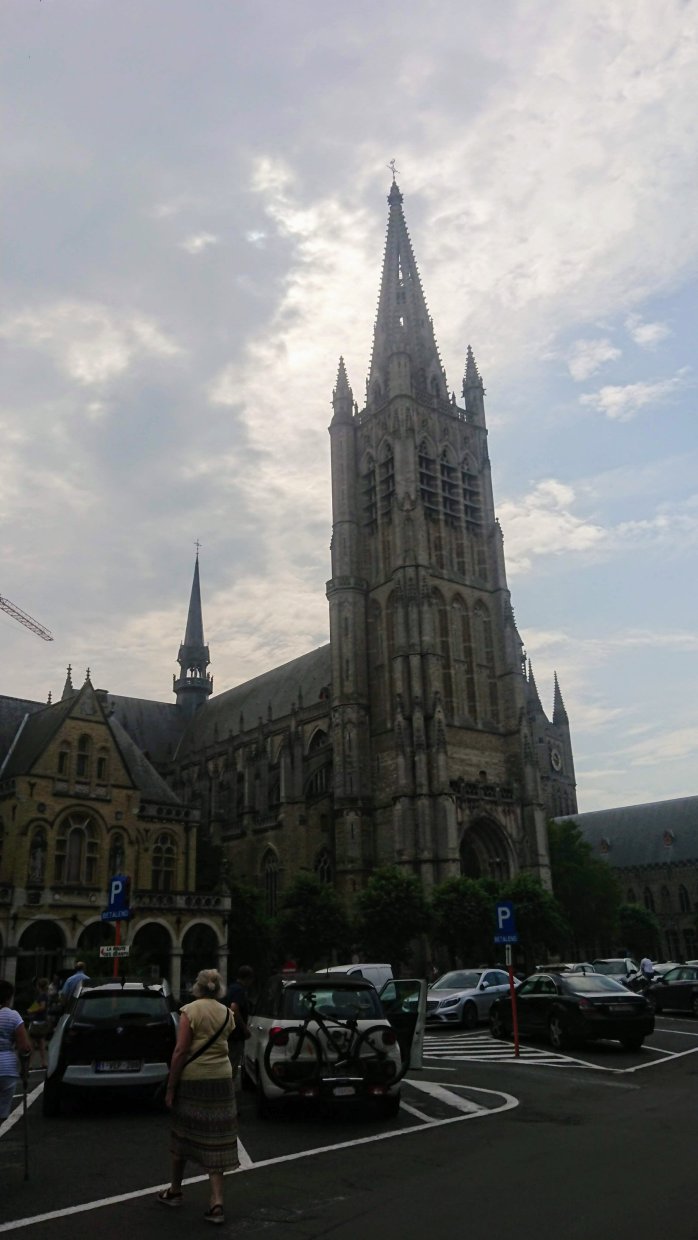
St Martin’s Cathedral, Ieper

St Martin’s Cathedral (Flemish: Sint-Maartenskathedraal), also called St Martin’s Church (Sint-Maartenskerk), is a church and former cathedral in the city of Ypres. It was a cathedral and the seat of the former diocese of Ypres from 1561 to 1801, and is still commonly referred to as such. It is among the tallest buildings in Belgium at 102m (335ft) tall.

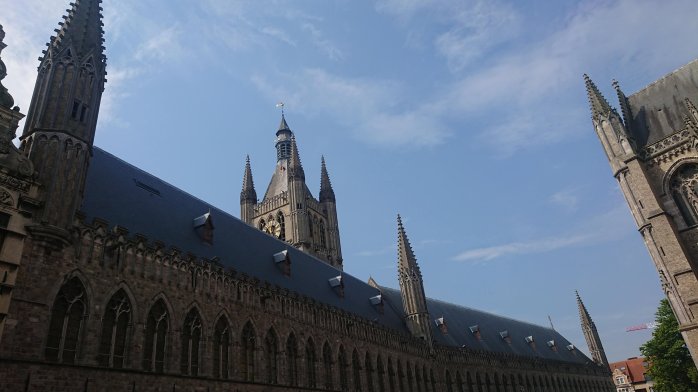
Corner of Square leading to the Cloth Hall, Ieper

Construction started on the church in 1230, and was finished in 1370. There had previously been a Romanesque church in the area, dating from the 10th or 11th century.

Side of Cathedral

After the 1801 Concordat between Napoléon and Pope Pius VII, Ypres was incorporated into the diocese of Ghent and Saint Martin’s lost its status as a cathedral. As with many former cathedrals (pro-Cathedrals), it is often still referred to as a cathedral by locals.

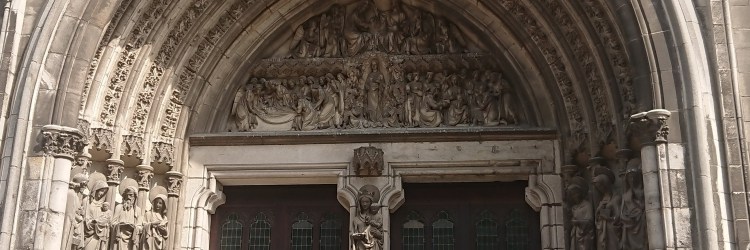
Main entrance to St Martin’s Cathedral, Ieper

It suffered heavy damage during the Great War. Subsequently (1922–1930) the ruin was cleared and the church was entirely rebuilt following the original plans, although the tower was built with a higher spire than the original.

St Martin’s Cathedral

Cornelius Jansen, the father of the theological movement Jansenism, was Bishop of Ypres from 1635 to 1638. He is buried in the cathedral. Count Robert III of Flanders, popularly known as The Lion of Flanders, is also buried there.

St Martin’s Cathedral, Ieper

Because a funeral Mass was about to start and the bell was tolling as we arrived at the church, it was not officially open for visits. But joining a short queue at the main entrance and going into the Cathedral we paid our respects to the deceased whose remains were resting in a coffin at the back of the church, then remained standing at the doors to say a few prayers whilst taking in the vast interior. This seems to be a local custom. The mourners and undertaker must have wondered who we were gatecrashing a funeral….!

Share this:

  • Click to share on Facebook (Opens in new window) Facebook
  • Click to share on X (Opens in new window) X
Like Loading...
MILITARY NEWS TRAVEL UNCATEGORISED IeperSt Martin's CathedralYpres 1 Comment

ST GEORGE’S: IRISH LINKS

25/09/2019 by borderroamer

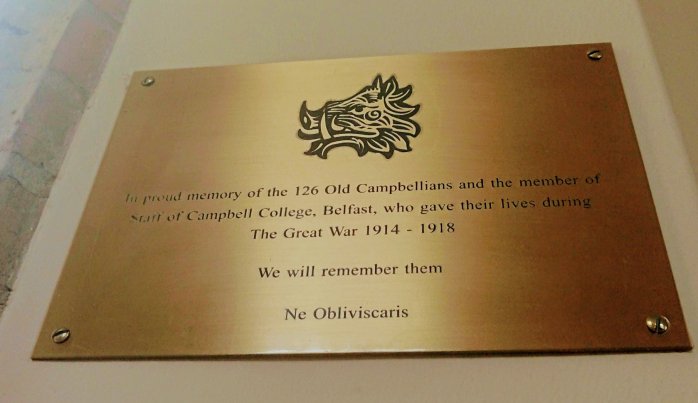
Campbell College plaque

Seat covers with badges of different Regiments including Royal Inniskilling Fusiliers

Window with Campbell College plaque alongside

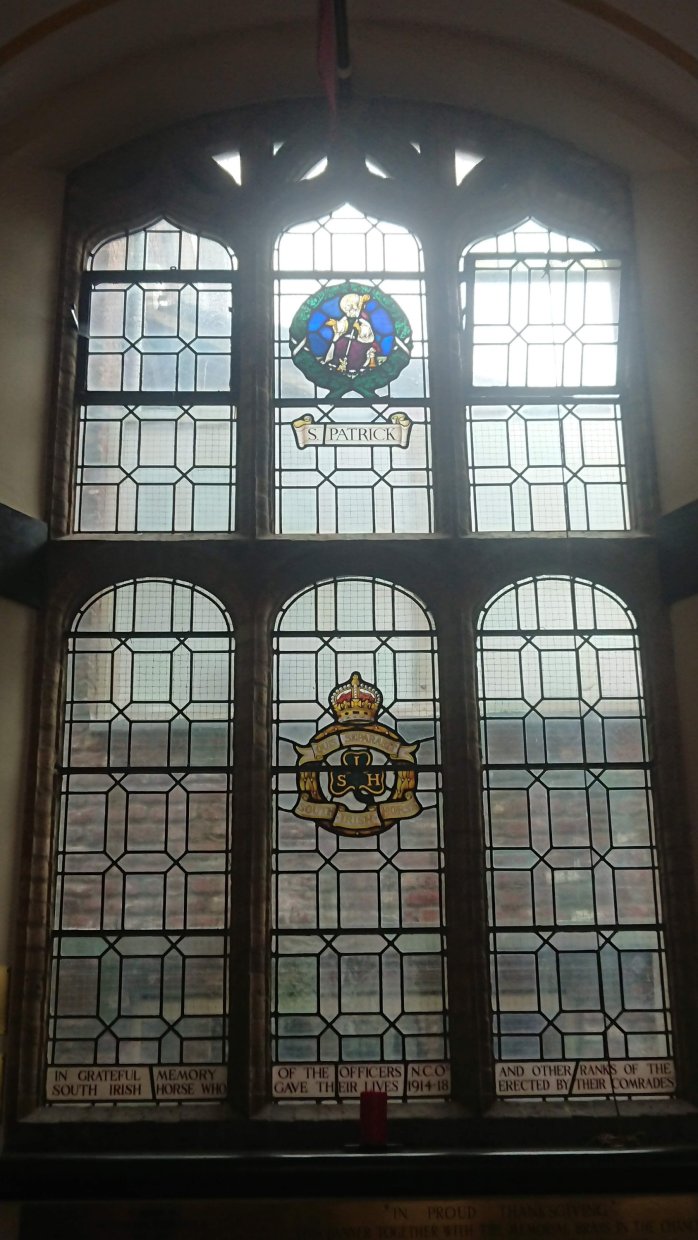
Memorial window North Irish Horse

Memorial window with regimental badges

Wreath for Royal Dublin Fusiliers

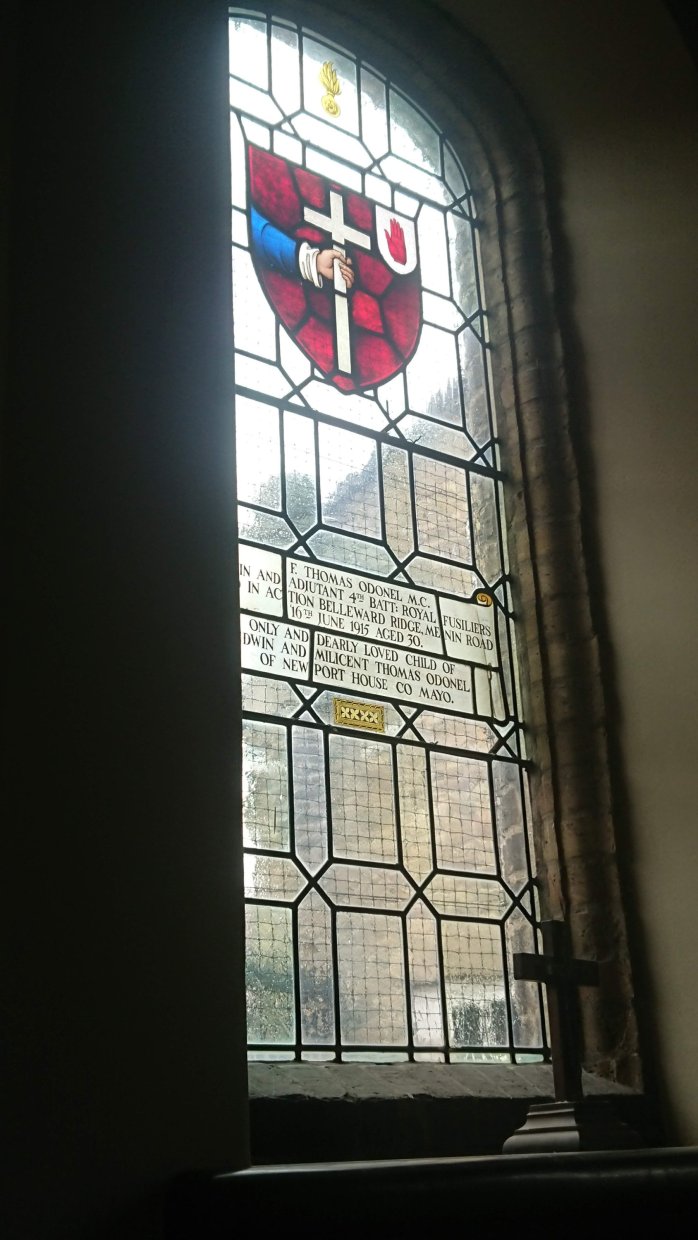
Memorial window Capt Thomas O’Donel MC from Newport Co. Mayo

Share this:

  • Click to share on Facebook (Opens in new window) Facebook
  • Click to share on X (Opens in new window) X
Like Loading...
MILITARY NEWS TRAVEL UNCATEGORISED Campbell CollegeIeperSt George's ChurchWWI Leave a comment

ST GEORGE’S, IEPER

24/09/2019 by borderroamer

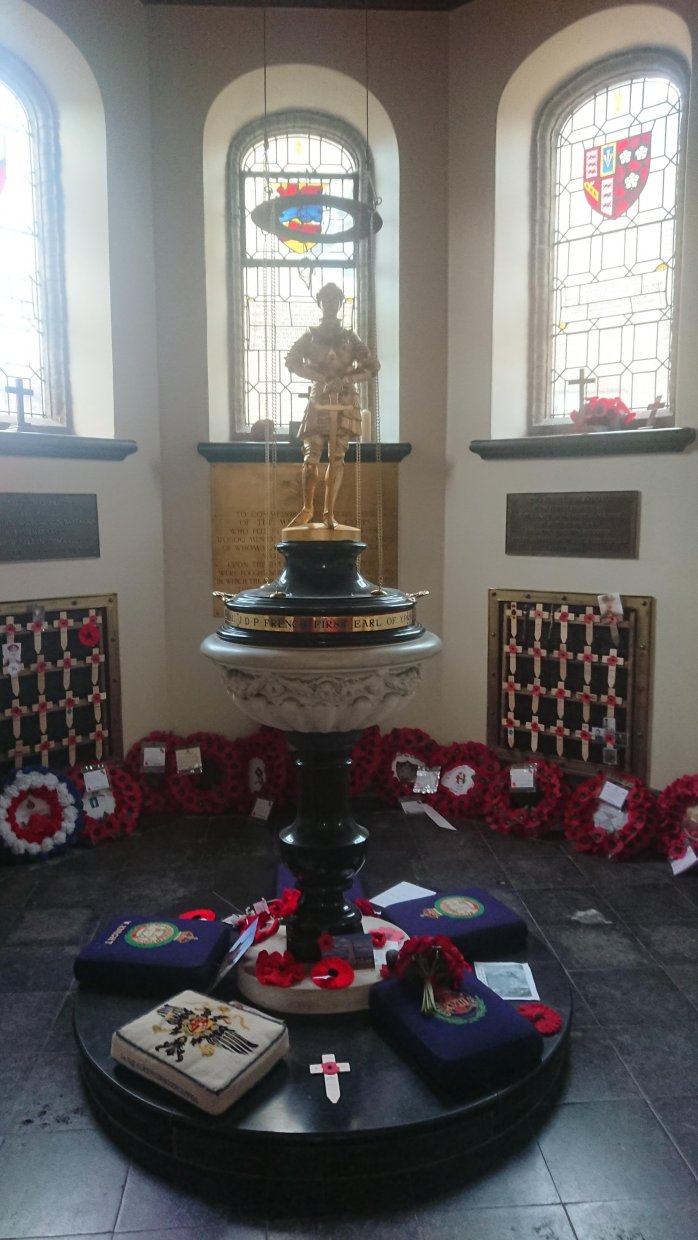
Baptismal font at St George’s Church Ieper

St George’s is an Anglican Church within the Church of England’s Diocese in Europe. The Diocesan Bishop is the Lord Bishop of Gibraltar in Europe who shares his responsibilities with the Suffragan Bishop in Europe.

St George’s is a Pilgrimage Church for the many thousands of people who visit the World War One sites of the Ypres Salient Battlefields. There is a small resident congregation who live in Ypres and surrounding area of Belgium and Lille in northern France.

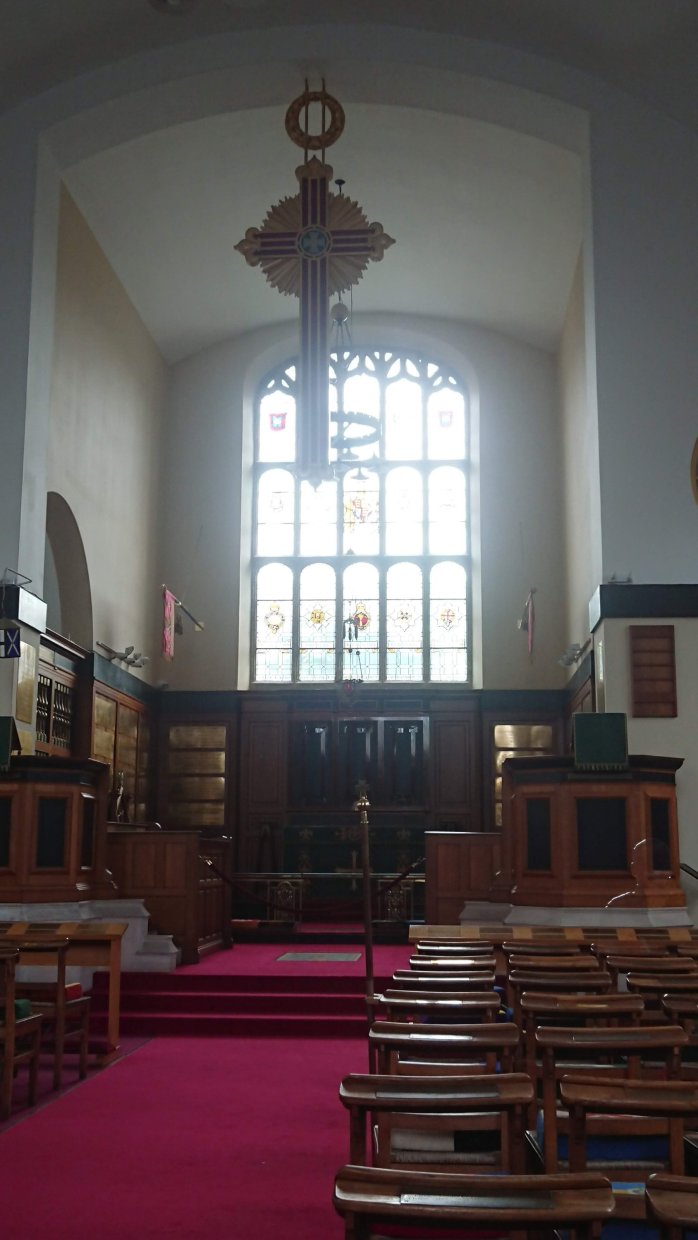
St George’s Church Ieper

Figure of a ‘Tommy’ among the pews

Here the congregation offer Christian worship and prayer in the Anglican tradition to be ‘still in the presence of the Lord’ in a place filled with the memorials of stained glass, brass and stone, to those who fought for peace and justice, who gave their lives for their country in two World Wars.

The Church welcomes tourists. pilgrims and school students from many countries, churches and world faiths. The pastors are committed to ecumenical partnerships working together with fellow Christians.

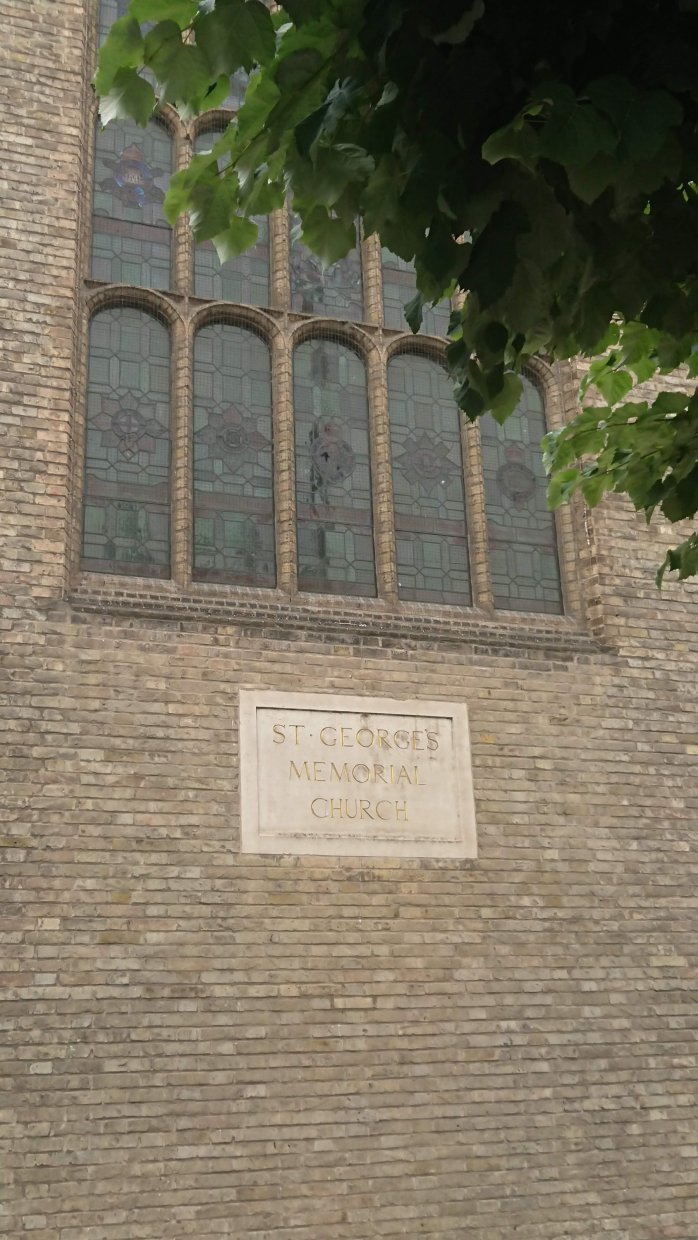
Exterior wall of St George’s Church Ieper

Memorial for British Army 1914 commander Field Marshal French
The team minister to the British Community, the Commonwealth War Graves Commission, and to all who enter the Church.

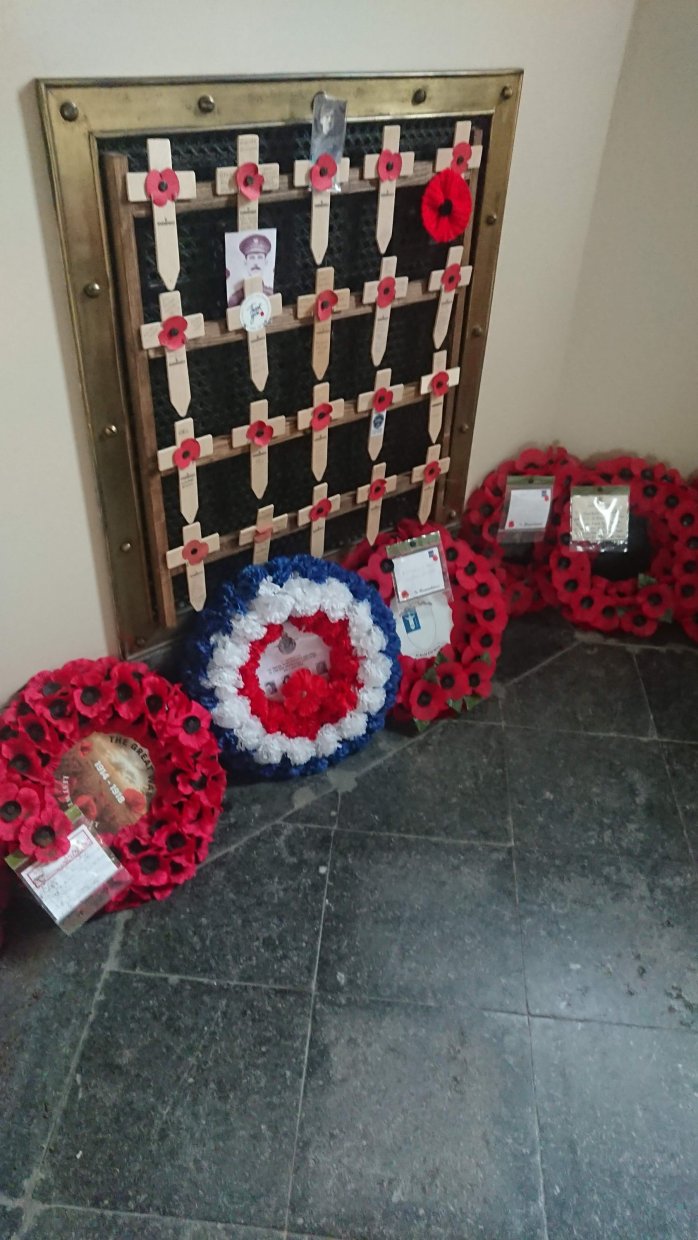
Memorial crosses and wreaths at St George’s Church Ieper

The Church gives Christian burial to the recovered remains of soldiers of the Great War (1914—1918), some known. others known only to God. The Church is a house of God and a place of remembrance.

Share this:

  • Click to share on Facebook (Opens in new window) Facebook
  • Click to share on X (Opens in new window) X
Like Loading...
MILITARY NEWS UNCATEGORISED Church of EnglandSt George's IeperWW1Ypres Leave a comment

FLANDERS DAY FIVE

23/09/2019 by borderroamer

Ieper Cloth Hall

Day five, the final day of our visit to Flanders. After an exhausting fourth day that turned out to be a record heatwave, we started exploring some places near the centre of Ieper where we were staying.

Ieper St George’s Church

St George’s Church which I will cover in a separate article is a Church of England (Anglican) place of worship. It contains several interesting memorials, some with Irish connections.

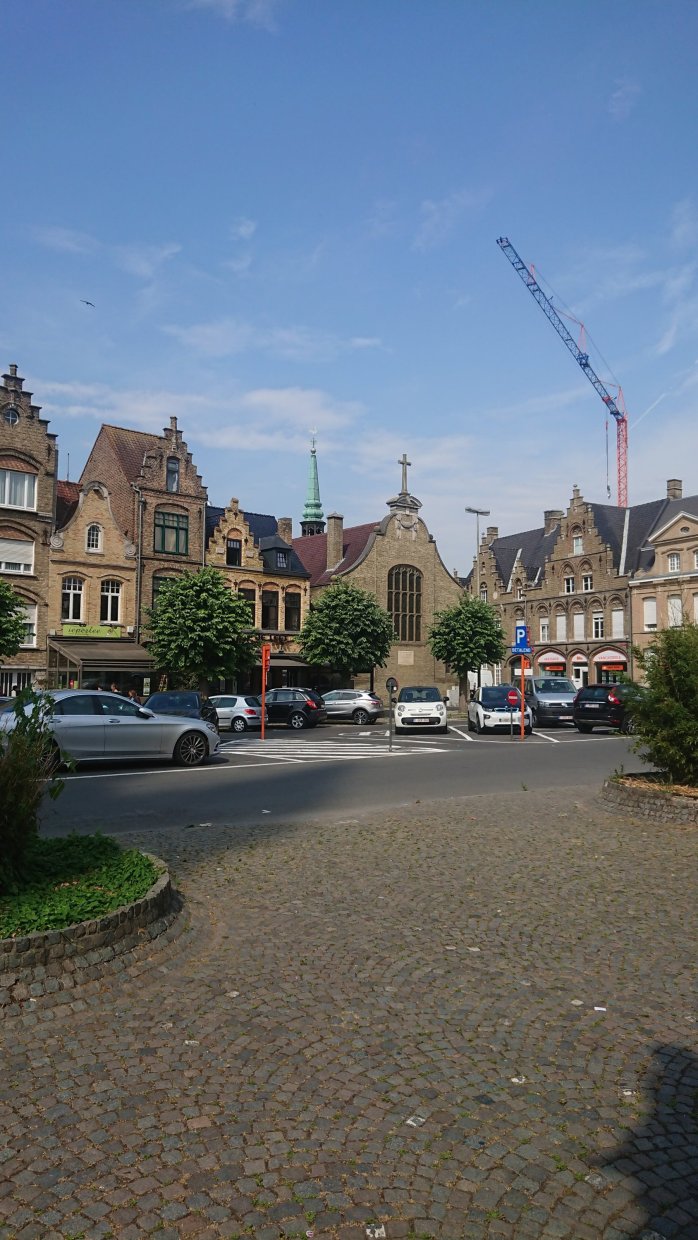
St George’s Church, Ieper (Ypres)

Close to St Martin’s Catholic Church (former Cathedral) where there was once a monastery, there was a building site where the façade was being carefully preserved. Large steel girders propped up the beautiful brickwork. It made me think of how the shell of Castleblayney Market House was being treated. In Belgium much more attention seemed to be given to preserving the old alongside the new.

Ieper building site

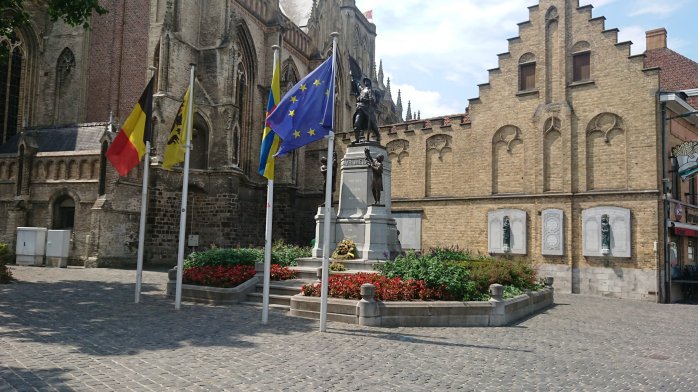
At the rear of the Cathedral, where a funeral Mass was being held, we came across a Celtic cross with a tricolour flying. This is a memorial for the Royal Munster Fusiliers (more later).

Memorial for the Royal Munster Fusiliers in Ieper

We moved on to the village of Poperinge where the TOC-H house is situated.

Poperinge

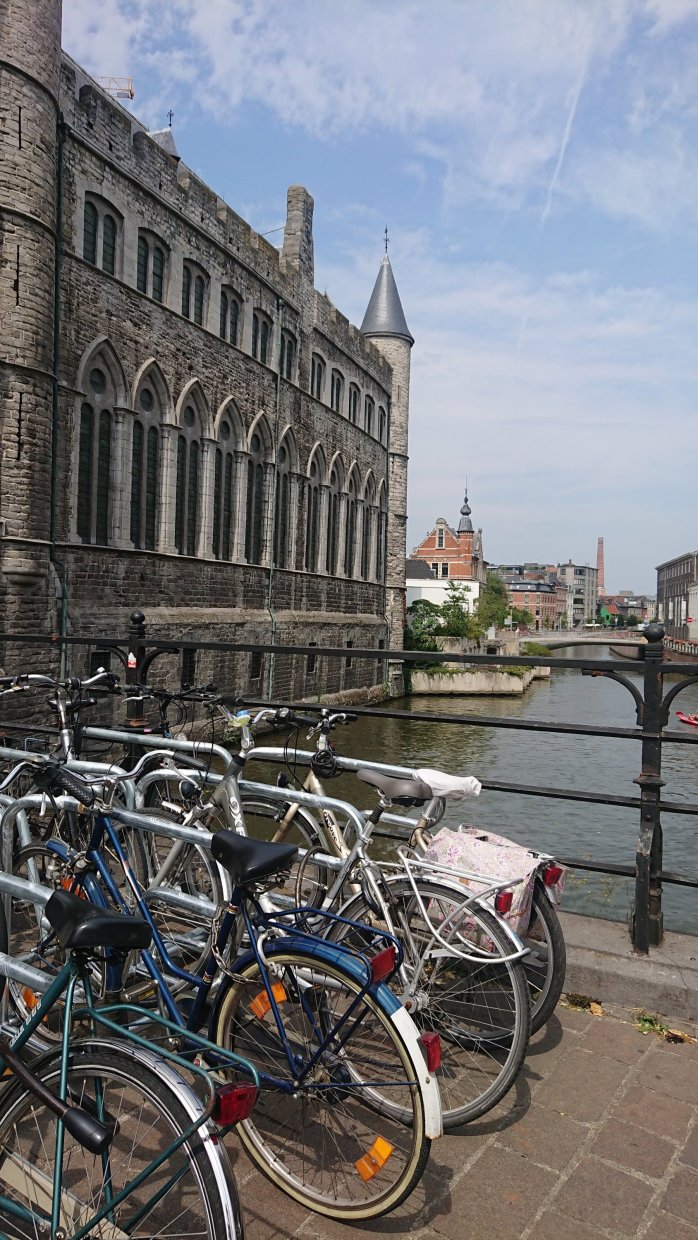
Our final stop on the way back to Brussels Airport at Zaventem was in Ghent. Unfortunately we did not have time to stop at the site of the Battle of Waterloo (Westerlo) as planned. But it is a site I have visited before.

Canal at Ghent

Share this:

  • Click to share on Facebook (Opens in new window) Facebook
  • Click to share on X (Opens in new window) X
Like Loading...
MILITARY NEWS TRAVEL UNCATEGORISED GhentIeperPoperingeRoyal Munster FusiliersWW1 Leave a comment

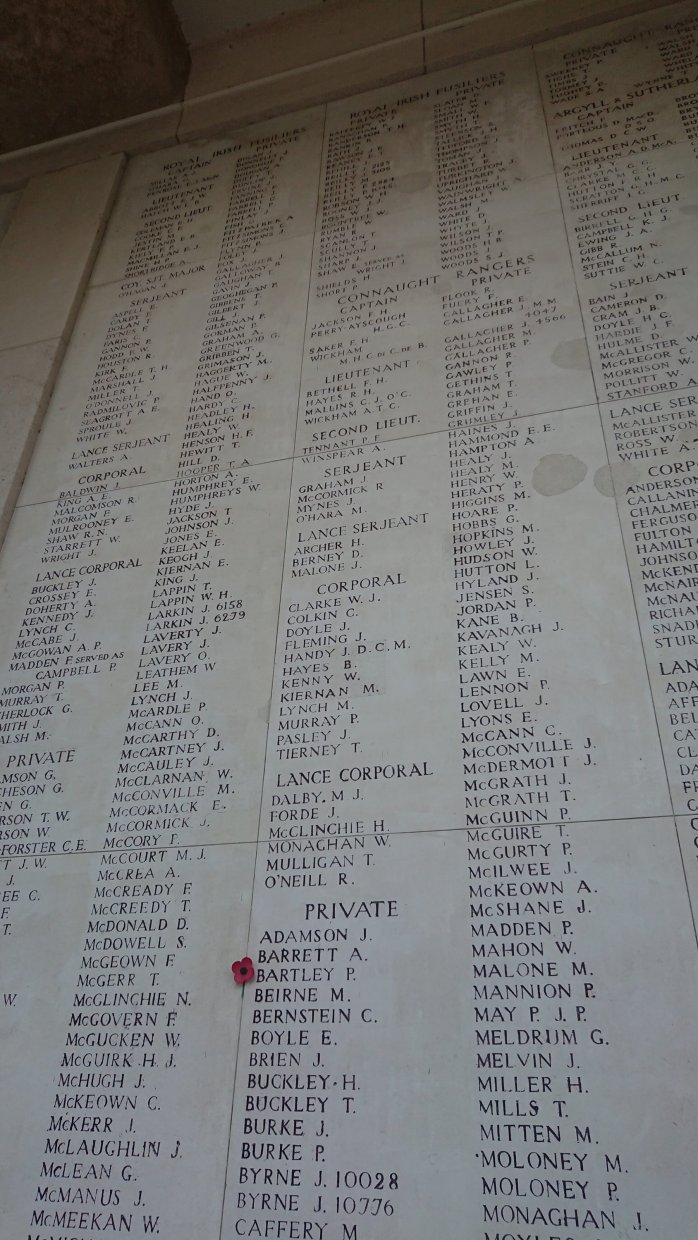
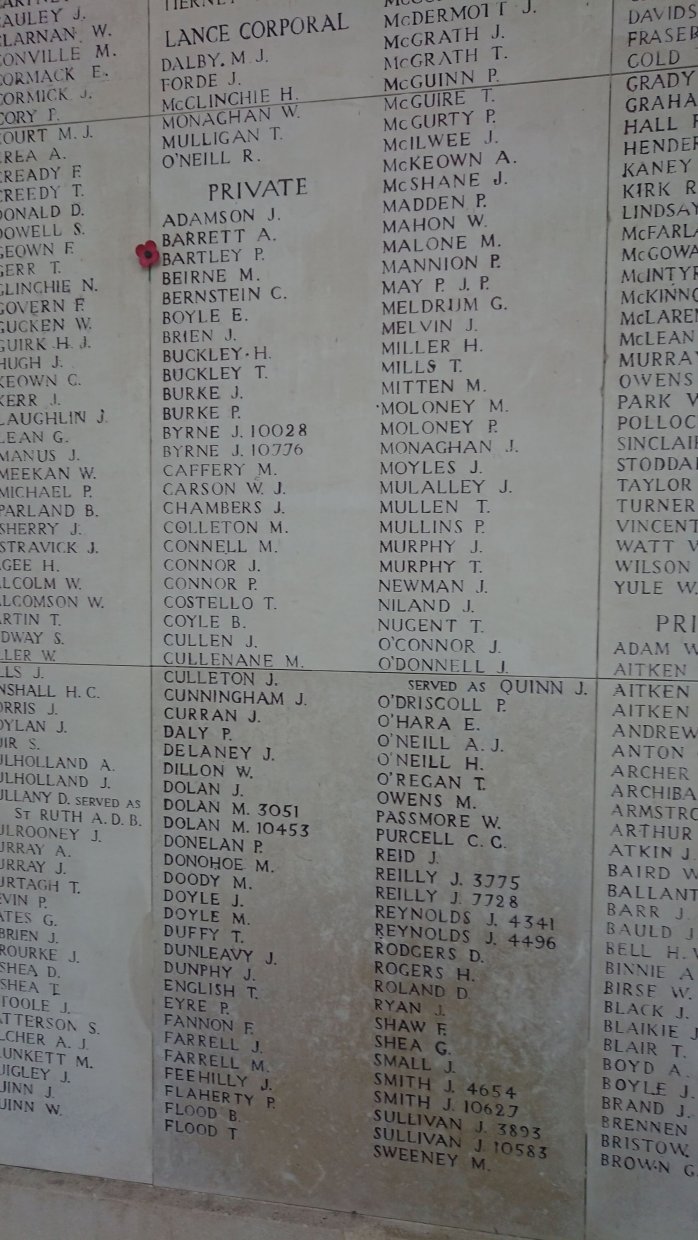
MENIN GATE NAMES

22/09/2019 by borderroamer

Names of members of the Royal Dublin Fusiliers and The Rifle Brigade

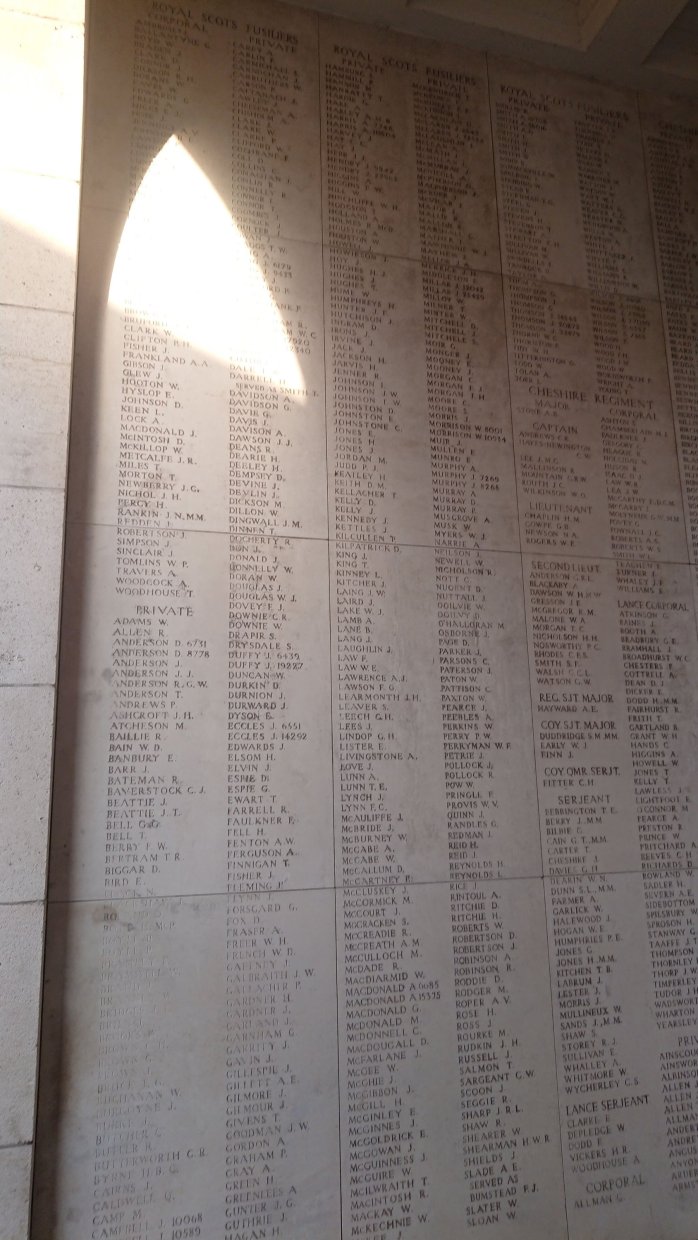
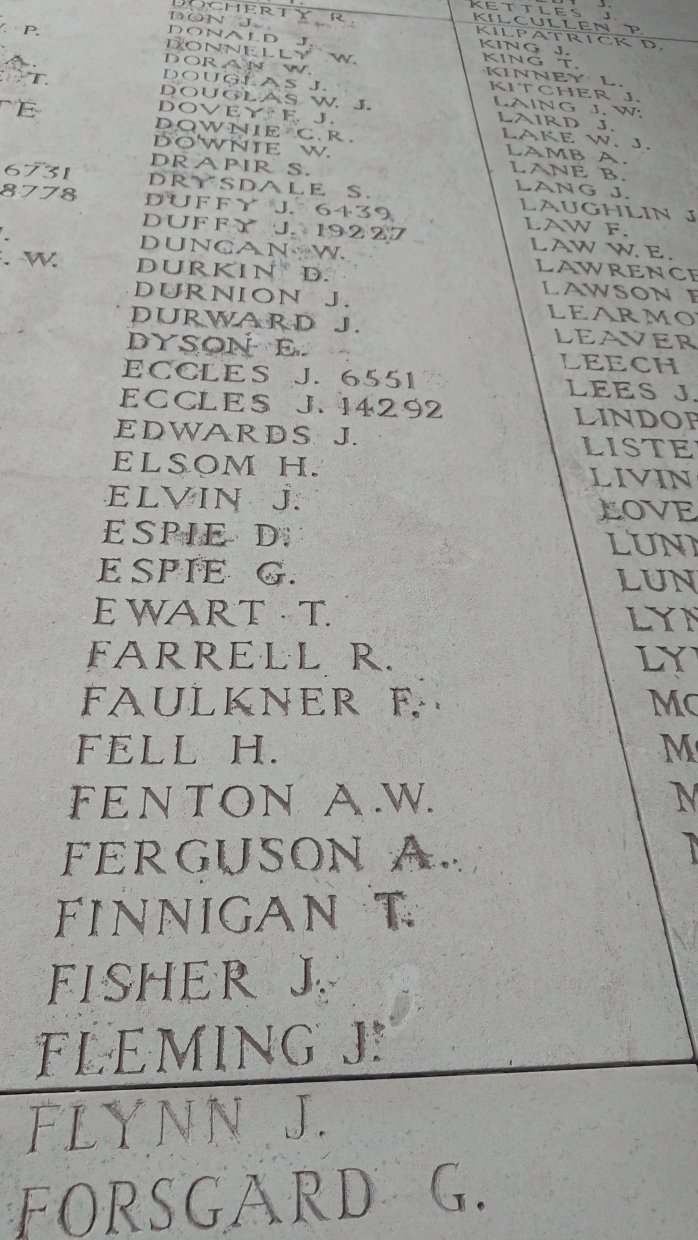
Names of soldiers who died in Flanders around the Ieper area whose remains were never identified. They are inscribed on the panels of the impressive Menin Gate CWGC memorial.

Lancashire Fusiliers members

Lancashire Fusiliers including a Fisher J. (no relation)

Names of soldiers in the Royal Dublin Fusiliers

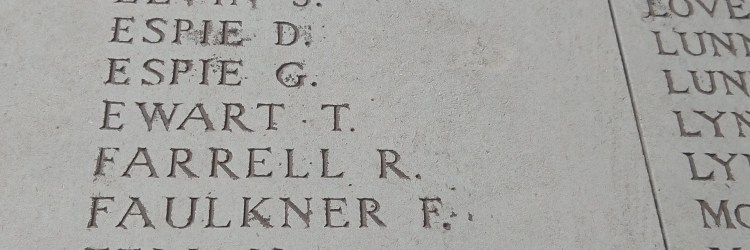
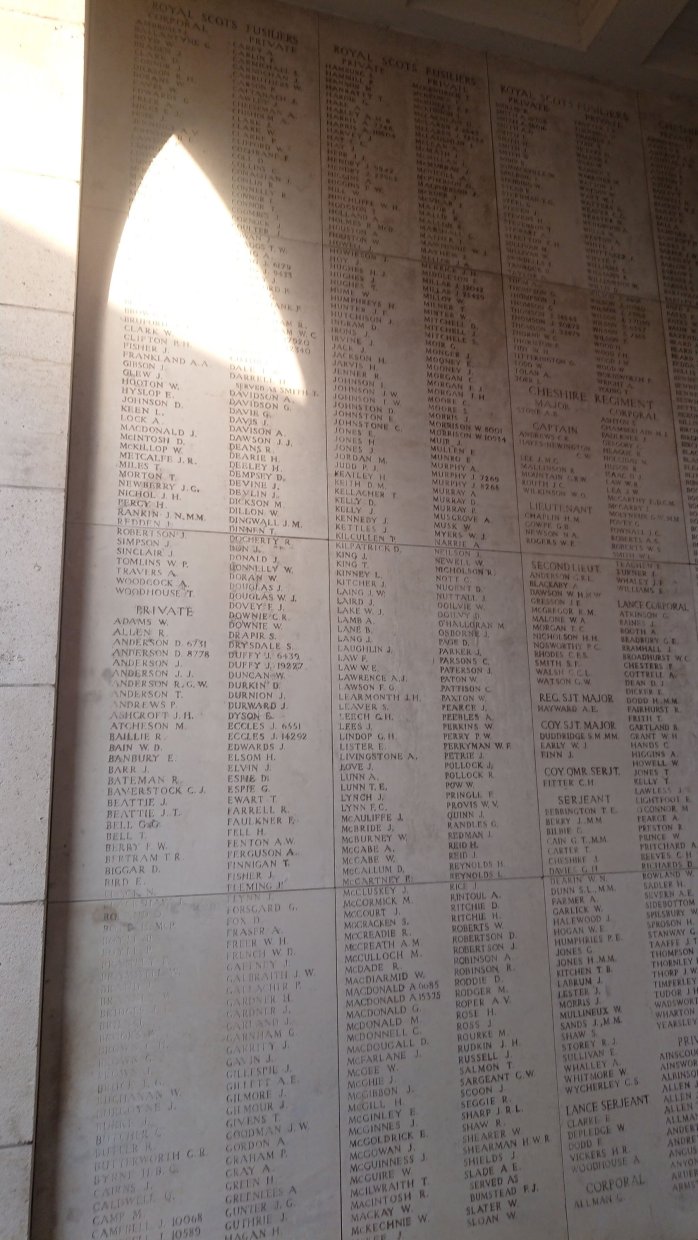
Members of the Royal Scots Fusiliers

Panel for The Rifle Brigade

Connaught Rangers Panel 42

Names of the Connaught Rangers who died Panel 42

Panel 44 Royal Dublin Fusiliers

Panel 44 for the Royal Dublin Fusiliers

Share this:

  • Click to share on Facebook (Opens in new window) Facebook
  • Click to share on X (Opens in new window) X
Like Loading...
MILITARY NEWS UNCATEGORISED Connaught RangersCWGCLancashire RegimentMemorialMenin GateRoyal Dublin FusiliersWWI Leave a comment

WREATH LAYING, IEPER

21/09/2019 by borderroamer

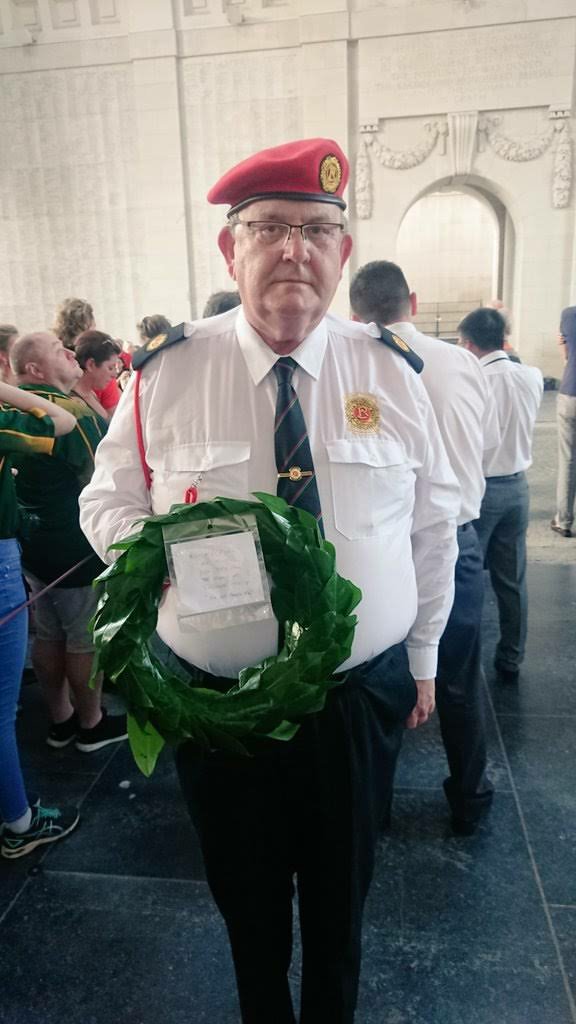
Wreath laying by Michael Fisher at Last Post ceremony in Ieper

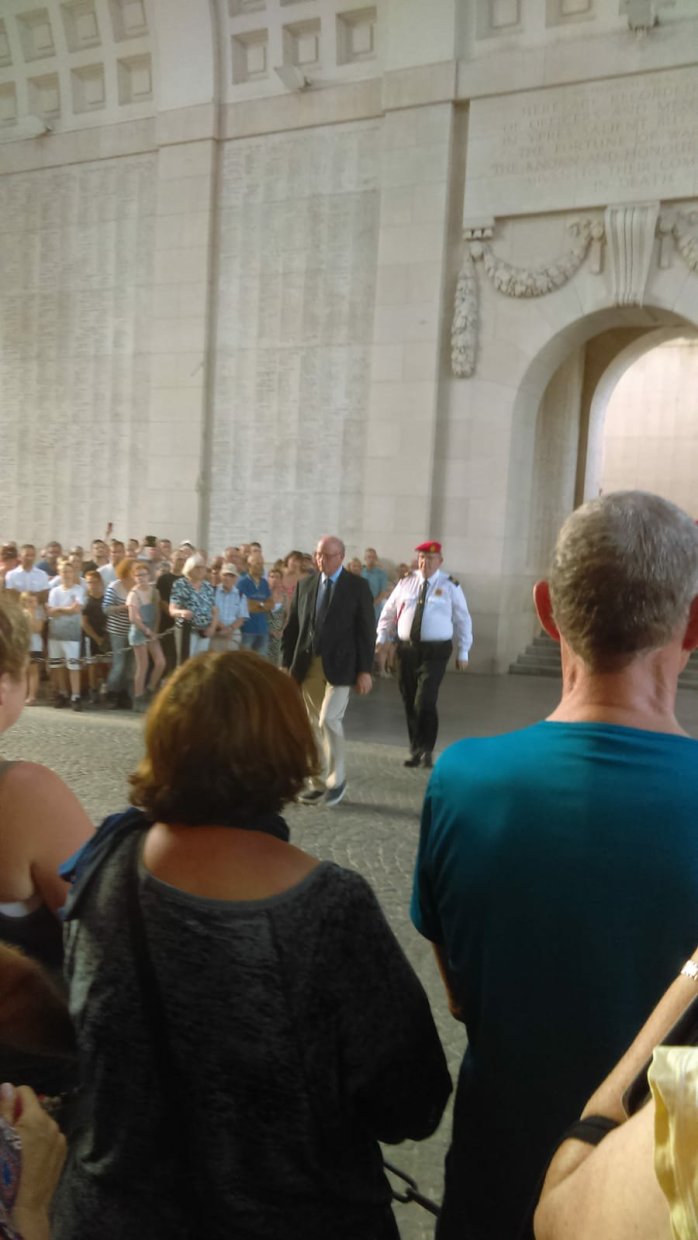
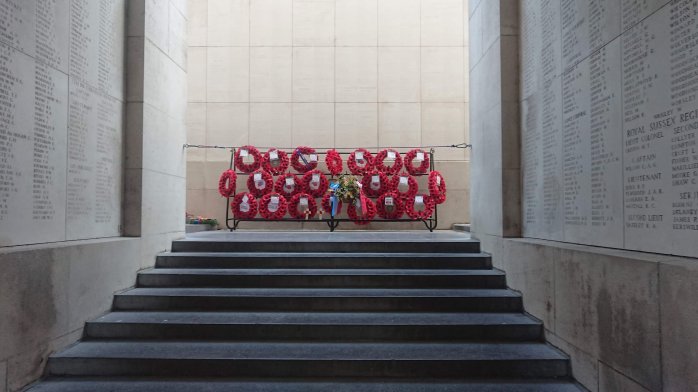
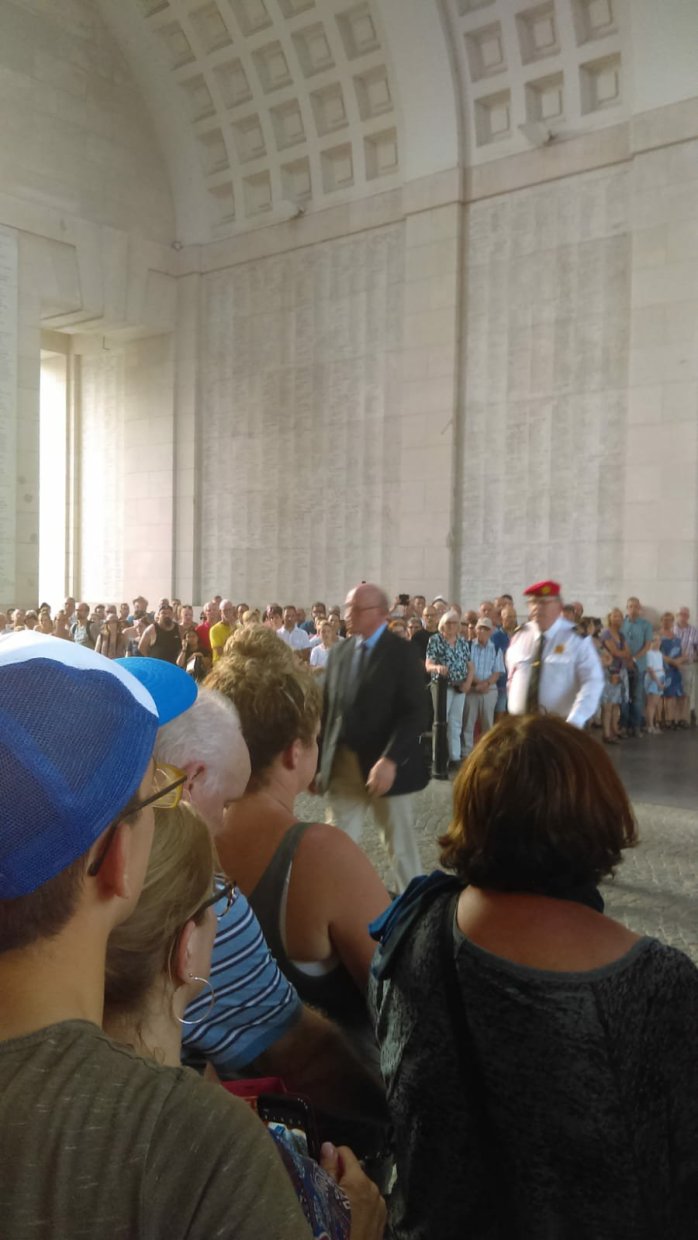
The highlight of our five day visit to Flanders was to attend the daily Last Post ceremony at the Menin Gate memorial in Ieper. Buglers from the local fire brigade sound the Last Post at 8pm. It’s a tradition that was started after the end of WWI in July 1928.

Charles Wills placed a wreath in memory of soldiers from Co. Mayo

One wreath was laid by Charles Wills from Foxford in memory of Irish soldiers in the British Army who were from Co. Mayo.

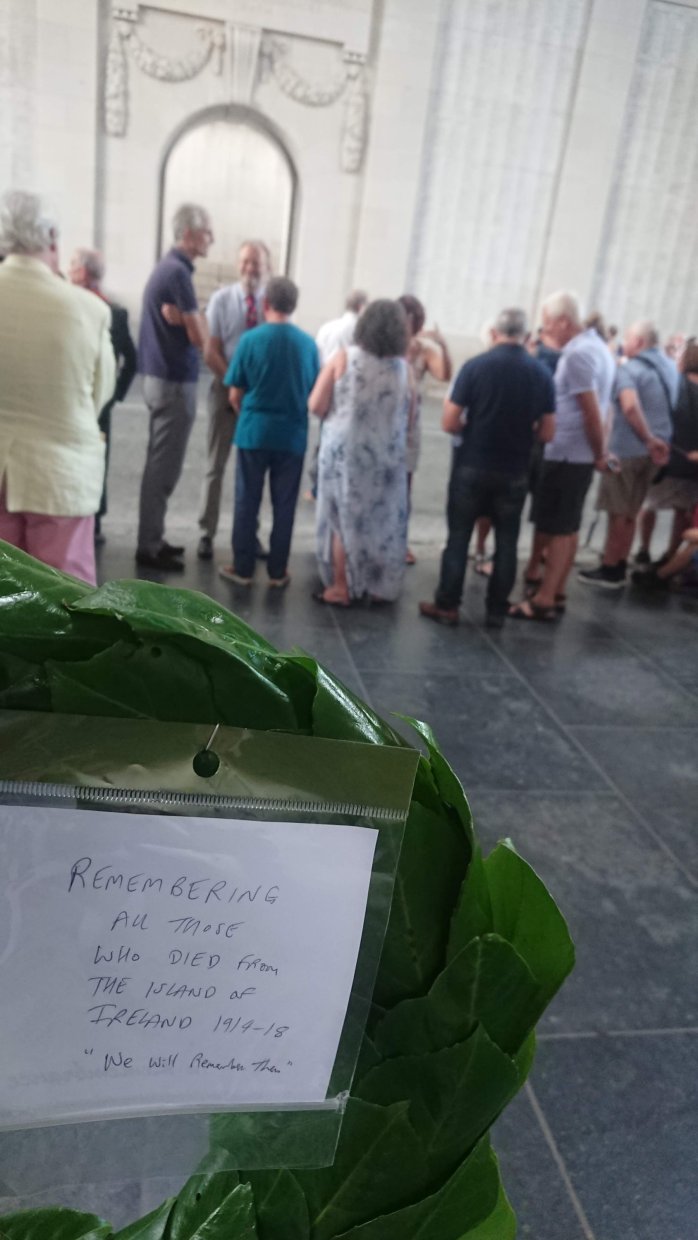
Laurel wreath in memory of those soldiers from Ireland who died in WWI

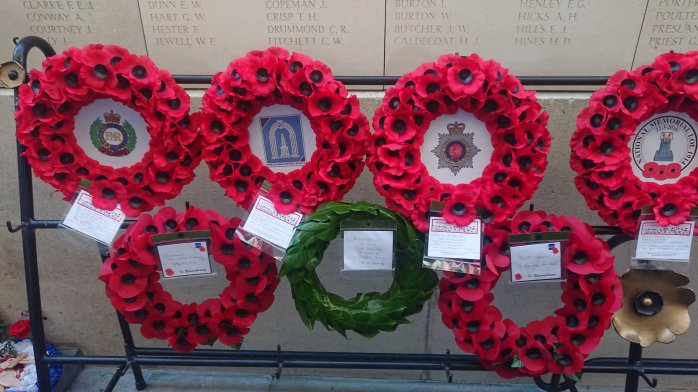
I laid a laurel wreath with a tricolour ribbon attached in memory of all those soldiers from the island of Ireland who died in the 1914-18 conflict.

Waiting to lay the wreath

Along with Charles we waited in line behind some former British soldiers and a group from the Orange Order in Scotland for our turn to lay the wreaths at the memorial.

Laying a wreath in memory of those soldiers from Co. Mayo killed in WWI

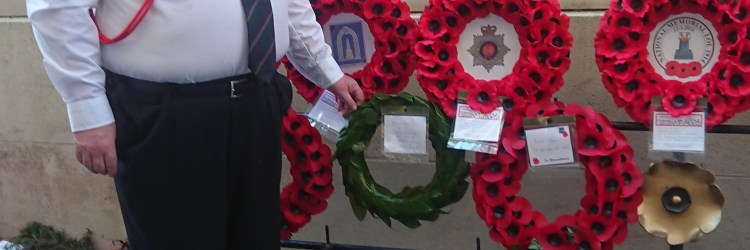
The wreaths laid at the Last Post ceremony

Placing a wreath at the Menin Gate memorial
Our group at the Menin Gate following the ceremony

It was a fitting end to a very busy day visiting some of the CWGC cemeteries in Flanders around Ieper. We will remember them.

Share this:

  • Click to share on Facebook (Opens in new window) Facebook
  • Click to share on X (Opens in new window) X
Like Loading...
MILITARY MONAGHAN NEWS UNCATEGORISED IeperLast PostMenin GateMichael FisherWreath LayingWWI Leave a comment

LAST POST, IEPER

20/09/2019 by borderroamer

Buglers from the Last Post Association

On the fourth day of our tour in July, the group attended the daily Last Post ceremony at the Menin Gate Memorial in Ieper. Two of us laid wreaths along with several other groups. See a separate report.
Wreath Laying at the Menin Gate

On Friday, 6th September a special ceremony was held in Ieper to commemorate the 75th anniversary of the liberation of the city 75 years ago by the 1st Polish Armoured Division commanded by General Maczek on 6th September 1944.
Last Post ceremony at the Menin Gate

The daily Last Post ceremony was held for the first time on 2nd July 1928. It was suspended on 21st May 1940, following the German occupation of the city at the start of the Second World War. It is not known whether this was a decision imposed by the occupying German authorities or was voluntarily undertaken by Richard Leclercq, who was then chairman of the Last Post Committee.

Belgian Plot at Brookwood Cemetery in Surrey

From January 1941, the Ieper Last Post ceremony was continued at Brookwood Military Cemetery in Surrey and this at the initiative of Edgar Ashley Cook, MBE. A number of members of the Belgian Defence Forces who died during their WWII service in England are buried there.

Guy Gruwez, honorary chairman of the Last Post Association: “By 5 o’clock in the afternoon of 6 September 1944, the city had already been liberated by the Polish Division that was fighting alongside the Canadian Army. There was a great sense of joy and relief. Bugler Jozef Arfeuille thought immediately to celebrate this unique moment by a resumption of the Last Post ceremony. He went with a group of neighbours and friends to the Menin Gate, where he played the Last Post no fewer than six times, or so it is claimed, to mark the restoration of our freedom. In this way, the daily ceremony was re-initiated after a gap of four years.”

For many years, the City of Ieper has commemorated the liberation together with the City of St. Omer, the city in France with which Ieper is twinned. Both cities were liberated on the same day in September 1944 by the same Polish Armoured Division. The commemorative ceremony is held on alternating years in each city. In 2019, it is the turn of St Omer, where the ceremony take place on Sunday, 1st September.

Fisher J. (no relation) was an English soldier

Alderman Diego Desmadryl: “Because this year is a special anniversary, the City of Ieper did not want to let this occasion pass without some form of recognition. As a result, we arranged a programme of events in Ieper on Friday 6th September. This consisted of a short ceremony at the Polish memorial plaque on the Cloth Hall at 19:30hrs, followed by the daily Last Post ceremony at the Menin Gate at 20.00. This was arranged by the city authorities in collaboration with the Last Post Association and the Royal Association of Veterans (and persons treated as such).”

Wreath laying ceremony at the Menin Gate

Benoit Mottrie, present chairman of the Last Post Association: “On 6th September 2019, the Last Post ceremony was held for the 31,520th time. During the past 25 years, public and international interest has increased enormously. For this reason, I would like to take this opportunity to thank all my predecessors, all past and current members of the board of directors and all other supporters of our Association. In particular, I would like offer a special word of thanks to all past and present buglers and ceremonial assistants, who give their time so freely and so generously. In this way, we will continue to remember each day those who died for the liberation of the city and the restoration of our freedom.”

Our group after the Last Post ceremony

Share this:

  • Click to share on Facebook (Opens in new window) Facebook
  • Click to share on X (Opens in new window) X
Like Loading...
MILITARY MONAGHAN NEWS UNCATEGORISED BuglersIeperLast PostMenin GateWWI Leave a comment

MENIN GATE

19/09/2019 by borderroamer

Menin Gate, Ieper

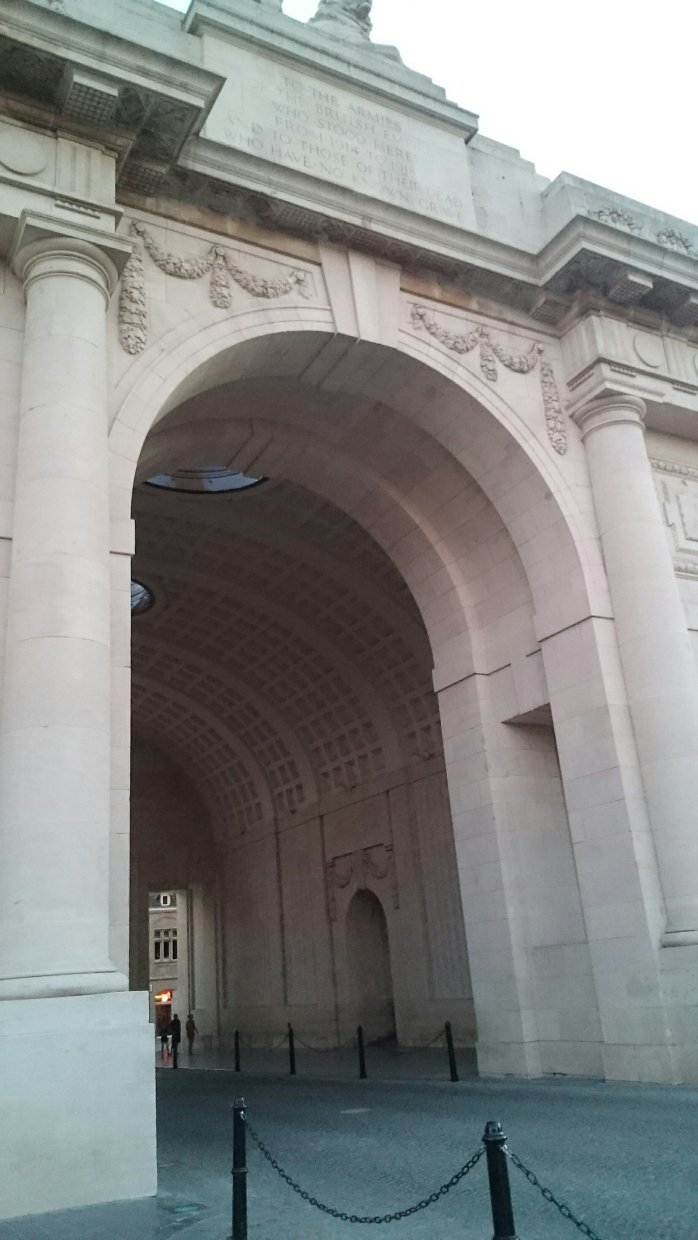
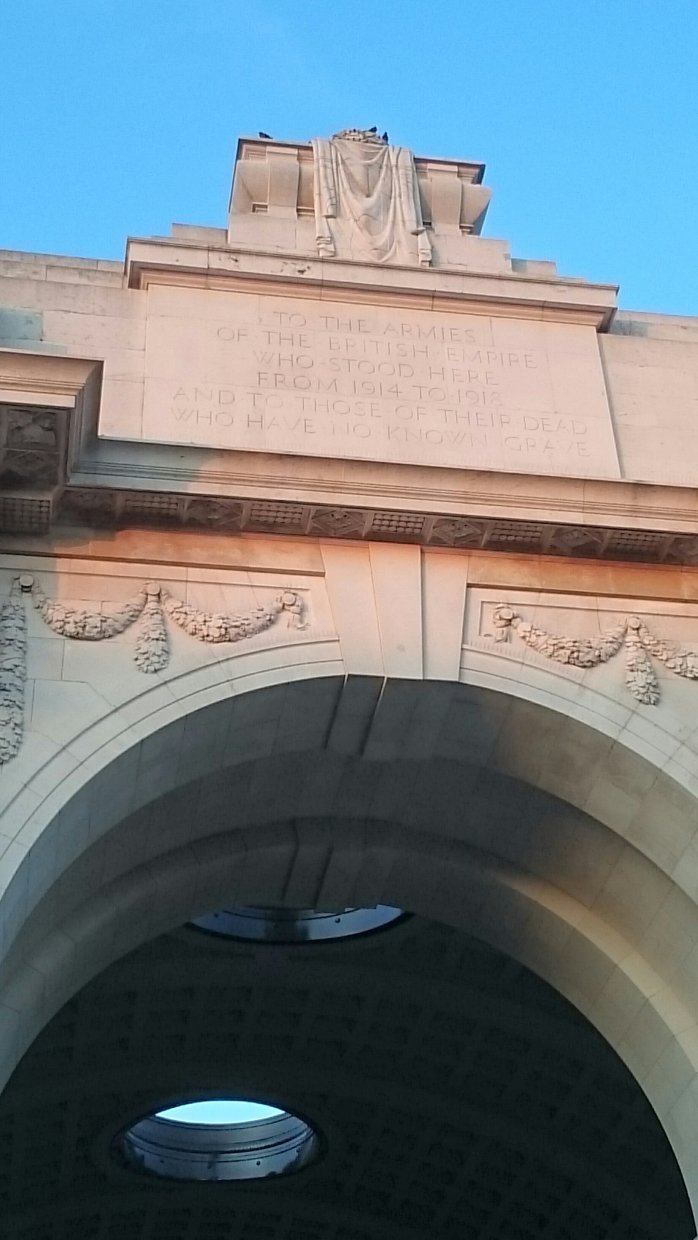
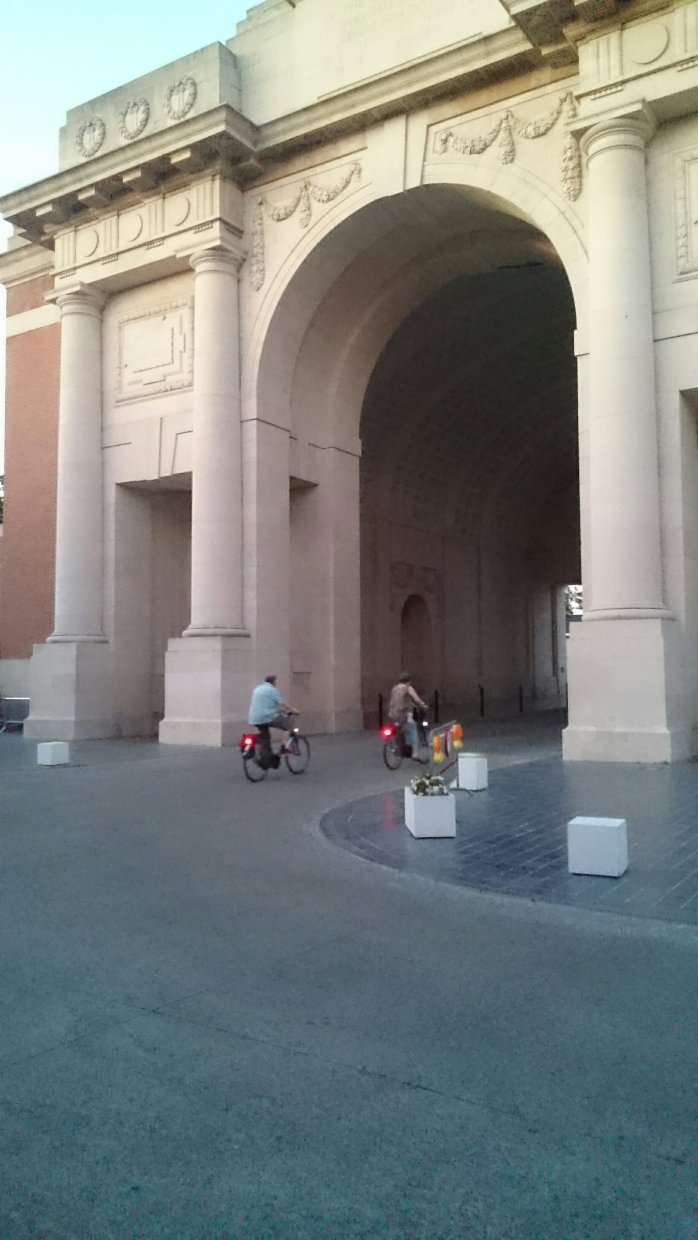
Reginald Blomfield’s triumphal arch at one of the entrances into Ieper (Ypres) was designed in 1921. It honours the missing of World War One in Flanders, who have no known graves. The lion on the top is the lion of Britain but also the lion of Flanders. It was chosen to be a memorial as it was the closest gate of the town to the fighting, and so Allied Troops would have marched past it on their way to fight.

Menin Gate, Ieper

Its large Hall of Memory contains names on stone panels of 54,395 Commonwealth soldiers who died in the Ieper Salient but whose bodies have never been identified or found. On completion of the memorial, it was discovered to be too small to contain all the names as originally planned. A cut-off point of 15th August 1917 was chosen and the names of 34,984 UK missing after this date were inscribed on the Tyne Cot memorial instead. The Menin Gate Memorial does not list the names of the missing soldiers of New Zealand and Newfoundland, who are instead honoured on separate memorials.

Menin Gate, Ieper

The inscription inside the archway is similar to the one at Tyne Cot, with the addition of the Latin phrase meaning ‘To the Greater Glory of God”: Ad Majorem Dei Gloriam – Here are recorded names of officers and men who fell in Ypres Salient, but to whom the fortune of war denied the known and honoured burial given to their comrades in death”. Both this inscription, and the main overhead inscription on both the east- and west-facing façades of the arch, were composed by Rudyard Kipling.

Inside the archway

On the opposite side of the archway to that inscription is the shorter dedication: “They shall receive a crown of glory that fadeth not away”. There are also Latin inscriptions set in circular panels either side of the archway, on both the east and west sides: “Pro Patria” and “Pro Rege” (‘For Country’ and ‘For King’). A French inscription mentions the citizens of Ypres: “Erigé par les nations de l’Empire Britannique en l’honneur de leurs morts ce monument est offert aux citoyens d’Ypres pour l’ornement de leur cité et en commémoration des jours où l’Armée Britannique l’a défendue contre l’envahisseur“, which translated into English means: “Erected by the nations of the British Empire in honour of their dead this monument is offered to the citizens of Ypres for the ornament of their city and in commemoration of the days where the British Army defended it against the invader.”

Menin Gate, Ieper

Reaction to the Menin Gate, the first of the Commonwealth War Grave Commission’s memorials to the missing, ranged from its condemnation by the war poet, Siegried Sassoon, to praise by the Austrian writer Stefan Zweig.

Menin Gate, Ieper

Share this:

  • Click to share on Facebook (Opens in new window) Facebook
  • Click to share on X (Opens in new window) X
Like Loading...
MILITARY NEWS UNCATEGORISED CWGCIeperMenin GateWW1 Leave a comment

IN FLANDERS FIELDS

18/09/2019 by borderroamer

In Flanders Fields

By John McCrae

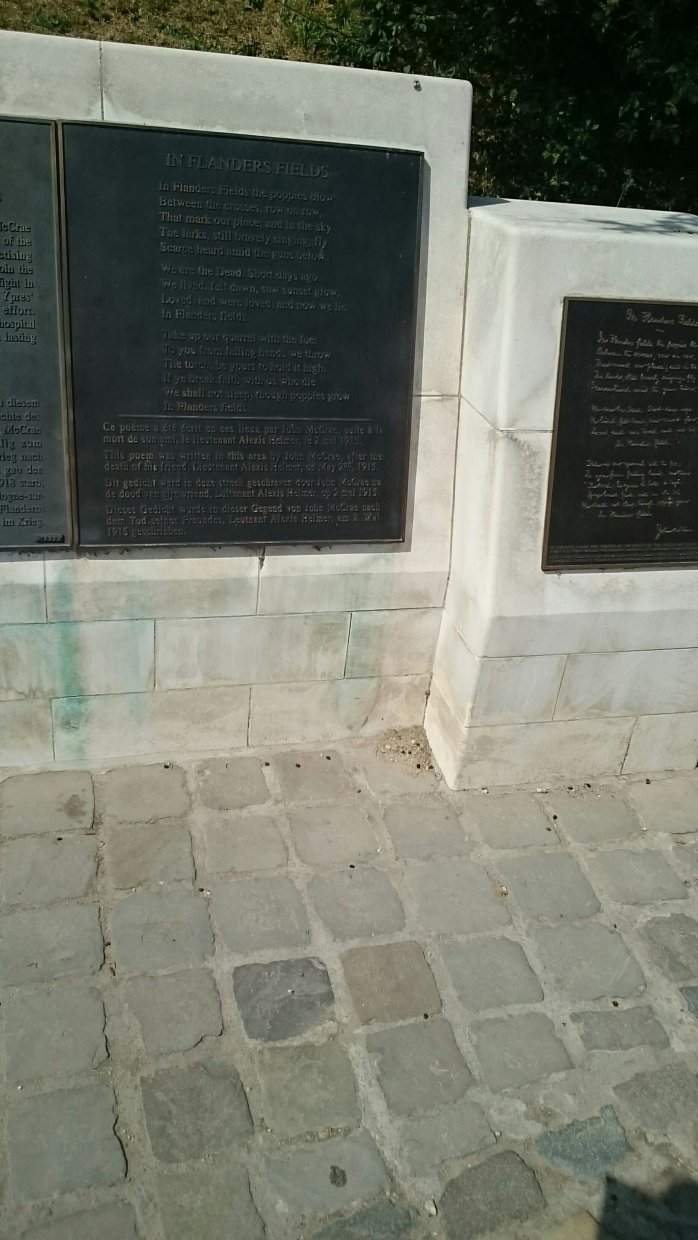
In Flanders fields the poppies blow

Between the crosses, row on row,
That mark our place; and in the sky

The larks, still bravely singing, fly

Scarce heard amid the guns below.

***

We are the Dead. Short days ago
We lived, felt dawn, saw sunset glow,
Loved and were loved, and now we lie,

In Flanders fields.

***

Take up our quarrel with the foe:
To you from failing hands we throw

The torch; be yours to hold it high.

If ye break faith with us who die
We shall not sleep, though poppies grow

In Flanders fields.

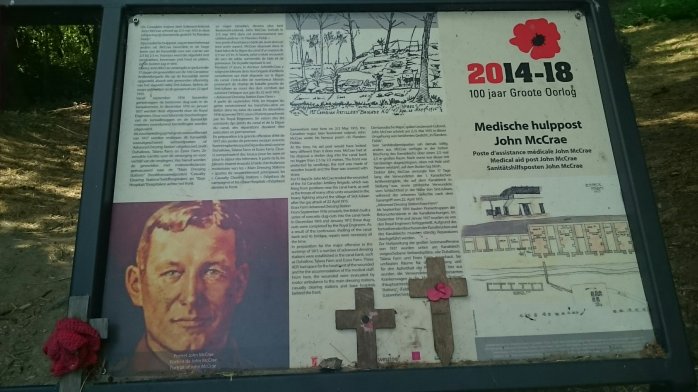
The Advanced Dressing Station where John McCrae was based at Essex Farm

At the beginning of WWI in 1914, Canada, as a Dominion within the British Empire, was at war as well. McCrae was appointed as Medical Officer and Major of the 1st Brigade CFA (Canadian Field Artillery). He treated the wounded during the Second Battle of Ypres in 1915, from a hastily dug, 8 foot by 8 foot bunker dug in the back of the dyke along the Yser Canal about 2 miles north of Ypres. McCrae’s friend and former militia pal, Lt Alexis Helmer, was killed in the battle, and his burial inspired the poem, ‘In Flander’s Fields’, which was written on May 3rd 1915 and was first published in the magazine Punch.

Bunker where McCrae treated the wounded

From June 1st 1915, McCrae was ordered away from the artillery to set up No. 3 Canadian General Hospital at Dannes-Camiers near Boulogne-sur-Mer, northern France. C.L.C. Allinson reported that McCrae “most unmilitarily told [me] what he thought of being transferred to the medicals and being pulled away from his beloved guns. His last words to me were: ‘Allinson, all the goddamn doctors in the world will not win this bloody war: what we need is more and more fighting men.'”

“In Flanders Fields” appeared anonymously in Punch on December 8, 1915, but in the index to that year McCrae was named as the author. The verses swiftly became one of the most popular poems of the war, used in countless fund-raising campaigns and frequently translated. “In Flanders Fields” was also extensively printed in the United States, whose government was contemplating joining the war, alongside a ‘reply’ by R.W.Lillard, “…Fear not that you have died for naught, / The torch ye threw to us we caught…”.

McCrae’s grave at the CWGC Cemetery at Wimereux, France

For eight months the hospital operated in Durbar tents shipped from India, but after suffering from storms, floods, and frosts it was moved in February 1916 into the old Jesuit College in Boulogne-sur-Mer.

Plaque at Essex Farm

McCrae, now “a household name, albeit a frequently misspelt one”, regarded his sudden fame with some amusement, wishing that “they would get to printing ‘In F.F.’ correctly: it never is nowadays”; but (writes his biographer) “he was satisfied if the poem enabled men to see where their duty lay.”

Lt Col John McCrae Pic. Guelph Museum

On January 28, 1918, while still commanding No. 3 Canadian General Hospital (McGill) at Boulogne, McCrae died of pneumonia with “extensive Pneumococcus meningitis” at the British General Hospital in Wimereux, France. He was buried the following day in the CWGC section of Wimereux Cemetery, just a couple of kilometres up the coast from Boulogne, with full military honours.

A plaque with McCrae’s poem ‘In Flander’s Fields’

Share this:

  • Click to share on Facebook (Opens in new window) Facebook
  • Click to share on X (Opens in new window) X
Like Loading...
MILITARY NEWS UNCATEGORISED BoezingeEssex Farm CemeteryIn Flanders FieldsJohn McCraeWWI Leave a comment

Post navigation

← Older posts
Newer posts →

Recent Posts

  • DESMOND FISHER 1920-2014 30/12/2020
  • GAJ AWARDS 2020 24/12/2020
  • COVID-19 REPORTING AWARD 20/12/2020
  • HAPPY 100TH BIRTHDAY 31/03/2020
  • NUJ VOTING REMINDER 26/01/2020
  • WORLD PRESS FREEDOM 20/01/2020
  • REMINDER TO VOTE 18/01/2020
  • BOND, WE’VE BEEN EXPECTING YOU! 17/01/2020
  • NUJ MEMBERS IN IRELAND 09/01/2020
  • NUJ BLAST FROM THE PAST 08/01/2020

Archives

  • Dec 2020 (3)
  • Mar 2020 (1)
  • Jan 2020 (13)
  • Oct 2019 (10)
  • Sep 2019 (30)
  • Aug 2019 (31)
  • Jun 2019 (2)
  • May 2019 (1)
  • Sep 2018 (1)
  • Jul 2017 (1)
  • Dec 2016 (12)
  • Sep 2016 (2)
  • Aug 2016 (5)
  • Jul 2016 (5)
  • Jun 2016 (10)
  • May 2016 (15)
  • Apr 2016 (19)
  • Mar 2016 (14)
  • Jan 2016 (26)
  • Dec 2015 (2)
  • Aug 2015 (1)
  • Jul 2015 (30)
  • Jun 2015 (30)
  • May 2015 (32)
  • Apr 2015 (30)
  • Mar 2015 (31)
  • Feb 2015 (28)
  • Jan 2015 (31)
  • Dec 2014 (31)
  • Nov 2014 (14)
  • Mar 2014 (2)
  • Feb 2014 (2)
  • Jan 2014 (31)
  • Dec 2013 (19)
  • Nov 2013 (17)
  • Oct 2013 (29)
  • Sep 2013 (30)
  • Aug 2013 (31)
  • Jul 2013 (31)
  • Jun 2013 (30)
  • May 2013 (28)
  • Apr 2013 (32)
  • Mar 2013 (31)
  • Feb 2013 (28)
  • Jan 2013 (31)
  • Dec 2012 (3)
  • Oct 2012 (1)
  • Sep 2012 (1)
  • Aug 2012 (2)
  • Jul 2012 (3)
  • Jun 2012 (3)
  • May 2012 (3)
  • Apr 2012 (5)
  • Mar 2012 (1)
  • Jan 2012 (1)
  • Dec 2011 (1)
  • Nov 2011 (1)
  • Jun 2011 (1)
  • May 2011 (1)
  • Apr 2011 (2)
  • Dec 2010 (1)
  • Nov 2010 (3)
  • Oct 2010 (6)
  • Aug 2010 (1)
  • Jul 2010 (7)

Categories

Meta

  • Create account
  • Log in
  • Entries feed
  • Comments feed
  • WordPress.com

Enter your email address to follow this blog and receive notifications of new posts by email.

36th Ulster Division 2013 WPFG AFC Wimbledon An Bord Pleanála Ballinode Balmoral Show Barry McCall Battle of Somme BBC belfast Belfast Festival Belfast Lions Club Big Music Week Birmingham BOSE Bristol Carlow Carrickmacross Castleblayney Catholic Herald Clogher Clones CMAPC Defence Forces Derry Desmond Fisher Dublin EirGrid Emyvale Fine Gael GAA Geel Glaslough Heather Humphreys TD Iarnród Éireann Ice Hockey Ieper Inniskeen Irish Press Kingsmeadow London Meath Michael Fisher Monaghan Monaghan County Council NEC NEPPC Newbridge North/South Interconnector Northern Standard NUJ Odyssey Arena Patrick Comerford Pope Francis Poperinge Private Robert Hamilton PSNI Royal Irish Fusiliers RTÉ SDLP Shamrock Rovers Shared History Shared Future SIPTU St Macartan's Cathedral Tallaght Tydavnet Tyrone Ulster rugby Vatican II William Carleton William Carleton Society William Carleton summer school WW1 WWI WWII

Blog Stats

  • 240,515 hits
Blog at WordPress.com.
Michael Fisher's News
Blog at WordPress.com.
  • Subscribe Subscribed
    • Michael Fisher's News
    • Join 173 other subscribers.
    • Already have a WordPress.com account? Log in now.
    • Michael Fisher's News
    • Subscribe Subscribed
    • Sign up
    • Log in
    • Report this content
    • View site in Reader
    • Manage subscriptions
    • Collapse this bar
 

Loading Comments...
 

    %d