Get me outta here!

Michael Fisher's News

© Michael Fisher MMXXII

Menu

Skip to content
  • Home
  • About

Author Archives

borderroamerhttps://fisherbelfast.wordpress.comThe Northern Standard, Monaghan. Reporter.
borderroamer's avatar

MALLARD RECORD

03/07/2013 by borderroamer
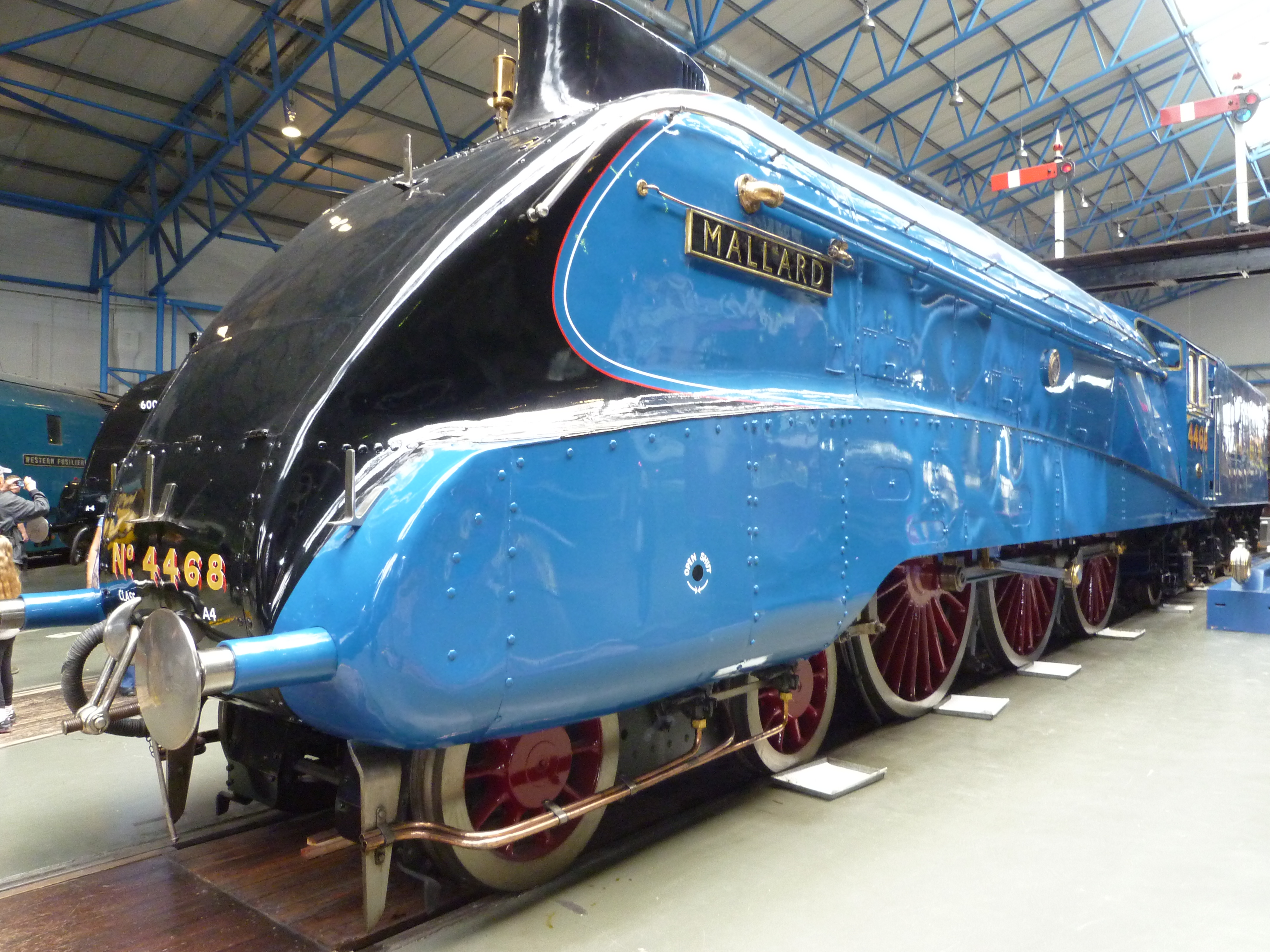
Mallard at National Railway Museum York

Mallard at National Railway Museum York

75 years ago today, Mallard set a new record. The A4 Class steam locomotives broke the world speed record for steam on July 3rd 1938 by travelling at 126mph (203km/h) at Stoke Bank near Grantham in Lincolnshire. To mark the occasion a special “Gathering” of the six surviving engines in the class has been organised by the National Railway Museum in York which I visited last month. It’s the first time the six surviving engines, Dwight D Eisenhower, Mallard, Bittern, Union of South Africa, Dominion of Canada and Sir Nigel Gresley  have been seen together.
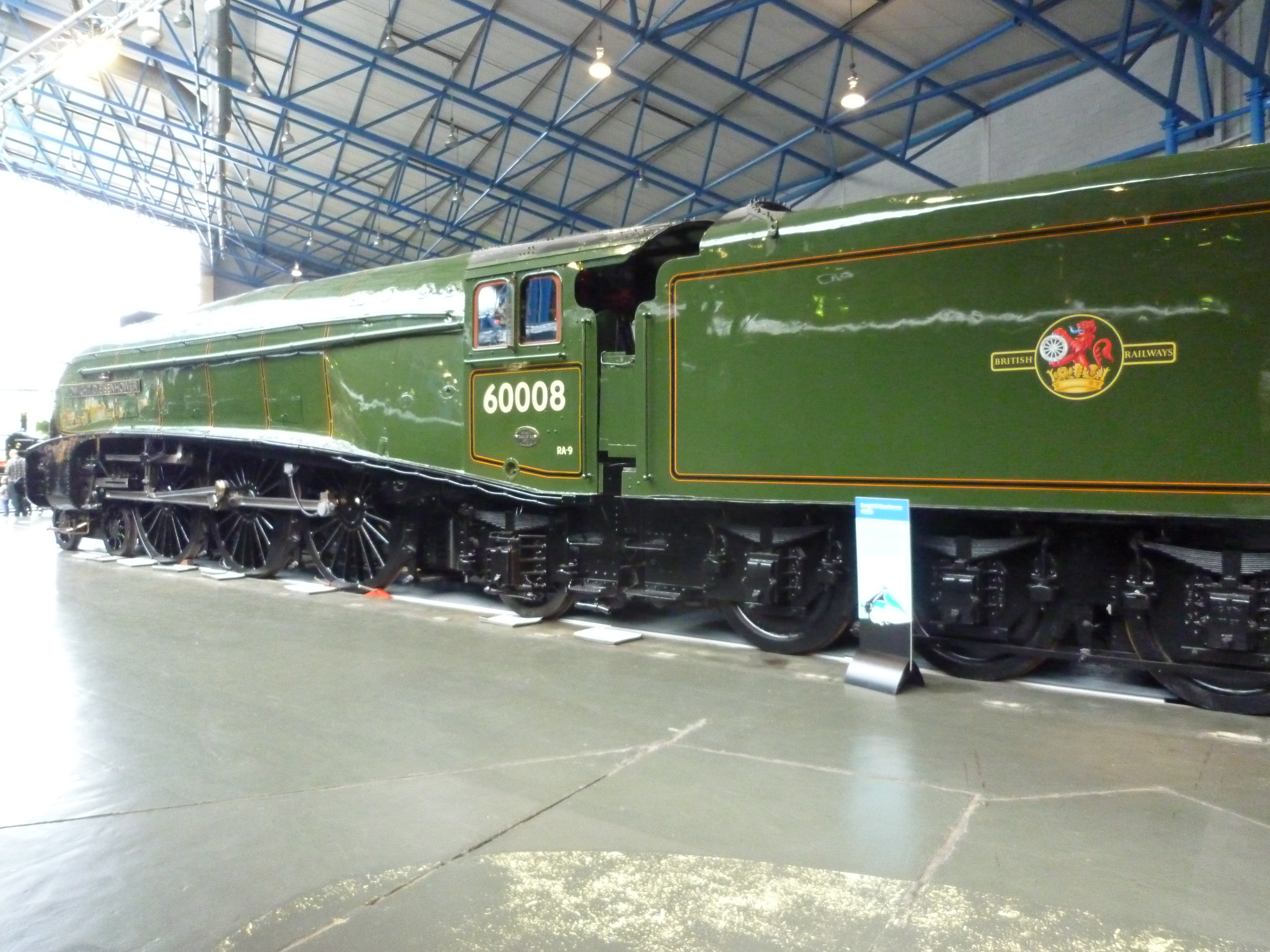
Dwight D Eisenhower at York in traditional BR green livery

Dwight D Eisenhower at York in traditional BR green livery

It was a huge undertaking for the organisers. with Dwight D Eisenhower and Dominion of Canada having to be shipped from North America for the event. Bittern travelled from London King’s Cross under its own steam on Saturday in a 90mph (145km/h) run up the East Coast Mainline to York. Mallard ran on the East Coast Mainline from the 1930s to the 1960s and on the historic day in 1938 was driven by the late Joe Duddington from Doncaster.

Mallard

Mallard

The A4 Class was designed by Sir Nigel Gresley, who also created the Flying Scotsman. Mallard was thought to have been chosen for the record-breaking run because it was one of the newest locomotives and Sir Nigel wanted to test its new performance exhaust. The locomotive broke down soon after it reached the top speed and was brought back to the workshop to have a bearing replaced.
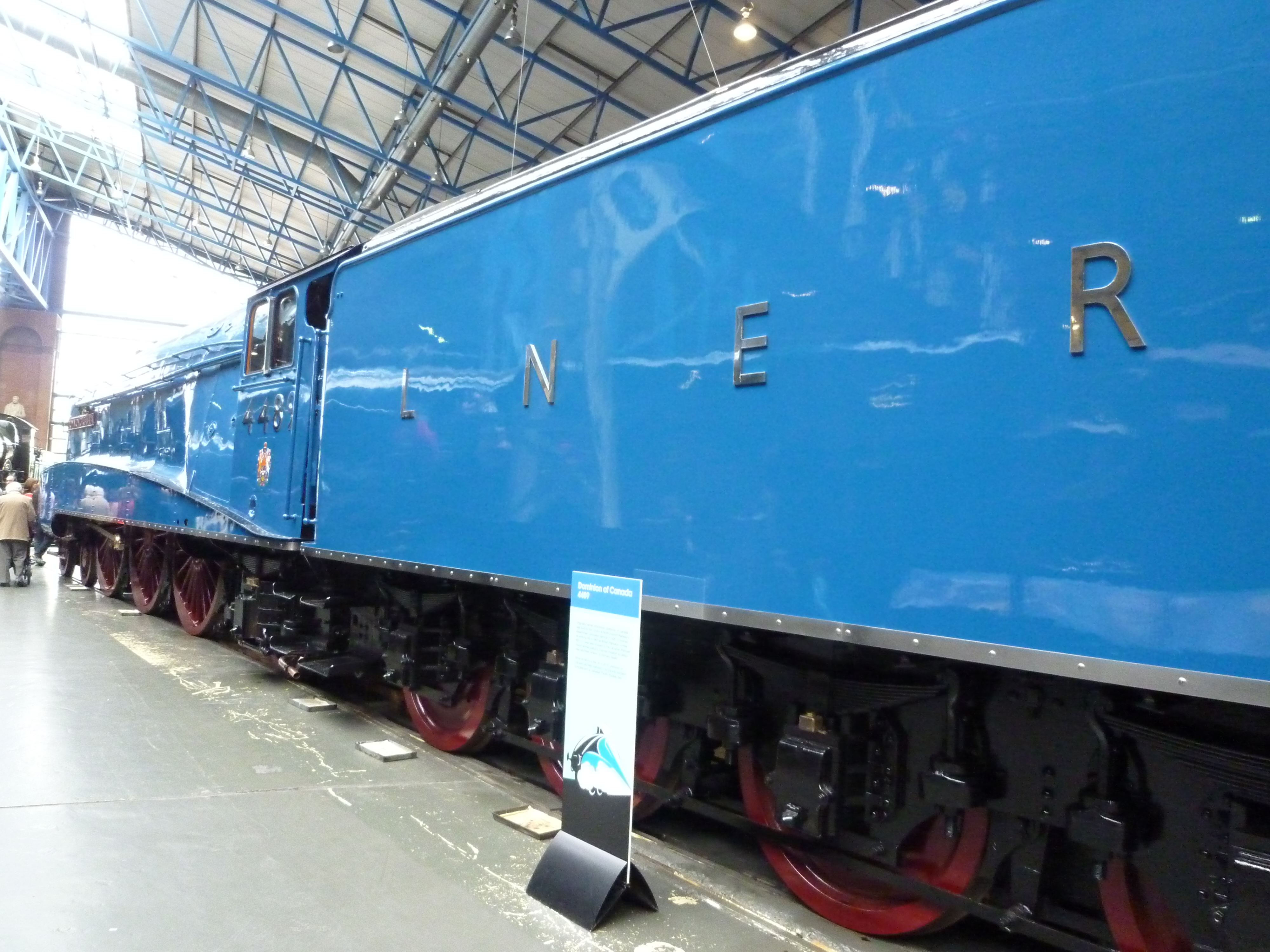
Mallard

Mallard

A golden plaque on the side of Mallard reads: “On July 3rd 1938 this locomotive attained a world speed record for steam traction of 126 miles per hour.”

British Rail’s modernisation plan began sweeping steam away in 1955 and Mallard was withdrawn from service in 1963. The engine was restored by the National Railway Museum in the mid-1980s.

Visiting Mallard at NRM York

Visiting Mallard at NRM York

Share this:

  • Share on Facebook (Opens in new window) Facebook
  • Share on X (Opens in new window) X
Like Loading...
NEWS TRAVEL UNCATEGORISED BitternMallardNational Railway MuseumSir Nigel Gresleyspeed recordYork Leave a comment
FROM SHIPLEY TO SALTAIRE

02/07/2013 by borderroamer
West Mill, Saltaire

West Mill, Saltaire

I was disappointed when I arrived in Shipley by way of Ilkley Moor. I thought the centre of this industrial Yorkshire town had been altered unsympathetically by 1960s redevelopment. Few of the Victorian buildings remain. The slums were replaced with low-rise modern retail outlets. A central square serves as an outdoor market and an underground indoor market is situated beneath a tall,  market hall tower which is a landmark for many miles around. I thought it was a block of flats when I noticed it.  A second phase of clearance in 1966 saw the construction of an Asda supermarket (now the main building in the town centre), a library which had a small section on local history, a swimming pool and a health centre. By 1970 2,900 slum houses had been demolished.

Railway Line beside West Mill, Saltaire

Railway Line beside West Mill, Saltaire

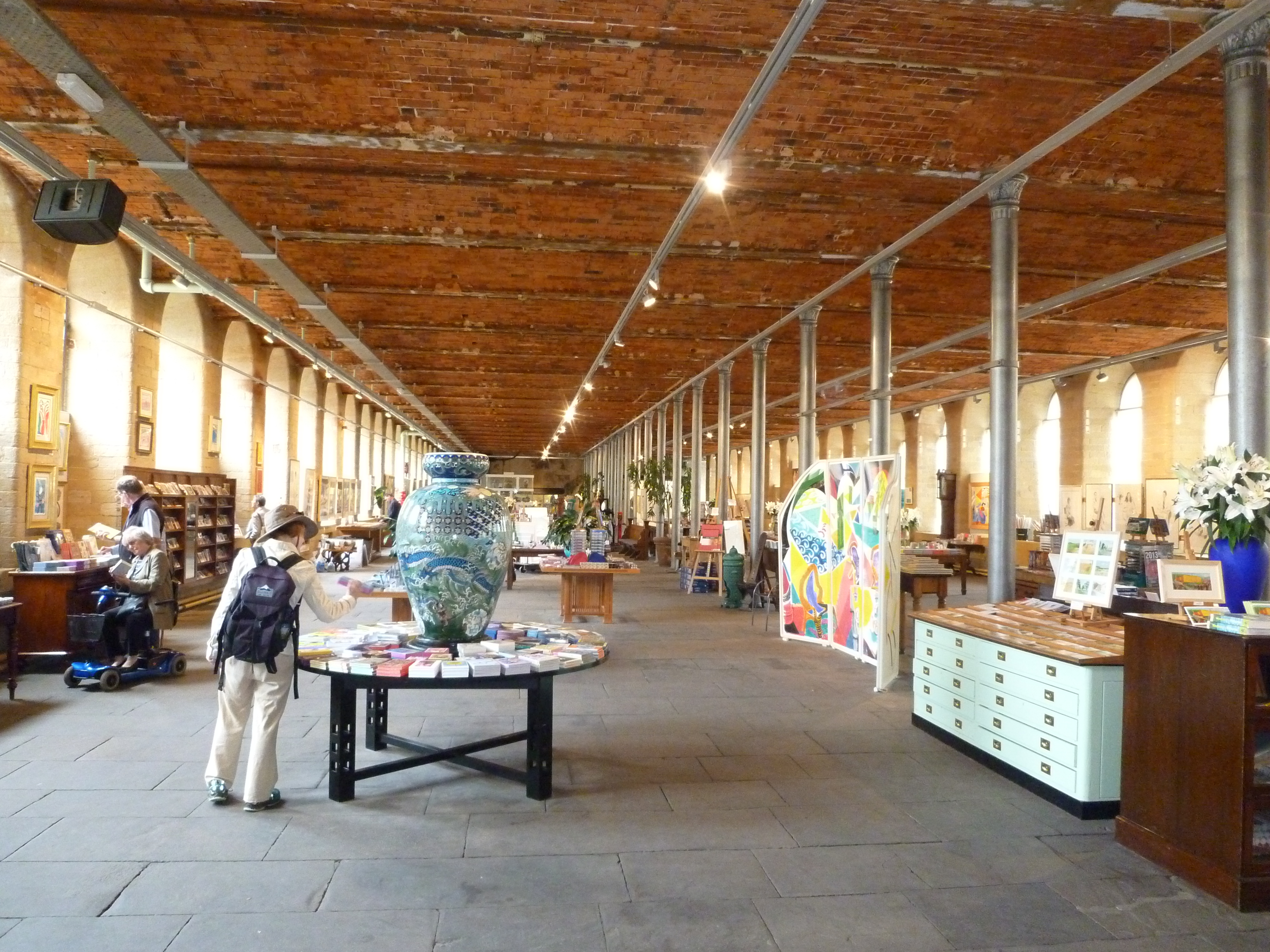
I saw from the map that Saltaire was nearby and when I got my bearings I soon saw the large former mill buildings not too far distant, on the other side of a railway line. This was a gem in industrial architecture. The township built by Sir Titus Salt alongside the River Aire is now a UNESCO world heritage site. Part of the Salt’s Mill complex contains retail outlets and another section of it is devoted to commercial use. There are some nice restaurants inside. I thought Belfast’s old mills were big but Salt’s building has a frontage that is 545 ft long, with six storeys rising 72 ft. At one stage in the 1800s some 4000 people worked here. The weaving shed of the mill housed 1200 looms, producing 30,000 yards of alpaca and other cloths daily.

Shop in former Salt's Mill

Shop in former Salt’s Mill


Share this:

  • Share on Facebook (Opens in new window) Facebook
  • Share on X (Opens in new window) X
Like Loading...
NEWS TRAVEL River AireSaltaireShipleyTitus Salt Leave a comment

FROM CULLAMORE TO SHIPLEY

01/07/2013 by borderroamer
Lough More, Cullamore on Tyrone/Monaghan border

Lough More, Cullamore on Tyrone/Monaghan border

After finishing some work on the programme for the 2013 William Carleton summer school next month, I travelled back through Carleton country to North Monaghan. I went past Kilrudden, home of the late Mary McKenna, a former President of the William Carleton Society. I had earlier visited her grave at St Macartan’s (the Forth) chapel, where I also tidied up the grave of my McCann relatives, two of whom had made the journey from this beautiful Tyrone countryside to work as doctors in Shipley in England. I will tell you more about them later and how I found myself following their footsteps to Yorkshire last month.
Grave of Mary McKenna, Kilrudden House

Grave of Mary McKenna, Kilrudden House

The old road from Augher towards Monaghan takes you past Kilrudden and up Dunroe hill. Heading towards the border along a road that has now been re-connected with County Monaghan, you pass the townland of Cloonycoppoge where the McCanns came from before they moved to Aughnacloy, and then you come to Cullamore. I remember talking to Mary about them as she brought us on a Carleton tour one year.

Although it was 10pm it was still bright and I met a couple who were out walking. I stopped to look across at Lough More, a lake that marks the boundary between the UK and Republic of Ireland. The lake covers approximately 30 hectares and contains a good stock of wild brown  trout including the Ferox trout. The Lough More Anglers Association controls  fishing  on this water and day permits are available.

Carleton tells us in the Preface to The Black Baronet (1858) that “the titles of Cullamore and Dunroe are taken from two hills, one greater than the other, and not far asunder, in my native parish; and I have heard it said, by the people of that neighbourhood, that Sir William Richardson (of Augher), father to the late amiable Sir James Richardson Bunbury, when expecting at the period of the Union to receive a coronet instead of a baronetcy, had made his mind up to select either one or the other of them as the designation of his rank“.

Share this:

  • Share on Facebook (Opens in new window) Facebook
  • Share on X (Opens in new window) X
Like Loading...
CARLETON MONAGHAN NEWS AugherBlack ProphetCullamoreForth ChapelLough MoreMary McKennaMcCannShipleyWilliam Carleton summer school Leave a comment

LONDON GAELS

30/06/2013 by borderroamer
GAA in Britain Logo

GAA in Britain Logo

The first time I saw Gaelic Games being played was not in Croke Park or even in Ireland. I was introduced to them when I was still at primary school and I got the opportunity to visit England’s bastion of soccer, Wembley Stadium in North London. So tonight I was delighted to watch highlights on television of London’s narrow victory over Leitrim in the Connacht senior football semi-final.

The Londoners, a team made up mainly of exiles like Shane Mulligan from Aghabog in County Monaghan, will meet Mayo in the provincial final on July 21st, the first time they have managed such an achievement.

You can see how significant it is from the London GAA Roll of Honour up to today:-

Junior Football (6 titles)

1938 – Leitrim (5-7 to 2-9)

1966 – Cork (1-6 to 0-8)

1969 – Wicklow (3-12 to 1-11)

1970 – Kildare (1-12 to 0-9)

1971 – Dublin (1-9 to 0-9)

1986 – Cork (1-9 to 0-7)

Liam McCarthy was on London’s very first County Committee holding the position of Treasurer. The following year McCarthy became Secretary before assuming the position of President (now Chairperson) in 1898, a position he held for the next 9 years. 1898 also saw Liam McCarthy nominated as a Vice-President of the Association. In 1906 McCarthy stood down as President before returning to the position in 1906 and serving until 1911. McCarthy commissioned the manufacturing of a trophy which he offered to Croke Park and which was gratefully accepted. The trophy now bears his name and is awarded annually to the winners of the All Ireland Senior Hurling Championship.

Sam Maguire served alongside Liam McCarthy as Vice-President from 1902 until 1906. Maguire was an active player during this period and had the honour of captaining London against the All Ireland champions in 1903. Sam Maguire held the position of President in 1907 and again in 1908, stepping down in 1909 before returning to the position in 1912 and serving until 1915. After his death in 1927 a cup was designed and presented to the GAA, who presented it to the winner of the All Ireland Senior Football Champions for the first time in 1928.

The first Wembley Games were in 1958. On the website of An Fear Rua I found a report of the hurling match that year between then All-Ireland champions Kilkenny and Clare and the following year between Cork and Kilkenny:-

NEWSPAPER REPORT FROM MAY 31st 1958

KILKENNY ON TOP AT WEMBLEY: PITCH TOO SHORT FOR OLLIE WALSH

KILKENNY 6-10 CLARE 5-07

The long clearances of Kilkenny’s ace goalie, Ollie Walsh has been a prominent factor in the fast rise to fame of the young Thomastown wonder, but few hurling followers expected to see the day when his strokes would prove too lengthy for one of the World’s leading arenas. Yet this was what happened at London’s famous Wembley Stadium on Saturday, when Kilkenny beat Clare by 6-10 to 5-07 in the first ever hurling match at the headquarters of soccer, rugby league and numerous other sports. It was fitting that the first sample of hurling outside London’s GAA pitches should be provided by Kilkenny traditional masters of the game. According to reports, leading British sports critics wee very impressed with the game and although the attendance of 33,240 in a ground capable of taking over 100,000 was not al that might have been expected, the secretary of the London county board stated that he felt they would almost certainly put up two games again at Wembley next Whit Sunday. Ollie Walsh’s long pucking, and the equally long strokes of Clare’s Mick Hayes, on the 120 yard plus had a definite effect on the trend of the play and the scoring. An inordinate amount of work was thrown on the rival defences while the midfielder got little scope to figure prominently in the game. Consequently the high scoring – eleven goals was not a reflection on the respective defences, as it might seem, but was mainly due to the shortness of the pitch. The game finished in a crescendo of cheering. The atmosphere was super charged with excitement in the last quarter as Clare, inspired by a devastating Jimmy Smyth, made an all out bid for victory. The tempo, always fact, quickly mounted and the last eight or ten minutes were played at fever pitch. Scores were level three times in the first half and, although Kilkenny forged ahead on the resumption when backed by the considerable cold wind, there was always the possibility that the Munster men would catch them, if not regain the lead, The starts of Kilkenny’s triumph were Ollie Walsh, James Walsh, Tom Walsh – who had one of his best games to date – Johnny McGovern, Sean Clohessy – who was back top his best form, scoring three goals – and Denis Heaslip. Best of the Clare side were Jimmy Smyth, who hit the high spots after an inconspicuous first half, Naoise Jordan, Michael Hayes, who challenged Ollie Walsh for goalkeeping honours; Dermot Sheedy, Johnny Purcell and Gerry Ryan.

TEAMS: KILKENNY O Walsh T Walsh J Walsh J Maher P Buggy M Walsh J McGovern J Sutton M Brophy  D Heaslip M Kenny J Murphy S Clohessy W Dwyer M Fleming CLARE M Hayes J Purcell D Hoey B Burke B Dilger D Sheedy M Blake N Deasy M Lynch J Smith M Nugent M Dilger P Kirby G Ryan W Jordan

WEMBLEY 1959 CORK 7-09 KILKENNY 3-08

Remember Whit Sunday 1959, because it marked a very rare occasion on the calendar of hurling events – the day Cork, for once, didn’t need Christy Ring. More frequently than not the Glen Rovers genius id indispensable in a Cork hurling team and the history of hurling championships is liberally sprinkled with the occasions on which Ring was in fact, Cork. When Cork lined out at sunny Wembley Stadium yesterday, 38-tear-old Ring was absent because of a shoulder-injury which prevent him from making the trip to London. But for this occasion it transpired that Cork could do without Christy Ring because they had Paddy Barry in their attack. And this veteran of many a championship campaign created havoc in the Kilkenny defence. A WARNING FOR TIPPERARY: Barry’s hurley was a lethal instrument of devastation, and from the centre-half-forward position he inspired this splendid Cork victory. which stands out as a warning for Tipperary that their Munster and All Ireland titles are in jeopardy. Here was a solid Cork defence, and it withstood the most adventurous attacks that Kilkenny could launch. Backed by brilliant Mick Cashman in goal, Gerald Mulcahy, Jimmy Brogan, Phil Duggan and Martin Thompson performed superbly. And from a mastery midfield partnership of Eamon Goulding and Noel Gallagher went with a steady supply of the ball which eager forwards like Barry, Willie Walsh and Noel O’Connell converted into score after score. Kilkenny went down fighting and their continued pressure in the second – half contributed greatly to a fast and hectic second period. Place no blame on Ollie Walsh, last year’s Wembley hero, who made some splendid saves, despite the seven which beat him. Mick Walsh who retired towards the end of the day with a slight ankle injury, Mick Fleming and Mickey Kelly were also prominent.

According to 100 Years of London GAA, County Board Chairman in 1958 Fr. Tom McNamara was the man who got the games of hurling and Gaelic Football to this magnificent arena. A Cork man, Fr McNamara knew that not only would this be great publicity for the game but that it would help the finances of the County Board which were at an all time low.

The first games took place on the Whit weekend of 1958 and the All-Ireland champions Kilkenny took on Clare and Galway took on Derry in the football. The crowds flocked to see their heroes and watch the masters at play. Players like Ollie Walsh, John Maher, Paddy Buggy (who went on to become President of the GAA) and the great Billy Dwyer were on show for the Noresiders. For the following twenty years Wembley played host to the cream of Gaelic Football and Hurling stars, with the Whit weekend being almost like that of All-Ireland days back home.

The Down footballers of the sixties used the Wembley games to their full advantage, as it was the practice run they had for their All-Ireland victory. Patsy O’Hagan became the first man to score a hat-trick at the stadium as Down blasted Galway off the field with a glorious display. Not forgetting the football, the likes of Cork, Kerry and the Dubs came to London and showed the capital their finest. No team came to Wembley with an under strength side, they knew how much the day meant to the exiles and they fielded their top players. In 1962 the London side defeated New York.

Patsy O’Hagan’s achievement when he scored four goals against Galway was in 1959. After the feat, there were reports in the English press that the first division side Chelsea were keen on signing the Gaelic footballer. The Clonduff man who died three years ago was a vital part of the Down side which brought the Sam Maguire Cup across the border for the first time in 1960. He played at full-forward in the final when they defeated Kerry by 2-10 to 0-8.

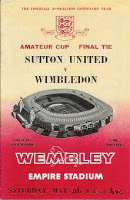
Programme for 1963 Amateur Cup Final at Wembley

Programme for 1963 Amateur Cup Final at Wembley

O’Hagan’s feat was rivalled in May 1963 by another Irishman, Eddie Reynolds from Belfast, as his four headed goals ensured victory by Wimbledon FC over Sutton United in the FA Amateur Cup, 4-2. His performance earned him a Northern Ireland cap against Scotland.

Share this:

  • Share on Facebook (Opens in new window) Facebook
  • Share on X (Opens in new window) X
Like Loading...
MONAGHAN NEWS SPORT AghabogAmateur CupConnacht FinalEddie ReynoldsGAALeitrimLondon GaelsMonaghanShane MulliganSutton UnitedWembley GamesWimbledon FC 2 Comments

A NOT SO FRIENDLY MATCH

29/06/2013 by borderroamer
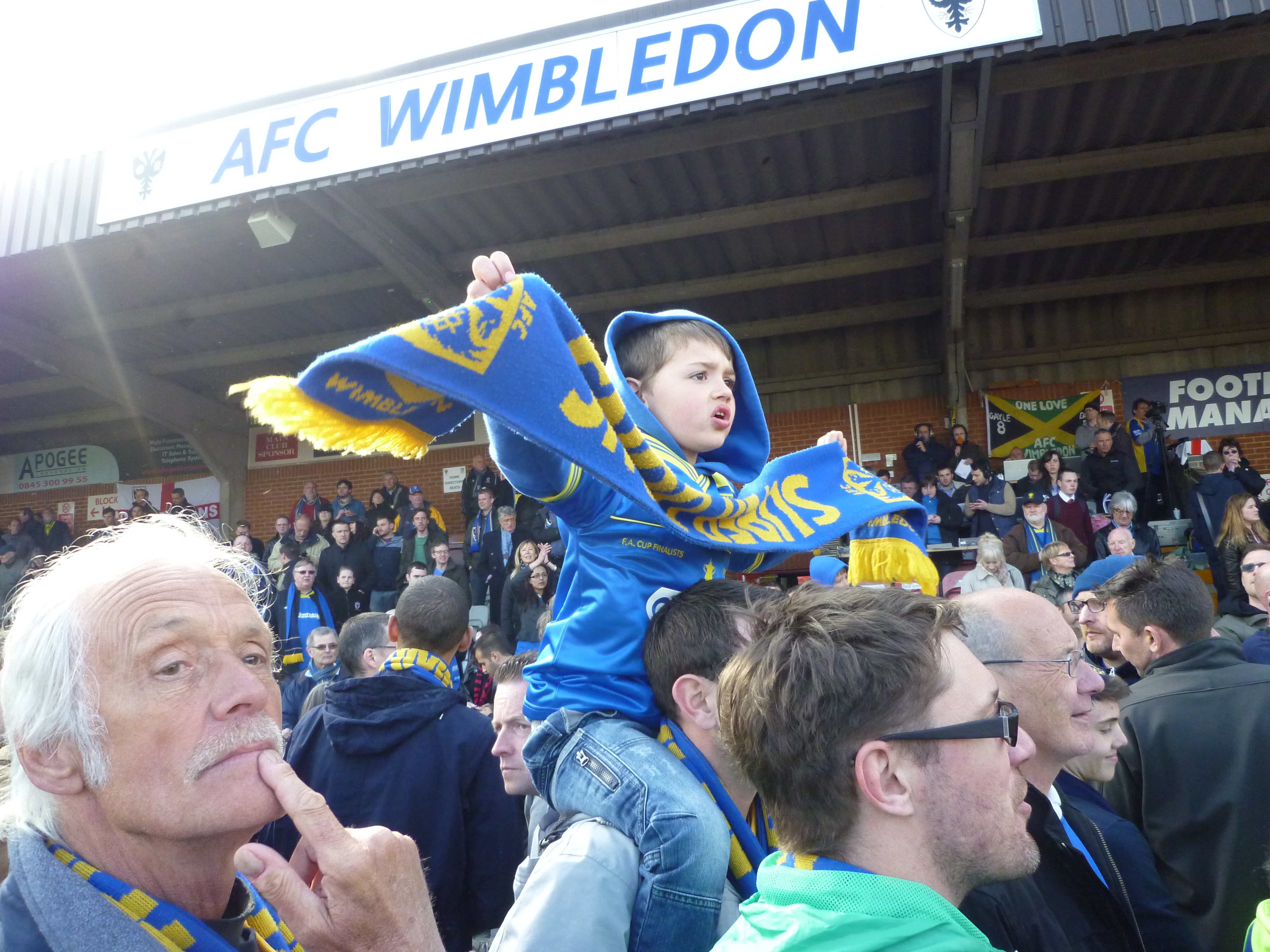
Final match win v Fleetwood assures League status

Final match win v Fleetwood assured League status

We are Wimbledon: see my blog last December to know the reasons why. I am a founder member of the Dons Trust in 2002, a decision which led to the formation of AFC Wimbledon, a team that started off in the Combined Counties League and (re-)entered the Football league in 2011/12. We just about survived in League Two last season: see my article AFCW: We’re Staying Up! in April.

AFC Wimbledon 2 Fleetwood Town 1

Spot the Ball: AFC Wimbledon 2 Fleetwood Town 1

On 28th May 2002, the Football Association backed a three-man independent commission decision to allow Wimbledon F.C. to relocate 56 miles North to the new town of Milton Keynes in Buckinghamshire (otherwise known as roundabouts, like Craigavon).  The Wimbledon chairman at the time Charles Koppel claimed such a move was necessary in order to prevent the club from folding. This franchising of a club was unprecedented in English football. By moving so far from their original base in London SW19, Wimbledon F.C. were cutting all ties with the area. Although the club was unable to move to Milton Keynes for over a year, their small band of loyal fans stayed put.

On 30th May 2002 a group of supporters led by Kris Stewart and fellow founding members Marc Jones and Trevor Williams, announced plans to create a new club , AFC Wimbledon.  On 13th June 2002, a new manager, kit, crest and ground (shared with Kingstonian FC in Norbiton, in the nearby Borough of Kingston-on-Thames and on the 131 bus route from Wimbledon) were unveiled to fans and the media at Wimbledon Community Centre.

In order to assemble a competitive team at short notice, AFC Wimbledon held player trials on 29th June 2002 on Wimbledon Common, open to any unattached player who felt he was good enough to try out for the team. The event attracted 230 players, from whom the club’s squad for their inaugural season was chosen, under the captaincy of former Chelsea player Joe Sheerin, who ended up at Leatherhead in 2006. Forward Kevin Cooper (no relation to my friend in Belfast!) was the player of the year.

In March 2003 the Dons Trust members voted to purchase part of the lease for the ground at Kingsmeadow and in June 2003 the contract for buying the lease to the stadium was agreed with the owner Rajesh Khosla. £2.4 million needed to be raised, and a share issue in which I was an investor raised over one-third of the required amount. Further amounts were raised through a bond issue (in which I also invested) and a commercial loan was organised through Barclays Bank, not an easy task for a completely new entity which had no financial record.

CEO AFC Wimbledon Erik Samuelson (on right)

CEO AFC Wimbledon Erik Samuelson (on right)

AFCW PLC was placed under the ownership of The Dons Trust, a supporters’ group which is pledged to retain majority control of that ownership. The Dons Trust is an Industrial and Provident Society registered with the Financial Services Authority as “Wimbledon Football Club Supporters’ Society Limited”. The Chief Executive of AFC Wimbledon (previously Finance Director) is longstanding fan Erik Samuelson, a retired accountant with PwC, whose influence and experience was crucial in securing the commercial loan. In an online question and answer session, he explained how the finances worked from the start:-

“We paid £2.4m for the stadium – remember it was a non-league stadium, although it had already been upgraded for Football Conference national standards in line with the rules in place 11 years ago. We paid for it in stages:

  • We created an intermediate holding company called AFCW PLC and issued shares.  After expenses this raised about £1.25m;
  • We couldn’t get anyone to lend us the balance but fortunately for us the people who sold us the stadium agreed that they should become our creditors and we paid them a high, but not usurious, rate of interest on the debt;
  • So we decided to issue a Bond.  These were for four years, but capable of being extended (and most have done so) and you could select your own interest rate, subject to a cap.  We raised about £300k.  About half the Bond holders chose 0% and the average rate paid was about 2%, a nice cheap loan;
  • Then we decided to spend some of our five year ST money on reducing the debt.  Spending next year’s income can be a very risky option but we knew we had a pretty certain stream of income coming from the Trust’s fundraising and so it was set aside for the purpose of replacing the annual ST income we’d spent on repaying some debt.  In effect, we were spending the next five years’ fundraising on reducing the debt;
  • Then we, astonishingly, managed to get a bank loan which cleared the final tranche of the debt on purchase.  We make the capital repayments on the loan from the Trust’s fundraising and the interest is paid by the operating company.

As for subsequent fundraising, we’ve self funded substantial improvements to our stadium to make it Football League compliant (plus about £600k of Football Stadia Improvement Fund grants). For our hoped-for new stadium* we expect most of it to be paid for by enabling development but we are also changing our constitution to allow us to issue Community Shares in the Trust, hopefully qualifying as an Enterprise Investment Scheme, so that investors get 30% tax relief up front on their investment. Supporters Direct have been a great help in pulling the Community Shares plans together.” 

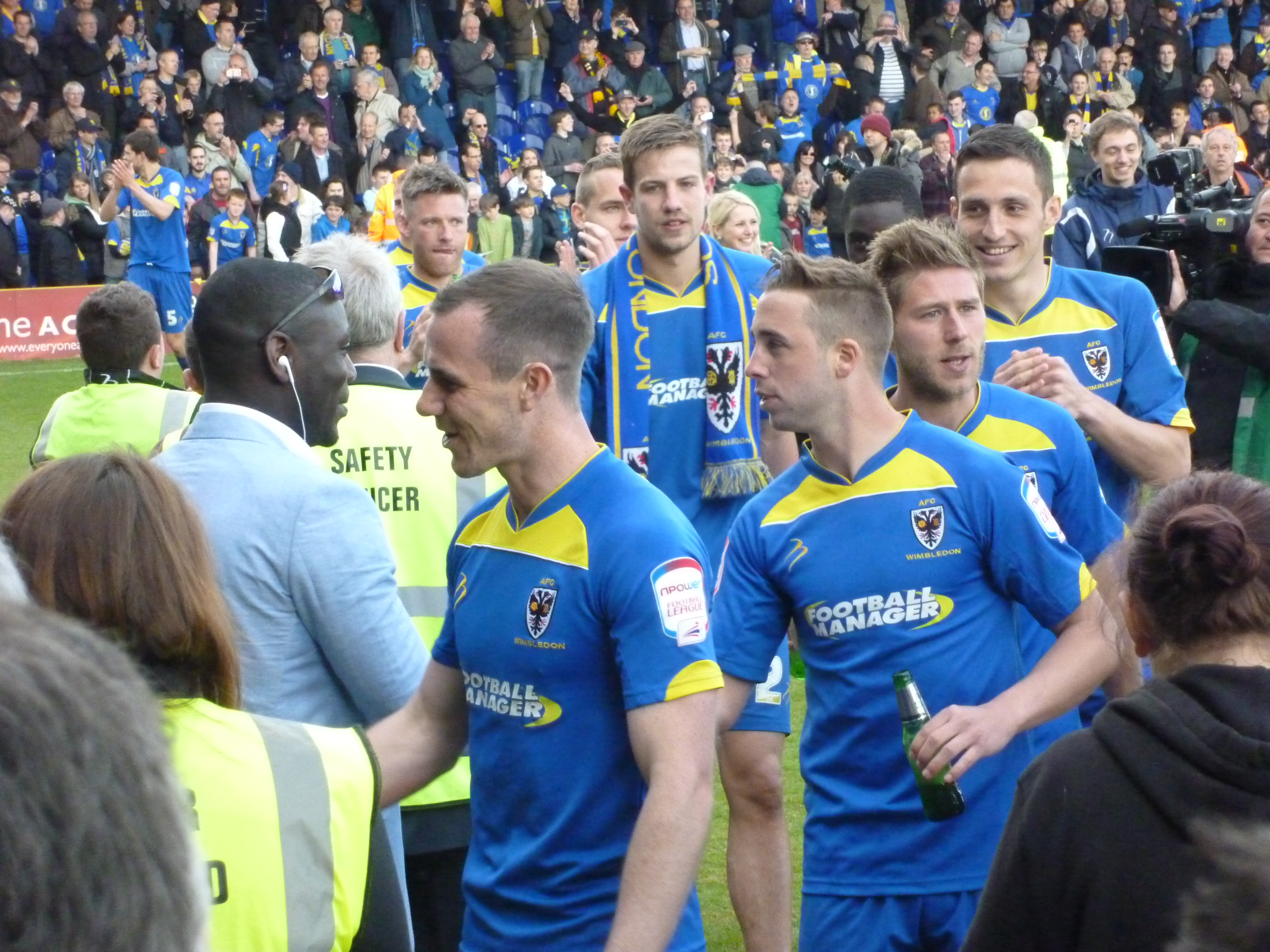
Celebrations as League Status Assured for 2013/14

Celebrations as League Status Assured for 2013/14

*The plan for a new stadium is based on proposals for the redevelopment of the greyhound stadium at Plough Lane in Wimbledon, alongside what was once the home of Wimbledon FC and is now a housing estate. Remember what happened to Glenmalure Park and now Shamrock Rovers FC are in a brand new stadium in Tallaght, with the support of South Dublin County Council? This afternoon I passed by the Glenmalure Park memorial at Milltown and memories came flooding back, just as they do whenever I am near Plough Lane.

At Glenmalure Park Shamrock Rovers FC memorial today

At Glenmalure Park Shamrock Rovers FC memorial today

I am one of the AFC Wimbledon five year season ticket holders, in the front row of the main stand near the middle of the pitch. If I cannot make it to a home match, the Club can re-sell my seat and gain added income, as well as reclaiming the VAT on my ticket. Given the level of my commitment to AFC Wimbledon, you can now see why I am opposed to the visit of Franchise FC to my other “home patch” at UCD in Belfield, where I went to University in the first year of the Arts/Commerce Block and just a short walk away from where I am typing this article in the family home.

So once again I will say it: UCD AFC are entitled to play whoever they choose. But let’s not give Franchise FC the traditional Irish “Céad Mile Fáilte” when they arrive in Dublin for pre-season training. To the FAI and Airtricity League my message is this: Franchise FC were supposed to be coming to Dublin at one stage (or even Belfast) and a few prominent businessmen and commentators were doing their best to encourage a move across the Irish Sea to set up the “Dublin Dons” in the English Premiership. Wisely, in my view, the FAI said “NO” but that did not stop a certain pop music executive now property developer from setting up a soccer franchise in Milton Keynes, with the blessing of the Football Association. They took away our Club and eleven years on, we have given them the answer.

Mascot Haydon the Womble

Mascot Haydon the Womble

Share this:

  • Share on Facebook (Opens in new window) Facebook
  • Share on X (Opens in new window) X
Like Loading...
NEWS SPORT AFC WimbledonDublinFranchise FCGlenmalure ParkKingsmeadowPlough LaneShamrock RoversUCD AFC Leave a comment

FRANCHISE FC UNWELCOME IN DUBLIN

28/06/2013 by borderroamer
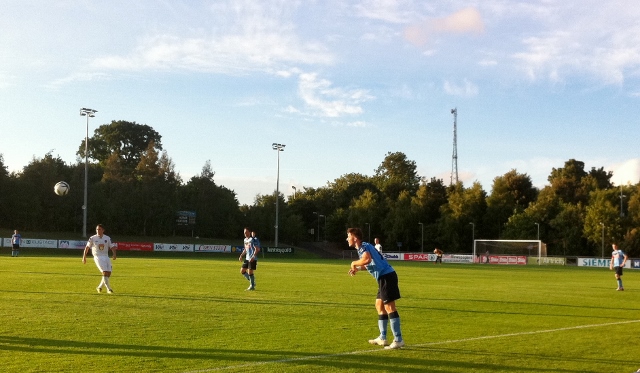
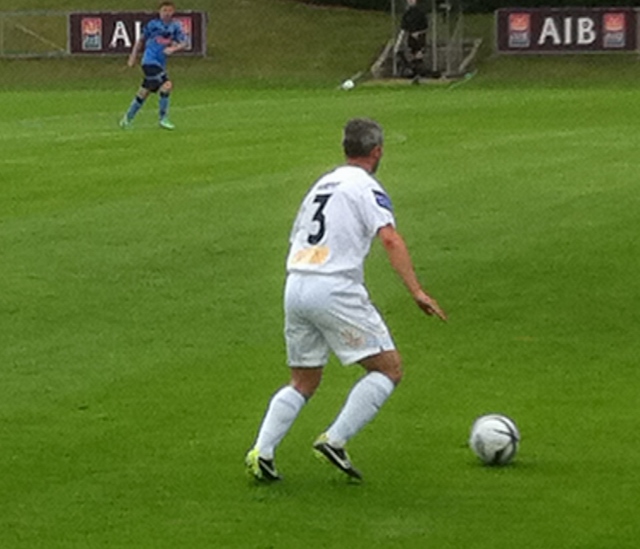
UCD v Cork City

UCD v Cork City

UCD 3 CORK CITY 0 AIRTRICITY LEAGUE PREMIER DIVISION

I left the Belfield Bowl delighted to have seen a College victory over the Leesiders, having kept a clean sheet in the process. After the final whistle had blown, however, the PA announcer said something that made me seethe with rage. He was announcing a series of three mid-season friendly games to be hosted in the coming fortnight by the UCD Club.

UCD v Cork City

UCD v Cork City

League One side Peterborough are first up next Wednesday, 3rd July. But then came the dreaded words “MK Dons”, known to us AFC Wimbledon fans and many other true football supporters simply by the name “Franchise FC”. The match is due to take place at Belfield on Tuesday 9th July and the third one in the series is against Aberdeen (July 16th), coincidentally nicknamed the Dons and in my view the only other Club worthy of that sobriquet apart from AFC Wimbledon. To see how strongly I feel about the issue, see my post in December “We are Wimbledon” when I went to Kingsmeadow to watch the Dons playing Franchise FC in the FA Cup, rather than go to a place sixty miles from London.

UCD v Cork City

UCD v Cork City

I’m sure UCD badly need the revenue from these games. There were only a few hundred fans at tonight’s match, about fifty of them following Cork City. As the away team came off the pitch, their followers chanted slogans at them about being “rubbish” and not fit to wear the club shirt.

So I do not want to advise a total boycott of the game. Every Euro that comes into the UCD Club is I’m sure put to good use. But what I will say is that should I decide to attend Belfield that night, I will be asking all true soccer supporters, including my friends from Shamrock Rovers who I met on the Milltown 25 walk, please do nothing to give this Franchise Club a welcome in our capital city.

For those who do not know my background, I am a UCD Arts Graduate (1973) having arrived back in Dublin in 1967 from Wimbledon, where I began my support of the Dons in their amateur Isthmian League days when Irishman Eddie Reynolds was my hero. During my time at College I was a Shamrock Rovers supporter, (Eddie Bailham left Rovers and went to Wimbledon) having discovered their Glenmalure Park ground backed onto the sports pitches where we played rugby at Gonzaga College.

UCD Rugby Club Centenary Wall

UCD Rugby Club Centenary Wall

One of the stars of the Zaga team of that era was Tony Ensor who played for Ireland as full back. By coincidence I spotted his name at half time on the UCD Rugby Club Centenary Wall which has been added to one side of the changing rooms. I  was told it had gone up only in the past month. Other Gonzaga greats on it include Peter Sutherland, Barry Bresnihan and Kevin McLaughlin.

Share this:

  • Share on Facebook (Opens in new window) Facebook
  • Share on X (Opens in new window) X
Like Loading...
NEWS SPORT Aberdeen FCAFC WimbledonBelfieldDublinFranchise FCMK DonsPeterborough FCShamrock RoversUCD AFC Leave a comment

LIONS RECYCLE USED SPECTACLES

27/06/2013 by borderroamer

RecycleFSColor

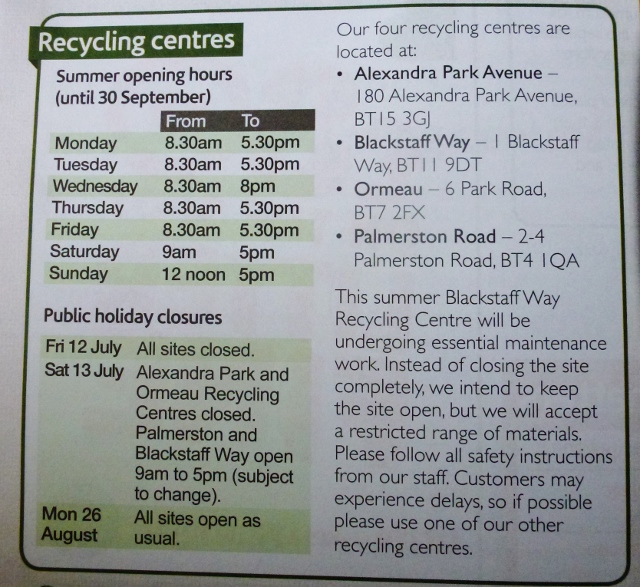
Have you old or unused spectacles you no longer need? Belfast Lions Club has teamed up with Belfast City Council and Extern as well as ArtsEkta, a social enterprise based in Belfast, to recycle the glasses. They are now being collected in specially provided blue bins at the Council’s four main recycling deports covering North, South, East and West Belfast, at Alexandra Park Avenue, Ormeau, Palmerstown Road and Blackstaff Way.

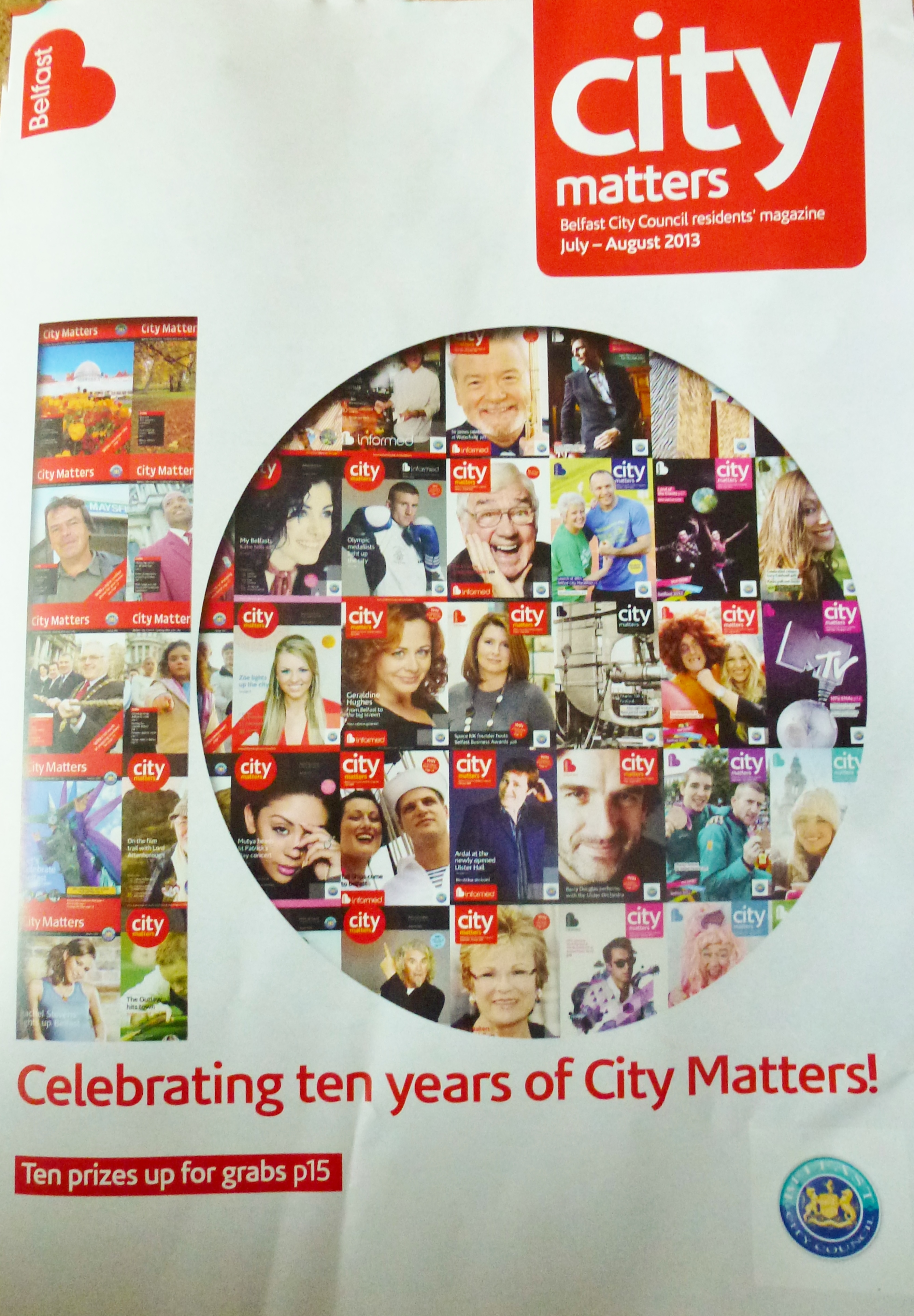
Belfast City Council Magazine: City Matters

Belfast City Council Magazine: City Matters

 lionsspecsThe latest edition of the Council’s City Matters magazine contains details of the location of the depots and the opening hours. Perhaps you know an optician who would like to collect the spectacles and organise the scheme locally, so that the glasses (without the cases) can be passed on to the Council for disposal in the blue bins provided. The charity Extern will collect the spectacles and put them into boxes. They will then be sent to a central depot in England run by Chichester Lions Club. From there, they will be sent for reuse in countries in Africa and in India.

Belfast Lions Club: Recycle your Spectacles

Belfast Lions Club: Recycle your Spectacles

RECYCLE YOUR SPECS

You can now recycle your old glasses at any of our (Belfast City Council) recycling centres.

We’ve teamed up with Belfast Lions Club, local charity Extern and a Belfast-based social enterprise ArtsEkta to send unwanted spectacles to developing countries. The glasses are collected from our recycling centres and sorted into various categories. They are then distributed to eye camps in India, Africa and Eastern Europe, where they are matched to the right patient. The (Chichester) Lions Clubs have run this scheme for over thirty years and last year they sent over 300,000 pairs of spectacles for reuse at eye camps.     LIONSweserve

i: For more information on this and other projects or to get involved with Belfast Lions Club, please call Michael Fisher on 9066 2945.

Belfast City Council Recycling Centres

Belfast City Council Recycling Centres

These schemes operate through Lions Clubs in many parts of the UK and Ireland. When I passed through the town in March I noticed that Southend-on-Sea Lions Club had linked up with the local Council to provide a box at its headquarters where unused spectacles could be recycled. Perhaps we will be able to arrange something similar with the City fathers in Belfast. 

Southend-on-Sea Lions Club Recycling Scheme

Southend-on-Sea Lions Club Recycling Scheme

Share this:

  • Share on Facebook (Opens in new window) Facebook
  • Share on X (Opens in new window) X
Like Loading...
NEWS UNCATEGORISED ArtsEktaBelfast City CouncilBelfast Lions ClubCity MattersExternrecyclingspectacles Leave a comment

ROYAL VISITORS IN CALEDON

26/06/2013 by borderroamer
Arrival of Prince of Wales & Duchess of Cornwall in Caledon

Arrival of Prince of Wales & Duchess of Cornwall in Caledon

The border village of Caledon in County Tyrone was looking its best as it welcomed a royal visitor, His Royal Highness the Prince of Wales who is on a two-day visit to Northern Ireland along with Her Royal Highness the Duchess of Cornwall.  It’s a while since any member of the British royal family came here, although the area is the seat of the 7th Earl of Caledon, Lord Lieutenant for County Armagh, which lies on the other side of the River Blackwater and where some of his 5000 acre estate is situated. It adjoins two other estates, Tynan Abbey (Armagh) and Castle Leslie across the border in Glaslough, County Monaghan. Sir Shane Leslie and his parents would have been in contact with their Caledon neighbours, as well as the Stronges. Sir John Leslie arrived to meet the royal visitors and remind them of his family’s connection with Winston Churchill.

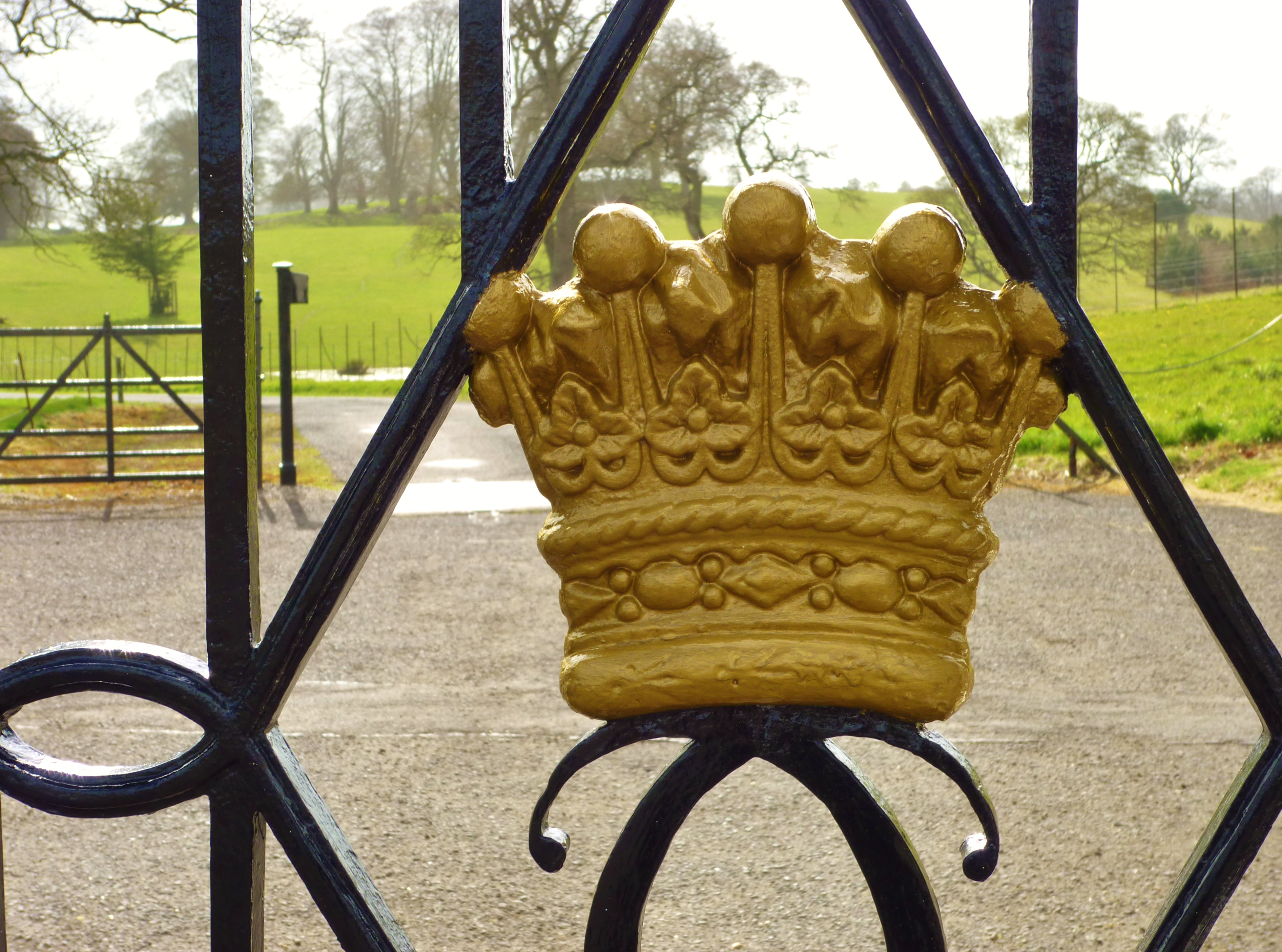
Detail on Gate

Detail on Gate

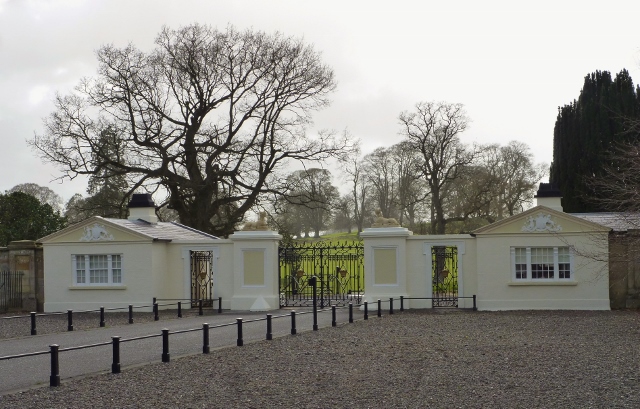
Entrance to Caledon Castle

Entrance to Caledon Castle

Tynan Abbey was destroyed in an IRA gun and bomb attack on January 21st 1981. The elderly Sir Norman Stronge (86), a former Stormont Speaker, Ulster Unionist politician and former British Army officer, was shot dead along with his only son James, a former Grenadier Guards officer and Unionist MP who was also an RUC Reservist.

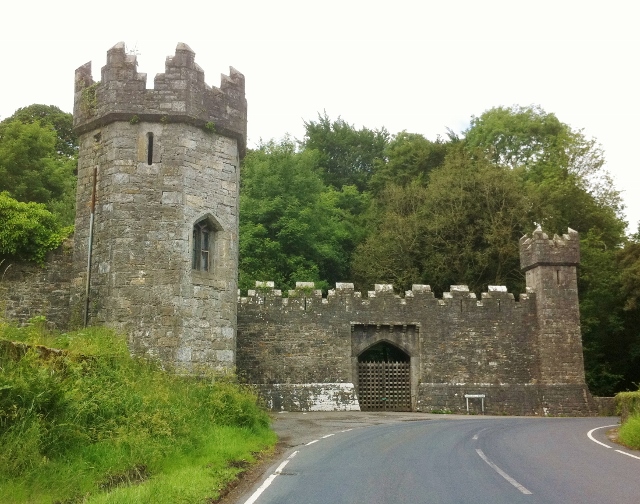
Entrance to Tynan Abbey estate

Entrance to Tynan Abbey estate

There are other reminders that this was one of the areas targeted by the IRA during the “troubles”. In the cemetery beside St John’s parish church, I came across the grave of an RUC Reservist Joshua Willis. The 35 year-old was killed when an IRA landmine containing at least 1000 lbs of explosives was detonated as his armoured patrol car passed along the Killylea Road outside Armagh. Two of his colleagues also died in the attack in July 1990. There was a fourth victim who was passing with a companion in another car, a Catholic nun, Sr Catherine Dunne of the St Louis sisters. She was based at Middletown. The IRA said the nun was the victim of ”unforeseen and fluke circumstances”. One of the nuns from Middletown was at a reception involving community groups who met the VIPs.

Grave of Reserve Constable Joshua Willis

Grave of Reserve Constable Joshua Willis

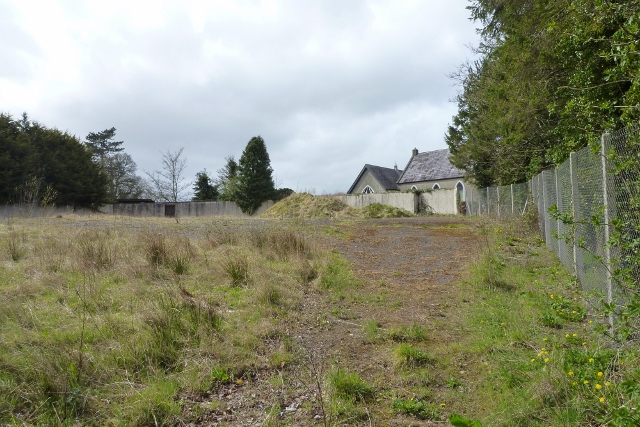
Not far away on the road towards Aughnacloy there is a memorial erected by local people in memory of the three policemen who were killed. It is close to the site of the former RUC/PSNI barracks, which has now been demolished. The site has now been sold for redevelopment.

Site of former Police Station

Site of former Police Station

Memorial to RUC Reservists

Memorial to RUC Reservists

Prince Charles however was probably concentrating on other parts of this former mill village, where an extensive regeneration project has been carried out over the past few years, led by an enthusiastic committee. I wrote about the work of Caledon Regeneration project last April.

Caledon Regeneration Partnership was formed in 1994 to take forward a planned social, economic and environmental regeneration strategy for the County Armagh village. It is made up of representatives from the local community, local authority and Caledon Estates Company, which has an office in the main street.

Caledon Post Office, Main Street

Caledon Post Office, Main Street

One of the projects being undertaken is the restoration of a beam engine and engine house. Last year a total of £220,000 in funding was secured to finance the first phase.  It is hoped that the engine will eventually be restored to a fully operational state, and become a tourist attraction for the area. The unique piece of equipment dates back to the early 1830s and is one of the earliest surviving steam engines in Ireland. It was once used to power the Caledon Flour Mill and then Caledon Woollen Mills.

Beam Engine, Caledon

Beam Engine, Caledon

In 1984 the village was designated as a Conservation Area and six years later, this was reviewed and the boundary extended. DoE (NI) Planning Service produced a Conservation Area Guide to accompany the original designation, which included design guidance intended to help protect the historic fabric of the village. In November 2001 a unique restoration scheme was officially opened by then Social Development Minister Nigel Dodds of the DUP.

Mill Terrace, Caledon

Mill Terrace, Caledon

The £500,000 project involved the sympathetic restoration of a historic terrace of former mill houses and the implementation of an environmental improvement scheme in the Mill Street area of Caledon. Speaking at the opening ceremony, Mr Dodds said:-

“Caledon has a host of unique and beautiful buildings which represent an important part of our architectural heritage. The restoration work and the environmental improvements have made a very significant impact on the appearance and life of the village. The regeneration of towns and villages across Northern Ireland is an important priority for the Department for Social Development. The Mill Street project is an example of what can be achieved through partnerships between local communities, statutory agencies and funding bodies.”

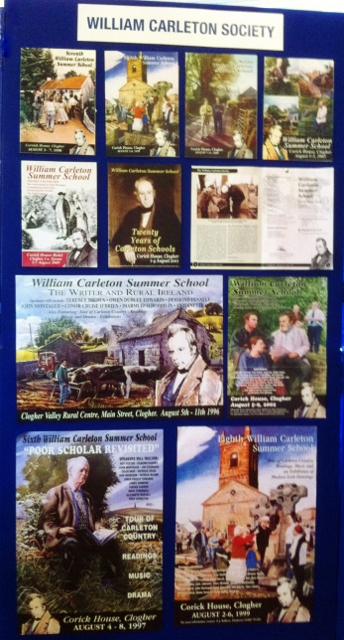
William Carleton Society display

William Carleton Society display

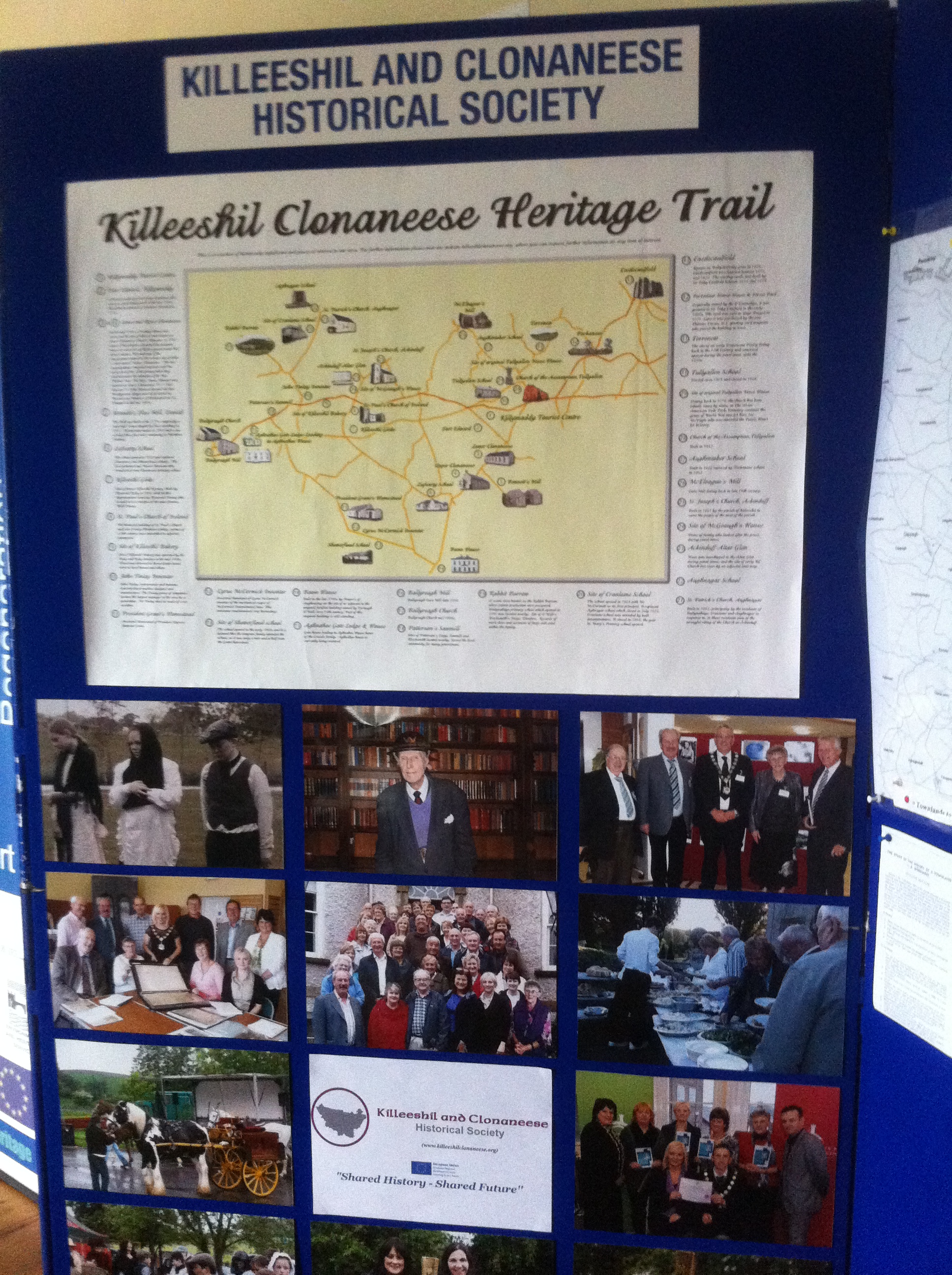
Killeeshil & Clonaneese Historical Society Display

Killeeshil & Clonaneese Historical Society Display

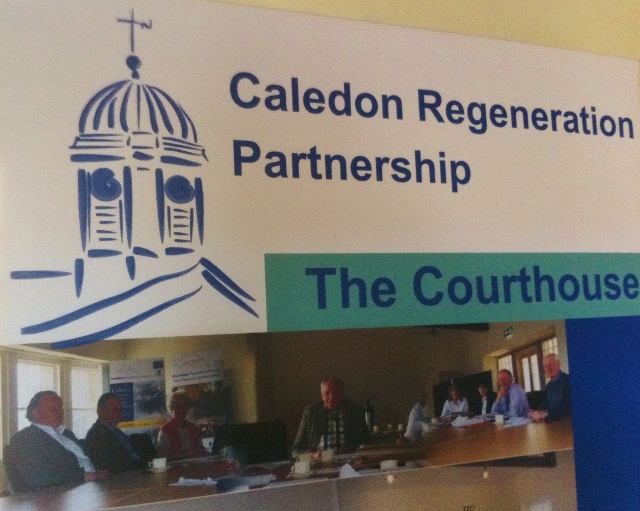
Caledon Regeneration Partnership

Caledon Regeneration Partnership

William Carleton Society & Donaghmore Historical Society

William Carleton Society & Donaghmore Historical Society

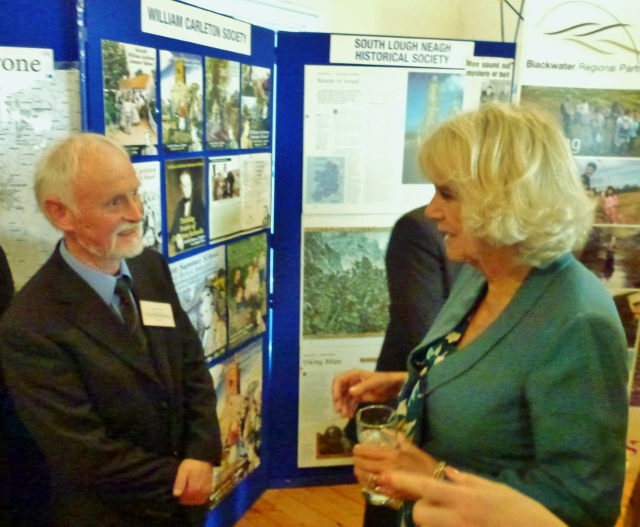
Caledon Regeneration is one of five groups taking part in the “Shared History, Shared Future” project under the Peace III programme run by Dungannon and South Tyrone Borough Council. They had a display at the Courthouse along with the William Carleton Society, Killeeshil and Clonaneese Historical Society, Donaghmore Historical Society and South Lough Neagh Historical Society, which is working on a project about the Ulster Canal. The historian Jack Johnston President of the William Carleton Society represented the group at the Caledon event along with Patron Sam Craig and Summer School Director Michael Fisher.

William Carleton Society Patron Sam Craig & Duchess of Cornwall

William Carleton Society Patron Sam Craig & Duchess of Cornwall

The Northern Ireland Office news release:-

On the second day of engagements (in Northern Ireland), TRH The Prince of Wales & The Duchess of Cornwall this morning visited the historical village of Caledon.  They were accompanied by Lord Caledon and his wife, Lady Caledon.

TRHs visited Mill Street Cottage and they met with the owners of one of the refurbished cottages, Denver and Michelle Irvine.  This is one of the first projects to be completed by the regeneration scheme which had lain idle since the early 1970s.  The terraced two-story stone cottage, which was constructed around 1850 to house mill workers and their families, received Grade B1 listing in 1983 and are now the pride of this lovely village.

The Prince of Wales and the Duchess of Cornwall then moved to the Beam Engine and Engine House which dates from the early 1830s and once powered a flour mill and subsequently a woollen mill.  They are now all that remain of what was once a massive mill complex.  TRHs were then presented to members of the Caledon Regeneration Partnership by the founding member, William Beattie.  Following a short overview of the Beam Engine Conservation project, TRHs had the opportunity to view the Beam Engine.  This engine is one of only eight beam engines to survive in Ireland, a rare example of 19th century steam engine technology

Prior to departing the Beam House, William Beattie  invited HRH The Prince of Wales to unveil a plaque to officially open the complex.

TRHs then made the short journey to the centrepiece of the village – the Court House and Clock Tower.  On arrival at the Courthouse they had the opportunity to meet with children and teachers from St Joseph’s and Churchill Primary Schools, as well as representatives of the Blackwater Regional Partnership, South Tyrone Historical Group, local church leaders and members of the Women’s Institute.

Prior to farewells, TRH The Prince of Wales and The Duchess of Cornwall were presented with a Food Hamper by two local school children.

Share this:

  • Share on Facebook (Opens in new window) Facebook
  • Share on X (Opens in new window) X
Like Loading...
CARLETON NEWS UNCATEGORISED CaledonCaledon Regeneration PartnershipDonaghmore Historical SocietyGlasloughKilleeshil & Clonaneese Historical SocietyPrince of WalesSouth Lough Neagh Historical SocietyTynanTyroneWilliam Carleton Society 3 Comments

ORANGE BANNERETTE IN TYRONE

25/06/2013 by borderroamer
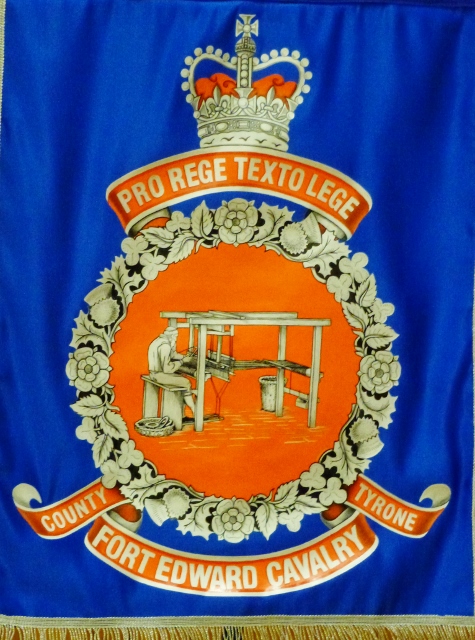
Fort Edward Bannerette, Aughintober LOL 37

Fort Edward Bannerette, Aughintober LOL 38

In April I wrote about the banners and sashes from orange and green traditions on display in an interesting exhibition “Walking the Colours” at Monaghan County Museum until the end of July. Tonight there was an unveiling of a new bannerette at Aughintober orange hall near Castlecaulfield in County Tyrone. The News Letter reports that it uses the description of the original banner dedicated to a former local lodge, Fort Edward Cavalry 677, which was formed from a local Yeomanry unit in 1798. The bannerette was commissioned by Raymond Cuddy, a pig farmer, who is a long-standing member of Aughintober LOL 38  and a past worshipful master and secretary, who gave some 20 years’ service as an officer with the lodge. The unveiling was carried out by the Grand Master of the Grand Orange Lodge of Ireland, Edward Stevenson.

Aughintober Orange Hall

Aughintober Orange Hall

The presentation of Fort Edward Cavalry’s original banner on July 12 1798 was recorded in the News Letter. This was discovered by Raymond Cuddy and fellow historian Jonathan Gray, who was born in Belfast but now lives in Castlecaulfield, following extensive research carried out over the past year. At tonight’s unfurling, which took  place in Aughintober Orange Hall, both Raymond and Jonathan Gray presented a talk on the Fort Edward Cavalry, tracing their origins in the Clonaneese volunteers, their relationship with Lower Clonaneese Presbyterian Church and their legacy in this area. The talk included the military career of their Captain, Waterhouse Crymble Lindsay. Raymond, who along with Jonathan is a member of Killeeshil and Clonaneese Historical Society, has plans to write a book about the legacy of the local lodge. The talk will be repeated next Wednesday 3rd July at 7:30pm at Ranfurly House in Dungannon.

Although tonight’s event is not part of the same programme, the Killeeshil and Clonaneese Historical Society is one of five groups including the William Carleton Society involved in the “Shared History, Shared Future” project supported by Dungannon and South Tyrone Borough Council. It recently held an open day at a former flax mill at Ennish near Lower Clonaneese church.

Bannerette unveiled by Grand Master

Bannerette unveiled by Grand Master

Share this:

  • Share on Facebook (Opens in new window) Facebook
  • Share on X (Opens in new window) X
Like Loading...
CARLETON MILITARY NEWS Aughintober orange hallCastlecaulfieldEdward StevensonFort Edward CavalryJonathan GrayKilleeshil & Clonaneese Historical SocietyRaymond CuddyTyrone Leave a comment

WIMBLEDON

24/06/2013 by borderroamer
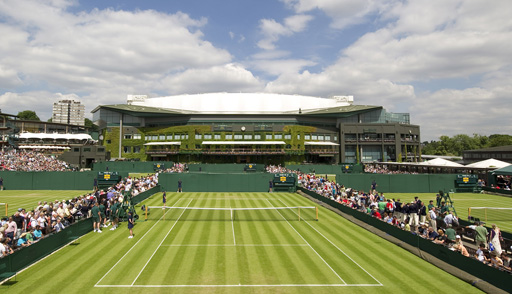
All England Lawn Tennis & Croquet Club, Wimbledon: Photo Credit: AELTC / Professional Sport / Jon Buckle

All England Lawn Tennis & Croquet Club: Photo Credit: AELTC / Professional Sport / Jon Buckle

Wimbledon: it’s that time of year again! Wimbledon is everywhere in the media, including news bulletins on television and radio and of course in the newspapers. It’s not the football club (now AFC Wimbledon, based at Kingsmeadow near Kingston-on-Thames) but rather the tennis that carries the name of this famous London suburb worldwide.

Already on day one of the Championships there has been a major shock, with Rafael Nadal of Spain, the number five seed, being put out 7-6 (7-4) 7-6 (10-8) 6-4 in the first round of the mens’ singles by a Belgian, Steve Darcis, ranked number 135. The defeat of  Nadal potentially gives Britain’s Andy Murray an easier route to the final as they were in the same side of the draw. Murray, seeded second, saw off Germany’s Benjamin Becker 6-4 6-3 6-2 on the Centre Court.

The Club was founded on 23rd July 1868 as The All England Croquet Club. Its first location was at a field alongside the railway line at Worple Road in Wimbledon, close to where I used to live. In my days there as a schoolboy I could cycle or walk to the new location at Church Road and in the late afternoon, under-16s could gain admission for half a crown (2s 6d). After 6pm or so, some fans would be leaving the centre court or number one court and you could get their seats for the rest of the evening, thanks to some friendly commissionaires.

The name was changed in 1877 to The All England Croquet and Lawn Tennis Club and in 1899 to The All England Lawn Tennis and Croquet Club. In 1922 it moved to hurch Road. As the vintage London Transport Museum posters show, this site is closer to Southfields station rather than the terminus of Wimbledon on the District Line of the Underground, which in this part of South London is actually overground!. On 1st August 2011 the Club was converted into a company limited by guarantee under the name The All England Lawn Tennis & Croquet Club Limited. The activities of the Club, as a private members’ club, are conducted separately from The Championships.

Plaque unveiled at Worple Road June 2012: Photo Wimbledon Guardian

Plaque unveiled at Worple Road June 2012: Photo Wimbledon Guardian

Last year a plaque was unveiled to celebrate the holding of the first Wimbledon Championships in 1877, as well as the 1908 Olympic Tennis event, at the former home of the Club in Worple Road. The site is now used as playing fields for Wimbledon High School.

Philip Brook, Chairman of the All England Club, said: “As our former home, Worple Road occupies a special place of affection in the All England Club’s history. The return of the Olympic tennis for the first time since 1908 offered us the perfect opportunity to celebrate our heritage at Worple Road and we are delighted to have commissioned this new plaque to tell that story”. Heather Hanbury, Headmistress of Wimbledon High School, said: “We are immensely proud of our connection with the history of tennis in Wimbledon and with the Olympics in this special year (2012). Watching our girls play on the site, 104 years on, reminds us how lucky we are”.

The inscription for the plaque reads:

WIMBLEDON HIGH SCHOOL PLAYING FIELDS

THIS SITE AND PAVILION WERE THE GROUNDS OF THE ALL ENGLAND LAWN TENNIS AND CROQUET CLUB FROM 1869 UNTIL THE CLUB MOVED TO THE PRESENT SITE IN CHURCH ROAD IN 1922. THE FIRST LAWN TENNIS CHAMPIONSHIP IN 1877 WAS HELD HERE, AS WAS THE LAWN TENNIS EVENT OF THE 1908 OLYMPIC GAMES.

The Wimbledon Guardian compared the championships then and now:-

THEN AND NOW:-

ENTRANCE FEE TO MEN’S FINAL   = 1 shilling (1887) =£3,200 (2012)

PRIZE FUND FOR MEN’S  =12 guineas (1887) =£1,600,000 (2013)

ATTENDANCE AT CHAMPIONSHIPS  =60,000 (estimated, 1913-1921) =484,805 (2012)

LENGTH OF MEN’S FINAL =48 minutes (1887) =2 hours and 29 minutes (2011)

ATTENDANCE AT FINAL =200 (1887) =15,000 (2012)

WHO COULD PLAY? =Men singles only (1887) =Everybody including younger players (2013)

DRESS CODE =White long sleeves for men and corsets for women (19th century) =Short skirts and sleeves all allowed. A lot of leg always on show (2013)

One other interesting statistic: Wimbledon is the largest single annual sporting catering operation carried out in Europe, employing 1800 staff. Strawberries and cream are not the only delicacy on the menu. A few years ago when she was a student at Newcastle-on-Tyne my daughter worked on a stand selling gourmet hot dogs. Two of my neighbours from Belfast were attending the Championships and bumped into her there among the crowds. On another occasion I walked with her up Wimbledon Hill and down to Church Road on the route I used to go as a schoolboy and accompanied her to the gates near the Centre Court as she began her shift. It certainly brought back memories of those days fifty years ago when I could watch some of the great players in action and when Britain’s star player was Ann Haydon-Jones, closely followed by Virginia Wade. Haydon-Jones won the French Open in 1966. Margaret Court from Australia won the women’s singles title in 1963.

Average quantities supplied by Championships’ caterers FMC.

  • 300,000 cups of tea and coffee
  • 250,000 bottles of water
  • 207,000 meals served
  • 200,000 glasses of Pimm’s
  • 190,000 sandwiches
  • 150,000 bath buns, scones, pasties and doughnuts
  • 135,000 ice creams
  • 130,000 lunches are served
  • 100,000 pints of draught beer and lager
  • 60,000 Dutchees
  • 40,000 char-grilled meals served
  • 32,000 portions of fish and chips
  • 30,000 litres of milk
  • 28,000 kg (112,000 punnets) of English strawberries
  • 25,000 bottles of champagne
  • 23,000 bananas
  • 20,000 portions of frozen yoghurt
  • 12,000 kg of poached salmon and smoked salmon
  • 7,000 litres of dairy cream
  • 6,000 stone baked pizzas

Share this:

  • Share on Facebook (Opens in new window) Facebook
  • Share on X (Opens in new window) X
Like Loading...
NEWS SPORT AELTCAFC WimbledonSouthfieldsStrawberries & CreamtennisWimbledonWorple Road Leave a comment

Post navigation

← Older posts
Newer posts →

Recent Posts

  • DESMOND FISHER 1920-2014 30/12/2020
  • GAJ AWARDS 2020 24/12/2020
  • COVID-19 REPORTING AWARD 20/12/2020
  • HAPPY 100TH BIRTHDAY 31/03/2020
  • NUJ VOTING REMINDER 26/01/2020
  • WORLD PRESS FREEDOM 20/01/2020
  • REMINDER TO VOTE 18/01/2020
  • BOND, WE’VE BEEN EXPECTING YOU! 17/01/2020
  • NUJ MEMBERS IN IRELAND 09/01/2020
  • NUJ BLAST FROM THE PAST 08/01/2020

Archives

  • Dec 2020 (3)
  • Mar 2020 (1)
  • Jan 2020 (13)
  • Oct 2019 (10)
  • Sep 2019 (30)
  • Aug 2019 (31)
  • Jun 2019 (2)
  • May 2019 (1)
  • Sep 2018 (1)
  • Jul 2017 (1)
  • Dec 2016 (12)
  • Sep 2016 (2)
  • Aug 2016 (5)
  • Jul 2016 (5)
  • Jun 2016 (10)
  • May 2016 (15)
  • Apr 2016 (19)
  • Mar 2016 (14)
  • Jan 2016 (26)
  • Dec 2015 (2)
  • Aug 2015 (1)
  • Jul 2015 (30)
  • Jun 2015 (30)
  • May 2015 (32)
  • Apr 2015 (30)
  • Mar 2015 (31)
  • Feb 2015 (28)
  • Jan 2015 (31)
  • Dec 2014 (31)
  • Nov 2014 (14)
  • Mar 2014 (2)
  • Feb 2014 (2)
  • Jan 2014 (31)
  • Dec 2013 (19)
  • Nov 2013 (17)
  • Oct 2013 (29)
  • Sep 2013 (30)
  • Aug 2013 (31)
  • Jul 2013 (31)
  • Jun 2013 (30)
  • May 2013 (28)
  • Apr 2013 (32)
  • Mar 2013 (31)
  • Feb 2013 (28)
  • Jan 2013 (31)
  • Dec 2012 (3)
  • Oct 2012 (1)
  • Sep 2012 (1)
  • Aug 2012 (2)
  • Jul 2012 (3)
  • Jun 2012 (3)
  • May 2012 (3)
  • Apr 2012 (5)
  • Mar 2012 (1)
  • Jan 2012 (1)
  • Dec 2011 (1)
  • Nov 2011 (1)
  • Jun 2011 (1)
  • May 2011 (1)
  • Apr 2011 (2)
  • Dec 2010 (1)
  • Nov 2010 (3)
  • Oct 2010 (6)
  • Aug 2010 (1)
  • Jul 2010 (7)

Categories

Meta

  • Create account
  • Log in
  • Entries feed
  • Comments feed
  • WordPress.com

Enter your email address to follow this blog and receive notifications of new posts by email.

36th Ulster Division 2013 WPFG AFC Wimbledon An Bord Pleanála Ballinode Balmoral Show Barry McCall Battle of Somme BBC belfast Belfast Festival Belfast Lions Club Big Music Week Birmingham BOSE Bristol Carlow Carrickmacross Castleblayney Catholic Herald Clogher Clones CMAPC Defence Forces Derry Desmond Fisher Dublin EirGrid Emyvale Fine Gael GAA Geel Glaslough Heather Humphreys TD Iarnród Éireann Ice Hockey Ieper Inniskeen Irish Press Kingsmeadow London Meath Michael Fisher Monaghan Monaghan County Council NEC NEPPC Newbridge North/South Interconnector Northern Standard NUJ Odyssey Arena Patrick Comerford Pope Francis Poperinge Private Robert Hamilton PSNI Royal Irish Fusiliers RTÉ SDLP Shamrock Rovers Shared History Shared Future SIPTU St Macartan's Cathedral Tallaght Tydavnet Tyrone Ulster rugby Vatican II William Carleton William Carleton Society William Carleton summer school WW1 WWI WWII

Blog Stats

  • 243,964 hits
Blog at WordPress.com.
Michael Fisher's News
Blog at WordPress.com.
  • Subscribe Subscribed
    • Michael Fisher's News
    • Join 173 other subscribers.
    • Already have a WordPress.com account? Log in now.
    • Michael Fisher's News
    • Subscribe Subscribed
    • Sign up
    • Log in
    • Report this content
    • View site in Reader
    • Manage subscriptions
    • Collapse this bar
 

Loading Comments...
 

    %d