Get me outta here!

Michael Fisher's News

© Michael Fisher MMXXII

Menu

Skip to content
  • Home
  • About

Author Archives

borderroamerhttps://fisherbelfast.wordpress.comThe Northern Standard, Monaghan. Reporter.
borderroamer's avatar

LONDON TRANSPORT

03/06/2013 by borderroamer
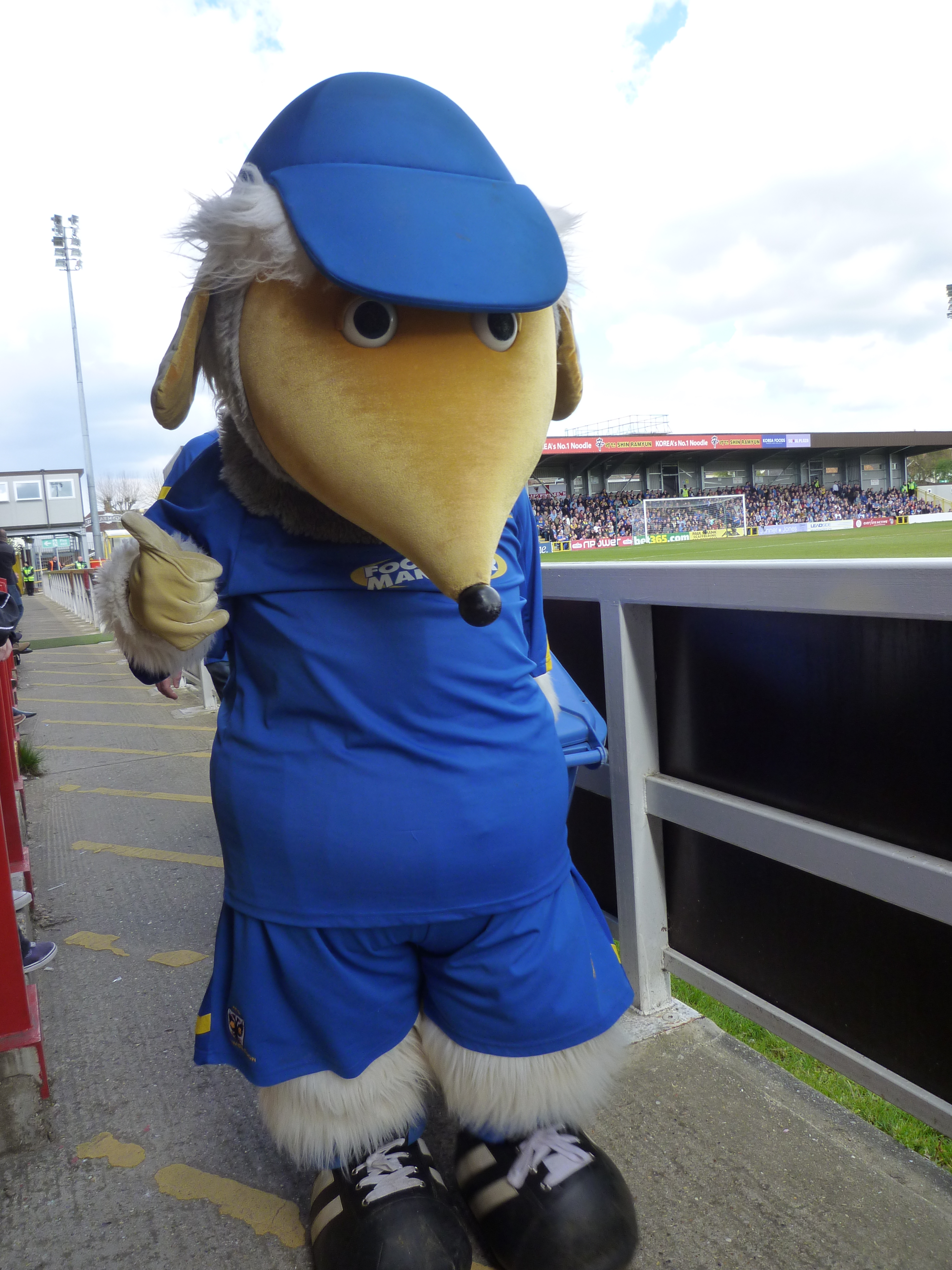
Haydon the Womble: AFC Wimbledon mascot

Haydon the Womble: AFC Wimbledon mascot

While I was writing yesterday about the Church of Ireland, one of its clergy the Reverend Patrick Comerford was blogging about a favourite subject of mine, the London Undeground: Mind the Gap, Avoid eye contact and Move along the Platform! He even mentioned my beloved Wombles of Wimbledon Common, a place where I used to go for walks around “Caesar’s Camp“, Cannizaro Park and the windmill (1817) near the golf course.

I think that title sums up well many of the features of tube travel, particularly during rush hour. He made the point that the largest part of the underground is in fact overground. Certainly many sections of the various lines run out into the suburbs. Even the original Metropolitan Line running from Baker Street and Aldgate now serves places like Amersham and Chesham in Buckinghamshire, Watford in Hertfordshire and Uxbridge. The section of the District line from Wimbledon as far as West Brompton (the stop for Chelsea FC at Stamford Bridge) is overground and crosses the River Thames at Putney.

There is now a London Overground network, interconnecting with many of the stations on the Underground. Construction is also proceeding on the £14.8 billion Crossrail project. In his blog Patrick also mentions one of my favourite London termini, namely Waterloo station, which serves Wimbledon and is the starting point for the South West routes to the Coast including Southampton and Portsmouth.

++++++++++++++++++++++++++++++++++++++++++++++++++++++++++++++++

Patrick Comerford

Mind the Gap, avoid eye contact,  and move along the platform

Harry Beck’s map of the Underground, first produced in 1931, was inspired by electrical circuit diagrams

For a few days recently, I took part in a number of meetings at the London offices of Us, the Anglican mission agency previously known as USPG (the United Society for the Propagation of the Gospel), including a planning meeting for the annual conference of Us at the High Leigh Conference Centre later this month.

The offices of Us are on the top floor of a former factory building in Great Suffolk Street, Southwark. On one side, we were looking out at the London Eye; on the other side was the Gherkin, a modern iconic building in the financial heart of the City of London; below us, trains were trundling away into the Tube station at Southwark.

During that week, I made a number of cross-London journeys on the Underground between the stations at Southwark and Westbourne Park for the Anglican Communion Office at Tavistock Crescent.
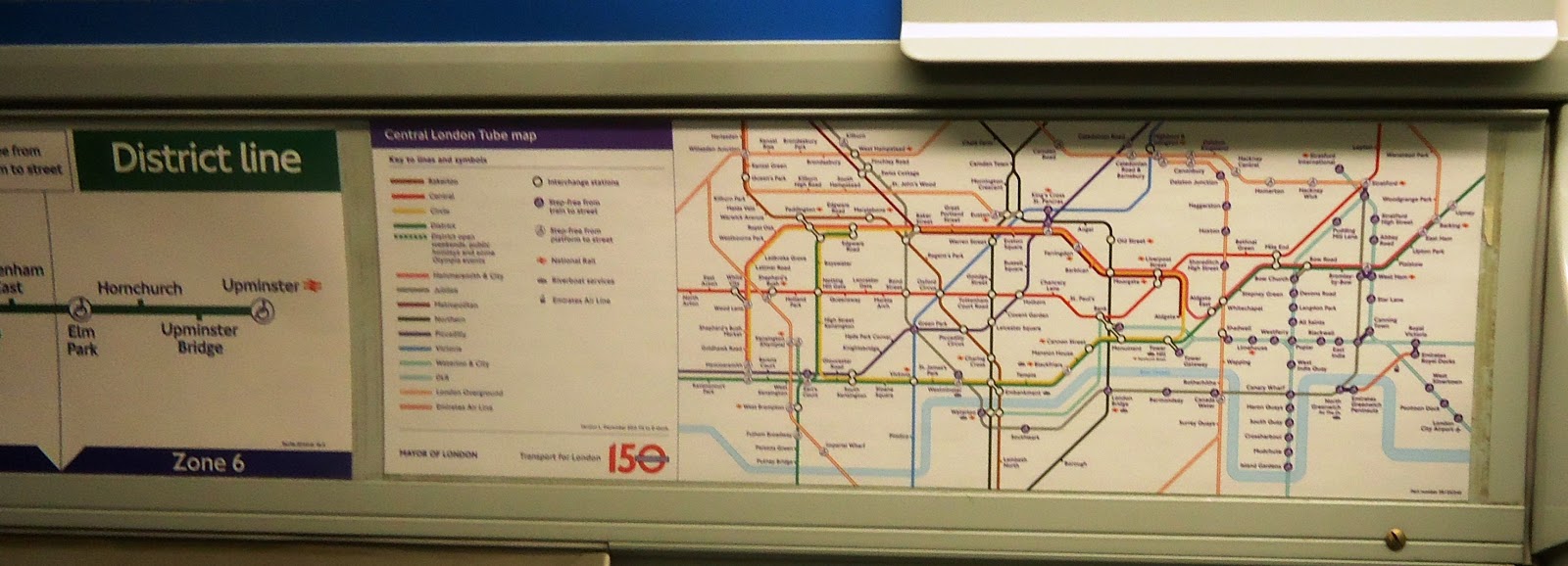
My mild colour-blindness and short-sightedness make it difficult for me to read the Tube maps in the heave-ho of rush-hour commuting (Photograph: Patrick Comerford)

The map of the Underground is so familiar to many people, that even if they never visit London they easily associate the primary colours with different lines: Red (Central), Yellow (Circle), Green (District), Blue (Victoria), and so on.

Constantly, though, my mild colour-blindness and short-sightedness make it difficult for me to read the Tube maps, particularly in the heave-ho of rush-hour commuting, at times unable to distinguish between Northern Black and Piccadilly Dark Blue, between Victoria Blue and Piccadilly Dark Blue, and Metropolitan Dark Red and Central Red. But then, colour-blindness and ham-fisted efforts to use my pidgin Italian recently left me boarding the wrong train, on the wrong platform, at the wrong time in Tuscany.

Mapping the Underground
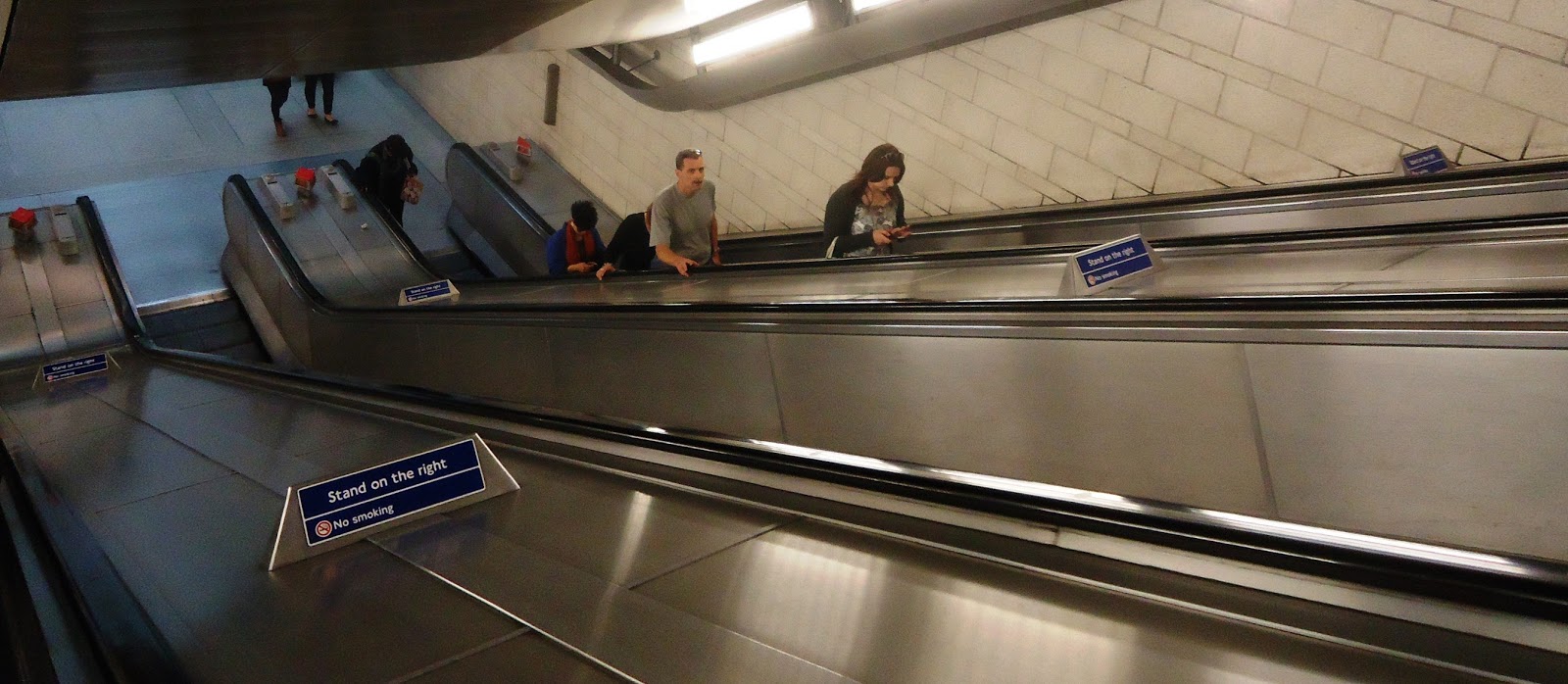
There are 426 escalators on the Underground and with 23 Waterloo has the most (Photograph: Patrick Comerford)

I suppose most of us who use the London Underground on a regular basis just keep our heads down, avoid eye contact and get into “auto-drive” mode as we work our way between stations and change lines. We never really get to appreciate where we are or where we are going.

At Southwark station one afternoon, a woman asked the cheapest way to her destination. “By walking” was the witty reply. “But it’s much slower.”

Many of us can read the London Underground map, but few of us would ever be able to follow the route if we had to walk between places more than one or two stations apart.

Mark Mason, in his new book Walk The Lines – The London Underground, Overground. has done precisely that. He has walked the entire length of the London Underground, but has walked it overground, passing every station on the way and flagging up all the sights, sounds and soul of what he claims is “the greatest city on earth.”
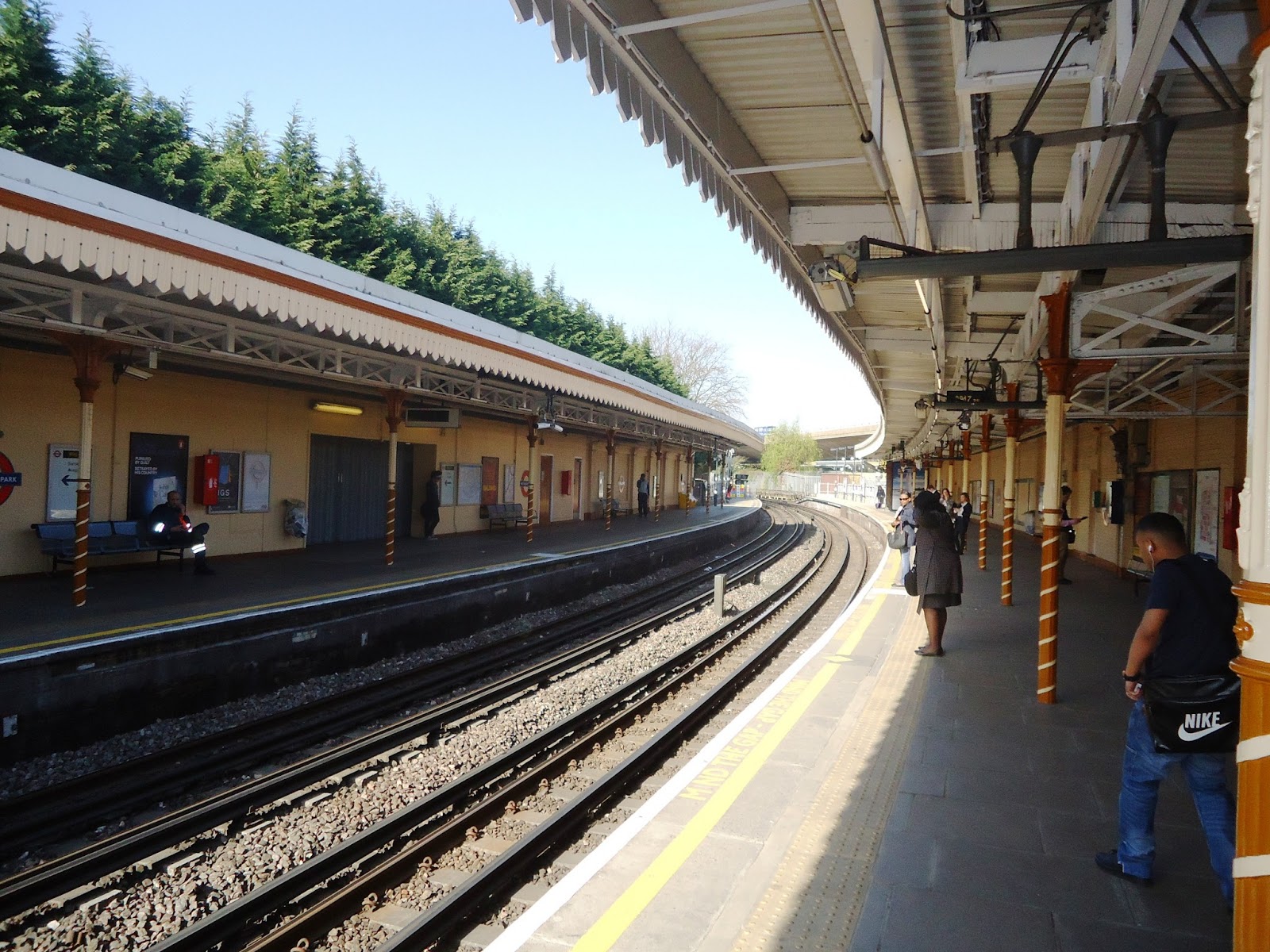
Underground mainly means overground … waiting on the platform at Westbourne Park (Photograph: Patrick Comerford)

Standing at Wetsbourne Park station in warm sunshine recently, I realised the largest part of the London Underground runs overground. I was reminded of ‘The Wombling Song’ from The Wombles:

Underground, overground, wombling free,

The Wombles of Wimbledon Common are we.

And, of course, Uncle Bulgaria came to mind too, “with his map of the world” that would take him to Tobermory.

Indeed, almost 60 per cent of the Underground runs overground – 146 miles or 58% of the 253 miles of the tracks run above ground; only 93 miles run in deep tunnels, and a further 20 miles in shallow tunnels. There is a prevalent north/south divide, with less than 10 per cent of stations south of the Thames.

Celebrating a century and a half
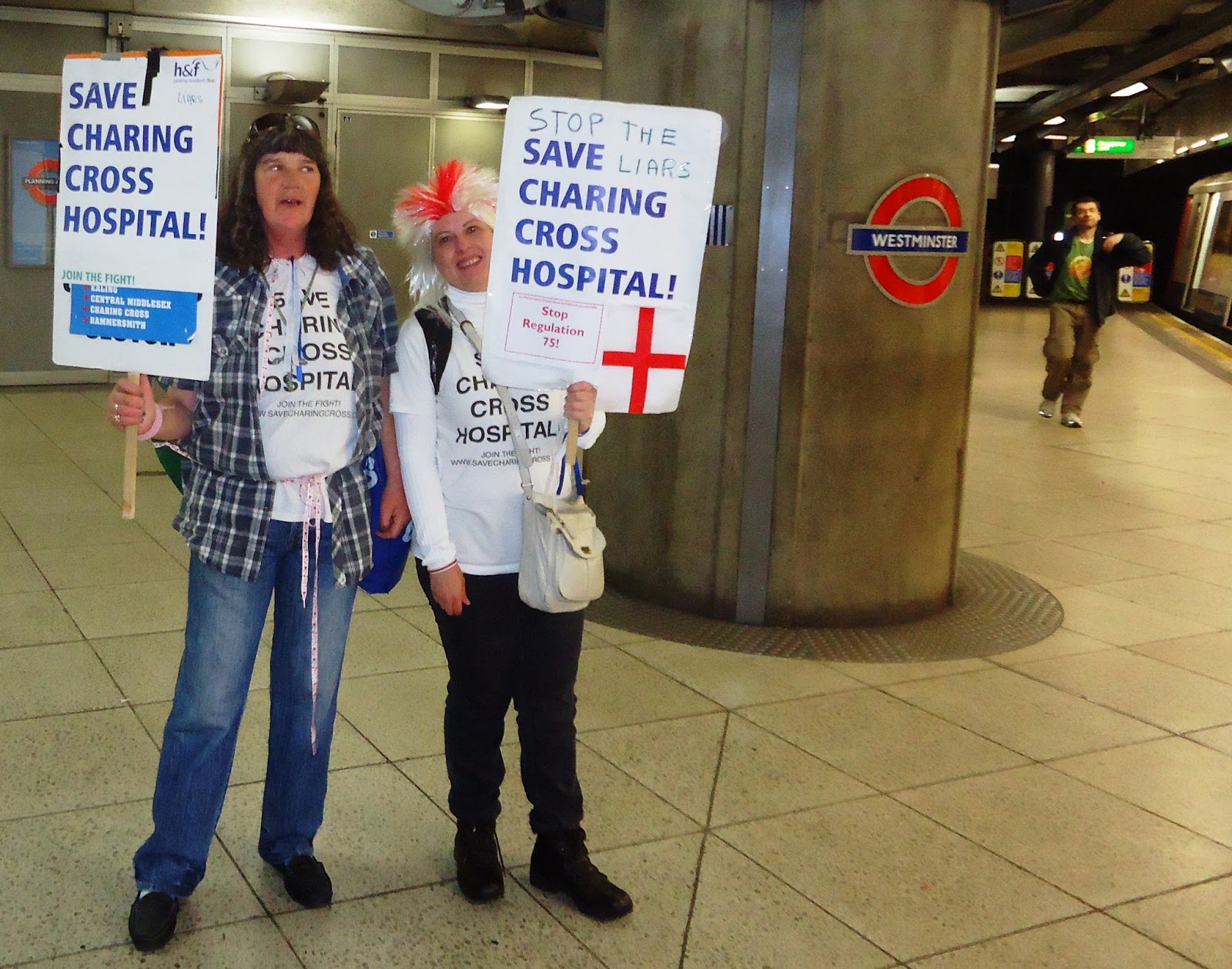
Protesters can be found at many stations any day, but since 2003 buskers need a licence (Photograph: Patrick Comerford)

Earlier this year, London Underground marked the 150th anniversary of the first Tube journey on 9 January 1863. The London Underground was the vision of Charles Pearson (1793-1862), who first thought of a Fleet Valley rail tunnel in 1845.

The engineering designs were produced by Sir John Fowler (1817-1898), who also designed the Forth Railway Bridge. Most of the District Line was designed by Sir John Wolfe-Barry (1836-1918), who also designed Tower Bridge. But the first Tube journey did not take place for another 20 years.

The first Tube line was built by the Metropolitan Railway, a private company. It took 21 years to complete the Inner Circle, and when the Circle Line opened in 1884, The Times described travelling on it as “a form of mild torture.”

By then, over 800 trains were running on the Inner Circle each day. A full journey from Stockwell to the City on the City and South London Railway, now part of the Northern Line, took just 18 minutes.

The Waterloo and City Line was the only other line built before the turn of the century. The Great Northern and City Line, between Moorgate and Finsbury Park, was mostly completed by 1902.

The Underground became known as the “Tube” in the early 1900s, when the Central London Railway (now the Central Line) was nicknamed the “Twopenny Tube” by the Daily Mail five days after it opened.

The “Twopenny Tube” line significantly boosted profits for shops around Oxford Street and Regent Street, and in 1909, Selfridges lobbied – unsuccessfully – to have Bond Street station renamed after Selfridges.

War-time shelter
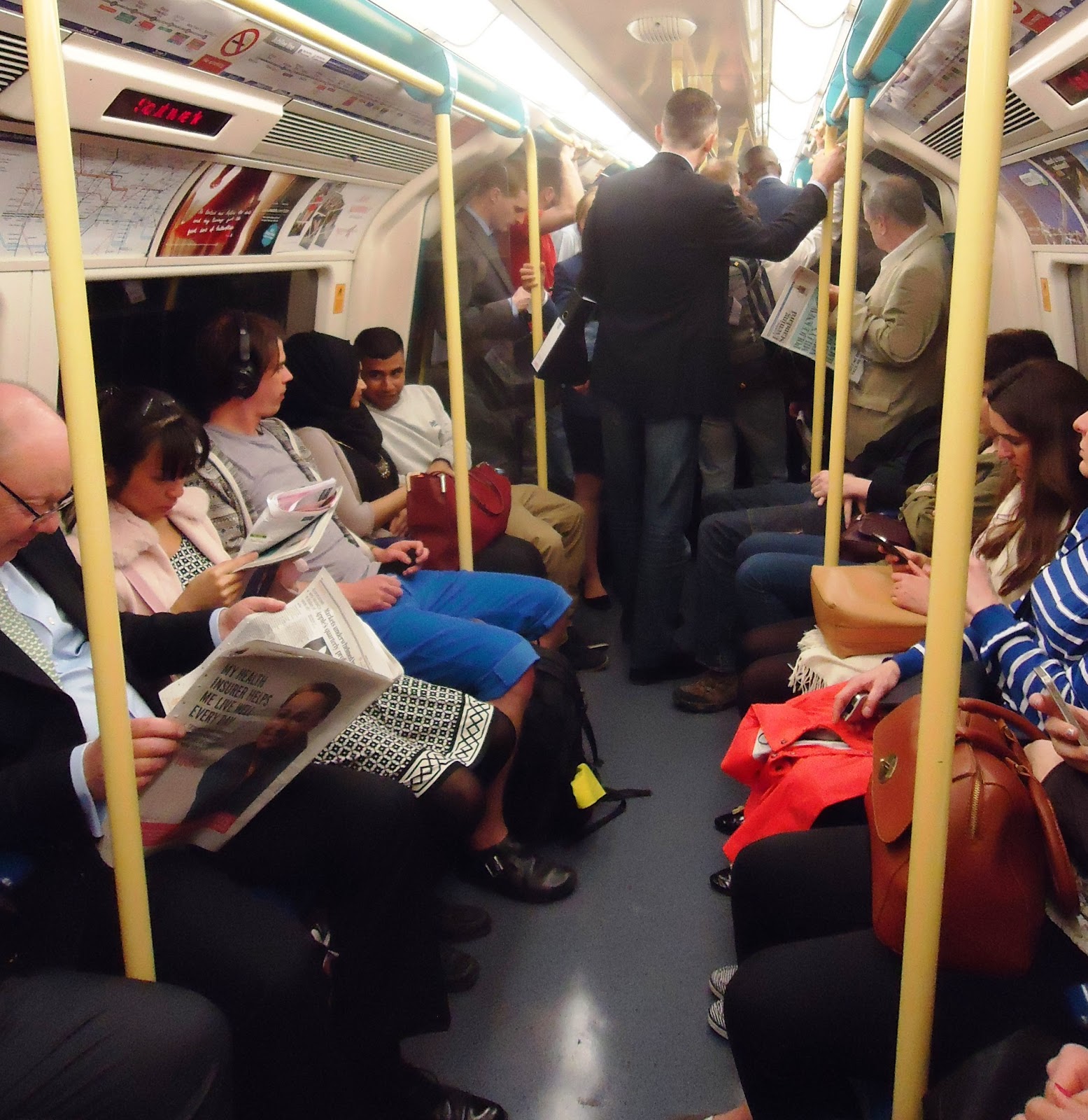
Passenger etiquette often demands “eyes down” and “avoid eye contact” (Photograph: Patrick Comerford)

Women began to make up staff shortages on the Underground during World War I. When Maida Vale station opened in 1915, it was entirely staffed by women.

Police reports estimate 300,000 people took shelter in Tube stations during the German bombing raids on London in 1917. A memorial at Baker Street commemorates 137 Metropolitan Line workers killed in World War I.
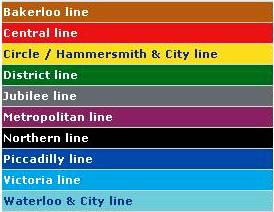
Finding the right line is a problem for anyone who is colour-blind

The Underground expanded rapidly in the 1930s. But this came to an abrupt halt with the outbreak of World War II. Within a few days, the Underground was used to evacuate 600,000 Londoners, mainly children and pregnant women, to the countryside.

During the war, signs at Underground stations warned passengers to carry their gas masks, and .posters warned them not to use the stations as air-raid shelters. However, when the East End suffered the first of many heavy bombing raids on 7 September 1940, there was a rush to the Underground stations.

Many got round the sheltering ban by buying cheap penny travel tickets and then refusing to leave the platforms. Trains continued to run throughout the Blitz, leading to crowded stations. Soon, about 177,000 people were sheltering in the Underground each night. A government U-turn on 8 October 1940 brought an end to the unenforceable ban on sheltering in the Tube.

Between September 1940 and May 1941, 198 people were killed when Tube shelters were hit directly by bombs. In one of the worst incidents, 64 people were killed. When Bank station was hit on 13 January 1941, 56 people were killed, but details were strictly censored. In the worst single incident on 3 March 1943, 173 people were crushed to death in a stairwell at Bethnal Green station – but not one bomb was dropped on London that night.

Maps and designs
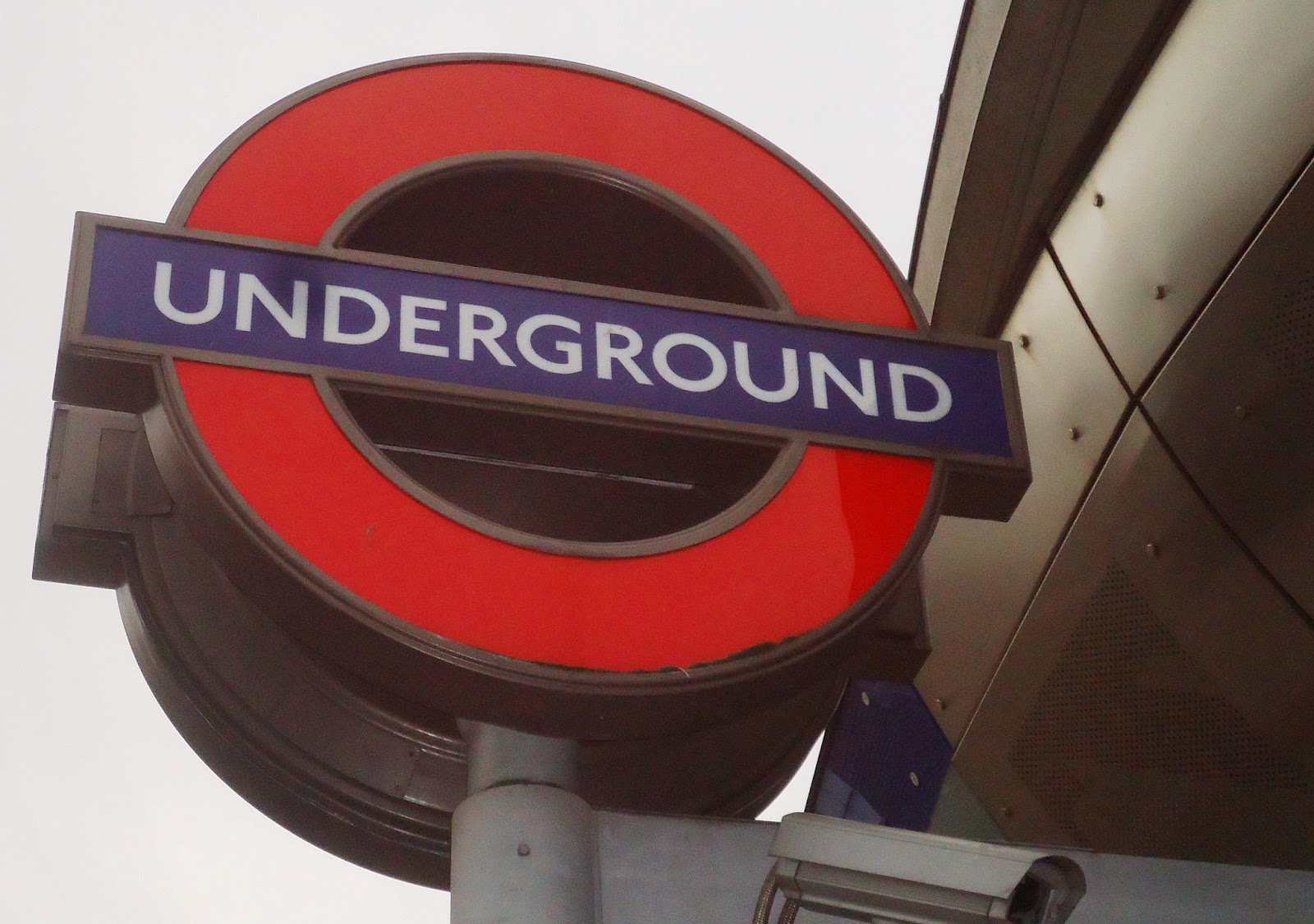
The Underground’s red circle logo first appeared in 1908 (Photograph: Patrick Comerford)

In the 1860s, there was only basic signage, with the station name and exit. The Underground’s red circle logo first appeared in 1908, although about 60 stations on the Metropolitan line continued to use a red diamond until the 1970s.

One of the first rail maps, produced by the District line in 1892, featured the slogan “Time Is Money.” The first free Underground map was published collaboratively in 1908 by companies running separate lines.

Harry Beck’s map of the Underground, first produced in 1931, was inspired by electrical circuit diagrams. He was paid 10 guineas (£10 10s) for his design. Beck’s map was received enthusiastically, and he remained involved with changes and updates for over 25 years. Eventually, he fell out with London Transport and his name was removed from the map in 1959. But his name reappeared on the map in the 1990s, when he was once again acknowledged as its designer.

In 2006, the London Underground map came second in a BBC competition to find the public’s favourite British design of the 20th century. The angular representation of the River Thames was briefly removed from the map in 2009, but was quickly replaced after a public outcry.

During the three-hour morning peak, the busiest Tube station is Waterloo, with 57,000 people moving through (Photograph: Patrick Comerford)

The Scottish sculptor Eduardo Paolozzi designed the mosaic murals at Tottenham Court Road station, which were completed in 1984. The ceramics on the City and South London Railway, now part of the Northern line, were inspired by the work of William Morris. Charles Holden based his design for Arnos Grove on Stockholm Public Library, while Gants Hill was inspired by the Moscow Metro.
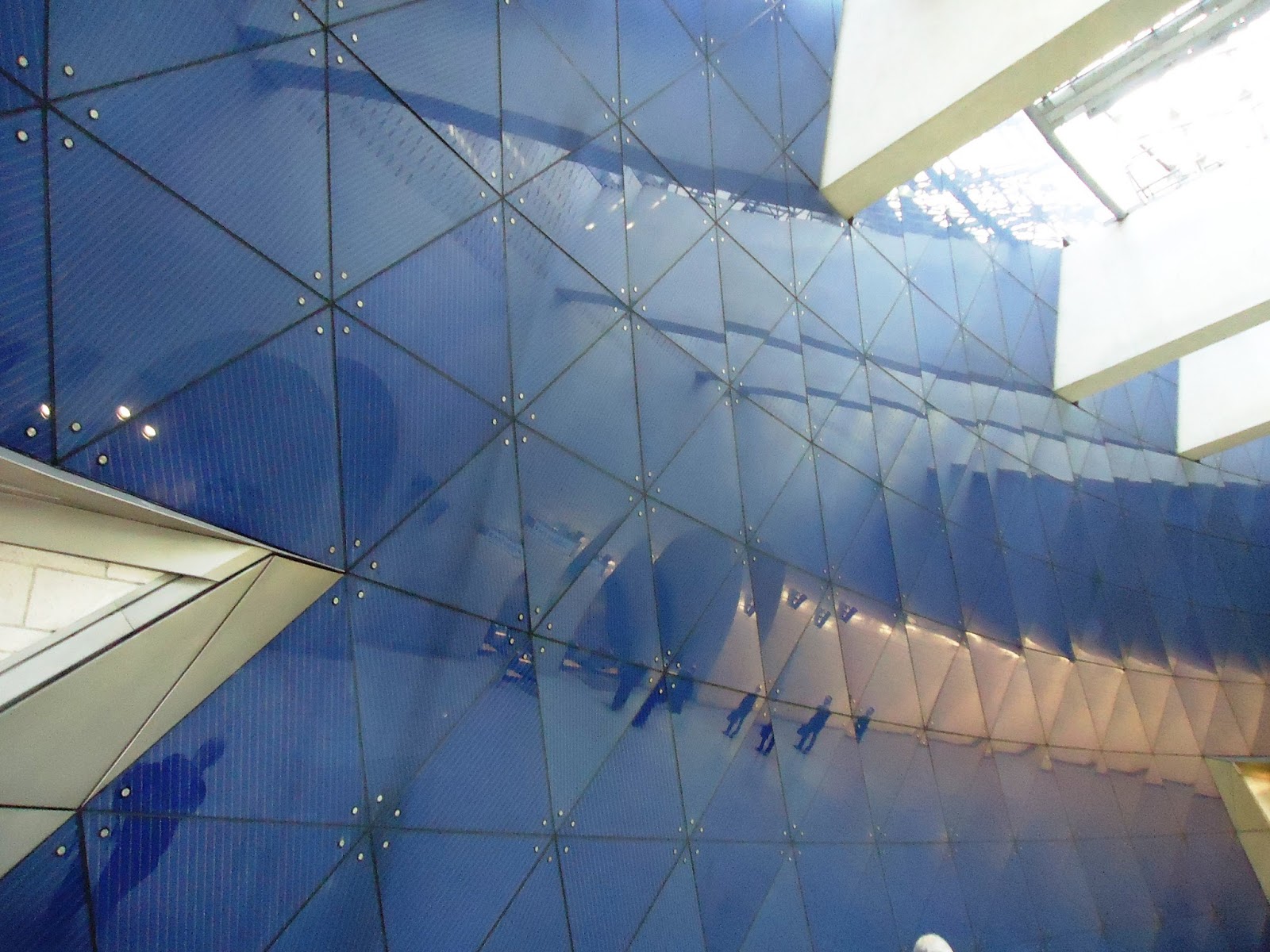
Southwark Station’s blue cone wall, built as part of the Jubilee line extension’s new generation of stations, was inspired by an 1816 stage set for Mozart’s ‘The Magic Flute’ (Photograph: Patrick Comerford)

The Victoria Line commissioned artists to produce original tile motifs for each station, including the seven trees that give Seven Sisters its name. All 46 stations designed by Leslie Green have distinctive tile patterns and all his stations – such as Covent Garden – were steel-clad to allow premises to be built on top of them.

Rush hours and busy hours
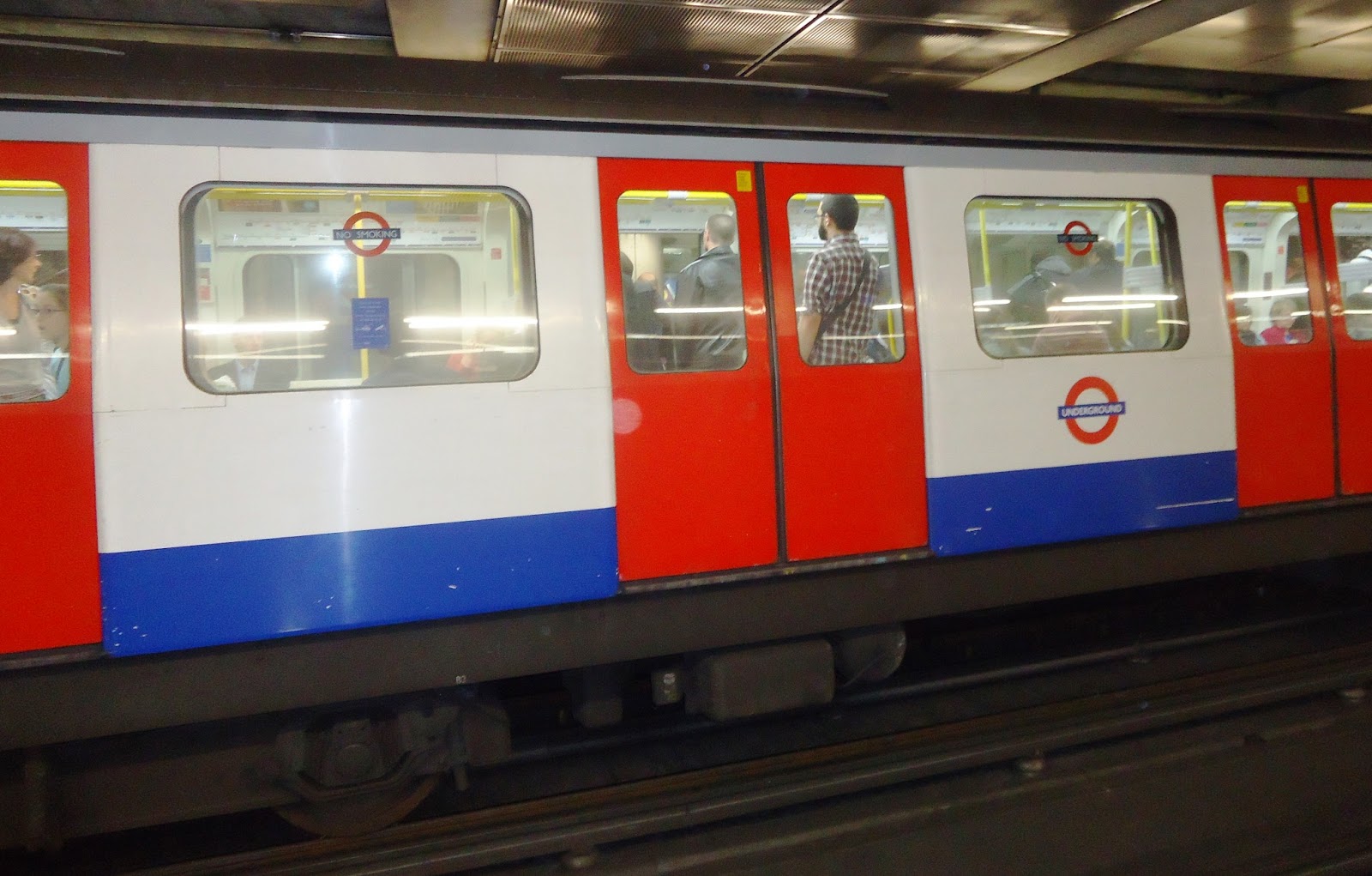
Due to a rise in graffiti, the silver tube trains were replaced in the 1990s with the red, white and blue ones seen today (Photograph: Patrick Comerford)

About 1.1 billion passengers now use the Underground each year. The busiest station is Waterloo, with 57,000 people passing through during the three-hour morning peak and 82 million passengers travelling through each year.
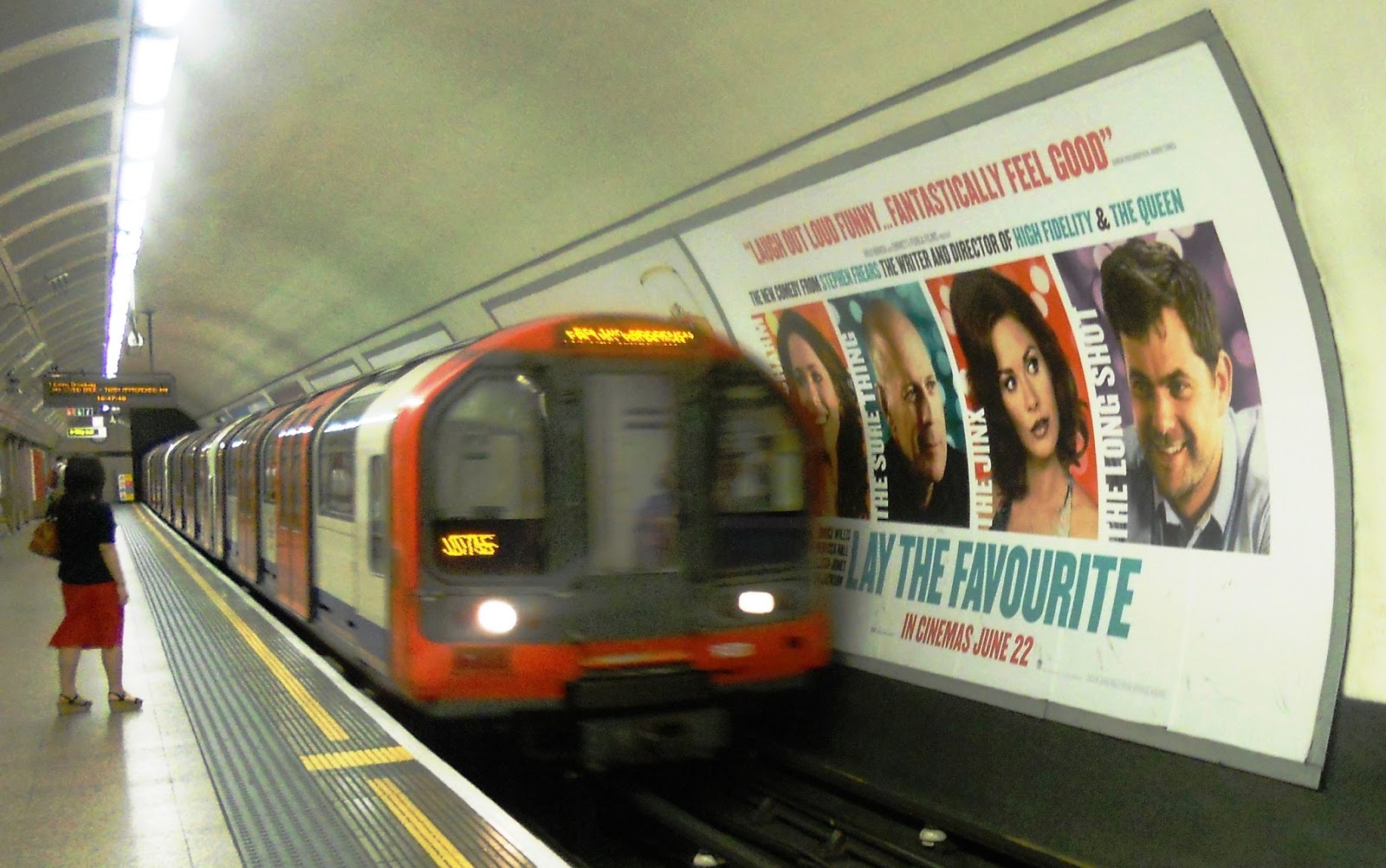
The average speed of a Tube train is 33 kph (Photograph: Patrick Comerford)

Each year, each Tube train travels 184,269 km, and the average speed is 33 kph. The longest distance between two stations is between Chesham and Chalfont and Latimer on the Metropolitan Line, which are 6.3 km apart. The shortest distance between two stations is from Leicester Square to Covent Garden on the Piccadilly Line, which are 300 metres apart. If you pay the full cash fare between Covent Garden and Leicester Square, a mere 0.16 miles, it works out at the equivalent of over £28 a mile.
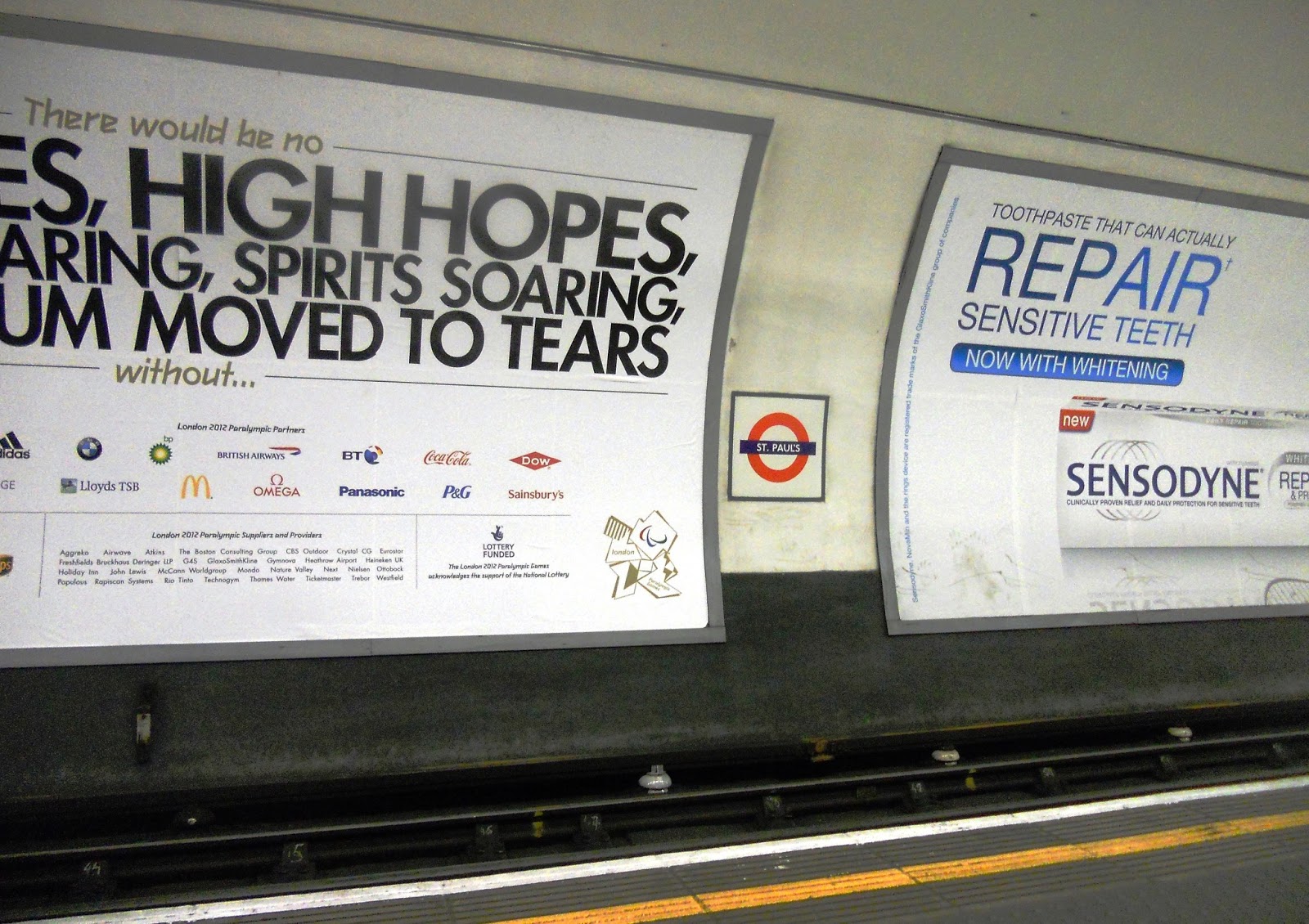
Advertising hoardings at Saint Paul’s Underground station (Photograph: Patrick Comerford)

The longest journey you can take without changing is 59.4 km from West Ruislip to Epping on the Central Line. The longest continuous tunnel, between East Finchley and Morden (via Bank), is 27.8 km long. The total number of stations in use today is 270; Waterloo station alone has 23 escalators, and Baker Street has 10 platforms.

In central London, trains cannot drive faster than 30-40mph because of the short distances between stations. But the Victoria Line can reach speeds of up to 50 mph because the stations are further apart. And the Metropolitan line has the fastest speeds, sometimes reaching over 60 mph.

‘Mind the Gap’
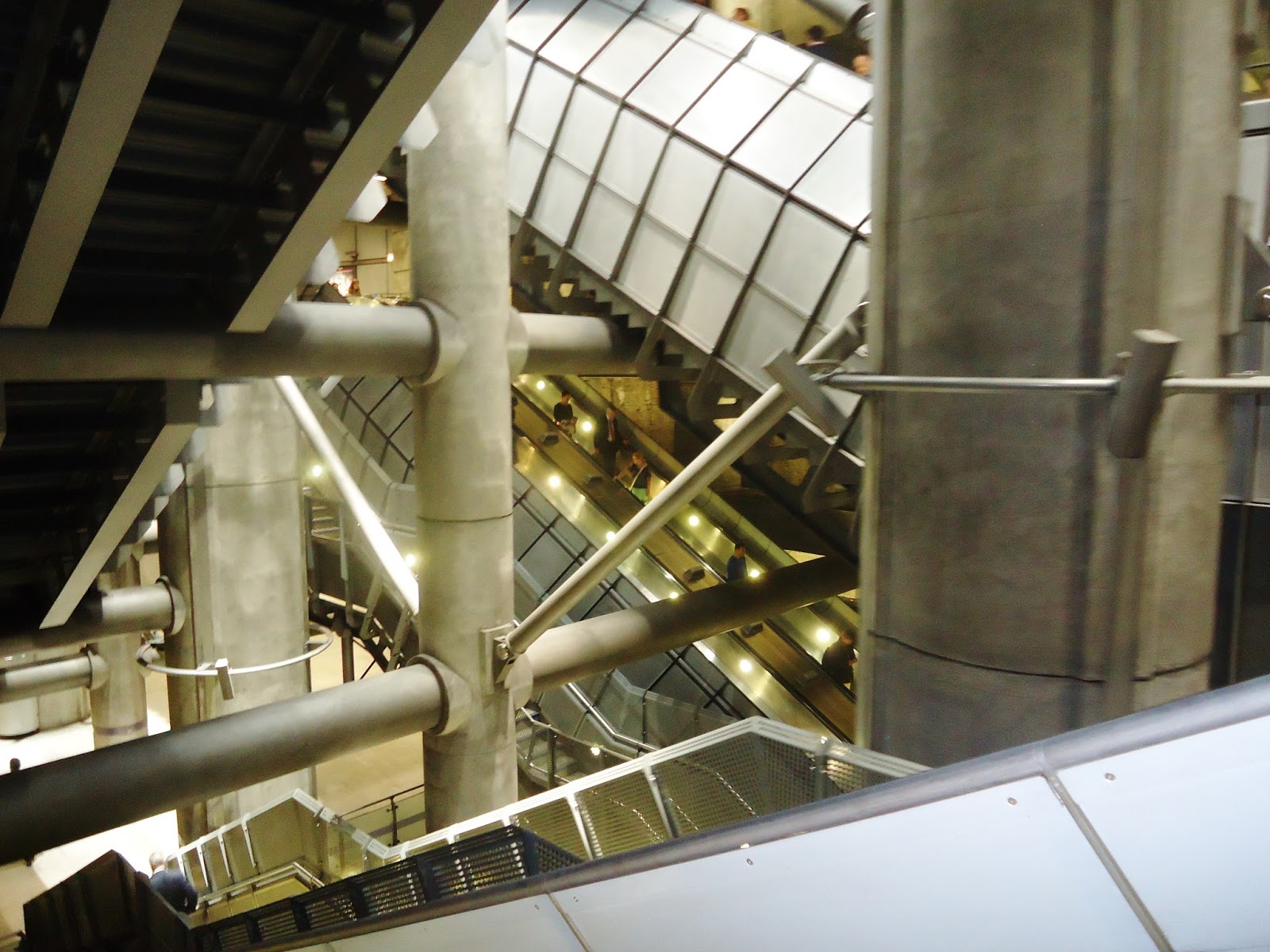
Rush-hour traffic and pressure can make it difficult to read maps and find your way (Photograph: Patrick Comerford)

But wherever you go this summer – underground or overground, slowly or at speed – always remember: “Mind the Gap.”

The original recording of “Mind the Gap” was made in 1968 featuring the voice of Peter Lodge. Most lines still use Peter Lodge’s recording, but others use a recording by voice artist Emma Clarke, and the Piccadilly Line uses the voice of Tim Bentinck, better known as David Archer from The Archers.

● Further reading: David Bownes, Oliver Green and Sam Mullins, Underground: How the Tube Shaped London (Allen Lane, £25); Andrew Martin, Underground Overground: A Passenger’s History of the Tube (Profile, £8.99); Mark Ovenden, London Underground by Design (Particular, £20).

Canon Patrick Comerford is Lecturer in Anglicanism and Liturgy, the Church of Ireland Theological Institute, and an Adjunct Assistant Professor, Trinity College Dublin. This essay was first published in the June 2013 editions of the Church Review (Dublin and Glendalough) and the Diocesan Magazine (Cashel and Ossory.
Share this:

  • Share on Facebook (Opens in new window) Facebook
  • Share on X (Opens in new window) X
Like Loading...
NEWS TRAVEL UNCATEGORISED CrossrailHarry BeckLondon UndergroundMind the GapOvergroundPatrick ComerfordWimbledon CommonWombles 1 Comment

ST MACARTAN’S CATHEDRAL CLOGHER

02/06/2013 by borderroamer
St Macartan's Cathdral, Clogher

St Macartan’s Cathdral, Clogher

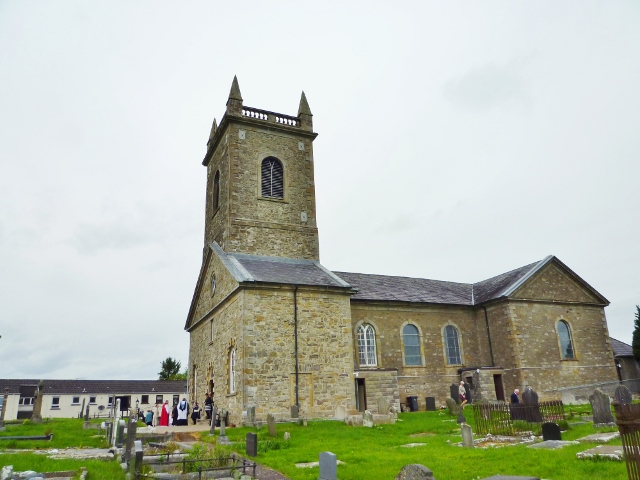
The Bishop of Clogher Right Reverend John McDowell has praised those who help to preserve small Anglican Cathedrals in towns throughout Ireland. It’s not an easy task with small congregations in many parishes. In the case of St Macartan’s, the Friends of Clogher Cathedral have made a major contribution over the years to keeping the structure and the interior maintained. The William Carleton Society has co-operated with them on a number of occasions during the annual summer school. The Society held a talk there about the Ulster English on St George’s Day. In March, the Cathedral organised a number of events to celebrate St Patrick’s Day.

St Macartan's Cathedral

St Macartan’s Cathedral

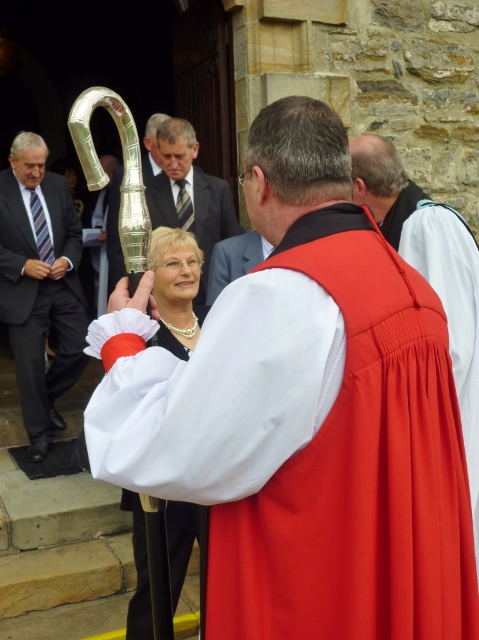
The Friends  come from different Christian churches, including Presbyterians, Methodists and Catholics. Every year they hold a service in the Cathedral to coincide with their AGM. I attended their Choral Evensong this afternoon, led by the Precentor Noel Regan, a Sligoman, along with the curate Reverend Alistair Warke. Bishop McDowell preached the homily.

Bishop McDowell & Canon Noel Regan greet members of the congregation

Bishop McDowell & Canon Noel Regan greet members of the congregation

ORDER FOR EVENING PRAYER

The Precentor sang the Vestry Prayer

Processional Hymn:  Praise My Soul the King of Heaven

Sentences of Scripture

Bishop of Clogher Rt Rev John McDowell

Bishop of Clogher Rt Rev John McDowell

Exhortation: Dean of Clogher Kenneth Hall, St Macartin’s Cathedral, Enniskillen

General Confession

The Absolution: Pronounced by the Bishop

Opening Versicles according to the Book of Common Prayer:

Priest: O Lord, open thou our lips: Choir: And our mouth shall shew forth thy praise. Priest: O God, make speed to save us: Choir: O Lord, make haste to help us. Priest: Glory be to the Father, and to the Son, and to the Holy Ghost. Choir: As it was in the beginning, is now, and ever shall be, world without end. Amen. Priest: Praise ye the Lord. Choir: The Lord’s Name be praised.

Bishop McDowell greeting the congregation

Bishop McDowell greeting the congregation

The Psalm: Psalm 84 How lovely is your Dwelling Place, O Lord of Hosts!

Lesson from the Old Testament Genesis 4: 1-16

Bishop McDowell greets the congregation

And Bishop McDowell greets the congregation

Magnificat: The Song of the Blessed Virgin Mary St Luke 1: 46-55

My soul doth magnify the Lord, and my spirit rejoiceth in God my Saviour. For he hath regarded the lowliness of his hand-maiden. For behold, from henceforth, all generations shall call me blessed. For he that is mighty hath magnified me, and holy is his Name. And his mercy is on them that fear him throughout all generations. He hath shewed strength with his arm, he hath scattered the proud in the imagination of their hearts. He hath put down the mighty from their seat, and hath exalted the humble and meek. He hath filled the hungry with good things, and the rich he hath sent empty away. He remembering his mercy hath holpen his servant Israel, as he promised to our forefathers, Abraham and his seed for ever. Glory be to the Father, and to the Son, and to the Holy Ghost; As it was in the beginning, is now, and ever shall be: world without end. Amen.

St Macartan's Cathedral, Clogher

St Macartan’s Cathedral, Clogher

Lesson from the New Testament: St Mark 5: 21-43

Nunc Dimittis: The Song of Simeon  St Luke 2: 29-32

Lord now lettest thou thy servant depart in peace: according to thy word. For mine eyes have seen thy salvation, which thou hast prepared before the face of all people. To be a light to lighten the Gentiles, and to be the glory of thy people Israel. Glory be to the Father, and to the Son, and to the Holy Ghost; As it was in the beginning, is now, and ever shall be: world without end. Amen

St Macartan's Cathedral, Clogher

St Macartan’s Cathedral, Clogher

The Apostles’ Creed

I believe in God the Father Almighty, Maker of heaven and earth: And in Jesus Christ, His only Son our Lord, who was conceived by the Holy Ghost, born of the Virgin Mary, suffered under Pontius Pilate, was crucified, dead and buried. He descended into hell; the third day he rose again from the dead; he ascended into heaven, and sitteth on the right hand of God the Father Almighty; from thence he shall come to judge the quick and the dead. I believe in the Holy Ghost; the holy Catholic Church; the Communion of Saints; the forgiveness of sins; the Resurrection of the body, and the life everlasting. Amen

Priest: The Lord be with You Choir: And with Thy Spirit Priest: Let us Pray Choir: Lord, have mercy upon us. Christ have mercy upon us. Lord have mercy upon us.

The Lord’s Prayer

Our Father, which art in heaven, Hallowed be thy Name; Thy kingdom come; Thy will be done in earth; as it is in heaven. Give us this day our daily bread. And forgive us our trespasses, as we forgive them that trespass against us. And lead us not into temptation: but deliver us from evil. Amen

O Lord, shew thy mercy upon us:  And grant us thy salvation.

O Lord, save the Queen: And mercifully hear us when we call upon thee.

Endue thy ministers with righteousness: And make thy chosen people joyful.

O Lord, save thy people: And bless thine inheritance.

Give peace in our time, O Lord: Because there is none other that fighteth for us, but only thou, O God.

O God, make clean our hearts within us: And take not thy Holy Spirit from us.

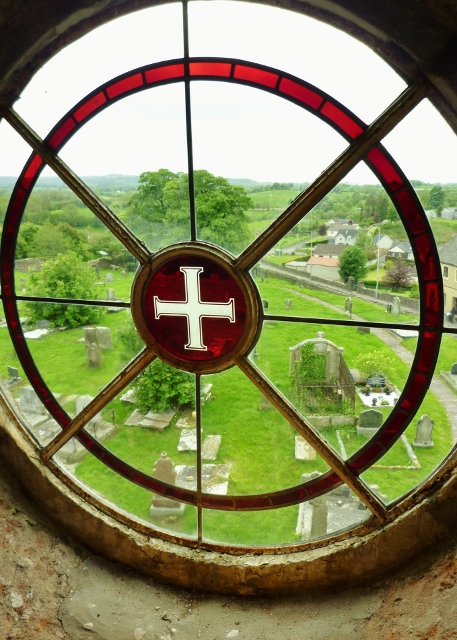
Bell Tower window

Bell Tower window

The Collect of the First Sunday of Trinity:  The Precentor sings:

O God, the strength of all them that put their trust in thee, mercifully accept our prayers; and because through the weakness of our mortal nature we can do no good thing without thee, grant us the help of thy grace, that in keeping of thy commandments we may please thee both in will and deed, through Jesus Christ our Lord. Amen.

The Second Collect: for Peace

O God, from whom all holy desires, all good counsels and all just works do proceed: Give unto thy servants that peace which the world cannot give; that both our hearts may be set to obey thy commandments and also that by thee we being defended from the fear of our enemies may pass our time in rest and quietness; through the merits of Jesus Christ our Saviour. Amen

The Third Collect for Aid against all Perils

Lighten our darkness, we beseech thee, O Lord; and by thy great mercy defend us from all perils and dangers of this night for the love of thy only Son, our Saviour, Jesus Christ. Amen

Hymn: All People that on Earth do Dwell

St Macartan's Cathedral, Clogher

St Macartan’s Cathedral, Clogher

The Sermon: The Right Reverend F John McDowell, Bishop of Clogher

Hymn: (The Breastplate of St Patrick)

Christ be with me, Christ within me,
Christ behind me, Christ before me,
Christ beside me, Christ to win me,
Christ to comfort and restore me.

Christ beneath me, Christ above me,
Christ in quiet, Christ in danger,
Christ in hearts of all that love me,
Christ in mouth of friend and stranger.

PRAYERS led by the Diocesan Curate Reverend Alistair Warke

Almighty and merciful God, who in days of old didst give to this land the benediction of thy holy Church, withdraw not, we pray thee, thy favour from us, but so correct what is amiss, and supply what is lacking, that we may more and more bring forth fruit to thy glory, through Jesus Christ our Lord.

The General Thanksgiving:

Almighty God, Father of all mercies,  we thine unworthy servants do give thee most humble and hearty thanks for all thy goodness and loving kindness to us and to all men. We bless thee for our creation, preservation, and all the blessings of this life; but above all for thine inestimable love in the redemption of the world by our Lord Jesus Christ; for the means of grace, and for the hope of glory. And, we beseech thee, give us that due sense of all thy mercies, that our hearts may be unfeignedly thankful; and that we show forth thy praise, not only with our lips, but in our lives, by giving up our selves to thy service, and by walking before thee in holiness and righteousness all our days; through Jesus Christ our Lord, to whom, with thee and the Holy Spirit, be all honour and glory, world without end. Amen.

A Prayer of St Chrysostom:

Almighty God, who hast given us grace at this time with one accord to make our common supplications unto thee and dost promise that when two or three are gathered together in thy Name thou wilt grant their requests. Fulfil now, O Lord, the desires and petitions of thy servants as may be most expedient for them; granting us in this world knowledge of thy truth, and in the world to come life everlasting.

The grace of our Lord Jesus Christ and the love of God and the fellowship of the Holy Spirit be with us all evermore. Amen.

Hymn with the Collection of Alms: God, whose city’s sure foundation

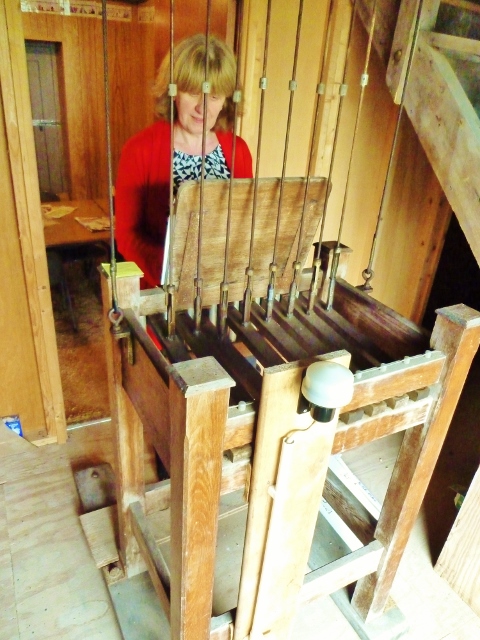
Heather McKeown playing the bells

Heather McKeown playing the bells

God, whose city’s sure foundation
stands upon his holy hill,
by his mighty inspiration
chose of old and chooseth still
men of every race and nation
his good pleasure to fulfil.

Here in Ireland through the ages,
while the Christian years went by,
saints, confessors, martyrs, sages,
strong to live and strong to die,
wrote their names upon the pages
of God’s blessed company.

Some there were like lamps of learning
shining in a faithless night,
some on fire with love, and burning
with a flaming zeal for right,
some by simple goodness turning
souls from darkness unto light.
As we now with high thanksgiving                                                                                                                                                                                                                                                                                     their triumphant names record,

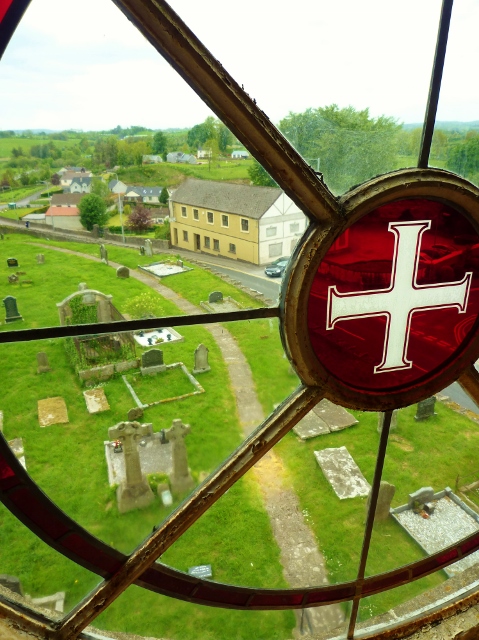
View of graveyard from bell tower window

View of graveyard from bell tower window

grant that we, like the, believing
in the promise of thy word,
may, like them, in all good living
praise and magnify the Lord.

The Blessing: The Bishop sings the blessing

The peace of God, which passes all understanding, keep you in your heart and mind in the knowledge and love of God, and of his Son, Jesus Christ our Lord, and the blessing of God Almighty, the Father, the Son. and the Holy Spirit, be with you and remain with you always. AMEN.

Hymn: Abide with me

Abide with me; fast falls the eventide;
The darkness deepens; Lord with me abide.
When other helpers fail and comforts flee,
Help of the helpless, O abide with me.

Swift to its close ebbs out life’s little day;
Earth’s joys grow dim; its glories pass away;
Change and decay in all around I see;
O Thou who changest not, abide with me.

I need Thy presence every passing hour.
What but Thy grace can foil the tempter’s power?
Who, like Thyself, my guide and stay can be?
Through cloud and sunshine, Lord, abide with me.

I fear no foe, with Thee at hand to bless;
Ills have no weight, and tears no bitterness.
Where is death’s sting? Where, grave, thy victory?
I triumph still, if Thou abide with me.

Hold Thou Thy cross before my closing eyes;
Shine through the gloom and point me to the skies.
Heaven’s morning breaks, and earth’s vain shadows flee;
In life, in death, O Lord, abide with me.

As I arrived at the service, it was nice to hear the Cathedral bells ringing. So afterwards as they rang again while the congregation left the church, I went into the bell tower to look at them, expecting to find a group of bell ringers pulling ropes. Instead I found Heather McKeown at the console of the chime, with eight bells individually numbered and a wooden lever to press down to ring the bell.

"Be Still and Know" on the Chime

“Be Still and Know” on the Chime

She encouraged me to have a go, so I tried playing the hymn “Be Still and Know”. If it sounded a bit strange, I can only apologise, and I did make at least one error in ringing the wrong bell! But second time round it proved a lot easier to ring the bells in the right order and tempo.

Heather McKeown & the 8-bell chime

Heather McKeown & the 8-bell chime

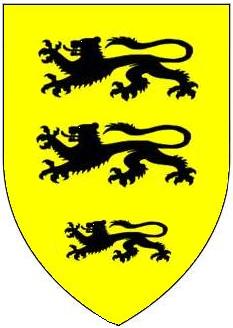
Diocese of Clohger: Arms
Diocese of Clogher: Arms

For more information about the Friends of Clogher Cathedral, please contact the Reverend Precentor Noel Regan, The Deanery, 10 Augher Road, Clogher.

Copyright: photos © Michael Fisher

Material from Book of Common Prayer: © The Representative Body of the Church of Ireland 2004

The Irish Church Hymnal — Fifth Edition:  © The Standing Committee of the General Synod of the Church of Ireland 2000

Share this:

  • Share on Facebook (Opens in new window) Facebook
  • Share on X (Opens in new window) X
Like Loading...
CARLETON NEWS UNCATEGORISED Bishop John McDowellClogherEight-bell ChimeHeather McKeownPrecentor Noel ReganSt Macartan's Cathedral 6 Comments

ENNISH FLAX MILL

01/06/2013 by borderroamer
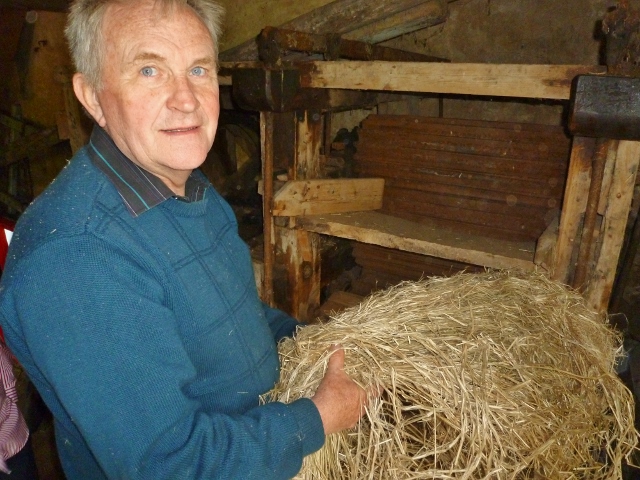
Howard Bennett at Ennish Scutch Mill

Harold Bennett at Ennish Scutch Mill

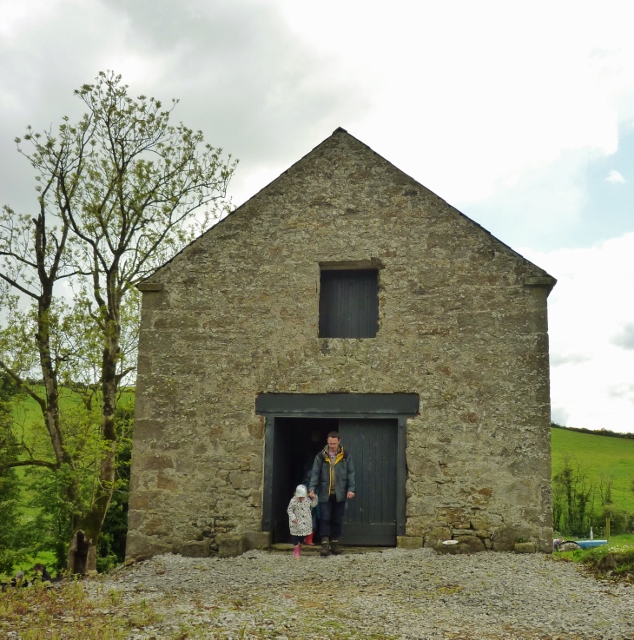
For over ten years Harold Bennett from County Tyrone has been devoted to preserving an important part of Ulster’s industrial heritage. Ennish Flax Mill between Aughnacloy and Dungannon is the third generation of his family to own the mill., which closed in 1950. In the early 2000s he decided to renovate the mill, a project which has taken considerable time, money and effort an is still a wok in progress. He has been supported in his efforts by the Killeeshil and Clonaneese Historical Society, which is currently undertaking a project on engineering in the area under the “Shared History, Shared Future” project, of which the William Carleton Society is a member.

Barbeque at Ennish Mill

Barbeque at Ennish Mill

Flax after scutching

Flax after scutching

An open day and barbeque was held at the mill to show it in operation and to give a younger generation an idea of how the mill operated. Ennish started off as a corn mill around 1770 and was owned by the Burges family of Parkanaur Manor near Castlecaulfield. In 1917 William S Bennett purchased the mill from Colonel YS Burges for £255. At that time the flax industry, which was important in Ulster in the 18th and 19th Centuries, was booming. The mill was converted to process flax, which was first scotched in October 1917.

Mill Wheel at Ennish

Mill Wheel at Ennish

Up to 1944 the mill was driven by the mill wheel but because of dry seasons there was insufficient water to turn the wheel. The then owner, William Bennett’s son Hugh John, was obliged to instal an engine to drive the mill. It was installed by AS McKee & Sons of Cranslough, who also carried out a number of renovations in order to accommodate the new engine. Farmers came from surrounding areas such as Crilly, Minteburn, Rehaghey, Brantry, Newmills, Clonavaddy and Castlecaulfield to get their flax scutched. After flowering and ripening in July, the farmers pulled the flax by hand and then soaked it in a water-filled dam for one to two weeks to ret (break down the outer coating). It was then spread on a field to dry before being taken to the mill.

Scutching handles behind the berths

Scutching handles behind the berths

The mill has seven “berths”, the space in front of each flax handle where the scutchers worked. Sometimes they worked in pairs. The first was a “buffer”, who took the rough off the flax, the second was the “cleaner”, who completed the scutching. Good flax could be scutched into long, strong fibres, which could eventually be turned into fine linen cloth. When the scotching was finished, the flax was taken to Union Street in Cookstown for inspection and if it passed the grading process, it was then taken to a linen mill in Belfast and woven int linen fabric. The poorer quality flax containing many shorter fibres was called “tow” and was less valuable. Any cloth made from it was rough and inferior. Usually the mill owner kept the tow as payment or part payment for the scutching.

Ennish Flax Mill

Ennish Flax Mill

Scutching: a dusty process

Scutching: a dusty process

The waste from scutching known as “shoves” or “shows” was a cheap and popular fuel on the hearths of mill workers. A properly lit fire of shoves would burn for hours, emitting an intense heat. It must have been difficult for the seven scutchers working in a confined space and with the noise of the machinery as well as the dust. Harold’s demonstration gave an idea of what conditions must have been like for them, but this picture was with only one blade in action!

According to the mill records for 1945, the workforce consisted of six scutchers, three strickers, one roller and a handyman, whose job it was to remove the shoves from behind the handles. Scutchers were paid by the number of stones scutched and in a good week would earn between £3 and £4. The roller was on a set wage of £2.14.6 and the strickers earned £2.10.0 a week. In 1918 scutchers were paid a bounty of £6.0.0. to secure their services for the next scutching season. The details are taken from an information leaflet kindly provided by Harold Bennett.

Thresher in action

Thresher in action

This is one of only three such flax mills still remaining in Northern Ireland. Another one is at Gorticashel near Gortin, also in Tyrone. The scutching  demonstration was complemented by a display of threshing in the adjoining field. The straw was brought in for the occasion. The thresher carried the name “Boyd” and appeared to come from Maghera.

While researching the history of the linen industry, I discovered a newspaper cutting from the USA which shows that even before the new engine was installed at Ennish, the linen industry was in decline. The Delmarva Star from Wilmington in Delaware carried a report on March 3rd 1935 (p.22) headlined: “Shortage of Flax Threatens Ulster Makers of Linen: Numbers of Mills Face Necessity of Closing Down: Prices Have Made Unexpected Rise“. The news from Belfast (March 2) states that:-

“Ulster’s world-famed linen industry today finds itself menaced by an acute shortage of its necessary raw material, flax.

Unless the crisis in the industry is overcome within the next few months, numbers of linen mills in Northern Ireland will be faced with the necessity of closing down.

The outstanding reason for the present crisis is a shortage of flax from Soviet Russia. The linen mills of Northern Ireland, which employ about 85,000 workers, are dependent on Soviet Russia for more than 90 per cent of their raw materials. The Soviet Union itself is the world’s biggest flax producer, growing between 90 and 95 per cent of the world’s total flax supply.

In recent months Germany has bought ever-increasing quantities of Russian flax to take the place of wool and cotton which it has been unable to import owing to exchange restrictions. At the same time the Soviet Union itself has begun to absorb large quantities of its own raw flax to manufacture in its new factories.

The result of these unexpected developments has been a leap upwards in the price of flax. Ulster linen manufacturers state that they have only sufficient flax on hand to meet the needs of the next four or five months, after which they expect the cost of flax to be so prohibitive that it will be impossible to produce linen goods in Northern Ireland at economic prices.

With a steep rise in the price of linen goods expected the next few months, it is understood that United States and other foreign importers of Irish linen have made large purchases in Belfast before prices soar still higher“.

Share this:

  • Share on Facebook (Opens in new window) Facebook
  • Share on X (Opens in new window) X
Like Loading...
CARLETON MONAGHAN NEWS Ennish Scutch MillFlaxHarold BennettKilleeshil & Clonaneese Historical SocietyShared History Shared Future 2 Comments

BLACK MOUNTAIN WALK

31/05/2013 by borderroamer
View from Black Mountain: Photo © National Trust

View from Black Mountain: Photo © National Trust

This morning I ventured towards Divis and the Black Mountain. I was on my way back from Belfast International Airport via Hannahstown at 6am and the sun was shining, so I thought it would be a good chance to look at the area now owned by the National Trust. The property contains the peaks of Divis Mountain, Black Mountain, Mount Gilbert and Armstrongs Hill, and also the headwaters of the Clady Water, Forth River, Ballygomartin River, Collin River and the Crumlin River. The landscape is home to a host of wildlife and there are walking trails along a variety of terrain: through heath, on stone tracks, along boardwalks and road surface.

However I was not properly prepared for hill walking so I spent half an hour or so on the road leading up towards the two mountains. Having reached Divis Lodge I turned back. The house and farm was the home of the Dobbin family until the 1950s. The whole site used to be owned by the Ministry of Defence and was out of bounds to the public for over fifty years. The communications centre on the top of Divis Mountain was used during the Cold War and later during the troubles. It was also used by the British Army as a training area. As I walked from the car park, I was on my own enjoying views across towards Lisburn and beyond to the Mourne mountains. The only other occupants were some cattle in a field. It was a beautiful start to the day.

I noticed that a walking festival will be taking place there in a fortnight’s time, organised by the North West Mountain Rescue Team to raise funds for the service. Routes of 10k and 20k are being offered on the day (Saturday June 15th).  There will also be a vintage tractor and vehicle extravaganza from 1pm to 3pm with the vehicles making their way to the top of Divis Mountain. More details can be found on the website of the Belfast Hills Partnership.

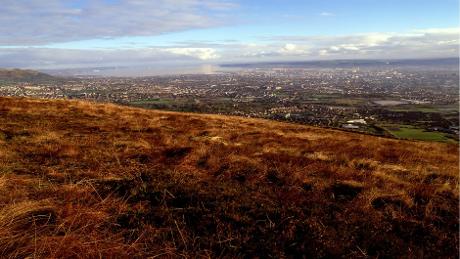
View from Divis Mountain: Belfast Hills Partnership

View from Divis Mountain: Belfast Hills Partnership

On a clear day Divis Mountain allows views of Belfast and Belfast Lough, south-west Scotland, the Isle of Man, Antrim Hills, the Mournes, Lough Neagh, Strangford Lough, the Sperrins, Donegal and mid-Ulster. My neighbour, an experienced hillwalker, has often told me about this beauty to be found on our doorstep. From our houses we can see the other side of Divis and White Mountain. I must now take the opportunity to explore further this scenic part of Belfast.

The City Council has produced a useful guide to the different paths. The Black Mountain route is 6km return and can be done in under two hours. The trek to Divis is a further 2.3km. A walk around the perimeter of the National Trust property takes around six hours. For a list of all walking routes in the city, see here.


Share this:

  • Share on Facebook (Opens in new window) Facebook
  • Share on X (Opens in new window) X
Like Loading...
NEWS TRAVEL belfastBlack MountainDivisNational TrustNWMRTWalks Leave a comment

CLARE & MARY ROSE

30/05/2013 by borderroamer

From time to time on my blog, I republish blogs from other people that have caught my attention. If you read my reports from Bristol earlier this year, you may have noticed my coverage of the SS Great Britain which was recovered from the Falklands and then brought back to Bristol for restoration. It is now a museum and it is well worth a visit if you are passing that way. I have still to visit the restored clipper Cutty Sark in the dry dock at Greenwich in London, but I did pass by that famous ship during a walk along the Thames in April last year.

The Mary Rose: Geoff Hunt painting

The Mary Rose: Geoff Hunt painting

My interest in today’s story of the Mary Rose developed because at the time the warship was salvaged from the Solent in October 1982, I was a senior journalist in RTÉ News in Dublin. A colleague from County Meath who worked with me on the television news desk turned out to be a distant relative of Sir George Carew, commander of the Mary Rose, who died when she sank at the entrance to Portsmouth harbour in 1545. The commander had just been created Vice Admiral of the fleet by Henry VIII. The Mary Rose will open as a museum tomorrow Friday May 31st in Portsmouth. The building cost £35m.

George Carew painting by Holbein

George Carew painting by Holbein

Carew Coat of Arms

Carew Coat of Arms

So here is the story of County Clare and the Mary Rose, as told by Irish Waterways History:

Clare and Mary Rose

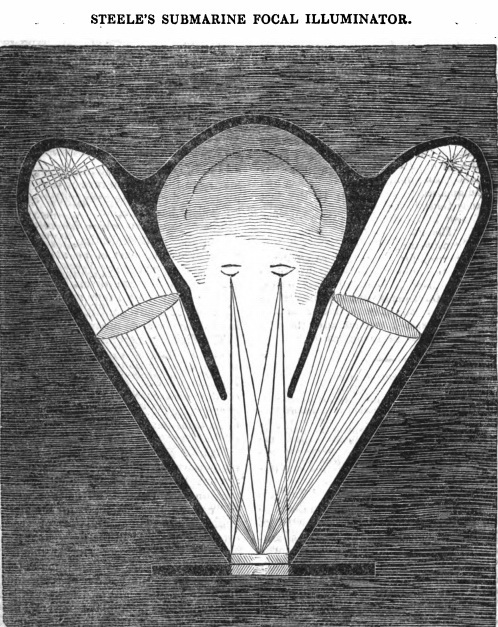
“A new museum dedicated to the Tudor warship Mary Rose will be opened in Portsmouth on 31 May 2013. Despite what the UK Independent says, the warship did not lie “undiscovered in the Solent until its exposed timbers were seen by divers in 1971″: the rather longer Guardian story points out that the Deane brothers dived on the wreck in the mid-nineteenth century. Charles Deane also worked on the recovery of the cargo of the Intrinsic, off the coast of Clare; he allowed Thomas Steele to wear his apparatus to descend on the wreck.

In September 1840, in the same issue that reported Mr Brunel’s rash wager of £1,000 that, when his Great Western Railway was finished, he could travel from Bristol to London in two hours [i], the Mechanics’ Magazine also reported that:-

‘Mr Steele, of the County Clare, in the prosecution of his new principle of submarine illumination of objects in dark and muddy water, has been this week down on the wreck in Mr Deane’s water-tight dress and diving helmet, making some observations and experiments’  [ii].

It may be, therefore, that it was a Clare man who cast the first light on the Mary Rose for almost three hundred years”.

From The Mechanics’ Magazine, Museum, Register, Journal, and Gazette No 867 Saturday March 21 1840

From The Mechanics’ Magazine, Museum, Register, Journal, and Gazette No 867 Sat. March 21 1840

[i] italics in the original

[ii] “Submarine Operations” in The Mechanics’ Magazine, Museum, Register, Journal, and Gazette No 893 Saturday September 19 1840

Share this:

  • Share on Facebook (Opens in new window) Facebook
  • Share on X (Opens in new window) X
Like Loading...
NEWS TRAVEL BristolCharles DeaneClareIntrinsicIrish Waterways HistoryMary RosePortsmouthSir George Carew Leave a comment

WEMBLEY DRAW

29/05/2013 by borderroamer
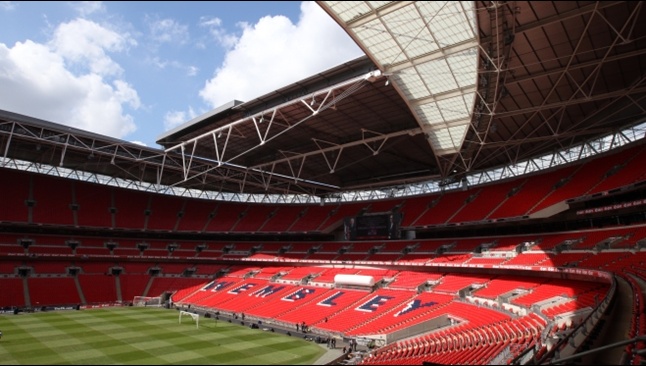
Wembley Stadium

Wembley Stadium

Wembley stadium in London is the venue for tonight’s soccer international between England and the Republic of Ireland. An interesting game for a number of reasons, mainly because it has been 18 years since these near neighbours have met. The last occasion was at the old Lansdowne Road stadium in Dublin in Fenruary 1995. With Ireland leading 1-0 the match had to be abandoned after 27 minutes as a section of the English fans in an upper stand began a riot, throwing seats, bars and other missiles down onto the Irish fans, Gardaí and stewards beneath them.

But as RTÉ sport recalled, in the years preceding those appalling scenes, the Boys in Green and the Three Lions had become familiar foes, playing out a series of intriguing competitive games between 1988 and 1991. I was in Germany for Euro 88 when in the golden era for Irish soccer for nine years under Jack Charlton, Ray Houghton’s early header decided the opening game for Ireland against the old enemy in Stuttgart. In the Euro 92 qualifiers the sides were again facing each other. Although England took the lead in both games, Tony Cascarino (Aston Villa) headed in a late equaliser in Dublin, while Niall Quinn levelled in Wembley, a match Ireland should have won.

Just like their rugby counterparts, this game means more for the Ireland players than it does for England, where most players get a regular taste of Champions League, World Cup and European Championship action. Kyle Walker, Tom Cleverly and Andy Carroll all dropped out, while Robbie Keane (LA Galaxy), Darren O’Dea and Aiden McGeady have all travelled considerable distances for the chance to step out at the famous stadium.

Wembley Stadium

Wembley Stadium

HALF TIME: ENGLAND 1 REPUBLIC of IRELAND 1

Ireland got off to a good start and took the home side by surprise by going ahead after twelve minutes. A beautiful header from West Bromwich Albion striker Shane Long inspired Trapattoni’s men. But their lead lasted for only ten minutes as Chelsea’s Frank Lampard scored the equaliser. Although both teams had their chances in the second half, there was no change in the score and at the end of the day a draw seemed the fairest result. The green army went away in happy mood singing “you’ll never beat the Irish!” Hopefully the game will have given Trapattoni the opportunity to consider his options for the next friendly at home to Georgia on Sunday then back once more on the World Cup 2014 qualifying trail with a home game against the Faroe Islands on Friday 7th June.

FULL TIME: ENGLAND 1 REPUBLIC of IRELAND 1England Football LogoFAIlogo

Share this:

  • Share on Facebook (Opens in new window) Facebook
  • Share on X (Opens in new window) X
Like Loading...
SPORT EnglandFrank LampardRepublic of IrelandShane LongsoccerTrapattoniWembley Leave a comment

NARROW WATER BRIDGE

28/05/2013 by borderroamer

In March I wrote about the ongoing controversy over the plan for a new cross-border bridge at Narrow Water linking County Down near Warrenpoint with Omeath in the Carlingford peninsula in County Louth. Now the project has been given the go-ahead by the Northern Ireland Finance Minister Sammy Wilson of the DUP and the way has been cleared for funding of €17.4m to be obtained from the Special EU Programmes Body under the INTERREG scheme. The BBC reports that the scheme for the bridge 660 metres (2,165 feet) long will be subject to various conditions in relation to its upkeep by Newry and Mourne Council as well as Louth County Council.

Proposed Narrow Water Bridge

Proposed Narrow Water Bridge

They have been talking about the project since 1976 when the East Border Region committee was formed by ten councils on both sides of the border, years before the Anglo-Irish agreement or the Good Friday agreement. The provisional EU offer of help last year was welcomed by the EBR Committee Chair, Councillor Jackie Crowe, a Sinn Féin member from Monaghan.

Proposed Bridge

Proposed Bridge

The approved scheme is for a single carriageway cable-stayed bridge across Carlingford Lough, which will be able to open to enable tall ships, leisure craft and other marine vessels access to Victoria Lock and the Albert Basin in Newry. The total length of the scheme is 660m while the towers have a height of 90m and 37m respectively. The design is by Roughan O’Donovan Consulting Engineers, who were also responsible for the new Boyne Bridge on the M1 near Drogheda.
Margaret Ritchie MP

Margaret Ritchie MP

The SDLP MP for South Down Margaret Ritchie has taken a keen interest in the project since her involvement with the East Border Region Committee as a Councillor in 1985. She paid tribute to people such as her predecessor Eddie McGrady, Jim McCart, Donal O’Tierney and Barney Carr, who she said had never faltered from their belief in the bridge and who had shaped the economic debate for it and kept the project alive during very difficult political times in the North. In March she had raised questions with Sammy Wilson and accused him of dragging his feet in approving the Stormont contribution to the project.

Following a meeting with the Minister today Ms Ritchie said  she was delighted to confirm that residual funding had been secured to allow the construction of the Narrow Water Bridge, which she described as one of the most important North South projects to be brought forward.

“Narrow Water Bridge will enable, not only many jobs to be provided in construction, but also will be a vital gateway to the Mournes on completion. It will be an important catalyst for economic investment and tourism not only in South Down and the Cooley Peninsula but throughout the island of Ireland. The project is a shining example of how far we have come as a community and in our North South relations. It also symbolises the future of our economy, which is in our tourism product, and this is now something, thanks to the peace process that we can export worldwide“, she said.

The MP said she had been making robust representations to secure funding for this project for considerable time and previously had met with all other funders including the Taoiseach, the Secretary of State for Northern Ireland and the Good Friday Agreement Committee in Dublin. She said today was a very positive day for the Narrow Water Bridge project, the people of Warrenpoint, Kilkeel and the Mournes and she thanked everybody who she said had worked so hard to bring the project to this now very advanced stage.

Narrow Water project

Narrow Water project


Share this:

  • Share on Facebook (Opens in new window) Facebook
  • Share on X (Opens in new window) X
Like Loading...
NEWS POLITICS CarlingfordLouth County CouncilMargaret Ritchie MPNarrow Water BridgeOmeathSDLP Leave a comment

LOURDES RETURN

27/05/2013 by borderroamer
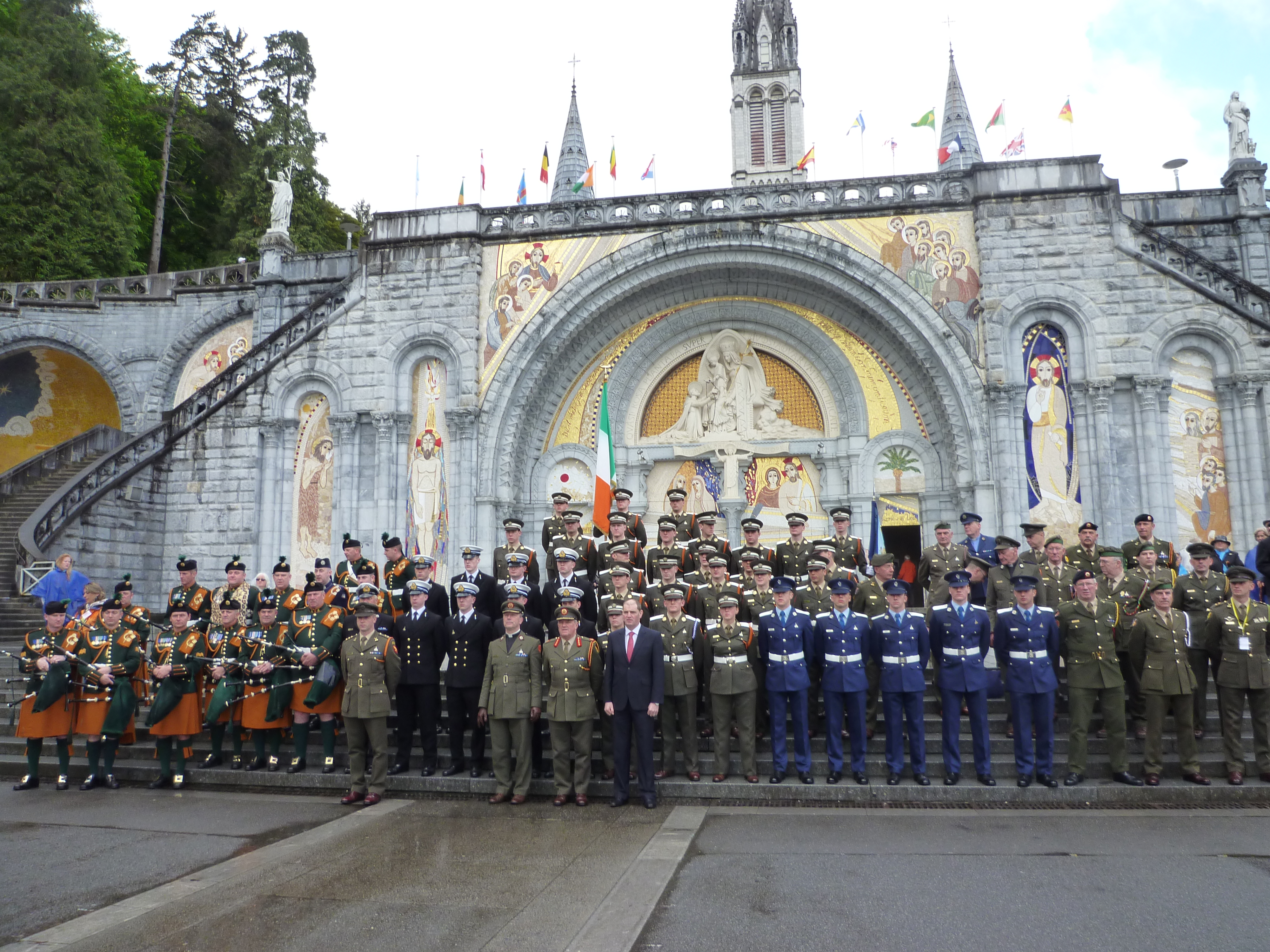
Defence Forces members on International Military Pilgrimage to Lourdes

Defence Forces members & Minister of State Paul Kehoe TD on International Military Pilgrimage to Lourdes

The 300-strong Irish contingent that took part in the 55th international military pilgrimage to Lourdes returned to Dublin this afternoon, having travelled on Wednesday to the famous shrine of Our Lady in the Pyrenees in southern France. Over 25,000 military personnel and their families and friends participated in the 2013 Pilgrimage. Since 1958, the shrine has seen soldiers from all over the world come in peace to venerate Mary. The tradition of the International Military Pilgrimage (IMP) began in 1958, after what was initially a regional then national pilgrimage was made international to recognise officially the many soldiers that had been arriving. The only glitch was a baggage handling delay at Lourdes-Tarbes airport, which meant that the departure of the two Dublin flights was two hours later than expected.

Air Corps cadets & chaplain Fr Gerry Carroll

Air Corps cadets & chaplain Fr Gerry Carroll

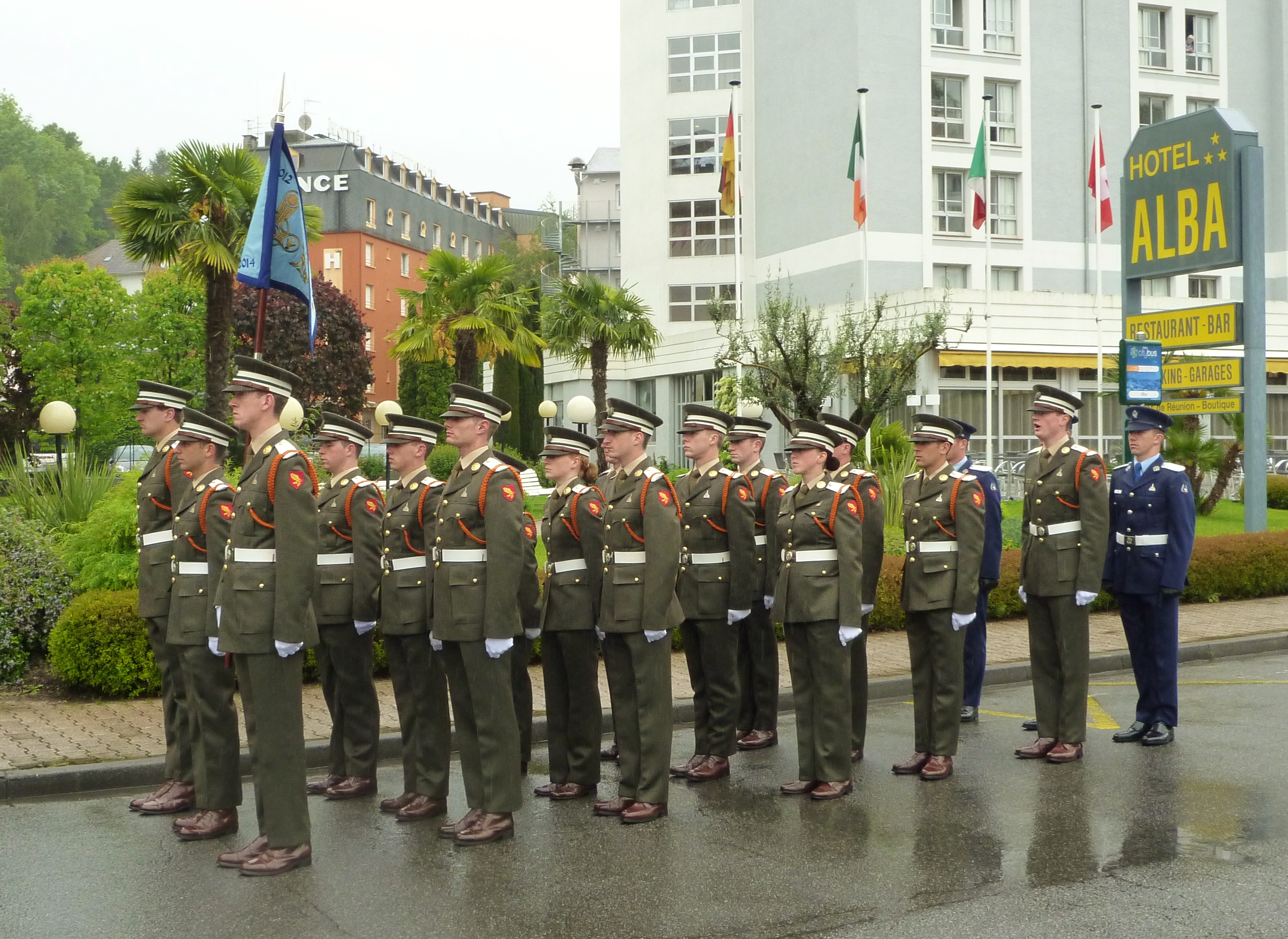
Along the way we met groups including young helpers from Ossory (Co.Kilkenny) and Raphoe (Co.Donegal) taking part in their diocesan pilgrimages. From England, there were groups from Middlesborough (staying in our hotel), Birmingham and Plymouth dioceses (staying in the hotel next door, where the UK contingent from the Royal Navy, RAF and British Army were based). The young people were a credit to their respective groups and in the case of the Defence Forces, the cadets from the 89th class at the Curragh Training Centre along with the Navy cadets from Haulbowline and Air Corps cadets from Baldonnell represented Ireland with distinction, along with the DF pipe band, who never seemed to go to bed and a group from the Civil Defence

Parading the Colours: Ireland with UK and Hungary

Parading the Colours: Ireland (Navy) with UK (RMAS) and Hungary

Share this:

  • Share on Facebook (Opens in new window) Facebook
  • Share on X (Opens in new window) X
Like Loading...
MILITARY NEWS TRAVEL 89th Cadet ClassDefence ForcesHaulbowlineInternational Military PilgrimageIrish Air CorpsLourdes 1 Comment

MONAGHAN AT THE MAZE

23/05/2013 by borderroamer
Tom Cloonan, Castleshane with helper Charlie Barker, Ballybay

Tom Cloonan, Castleshane with helper Charlie Barker, Ballybay

Even in a crowd of thousands the chances are you will always meet someone with a Monaghan connection. So it was at the new-look Balmoral Show, transferred by the Royal Ulster Agricultural Society from its usual venue at the King’s Hall in Belfast to the Maze/Long Kesh development site near Lisburn. Amidst the rubble of the H-Blocks and with some of the watchtowers and remainder of the security wall from the former high security prison in the background I came across Charlie Barker from Derryvalley in Ballybay.

The former nurse at St Davnet’s hospital is a volunteer with the Riding for the Disabled Association Ireland, based at Geraldine Bellew’s Cloncaw Equestrian Centre in Glaslough. He was helping Tom Cloonan from Castleshane to take part in a riding display involving games in one of the outdoor arenas. It was organised by RDA groups from the North.The Monaghan group meets every Tuesday morning and helps a dozen or so people with learning difficulties to enjoy riding a pony, in this case “Major”, which Geraldine had transported to the show. Keeping them company was Mary Foley from Lemaculla, Ballinode.

Trevor Keith, Glaslough, Hugo Maguire, TMC Ltd., Brendan Greenan, Ardaghy, David Boyd, Glaslough, Eddie Rafferty, Tydavnet, Paddy Rafferty, Monaghan at TMC stand

Trevor Keith, Glaslough, Hugo Maguire, TMC Ltd., Brendan Greenan, Ardaghy, David Boyd, Glaslough, Eddie Rafferty, Tydavnet, Paddy Rafferty, Monaghan at TMC stand

Another Glaslough connection encountered at the new Balmoral Park was David Boyd from Mullaghduff, a Holstein cattle breeder and dairy farmer, who had a number of them entered in the show. He has been on the Irish judges’ panel for the past twenty years and has judged at shows throughout Ireland, England, Portugal and Italy. In March he was a judge at the European Holstein Championships in Switzerland. It was Holsteins that took the two top spots for the dairy interbreed section at Balmoral. David was among the visitors at the Town of Monaghan Co-op stand, where chairman Hugo Maguire from Clones was on hand to greet suppliers, their families and friends and provide them with a welcome cup of tea and delicious scones with cream and jam. The visitors included another Glaslough man, Trevor Keith, along with two brothers, Paddy Rafferty from Monaghan and Eddie from Sheetrim, Tydavnet. They were accompanied by Brendan Greenan from Ardaghy.

Joyce Blackburn, Monaghan & Ann Connolly, Tydavnet

Joyce Blackburn, Monaghan & Ann Connolly, Tydavnet

In another part of the 65 acre complex beside the main arena I met Ann Connolly from Tydavnet, who was with Joyce Blackburn from Monaghan, enjoying a break after a long day at the show. Their excursion might have brought them into contact with Liz McGuinness from Tydavnet, who brought her range of Kiwi Country Clothing to the shopping village. She told me that after one year in business she was now exporting her goods to a number of countries. In another part of the complex, Castle Leslie in Glaslough was promoting its leisure breaks.

Kiwi Country Clothing Stand

Kiwi Country Clothing Stand

But one of the most impressive displays from Monaghan was from McAree engineering of Ballinode, regular exhibitors at the trade stands. Eamonn McMeel and Noel Kiely were busy showing their range of V-Mac silos, hoppers and tote bins to prospective clients. The company used the show to test the water for its latest product, which immediately caught my attention when I visited the stand.

V-Mac one ton bag hopper

V-Mac one ton bag hopper

The V-Mac bag hopper with adjustable “legs” can be transported on a tractor with a buck rake or grab to collect a one ton bag of meal from the merchant and then bring it back to the farm and store it. The hopper has a chute at the bottom to dispense whatever amount of feed is required. Hopefully this design will prove to be another success for the company and we can expect to see more of them in use around the county.

Noel Kiely, McAree Engineering Ballinode, chatting to clients

Noel Kiely, McAree Engineering Ballinode, chatting to clients

McAree Engineering, Ballinode, stand at Balmoral Show

McAree Engineering, Ballinode, stand at Balmoral Show

The Balmoral show had something to attract all ages and when I saw a young lad in a Monaghan GAA top I immediately went over to his parents to discover it was Joe McCarey from Dundian, Carrickroe,   enjoying a day out with his wife Pauline and three sons, one of them a baby, Páidí, named after the great Kerry footballer who died last year. Cathal (standing in the front of the picture) is becoming a media personality, having appeared in the Irish News and also on the RTÉ Sport coverage of the Monaghan v Meath division III final when the camera zoomed in for a close-up of him, apparently!

Joe McCarey, Dundian, his wife Pauline & three sons, baby Páidí, Darragh and Cathal

Joe McCarey, Dundian, his wife Pauline & three sons, baby Páidí, Darragh and Cathal

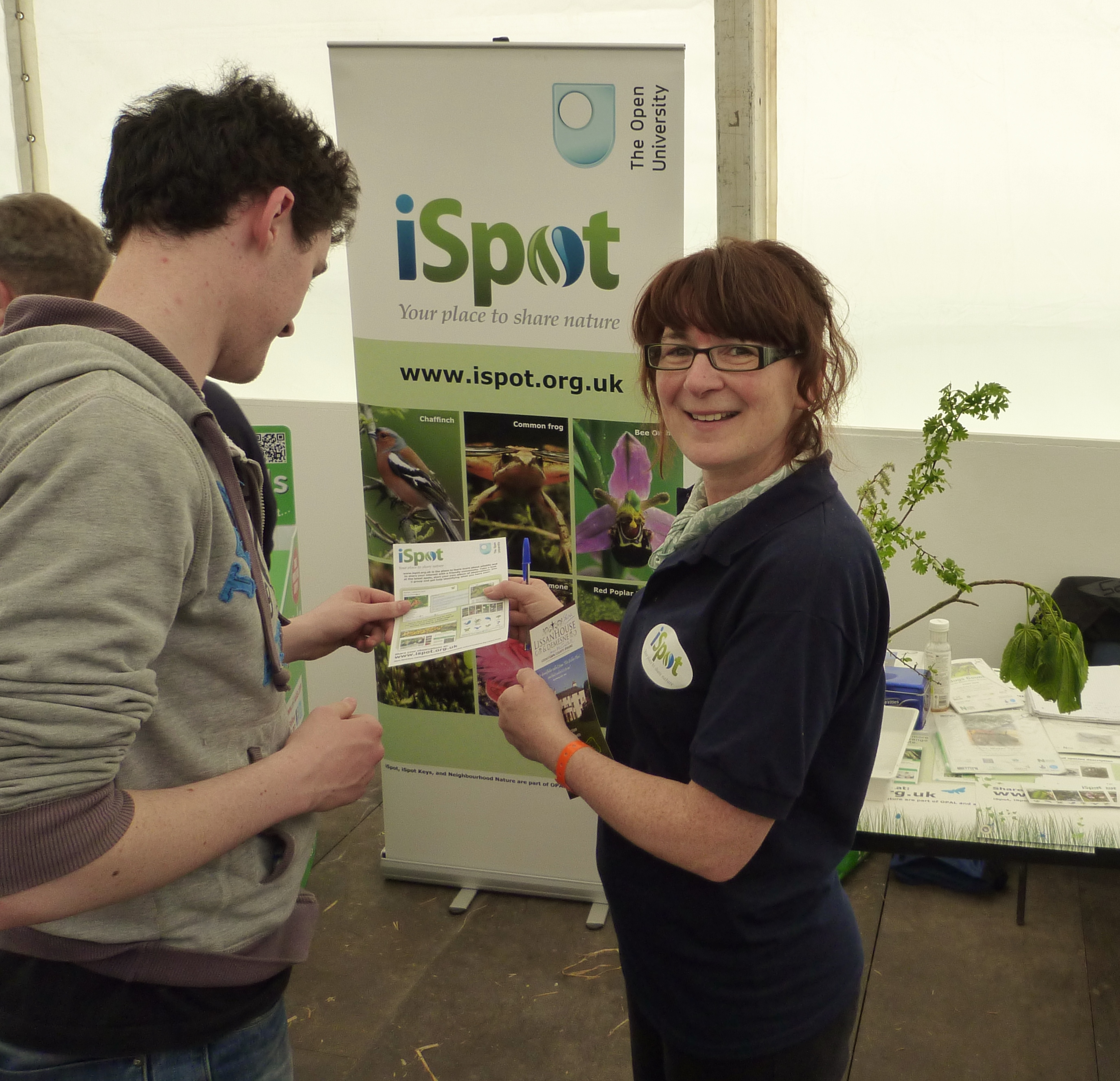
Over at the childrens’ farm, earth science expert Gretta McCarron from Monaghan had set up a stand for the Open University iSpot programme, encouraging people to identify and record wildlife and plants. All in all it was a very successful show at the new Balmoral Park, with a strong Monaghan presence.

Gretta McCaron, Monaghan, at the iSpot stand for identifying plants and wildlife

Gretta McCarron, Monaghan, at the iSpot stand for identifying plants and wildlife

Share this:

  • Share on Facebook (Opens in new window) Facebook
  • Share on X (Opens in new window) X
Like Loading...
MONAGHAN NEWS Balmoral ShowDavid BoydGlasloughiSpotJoe McCareyKiwi Country ClothingMcAree EngineeringMonaghanRiding for the Disabled AssociationTMC Leave a comment

LOURDES

22/05/2013 by borderroamer
89th Cadet Class ready to march to shrine

89th Cadet Class ready to march to shrine

Brigadier Michael Finn (right) joins parade to shrine at Lourdes

Brigadier Michael Finn (right) joins parade to shrine at Lourdes

I travelled to Lourdes to see the shrine to Our Lady for the first time. I flew from Dublin with a group from the Defence Forces to take part in the 55th international military pilgrimage. Minister of State at the Department of Defence and government Chief Whip Paul Kehoe TD (Wexford) joined the group two days later. The military pilgrims were led by Brigadier Michael Finn GOC 2nd Brigade (formerly Eastern), who was also making his first visit to the shrine in the Pyrenees.

Sgt Liam Bellew helps prepare the DF pilgrimage candle

Sgt Liam Bellew helps prepare the DF pilgrimage candle

 The tradition of the International Military Pilgrimage (IMP) to the French Shrine of Our Lady of Lourdes began in 1958, after what was initially a regional pilgrimage and later national pilgrimage was made international to recognise officially the many soldiers that had been arriving.

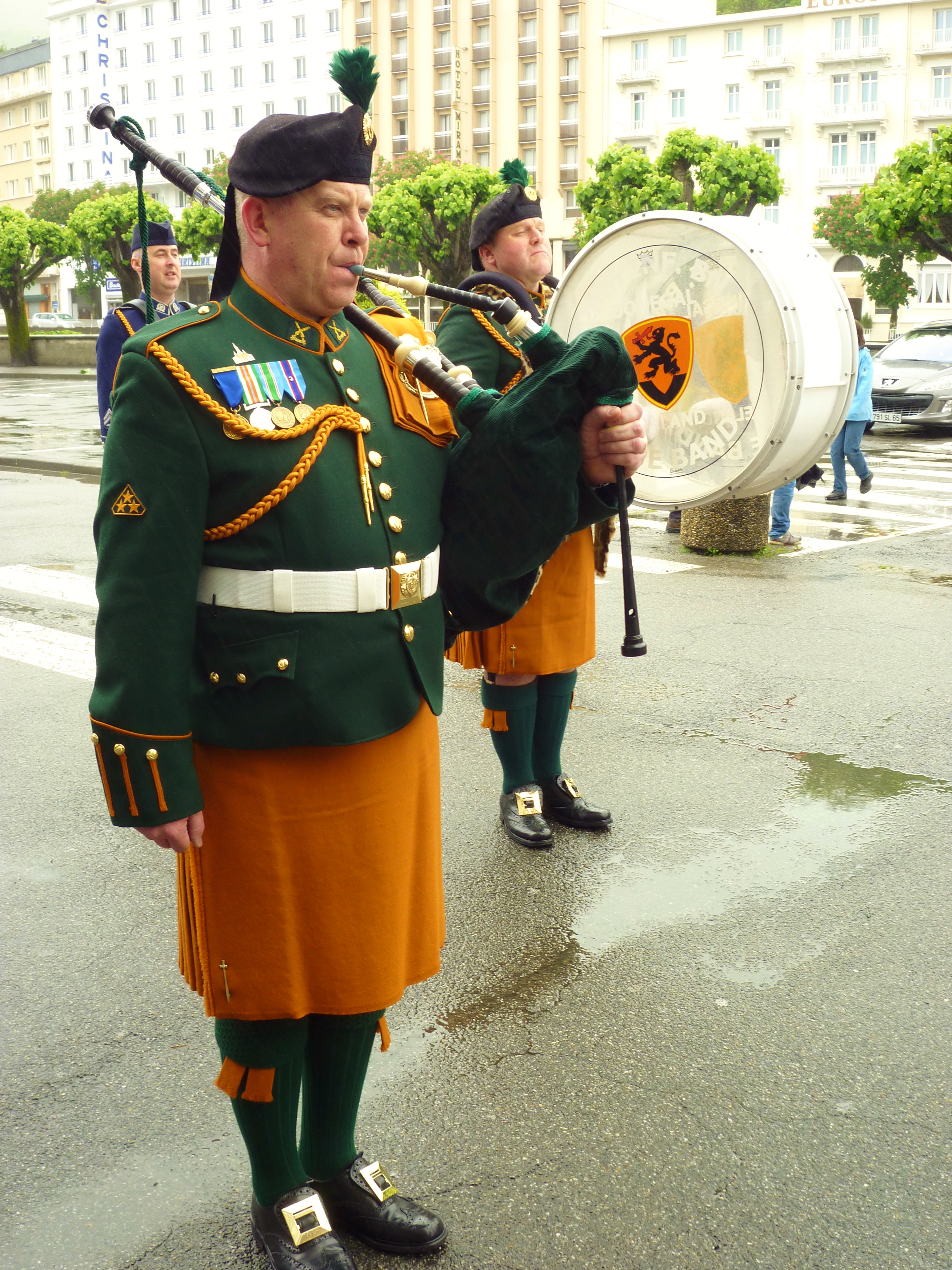
Pipe Band prepare to lead parade to Shrine

Pipe Band prepare to lead parade to Shrine

The Irish contingent arrived on Wednesday 22nd and this year’s international pilgrimage took place from May 24th-26th. I am now updating this blog following my return. Major events during the stay in the foothills of the French Alps included a parade on Friday, adoration in the Basilica of Our Lady of the Rosary and on Sunday a Mass in the large underground Basilica of St. Pius X  followed by a closing ceremony in the afternoon, in which all the bands particpate. Many other activities took place within the individual national groups, including the Irish.

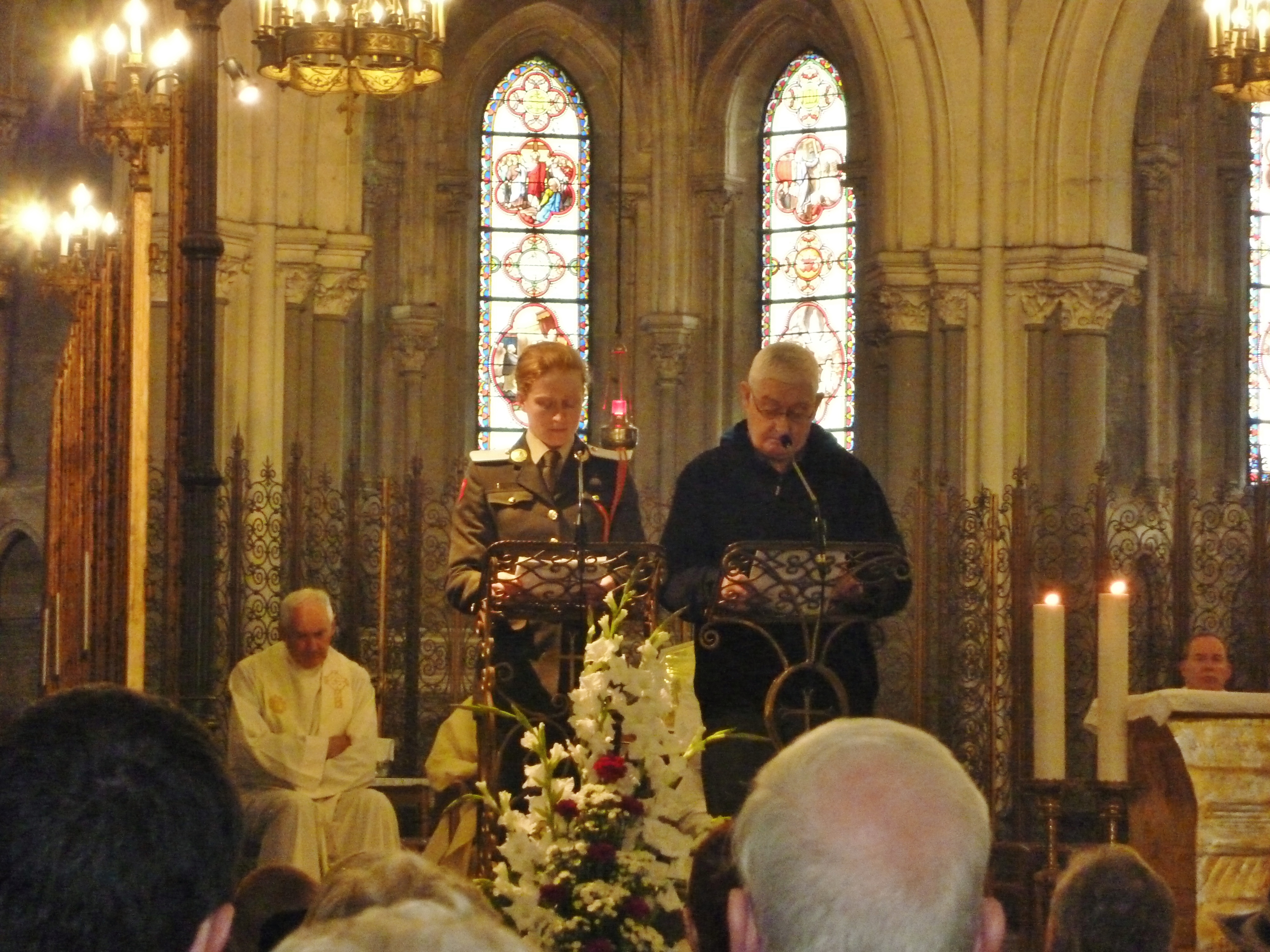
An Army Cadet & Brig. General Carl Dodd read out names on the UN Roll of Honour during Mass in Upper Basilica

An Army Cadet & General Carl Dodd read names on UN Roll of Honour at Mass in Upper Basilica

Share this:

  • Share on Facebook (Opens in new window) Facebook
  • Share on X (Opens in new window) X
Like Loading...
MILITARY NEWS UNCATEGORISED 55PMIBrigadier Michael FinnGeneral Carl DoddInternational Military PilgrimageLourdesPaul Kehoe 1 Comment

Post navigation

← Older posts
Newer posts →

Recent Posts

  • DESMOND FISHER 1920-2014 30/12/2020
  • GAJ AWARDS 2020 24/12/2020
  • COVID-19 REPORTING AWARD 20/12/2020
  • HAPPY 100TH BIRTHDAY 31/03/2020
  • NUJ VOTING REMINDER 26/01/2020
  • WORLD PRESS FREEDOM 20/01/2020
  • REMINDER TO VOTE 18/01/2020
  • BOND, WE’VE BEEN EXPECTING YOU! 17/01/2020
  • NUJ MEMBERS IN IRELAND 09/01/2020
  • NUJ BLAST FROM THE PAST 08/01/2020

Archives

  • Dec 2020 (3)
  • Mar 2020 (1)
  • Jan 2020 (13)
  • Oct 2019 (10)
  • Sep 2019 (30)
  • Aug 2019 (31)
  • Jun 2019 (2)
  • May 2019 (1)
  • Sep 2018 (1)
  • Jul 2017 (1)
  • Dec 2016 (12)
  • Sep 2016 (2)
  • Aug 2016 (5)
  • Jul 2016 (5)
  • Jun 2016 (10)
  • May 2016 (15)
  • Apr 2016 (19)
  • Mar 2016 (14)
  • Jan 2016 (26)
  • Dec 2015 (2)
  • Aug 2015 (1)
  • Jul 2015 (30)
  • Jun 2015 (30)
  • May 2015 (32)
  • Apr 2015 (30)
  • Mar 2015 (31)
  • Feb 2015 (28)
  • Jan 2015 (31)
  • Dec 2014 (31)
  • Nov 2014 (14)
  • Mar 2014 (2)
  • Feb 2014 (2)
  • Jan 2014 (31)
  • Dec 2013 (19)
  • Nov 2013 (17)
  • Oct 2013 (29)
  • Sep 2013 (30)
  • Aug 2013 (31)
  • Jul 2013 (31)
  • Jun 2013 (30)
  • May 2013 (28)
  • Apr 2013 (32)
  • Mar 2013 (31)
  • Feb 2013 (28)
  • Jan 2013 (31)
  • Dec 2012 (3)
  • Oct 2012 (1)
  • Sep 2012 (1)
  • Aug 2012 (2)
  • Jul 2012 (3)
  • Jun 2012 (3)
  • May 2012 (3)
  • Apr 2012 (5)
  • Mar 2012 (1)
  • Jan 2012 (1)
  • Dec 2011 (1)
  • Nov 2011 (1)
  • Jun 2011 (1)
  • May 2011 (1)
  • Apr 2011 (2)
  • Dec 2010 (1)
  • Nov 2010 (3)
  • Oct 2010 (6)
  • Aug 2010 (1)
  • Jul 2010 (7)

Categories

Meta

  • Create account
  • Log in
  • Entries feed
  • Comments feed
  • WordPress.com

Enter your email address to follow this blog and receive notifications of new posts by email.

36th Ulster Division 2013 WPFG AFC Wimbledon An Bord Pleanála Ballinode Balmoral Show Barry McCall Battle of Somme BBC belfast Belfast Festival Belfast Lions Club Big Music Week Birmingham BOSE Bristol Carlow Carrickmacross Castleblayney Catholic Herald Clogher Clones CMAPC Defence Forces Derry Desmond Fisher Dublin EirGrid Emyvale Fine Gael GAA Geel Glaslough Heather Humphreys TD Iarnród Éireann Ice Hockey Ieper Inniskeen Irish Press Kingsmeadow London Meath Michael Fisher Monaghan Monaghan County Council NEC NEPPC Newbridge North/South Interconnector Northern Standard NUJ Odyssey Arena Patrick Comerford Pope Francis Poperinge Private Robert Hamilton PSNI Royal Irish Fusiliers RTÉ SDLP Shamrock Rovers Shared History Shared Future SIPTU St Macartan's Cathedral Tallaght Tydavnet Tyrone Ulster rugby Vatican II William Carleton William Carleton Society William Carleton summer school WW1 WWI WWII

Blog Stats

  • 243,972 hits
Blog at WordPress.com.
Michael Fisher's News
Blog at WordPress.com.
  • Subscribe Subscribed
    • Michael Fisher's News
    • Join 173 other subscribers.
    • Already have a WordPress.com account? Log in now.
    • Michael Fisher's News
    • Subscribe Subscribed
    • Sign up
    • Log in
    • Report this content
    • View site in Reader
    • Manage subscriptions
    • Collapse this bar
 

Loading Comments...
 

    %d