KNOCKMANY WALK & CAROLS

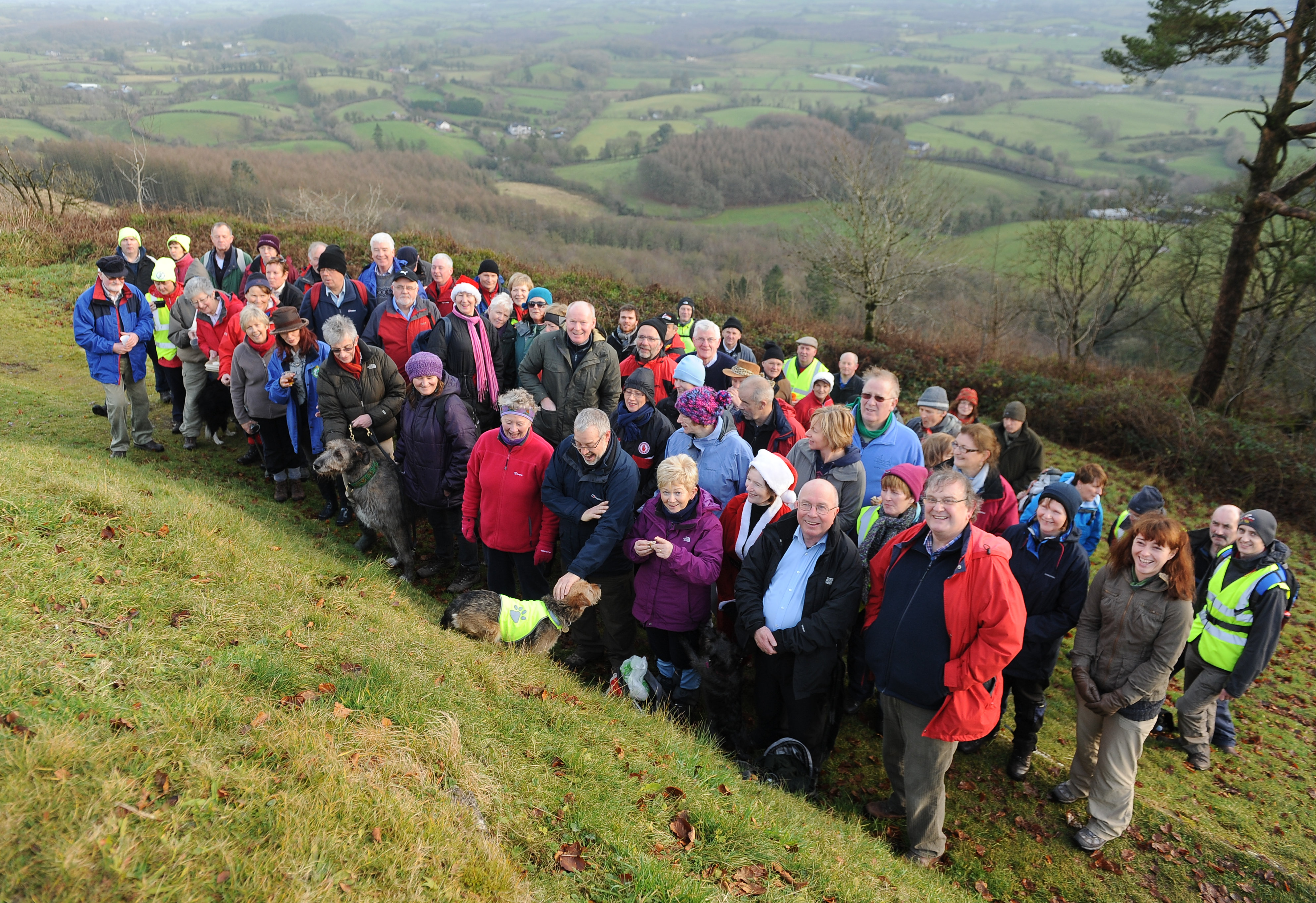
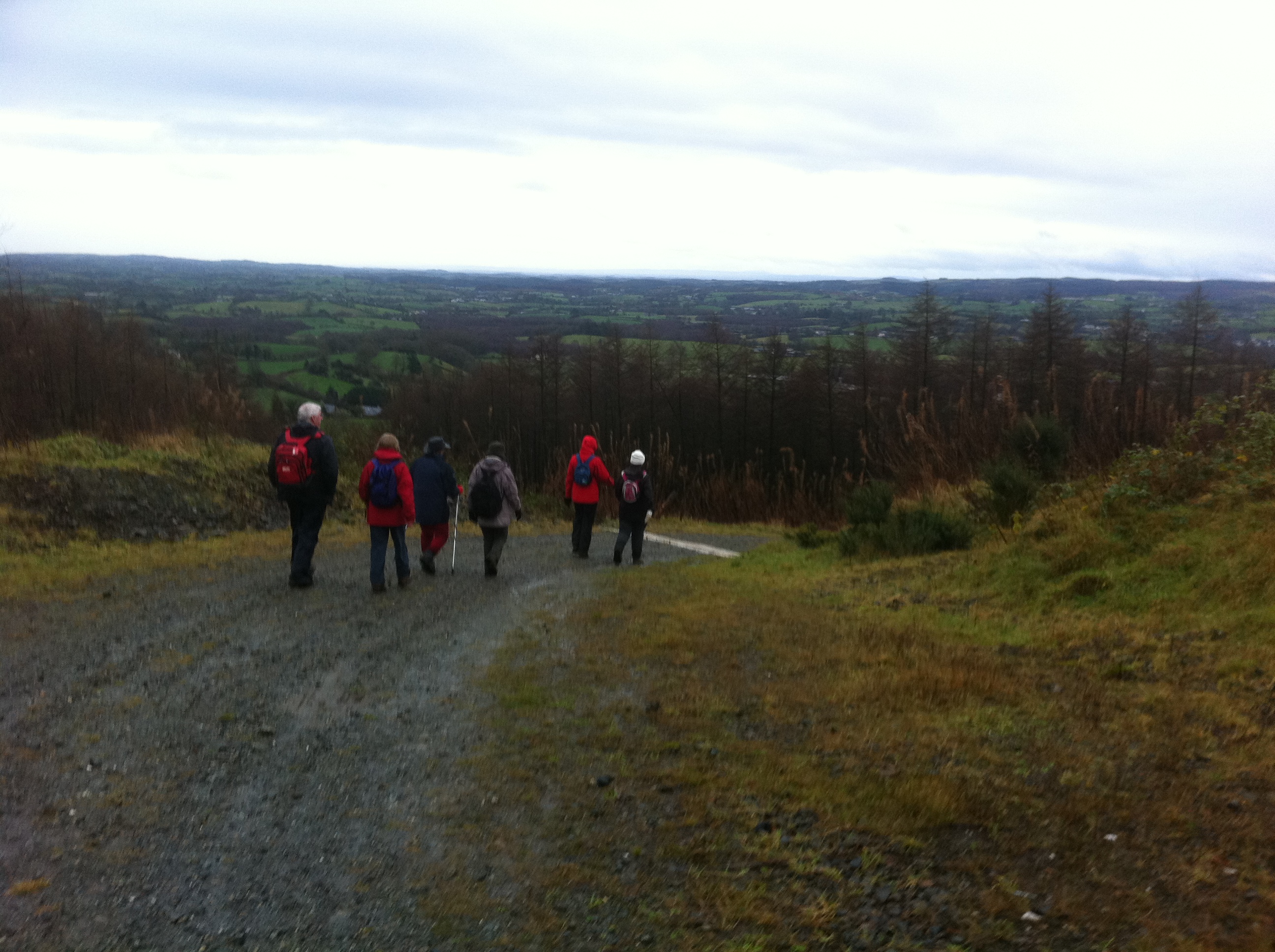
View from Knockmany towards Augher/Clogher  Photo: © Michael Fisher

View from Knockmany towards Augher/Clogher Photo: © Michael Fisher

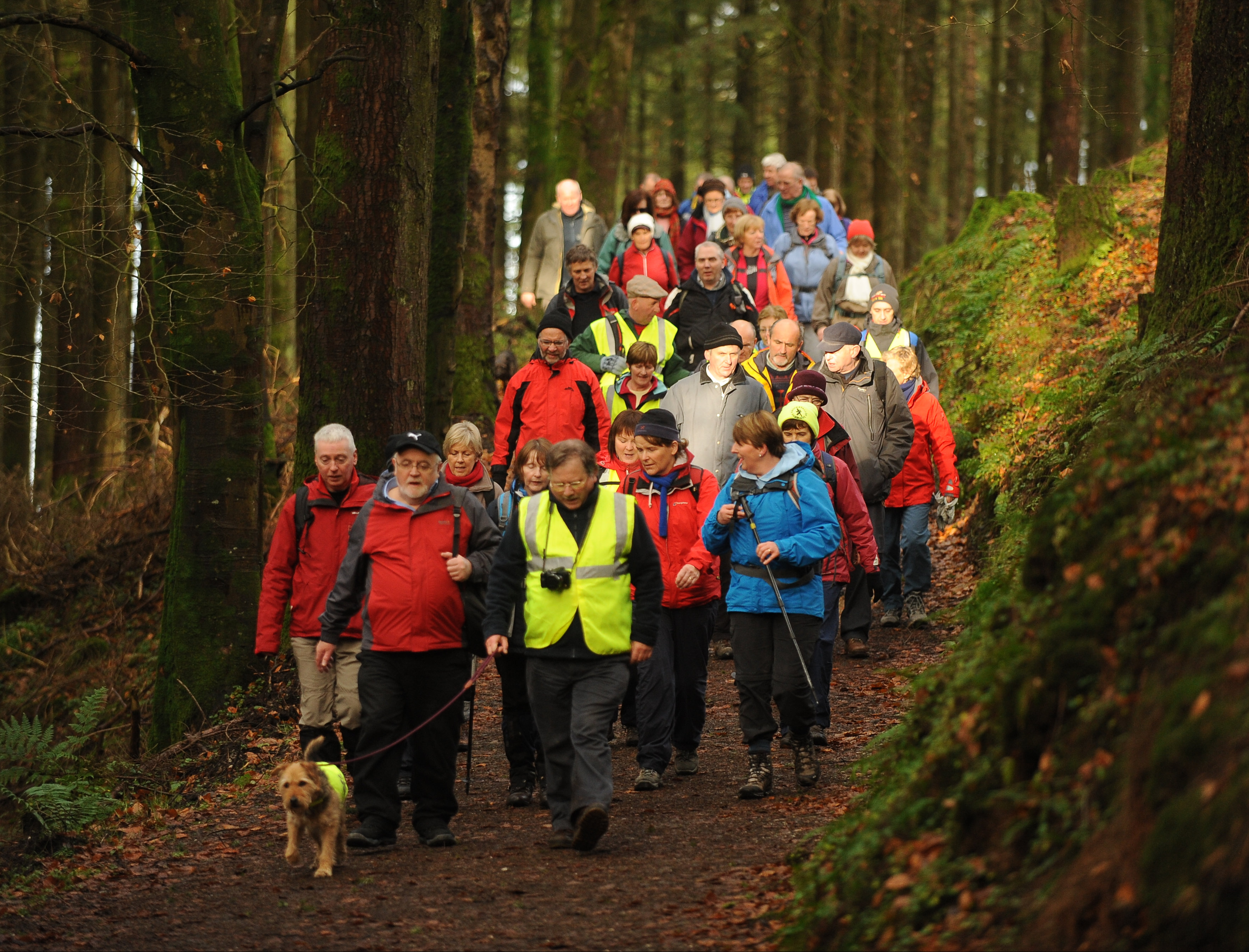
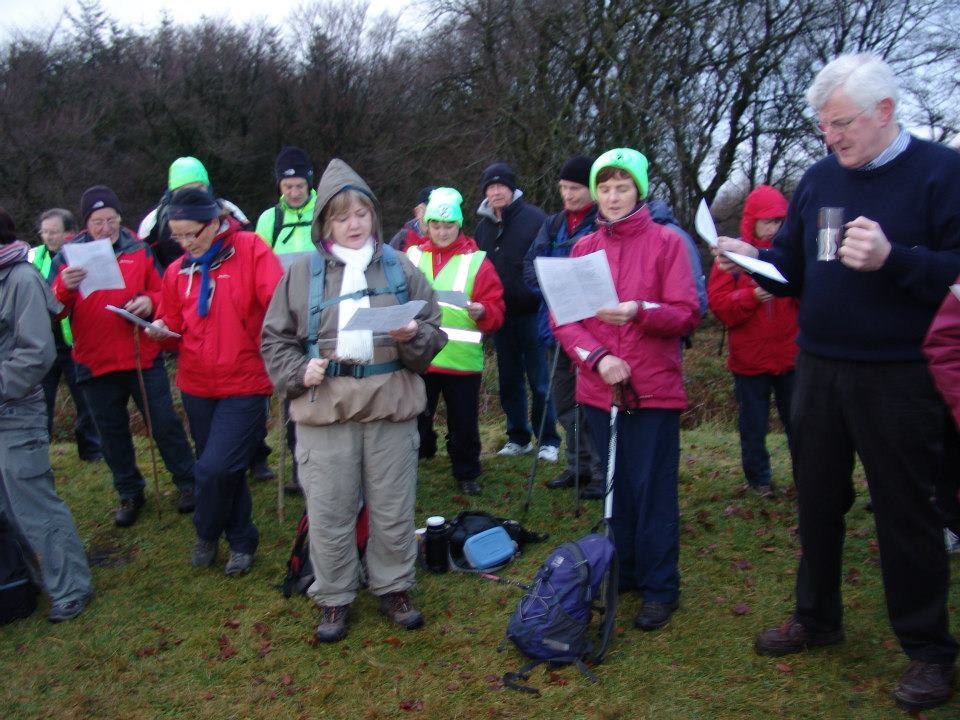
The annual mulled wine walk and Christmas carols went ahead on Sunday afternoon organised by the Clogher Valley walking club and Knockatallon ramblers. The rain was still coming down as the group of over forty walkers set off from the lower car park. But thankfully there was a break in the weather after we reached the top of the hill and as we began the carols. This meant that we were able to enjoy a wonderful view on the return journey. The £5 registration fee collected will be donated to St Vincent de Paul and another local charity.

Carols at Knockmany  Photo: © Michael Fisher

Carols at Knockmany Photo: © Michael Fisher

CAROLS AT KNOCKMANY

Knockmany Walk December 2012

Knockmany Walk December 2012 Photo: © Michael Cullen

Just a quick note to apologise for the lack of daily posts recently. I was without a landline/broadband in Co. Monaghan for a week because a passing truck driver (apparently) brought down two 100m lengths of cable about half a mile away from me. Eircom had to order the replacement cable from the UK and so it was only yesterday that things got back to normal. I got a call from Vodafone on my mobile today to tell me that service had been restored. However I have been trying to shake off a chest infection so was not out and about yesterday.

Knockmany Walk December 2012 Photo: © Michael Cullen

Knockmany Walk December 2012 Photo: © Michael Cullen

This weekend I hope to take part in the annual mulled wine walk with Christmas carols at Knockmany, near Clogher and Augher in County Tyrone. We meet in the lower forest car park at 12:30pm. Clogher Valley walking club and Knockatallon ramblers organise the event.

Christmas carols & mulled wine at Knockmany  Photo: © Gregory Murphy

Christmas carols & mulled wine at Knockmany Photo: © Gregory Murphy

There is a small registration fee: the money is donated to two local charities. To give you an idea what it’s like and the lovely views that can be enjoyed of the surrounding countryside, here is a video made for the William Carleton Society of last year’s event.

Knockmany Walk December 2012 Photo: © Michael Cullen

Knockmany Walk December 2012 Photo: © Michael Cullen

FLEADH IN DERRY

Knockmore Céilí Band at the Fleadh  Photo: BBC (NI)

Knockmore Céilí Band Co. Fermanagh (2nd place) at the Fleadh Photo: BBC (NI)

One of the most successful events during London/Derry’s year as UK City of Culture, apart from tonight’s announcement of the Turner Prize winner, was the staging of the All-Ireland Fleadh Cheoil na hÉireann, the first time this great traditional music competition was held in Northern Ireland. It was marked by a documentary on BBC Northern Ireland called ‘Fleadh‘, that was filmed, produced and directed by Sean McGuire with Paul McGuigan as Executive Producer.

McKenna Family, Clogher at Somers café Fardross  Photo: © Michael Fisher

McKenna Family, Clogher at Somers café Fardross Photo: © Michael Fisher

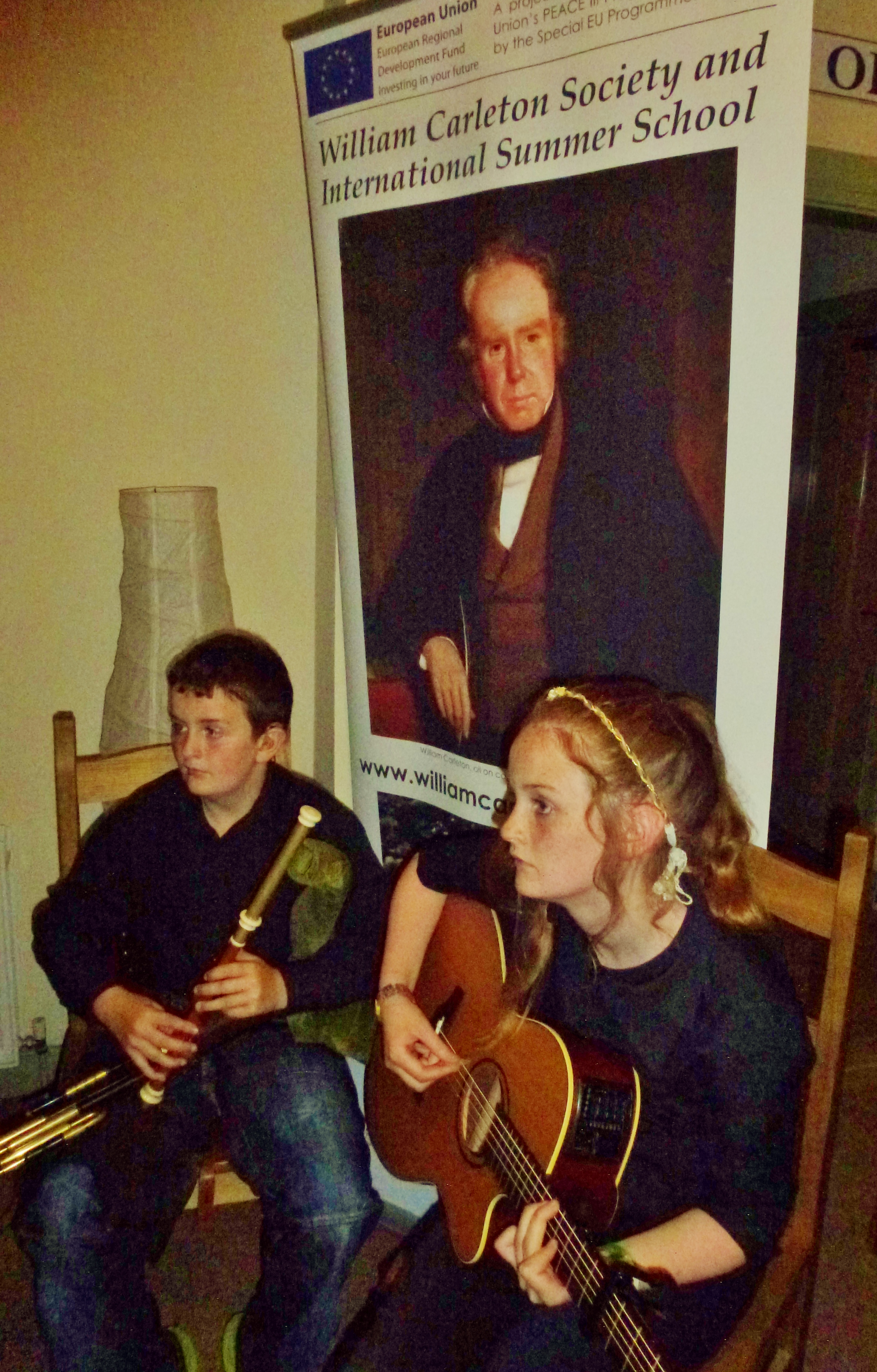
One of the groups appearing on the programme was the McKenna family from Clogher, who were competing in various categories. Peter plays the uilleann pipes. They are all very talented musicians, led by their father Martin. They performed during the William Carleton summer school at Somers café and caravan park at Fardross, Clogher, where they were joined by two pipers Frank Gildernew and Jim Brady as well as the Ulster-Scots Juvenile Pipe Band, who hold their practice sessions there.

Peter Mc Kenna (uilleann pipes) & his sister (guitar) at Somers café Fardross  Photo: © Michael Fisher

Peter Mc Kenna (uilleann pipes) & his sister (guitar) at Somers café Fardross Photo: © Michael Fisher

The BBC reported how every year hundreds of thousands of people gather for this festival of Irish traditional music, and for one week in August, Derry reverberated to the sound of fiddles, tin whistles and banjos. Organisers estimate that more than 400,000 people were at the fleadh over the course of the week, while 20,000 musicians were performing, whether on the big stages or in the streets and the city’s walls.

While the casual observer might have got swept up in the revelry, there were higher stakes involved for many of the musicians who had spent months and years fixated on winning a coveted all-Ireland title. It has been described as the Olympics of traditional music, and a new documentary goes behind the scenes to capture the pressure and tension at play when all those hours of practice come down to one nerve-wracking performance.

The programme charts the progress of a number of performers as they compete against hundreds of other hopefuls, first at county level, then at provincial level, in the hope of winning through to the main event. One of them is accordion player Justin Quinn, who likened the experience to “running down a hill faster than you feel comfortable”.

Justin grew up in Leeds but his parents are from Pomeroy in County Tyrone and Irish traditional music played a big part in his upbringing. While he won an all-Ireland title at the age of 14, he gave up the instrument when he went to university and did not return to it for another 20 years.

The competition itself is awful – having everything relying on five minutes, whether you forget the tune halfway through,” he says.

That pressure is echoed by accordion player Christopher Maguire, who says that by the time musicians have gone through provincial heats to reach the fleadh, everyone is of a high standard.

You’re in this massive room, and everyone’s watching you they’re like policemen for music, and you just have to perform your best. You have to know the song, you have to put feeling into the tune and imagine you’re singing it, you’re actually in the accordion,” he says.

While the world of traditional music is a close-knit community, friendships are put aside for a few hours while musicians do battle in front of the adjudicators. The programme’s producer and director, Sean McGuire, says the fleadh is about more than winning medals. Although there’s a competitive spirit, he says what he found in this world of music was friendship and camaraderie, along with  a lot of joy.

TYRONE INVENTORS

Christy & Martin Mallon, Killeeshil  Photo: © Kevin McSorley

Christy & Martin Mallon, Killeeshil Photo: © Kevin McSorley

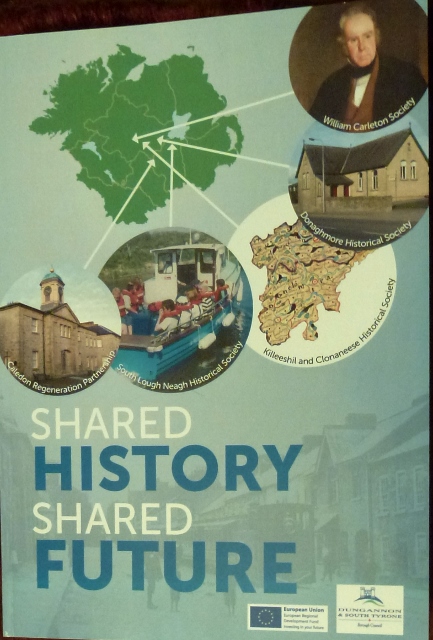
A South Tyrone filmmaker has helped to uncover five treasure troves of the area’s hidden history, including the story of how the achievements of two Killeeshil inventors changed the global quarry industry. Over the summer, cameraman Kevin McSorley captured the activities of history buffs from Caledon Regeneration Partnership, Donaghmore Historical Society, Killeeshil and Clonaneese Historical Society, South Lough Neagh Historical Society and the William Carleton Society.

His film was funded by the European Union’s PEACE III programme for PEACE and reconciliation through the ‘Shared History, Shared Future’ project, administered by Dungannon and South Tyrone Borough Council. It reveals the extraordinary story of how two men from Killeeshil, John Finlay and Sylvester Mallon, changed the course of the quarry engineering industry with inventions that are now used around the world. It also features a celebration of the legacy of literary genius William Carleton, born in the Clogher Valley, as well as the history of the Ulster Canal, and South Tyrone’s industrial heritage.

The film shows footage of Finlay and Mallon’s relatives describing the humble origins of both men, and how they were constantly dreaming up new inventions and enterprises on the backs of cigarette packets. The pair, who had great respect for each other, went on to set up factories and companies that employed large numbers of local people, and created the foundations for Tyrone’s world-class engineering industry. Nowadays, approximately 68 percent of the world’s mobile crushing machines is manufactured in the county.

The project was launched at Ranfurly House in February by the Mayor of Dungannon and South Tyrone. Dr Brian Lambkin, Director of The Ulster American Folk Park in Omagh, was the guest speaker. In June all five groups were represented at Caledon Courthouse during a visit by the Their Royal Highnesses the Prince of Wales and Duchess of Cornwall to see the work of Caledon Regeneration Partnership. The five historical societies shared with each other an awareness of their own fields of expertise and used it towards a shared understanding of our history and future.

Caledon Regeneration Partnership, formed in 1996, is a not for profit company whose make-up was and continues to be four community representatives, four Dungannon and South Tyrone Borough Councillors and three representatives from Caledon Estates Company. In 1997 the Partnership obtained funding from PEACE 1 for the development of a Comprehensive Development Plan for Caledon village. The group has helped to regenerate much of the village including many historically important at-risk buildings, such as Mill Street cottages and the beam engine house at the former mill. Caledon Regeneration Partnership is actively involved in community building initiatives.

Donaghmore Historical Society was formed by a small group of people in 1983 and since then its numbers have swollen. It refurbished what was the National School and is now the Heritage Centre. It built a replica of the Donaghmore High Cross, put Donaghmore Living History on the worldwide web and has, in conjunction with the Heritage Centre, amassed the largest archive of townlands research material in Ireland. Plans are being made to digitize the entire archive and bring townlands research into the 21st century at the touch of a button by providing access to data, using the DHS website.

Killeeshil and Clonaneese Historical Society encourages its membership to take ownership, research, interpret and be informed of the shared history of the area. It is rich in industrial heritage, including the development of machinery for quarry engineering.

South Lough Neagh Historical Society is based on the south shore of Lough Neagh. It is an academically- based society, drawing support from the wider community in their continued search to examine and record the historical and cultural footprint of this diverse area. The project examining the past, present and future of the old Ulster Canal has proved to be both illuminating and beneficial to all the members who participated and their findings are another marker in the history of this old waterway.

The William Carleton Society was re-formed in 2011 and is a cross-community, cross-border group dedicated to promoting the works of the well-known Irish author from County Tyrone and his life and times. It seeks to use his stories of faction-fighting and sectarianism in 19th century Ireland as the basis for talks and discussions on history and literature and the lessons for modern-day society. Since 1992 it has run an annual summer school in the Clogher area, with leading authors, poets and historians among the contributors.

All five groups have contributed to a 100-page booklet, which was published on November at a reception at Ranfurly House in Dungannon on November 19th. The publication printed by Ecclesville Printing Services in Fintona was also funded through the PEACE III project and copies costing £5 will be available from the individual societies from next week. Arcella Films produced the hour-long DVD. For more information and any permission to publish the video pictures contact Kevin McSorley in Cabragh, Dungannon or email the societies. Copyright 2013.

The above article is based on a news release I wrote for the Shared History, Shared Future project and was published in the Tyrone Times on November 22nd.

CAVAN COUNTY MUSEUM

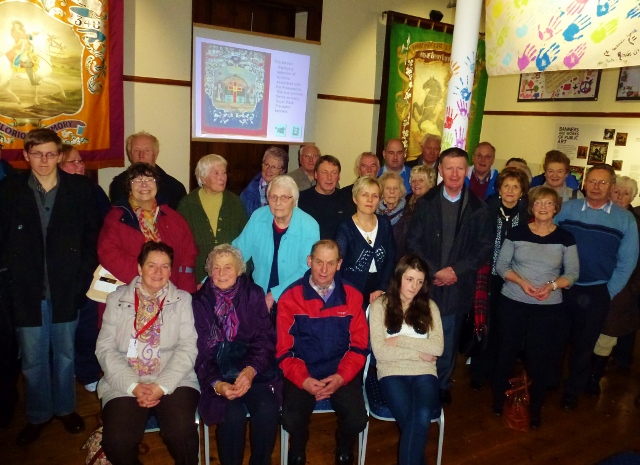
Members of the group at Cavan County Museum  Photo: © Michael Fisher

Members of the group at Cavan County Museum Photo: © Michael Fisher

Visit to Cavan County Museum, Ballyjamesduff, by members of the ‘Shared History, Shared Future’ project from South Tyrone. Members of the William Carleton Society joined the other groups on this study trip from Dungannon via Broomfield (coffee break at An Eaglais), the Boyne Valley and Navan to County Cavan. An evening meal was organised at the Lavey Inn.

Coffee Break at An Eaglais, Broomfield Co.Monaghan

Coffee Break at An Eaglais, Broomfield Co.Monaghan

CHURCH OF IRELAND

Once again I am turning to the Reverend Patrick Comerford for today’s contribution. A very interesting talk about the Church of Ireland: Church, Culture and being relevant. It was part of a series of talks on Anglicanism being delivered by him at the Mater Dei Institute of Education in Dublin.

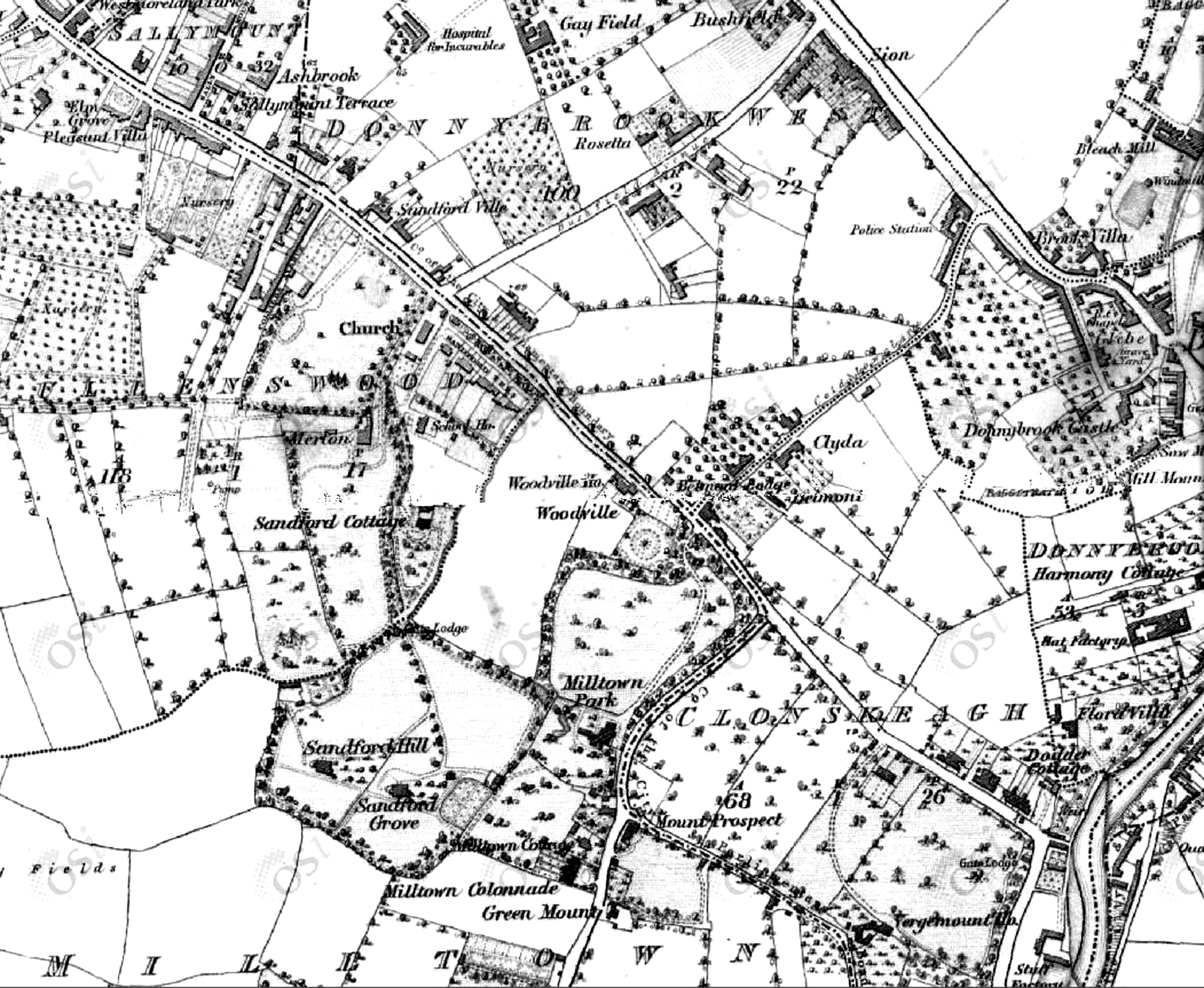
Map of Sandford Road Ranelagh c.1850 showing Woodville, where Carleton lived (Dublin City Library)

Map of Sandford Road Ranelagh c.1850 showing Woodville, where Carleton lived (Dublin City Library)

He might have added William Carleton (1794-1869) to the list of writers who were members of the Church of Ireland, although he came from a Catholic background and wrote mainly about the poor tenant farmers in the Clogher Valley: ‘Traits and Stories of the Irish Peasantry’. Carleton died in Ranelagh and is buried at Mount Jerome cemetery in Dublin and he spent most of his adult life in the city. This article on the Life of William Carleton was published in the William Carleton Society summer school booklet 2013 and is also included in a new publication due to be launched in Dungannon next Tuesday (19th November) on the ‘Shared History, Shared Future’ project involving five local historical and cultural societies.

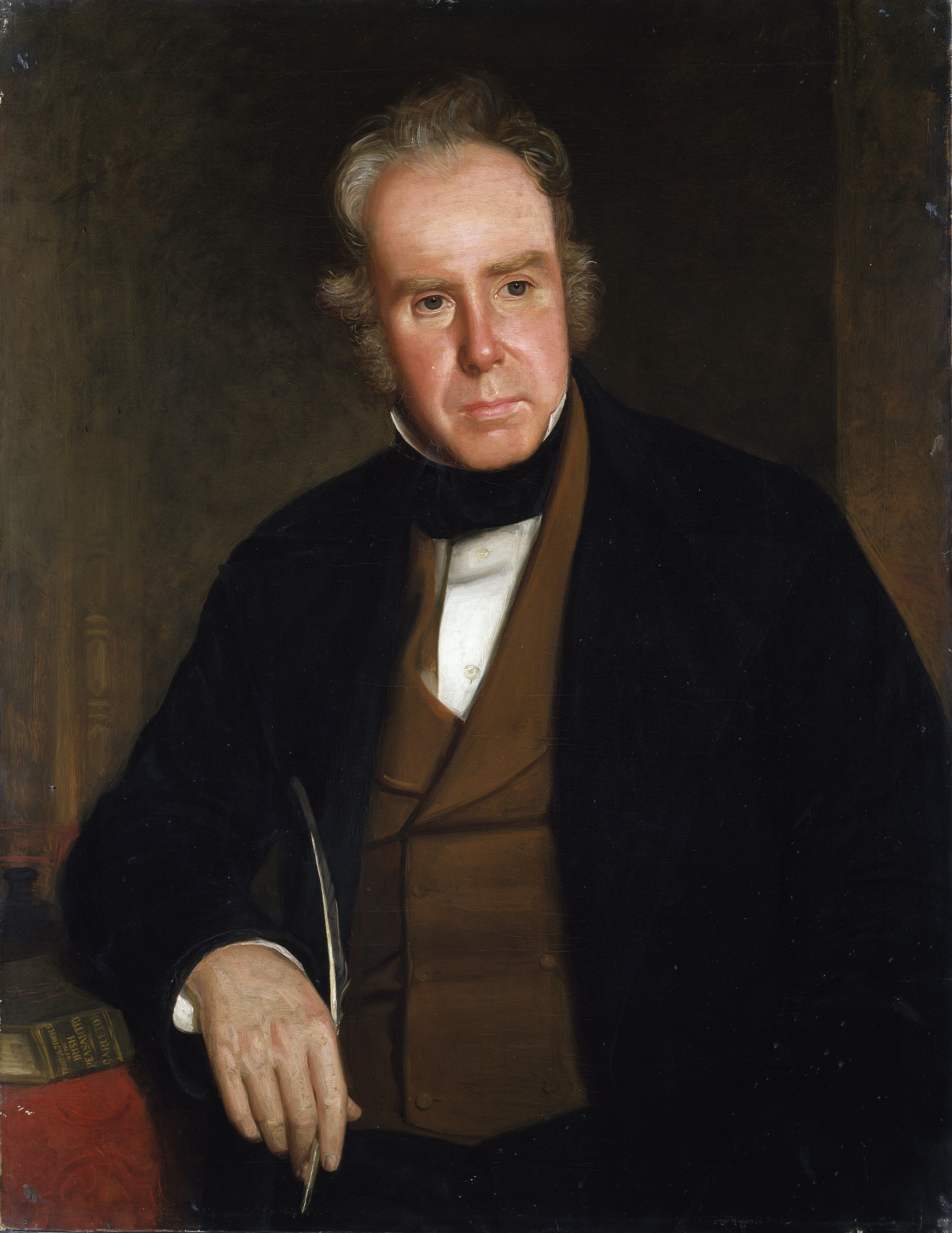
John Slattery portrait of William Carleton from National Gallery of Ireland collection

John Slattery portrait of William Carleton from National Gallery of Ireland

William Carleton (1794 – 1869) was born the youngest of a family of fourteen children in the townland of Prolusk (spelled ‘Prillisk’ in his autobiography) near Clogher in Co.Tyrone, on Shrove Tuesday, 20th February, 1794. Although there is little suggestion that the Carletons were upwardly mobile, they did move house frequently within the Clogher area and were established at the townland of Springtown when William left the family home. Carleton obtained his education at local hedge schools which he was to write about, fictionalising the pedagogue Pat Frayne as the redoubtable Mat Cavanagh. From other retrospections of his home district, we learn of Carleton’s delight in his father’s skill as a seanachie and the sweetness of his mother’s voice as she sang the traditional airs of Ireland; of his early romances- especially with Anne Duffy, daughter of the local miller; of Carleton the athlete, accomplishing a ‘Leap’ over a river, the site of which is still pointed out; of the boisterous open air dancing. Initially an aspirant o the priesthood, Carleton embarked in 1814 on an excursion as a ‘poor scholar’ but, following a disturbing dream, returned to his somewhat leisurely life in the Clogher Valley before leaving home permanently in 1817. Journeying via Louth, Kildare and Mullingar, he found work as a teacher, librarian and,  eventually, as a clerk in the Church of Ireland Sunday School Office in Dublin. In 1820, he married Jane Anderson who bore him several children. By 1825, Carleton. who had left the Roman Catholic Church for the Anglican Church of Ireland, met a maverick Church of Ireland cleric, Caesar Otway, who encouraged him to put his already recognised journalistic talents to such prosletysing purposes as satirising the attitudes reflected in pilgrimages to ‘St Patrick’s Purgatory’ at Lough Derg, a totemic site in Irish Catholicism. Further writings in the Christian Examiner & Church of lreland Magazine led in 1829 and 1833 to the publication of what is arguably Carleton’s best known work: Traits and Stories of the Irish Peasantry. In these stories Carleton returned imaginatively to the Clogher Valley, drawing on comedy, farce, melodrama and tragedy to present a tableau of the life of the country people of the north of Ireland before the famines of the 1840s altered their pattern of existence for ever. Carleton went on to respond to the challenge of the novel, in his tirne a comparatively undeveloped genre amongst Irish writers, and published Fardorougha the Miser (1839), Valentine McClutchy (1845), The Black Prophet (1847), The Emigrants of Aghadarra (1848), The Tithe Proctor (1849), The Squanders of Castle Squander (1852). In these works he addresses many of the issues affecting the Ireland of his day such as the influence of the Established Church and landlordism, poverty, famine and emigration but does so with an earnestness that regrettably often caused his more creative genius to be swamped in a heavy didacticism. Carleton continued to write in a variety of forms, including verse, until his death in 1869, but critics are agreed that the quality of the work is uneven. Despite his prolific output, Carleton never really made a living from his writings and welcomed the pension voted to him by the government following the advocacy of such contrasting figures as the Ulster Presbyterian leader, Dr Henry Cooke, and Paul Cardinal Cullen, Catholic Archbishop of Dublin. His last project, uncompleted when he died, was his Autobiography, which was re-issued through the efforts of the Summer School Committee in 1996. Carleton was buried in the cemetery at Mount Jerome in Dublin and over his grave a miniature obelisk records the place “wherein rest the remains of one whose memory needs neither graven stone nor sculptured marble to preserve it from oblivion”.

http://bit.ly/1gP8fsG

MARY O’ROURKE ON GRAND COALITION

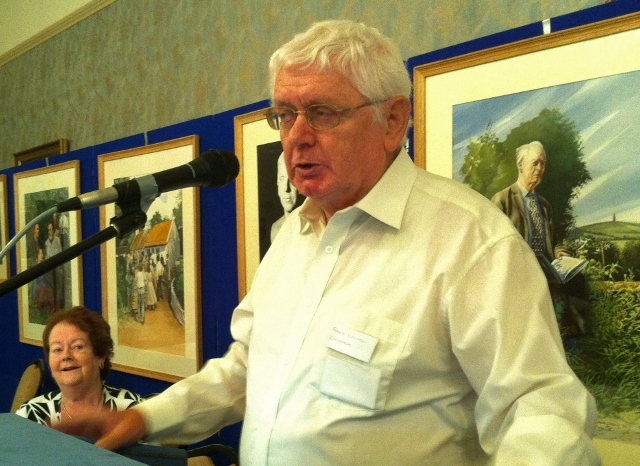
Mary O'Rourke at the William Carleton summer school Photo: © Michael Fisher

Mary O’Rourke at the William Carleton summer school Photo: © Michael Fisher

Mary O’Rourke’s speech in August at the William Carleton summer school in Clogher, County Tyrone, made headlines when she proposed a coalition between her party Fianna Fáil and Fine Gael. She also gave an interview to Lise Hand of the Irish Independent. This is her speech which can now be viewed on youtube in three short sections of about six minutes each. Her main proposal can be found in Part 3, “To think the unthinkable”.

(I was very pleased to accept Michael Fisher’s invitation to come here today to Clogher and to talk on the theme “How Differences Can Be Accommodated”.  I appreciate that the theme and the speakers to it will be mostly reviewing the Northern Ireland situation.  I have chosen to talk about my own mixed political background to the theme of the Summer School.)
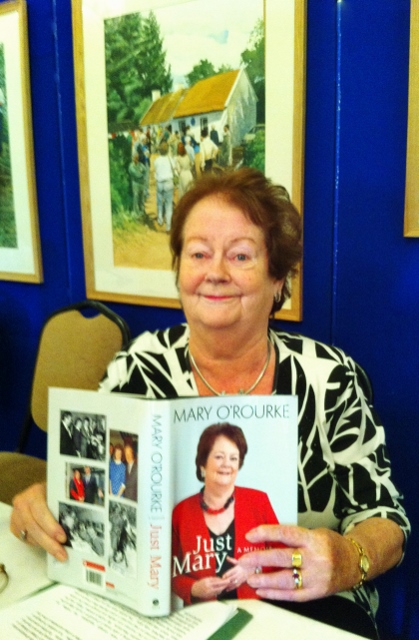
Mary O'Rourke at the William Carleton summer school, Clogher Photo: © Michael Fisher

Mary O’Rourke at the William Carleton summer school Photo: © Michael Fisher

PART 1 Family History: to watch the video click here

“I talk in my book “Just Mary” of my parents’ mixed political backgrounds. Not many people know that: until I put it in my book. My father was from Kilfenora County Clare where his father was of the very…a great follower of the old Irish Party and in time a follower of Michael Collins. My father, the young boy, imbued that from him. And indeed my cousin is here today Dr Dudley Edwards through my father’s mother late lamented and early lamented. But he was imbued with that kind of politics. He went off the UCG (University College Galway), where he met my mother and she was Ann Stanton from Drumcliff, County Sligo. Now she mixed and she was from a strongly republican background. Indeed my grandmother, her mother, was left with a clutch of six children when her husband was brought over to her mortally wounded, on the door of a pub at a local skirmish in Sligo and he died three or four days later and she was left…I think it was the era of no great big social welfare or anything like that…she was left with a clutch of children to bring up and to educate and they had twelve acres of land (of not great land) at the foot of Benbulbin. Now she was very lucky. She had a cousin who was very central in the nuns’ community in the Ursulines in Sligo and she took each one of the girls one by one and educated them, brought them into school, clothed them, fed them, made them boarders and they got (a) powerful education, so much so that three of them got scholarships directly to university out of the Ursulines in Sligo. So I went back there some time ago to look at the records and I was amazed. They have a wonderful woman there an elderly nun who’s looking after all of that. But she had it beautifully collated and ready for me and I thought to myself I don’t learn from a background like that what my mother was: it was a great feat to get to college and to do her BA and all of that. But along the way anyway she met my father Patrick Joseph Lenihan from Kilfenora County Clare. And when they met their different…their varied political background went out the window because love came in. And once it did, that was that. They fell for one another very heavily and they decided that they would get married. And going back to my grandmother she was so republican, instead of minding her business when she was herand knowing that she should be going careful she made her a safe house I heard one of the other speakers talk about the term “a safe house” she made the same house of her little farmhouse and everyone who was on the run or who was in trouble or whatever was welcome there. I’ve often thought of her spirit: instead of saying to herself ‘how am I going to manage now? I’ve no money and I’ve to manage and do she went out and she and in fact one of her sons Roger  Roger Gandon who was the boy soldier on the mountain in the skirmish when there were six of them taken Michael McDowell”s uncle, Eoin MacNeill’s son, Brian (MacNeill). He was the one who alerted that they were coming for them. The bodies were brought down and my mother   and the bodies were laid out…the six bodies…as they are called now Noblel Six. So that was the background of my mother and as I say the background of my father. My father fought in the Free State Army     He fought in Athenry when he was a student then after that he fought in many other skirmishes of that war. We were always conscious growing up my two brothers and my sister we were always conscious of our mixed political background. But when my father first went…Sean Lemass was the Minister in the Fianna Fáil government…had met my father in the old civil service and ike thought well he’s a good guy and he sent him to Athlone to set up an enterprise called General Textiles Limited. It was an embryonic cotton factory. There were about five or six of them set up around Ireland at the time to give employment state investment  but it was a time for that and he sent him to Athlone. And he came home and said to my mother one day “Pack your traps Annie we’re going to Athlone!”   Now she was glad she was halfway to Sligo and he was halfway to Clare I suppose. They came to Athlone with three children and I was…my mother was pregnant with me, so I’m the only Athlone person out of that clutch of people. But when the local elections came in 1943 in Athlone town my father went as a Ratepayers’ Association candidate. It was another title for Fine Gael so he was (true to his) roots and he went on that occasion as a Ratepayers’ Association and he had poll. Now later on Sean Lemass got at him: ‘Hey, I didn’t send you to Athlone  to be running Fine Gael’ but he went for Fianna Fáil and in time he became Mr Fianna Fáil Athlone. In 1965 he went for the Dáil and got in and for five short years. He died in 1970.”

Frank Brennan introduced Mary O'Rourke Photo: © Michael Fisher

Frank Brennan introduced Mary O’Rourke Photo: © Michael Fisher

PART 2 Brian Lenihan’s speech at Beal na mBláth 2010: to watch the video click here

“So you say why am I telling you all this? Fast forward to Sunday, the 22nd August 2010 in County Cork when Brian Lenihan, the then Minister for Finance, spoke at the Annual Commemoration of the life and legacy of Michael Collins. Brian Lenihan was greatly honoured to havend  August 2010 in  Béal  na mBláth received this “quite unexpected offer from the Collins Family and the Commemoration Committee” and he expressed so publicly on that occasion. I have spoken to Dermot Collins since then, who initiated the invitation to Brian and he was quite emphatic that he and the Committee were unanimous in wanting Brian Lenihan to have this privilege.

I went to Béal na mBláth on that occasion with two friends from Athlone and will always be glad that I did so as I have the eternal memory of Brian standing clear and tall and confident but humble as he spoke at that hallowed spot.  I quote directly now from his Speech:

“The differences between Fianna Fáil and Fine Gael today are no longer defined by the Civil War nor have they been for many years.  It would be absurd if they were. This period of our history is  graadually moving out of living memory. We ask and expect those in Northern Ireland to live and work together despite the carnage and grief of a much more recent and much more protracted conflict. Nevertheless, keen competition between Fianna Fáil and Fine Gael remains as I am very aware every time I stand up in the Dáil but the power of symbolism cannot be denied, all the more so as we move towards the centenaries of the Easter Rising and all that follows. If today’s commemoration can be seen as a further public act of historical reconciliation, at one of Irish history’s sacred places, then I will be proud to have played my part”.

Brian went on to say in his talk that he had taken:

a particular interest in Michael Collins’ work as Minister for Finance between 1919 and 1922.   In a meeting room in the Department of Finance, where I have spent many hours over the last two years, hang pictures of all previous Ministers.  They are in sequence.   Eoin Mac Néill’s portrait is the first because he was actually the first to own that office in the first Dáil though he served for less than ten weeks.  The picture of Collins is placed second and regularly catches my eye.   He is the youngest and I dare say, the best-looking, of us all”.

Brian went on to say “there is no substantive connection between the economic and financial position we come from today and the totally different challenges faced by Collins and his contemporaries. But as I look at those pictures of my predecessors on the wall in my meeting room, I recognise that many of them, from Collins through to Ray MacSharry, had in their time to deal with immense if different difficulties.  I am comforted by what their stories tell me about the essential resilience of our country, of our political and administrative system and above all of the Irish people.

That is why I am convinced that we have the ability to work through and to overcome our present difficulties, great though the scale of the challenges may be, and devastating though the effects of the crisis have been on the lives of so many of our citizens.” Brian’s closing lines on that memorable day in Béal na mBláth were ‘the spirit of Collins is the spirit of our Nation and it must continue to inspire all of us in public life, irrespective of Party or tradition’.”

Frank Brennan with Mary O'Rourke & Mary Kenny Photo: © Michael Fisher

Frank Brennan with Mary O’Rourke & Mary Kenny Photo: © Michael Fisher

PART 3 Time to Think the Unthinkable: to watch the video click here

“Well here we are now in 2013 and here I am too, somebody who was in successive general elections elected on behalf of the Fianna Fáil Party and proudly representing my constituency of Longford/Westmeath. And yet and yet and yet surely it is not too fanciful for me to put forward today as the theme, my theme, for this Summer School that it is time that Fianna Fáil and Fine Gael would bridge the political divide between them and give serious thought to coming together in a political coalition come the next General Election. I know quite well that there are plenty who will dismiss my reflections here today as ‘Summer School Speak’ or even the wild rantings of somebody who has left the political system. No, no, no, there are no wild rantings. It is very easy to dismiss my thoughts in that cavalier fashion. We, as a people, have long forgotten that the bone of contention between us as Parties since the Civil War is the Treaty signed in London in those far off days. I put the thought out there conscious that I can do so coming, as I do, from a lifetime of observing the tribal political theatre that is Dáil Éireann – coming, as I am, from someone who has reflected in historical terms long and hard on the thoughts I am putting forward today and coming as I am from a mixed political background. We are in the end the products of our background. And though growing up we knew all that about my mother and my father, it didn’t somehow come in on us. It didn’t kind of weigh upon us, but yet, of course, it had a bearing.

I was inspired to do so by the generous thoughts and reflections in the speech Brian Lenihan made in Béal na mBláth.  It is, to my mind, one of the most generous non-tribal speeches ever made by anyone in either Fianna Fáil, Fine Gael or Labour. But I am most of all inspired by what has been able to be done in Northern Ireland, of the differences which have been overcome and  accommodated. Is it not time to bury the totem poles and fly the common flag of Michael Collins and Éamon de Valera? I quote finally from the last sentence of Brian Lenihan’s speech:

But even if we can never know how the relationship between Collins and de Valera might have evolved, surely now we have the maturity to see that in their very different styles, both made huge contributions to the creation and development of our State. Neither was without flaws but each had great strengths. Each was, at different periods, prepared to operate with the constraints of the realities facing him without losing sight of his greater vision of a free, prosperous, distinctive (and dare I say it here in Clogher: some time) united Ireland.”

Is it not time now in this year of 2013 to note the similarities and to forgo the differences?   Is it not time for us to think the unthinkable – to allow our minds to range over the possibilities which could emerge from the voices of the electorate in two to three years’ time. It is enough that the mind is engaged and that is all I ask for. To engage the mind on this possibility and to reflect on the courage and vision of those who have gone before us.

Now I don’t usually…very rarely…do I actually speak from scripts. I like to talk naturally. But I did feel that this was an important occasion. I did feel that the theme and the principle of what I had to say was very important, so that’s why I actually sat down with Brian’s script there (left hand side) and my own black pencil (right hand) and I thought and wrote and thought  and wrote. And I hope you…I am sure you will accept it in the way in which I have prepared it and that

A little funny interlude to us all. I forgot to say that when I started to make my way in politics..

and I used to say ‘And what about my mother? Is she not important’

Women in politics…no no…they’re not top dog.

So that used to be the taunt I would get. You’re not really Fianna Faíl…..But of course we are…

and if you ask me something I will be delighted to answer and thank you for listening closely to me. Thank you”.

WILLIAM CARLETON SOCIETY

William Carleton

William Carleton

After two years running the annual William Carleton international summer school, I have handed over the reins. Dr Frank Brennan who is based in Dublin is the new Director and I wish him well. Already there are exciting plans being made for the 2014 event which will be held at Corick House Hotel in Clogher, Monday 4th to Thursday 7th August.

Jack Johnston, President William Carleton Society Photo: © Michael Fisher

Jack Johnston, President William Carleton Society Photo: © Michael Fisher

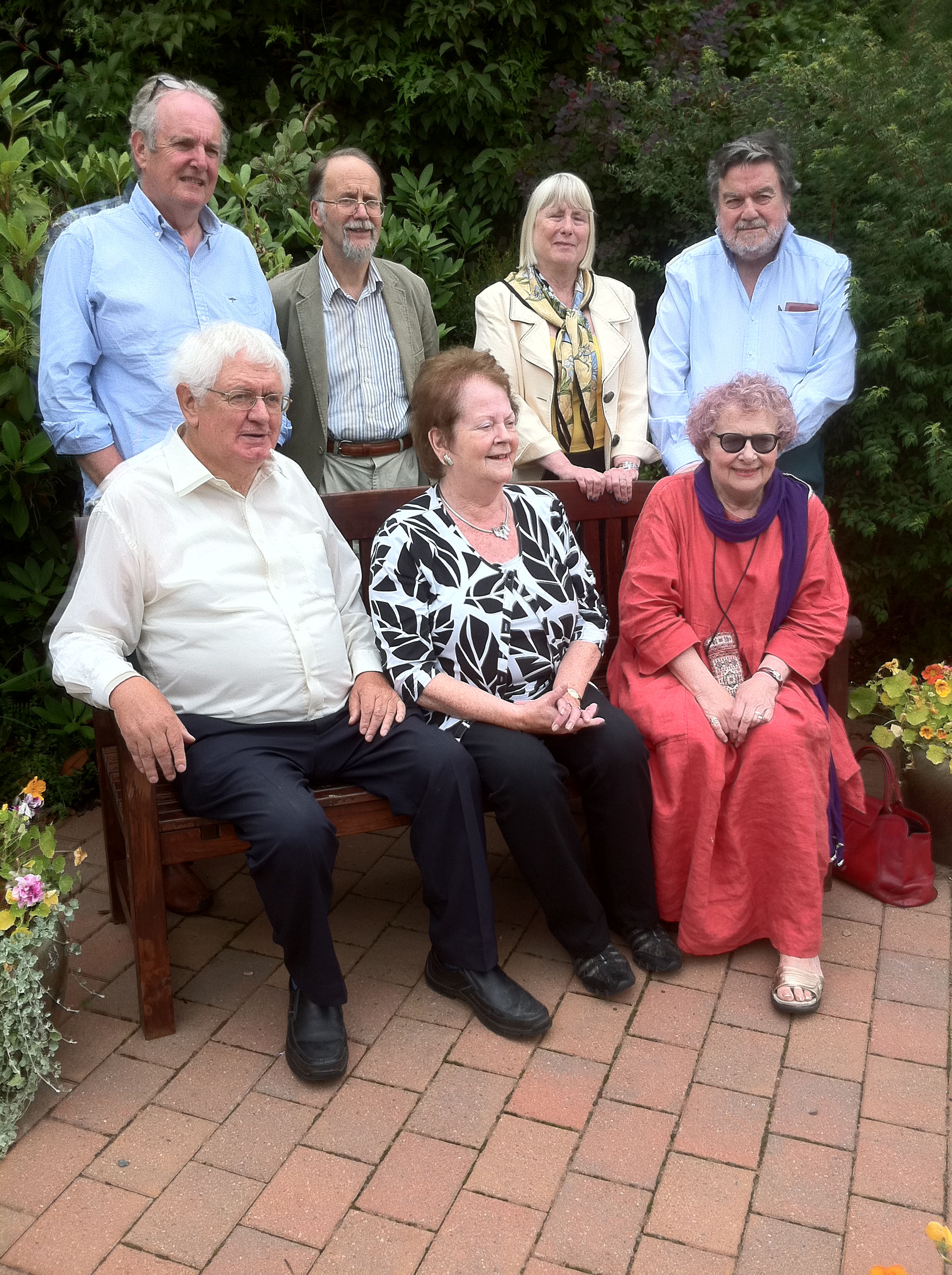
At the Annual General Meeting of the William Carleton Society at Corick House, a new committee was elected for 2013/14. I will henceforth be acting as Membership Secretary and also handling the publicity as PRO.

WILLIAM CARLETON SOCIETY 2013-14

President: Jack Johnston, Ratory, Clogher

Vice President: Liam Foley, Clogher

Chair: Gordon Brand, Enniskillen

Vice Chair: Pat Boyle, Dungannon

Secretary: Frank McHugh, Enniskillen contactable at wcarletonsociety@gmail.com

Membership Secretary: Michael Fisher, Belfast contactable at wcarletonsociety@gmail.com

Treasurer: Tom McKeagney, Belfast

Assistant Treasurer: Isabel Orr, Clogher

PRO: Michael Fisher, Belfast contactable at wcarletonsociety@gmail.com

Webmaster: Frank McHugh http://www.williamcarletonsociety.org

Summer School Director: Frank Brennan

Honorary Director: Owen Dudley Edwards

Deputy Directors: Paddy Fitzgerald; Aidan Fee

Patrons: Dr Joseph Duffy; Jim Cavanagh; Mary O’Donnell; Sam Craig; Noel Monahan

Executive Committee: Gordon Brand, Pat Boyle, Jim Cavanagh, Frank McHugh, Tom McKeagney, Isabel Orr, Michael Fisher, Peter Cavanagh, Patricia Cavanagh, Jack Johnston, Liam Foley, Frank Brennan, Paddy Fitzgerald, Aidan Fee, Malcolm Duffey, Bill McCrory, Beverley Weir.

Dr Frank Brennan, Summer School Director

Dr Frank Brennan, Summer School Director

O’HERLIHY ON GRAND COALITION

Dr Frank Brennan introduces Mary O'Rourke at the William Carleton summer school

Dr Frank Brennan introduces Mary O’Rourke at the William Carleton summer school

Former deputy leader of Fianna Fáil Mary O’Rourke made an interesting suggestion in her address to the 22nd annual William Carleton summer school in Clogher, County Tyrone, earlier this month. Her speech was reported and analysed by the Irish Independent and Sunday Independent. It was the subject of reports and editorials in the Irish Times and The Examiner (the latter very unfairly in my view referred to an unnamed ‘unfashionable’ summer school as the location for her talk).

During her speech which can now be viewed on youtube, she referred to an address made at Béal na mBláth by her nephew, the late Brian Lenihan (junior) TD, who was then Minister for Finance, in August 2010. She put forward the suggestion that the time had come for a realignment of the main parties that emerged from the Irish Civil War, Fianna Fáil and Fine Gael, into a Coalition.

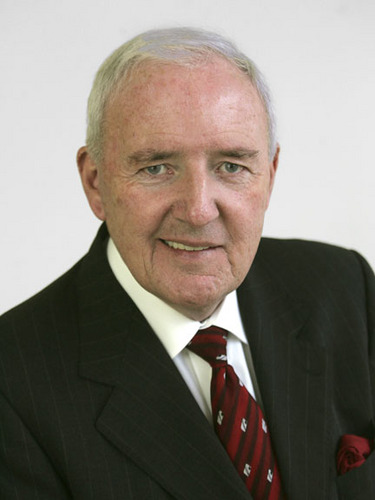
Bill O'Herlihy

Bill O’Herlihy

Now at the same commemoration of the death of Michael Collins at the hands of anti-treaty forces at Béal na mBláth in August 1922, former Garret FitzGerald media advisor Bill O’Herlihy has made a similar suggestion. The PR executive and broadcaster told the crowd he had been ‘fascinated’ by the suggestion made by Mary O’Rourke eighteen days ago.

Mr O’Herlihy’s speech had been widely reported on RTÉ News as well as in the Irish Times and Irish Independent, along with TheJournal.ie. For a full copy of his comments, you can click here (link via Irish Times website).

Béal na mBláth memorial for Michael Collins Photo: © Coppeen Heritage Colum Cronin

Béal na mBláth memorial for Michael Collins Photo: © Coppeen Heritage Colum Cronin