SIEGE OF JADOTVILLE

jadotvillefilm

Poster for The Siege of Jadotville Netflix film starring Jamie Dornan

Michael Fisher

The launch of the Netflix film “The Siege of Jadotville” last week marked the 55th anniversary of an important event in Irish military history. The bravery of the unit involved, ‘A’ company, 35th Battalion which was serving on United Nations peacekeeping duties in the Congo, has only now been acknowledged by the authorities.

Over the years, this group of men under the leadership of Commandant Patrick Quinlan was never given proper recognition for the courage they showed in Jadotville. The Irish soldiers resisted the secessionist Katangese forces for six days as they waited for reinforcements to reach them, but had to surrender after their supplies were exhausted. The men were then taken as prisoners of war for close to a month, but none of the 155-strong contingent was killed. 
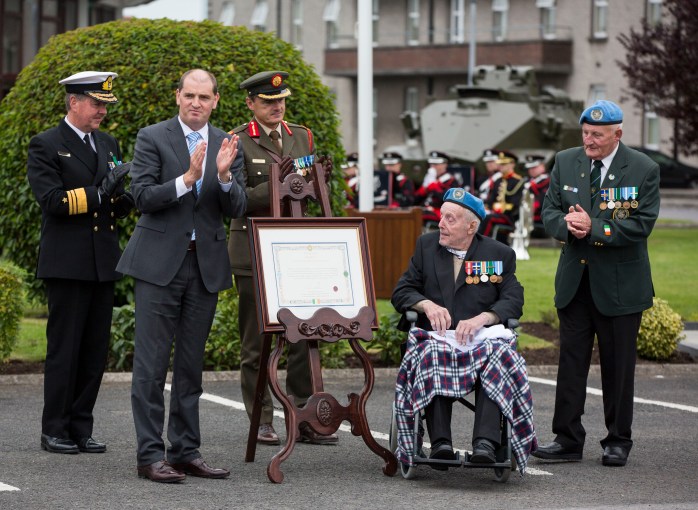
Jadotville ceremony  Custume Barracks Athlone  (5).jpg

Minister of State for Defence Paul Kehoe TD accompanied by Chief of Staff Vice Admiral Mark Mellett presents the unit citation to Sergeant Harry Dixon 35th Infantry Battalion     Pic: Merrionstreet.ie

Last Saturday 17th September the Minister with Responsibility for Defence, Paul Kehoe T.D. hosted an event at Custume Barracks, Athlone marking the collective actions of the men of ‘A’ Company, 35th Infantry Battalion and its attachments at the Siege. The Minister presented a unit citation to the Company in recognition of their bravery and heroism. A copy of the citation was presented to each member or next-of-kin of the unit. This was the first time a unit citation had been awarded within the Irish Defence Forces. In marking this unique occasion, Minister Kehoe also commissioned an insignia recognising the professional performance of the men of ‘A’ company.

Speaking at the event the Minister said: “I am very pleased to present this Unit Citation which recognises the bravery and courage of ‘A’ Company during the Siege of Jadotville whilst cut-off from support and reinforcements. The United Nations Operation in Congo was the first peacekeeping mission in which significant numbers of Irish soldiers took part. A total of 6,000 Irish soldiers served in the Congo from 1960 until 1964 and I want to take the opportunity to recall the contribution of all who served in the various Irish contingents over the course of this long Mission.”

The Minister concluded by saying “Ireland can be justifiably proud of all our brave men and women who have contributed to the cause of peace and security. Our continued participation in United Nations missions illustrates the very positive and practical difference that small countries, like Ireland, can make in the world’s trouble spots.”

Jadotville was an event that occurred during Ireland’s peacekeeping mission in the Congo in September 1961. ‘A’ Company of the 35th Infantry Battalion took responsibility for the UN post at Jadotville on the 3rd of September. On the 9th of September they were surrounded by a large force supporting the breakaway province of Katanga. Early on the morning of the 13th September the Company came under attack from this force. Over the coming days until 17th September they endured almost continuous attacks from ground and air.

Despite their courageous resistance and the sustained efforts of 35 Infantry Battalion HQ to provide assistance, ‘A’ Company was taken into captivity on 17th September. By this time ‘A’ Company had no water and several men had been wounded. ‘A’ Company remained in captivity until finally released on 25th October 1961.

soldiers

Group of Jadotville Soldiers Picture: RTE

The men of ‘A’ Company were drawn mostly from Custume Barracks, Athlone and what was the Western Command. The Citation is as follows:-

UNIT CITATION AWARDED TO ‘A’ COMPANY, 35TH INFANTRY BATTALION

“This Citation recognises the leadership, courage, bravery and professional performance of “A” Company 35th Infantry Battalion and its attachments who, under challenging circumstances at Jadotville, while besieged by overwhelming numbers of Katanganese Gendarmerie and cut-off from support and reinforcements, did valiantly defend their position from the 13th September 1961 to 17th September 1961.”

IRISH JOURNALISTS VISIT THE SOLDIERS HELD PRISONER IN JADOTVILLE

My father the late Desmond Fisher was one of three leading Irish journalists who managed to visit the soldiers when they were held prisoners. He was accompanied on the trip by Raymond ‘Congo’ Smith from the Irish Independent and John Ross from RTE. In the accompanying article my father does not admit that he was the person who was driving the hired car that failed to stop at a gendarmerie checkpoint, but luckily they all survived to tell the tale. Nor does he mention what apparently became of the ballot papers that the journalists brought with them to hand out to the troops, who were experiencing a shortage of modern domestic essentials in their confinement. The story ends with my father’s memory of the soldiers cheering them after their one-hour visit and singing as the reporters departed: “It’s a long way to Tipperary…”

The Irish Press October 2nd 961 p.1

AN 80 M.P.H. DASH TO CAMP . . .AND THE PRISONERS CHEERED

I meet the men of Jadotville siege

(From Desmond Fisher)

JADOTVILLE, Sunday —- Today I became one of the first Irishmen since the fighting in Katanga to drive down the famous Jadotville Road, across the Lufira Bridge — which two relief columns could not pass — into the town itself to meet the 181 Irish prisoners there. The outstanding impression from our visit was that all the boys were in the best form and delighted to get the bag of mail we brought to them.

Special permission for our trip was given by President Tshombe. General Muke, head of the Katangese gendarmerie, provided an escort of a gendarmerie adjutant and a paracommando officer to ensure our safe conduct.

 Our trip had minor historic significance — with us we brought ballot papers which, if inevitable Congolese differences are straightened out in time, may enable the prisoners to vote in the General Election.

The ballot papers arrived by air from Leopoldville (a) half hour before we left. They were handed over to us at a heavily-guarded Indian roadblock outside Elizabethville by Lt.-Col. Jock Casserley, who was accompanied by Col. McNamee, O.C. of the 35th.

 The trip began at gendarmerie headquarters in Avenue de La Reine, Elizabethville, where we picked up the escort. For eighty miles we drove at eighty miles an hour in a large hired American car which, after crashing through a gendarmerie roadblock, we discovered had no brakes. By the time we had pulled up on the dead straight road the gendarmerie were out of sight and the paracommando with us laughed — and waved us on.

But we made sure to pull up at Lafira Bridge, where a strong guard and roadblocks were still maintained round the clock. We got out of the car to inspect the bridge, which has now gone into Irish history, on account of the two gallant rescue efforts to relieve the Jadotville garrison.

It was very easy to see why the rescue columns could not get through. Steep banks lead down to muddy waters and on both sides of the river is swampy ground. Upstream, about fifty yards, is the wreck of a concrete bridge blown up during the fighting.

Warning call

Clambering down the embankment to get a closer view of the bridge, we clutched for support to a strong yellow cable. Gendarmerie called out a warning that the cable was a trip-wire for the mined bridge.

On arrival at the sunbaked mining town of Jadotville, fuller of soldiers than of miners, and with boarded sidewalks closely

To page 3

The Jadotville story (p.3)

From page 1

resembling the scene for a Western film, we drove to gendarmerie headquarters. Here there was more red tape for an hour, while we drank ice-cold Simba beer and gave diplomatic pats to a naked toddler tumbling on the dusty floor of the guardroom.

In true Congolese manner the Colonel in charge demonstrated authority, but a hesitant mention of President Tshombe, whose picture hung on the wall (as on every wall) proved an open sesame.

On the steps

Finally we reached the camp, not the prison camp, but a hotel in the middle of the town which was ringed off with barbed wire and blocks across the road. Across the street from the hotel, sitting at tables in a pavement café, were Katangese gendarmerie, while others were at the road blocks.

There, sitting on the steps of the verandah of the hotel, were the Irish prisoners. When they saw us they could hardly believe we were Irish too. Then we greeted them and they were all around us, smiling and laughing.

Soon we were swapping news — we giving them the latest from the free world while they told us about their heroic four-day stand and how they felt about being prisoners. On one point they reassured us — and through us the people at home — that they are being treated very well indeed.

Best of food

They get the best of food. They also get a fry for breakfast and also have a light lunch and a good dinner. On the menu is meat, soup, cheese, vegetables, fruit and jam.

The gendarmerie do the shopping for them in the town. While it is true that they are confined to the hotel, the building is large and airy. They do physical exercises on the roof and “play games of cards, chess and so on”.

The chaplain, Father Fagan, said: “The boys also do a lot of praying”.

Co-operation

The uppermost thought in everyman’s mind is — “when will I be free?” We were able to assure them that the peace talks are going well and that there should be good news for them soon. Our own observation showed us what seemed to be genuine co-operation between the Irish prisoners and the gendarmerie.

The spirit of goodwill between the Katangans and the Irish prisoners was expressed to us in another way by our guard on the way home. “Irish, our friends,” he said. “During the fighting we could have wiped them out altogether but we bore them no (ill-will)”.

The only civilian in the camp is the interpreter with the 35th Battalion, Mike Nolan. He is a great help to the prisoners because he understands French, Swahili and other African dialects.

Heroic stand

The medical officer, Commandant J.J. Clune, said that he examined all the men and they were in the best of form. The wounded were not seriously injured and they were all responding well to treatment.

The men crowded round us for the full hour we were allowed to stay there, telling us about themselves, recording interviews and being photographed for papers, television and army records.

Of the many battles in which the Irish distinguished themselves in the Katanga fighting, none was more heroic in the face of overwhelming odds than the Jadotville garrison, and we can bear this out after our visit here.  (NOTE THIS PARAGRAPH IN PARTICULAR)

Most of the men were at Mass and those manning trenches found their positions there being rushed, and the shooting started.

4-day attacks

Commandant Quinlan thought at first that it was a local incident and told the men not to use maximum fire, though they could have mown down the gendarmerie who were moving up. For four days the Irish were under heavy attack.

First came heavy mortar barrage and Irish mortar replied with good effect. As positions spread out, Commandant Quinlan decided to withdraw after dark to stronger positions astride the main road about a mile from the town.

The men holding the forward positions fought with great courage under fire while new positions were being dug. All the troops fell back safely to the new strong positions, but they were completely surrounded on all sides. It is estimated that the gendarmerie had 3,000 in the area.

Jet attacks

The Irish were being fire at from the front, rear and sides. They had laid in water supplies when the fighting started but this became putrid. They could not leave the trenches during those four days of fierce fighting.

There were flies all over the place. The jet plane joined in the attacks and bombs fell very near the trenches where the Irish were. The jet also machine-gunned them. The Irish fired back with small arms and the jet did not come in as low afterwards.

More jet attacks followed on the Thursday, Friday and Saturday and there was also heavy mortar fire. Propaganda warfare too.

‘Indigestion’

A man purporting to be from the Red Cross rang up the Irish to say that tribesmen were coming in to attack them and would eat them. Commandant Quinlan replied “If you come and try and eat us, we will give you indigestion.”

Commandant Quinlan warned too that if there were any more mob attacks the Irish would mow them down mercilessly. Convoys were heard at night moving on to Lufira Bridge to meet the breakthrough attempt by the first relief column.

quinlan

Commandant Pat Quinlan, Commanding Officer ‘A’ Coy 35 Inf Bn

Commandant Quinlan told me of the ceasefire arranged on Saturday evening, a condition that the jet would be grounded and that the men would get water and hold their positions.

But the jet came over again on Sunday morning and the water was still not turned on. Commandant Quinlan protested about the jet and he was assured it would not happen again.

Delaying game

After the big breakthrough attempt at Lufira Bridge had been repulsed on Saturday — and Irish and Indians withdrew to Elizabethville — Katangans pulled back paracommando elite troops from the bridge to Jadotville for an all-out final attack on the Irish.

Gendarmeries were now infiltrating Irish positions on all sides and a big force was massed.

“My men were now utterly exhausted,” Commandant Quinlan said. On Sunday, he said, they played a delaying game, holding out for a ceasefire and hoping against hope that reinforcements would get through.

“When I finally realised there was no hope of relief and that if I continued the fight all my men would be massacred by vastly superior forces, I decided to save the lives of the men by parleying with Munongo, Minister of the Interior, who arrived in the late afternoon,” said Commandant Quinlan.

Signed terms

The terms signed by Commandant Quinlan were as follows “I, Commandant Patrick Quinlan, Officer Commanding Irish United Nations Troops in Jadotville, do hereby agree to the terms of surrender of Minister Munongo because the Irish force is here on a peaceful police role and any further action would result in the loss of African and Irish lives.

“I also wish to state that my troops fought only in self-defence having been fired on while attending Mass on the morning of 13th September 1961. It is also agreed that the Irish troops will have their arms stored.”

Thus ended the glorious stand which would otherwise have surely resulted in heavy loss of life on the Irish side.

As we left Jadotville after the short hour with the prisoners they gave us three rousing cheers and sang cheerfully, though rather wistfully, “It’s a Long Way to Tipperary.”

THIEPVAL COMMEMORATION

13327586_1116707298391527_2727274521458333741_n

Ulster Tower, Thiepval  Pic. IRFU Charitable Trust

REMEMBERING THOSE WHO DIED AT THE SOMME 100 YEARS AGO

 Michael Fisher in Thiepval  Northern Standard  Thursday 7th July 2016

13606789_1155637621124346_7274108435410088020_n.jpg

Northern Standard, Thursday 7th July 2016

As she laid a wreath at the Ulster Tower in France last week, Minister Heather Humphreys stepped back and reflected on the carnage that had taken place on the battlefields of the Somme exactly one hundred years ago. She thought of the young men, including those from Ulster and other parts of Ireland, who had joined the British Army and had gone out to fight for their country and what they believed in. Some had written home to their mothers days before the offensive began and would die in the conflict.

The memorial which is similar to Helen’s Tower at Clandeboye, Co. Down, is beside Thiepval Wood where soldiers from the 36th Ulster Division including some Monaghan men left the trenches at 7.30am on July 1st 1916 to advance towards the German lines. Heather Humphreys laid a wreath along with the North’s First Minister Arlene Foster MLA, the Northern Secretary Theresa Villiers MP and Britain’s Prince Charles.

27917351082_57fb329fa1_z

NI Secretary of State Theresa Villiers M.P. at the Thiepval Memorial commemoration #Somme16

The service included representatives of the four main churches in Ireland. For the first 6time, the Catholic Archbishop of Armagh, Dr Eamon Martin, was present at Thiepval along with his Church of Ireland counterpart, Archbishop Richard Clarke. The Presbyterian Moderator Dr Frank Sellar and the Methodist President Reverend Bill Mullally joined them.

They jointly called for Christians of all traditions in Ireland to pray for peace in these challenging times.  The Church leaders said: “Let us put our faith into action: love our neighbours, reach out to the stranger, care for the vulnerable, build community and be agents for peace, forgiveness and reconciliation.”

Addressing the service Archbishop Clarke referred to how the Somme and Ulster had belonged together in the imagination of succeeding generations over the last century. He noted that the Somme represented “a connectedness for all time with many men and women, and not only in Ulster nor only for one Christian tradition.”

He also recalled the recent pilgrimage to the Somme last month which he jointly led alongside Archbishop Martin, and which included a cross-community group of young people from across the island of Ireland. Archbishop Clarke encouraged the present generation to relate the sacrifice of the Somme to its hopes, prayers and aspirations for the future. “We must believe in a hope of the future for our young people, as they must believe in it for themselves”, he said.

The Presbyterian Moderator, Dr Frank Sellar, spoke afterwards of how for many families like his own, the Battle of the Somme was still personal. He said the Great War had changed the course of human history and a century later the world is still living with the consequences of its aftermath. The Somme, as a particularly poignant part of that conflict, changed the lives of countless thousands and indelibly shaped whole communities in Ulster and throughout the island of Ireland. It was a time of terrible carnage and incredible heroism, he added.

“For us today, 100 years on, it is difficult to imagine, or even contemplate, the shear scale of the loss of life and the impact that it had then. My grandfather lost two of his brothers on the battlefield, while a third, who survived, received the Military Medal for his bravery,” Dr Sellar said.

“For many families, like my own, the events of 1916 are still personal. It is however an enormous privilege and honour to represent the Presbyterian Church in Ireland at such an historic occasion, as we pause and remember those who died and reflect on their loss.”

“I am also reminded of our own fractured society and troubled world we live in and the vital importance of critical reflection and inclusive remembering. I am also very conscious of the necessity to always search for true reconciliation and for the creative reimagining of a civil society humbly modeled on Christ Jesus for the common good,” he said.

The objective of the 36th Ulster division was to dominate the area between Beaucourt to the north and Thiepval to the south, necessitating the capture of all German trench systems in front of them, particularly the strongly defended Schwaben Redoubt. In addition to its twelve battalions, there were four battalions of Tyneside Irish and seven regular Irish battalions distributed in other divisions, giving a total of twenty-three Irish infantry battalions involved on this front.

The Somme campaign lasted 147 days, from 1st July to 24th November 1916. The Allies captured 120 square miles of land, and advanced six miles. They suffered 419,654 casualties: forty men killed or wounded for every yard advanced.

27405808214_d08119522a_z.jpg

Wreaths Laid at the Memorial Stone, Thiepval Memorial

At the start of her visit last Thursday, the Minister laid a wreath at the Ginchy Cross in Guillemont. It remembers the sacrifice of the 16th Irish Division of the British Army, which entered the Battle of the Somme in September 1916. Minister Humphreys will return there for a separate ceremony to mark the centenary in September.

She then visited one of the many cemeteries in the Picardy area maintained by the Commonwealth Graves Commission. Delville Wood contains the graves of over 5,500 servicemen, of whom 3,500 remain unidentified. They include some Irish casualties.

Heather Humphreys also attended a special Abbey Theatre production of ‘Observe the Sons of Ulster Marching Towards the Somme’, which was supported by her Department, at the Maison de la Culture in Amiens. It was attended by the playwright, Frank McGuinness.

On Friday morning the Cavan/Monaghan TD accompanied President Higgins at the Thiepval Memorial for an international service marking the start of the Battle of the Somme on July 1st 1916. This ceremony was attended by a number of senior members of the British royal family, the British Prime Minister David Cameron, and the North’s First Minister Arlene Foster MLA along with her counterparts from Scotland and Wales.

The Minister said it was very important that the Irish Defence Forces led by Chief of Staff Vice Admiral Mark Mellett had been included in the ceremony along with British and Commonwealth servicemen and women.

CQMS Gerry White from Cork read from the last letter of Lt Tom Kettle, journalist and soldier with the 16th Irish Division. Students from St Paul’s community college in Waterford also played a role at the service, which was attended by 10,000 guests, mainly from the United Kingdom. Solicitor Brendan O’Reilly from Cootehill and his son Aoghan from Dernakesh National School travelled from Co. Cavan. They saw the grave of Mr O’Reilly’s grand uncle Rifleman J.P. O’Reilly. He served in the Royal Irish Rifles and was killed in September 1916. He is buried at the nearby Lonsdale Cemetery.

Speaking about her visit to France Minister Humphreys said:

“The Battle of the Somme was a seismic event, which had a huge impact on the island of Ireland. The Somme has particular resonance in my own province of Ulster, due to the very heavy losses suffered by the 36th Ulster Division on the first day of the battle. There were more than 5,500 casualties in the 36th on July 1st 1916, including 2,000 deaths. Over the four years of World War One, it is estimated that 50,000 Irish men were killed while serving in the British, Commonwealth or United States armies.”

“This had a profound effect on the island of Ireland, and almost certainly had an impact on every community across the country. For decades, the stories of these men went largely untold, and many of those who returned home from the Somme and other battles, felt forced to conceal their own experiences. The Decade of Commemorations has allowed us to explore some of these stories for the first time, giving those who fought and those who died their rightful place in Irish history.”

“During 2016, our centenary year, it has been incredibly important to me that we remember those who died fighting abroad, as well as those who died fighting during the Rising here at home. One hundred years on from both the Easter Rising and the Battle of the Somme, we are hearing a more complete narrative on the Irish experience in 1916, and the impact the events of that year had on our culture, our society and our psyche.”

HRH CHARLES LIKED DONEGAL

28019297475_f657d212ab_z

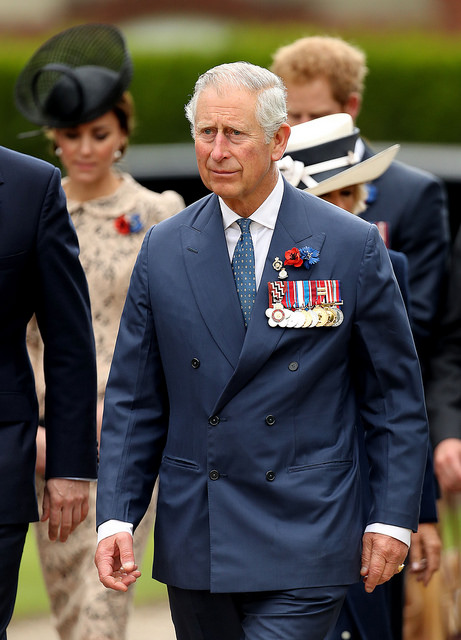
Prince Charles at the Somme Centenary Service at the Thiepval Memorial  Pic. PA

PRINCE CHARLES HOPES TO MAKE ANOTHER VISIT TO IRELAND

President and Minister Humphreys Participate in Battle of Somme Centenary

Michael Fisher  NORTHERN STANDARD Thursday 7th July 2016 p.1

Britain’s Prince Charles has told Minister Heather Humphreys during an informal meeting at the Somme Centenary in France he would be happy to return to Ireland on another visit. The Minister who chairs the consultation group on commemorations said the Prince of Wales told her he had been very impressed with Glenveagh National Park in County Donegal.

Six weeks ago Minister Humphreys welcomed Prince Charles and his wife Camilla Duchess of Cornwall to Glenveagh. The Minister described it as one of the jewels of Ireland’s natural heritage. It is one of six national parks in Ireland and is run by the National Parks and Wildlife Service, which comes under the brief of Minister Humphreys.

The Cavan/Monaghan TD accompanied President Higgins at the Thiepval Memorial last Friday for a service marking the start of the Battle of the Somme on July 1st 1916. The Minister said it was very important that the Irish Defence Forces led by Chief of Staff Vice Admiral Mark Mellett had been included in the ceremony along with British and Commonwealth servicemen and women.

ULSTER TOWER

Following the poignant service attended by 10,000 guests Minister Humphreys represented the government at a wreath-laying ceremony at the nearby Ulster Tower. It is beside Thiepval Wood where soldiers from the 36th Ulster Division including some Monaghan men left the trenches at 7.30am on July 1st 1916 to advance towards the German lines. She laid a wreath along with the North’s First Minister Arlene Foster MLA and the Northern Secretary Theresa Villiers MP.

The previous day Heather Humphreys paid tribute to the 16th Irish Division who had entered the battle two months later at Guillemont and also sustained heavy losses. The Minister attended a special performance in Amiens by the Abbey Theatre of the play “Observe the Sons of Ulster Marching Towards the Somme”.

STATE COMMEMORATION

On Saturday, the Minister will attend the main state event to commemorate the Somme Centenary, which is being held in conjunction with the Royal British Legion. It will take place in the Irish National War Memorial Gardens at Islandbridge in Dublin at 12 noon and will be televised live by RTÉ.

Invited guests will include members of the government, Council of State, elected representatives, members of the diplomatic corps and judiciary, and representatives of a large number of veterans’ organisations. It will involve a wreath-laying by the President Higgins. Ambassadors of the countries that fought at the Somme and the Presidents of the Royal British Legion from the Republic and Northern Ireland will also lay wreaths.

Speaking to the Northern Standard on her return from France, Minister Humphreys said the services in Thiepval had been very moving. She said the representation of the Irish government and Defence Forces at the Ulster Tower had been very much appreciated. She met representatives of the Orange Order there, building on contacts developed when she attended the visit by Prince Charles in May to a new Museum of Orange Heritage at Loughgall, Co. Armagh, which had been part-funded by the Irish government.

The Minister said she had wanted the programme of events for the centenary commemorations to be inclusive and respectful and it had been. It had opened up our understanding of events in 1916. It was not about one narrative, but concerned all the narratives and it was important to hear all the personal accounts from that era. People like 18 year-old Katie McGrane from Magheracloone, who in a letter to her mother dated May 2nd, 1916 had described the streets of Dublin city centre in the aftermath of the Easter Rising.

We had matured as a nation in our ability to accept and hear about the events and stories of one hundred years ago, the Minister said. We had reconnected with our history and there was now a great sense of pride, she said. She felt there had been great community engagement for the commemorative programme, including in County Monaghan. This included the distribution of the national flag to national schools with talks on civic duty and citizenship.

She believed it was important to keep the momentum going. She complimented the great work done for the 1916 Centenary by Monaghan County Council, the County Museum, the library service as well as local arts and heritage groups.

MOORE STREET SITE

Minister Humphreys also responded to criticism she was failing to protect buildings at Moore Street in Dublin city centre connected with the Easter Rising. Last month the government decided to bring an appeal to the Supreme Court over a High Court ruling which declared Moore Street to be a 1916 “battlefield site” and was therefore due to be protected. Earlier this year, a court action had been successfully taken by the 1916 Relatives Group which sought to prevent the destruction of buildings on the street.

Sinn Féin leader Gerry Adams TD condemned the decision by the government to appeal the High Court judgement. He said it was scandalous that in the centenary year of the Rising the government would refuse to uphold a court judgement that would protect Moore Street and its environs that were part of the legacy of 1916. Instead of defending and protecting the historical legacy of the Rising the government was putting the rights of developers and profiteers first, Mr Adams claimed.

Minister Humphreys said she was the first Minister to do anything about purchasing the site at 14-17 Moore Street last year. They had then embarked on a programme of conservation for the four buildings, to show what they were like in 1916 with the holes between the houses used by the rebels to move from one room to another. This site was where the Rising’s leaders held their last council of war and decided to surrender.

The Minister argued that other buildings on the street had been constructed after 1916 and were not historically significant. The vast bulk of the surrounding properties were privately owned. Her remit extended to the National Monument, which was being preserved. These houses retained significant 18th-century elements, including staircases, partitions, plasterwork, doors, floors, fittings and fixtures. The development of the wider street was a matter for Dublin City Council, she said.

However in his High Court judgment, Mr Justice Max Barrett said the wealth of evidence before the court pointed to historical significance in some of the other buildings. These included number 10, a portion of the parting wall at number 13 and number 18, as well as the building at 20-21 Moore Street.

Minister Humphreys said owing to the potential widespread implications of the “battlefield” judgement for planning and development nationally, the government had decided to appeal the decision. If the whole street was a national monument, then how would this translate to other historical sites, she asked. She said she fully understood that Moore Street was a location that held great importance for many people.

The Minister said she intended to establish a consultative group on Moore Street with an independent Chair as a means to make positive progress in relation to the future of the street. The group would include cross-party Oireachtas members and other relevant stakeholders including the 1916 relatives. She hoped they would sit down and see how they could progress the situation and make sure the four precious buildings were restored.

The completed project would be a permanent legacy to the leaders of 1916. She hoped the group could chart a way forward. The government was committed to looking after the four buildings with their original fabric, she said.


INTERCONNECTOR DAY23

MARTIN MCGARRELL from Cashel, Annyalla, explained he was acting as spokesperson for the Co. Monaghan landowner group consisting of 115 landowners who were totally opposed to pylons on their lands. This represented 92% of landowners in the area stretching from border at Lemgare to S. Monaghan almost to Cavan border.

As had already been pointed out, 99% of people who attended three open days in Monaghan in May 2013 indicated they had no acceptance of the current project. This remained the case despite the vast amount of money EirGrid had spent trying to infiltrate our communities by way of sponsorship of local radio stations and the GAA.

This advertising in the local media which had been ongoing since the application was lodged in June 2015 and particularly intense since this oral hearing began is prejudicial to a fair outcome and totally contrary to natural justice, not to mention a complete waste of taxpayers’ money.

They may be here to talk but the talk had been of rebuttal, denial, stonewalling, constant changing of evidence, filibustering, legalistic and technical jargon and point blank refusal to supply reasonable information that was requested.

EirGrid say that 25% of the lands have been accessed and surveyed but yet no maps have been produced to prove this. We firmly believe that nowhere near 25% of lands were accessed in Monaghan and if they were then it was done by trespass without the knowledge of the owner.

The landowners are full supportive of the stance taken by both CMAPC and NEPPC when they withdrew from part one of the hearing. Both the Cavan/Meath landowners and Monaghan landowners unanimously endorsed this stance at hugely attended meetings in Navan on Holy Thursday and Aughnamullen on Easter Monday.

What EirGrid was allowed to do by way of submitting maps in the EIS without firstly informing the landowners concerned was a total insult to not only the 25 affected landowners but to all the landowners in general. An insult to one is an insult to all.

To compound this insult the amended maps were delivered some days and indeed weeks later in the case of the first six by courier on Good Friday and Easter Tuesday, after they had been presented to this oral hearing, without any consultation with the landowners whatsoever.

MARIA FITZPATRICK from Lemgare claimed people in Monaghan were not being given the same treatment as the rest of the country where partial undergrounding of electricity lines was being allowed. She expressed concerns about the access route EirGrid proposed to use to get to the proposed pylon site. She said it would bring construction traffic along a laneway lines with hawthorn hedges and it was not suitable for that. She also wanted to know what would happen to the horses she kept when work on the towers was taking place. They would not have access to water if the laneway was blocked. They were also sensitive animals and she was concerned for their safety. She said it would also affect her husband’s business. 

MARTIN TRAYNOR from Lemgare said the power line would have a devastating impact as it would split his farm in two. He would have no choice but to travel under the lines several times daily to carry out his work. His elderly mother lived next door and her residence would be about 44m from the outer conductor of the line. He had a shed that was less than 30m away from the outer conductor of the line.

Mr Traynor claimed that the construction of the foundations for one of the towers had the potential to ruin the spring well from which he drew his water supply. There would be knock-on impacts for his farming enterprise and suckler cow herd, depriving him of earning a living from the land.

PHILIP AND ANNA COLLINS, Lisdrumgormley, had their submission presented by Jim McNally. They had expanded their our poultry house egg production in 2011 to accomodate 32,000 laying hens. However this new poultry house had not been included on the developer’s maps in the planning application.

EirGrid had admitted their property was very highly sensitive in the EIS, but had made no attempt to change the route, or to actively engage with, or accommodate them at any time in a positive or constructive manner. NIE in the North had redirected the line in South Tyrone near the Moy to avoid poultry housing.

No great effort was made by the developer to look at putting this powerline underground using DC technology along national roadways which would have avoided a very high sensitive poultry egg producing unit such as theirs. The omission of the new poultry unit from the EirGrid maps in their view rendered the EIS and the planning application incomplete, given that their poultry business should be classified as “very highly sensitive” in line with EirGrid’s own parameters.

Mr Mc Nally also presented a submission for KATHLEEN HUGHES of Lisdrumgormley. She expressed concerned about the real potential disturbance to the animals on the family farm and the access restrictions to the land in real terms during construction. She was concerned about the ongoing interruption to farming work and the potential for the spread of disease among animals. The access route for proposed pylon 109 was near a bend, off a local road, and would require the removal of wire fencing and hedgerow and bulldozing, to level off high ground and uneven surfaces in the field. No clarification on how each of these issues would be addressed had ever been explained to her.

SIR JACK LESLIE DIES AGED 99

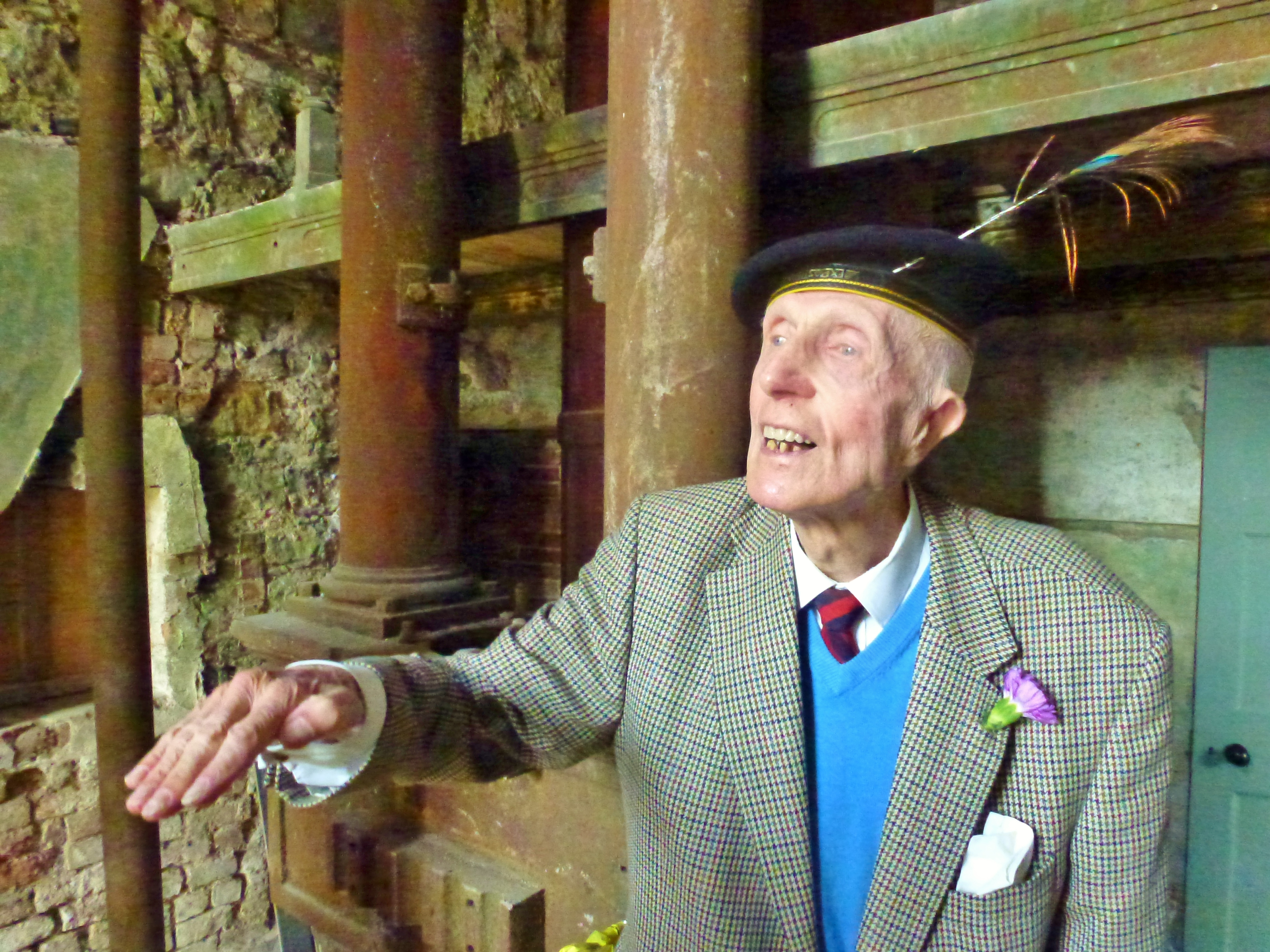
Sir John (Jack) Leslie in Caledon Photo: © Michael Fisher

Sir John (Jack) Leslie in Caledon Photo: © Michael Fisher

Sorry to learn this morning of the death of Sir John (Jack) Leslie eight months before his 100th birthday. He was single. His age did not stop him from dancing his way around various nightclubs in Ibiza and Monaghan! The news was conveyed by the family on social media @Castle_Leslie, adding that he died peacefully at his home.

In November last year (then aged 98) at the residence of the French Ambassador in Dublin, family and friends of Sir Jack joined the celebrations as the World War II veteran was awarded France’s highest distinction. The former Irish Guards officer was made a Chevalier de la Légion d’honneur, adding to his formal title of fourth baronet. The distinction was bestowed by the French Minister of State for Veterans and Remembrance, M. Jean-Marc Todeschini. Representatives of the British Army and the Irish Defence Forces were present for this important occasion that was another chapter in the historical friendship between Ireland and France. The Bishop of Clogher Dr Liam Mac Daid and Donagh Parish Priest Fr Hubert Martin were also among the guests.

Sir Jack said he wished to accept the award on behalf of all soldiers from the island of Ireland who fought and died in the two great wars. As a second Lieutenant in the Irish Guards, Jack Leslie commanded a unit at Boulogne-sur-Mer in 1940 that took on the advancing Panzers of the German army and held them back for several days allowing thousands of other British soldiers to be evacuated from Dunkerque. He was taken prisoner and spent the rest of the war in a prisoner-of-war camp in Germany.

Born on 6th December 1916 he was the eldest son of Sir Shane Leslie, 3rd Bt, and Marjorie Ide. He became the fourth baronet when his father died in 1971. He was educated at Downside School and Magdalene College, Cambridge. During World War II, he served as an officer in the Irish Guards during the Battle of France before being captured at Boulogne-sur-Mer. He then spent five years in POW camps. After the war he moved to New York and later travelled around Europe, settling in Rome. At the age of 78 he returned to his family’s homestead and traveled to Ibiza for his 85th birthday in 2001. He revealed the wedding location of Sir Paul McCartney and Heather Mills by admitting to reporters it was to take place in Castle Leslie, but that it was “a secret”. In January 2012 he appeared in the TV special “Secrets of the Manor House”, which discussed the Leslie family and Castle Leslie, among other manor homes. In 2015 he featured in the TV series “Tales of Irish Castles”. He was presented with the Legion d’Honneur at the French embassy in Dublin on 9 November 2015.

Jack Leslie survived his older sister, the author Anita Leslie (Anita King d.1985) and his younger brother, Desmond Leslie (d.2001). In the immediate line of succession for the baronetcy are nephew Shaun and nephew Mark. His father was a first cousin of the former British Prime Minister Sir Winston Churchill. His paternal grandmother, Leonie Jerome, and Churchill’s mother, Lady Randolph Churchill (born Jennie Jerome), were sisters – the daughters of American financier Leonard Jerome. His mother, Marjorie Ide, was the daughter of Henry Clay Ide, a former Governor-General of the Philippines.

A repeat of my article in 2014:

Among the family stories examined in a current World War One exhibition at the National Library in Dublin was that of the Leslies of Castle Leslie, Glaslough, County Monaghan. Sir John was a veteran of the Second World War and was there to help with the opening of the exhibition. It was attended by the British Ambassador Dominick Chilcott and the Minister for Arts, Heritage and the Gaeltacht Heather Humphreys TD, from County Monaghan.

I reported in 2014 how the display will run for four years and features letters, diaries, newspapers, leaflets and photographs from the library’s archives and aims to depict the various aspects of the Irish experience of the war, and Ireland’s response to the conflict. It is supported by the British Embassy and is part of the National Library’s programme for the Decade of Commemorations.

Nikki Ralston, exhibition curator for the NLI, said: “Irish people had very diverse and complex reactions to World War I. This exhibition captures those sentiments, and also recounts the tense domestic situation in the Ireland of 1914. We felt one of the best ways to illustrate how Ireland experienced the war was to explore a range of themes through real-life stories. We have chosen to focus on four people who had very different experiences, and we have featured their writings – including personal diaries and letters– in this exhibition. These primary sources are complemented by audio, video and touchscreen installations to create a multi-layered, multimedia experience for all visitors.”

Among the four real-life stories featured in the new exhibition focus on:

DSC_0077

Sir John (Jack) Leslie at Monaghan County Museum Photo: © Michael Fisher

**Captain Norman Leslie, 28 Rifle Brigade, second son of the well-known Leslie family from Castle Leslie, had become heir to the family estate when his elder brother, Shane, converted to Catholicism and became a supporter of Irish Home Rule. An experienced soldier when the war broke out, Norman was shot and killed in October 1914, while charging a German machine gun armed only with a sword (it was considered ungentlemanly for officers to carry guns). He is buried in France at Chapelle d’Armentieres Old Military Cemetery. The sword he was carrying when he died was eventually returned to the Leslie family, and now hangs in the gallery of Castle Leslie. It was carried by Jack, his nephew, for the opening of the exhibition.

Jack’s nephew, Mark Leslie; and Mark’s son, Luke were also present at the launch of the exhibition. The family spoke of how Norman’s memory is kept alive at Castle Leslie, where his sporting trophies adorn the entrance hall and his sword – considered a symbol of good luck – is used to cut all wedding cakes at the Castle.

Launching the exhibition at the time, Minister Heather Humphreys said: “This exhibition in the National Library allows us to understand the sheer magnitude of the First World War through very personal stories. By choosing to focus on four people and their different experiences, the Library has brought to life the real-life challenges and dilemmas which they faced 100 years ago. We can walk in their shoes, hear their words and see their hand-written letters. I was interested to see the Leslie family from Co Monaghan featuring in the exhibition. The story of the tragic death of Norman Leslie in 1914 gives us just one of example of the brutal way in which tens of thousands of Irish men lost their lives during the War. This fascinating exhibition is part of the Library’s programme for the Decade of Commemorations, and I would encourage as many people as possible to check it out.”

Addressing the launch, British Ambassador Dominick Chilcott said: “The British government are very pleased to be supporting the National Library of Ireland’s excellent work of commemorating the events of 100 years ago. The National Library’s archive of First World War documents is a rich one; and our understanding of the Great War and the Irish experience of it benefits hugely from this collection. The part of this exhibition that the British government helped to fund is the ‘listening post’, where you can hear period songs and readings of poetry and letters. The generation that went to war was a highly literary one. They wrote huge numbers of letters as well as much poetry and many books and diaries recording their experiences at the Front. We are fortunate in having so much material to explore.”

More details of the exhibition can be found here.

CANON MARSDEN HONOURED

France’s top honour the Chevalier de la Légion d’honneur was presented to retired Church of Ireland clergyman Canon Robert Marsden.IMG_20160127_001759

Full report in Thursday’s Northern Standard.

DUELS ON WIMBLEDON COMMON

DUEL

Duel at Wimbledon Common: Merton Memories Photographic  Archive

DUEL AT WIMBLEDON COMMON

This article is from The Spectator 8th February 1832 p.7

I am reproducing it here because I purchased at a book fair in Dublin today an old book about London co-authored by William Carleton’s biographer DJ O’Donoghue. It contained a few paragraphs about Wimbledon Common as a spot famous for duels. Putney Heath was also used for duels.

On Monday, a duel was fought at Wimbledon Common, by Major- General L. Moore and Mr. Miles Stapylton. General Moore was brought in the course of the evening to rnion Hall, in custody; wheu a gentleman named Harris gave the following account of the duel. “As he was proceeding to Godalming on the outside of the stage- coach, about four o’clock on Monday afternoon, in passing the road which crosses Wimbledon Common, he beard the report of a pistol ; and on looking towards the spot from whence it proceeded, he observed a gentleman fall. The coachman, who also heard the report, imme- diately pulled up ; when lie and a Mr. Self, who was sitting next him, alighted, and mu to the place, which was a short distance from the road- . side. Seeing the gentleman lying on the ground, and blood upon the breast of his shirt, he went towards the General, who had a pistol in his hand, and told him that he must consider himself in custody. The General offered not the slightest resistance, and immediately gave up his fire-arms. During time period that elapsed from the time that the wounded gentleman fell, until Mr. Harris spoke to the General on the subject of his apprehension, the seconds and some other persons as- sisted the wounded man off the ground, and placed him in a carriage which was in waiting, and immediately drove off towards town. – dr. Harris and Mr. Self conducted General Moore to Kingston’ and gave him into the custody of Walters, the constable there.” Mr. Self men- tioned, that on approaching Mr. Stapylton, that gentleman exclaimed, ” I am mortally wounded.” A certificate was read from Mr. Surgeon Guthrie, which simply stated that Mr. Stapylton was in great danger. The prisoner was remanded until Tuesday next. – The Daily Papers give a history of the causes of the duel, which we subjoin, without vouching for its accuracy. ” The hostile meeting,” they say, “between General Moore and Mr. Stapylton, took place, in consequence of a letter which the General addressed to his antagonist on the subject of a young lady of great beauty and accomplishments, a near connexion of the gallant officer, and to whom Mr. S. devoted much of his attention during a recent sojourn of the parties in Italy. Mr. Stapylton, we are told, on the receipt of the General’s communication, whilst he was staying at his seat near Richmond, in Yorkshire, ordered post-horses and travelled with all possible expedition to the metropolis, and called on General Moore for an explanation, which demand, it would appear, not being complied with, the meeting took place.” Mr. Stapylton was conveyed in a carriage to Long’s Hotel in New Bond Street, where he still is. The ball is not extracted. ‘He passed a restless night on Monday; but on Tuesday was pronounepd a • little better, and was enabled to converse with his second, Major Fan, court. The accounts yesterday Were rather more favourable. raffair of honour took place on Saturday morning at Wormwood Scrubs between Mr. F. Banvis, a gentleman of fortune residing at Bayswater, and a Captain in the Army. The Meeting, it seems, arose “from an apprehension in Mr. B. ‘s mind that the Captain was guilty of a violation of courtesy towards himself and daughter on re- tiring from Covent Garden Theatre.” The parties fired’ together, , and the Captain received Mr. Barwis’s ball in the pistol-arm ; when a reconciliation ensued, and they shook bands.

CONGO 1961: PADDY WALL HAS BUSY JOB

UN helmet of the type my father brought back to London after reporting from the Congo in 1961

UN helmet of the type my father brought back to London after reporting from the Congo in 1961

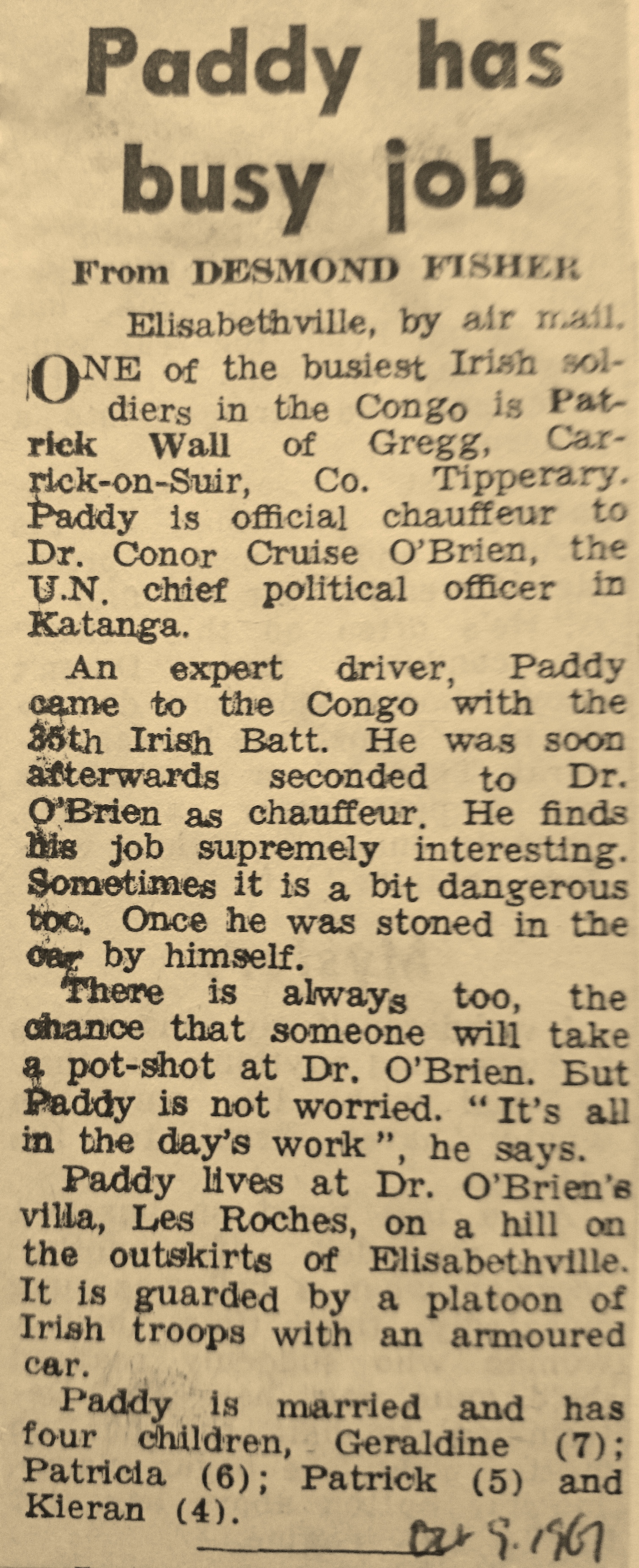
Paddy has busy job   Irish Press October 9th 1961

From DESMOND FISHER  Elizabethville, by air mail.

One of the busiest Irish soldiers in the Congo is Patrick Wall of Gregg, Carrick-on-Suir, Co. Tipperary. Paddy is official chauffeur to Dr. Conor Cruise O’Brien, the U.N. chief political officer in Katanga.

An expert driver, Paddy came to the Congo with the 35th Irish Batt. He was soon afterwards seconded to Dr. O’Brien as chauffeur. He finds his job supremely interesting. Sometimes it is a bit dangerous too. Once he was stoned in the car by himself.  (I trust you know what my father meant by that! — MF)

There is always too, the chance that someone will take a pot-shot at Dr. O’Brien. But Paddy is not worried. “It’s all in the day’s work”, he says.

Paddy lives at Dr O’Brien’s villa, Les Roches, on a hill on the outskirts of Elizabethville. It is guarded by a platoon of Irish troops with an armoured car.

Paddy is married and has four children, Geraldine (7); Patricia (6); Patrick (5) and Kieran (4).

Desmond Fisher report in The Irish Press October 9th 1961

Desmond Fisher report in The Irish Press October 9th 1961

IRISH CHAPLAIN IN CONGO 1961

Desmond Fisher report from the Congo 10th October 1961  The Irish Press

Desmond Fisher report from the Congo 10th October 1961 The Irish Press

IRISH AID IN HORROR CAMP  Chaplain Works for Balubas 

(From Desmond Fisher)   ELIZABETHVILE  (By Air Mail) —

The 40,000 Baluba men, women and children in the rag-and-cardboard refugee city in Elizabethville are ‘my children’ to Rev. Joseph Clarke, chaplain to the 35th Irish Battalion in the Congo.

Father Clarke is the friend, counsellor and refuge of the Balubas in all the terrible afflictions which are their lot.

Every morning, immediately after his Mass at 6:30 for the soldiers, Father Clarke sets out for the refugee camp near the Irish battalion headquarters. The camp chiefs wait for him and tell him their troubles — someone shot or hacked to pieces during the night; lack of food; danger from the Jeunesse Nationale Katanga, the teddy-boy youth movement which is terrorising the camp, and so on.

The chaplain moves round the different family groups in the camp speaking to them in his fluent French. He has organised the Irish section of the camp, where there are 5,000 families, into 14 groups. Each has its own administrative organisation which Father Clarke established. This administration supervises the daily distribution of food and settles disputes as to where the families can live.

Ordained in 1938, Father Clarke is an ‘old hand’ in Africa. He spent four years in Nigeria after his ordination before joining the Army as a chaplain. To him the African is a child, who will trust the European implicitly and will depend on him absolutely. This is fine until the African meets a white man who treats him badly or lets him down. Then he loses faith in all white men.

Katanga problem

In Katanga, there are more white men than in most parts of Africa; therefore the chances that the African will come up against a “bad white” are greater. Fot that reason, Father Clarke thinks, the African in Katanga has become a different sort of person. He is no longer simply a bush native, and yet a few years in a white-dominated city do not turn him into a civilised, democratically-minded person in our sense.

“You cannot take a native out of the bush, educate him for a few years and expect him to be like yourself”, says the chaplain.

As regards “his” refugee camp, Father Clarke says that the sooner it closes down the better. It is becoming a hiding-place for criminals, and a breeding place of violence and murder. Almost every night someone is killed in the camp and some horrible atrocities have come to light.

The least revolting of them is the killing of a Katangese native, the servant of a gendarme officer, whom the Balubas caught as he was passing their camp. He was found dead next morning with his hands and feet cut off: he had bled to death. The camp has also attracted the 5,000 unemployed Balubas in Elizabethville who have come in for free food and accommodation, such as it is.

Father Clarke fears two things. One is that the rains which are due shortly will wash away the flimsy shelters of the refugees and force them to break into the nearby villas vacated by white people. His other fear is that the Jeunesse youths will become the pawns of Communist-type agitators, who will use them to stir up trouble.

But, despite the dangers, Father Clarke continues to give most of his time and energies to helping the 40,000 Baluba people to whom he is “father”.      Oct 10 1961

NEW MANDATE FOR UN IN CONGO? (1961)

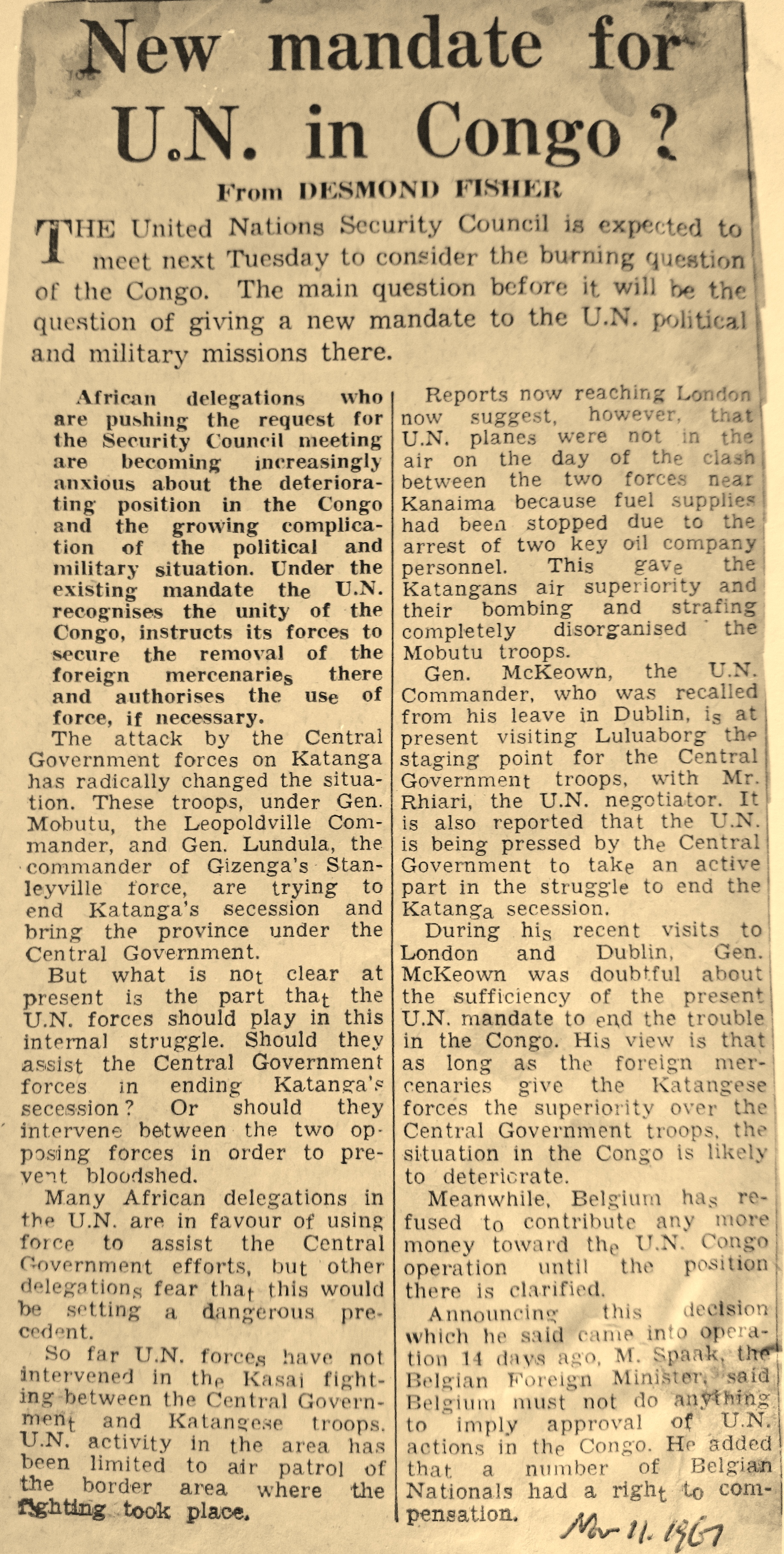
UNimagesFrom DESMOND FISHER  The Irish Press November 11th 1961

The United Nations Security Council is expected to meet next Tuesday to consider the burning question of the Congo. The main question before it will be the question of giving a new mandate to the U.N. political and military missions there.

African delegations who are pushing the request for the Security Council meeting are becoming increasingly anxious about the deteriorating position in the Congo and the growing complication of the political and military situation. Under the existing mandate the U.N. recognises the unity of the Congo, instructs its forces to secure the removal of the foreign mercenaries there and authorises the use of force, if necessary.    

The attack by the Central Government forces on Katanga has radically changed the situation. These troops, under Gen. Mobututu, the Leopoldville Commander, and Gen. Lundula, the commander of Gizenga’s Stanleyville force, are trying to end Katanga’s secession and bring the province under the Central Government.

But what is not clear at present is the part that the U.N. forces should play in this internal struggle. Should they assist the Central Government forces in ending Katanga’s secession? Or should they intervene between the two opposing forces in order to prevent bloodshed.

Many African delegations in the U.N. are in favour of using force to assist the Central Government efforts, but other delegations fear that this would be setting a dangerous precedent.

So far U.N. forces have not intervened in the Kasai fighting between the Central Government and Katangese troops. U.N. activity in the area has been limited to air patrol of the border area where the fighting took place.

Reports now reaching London now suggest, however, that U.N. planes were not in the air on the day of the clash between the two forces near Kanaima because fuel supplies had been stopped due to the arrest of two key oil company personnel. This gave the Katangans air superiority and their bombing and strafing completely disorganised the Mobutu troops.

Gen. McKeown, the U.N. Commander, who was recalled from his leave in Dublin, is at present visiting Luluaborg the staging point for the Central Government troops, with Mr. Rhiari, the U.N. negotiator. It is also reported that the U.N. is being pressed by the Central Government to take an active part in the struggle to end the Katanga secession.

During his recent visits to London and Dublin, Gen. McKeown was doubtful about the sufficiency of the present U.N. mandate to end the trouble in the Congo. His view is that as long as the foreign mercenaries give the Katangese forces the superiority over the Central Government troops, the situation in the Congo is likely to deteriorate.

Meanwhile, Belgium has refused to contribute any more money toward the U.N. Congo operation until the position there is clarified.

Announcing this decision which he said came into operation 14 days ago, M. Spaak, the Belgian Foreign Minister, said Belgium must not do anything to imply approval of U.N. actions in the Congo. He added that a number of Belgian Nationals had a right to compensation.

Desmond Fisher report from London in The Irish Press November 11th 1961

Desmond Fisher report from London in The Irish Press November 11th 1961