CARLETON & KAVANAGH

William Carleton summer school in Monaghan

William Carleton summer school in Monaghan

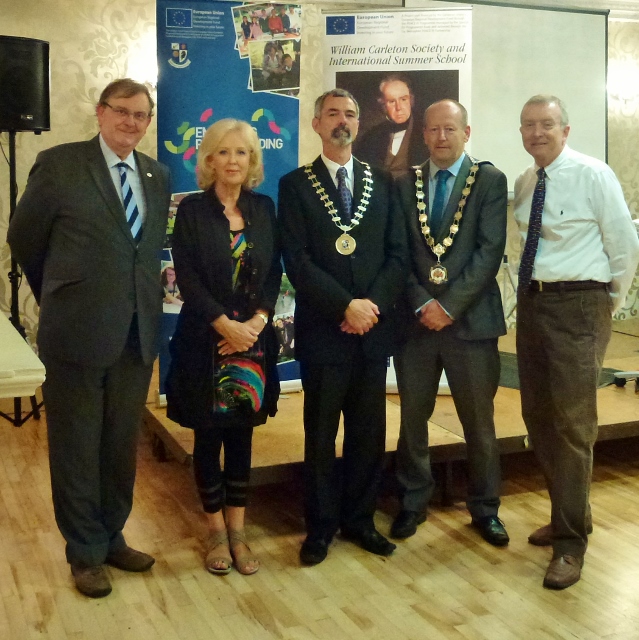
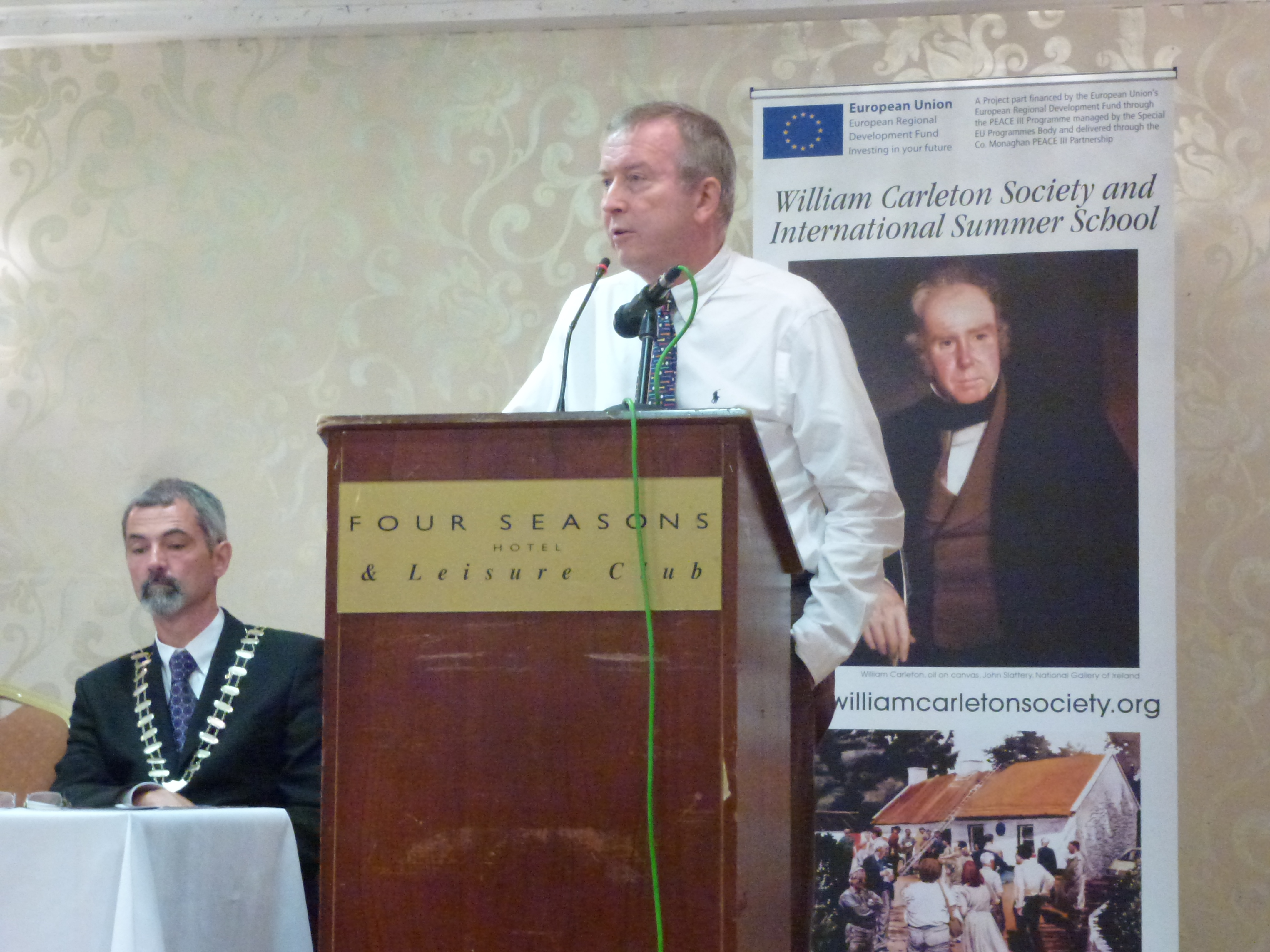
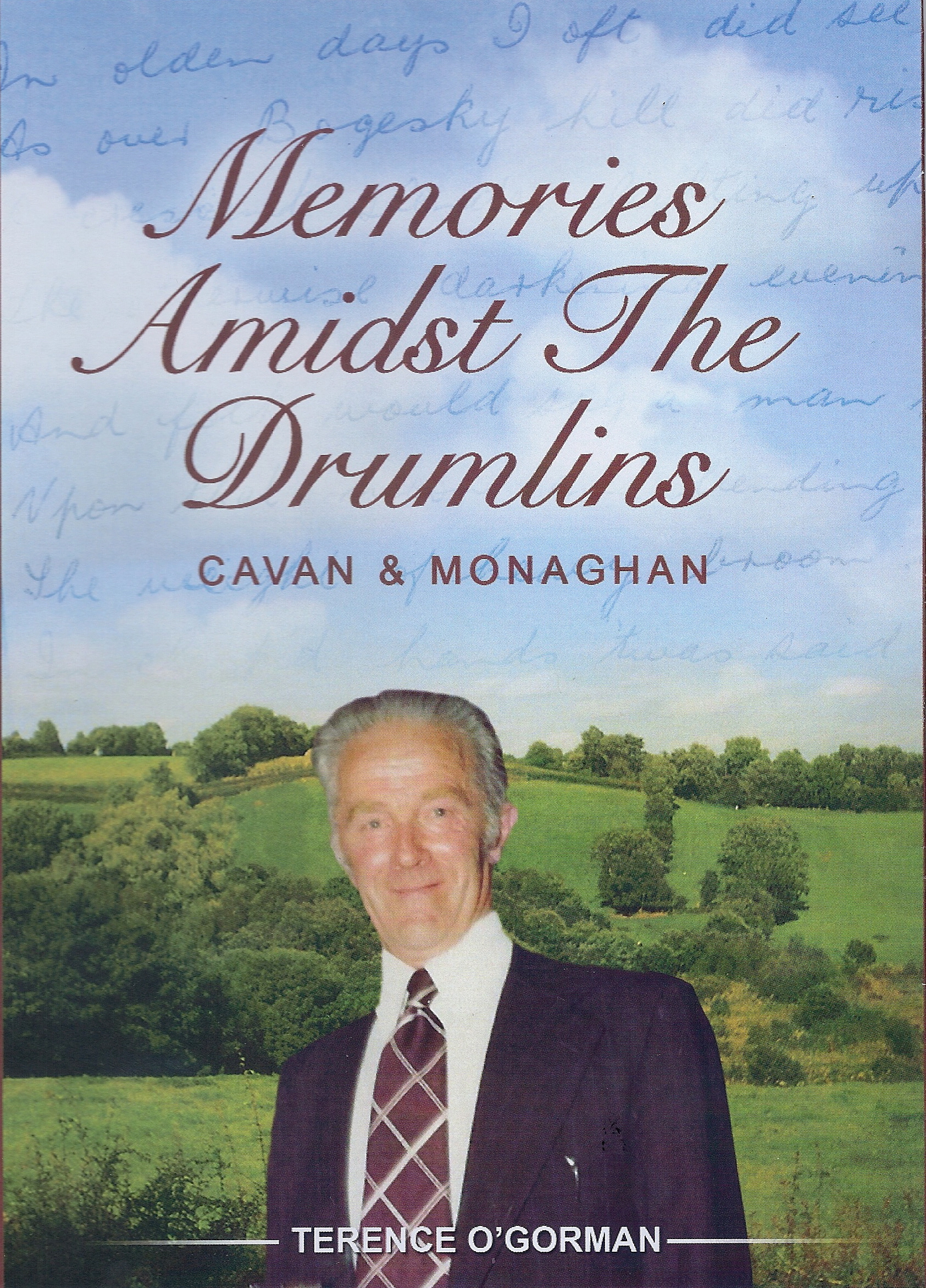
For the first time in its 22-year history the William Carleton international summer school held lectures in Monaghan town. The official opening was performed by the Mayor of Monaghan Cllr Sean Conlon in the presence of the Mayor of Dungannon & South Tyrone, Cllr Sean McGuigan. The guest speaker was Professor Thomas O’Grady from the University of Massachussets in Boston. He will be delivering the keynote address at the summer school on Monday at 2:30pm at Corick House in Clogher, talking about Carleton’s story, ‘The Donagh’. The other speakers were poet Mary O’Donnell (originally from Monaghan), Art Agnew from Inniskeen, who performed brilliantly in the role of Patrick Kavanagh, Aidan Walsh and Dr Brendan O Cathaoir on Charles Gavan Duffy and Felix Larkin who spoke about the Shemus cartoons in the Freeman’s Journal. Fifty people were there by lunchtime but the crowd grew to almost 300 by 6pm, when I launched the book: ‘Memories amidst the drumlins: Cavan and Monaghan’ by the late Terence O’Gorman. It is a beautifully produced book of his poems and stories, compiled and edited by his daughter Patricia Cavanagh. It was an honour to be asked to write a foreword for the publication and to speak at the beginning of the event. One of our guest speakers from Dublin decided to stay on for the launch and commented how he had never seen such a display of community spirit as was evident amongst the crowd.

Professor Thomas O'Grady at William Carleton summer school in Monaghan

Professor Thomas O’Grady at William Carleton summer school in Monaghan

EMYVALE PLAQUES

Donagh Oratory: Site of former courthouse and parochial hall

Donagh Oratory: Site of former courthouse and parochial hall

I happened to be passing through Emyvale, County Monaghan, on Monday on William Carleton summer school business when I was introduced to the Minister of State for the Office of Public Works and Public Service Reform, Brian Hayes TD. Accompanied by Fine Gael TD Heather Humphreys, he was carrying out a number of engagements in the constituency. He was shown around the village by a group that has erected stone plaques marking the history of five buildings.

Presentation made to Brian Hayes TD Photo: © Michael Fisher

Presentation made to Brian Hayes TD Photo: © Michael Fisher

One of the plaques is at a former orange hall LOL 581 at Bog Lane. The Minister was told it is hoped that this building at the top of the village close to the duck farm will eventually be transformed into a heritage centre. Other plaques mark the site of the old Market House, the former RIC/Garda Barracks, the former Courthouse and Parochial Hall (now the Oratory), and the former Village Inn and Courthouse.

Minister of State, Brian Hayes TD

Minister of State, Brian Hayes TD

In a separate initiative some time ago, an original name stone has been placed beside the entrance to the Leisure Centre and incorporated into a flower bed. It was the sign for a primitive Wesleyan Methodist Preaching House and Mission School (1836) that stood on the site. Emyvale Leisure Centre is the venue for a reading of William Carleton’s story, ‘Fair of Emyvale’, on Sunday 4th August at 7pm. Please note that this time is subject to change. The short story has been adapted by Liam Foley from Clogher and will be performed by the Carleton Players, who will be joined by local actor Pat Deery in the role of narrator. Admission FREE.

Name stone outside Leisure Centre

Name stone outside Leisure Centre

MONAGHAN: ULSTER KINGS & QUEENS

Ulster senior champions 2013: Monaghan Picture: RTE Sport www.rte.ie/sport/gaa

Ulster senior champions 2013: Monaghan Picture: RTE Sport http://www.rte.ie/sport/gaa

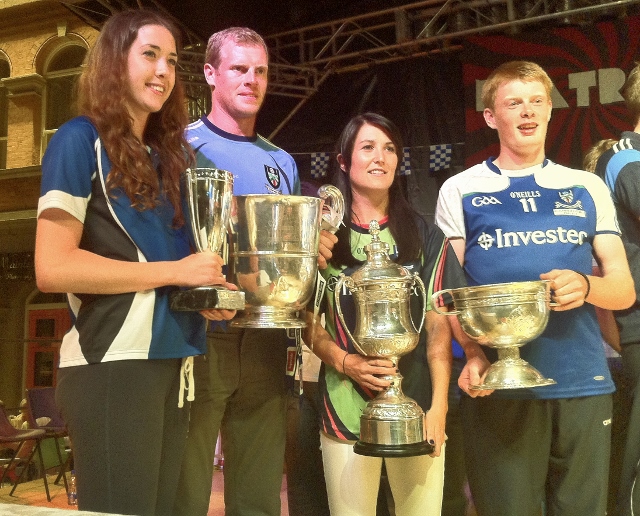
Seniors & Minors, Men & Ladies: Ulster Champions x 4!

Seniors & Minors, Men & Ladies: Ulster Champions x 4! Photo: Michael Fisher

Monaghan GAA are tops in Ulster: the Kings and Queens of Ulster football, as Monaghan town Mayor Paul McGeown described them. Congratulations to all four Ulster champions: Minor ladies (Muireann O’Rourke); Seniors (Owen Lennon: Anglo-Celt Cup); Senior ladies (Therese McNally: O’Harte Cup) and Minors (Ryan McAnespie: Fr Murray Cup). Five pieces of silverware on display at The Diamond, as the minors had the Ulster Minor League Cup as well! When will we see the likes of that again!

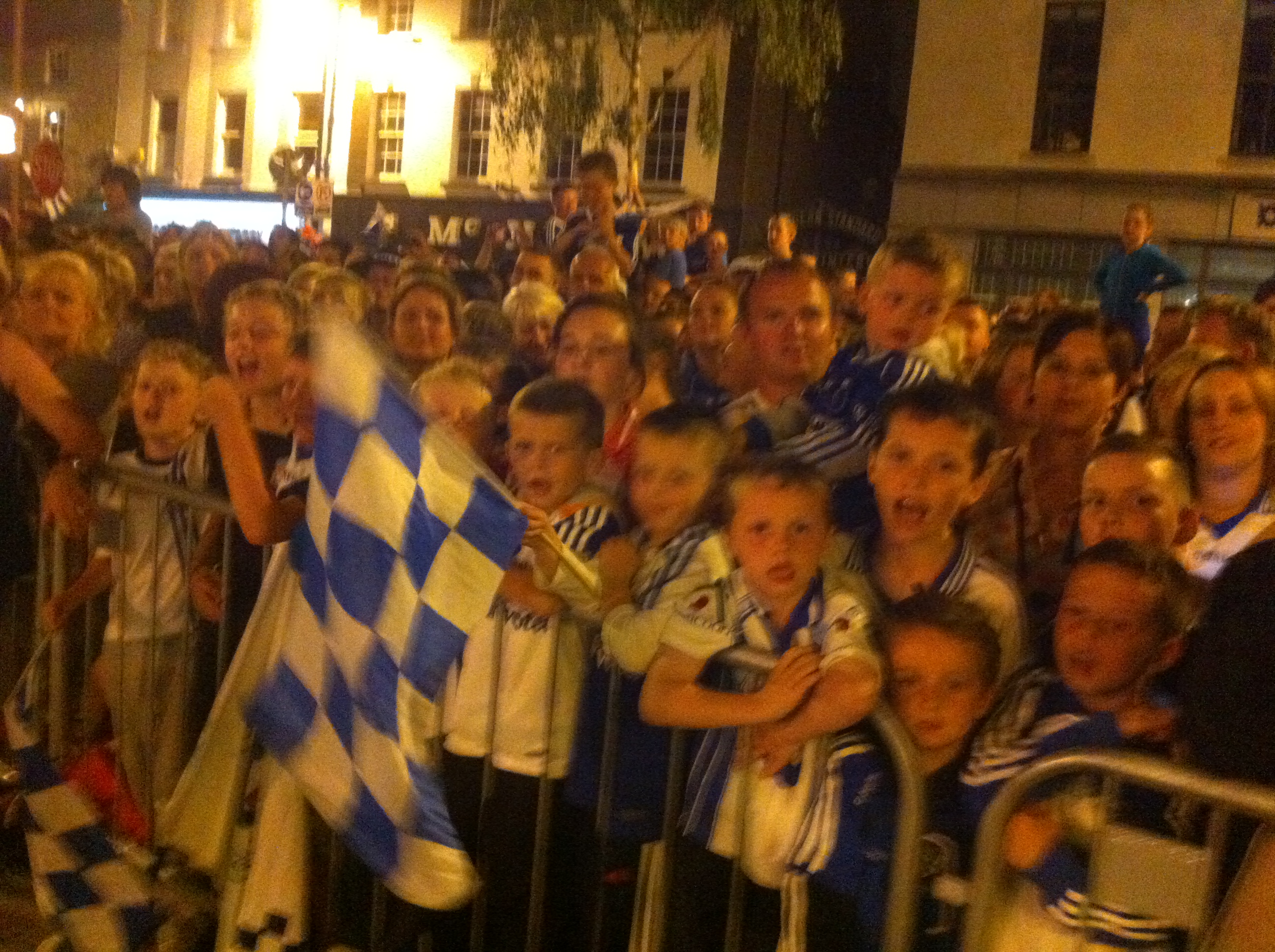
Crow at The Diamond, Monaghan

Crowd at The Diamond, Monaghan Photo: Michael Fisher

MONAGHAN: AN ULSTER DOUBLE

Last minute Fearghal McMahon penalty helps Monaghan Minors to Ulster title victory over Tyrone

Last minute Fearghal McMahon penalty helps Monaghan Minors to Ulster title victory over Tyrone

MONAGHAN 4-10 TYRONE 2-14 (Minor)

MONAGHAN 0-13 DONEGAL 0-07 (Senior)  Páirc Thiarnaigh Naofa, Cluain Eois

MONAGHAN supporters have been a long time waiting for an Ulster senior title: 25 years, in fact. Having waited so long it was nice to be able to claim a double at Clones, added to a fourth-in-a-row Ulster final victory by the ladies last weekend against Tyrone. It was very appropriate that having introduced the members of the 1988 Monaghan team to the crowd at half-time, the seniors went on to beat the current All-Ireland champions Donegal and take the Anglo-Celt Cup. It was even more special because two hours earlier the Monaghan minors had put in a fantastic finish to win the title for the county for the first time in 68 years.

Monaghan Minors celebrate Ulster title with lap of honour at Clones

Monaghan Minors celebrate Ulster title with lap of honour at Clones

1945 was the last occasion when Monaghan minors took what was only their third Ulster title. A man in the seat beside me in the Pat McGrane stand remarked that one of the stars of that side was from his parish in Sutton Dublin, namely Mackie Moyna from Scotstown, twin brother of Tommy. Mackie’s wife Margery (Boylan), a former teacher also from Scotstown, died recently. Rest in peace.

UPDATE: Since writing the blog yesterday, I have listened back to the end of the minor game commentary on Northern Sound by an almost hoarse Sean McCaffery. He lists the names of the victorious 1945 side and among them was Tommy Moyna, but not Mackie, so my informant was mistaken. However I did find one report on the Hogan Stand website when the twins received Monaghan GAA Hall of Fame awards in 1993. It explained how Mackie made an unregistered appearance in a Monaghan minor jersey at Croke Park in the all-Ireland semi-final in 1945 against Leitrim!

A sea of colour: Fermanagh Street, Clones

A sea of colour: Fermanagh Street, Clones

As usual, the atmosphere in Clones in the build-up to the two finals was tremendous: a sea of colour all along Fermanagh Street. Family groups that travelled from Donegal or further afield finding a suitable green patch on which to have a picnic. Others packing into the several pubs and debating the chances of their team. How long more the Ulster Council of the GAA will keep the final at Clones is another matter; hopefully this will not be the last time Monaghan win an Ulster senior title at Clones. The excellent match programme (€5/£5) contained an article about the planned redevelopment of Casement Park in Belfast, which has already been upgraded with floodlights. As someone who collects sports programmes, I believe this one will be in demand in years to come.

I had listened to some of the first half of the minor match on the car radio. When I took my seat, Monaghan were trailing by five points and the chance of a victory seemed to have slipped away. But a penalty (a bit fortunate) in the closing moments of the game was slotted home by Fearghal McMahon, giving them a single point advantage. It was followed by a Donal Meegan point in injury time, thus ensuring a Farney victory 4-10 to 2-14. Tyrone had led 1-9 to 2-1 at the break.

St Michael's Band Enniskillen prepare for pre-final parade

St Michael’s Band Enniskillen prepare for pre-final parade

The key to Monaghan’s victory in the senior match was the way they controlled Donegal right from the throw-in. They were four points up within nine minutes. Donegal’s opening score came in the 31st minute through a Colm McFadden free, followed by a Frank McGlynn point in injury time, making it 0-5 to 0-2 in favour of Monaghan at the break. The Farneymen were soon on the scoreboard again in the second half, through Kieran Hughes. Monaghan continued to dominate and were the better team throughout. Nice to see Tomás Freeman coming on as a substitute at the end and contributing an insurance point.

Ulster senior champions 2013: Monaghan Picture: RTE Sport www.rte.ie/sport/gaa

Ulster senior champions 2013: Monaghan Picture: RTE Sport http://www.rte.ie/sport/gaa

The final score 0-13 to 0-07 for the home side. Then it was time for a massive celebration with thousands among the crowd of 31,914 invading the pitch to join the excitement as the Anglo-Celt cup was presented by the President of the Ulster Council, Ballybay man Martin McAviney, to the Monaghan captain Owen Lennon. Watching the proceedings was the GAA Ard Stiúrthóir Páraic Duffy, another  proud Monaghan man! Former GAA President Sean McCague from Scotstown who managed the winning 1988 county team was also there, as were many other Monaghan personalities including Big Tom McBride who played on Saturday night at a country music festival in Monaghan town.

MEMORIES AMIDST THE DRUMLINS


New Publication Compiles Work of Noted Tydavnet Literary Figure

New Publication Compiles Work of Noted Tydavnet Literary Figure: Northern Standard 19/07/13

“Memories Amidst the Drumlins: Cavan and Monaghan”, a compilation of  the stories and poems of the late Terence O’Gorman of Tullyvogey, Tydavnet, will be officially launched at a function in Monaghan’s Four Seasons Hotel on Friday, August 2nd next. A well-known North Monaghan personality, Mr O’Gorman, who passed away in 2003, had some of his literary contributions published in the columns of this newspaper over the years.

His daughter Patricia Cavanagh, the current President of the ICA in Co. Monaghan, has now brought together dozens of poems and stories penned by her father in a volume that will be launched by the Director of the William Carleton Summer School, Michael Fisher. Over the past two years Patricia has carefully compiled and edited what amounts to a wonderful record of the lifestyle of South Ulster from the 1930s until the turn of the century.

Memories Amidst the Drumlins: Cavan & Monaghan

Memories Amidst the Drumlins: Cavan & Monaghan

Some of the poems were written to mark special occasions such as birthdays and weddings of family and friends and there were also tributes to those who had passed away. This collection is a wonderful tribute to Terence, who came from Lavey in Co. Cavan and who was a familiar figure in and around Tydavnet and Monaghan, where he worked at St Davnet’s Hospital for many years. The book includes a number of poems he wrote for his friends and work colleagues on their retirement from St Davnet’s.  He died in 2003. The 340-page book will retail for €15.

The launch will be performed on the opening day of the William Carleton Summer School events taking place in Monaghan and Emyvale from August 2-4. Terence was a regular visitor to the annual Carleton event as well as attending other literary festivals throughout the country. Patricia Cavanagh spoke about the book at the launch of the William Carleton Summer School programme at the Writers’ Centre in Dublin in June.

WILLIAM CARLETON LAUNCH

William Carleton Summer School Launch at Corick House, Clogher: Sam Craig, Isabel Orr & Liam Foley, Committee Members

William Carleton Summer School Launch at Corick House, Clogher:
Sam Craig, Isabel Orr & Liam Foley, Committee Members

Lively Programme for Carleton Summer School: Ulster Herald Thursday July 18th 2013

Tom McGurk returns to his Tyrone roots to appear at what promises to be one of the liveliest William Carleton summer school programmes in Clogher next month. It will include three nights of music of various types, including a session by a young female Irish traditional group Síoda.  

Tom McGurk returns to his roots

Tom McGurk returns to his roots

A native of Brockagh near the shore of Lough Neagh, Tom McGurk is one of the most distinguished journalists and broadcasters in Ireland. He will be in conversation with Aidan Fee (like him, a past pupil of St Patrick’s College Armagh) on the subject of ‘Northern Ireland, Past and Present’ on the opening day of the school at Corick House Hotel on Monday 5th August at 4:30pm. As a student at Queen’s University Belfast, he was active in the civil rights campaign in 1968 and was involved with the People’s Democracy group.

Tom’s RTE television credits include presenting programmes like ‘Tangents’, ‘Last House’, ‘Folio’ and he currently anchors major RTE sports coverage especially rugby. He played rugby for Ulster. In Britain, he fronted ‘Granada Reports’ and reported for ‘Channel 4 News’ and ‘Newsnight’ on BBC2. In the late 1980s he was Foreign Correspondent with ‘The Mail On Sunday’ (London) reporting from Latin America, Africa and the USA and he covered the end of the ‘Cold War’ in Europe.

His extensive radio credits include presenting ‘Start the Week’ on BBC Radio 4 and a wide variety of interview and current affairs programmes with RTE. His screen writing credits include the television dramas ‘Dear Sarah’ (Thames TV/RTE) and ‘The Need to Know’ (BBC TV). He is also a poet and is a columnist with The Sunday Business Post in Dublin.

Síoda will perform at the Rathmore Bar, Main street Clogher (opposite the Cathedral) at 8pm on Monday 5th August. Admission free. They are a young and vibrant Irish traditional band. They have been making waves on the traditional music scene throughout Ireland for the last year. The band is comprised of Emma Robinson on flute, whistles and vocals, Joanna Boyle on banjo, guitar and vocals, Alana Flynn on bodhran, vocals and dancing, Rosie Ferguson on fiddle, vocals and dancing and the only male in the line-up Conor Murphy on guitar and vocals. Coupled with the singing and playing, the band contains an all Ireland champion Irish Dancer, creating an all-round exhibition of Irish culture. The band have featured on numerous radio and television programmes, including BBC Radio Ulster’s ‘Blas Ceoil’, UTV, U105 and TG4’s ‘Geantrai’. Síoda will be joined by well-lnown singer and broadcaster Seosaimhín Ní Bheaglaoich.

Wednesday 7th August will be an opportunity to meet the two Marys….Mary O’Rourke and Mary Kenny. Both will be speaking on a day devoted mainly to dealing with the past. From the sectarianism of Carleton’s time in the Clogher Valley of the early 19th Century up to modern Ireland. The first topic that day (7th) will be the Orange Order. Politics Professor Jon Tonge from Liverpool University is an expert on the subject, author of a book on Orangeism and Britishness. Commentators Alex Kane and Dr Margaret O’Callaghan will be contributing to a discussion afterwards.

Former Fianna Fáil Minister Mary O’Rourke will talk about her Memoir concerning her life as a politician and how different political strands can be accommodated. Another guest is Dublin-born poet Siobhan Campbell, currently working with US Army veterans to set down their experiences in writing. The closing sessions will be devoted to the Carson story, the great unionist leader. Actor and playwright Paddy Scully will present extracts from his one-man show ‘Lord Edward Carson Reflects’. Author and playwright Mary Kenny will talk about ‘Carson, Irishman, Unionist and Dubliner’.

The international aspect of the summer school will be reinstated with the presence of Professor Thomas O’Grady, Director of Irish Studies at the University of Massachusetts in Boston. He will talk about Carleton’s story ‘The Donagh’ on Monday 5th August. Honorary Director, Professor Owen Dudley Edwards, will give a talk on Carleton, Irish Literature and Caesar Otway, the Protestant clergyman who influenced Carleton to convert to the Anglican church in order to get his writings published.

The question of language will be discussed on Tuesday 6th August. Dr Ciaran Mac Murchaidh, St Patrick’s Drumcondra, will speak about the use of Irish in the Clogher Valley in the era of Carleton’s youth. Dr Ian Adamson from Belfast will present a paper on Ulster Scots. The William Carleton Society President Jack Johnston will talk about Augher from the time of plantation landlord Sir Thomas Ridgeway to George Duffy, the Miller. The Miller’s daughter, Anne Duffy, Carleton’s earliest love, is the subject of a story by Josephine Treanor, who is related to her.

In a session devoted to literature, four writers will discuss their works:  Ciaran Collins from Kinsale, Co.Cork, ‘The Gamal’, Patricia Craig from Belfast, ‘Twisted Root’, Anthony Quinn from Tyrone,’Disappeared’ and Tony Bailie from Co.Down, ‘A Verse to Murder’. 

There will be entertainment each evening, including a concert at Fivemiletown Wesleyan Hall, opposite the creamery, at 8pm on Wednesday 7th August. Murley Silver Band, a local group, will be joined by Monaghan Gospel Choir, with a star guest, Gloria, famous for her recording of ‘One Day at a Time’. The previous evening (Tuesday 6th) at 8:30pm at Somers cafe, Fardross (Clogher Valley Caravan Park), the sound of bagpipers Jim Brady and Frank Gildernew along with the young pipes and drums Ulster Scots group will mix with the sound of Irish traditional musicians, the McKenna family from Clogher. The Clogher Valley ramblers have also organised a Carleton walk to finish at Fardross in time for the entertainment (departing Corick House 7pm for summer school participants). All evening events are FREE and are part-funded by the EU’s PEACE III Programme for PEACE and Reconciliation through the ‘Shared History Shared Future’ Project administered by Dungannon and South Tyrone Borough Council.

On Thursday 8th there will be a literary tour to Fermanagh including the Crom estate and Enniskillen. Cost £30 to include snack, light lunch and evening meal. Departing Corick House 10am sharp. Bookable via tour guide Frank McHugh e: f.mchugh4@btinternet.com.

The full programme can be found on our website, www.williamcarletonsociety.org or by contacting wcarletonsociety@gmail.com

NINETY NOT OUT

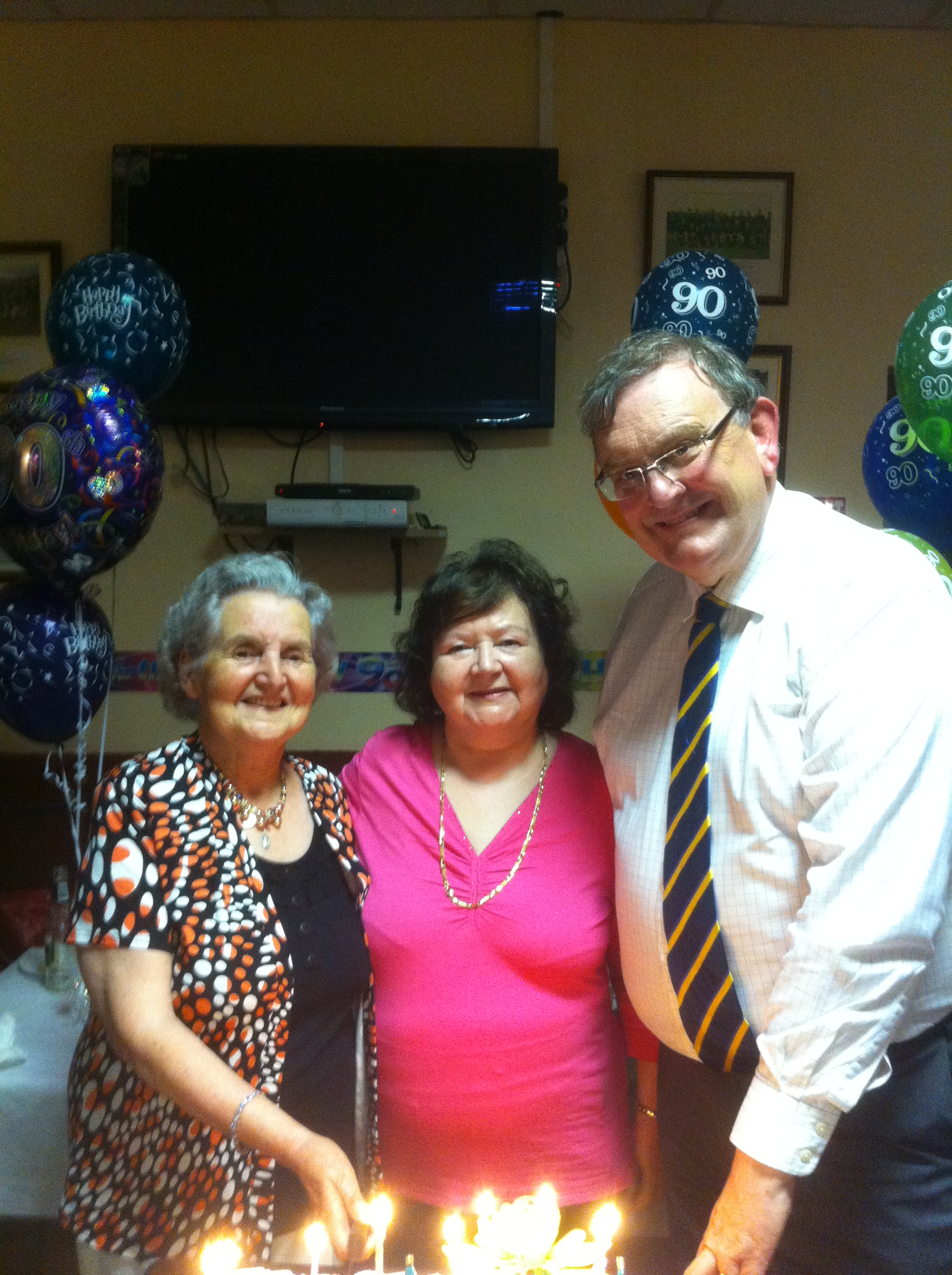
Helping to cut the birthday cake: with Bridie McGuire (left)

Helping to cut the birthday cake: with Bridie McGuire (left)

Congratulations to Bridie McGuire, Castleblayney, County Monaghan, who was 90 last Friday, 12th July. Her family made a ‘This is Your Life’ presentation to her. They asked me to fill the role of Eamonn Andrews, which I gladly did, in view of the link between us through my grandfather, John F. Smyth from Conabury. More details in The Northern Standard.

INNISKEEN ROAD: JULY EVENING

ALL PHOTOGRAPHS ARE COPYRIGHT MICHAEL FISHER © MMXIII AND MUST NOT BE REPRODUCED IN ANY WAY WITHOUT PERMISSION

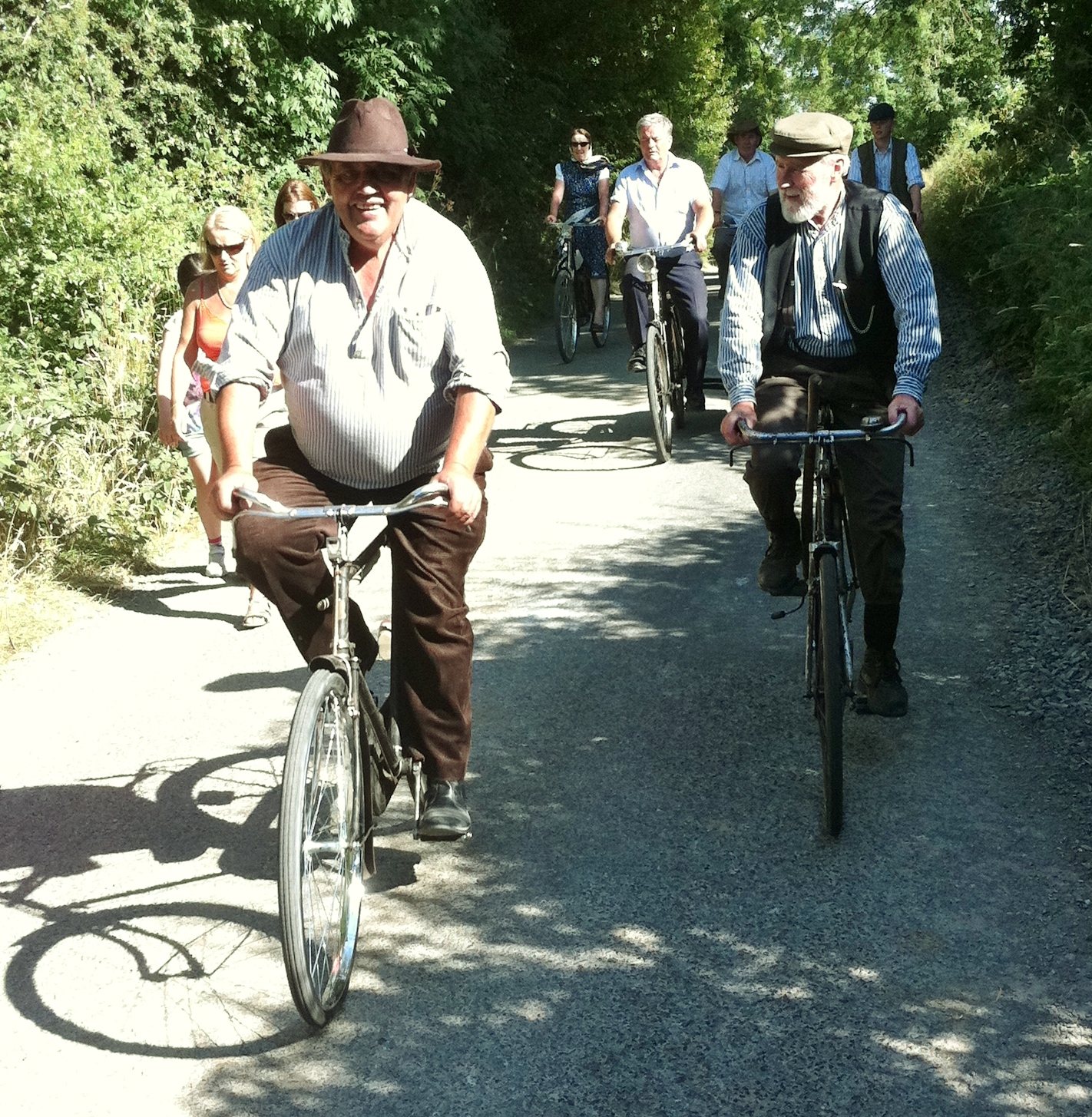
Bikes on the road to Billy Brennan's Barn, Inniskeen

Bikes on the road to Billy Brennan’s Barn, Inniskeen Photo: © Michael Fisher

The bicycles go by in twos and threes –
There’s a dance in Billy Brennan’s barn to-night,
And there’s the half-talk code of mysteries
And the wink-and-elbow language of delight.
Half-past eight and there is not a spot
Upon a mile of road, no shadow thrown
That might turn out a man or woman, not
A footfall tapping secrecies of stone.
I have what every poet hates in spite
Of all the solemn talk of contemplation.
Oh, Alexander Selkirk knew the plight
Of being king and government and nation.
A road, a mile of kingdom, I am king
Of banks and stones and every blooming thing.
Patrick Kavanagh Inniskeen Road: July Evening 

Bikes on the road to Billy Brennan's Barn, Inniskeen

Bikes on the road to Billy Brennan’s Barn, Inniskeen Photo: © Michael Fisher

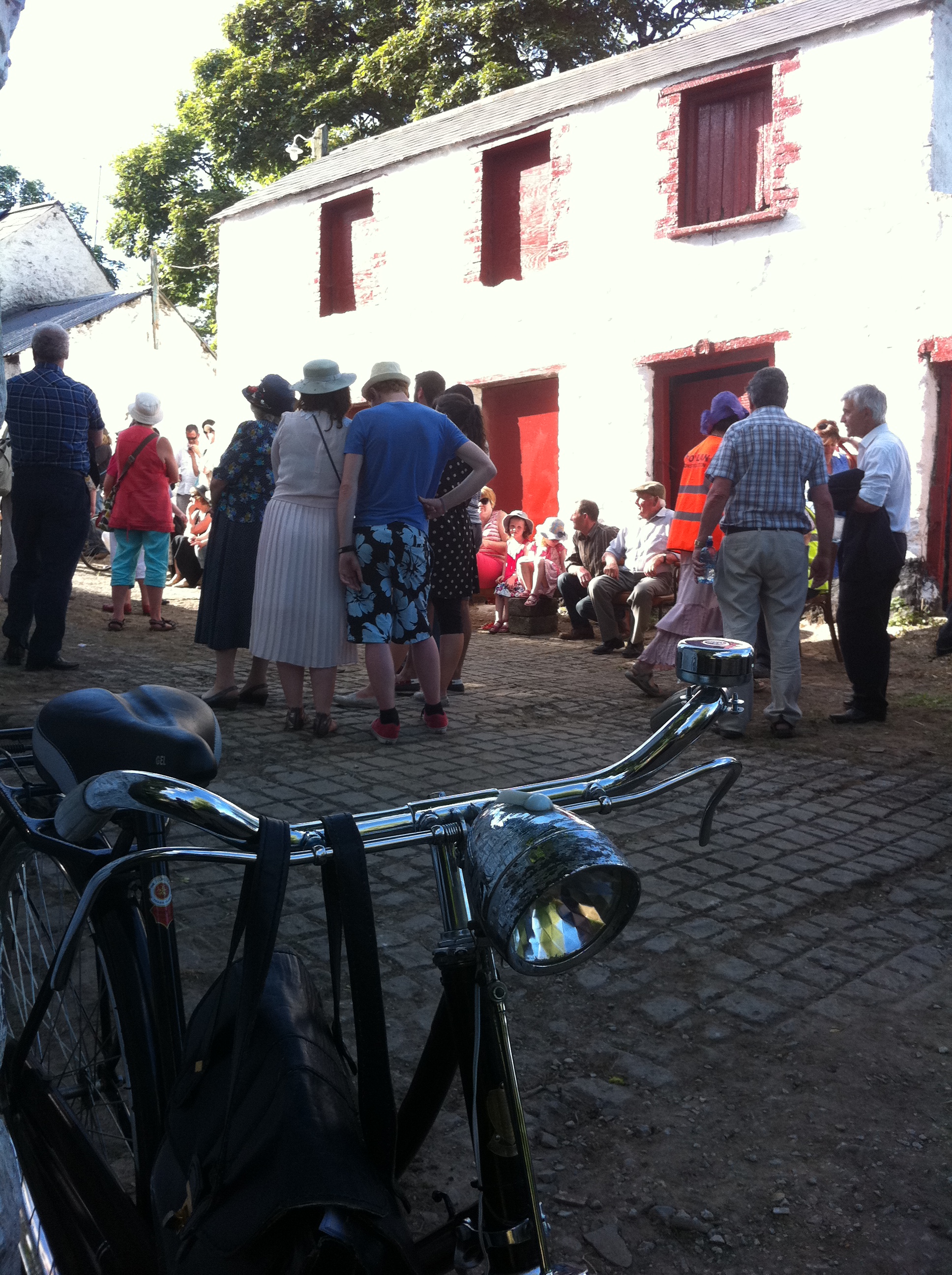
This was an enjoyable visit to Patrick Kavanagh country in Inniskeen, South Monaghan. The Patrick Kavanagh Centre organised a Gathering event based on Kavanagh’s poem quoted above, Inniskeen Road: July Evening. So it was a chance to get the High Nellies back into action over a 7.5km route through and around the village. I joined the walkers. The weather was really hot, so plenty of liquid was required en route to prevent dehydration, including a welcome cup of tea at Billy Brennan’s Barn. A great idea for a festival.

Tea and a hooley at Billy Brennan's Barn, Inniskeen

Tea and a hooley at Billy Brennan’s Barn, Inniskeen Photo: © Michael Fisher

FROM CULLAMORE TO SHIPLEY

Lough More, Cullamore on Tyrone/Monaghan border

Lough More, Cullamore on Tyrone/Monaghan border

After finishing some work on the programme for the 2013 William Carleton summer school next month, I travelled back through Carleton country to North Monaghan. I went past Kilrudden, home of the late Mary McKenna, a former President of the William Carleton Society. I had earlier visited her grave at St Macartan’s (the Forth) chapel, where I also tidied up the grave of my McCann relatives, two of whom had made the journey from this beautiful Tyrone countryside to work as doctors in Shipley in England. I will tell you more about them later and how I found myself following their footsteps to Yorkshire last month.

Grave of Mary McKenna, Kilrudden House

Grave of Mary McKenna, Kilrudden House

The old road from Augher towards Monaghan takes you past Kilrudden and up Dunroe hill. Heading towards the border along a road that has now been re-connected with County Monaghan, you pass the townland of Cloonycoppoge where the McCanns came from before they moved to Aughnacloy, and then you come to Cullamore. I remember talking to Mary about them as she brought us on a Carleton tour one year.

Although it was 10pm it was still bright and I met a couple who were out walking. I stopped to look across at Lough More, a lake that marks the boundary between the UK and Republic of Ireland. The lake covers approximately 30 hectares and contains a good stock of wild brown  trout including the Ferox trout. The Lough More Anglers Association controls  fishing  on this water and day permits are available.

Carleton tells us in the Preface to The Black Baronet (1858) that “the titles of Cullamore and Dunroe are taken from two hills, one greater than the other, and not far asunder, in my native parish; and I have heard it said, by the people of that neighbourhood, that Sir William Richardson (of Augher), father to the late amiable Sir James Richardson Bunbury, when expecting at the period of the Union to receive a coronet instead of a baronetcy, had made his mind up to select either one or the other of them as the designation of his rank“.

LONDON GAELS

GAA in Britain Logo

GAA in Britain Logo

The first time I saw Gaelic Games being played was not in Croke Park or even in Ireland. I was introduced to them when I was still at primary school and I got the opportunity to visit England’s bastion of soccer, Wembley Stadium in North London. So tonight I was delighted to watch highlights on television of London’s narrow victory over Leitrim in the Connacht senior football semi-final.

The Londoners, a team made up mainly of exiles like Shane Mulligan from Aghabog in County Monaghan, will meet Mayo in the provincial final on July 21st, the first time they have managed such an achievement.

You can see how significant it is from the London GAA Roll of Honour up to today:-

Junior Football (6 titles)

1938 – Leitrim (5-7 to 2-9)

1966 – Cork (1-6 to 0-8)

1969 – Wicklow (3-12 to 1-11)

1970 – Kildare (1-12 to 0-9)

1971 – Dublin (1-9 to 0-9)

1986 – Cork (1-9 to 0-7)

Liam McCarthy was on London’s very first County Committee holding the position of Treasurer. The following year McCarthy became Secretary before assuming the position of President (now Chairperson) in 1898, a position he held for the next 9 years. 1898 also saw Liam McCarthy nominated as a Vice-President of the Association. In 1906 McCarthy stood down as President before returning to the position in 1906 and serving until 1911. McCarthy commissioned the manufacturing of a trophy which he offered to Croke Park and which was gratefully accepted. The trophy now bears his name and is awarded annually to the winners of the All Ireland Senior Hurling Championship.

Sam Maguire served alongside Liam McCarthy as Vice-President from 1902 until 1906. Maguire was an active player during this period and had the honour of captaining London against the All Ireland champions in 1903. Sam Maguire held the position of President in 1907 and again in 1908, stepping down in 1909 before returning to the position in 1912 and serving until 1915. After his death in 1927 a cup was designed and presented to the GAA, who presented it to the winner of the All Ireland Senior Football Champions for the first time in 1928.

The first Wembley Games were in 1958. On the website of An Fear Rua I found a report of the hurling match that year between then All-Ireland champions Kilkenny and Clare and the following year between Cork and Kilkenny:-

NEWSPAPER REPORT FROM MAY 31st 1958

KILKENNY ON TOP AT WEMBLEY: PITCH TOO SHORT FOR OLLIE WALSH

KILKENNY 6-10 CLARE 5-07

The long clearances of Kilkenny’s ace goalie, Ollie Walsh has been a prominent factor in the fast rise to fame of the young Thomastown wonder, but few hurling followers expected to see the day when his strokes would prove too lengthy for one of the World’s leading arenas. Yet this was what happened at London’s famous Wembley Stadium on Saturday, when Kilkenny beat Clare by 6-10 to 5-07 in the first ever hurling match at the headquarters of soccer, rugby league and numerous other sports. It was fitting that the first sample of hurling outside London’s GAA pitches should be provided by Kilkenny traditional masters of the game. According to reports, leading British sports critics wee very impressed with the game and although the attendance of 33,240 in a ground capable of taking over 100,000 was not al that might have been expected, the secretary of the London county board stated that he felt they would almost certainly put up two games again at Wembley next Whit Sunday. Ollie Walsh’s long pucking, and the equally long strokes of Clare’s Mick Hayes, on the 120 yard plus had a definite effect on the trend of the play and the scoring. An inordinate amount of work was thrown on the rival defences while the midfielder got little scope to figure prominently in the game. Consequently the high scoring – eleven goals was not a reflection on the respective defences, as it might seem, but was mainly due to the shortness of the pitch. The game finished in a crescendo of cheering. The atmosphere was super charged with excitement in the last quarter as Clare, inspired by a devastating Jimmy Smyth, made an all out bid for victory. The tempo, always fact, quickly mounted and the last eight or ten minutes were played at fever pitch. Scores were level three times in the first half and, although Kilkenny forged ahead on the resumption when backed by the considerable cold wind, there was always the possibility that the Munster men would catch them, if not regain the lead, The starts of Kilkenny’s triumph were Ollie Walsh, James Walsh, Tom Walsh – who had one of his best games to date – Johnny McGovern, Sean Clohessy – who was back top his best form, scoring three goals – and Denis Heaslip. Best of the Clare side were Jimmy Smyth, who hit the high spots after an inconspicuous first half, Naoise Jordan, Michael Hayes, who challenged Ollie Walsh for goalkeeping honours; Dermot Sheedy, Johnny Purcell and Gerry Ryan.

TEAMS: KILKENNY O Walsh T Walsh J Walsh J Maher P Buggy M Walsh J McGovern J Sutton M Brophy  D Heaslip M Kenny J Murphy S Clohessy W Dwyer M Fleming CLARE M Hayes J Purcell D Hoey B Burke B Dilger D Sheedy M Blake N Deasy M Lynch J Smith M Nugent M Dilger P Kirby G Ryan W Jordan

WEMBLEY 1959 CORK 7-09 KILKENNY 3-08

Remember Whit Sunday 1959, because it marked a very rare occasion on the calendar of hurling events – the day Cork, for once, didn’t need Christy Ring. More frequently than not the Glen Rovers genius id indispensable in a Cork hurling team and the history of hurling championships is liberally sprinkled with the occasions on which Ring was in fact, Cork. When Cork lined out at sunny Wembley Stadium yesterday, 38-tear-old Ring was absent because of a shoulder-injury which prevent him from making the trip to London. But for this occasion it transpired that Cork could do without Christy Ring because they had Paddy Barry in their attack. And this veteran of many a championship campaign created havoc in the Kilkenny defence. A WARNING FOR TIPPERARY: Barry’s hurley was a lethal instrument of devastation, and from the centre-half-forward position he inspired this splendid Cork victory. which stands out as a warning for Tipperary that their Munster and All Ireland titles are in jeopardy. Here was a solid Cork defence, and it withstood the most adventurous attacks that Kilkenny could launch. Backed by brilliant Mick Cashman in goal, Gerald Mulcahy, Jimmy Brogan, Phil Duggan and Martin Thompson performed superbly. And from a mastery midfield partnership of Eamon Goulding and Noel Gallagher went with a steady supply of the ball which eager forwards like Barry, Willie Walsh and Noel O’Connell converted into score after score. Kilkenny went down fighting and their continued pressure in the second – half contributed greatly to a fast and hectic second period. Place no blame on Ollie Walsh, last year’s Wembley hero, who made some splendid saves, despite the seven which beat him. Mick Walsh who retired towards the end of the day with a slight ankle injury, Mick Fleming and Mickey Kelly were also prominent.

According to 100 Years of London GAA, County Board Chairman in 1958 Fr. Tom McNamara was the man who got the games of hurling and Gaelic Football to this magnificent arena. A Cork man, Fr McNamara knew that not only would this be great publicity for the game but that it would help the finances of the County Board which were at an all time low.

The first games took place on the Whit weekend of 1958 and the All-Ireland champions Kilkenny took on Clare and Galway took on Derry in the football. The crowds flocked to see their heroes and watch the masters at play. Players like Ollie Walsh, John Maher, Paddy Buggy (who went on to become President of the GAA) and the great Billy Dwyer were on show for the Noresiders. For the following twenty years Wembley played host to the cream of Gaelic Football and Hurling stars, with the Whit weekend being almost like that of All-Ireland days back home.

The Down footballers of the sixties used the Wembley games to their full advantage, as it was the practice run they had for their All-Ireland victory. Patsy O’Hagan became the first man to score a hat-trick at the stadium as Down blasted Galway off the field with a glorious display. Not forgetting the football, the likes of Cork, Kerry and the Dubs came to London and showed the capital their finest. No team came to Wembley with an under strength side, they knew how much the day meant to the exiles and they fielded their top players. In 1962 the London side defeated New York.

Patsy O’Hagan’s achievement when he scored four goals against Galway was in 1959. After the feat, there were reports in the English press that the first division side Chelsea were keen on signing the Gaelic footballer. The Clonduff man who died three years ago was a vital part of the Down side which brought the Sam Maguire Cup across the border for the first time in 1960. He played at full-forward in the final when they defeated Kerry by 2-10 to 0-8.
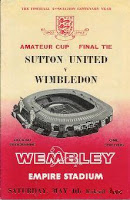
Programme for 1963 Amateur Cup Final at Wembley

Programme for 1963 Amateur Cup Final at Wembley

O’Hagan’s feat was rivalled in May 1963 by another Irishman, Eddie Reynolds from Belfast, as his four headed goals ensured victory by Wimbledon FC over Sutton United in the FA Amateur Cup, 4-2. His performance earned him a Northern Ireland cap against Scotland.