A-MAZING! DAY 2 AT BALMORAL

Riding for the Disabled group in shadow of former Maze prison

Riding for the Disabled group in shadow of former Maze prison

It was an a-mazing second day at the Balmoral Show. Standing in the shadow of two watchtowers, a security wall and other reminders of the former high-security jail, I met  a group from the Riding for the Disabled Association (whose President is the Princess Royal, sister of Prince Edward, who opened the show yesterday). They came from clubs in Newtownards, Banbridge and included some members of the RDA Ireland from Monaghan.

I was at the Maze only once during its previous existence as a high-security prison. Making a radio programme for BBC Radio Birmingham in the mid-1970s, I spent a night with a British Army regiment known as the Birmingham Gunners (39 Medium Regiment Royal Artillery) in the military base on one part of the site.

I remember it was around the time of St Patrick’s Day and I eventually found a suitable spot to drown the shamrock. Next day I was taken in a Land Rover on one of their perimeter security patrols and was also shown into one of the watchtowers. From there I could see a group of prisoners exercising in one of the H-blocks. One of them was running around the large cage and when he spotted a face in the observation post, he made a two-fingered gesture and shouted towards his “audience”.

The Gunners did four “emergency” tours of duty in the North in the 1970s, the first to Fort George in Derry in 1973, which, like the Maze, is now earmarked for a regeneration project. At the time of their deployment at the Maze, the squaddies were also in Craigavon and some were stationed at the border checkpoint at Aughnacloy. Some years previously in 1969 while on exercise in Libya, the Regiment found itself caught up in the military coup of the then Captain Muammar Gadaffi against the government of King Idris.

Main Arena Balmoral Show 2013 DayTwo

Main Arena Balmoral Show 2013 Day Two

Now after some 37 years I was back at the Maze, but in a very different context. With thousands of cars parked on hard standing all paths from the car park led to the main entrance of the 145th annual Royal Ulster Agricultural Society show. This event transferred from the King’s Hall complex at Balmoral in Belfast is helping to bring a promising future to the site of the former jail.

The transformation is being carried out by the Maze Long Kesh Development Corporation. Programme Director Kyle Alexander confirmed to reporters this evening that funding for the development of a Peace-building and Conflict Resolution Centre is expected to be in place by the end of this year. Although the Corporation wants to emphasise that the 347 acres should be a shared site, some unionist politicians and loyalists have protested that the preserved hospital and one H-block from the prison should not be allowed to become a “shrine” for the republican hunger strikers who died there.

RUAS President John Bamber at Balmoral Show entrance

RUAS President John Bamber at Balmoral Show entrance

Meanwhile the show will continue for a third day, with initial traffic problems apparently sorted, although the delays in arriving now seem to have been transferred to departure from the site. There are plans to build a slip road to the nearby M1 motorway in 2015, which would ease congestion along the narrow access roads around the complex. RUAS President John Bamber was pleased with the opening day of the show and said he hoped the traffic management plan put into place with the PSNI and Roads Service would help to ease congestion, especially for those travelling from West of the Bann.
WILLIAM CARLETON SUMMER SCHOOL

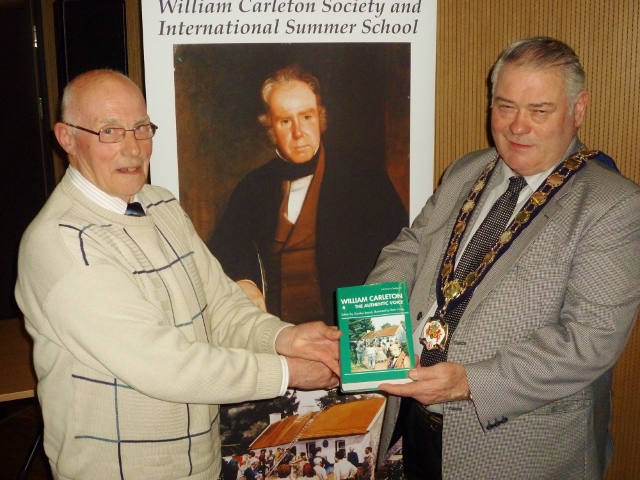
Pat Boyle presents a copy of The Authentic Voice to Mayor of Dungannon Cllr Phelim Gildernew

William Carleton Society Vice-Chair Pat Boyle presents “The Authentic Voice” to Mayor of Dungannon Cllr Phelim Gildernew

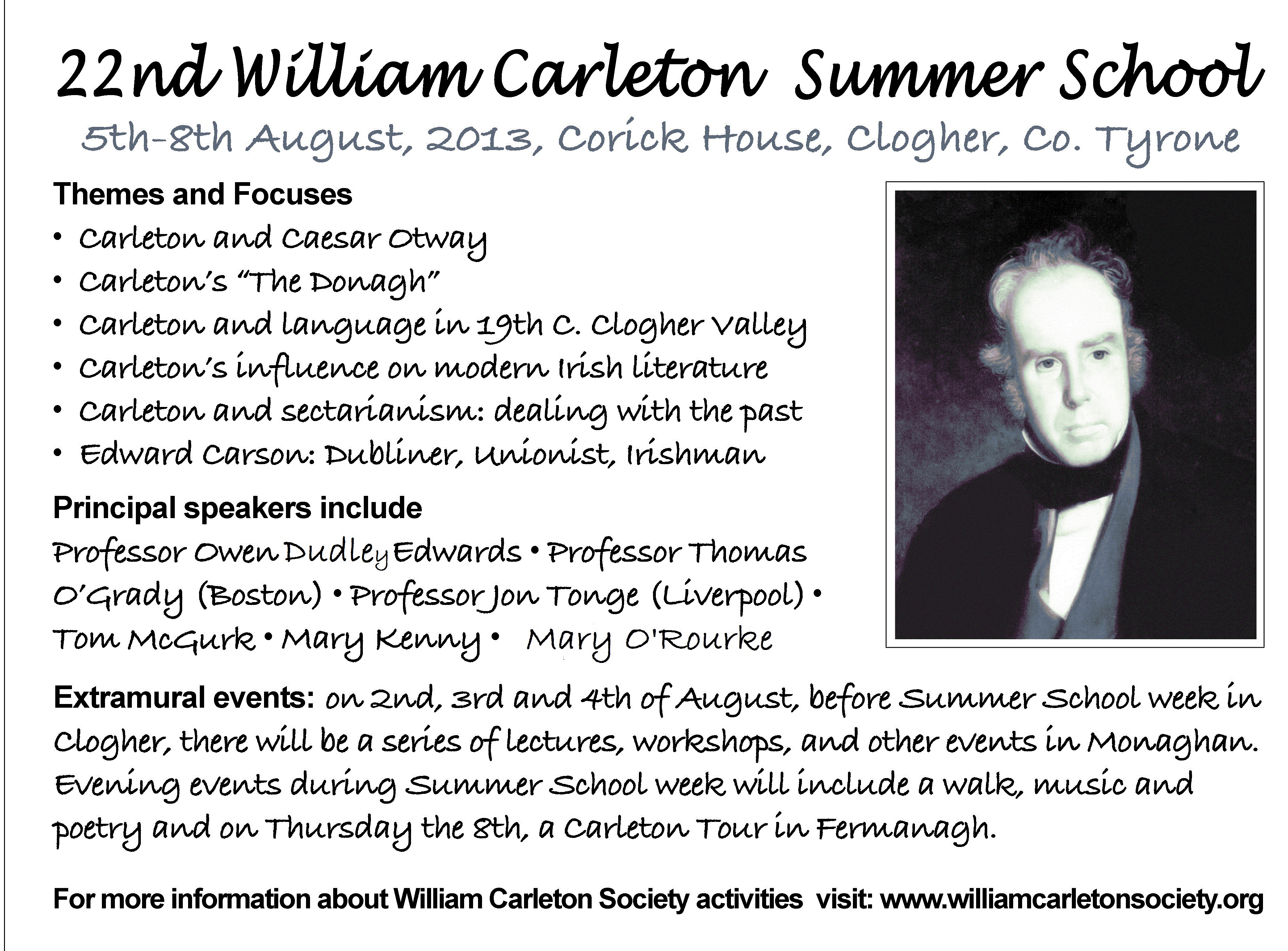
Details have been announced of the 22nd annual William Carleton summer school. The programme for 2013 was  launched at the Hill of the O’Neill Centre/Ranfurly House in Dungannon in the presence of the Mayor of Dungannon and South Tyrone Borough Council, Cllr Phelim Gildernew. He was presented with a copy of “The Authentic Voice”, edited by Gordon Brand and illustrated by Sam Craig, which contains articles about Carleton based on lectures to the summer school in previous years.

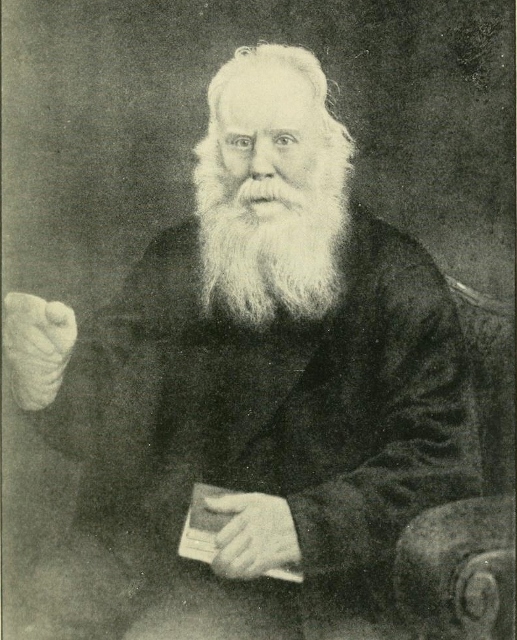
William Carleton

William Carleton

The summer school opens at 11:30am on Monday 5th August at Corick House Hotel in Clogher. The starting time has been put back to enable more people to attend who might have to travel, especially our friends and supporters in the Dublin area. Our Honorary Director Professor Owen Dudley Edwards will speak about Carleton, Caesar Otway and Irish literature. Otway was a Protestant clergyman in Dublin whose influence on the writer came at an important time in his career. Professor Thomas O’Grady from Boston will speak about “The Geography of the Imagination: Carleton’s story “The Donagh”. The final talk of the day will feature the broadcaster and poet Tom McGurk, who comes from Brackagh in County Tyrone, in conversation with one of his contemporaries at school, Aidan Fee, about Northern Ireland, past and present.

On Tuesday 6th August there will be a discussion about language in the 19thC Clogher Valley. Dr Ciaran Mac Murchaidh, St Patrick’s Drumcondra will talk about Irish and Ulster Scots will be the topic for  Dr Ian Adamson. There will be a session on literature with Ciaran Collins “The Gamal”, Tony Bailie, and Patricia Craig “Twisted Root”. Josephine Treanor will talk about her relative, Anne Duffy, the Miller’s Daughter from Augher, one of Carleton’s first loves.
Wednesday 7th August is devoted to dealing with the past and will feature Professor Jon Tonge (Liverpool), Mary O’Rourke on how different political strands can be accommodated, poet Siobhan Campbell and Mary Kenny talking about Edward Carson, unionist, Dubliner and Irishman. Actor Patrick Scully will present his one-man show on Carson, which he performed recently at the Lyric Theatre studio in Belfast.

Patrick Scully as Edward Carson

Patrick Scully as Edward Carson

The final day, Thursday 8th August, Gordon Brand and summer school deputy director Frank McHugh will act as guides for the annual coach tour. This year it will go to the neighbouring county of Fermanagh. It will focus on the work of Shan Bullock, who wrote “The Loughsiders”, based in the area around the Crom estate. The tour will depart from Corick House in Clogher at 10:30am and advance booking is necessary at wcarletonsociety@gmail.com.

Charles Gavan Duffy

Charles Gavan Duffy

This year there will be a number of events in Monaghan and Emyvale (which has a Carleton connection) preceding the summer school. On Friday 2nd August there will be a one-day conference at the Four Seasons Hotel, CARLETON, KAVANAGH and GAVAN DUFFY. Admission is free and the event is funded by the EU Peace III programme of Monaghan County Development Board.

Professor Thomas O’Grady from Boston will read some of his poems and talk about his research on the Monaghan poet, Patrick Kavanagh. Art Agnew from Inniskeen will read selected extracts from Kavanagh’s works, including The Green Fool. The afternoon is devoted to a study of Monaghan man Charles Gavan Duffy, a devotee of Carleton and one of the influential people who helped the writer to obtain a civil list pension in 1848. The speakers will be Brendan O Cathaoir from Bray and Aidan Walsh, a heritage consultant who was the first curator of Monaghan County Museum. Monaghan poet Mary O’Donnell, one of the William Carleton Society’s patrons, will read from some of her works. The programme will conclude with a talk on “The Shemus Cartoons” from the Freeman’s Journal by Felix M.Larkin from Dublin.

I am also pleased that the William Carleton Society will be hosting the launch of a book, “Memories Amidst the Drumlins: Cavan and Monaghan“, containing some of the poems and stories written about the area by the late Terence O’Gorman from Tydavnet and edited by his daughter, Patricia Cavanagh. Terence was a regular visitor to the summer school and many other similar events throughout Ireland.

On Saturday 3rd August, Grace Moloney of the Clogher Historical Society and Theresa Loftus (Monaghan Museum) will lead a walk through Monaghan town, starting at the Museum at Hill Street at 11am. This event is free. The following day, Sunday 4th August, there will be a ceremony to mark the Carleton plaque at the Blue Bridge near Emyvale. At 8pm in Emyvale Leisure Centre, the Carleton Players will perform a reading of the “Fair of Emyvale”, adapted by Liam Foley.   summerschoolad

Blue Bridge near Emyvale

Blue Bridge near Emyvale

CARLETON ON TOUR

Jack Johnston at Draperstown

Jack Johnston at Draperstown

The William Carleton story was told by Jack Johnston at The Shepherd’s Rest pub near Draperstown. The well-attended event was hosted by Ballinascreen Historical Society. It include a reading by the Carleton Players from “The Party Fight and Funeral”, adapted by Liam Foley. William Carleton Society is part of the “Shared History, Shared Future” project financed by the EU Peace III initiative and administered by Magherafelt District Council on behalf of the South West Peace III Partnership. On Tuesday 14th May at 6:30pm at Ranfurly House/Hill of the O’Neill centre in Dungannon we will be launching the programme for the 22nd annual William Carleton international summer school. All welcome.

summerschoolad

CALEDON AND ITS REGENERATION

Caledon Courthouse

Caledon Courthouse

For many years during the troubles in Northern Ireland the border village of Caledon in County Tyrone looked shabby, with many derelict and unused buildings along the main street. It looks very different nowadays, as the restored courthouse building testifies.

In 1984 the village was designated as a Conservation Area and six years later, this was reviewed and the boundary extended. DoE (NI) Planning Service produced a Conservation Area Guide to accompany the original designation, which included design guidance intended to help protect the historic fabric of the village.

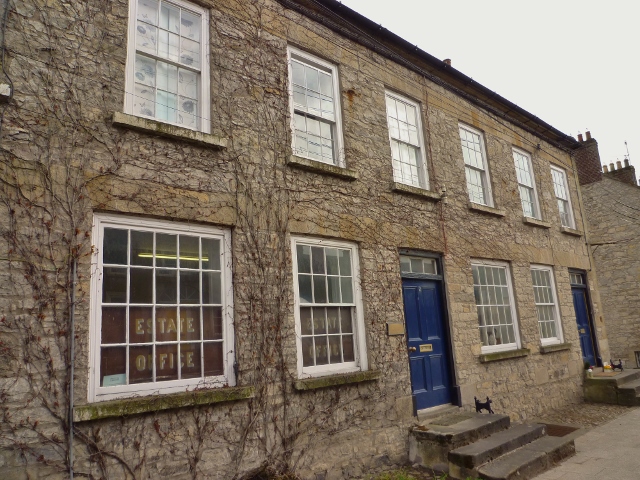
Caledon Estate Office

Caledon Estate Office

The Caledon Regeneration Partnership was formed in 1994 to take forward a planned social, economic and environmental regeneration strategy for the County Armagh village. It is made up of representatives from the local community, local authority and Caledon Estates Company, which has an office in the main street.

Beam Engine House, Caledon

Beam Engine House, Caledon

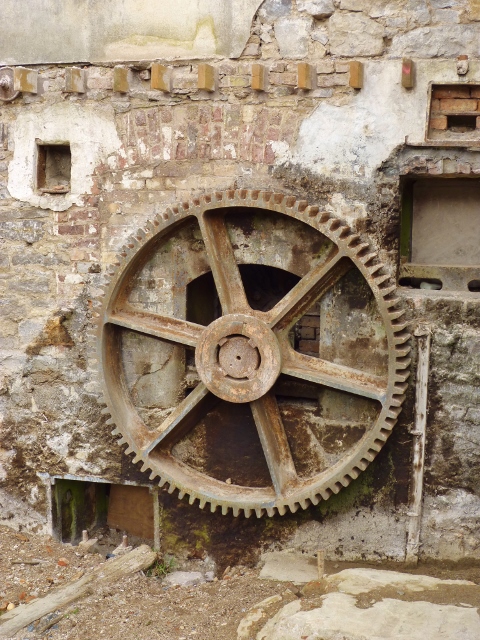
One of the projects being undertaken is the restoration of a beam engine and engine house. Last year a total of £220,000 in funding was secured to finance the first phase.  It is hoped that the engine will eventually be restored to a fully operational state, and become a tourist attraction for the area. The unique piece of equipment dates back to the early 1830s and is one of the earliest surviving steam engines in Ireland. It was once used to power the Caledon Flour Mill and then Caledon Woollen Mills.

Beam Engine House, Caledon

Beam Engine House, Caledon

William Beattie of Caledon Regeneration Partnership said he believed the beam engine is unique in these islands:-  “There are only about eight beam engines in Ireland, and this one is the only one which has a housed engine, making it a very important piece of industrial archaeology. This is the only relic remaining of Caledon’s once famous mill industry, which produced quality woollen garments until the 1930s. The mill, which was built in the early 1800s, was demolished in 1985. During the summer, wood and coal was used to power the beam engine, when the water-flow was not strong enough to move the wheel. The hope is to get the engine functioning again, and to create a viable tourism attraction which will also faithfully record the history of the village”, he said.

In addition a Grade B listed property, a former worker’s building on the Caledon Estate, which has lain derelict for years, has received funding worth £30,000 under the Historic Buildings Grant-Aid Scheme.

Caledon estate was bought from the seventh Earl of Cork for £94,400 in 1776 by James Alexander (later first Earl of Caledon), an East India Company Nabob. The Earls of Cork and Orrery had only acquired the estate by marriage from the Hamilton family in 1738, but during the forty years of ownership, they had made it into a by-word for fashionable landscape design, complete with a gate lodge decorated with statues and Latin epigrams, a hermitage and a bone house.

Gate Lodge Caledon Estate

Gate Lodge Caledon Estate

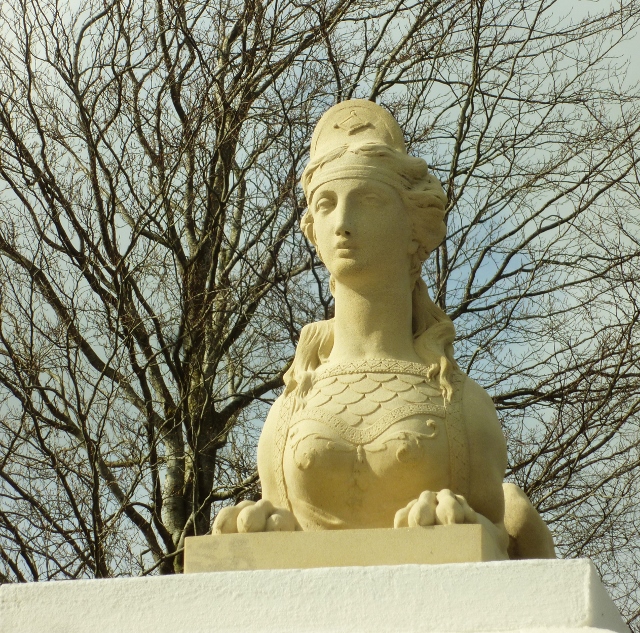
Sphinx Statue at Gate Lodge

Sphinx Statue at Gate Lodge

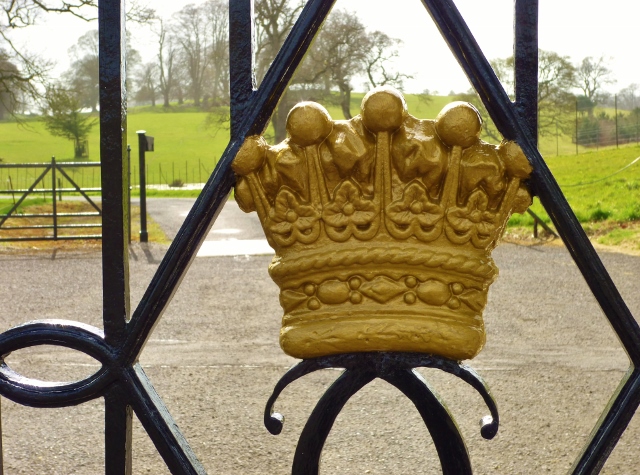
Detail on Gate

Detail on Gate

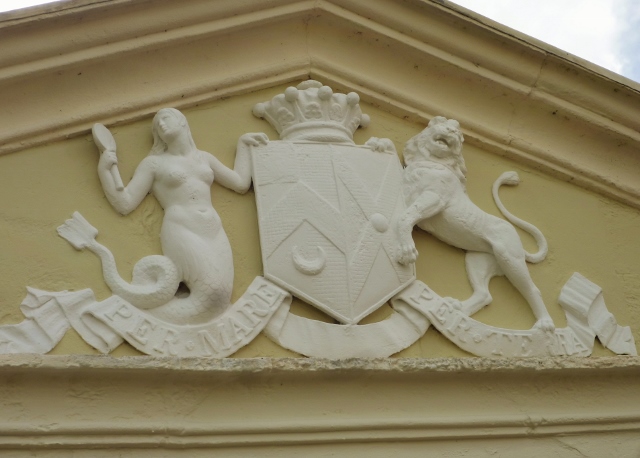
Pediment Relief: Coat of Arms

Pediment Relief: Coat of Arms

Caledon Regeneration is one of five groups taking part in the “Shared History, Shared Future” project under the Peace III programme run by Dungannon and South Tyrone Borough Council. On Thursday evening (25th April) at 7pm, the historian Jack Johnston of the William Carleton Society will give a talk on the Clogher Valley Railway. The narrow gauge line ran through the main street of the village until its closure in 1941.

CVR train in Main St Caledon (TG4 photo)

CVR train in Main St Caledon (TG4 photo)

.

ULSTER ENGLISH AGENCY?

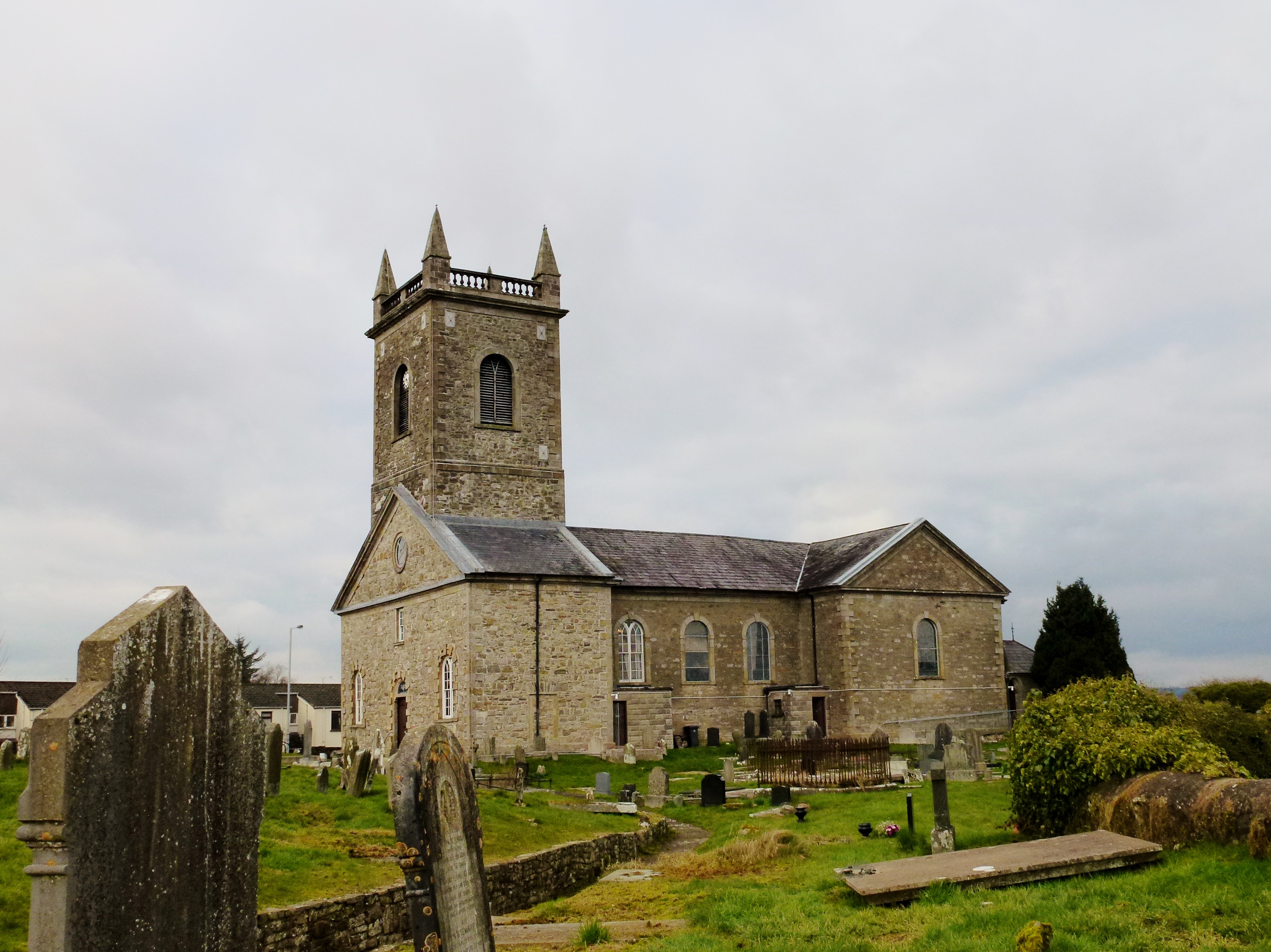
St Macartan's Cathedral, Clogher

St Macartan’s Cathedral, Clogher

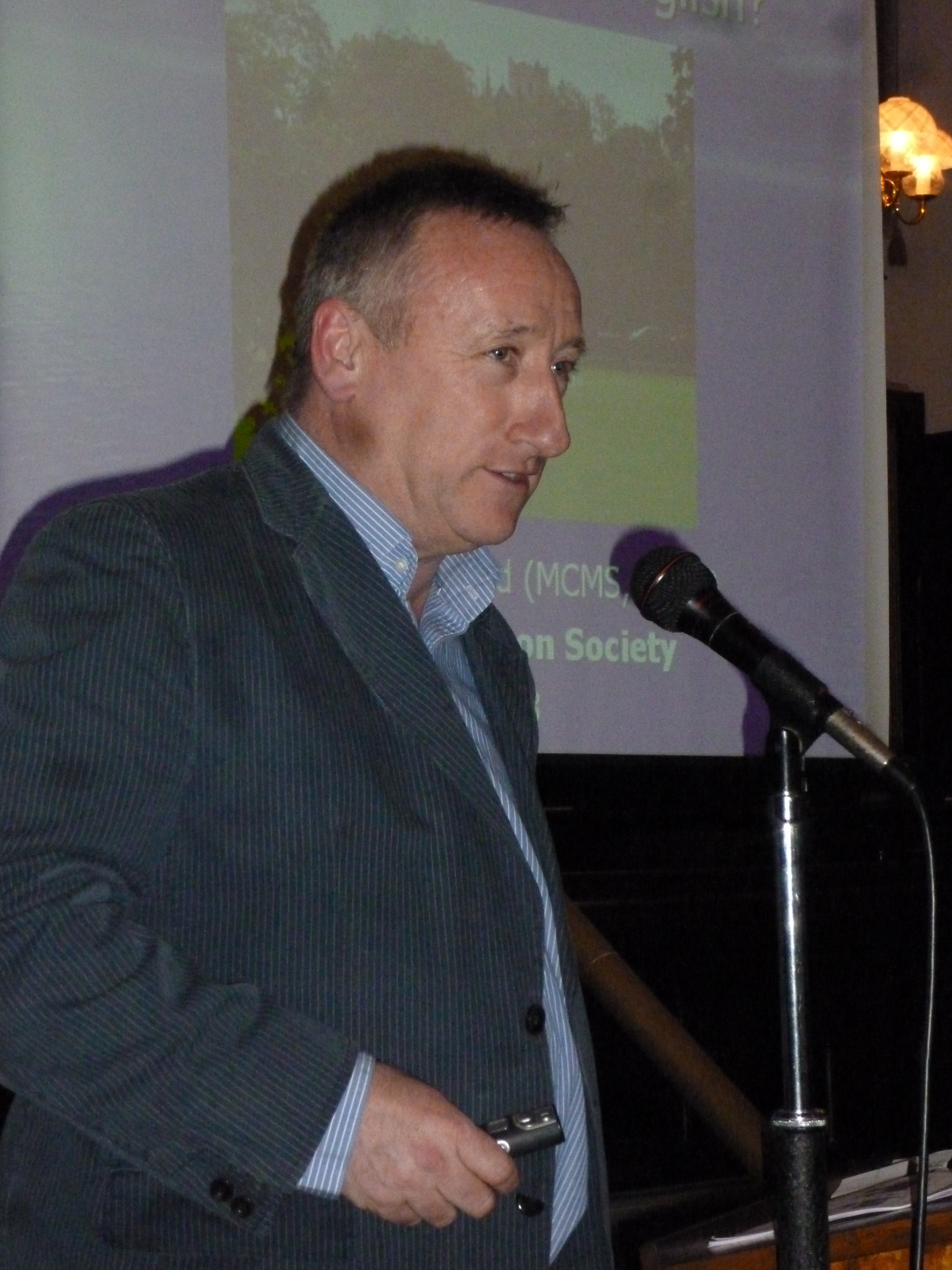
Dr Paddy Fitzgerald

Dr Paddy Fitzgerald

Much of the discussion about the two communities in Northern Ireland refers to the different backgrounds of the Irish (Gaelic) race and Ulster-Scots. But there is little to be found about a third category that dates back to the time of the Plantation in 1607, Ulster-English. This was the subject of a fascinating talk hosted on St George’s Day at St Macartan’s Cathedral in Clogher, County Tyrone and organised by the William Carleton Society.

The speaker was Dr Paddy Fitzgerald of the Centre for Migration Studies at the Ulster-American folk park in Omagh, a member of the Executive Committee of the Society. Earlier this year he gave an interesting talk about Archbishop John Hughes who came from the Augher area.

Dr Fitzgerald gave an outline of his own family history, which he pointed out had an Ulster-English connection. He explained that this was a different strand than the Ulster Scots. English settlers arrived after 1607 in the Belfast Lough area, moving through the Lagan Valley and South Antrim towards North Armagh and then along the Clogher Valley into Fermanagh. At the end of his talk, he posed the question whether we should have an Ulster-English Agency, because he said the authorities seemed to be promoting Ulster-Scots as the only alternative to the Gaelic and nationalist tradition.

Attendance at St Macartan's Cathedral

Attendance at St Macartan’s Cathedral

The British Museum guide on accents and dialects of Northern Ireland says:-

The Plantation of Ulster…was a planned process of settlement aimed at preventing further rebellion among the population in the north of Ireland. This part of the island was at that time virtually exclusively Gaelic-speaking and had shown the greatest resistance to English colonisation. From the early seventeenth century onwards, Irish lands were confiscated and given to British settlers — or ‘planters’ — who arrived in increasing numbers, bringing the English Language with them. Large numbers of settlers came from southwest Scotland and thus spoke a Scots dialect, while the remaining settlers came predominantly from the north and Midlands of England….

For some considerable time the colonists remained surrounded by Gaelic-speaking communities in County Donegal to the west and the counties of Louth, Monaghan and Cavan to the south. Thus English in the northeast of the island developed in relative isolation from other English-speaking areas such as Dublin, while the political situation over the course of the twentieth century has meant that Northern Ireland has continued to develop a linguistic tradition that is distinct from the rest of Ireland. Scots, Irish Gaelic, seventeenth century English and Hiberno-English (the English spoken in the Republic of Ireland) have all influenced the development of (Ulster) Northern Irish English, and this mixture explains the very distinctive hybrid that has emerged.”

Dr Paddy Fitzgerald

Dr Paddy Fitzgerald

The William Carleton Society would like to express its thanks to Precentor Noel Regan, for making the Cathedral available for this event. In his absence, the diocesan Curate Reverend Alistair Warke said the Cathedral enjoyed a good relationship with the annual William Carleton summer school and was pleased to be able to host the Society’s first talk in its programme for 2012/13. The talk was part of the “Shared History, Shared Future” project, supported by the EU Peace III programme delivered by Dungannon and South Tyrone Borough Council.      SWPeaceIII_logo_options_2b

DSTBC LogoEU flag2colors

ULSTER ENGLISH

St Macartan's Cathedral, Clogher

St Macartan’s Cathedral, Clogher

Much of the discussion about the two communities in Northern Ireland refers to the different linguistic backgrounds of Irish (Gaelic) and Ulster-Scots. But there is little to be found about a third category that dates back to the time of the Plantation in 1607, Ulster-English. This is the subject of tonight’s talk (7:30pm) hosted on St George’s Day at St Macartan’s Cathedral in Clogher, County Tyrone and organised by the William Carleton Society.  

Dr Paddy Fitzgerald & Malcolm Duffey

Dr Paddy Fitzgerald & Malcolm Duffey

The speaker is Dr Paddy Fitzgerald of the Centre for Migration Studies at the Ulster-American folk park in Omagh, a member of the Executive Committee of the Society. Earlier this year he gave an interesting talk about Archbishop John Hughes who came from the Augher area. The British Museum guide on accents and dialects of Northern Ireland says:-

 “The Plantation of Ulster…was a planned process of settlement aimed at preventing further rebellion among the population in the north of Ireland. This part of the island was at that time virtually exclusively Gaelic-speaking and had shown the greatest resistance to English colonisation. From the early seventeenth century onwards, Irish lands were confiscated and given to British settlers — or ‘planters’ — who arrived in increasing numbers, bringing the English Language with them. Large numbers of settlers came from southwest Scotland and thus spoke a Scots dialect, while the remaining settlers came predominantly from the north and Midlands of England…. 

For some considerable time the colonists remained surrounded by Gaelic-speaking communities in County Donegal to the west and the counties of Louth, Monaghan and Cavan to the south. Thus English in the northeast of the island developed in relative isolation from other English-speaking areas such as Dublin, while the political situation over the course of the twentieth century has meant that Northern Ireland has continued to develop a linguistic tradition that is distinct from the rest of Ireland. Scots, Irish Gaelic, seventeenth century English and Hiberno-English (the English spoken in the Republic of Ireland) have all influenced the development of (Ulster) Northern Irish English, and this mixture explains the very distinctive hybrid that has emerged.”

Admission to the talk is free. It is part of the “Shared History, Shared Future” project, supported by the EU Peace III programme delivered through Dungannon and South Tyrone Borough Council.    EU flag2colorsDSTBC LogoSWPeaceIII_logo_options_2bpaddyfitz

BANNERS & SASHES

This orange banner comes from Redhills in County Cavan. It belongs to the Stonepark Lodge No.607 and depicts the departure of King William III (of Orange) from the original Hillsborough Castle in County Down in 1690. An unofficial history of the Irish Campaign explains how he had landed at Carrickfergus a few days earlier and on 19th June 1690 at Hillsborough the King “issued an order…granting Presbyterian ministers in Ireland the right to receive the regium donum, an annual grant, paid to nonconformists ministers in England, Scotland and especially Ireland at that time. The payment was made as a reward for their loyalty to him and partly as compensation for their recent losses“.  The following month the crucial Battle of the Boyne took place against the forces of James II.

Stonepark Co.Cavan Orange Lodge Banner

Stonepark Co.Cavan Orange Lodge Banner

Monaghan UVF Flag

Monaghan UVF Flag

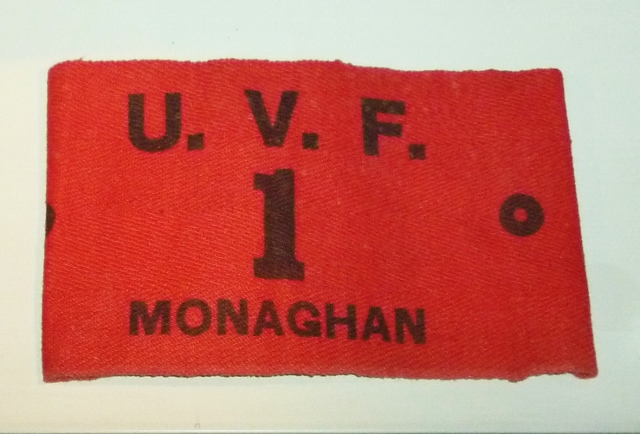
On the reverse side is a picture of Lisburn Cathedral. This suggests that the banner has been re-used by a different orange lodge. The banner is part of “Walking the Colours“, a touring exhibition currently at Monaghan Museum and running until the end of July. Colour is the operative word as there is a varied selection of banners and sashes from both the orange and green traditions. With all the current controversy about UVF centenary flags flying in East Belfast, I was interested to see an original flag of the Ulster Volunteer Force in Monaghan dating back to the period around 1912/13. There was also a UVF armband from the same era.

UVF Monaghan Armband

UVF Monaghan Armband

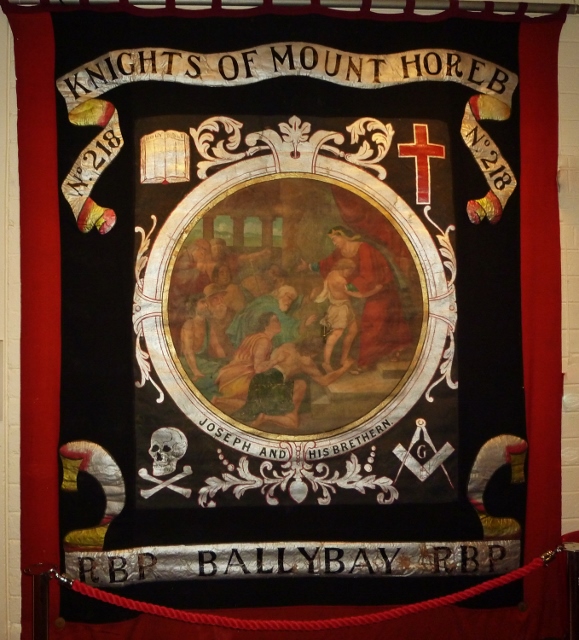
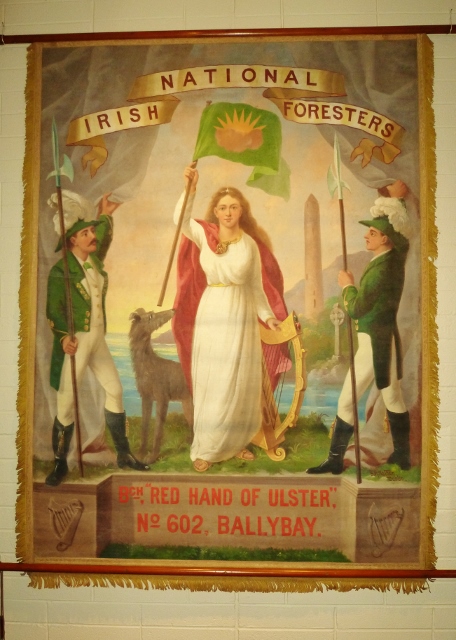
 To complete the display of banners from the Protestant tradition, there is one belonging to the Royal Black Preceptory in Ballybay, named the Knights of Mount Horeb. Biblical scenes were common (and still are) in the black and orange loyal order banners. The teachings of the Royal Black Institution are based on Holy Scripture. The organisation was founded in 1797, two years after the Orange Order came into existence. There are two Royal Black District Chapters in Monaghan and fourteen Preceptories. Donegal is the only Ulster county not represented.

RBP Banner Ballybay

RBP Banner Ballybay

On the nationalist side, there are several local banners of significance. They include one of Terence Bellew MacManus from Tempo, County Fermanagh. The slogan exhorts Men of Monaghan to “Remember MacManus”, who took part in the Young Irelander rebellion in 1848. He is buried in Glasnevin cemetery in Dublin. The banner is thought to have been made in the early 1900s. It was brought to the USA and used by the Monaghan Mens’ Association in the St Patrick’s Day parade in New York. There is a picture of it accompanying the group in 1933.

AOH Donagh

AOH Donagh Monaghan Div.434

Remember MacManus

Remember MacManus

 The Ancient Order of Hibernians was set up in 1838 as a counter to the Orange Order. Division 434 was the designation in Donagh parish, in North Monaghan.

Some more banners from the exhibition:-

AOH Banner, Donagh

AOH Banner, Donagh

Truagh Banner re 1798

Truagh Banner re 1798

INF Banner, Ballybay

INF Banner, Ballybay

WALKING THE COLOURS

Monaghan Museum

Monaghan Museum

With the marching season now underway, it is perhaps timely that an exhibition is coming to Monaghan Museum about the history and traditions of walking the colours in Ulster, both orange and green. It opens on Wednesday 10th April at 6pm and will run until the end of July. Unfortunately it will have finished by the time the William Carleton Society’s one day conference takes place in Monaghan on Friday 2nd August (Bank Holiday weekend in the Republic), when the issues of a divided community will be raised.

Incidentally, it was noticeable that the usual start of the marching season on Easter Monday (as well as the republican commemorations on Easter Sunday) with the Apprentice Boys of Derry main parade in Enniskillen passed off without incident. I remember standing at the Ormeau Bridge in Belfast or in Ardoyne on previous Easter Mondays and sometimes these feeder parades were highly contentious.     photo (12) (640x472)

Everyone displays their colours in one way or another – hence the title of this ground breaking exhibition; “Walking the Colours”. The cross border exhibition will feature the incredible collection of marching banners held by Monaghan County Museum. This collection has never been displayed together before and will illuminate the gallery with an explosion of colour. This is one exhibition that should not be missed. The display explores the origins of parades looking at the guilds, trades and orders who hark back to the middle ages while also trying to explore the current scene. It includes the role of youth organisations, along with civic parades and public celebrations.

The exhibition forms part of the Cultural Fusions project, which is a heritage based project being delivered by Mid-Antrim Museum Service and Causeway Museum Service across the local councils of Ballymena, Larne, Ballymoney, Coleraine, Limavady and Moyle. It is supported by the PEACE III Programme through funding from the Special EU Programmes Body administered by the North East PEACE III Partnership

WILLIAM CARLETON

William Carleton

William Carleton

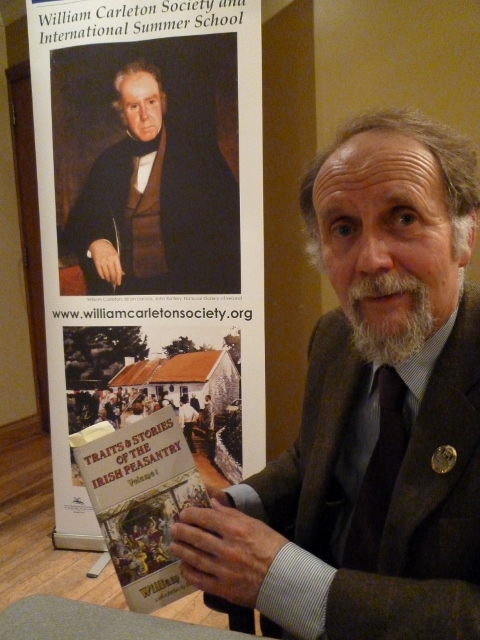
Donaghmore Historical Society in County Tyrone concluded its season of talks in The Heritage Centre on Monday, 8th April, when Michael Fisher gave an illustrated talk entitled, “From Prillisk to Beechmount: a Tyrone man’s journey to Dublin: the story of William Carleton.” Born and reared as a Catholic in the Clogher Valley , where his father was a small farmer, Carleton has never had the recognition he deserves, either in his native area or in the ranks of Irish novelists. He spent most of his adult life in Dublin , where his works were written, including the famous “Traits and Stories of the Irish Peasantry,” the first such significant stories to be published in the English language in Ireland and Britain . When he settled in the capital city, he came under the influence of a Protestant clergyman, who persuaded him to change his religion in order to gain a living as a writer. His stories describe the society he grew up in, which often featured sectarian confrontation between orange and green factions, such as “The Party Fight and Funeral.”

Michael Fisher Talk

Michael Fisher Talk

Michael Fisher is Director of the William Carleton Society’s international summer school. A freelance journalist, he retired from RTÉ. News in Belfast in September 2010, having joined the broadcaster in Dublin in 1979. He is a former BBC. News trainee in London and worked in Birmingham as a local radio reporter. A native of Dublin , Michael has family connections with County Tyrone as well as County Monaghan . He is a graduate of UCD. and QUB., where he completed an MA. in Irish Studies in 2001, including a dissertation on The Big House in Counties Fermanagh and Monaghan. He was introduced to the works of Carleton during his time as a student at University College in Dublin by one of his lecturers on Anglo-Irish literature, Maurice Harmon, who is now a patron of the William Carleton Society.

Michael FisherTalk

Michael FisherTalk

Those who remember Michael’s soft modulated, dulcet tones from his days on our television screens will have a chance to see and hear him in person in The Heritage Centre on Monday night at 8 o’clock, when he will be telling the story of a County Tyrone writer, who, surprisingly enough, is virtually unknown in this part of the county.

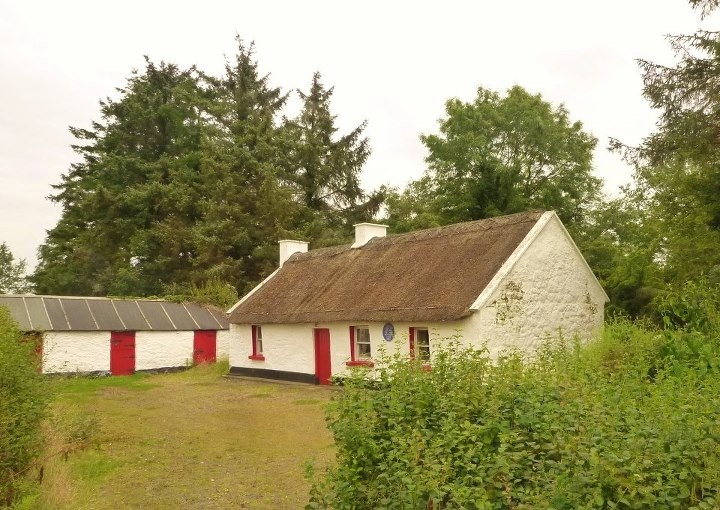
Carleton's Cottage, Springtown

Carleton’s Cottage, Springtown

William Carleton                    1794 – 1869

William Carleton was born the youngest of a family of 14 children in the townland of Prolusk (‘Prillisk’ in his autobiography) near Clogher in Co.Tyrone, on Shrove Tuesday, 20th February,1794. Although there is little suggestion that the Carletons were upwardly mobile, they did move house frequently within the Clogher area and were established at the townland of Springtown when William left the family home. Carleton obtained his education at local hedge schools which he was to write about, fictionalising the pedagogue Pat Frayne as the redoubtable Mat Cavanagh. From other retrospections of his home district, we learn of Carleton’s delight in his father’s skill as a seanachie and the sweetness of his mother’s voice as she sang the traditional airs of Ireland; of his early romances- especially with Anne Duffy, daughter of the local miller; of Carleton the athlete, accomplishing a ‘Leap’ over a river, the site of which is still pointed out; of the boisterous open air dancing. Initially an aspirant o the priesthood, Carleton embarked in 1814 on an excursion as a ‘poor scholar’ but, following a disturbing dream, returned to his somewhat leisurely life in the Clogher Valley before leaving home permanently in 1817. Journeying via Louth, Kildare and Mullingar, he found work as a teacher, librarian and,  eventually, as a clerk in the Church of Ireland Sunday School Office in Dublin. In 1820, he married Jane Anderson who bore him several children. By 1825, Carleton. who had left the Roman Catholic Church for the Anglican Church of Ireland, met a maverick Church of Ireland cleric, Caesar Otway, who encouraged him to put his already recognised journalistic talents to such prosletysing purposes as satirising the attitudes reflected in pilgrimages to ‘St Patrick’s Purgatory’ at Lough Derg, a totemic site in Irish Catholicism. Further writings in the Christian Examiner & Church of lreland Magazine led in 1829 and 1833 to the publication of what is arguably Carleton’s best known work: Traits and Stories of the Irish Peasantry. In these stories Carleton returned imaginatively to the Clogher Valley, drawing on comedy, farce, melodrama and tragedy to present a tableau of the life of the country people of the north of Ireland before the famines of the 1840s altered their pattern of existence for ever. Carleton went on to respond to the challenge of the novel, in his tirne a comparatively undeveloped genre amongst Irish writers, and published Fardorougha the Miser (1839), Valentine McClutchy (1845), The Black Prophet (1847), The Emigrants of Aghadarra (1848), The Tithe Proctor (1849), The Squanders of Castle Squander (1852). In these works he addresses many of the issues affecting the Ireland of his day such as the influence of the Established Church and landlordism, poverty, famine and emigration but does so with an earnestness that regrettably often caused his more creative genius to be swamped in a heavy didacticism. Carleton continued to write in a variety of forms, including verse, until his death in 1869, but critics are agreed that the quality of the work is uneven. Despite his prolific output, Carleton never really made a living from his writings and welcomed the pension voted to him by the government following the advocacy of such contrasting figures as the Ulster Presbyterian leader, Dr Henry Cooke, and Paul Cardinal Cullen, Catholic Archbishop of Dublin. His last project, uncompleted when he died, was his Autobiography, which was re-issued through the efforts of the Summer School Committee in 1996. Carleton was buried in the cemetery at Mount Jerome in Dublin and over his grave a miniature obelisk records the place “wherein rest the remains of one whose memory needs neither graven stone nor sculptured marble to preserve it from oblivion”.           (Summer School handbook 1998)

P1100802 (2)

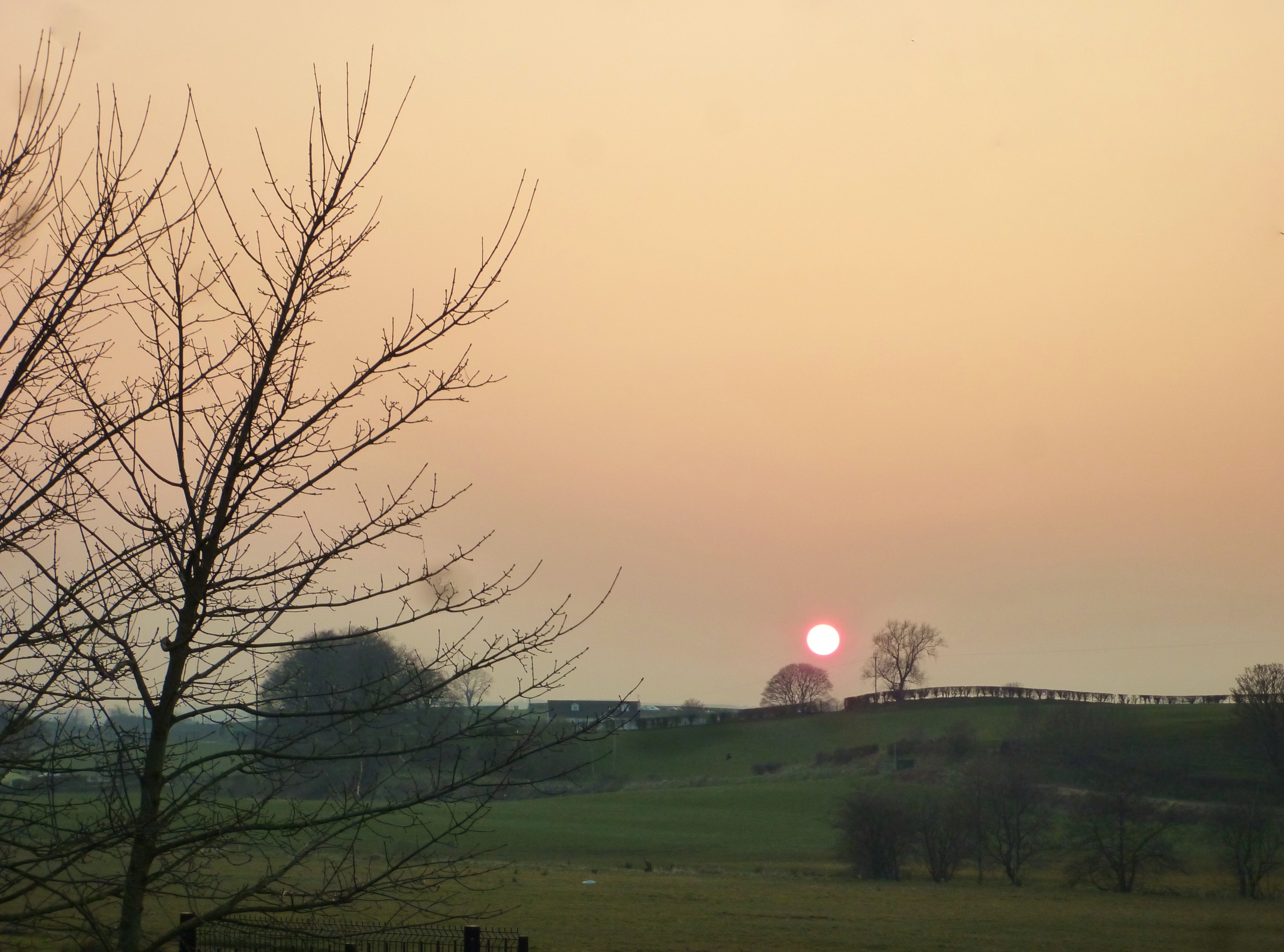
Donaghmore Sunset

SWPeaceIII_logo_options_2b  DSTBC Logo

MONAGHAN GO UP!

Dick Clerkin: A Helping Hand

Dick Clerkin: A Helping Hand

Monaghan 3-16 Antrim 0-13

This was a convincing performance by Monaghan at St Tiarnach’s Park in Clones, which earned the Farneymen promotion to division two of the Allianz National Football League next season. But they were up against an Antrim side which at times lacked in conviction and was too reliant on Paddy Cunningham. The Lámh Dhearg man scored eight of their points, half of them from frees.

The visitors had a great chance in the first minute, but Cunningham’s shot at goal from close range was blocked by an effective Monaghan defence. The ball was cleared up the field and a pass found Christopher McGuinness in the perfect spot to rattle the Antrim net, giving substitute keeper Chris Kerr little chance.

Job well done

Job well done

Monaghan added two points in the next four minutes, then Cunningham got the first of his frees, making it 1-2 to 0-1. Both sides exchanged further scores then Monaghan started to apply the pressure, adding four points, one of them a beautifully taken one from long range by Dick Clerkin. Two more Cunningham frees for the visitors had made it 1-7 to 0-03 after 25 minutes, when Antrim got their first score from play through Michael Pollock, then each side added a further point. Then with the break approaching Kieran Hughes scored Monaghan’s second goal, 2-8 to 0-5. Cunningham and Paul Finlay for Monaghan were both on target with frees and a neatly-taken point by St Gall’s half forward Kevin Niblock rounded off the first half and meant that Antrim still had a slim chance of turning things round in the second, although trailing by eight points,

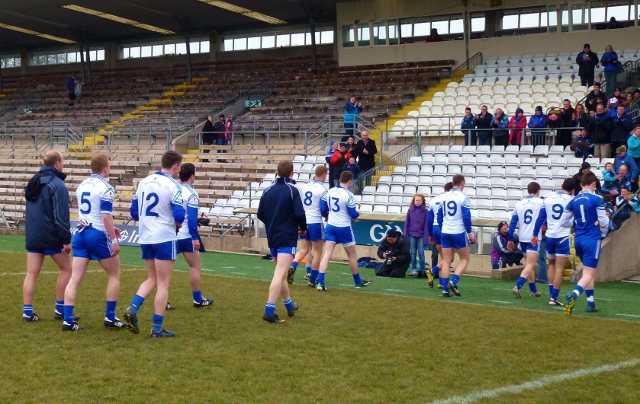
Monaghan 2-9 Antrim 0-7 Half Time 

Antrim got off to a good start in the second half, but Monaghan were more than capable of dealing with any of their attacks and McGuinness almost grabbed his second goal but was penalised for over-carrying. It was left to his colleague Darren Hughes to assure a Monaghan win with a nice three-pointer in the 49th minute, 3-11 to 0-9.

Conor McManus point

Conor McManus point

Eoin Duffy added a good point at the end of an attack involving Conor McManus, Owen Lennon and Clerkin, but Antrim hit back with three in a row – two from Cunningham and one by Michael Pollock. McManus kicked a couple of points from frees after fouls on Kieran Hughes and Stephen Gollogly. Andy McClean rounded off the scoring for the Saffrons, but Monaghan were deserving winners. Hughes though received a second yellow and therefore a red card before the final whistle, so Monaghan ended the game with fourteen players.

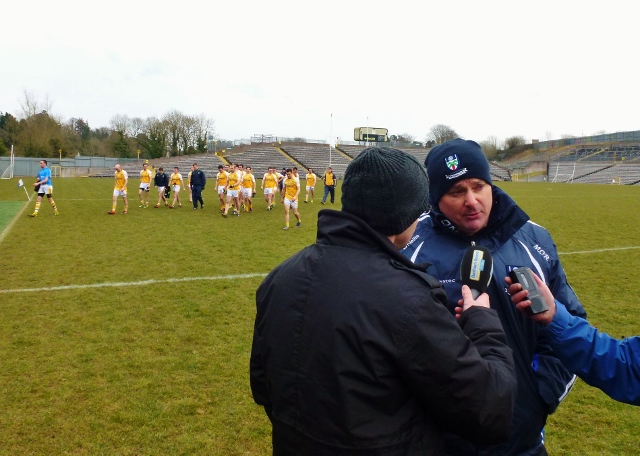
The two teams will face each other again in the Ulster senior football championship in June. Monaghan boss Malachy O’Rourke said afterwards he thought the game at Casement Park will not be as easy:-

We are delighted to get the win and secure promotion. We knew Antrim would be tricky opponents but we got a good start and kept the lead. Antrim battled hard but we got the goal at the right time – they had a lot of players missing and it will be a completely different team when we meet them in the championship”, he said.

Monaghan boss Malachy O'Rourke

Monaghan boss Malachy O’Rourke

Before then, the Farneymen will take on Meath in the division three final at Croke Park in Dublin on April 27th. One thing that annoyed me about the Antrim side this afternoon (which did not include any players from my Belfast parish of St Brigid’s). As Amhrán na bhFiann was being sung before the throw-in, some of the Saffron players were jumping up and down, doing their stretching exercises. One of them broke away from the bunch before the national anthem had even ended. Very disrespectful, in my opinion, and not something the Tyrone management or I’m sure any other county would encourage.