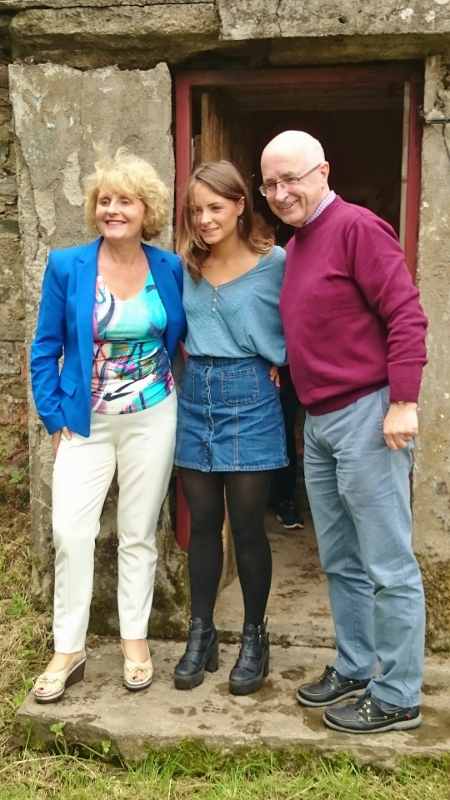
LIAM CLARKE

LIAMCLARKE

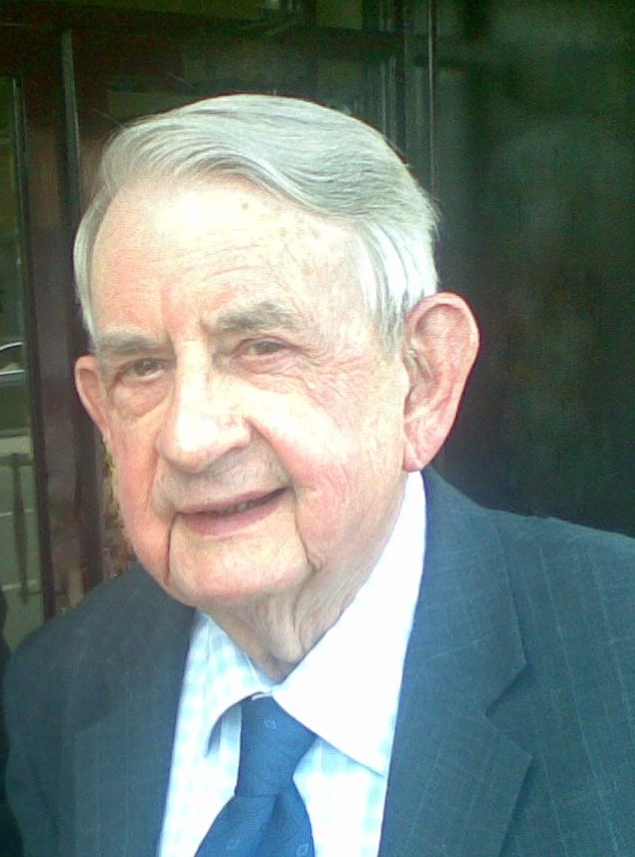
The late Liam Clarke

Sudden death is always difficult for relatives to come to terms with. Liam Clarke had made known his illness (a rare form of stomach cancer) but it was nevertheless a shock to hear that he had passed away peacefully at his home in Ballymena in the early hours of Sunday 27th December just after Christmas. Condolences to his wife Kathryn, his three children and extended family members.

Liam was a practising Zen Buddhist and in June 2014 when he wrote in the Belfast Telegraph about being diagnosed with Pseudomyxoma Peritonei he said: “the beauty of life in the face of death is a very Zen concept. Every moment should be lived as if it was our last – as it could be. It isn’t a delay to be endured while waiting for something better, it is complete in itself.”

The funeral service took place in Roselawn Crematorium outside Belfast on Tuesday afternoon, as reported in the News Letter. Yesterday there was a simple Zen Buddhist service at his home, led by Ingen K. Breen.

Liam was one of the best-known journalists in Ireland. His most recent position was as political editor of the Belfast Telegraph, which he took up in 2011. He had previously worked for the Sunday Times as its Northern Ireland editor for twenty years before becoming a columnist for the paper. In 2014, he was named journalist of the year by the Chartered Institute of Public Relations.

The Irish Secretary of the National Union of Journalists, Seamus Dooley said: “I would like to extend sympathy to the family, colleagues and friends of Liam Clarke Political Editor, The Belfast Telegraph and a former officer of Belfast and district branch of the NUJ, who has died.”

“Liam was a fearless journalist. He was never afraid to challenge authority and was always prepared to stand up for the principle of media freedom. In the Sunday Times and, more recently in the Belfast Telegraph he covered some of the most significant events in the history of Northern Ireland.”

“As a columnist he was  insightful, authoritative and, at times provocative. He commanded respect across the political divide and his death is a loss to journalism in Northern Ireland.”

The editor of the Belfast Telegraph, Gail Walker, said Mr Clarke had been the pre-eminent political journalist of his generation.

“Just a few days ago, Liam delivered what was to sadly prove his last big exclusive, a brilliant in-depth interview with first minister-in-waiting Arlene Foster. Liam told me how much he’d enjoyed the encounter and I know he got a great buzz from landing yet another scoop”, she said.

Arlene Foster, the DUP leader, said her thoughts and prayers were with Mr Clarke’s family.

“As a journalist Liam had an ability to cut through all the padding and get right to the core of a story. He will be missed by us as politicians, but of course our grief is overshadowed by that of his family whom he loved dearly and often spoke”, she said.

Sinn Féin’s Martin McGuinness, the deputy First Minister, said he was sorry to learn of Mr Clarke’s passing. Traditional Unionist Voice leader Jim Allister said Mr Clarke had been a household name for many.

SDLP leader Colum Eastwood said Mr Clarke was a good journalist and a good man. “Liam Clarke is one of the most recognisable names in Irish journalism,” he said.

“That’s due not only to his distinguished career and remarkable work ethic, but to his warm character and his good nature. Never one to give any politician an easy ride, Liam’s enduring professional qualities were his straight-talking style and his dogged determination”, he said.

The Ulster Unionist Party leader Mike Nesbitt, a former broadcasting journalist, said he was “stunned and deeply saddened” by Mr Clarke’s death. He said Liam was hugely professional, always probing and persistent, yet also totally trustworthy.

“He was someone worth reading, listening to and following. News journalists do a job that some people do not always like, so the journalist’s ambition must be to earn respect, which is quite a challenge in a divided society like ours. Liam won that universal respect, deservedly so”, Mr Nesbitt said.

Rest in Peace.

The Monaghan Connection
CLARKEPIPER

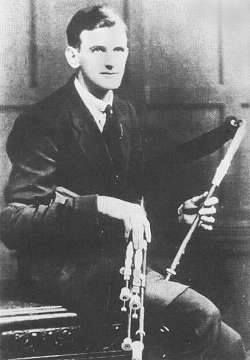
William Clarke, Ballybay Piper

Liam explored his family history and wrote about his grandfather from County Monaghan, William Clarke, known as the Ballybay Piper because of his skills as a musician playing the uilleann pipes. Local historian the late Peadar Murnane wrote about William in an article published six years ago by the Ireland Newsletter:

==================================

WILLIAM CLARKE, THE BALLYBAY PIPER

by Peadar Murnane

===================================

The son of a third generation Scottish Presbyterian family who settled in Cornahoe, near Ballybay, County Monaghan where Robert William Clarke was born on 29th. October 1889. The family moved to thetownland of Carga and later to Dunmaurice where the family was reared. The probability is that they all attended the National School at Cornanure until they were old enough to walk to the town school in Hall Street. At this time Cornanure was an interdenominational school. Although the only son and the one best entitled to inherit and work the farm, young Willie opted for a less laborious and more interesting occupation.

On leaving school, he ‘went to serve his time’ to the Ballybay jeweller and watchmaker, Patrick Duffy. He finished his apprenticeship with Mercers of Enniskillen and returned to Ballybay to commence business in Main St. in premises formerly occupied by Marcella Brown. He married Margaret Johnston from Clontibret and they had a family of two boys, Thomas and William and a daughter, Nancy. Thomas (Tom) joined the RAF during World War Two and was killed in action. William (Willie) is a Minister of the Presbyterian Church, now retired in Eglinton, Co. Derry [Liam’s father]. Nancy is married and lives in England.

There was no musical tradition in the Dunmaurice Clarkes but when young Willie by chance met up with ‘The Piper Ward’ from Oghill, his latent talent soon surfaced. Ward introduced Clarke to the Uilleann pipes and Highland Bagpipes and gave him a sound grinding on the rudiments of both instruments and taught him the skills of reading and writing music. Pipe bands and fife and drum bands were a common feature of parish life in Co. Monaghan in the early 1900’s. The Orange Lodges, the Hibernians, the Foresters, Land Leaguers and Home Rulers sustained their faith and enthusiasm through their bands and banners. Willie Clarke was responsible for the formation of the Ballybay Pipe Band in 1919. He brought the recruits together, trained them and raised funds to procure instruments and uniforms. One of their first public appearances was at the Peace Celebrations held in Leslie Demesne (Ballybay) in August 1919. Their band room was in Church St., opposite the old National School which later became their headquarters. This was also the meeting place of the local Orange Lodge No. 211. It was inevitable that an amalgamation would take place. Not every member of the band was an Orangeman. Many like Fred Braden, were members of the band for the sheer love of pipe music. Fred was a Methodist.

It was very appropriate that when Willie Clarke died in 1934 the name of the band was changed to the “William Clarke Memorial Pipe Band”. During his short life, Willie soon attracted the company of such noted Uilleann and Warpipe players as the Carolans of Dopey Mills, near Newbliss; Michael Keenan of Glassleck, near Shercock; Philip Martin of Kilturk, near Newtownbutler who used to cycle to Ballybay for piping sessions with Clarke and the Moorheads from Doohamlet.

Robert William Clarke died in 1934 aged 45. His remains lie buried in the graveyard of Second Ballybay Presbyterian Church.

Peadar Murnane, local historian, Ballybay.

MAIRIA CAHILL

DSC_3665

Mairia Cahill arrives at St Mary’s for the Gerry Conlon lecture Photo: Michael Fisher

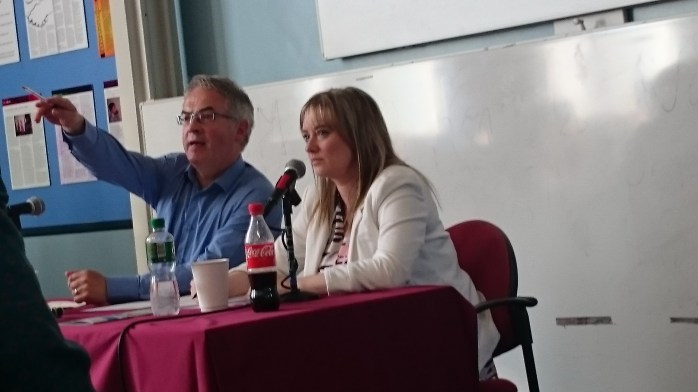
Sex abuse victim Mairia Cahill delivered the Gerry Conlon summer memorial lecture at the West Belfast Féile an Phobail festival in which she criticised Sinn Fein. Ms Cahill talked about the sequence of events in 1997 in which, while working for a radio station linked to the Feile festival, she alleges she was raped by a member of the IRA. The organisation allegedly later conducted a “kangaroo court” bringing her face to face with her abuser against her wishes.

Delivering the talk at St Mary’s University College, Ms Cahill said she disclosed the abuse to a Sinn Féin MLA between 1997 and 1998 but that subsequent to that the alleged abuser was still a member of the Féile management committee. However, Ms Cahill said that not all members of the committee were aware of the abuse.

Ms Cahill also said the First Minister had told her that if the MLA had not later resigned from the Assembly the Sinn Féin representative could have been investigated by Stormont’s Standards Commissioner. Ms Cahill said it was “unforgivable” that the man she alleges abused her was still involved in the Féile management committee after she had disclosed the abuse and added that as a result “children were put at risk”.

A court case against the alleged abuser collapsed after Ms Cahill withdrew her co-operation as a result of failings in the handling of the case by the Public Prosecution Service, who later apologised to Ms Cahill. In October 2014 Ms Cahill’s allegations were aired on the BBC (NI) ‘Spotlight’ programme.

DSC_3689

SDLP MLA Alex Attwood chaired the talk  Photo: Michael Fisher

In the lecture, Ms Cahill also claimed that the alleged abuser was able to go on a community group residential with children after senior Sinn Féin figures were aware of her disclosures. Around 150 people attended the Féile event, where Ms Cahill, a relative of the late republican Joe Cahill, said she would not back down to pressure from lawyers.

It has been reported that the organisers of Feile an Phobail were advised that some of those allegedly involved in the “kangaroo court” would hold the festival liable for any defamatory or abusive remarks against them.

Sinn Féin later replied to the News Letter that “anyone who has any information whatsoever about any child abuse should come forward to the authorities North or South and they will have the full support of Sinn Féin in doing so.”


CONGO 1961: PADDY WALL HAS BUSY JOB

UN helmet of the type my father brought back to London after reporting from the Congo in 1961

UN helmet of the type my father brought back to London after reporting from the Congo in 1961

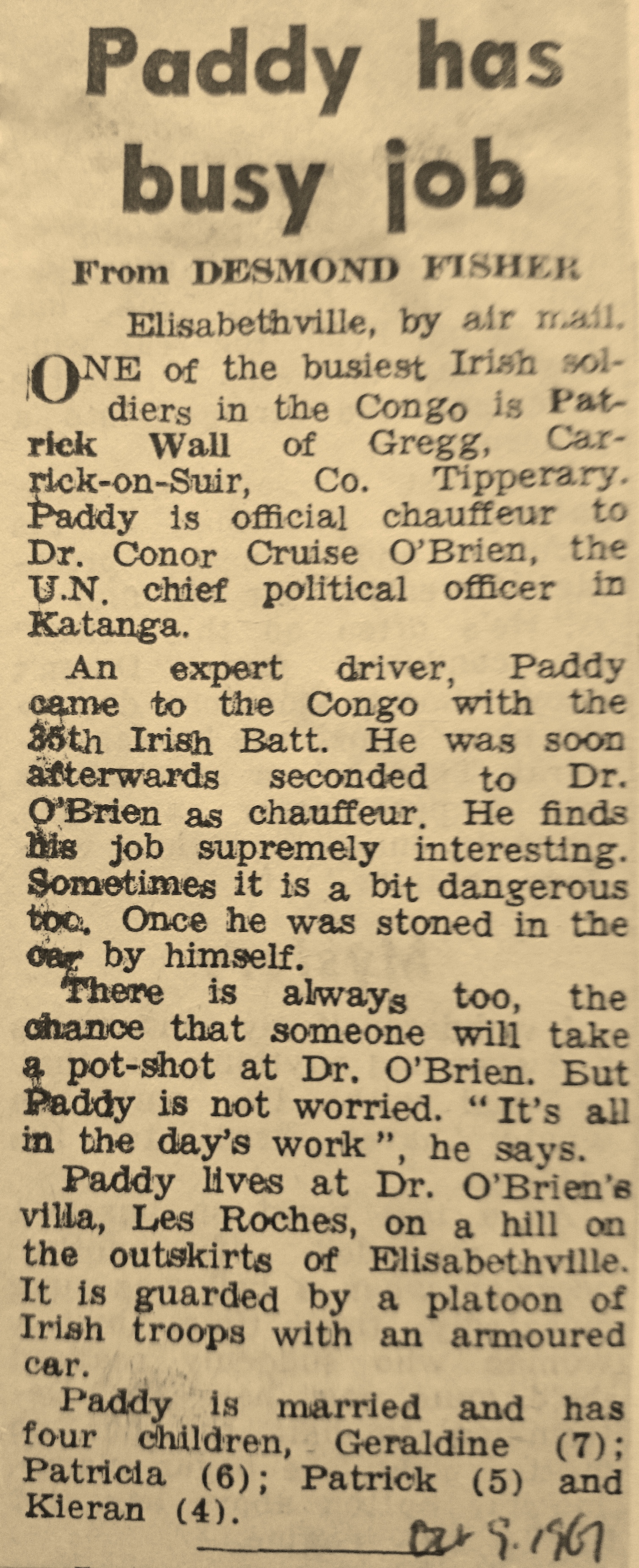
Paddy has busy job   Irish Press October 9th 1961

From DESMOND FISHER  Elizabethville, by air mail.

One of the busiest Irish soldiers in the Congo is Patrick Wall of Gregg, Carrick-on-Suir, Co. Tipperary. Paddy is official chauffeur to Dr. Conor Cruise O’Brien, the U.N. chief political officer in Katanga.

An expert driver, Paddy came to the Congo with the 35th Irish Batt. He was soon afterwards seconded to Dr. O’Brien as chauffeur. He finds his job supremely interesting. Sometimes it is a bit dangerous too. Once he was stoned in the car by himself.  (I trust you know what my father meant by that! — MF)

There is always too, the chance that someone will take a pot-shot at Dr. O’Brien. But Paddy is not worried. “It’s all in the day’s work”, he says.

Paddy lives at Dr O’Brien’s villa, Les Roches, on a hill on the outskirts of Elizabethville. It is guarded by a platoon of Irish troops with an armoured car.

Paddy is married and has four children, Geraldine (7); Patricia (6); Patrick (5) and Kieran (4).

Desmond Fisher report in The Irish Press October 9th 1961

Desmond Fisher report in The Irish Press October 9th 1961

IRISH CHAPLAIN IN CONGO 1961

Desmond Fisher report from the Congo 10th October 1961  The Irish Press

Desmond Fisher report from the Congo 10th October 1961 The Irish Press

IRISH AID IN HORROR CAMP  Chaplain Works for Balubas 

(From Desmond Fisher)   ELIZABETHVILE  (By Air Mail) —

The 40,000 Baluba men, women and children in the rag-and-cardboard refugee city in Elizabethville are ‘my children’ to Rev. Joseph Clarke, chaplain to the 35th Irish Battalion in the Congo.

Father Clarke is the friend, counsellor and refuge of the Balubas in all the terrible afflictions which are their lot.

Every morning, immediately after his Mass at 6:30 for the soldiers, Father Clarke sets out for the refugee camp near the Irish battalion headquarters. The camp chiefs wait for him and tell him their troubles — someone shot or hacked to pieces during the night; lack of food; danger from the Jeunesse Nationale Katanga, the teddy-boy youth movement which is terrorising the camp, and so on.

The chaplain moves round the different family groups in the camp speaking to them in his fluent French. He has organised the Irish section of the camp, where there are 5,000 families, into 14 groups. Each has its own administrative organisation which Father Clarke established. This administration supervises the daily distribution of food and settles disputes as to where the families can live.

Ordained in 1938, Father Clarke is an ‘old hand’ in Africa. He spent four years in Nigeria after his ordination before joining the Army as a chaplain. To him the African is a child, who will trust the European implicitly and will depend on him absolutely. This is fine until the African meets a white man who treats him badly or lets him down. Then he loses faith in all white men.

Katanga problem

In Katanga, there are more white men than in most parts of Africa; therefore the chances that the African will come up against a “bad white” are greater. Fot that reason, Father Clarke thinks, the African in Katanga has become a different sort of person. He is no longer simply a bush native, and yet a few years in a white-dominated city do not turn him into a civilised, democratically-minded person in our sense.

“You cannot take a native out of the bush, educate him for a few years and expect him to be like yourself”, says the chaplain.

As regards “his” refugee camp, Father Clarke says that the sooner it closes down the better. It is becoming a hiding-place for criminals, and a breeding place of violence and murder. Almost every night someone is killed in the camp and some horrible atrocities have come to light.

The least revolting of them is the killing of a Katangese native, the servant of a gendarme officer, whom the Balubas caught as he was passing their camp. He was found dead next morning with his hands and feet cut off: he had bled to death. The camp has also attracted the 5,000 unemployed Balubas in Elizabethville who have come in for free food and accommodation, such as it is.

Father Clarke fears two things. One is that the rains which are due shortly will wash away the flimsy shelters of the refugees and force them to break into the nearby villas vacated by white people. His other fear is that the Jeunesse youths will become the pawns of Communist-type agitators, who will use them to stir up trouble.

But, despite the dangers, Father Clarke continues to give most of his time and energies to helping the 40,000 Baluba people to whom he is “father”.      Oct 10 1961

NEW MANDATE FOR UN IN CONGO? (1961)

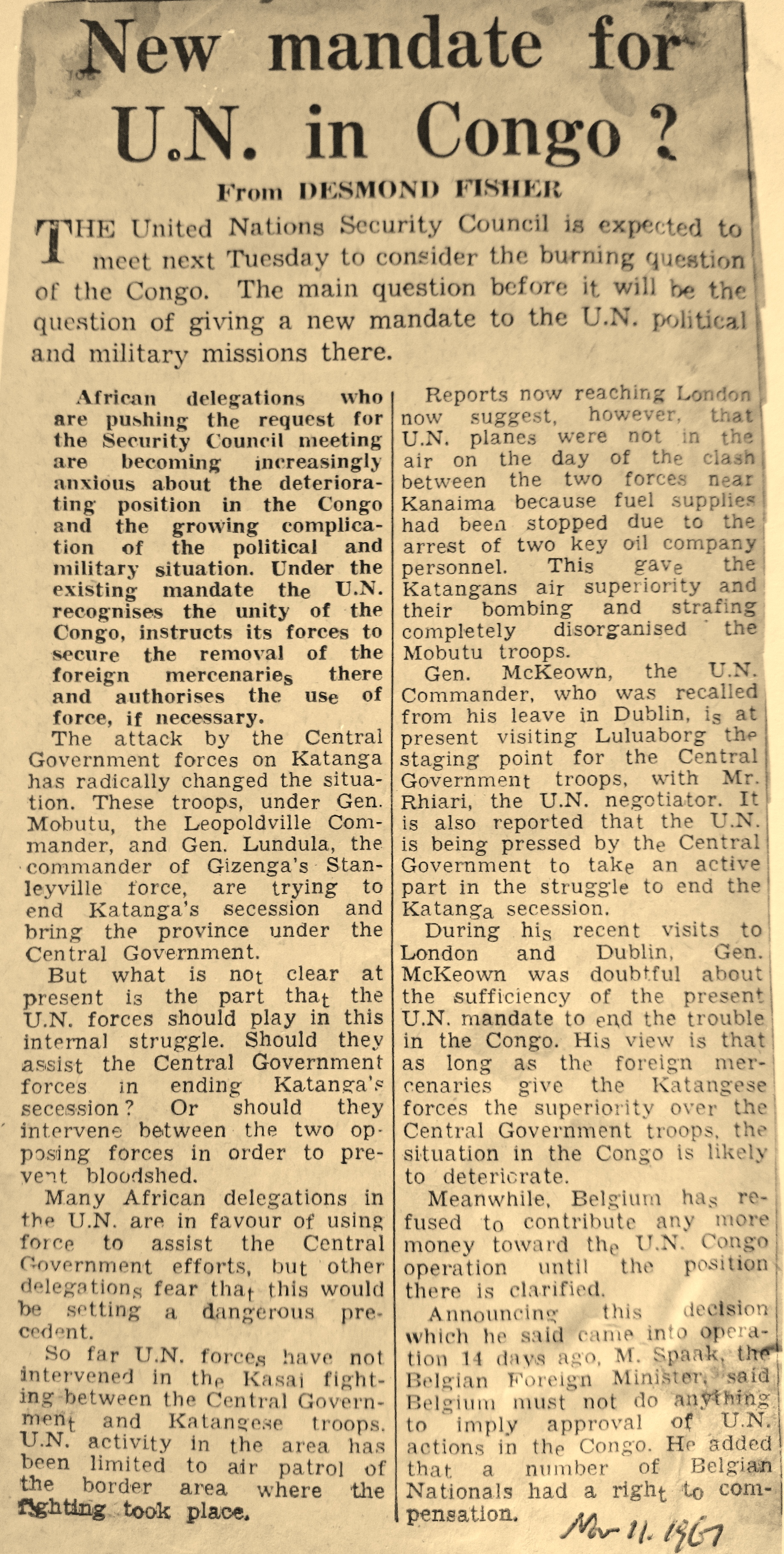
UNimagesFrom DESMOND FISHER  The Irish Press November 11th 1961

The United Nations Security Council is expected to meet next Tuesday to consider the burning question of the Congo. The main question before it will be the question of giving a new mandate to the U.N. political and military missions there.

African delegations who are pushing the request for the Security Council meeting are becoming increasingly anxious about the deteriorating position in the Congo and the growing complication of the political and military situation. Under the existing mandate the U.N. recognises the unity of the Congo, instructs its forces to secure the removal of the foreign mercenaries there and authorises the use of force, if necessary.    

The attack by the Central Government forces on Katanga has radically changed the situation. These troops, under Gen. Mobututu, the Leopoldville Commander, and Gen. Lundula, the commander of Gizenga’s Stanleyville force, are trying to end Katanga’s secession and bring the province under the Central Government.

But what is not clear at present is the part that the U.N. forces should play in this internal struggle. Should they assist the Central Government forces in ending Katanga’s secession? Or should they intervene between the two opposing forces in order to prevent bloodshed.

Many African delegations in the U.N. are in favour of using force to assist the Central Government efforts, but other delegations fear that this would be setting a dangerous precedent.

So far U.N. forces have not intervened in the Kasai fighting between the Central Government and Katangese troops. U.N. activity in the area has been limited to air patrol of the border area where the fighting took place.

Reports now reaching London now suggest, however, that U.N. planes were not in the air on the day of the clash between the two forces near Kanaima because fuel supplies had been stopped due to the arrest of two key oil company personnel. This gave the Katangans air superiority and their bombing and strafing completely disorganised the Mobutu troops.

Gen. McKeown, the U.N. Commander, who was recalled from his leave in Dublin, is at present visiting Luluaborg the staging point for the Central Government troops, with Mr. Rhiari, the U.N. negotiator. It is also reported that the U.N. is being pressed by the Central Government to take an active part in the struggle to end the Katanga secession.

During his recent visits to London and Dublin, Gen. McKeown was doubtful about the sufficiency of the present U.N. mandate to end the trouble in the Congo. His view is that as long as the foreign mercenaries give the Katangese forces the superiority over the Central Government troops, the situation in the Congo is likely to deteriorate.

Meanwhile, Belgium has refused to contribute any more money toward the U.N. Congo operation until the position there is clarified.

Announcing this decision which he said came into operation 14 days ago, M. Spaak, the Belgian Foreign Minister, said Belgium must not do anything to imply approval of U.N. actions in the Congo. He added that a number of Belgian Nationals had a right to compensation.

Desmond Fisher report from London in The Irish Press November 11th 1961

Desmond Fisher report from London in The Irish Press November 11th 1961

DAG SHOT DOWN, SAY EXPERTS

Desmond Fisher report in The Irish Press, 21st September 1961

Desmond Fisher report in The Irish Press, 21st September 1961

Following on from yesterday’s post about Dag Hammarskjöld, this is how my late father Desmond Fisher reported the fatal plane crash in the Congo in 1961. His report was filed from Leopoldville and appeared in The Irish Press on September 21st 1961. He was London Editor at the time and on assignment in the Congo to report on the Irish contingent serving with the United Nations).

DAG SHOT DOWN, SAY EXPERTS (From Desmond Fisher)

LEOPOLDVILLE, Wednesday —  The plane in which United Nations Secretary General Mr. Dag Hammarskjoeld and 14 others — including an Irishman, Mr. Francis Eivers, U.N. Security Guard — lost their lives on Monday night, was almost certainly shot down by long-distance rocket fire from a Katanga Fouga jet fighter.

This conviction is growing among leading U.N. experts here but they say the world will never be told the true story. Fill disclosures of the facts might, they think, act as a spark to touch off a major world explosion.

The experts quote, as grounds for their belief, three pieces of evidence: 

1–The report from Ndola Airport control tower that an unidentified aircraft circled the field shortly before the crash.

2–Eyewitness accounts of seeing two or three explosions in the sky.

3–Reports from the lone survivior, U.N. Security Officer, Harold Julien, who is still seriously ill but reported to be “holding his own”.

Sergeant Julien is reported to have said that the plane was rocked by several explosions just before the crash.

Three Swedish experts are on their way to the scene of the crash to conduct the official investigation. The Northern Rhodesian Government, I understand, has refused to let any other investigators in.

Jet bitterness 

Meanwhile, I learned authoritatively tonight that the three Ethiopian jet fighters held up in Kano, Nigeria, for the past four days, will fly to the Congo tomorrow. There is bitter indignation in U.N. circles here at what is regarded as deliberate British stalling tactics in refusing to give the jets clearance.

Many U.N. officials believe that if the jets had been allowed to leave Kano when they were first due to take off, Mr. Hammarskjoeld would be alive today.

The new jets are expected to give the U.N. force air superiority in Katanga. They are far faster and more heavily armed than the two Fouga jets which operate from Kolwezi and which are believed to be flown against U.N. targets by a pilot of Rhodesian nationality.

If the Katangan fighting is resumed, and the Fougas take to the air, the U.N. jets will attack. They will probably be flown by Swedish pilots of the U.N. air command.

Desmond Fisher report in The Irish Press, 21st September 1961

Desmond Fisher report in The Irish Press, 21st September 1961

DAG HAMMARSKJöLD

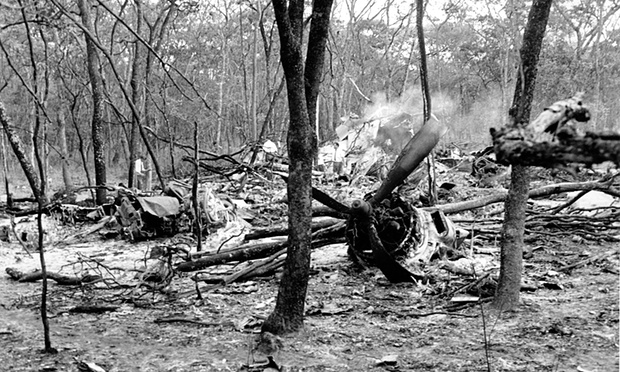
The wreckage of Dag Hammarskjöld’s aircraft at Ndola on 19th September 1961. Photo: AP

The wreckage of Dag Hammarskjöld’s aircraft at Ndola on 19th September 1961. Photo: AP

Dag Hammarskjöld: evidence suggests UN chief’s plane was shot down — The Guardian

New information uncovered by a UN panel on the death of former secretary-general Dag Hammarskjöld (aged 56) should be investigated to establish whether his plane was attacked just before it crashed in southern Africa, the UN chief said on Monday (July 6th). After receiving the report, the secretary-general, Ban Ki-moon, said “a further inquiry or investigation would be necessary to finally establish the facts” surrounding the mysterious crash more than 50 years ago.

The panel “found new information, which it assessed as having moderate probative value, sufficient to further pursue aerial attack or other interference as a hypothesis of the possible cause of the crash”, said UN spokesman Farhan Haq. The answers may lie in classified documents from the United States and Britain that the panel was unable to consult, despite requests for access. Ban said he would follow up on the requests. 

Dag Hammarskjöld, UN Secretary General  Photo: UN

Dag Hammarskjöld, UN Secretary General Photo: UN

The UN’s second secretary-general, Hammarskjöld died when his plane crashed on 17 or 18 September 1961 near Ndola in Northern Rhodesia, now known as Zambia. The Swedish diplomat was on his way to negotiate a ceasefire for mining-rich Katanga province in what was the Republic of the Congo, which had proclaimed independence from Belgium.

The three-person panel spoke to witnesses in Zambia who testified that there was more than one aircraft in the air when the plane made its approach to Ndola, or that the plane was on fire before it hit the ground. These accounts seemed to corroborate information contained in a 2013 report by a separate commission that concluded that there was “convincing evidence” that the plane was shot down as it prepared to land.

A former US air force security officer, Paul Abram, told the panel that he heard transmissions about the shooting down of an aircraft near Congo while serving at a National Security Agency listening post in Greece. The panel said it could not authenticate Abram’s claims.

The US government wrote in a letter to the panel last month that a search had not revealed any documents on radio transmissions but added that other files classified as top secret from the National Security Agency would not be released. Among the new information uncovered by the panel was a declassified report from a senior British diplomat to a secret service agent, Neil Ritchie, who details how he helped the Katanga leader Moise Tshombe travel to Ndola for his meeting with Hammarskjöld.

The report did not mention the possible crash but “its existence and content serves as new information about the presence of the British intelligence agency in the area”, said the UN panel. The British government responded last month in a letter to the panel that it would not be able to provide more information on the case due to security concerns.

The UN General Assembly in late December adopted a resolution, drafted by Sweden, that called for the new investigation to finally shed light on the top diplomat’s death. Led by the Tanzanian prosecutor Mohamed Chande Othman, the panel also included Kerryn Macaulay of Australia and Henrik Larsen of Denmark.

This report is from The Guardian three weeks ago. Five years ago my late father, who was reporting for The Irish Press from the Congo at the time of the crash in September 1961, wrote this article about the event in which an Irish UN security guard (ex Garda) Frank Ievers was also killed:

Death of top UN official still shrouded in mystery

Secretary-general killed in suspicious plane crash en route to broker a ceasefire in the Congo, writes Desmond Fisher  

The late Desmond Fisher, former London Editor, The Irish Press  Photo:  © Michael Fisher

The late Desmond Fisher, former London Editor, The Irish Press Photo: © Michael Fisher

PUBLISHED  September 19th 2010  Sunday Independent

On this weekend 49 years ago, the world was shaken by news of a mysterious air crash in Africa. The bodies of 16 people were recovered from the wreck. Some had multiple bullet wounds in their heads and bodies. The airport’s handling of the pre-crash warnings was sub-standard. Other aircraft were seen in the area. Strange lights were reported over the airport. And a famous man, on a mission to prevent what might degenerate into a world war, was among the dead. It was September 18th, 1961. And the dead man was Dag Hammarskjöld, secretary-general of the United Nations. His death shocked the world. The previous afternoon, Hammarskjöld’s DC-6B plane had left Leopoldville (now Kinshasa) in the Congo en route to Ndola in Northern Rhodesia (now Zambia). He had arranged a meeting with Moise Tshombe, president of the rebel State of Katanga, which was now engaged in a war to become independent from the Congo.

Katangese soldiers were fighting UN peacekeeping forces sent in to prevent civil war. With the UK, the US and Belgium clandestinely helping the rebels, Russia making bellicose noises and a world war threatening, Hammarskjöld was trying to arrange a ceasefire.

In the early morning, the news came that his plane had crashed. At the time, I was in a crowded pressroom at UN HQ in Leopoldville. Senior UN officials and hardened war correspondents sobbed uncontrollably. Every one of them was of one mind. Hammarskjöld had been assassinated.

Ireland was deeply involved in the Congo crisis. Lt Gen Sean McKeown was in command of all UN peacekeeper troops there to support the government in its efforts to prevent Katanga from seceding. Dr Conor Cruise O’Brien was Hammarskjöld’s special representative in Katanga. A battalion of Irish soldiers was engaged in heavy fighting. Only three days earlier, Trooper Pat Mullins from Kilbehenny, Co Cork, was killed in an ambush. And 150 Irish soldiers were prisoners of the Katangese.

What happened to Hammarskjöld and 15 others is still disputed. Former US president Harry Truman said bluntly that he was killed. Allegations that his plane had been shot down, deliberately given wrong instructions, or sabotaged, were never proven.

Thirty-seven years after the crash, the South African Truth and Reconciliation Commission quoted recently discovered letters linking MI5, the CIA and the South African secret services with the crash, including the suggestion that a bomb was placed in the plane’s wheel bay to explode when the plane touched down. And as recently as 2005, a Norwegian soldier who was the first UN official to see Hammarskjöld’s dead body said it had a hole in the head that was air-brushed out of the post-mortem photos.

Hammarskjöld’s death was regarded as a major blow to the UN. But the moral force that is the organisation’s greatest weapon was greatly reinforced by what was seen as the assassination of a spiritual man who was regarded by some as the ‘secular Pope’.

Only (47 – incorrect) 56 when he died, Hammarskjöld came from a family with many generations of public service, his father having been prime minister of Sweden. Among his earliest decisions as secretary-general was to appoint only non-partisan and fair-minded officials to his 4,000 staff. His ultimate aim was to establish an independent UN force.

Hammarskjöld was a highly introspective man. He did not give interviews and I had to rely on the influence of Freddie Boland, that year’s president of the General Council, to arrange for me to see him. He did not invite me to sit and reacted animatedly only when I asked him how he rated Ireland’s contribution to the UN. He spoke highly of the way Ireland, as a non-aligned country, was able to act as an “honest broker” and help to solve many of the UN’s problems. And he praised genuinely and enthusiastically Ireland’s contribution to the UN’s mission to the Congo.

Hammarskjöld kept what he called his ‘journal’ — a combination of diary entries and spiritual thoughts cloaked in haiku-style poetry — published after his death as Markings. In it, he wrote: “Everything will be all right when people stop thinking of the United Nations as a weird Picasso abstraction and see it as a drawing they made themselves.”

He regarded his own writings as “negotiations with myself and with God”. One such aphorism gives an idea of his tortuous mind:

Tomorrow we shall meet

Death and I —

And he shall thrust his sword

Into one who is wide awake.

TSR2: WE GAVE IT ALL AWAY

The only TSR-2 to fly, XR219, in anti-flash white finish, at BAC's Warton factory in 1966 Photo: wikipedia

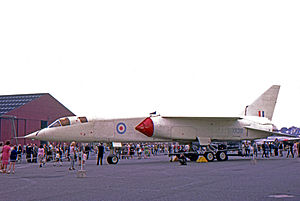
The only TSR-2 to fly, XR219, in anti-flash white finish, at BAC’s Warton factory in 1966 Photo: wikipedia

An opportunity lost: we gave it all away. Some of the sentiments expressed in a fascinating BBC4 series on ‘Cold War, Hot Jets‘. At the end of the second world war, Britain was the leader in the field of jet propulsion. Twenty years of research went into developing the TSR2 strike and reconnaissance airccraft, a light bomber that could reach supersonic speed and could operate both at high and low-level altitude.

Harold Wilson enters No. 10 in October 1964  Photo: thejc.com

Harold Wilson enters No. 10 in October 1964 Photo: thejc.com

Harold Wilson’s win in the October 1964 general election and his elevation to 10 Downing Street as Prime Minister changed all that. The new Labour government initiated cutbacks in the defence programme and the TSR2 was scrapped. I remember (as a grammar school pupil in London) I had a picture postcard of this stunning jet as well as having it on a poster which showed other RAF aircraft.

Denis Healey, Defence Minister in Wilson’s Cabinet said at the time of the cancellation in April 1965: “The trouble with the TSR-2 was that it tried to combine the most advanced state of every art in every field. The aircraft firms and the RAF were trying to get the Government on the hook and understated the cost. But TSR-2 cost far more than even their private estimates, and so I have no doubt about the decision to cancel.”

Aeronautical engineer Sir Sydney Camm said of the TSR-2: “All modern aircraft have four dimensions: span, length, height and politics. TSR-2 simply got the first three right”, a quotation used on the tv documentary.

The TSR2 was developed by the British Aircraft Corporation (BAC) for the Royal Air Force in the late 1950s and early 1960s. The jet was designed to penetrate a well-defended forward battle area at low altitudes and very high speeds, and then attack high-value targets in the rear with nuclear or conventional weapons. Another intended combat role was to provide high-altitude, high-speed stand-off, side-looking, radar and photo imagery and signals intelligence, reconnaissance. Some of the most advanced aviation technology of the period was incorporated in order to make it the highest-performing aircraft in the world in its projected missions. 

The TSR-2 was the victim of ever-rising costs and inter-service squabbling over Britain’s future defence needs, which led to the controversial decision to scrap the programme in 1965. With the election of a new government, the TSR-2 was cancelled due to rising costs, in favour of purchasing an adapted version of the General Dynamics F-111, a decision that itself was later rescinded as costs and development times increased. The replacements included the Blackburn Buccaneer and Mc Donnell Douglas F-4 Phantom II, both of which had previously been considered and rejected early in the TSR-2 procurement process. Eventually, the smaller swing-wing Panavia Tornado was developed and adopted by a European consortium to fulfil broadly similar requirements to the TSR-2.

According to the Flight Envelope diagram, TSR2 was capable of sustained cruise at Mach 2.05 at altitudes between 37,000 ft (11,000 m) and 51,000 ft (16,000 m) and had a dash speed of Mach 2.35 (with a limiting leading edge temperature of 140 degrees Celsius). Its theoretical maximum speed was Mach 3 in level flight at 45,000 ft (14,000 m).

There were considerable problems with realising the design. Some contributing manufacturers were employed directly by the Ministry rather than through BAC, leading to communication difficulties and further cost overruns. Equipment, an area in which BAC had autonomy, would be supplied by the Ministry from “associate contractors”, although the equipment would be designed and provided by BAC, subject to ministry approval. The overall outlay of funds made it the largest aircraft project in Britain to date.

Unlike most previous projects, there were to be no prototypes. Under the “development batch” procedure pioneered by the Americans (and also used by English Electric for the Lightning), there would instead be a development batch of nine airframes, to be built using production jigs. The choice of proceeding to production tooling turned out to be another source of delay, with the first aircraft having to adhere to strict production standards or deal with the bureaucracy of attaining concessions to allow them to exhibit differences from later airframes. Four years into the project, the first few airframes had effectively become prototypes in all but name, exhibiting a succession of omissions from the specification and differences from the intended pre-production and production batches.

Testing

Serial number XR222 was one of only three “flight ready” TSR-2s completed, photographed at the Supermarine Spitfire 60th Anniversary Airshow, Duxford, 1996

Despite the increasing costs (which were inevitable, given the low original estimates), the first two of the development batch aircraft were completed. Engine development and undercarriage problems led to delays for the first flight which meant that the TSR-2 missed the opportunity to be displayed to the public at that year’s Farnborough Airshow. In the days leading up to the testing, Denis Healey, then the Opposition defence spokesman, had criticised the aircraft saying that by the time it was introduced it would face “new anti-aircraft” missiles that would shoot it down making it prohibitively expensive at £16 million per aircraft (on the basis of only 30 ordered).

Test pilot Roland Beamont finally made the first flight from the Aeroplane and Armament Experimental Establishment (A&AEE) at Boscombe Down, Wiltshire, on 27 September 1964. Initial flight tests were all performed with the undercarriage down and engine power strictly controlled—with limits of 250 kn (460 km/h) and 10,000 ft (3,000 m) on the first (15-minute) flight. Shortly after takeoff onXR219’s second flight, vibration from a fuel pump at the resonant frequency of the human eyeball caused the pilot to throttle back one engine to avoid momentary loss of vision.

Only on the 10th test flight was the landing gear successfully retracted—problems preventing this on previous occasions, but serious vibration problems on landing persisted throughout the flight testing programme. The first supersonic test flight (Flight 14) was achieved on the transfer from A&AEE, Boscombe Down, to BAC Warton. Over a period of six months, a total of 24 test flights were conducted. Most of the complex electronics were not fitted to the first aircraft, so these flights were all concerned with the basic flying qualities of the aircraft which, according to the test pilots involved, were outstanding. Speeds of Mach 1.12 and sustained low-level flights down to 200 ft (above the Pennines) were achieved. Undercarriage vibration problems continued, however, and only in the final few flights, when XR219 was fitted with additional tie-struts on the already complex landing gear, was there a significant reduction in them. The last test flight took place on 31 March 1965.

Although the test flying programme was not completed and the TSR-2 was undergoing typical design and systems modifications reflective of its sophisticated configuration, “[t]here was no doubt that the airframe would be capable of accomplishing the tasks set for it and that it represented a major advance on any other type.”

Costs continued to rise, which led to concerns at both company and government upper management levels, and the aircraft was also falling short of many of the requirements laid out in OR.343, such as takeoff distance and combat radius. As a cost-saving measure, a reduced specification was agreed upon, notably reductions in combat radius to 650 nmi (1,200 km), the top speed to Mach 1.75 and takeoff run up increased from 600 to 1,000 yards (550 to 910 m).

Project cancellation

XR220 at the RAF Museum, Cosford, 2007. The two cockpit canopies are coated with a thin film of gold to protect the occupant’s eyes from a nuclear flash

By the 1960s, the United States military was developing the swing-wing F-111 project as a follow-on to the Republic F-105 Thunderchief, a fast low-level fighter-bomber designed in the 1950s with an internal bay for a nuclear weapon. There had been some interest in the TSR-2 from Australia for the Royal Australian Air Force (RAAF), but in 1963, the RAAF chose to buy the F-111 instead, having been offered a better price and delivery schedule by the American manufacturer. Nonetheless, the RAAF had to wait 10 years before the F-111 was ready to enter service, by which time the anticipated programme cost had tripled. The RAF was also asked to consider the F-111 as an alternative cost-saving measure. In response to suggestions of cancellation, BAC employees held a protest march, and the new Labour government, which had come to power in 1964, issued strong denials.

However, at two Cabinet meetings held on April 1st 1965, it was decided to cancel the TSR-2 on the grounds of projected cost, and instead to obtain an option agreement to acquire up to 110 F-111 aircraft with no immediate commitment to buy. This decision was announced in the budget speech of 6 April 1965. The maiden flight of the second development batch aircraft, XR220, was due on the day of the announcement, but following an accident in conveying the airframe to Boscombe Down, coupled with the announcement of the project cancellation, it never happened. Ultimately, only the first prototype, XR219, ever took to the air. A week later, the Chancellor defended the decision in a debate in the House of Commons, saying that the F-111 would prove cheaper.

Source: Wikipedia

MEMORIAL TO DR PADDY MAC CARVILL

Guest speaker Michael McDowell SC with Eamonn Mulligan, Niall Mac Carvill (Pady's son), his cousin Mackie Moyna and Brendan Smith T.D. Photo:  © Michael Fisher

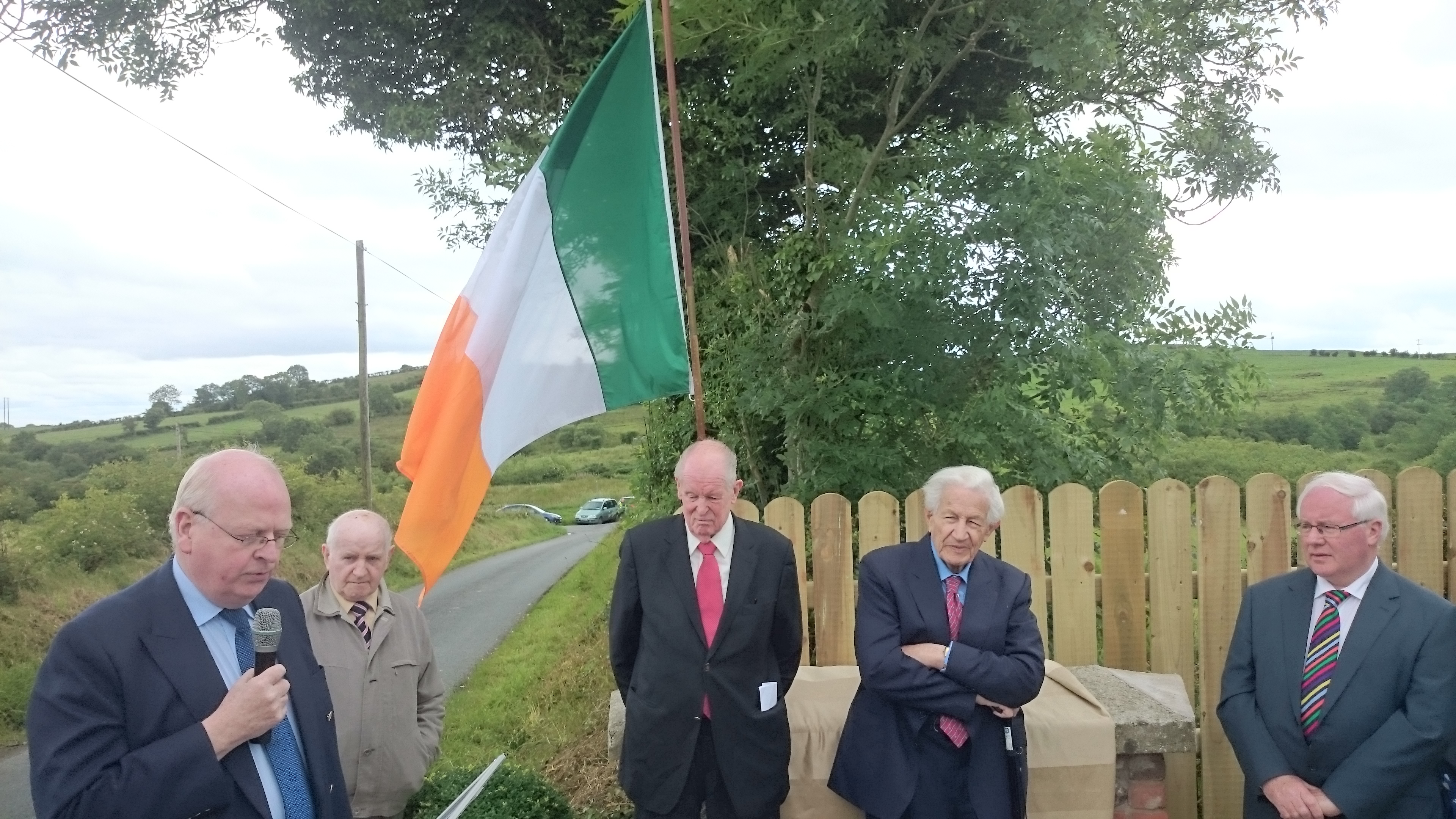
Guest speaker Michael McDowell SC with Eamonn Mulligan, Niall Mac Carvill (Pady’s son), his cousin Mackie Moyna and Brendan Smith T.D. Photo: © Michael Fisher

MEMORIAL UNVEILED TO FORMER MONAGHAN T.D. DR PADDY MAC CARVILL

Michael Fisher   Northern Standard   Thursday  16th July

Brendan Smith T.D. with Mackie Moyna Jnr., Mackie Moyna, guest speaker Michael McDowell S.C., Senator Diarmuid Wilson and Dr Rory O'Hanlon, former Ceann Comhairle  Photo:  © Michael Fisher

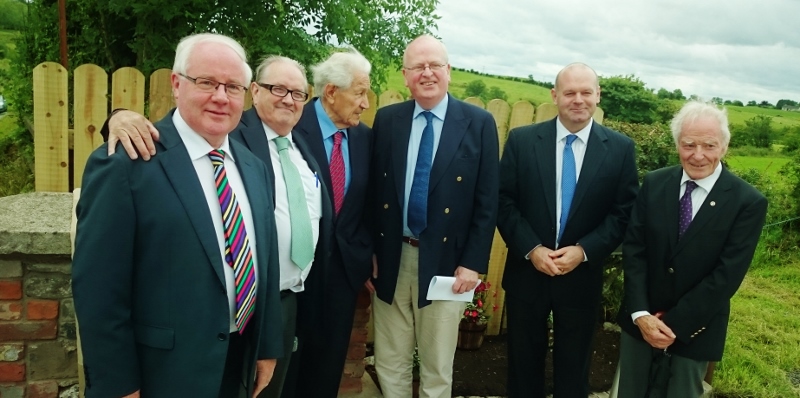
Brendan Smith T.D. with Mackie Moyna Jnr., Mackie Moyna, guest speaker Michael McDowell S.C., Senator Diarmuid Wilson and Dr Rory O’Hanlon, former Ceann Comhairle Photo: © Michael Fisher

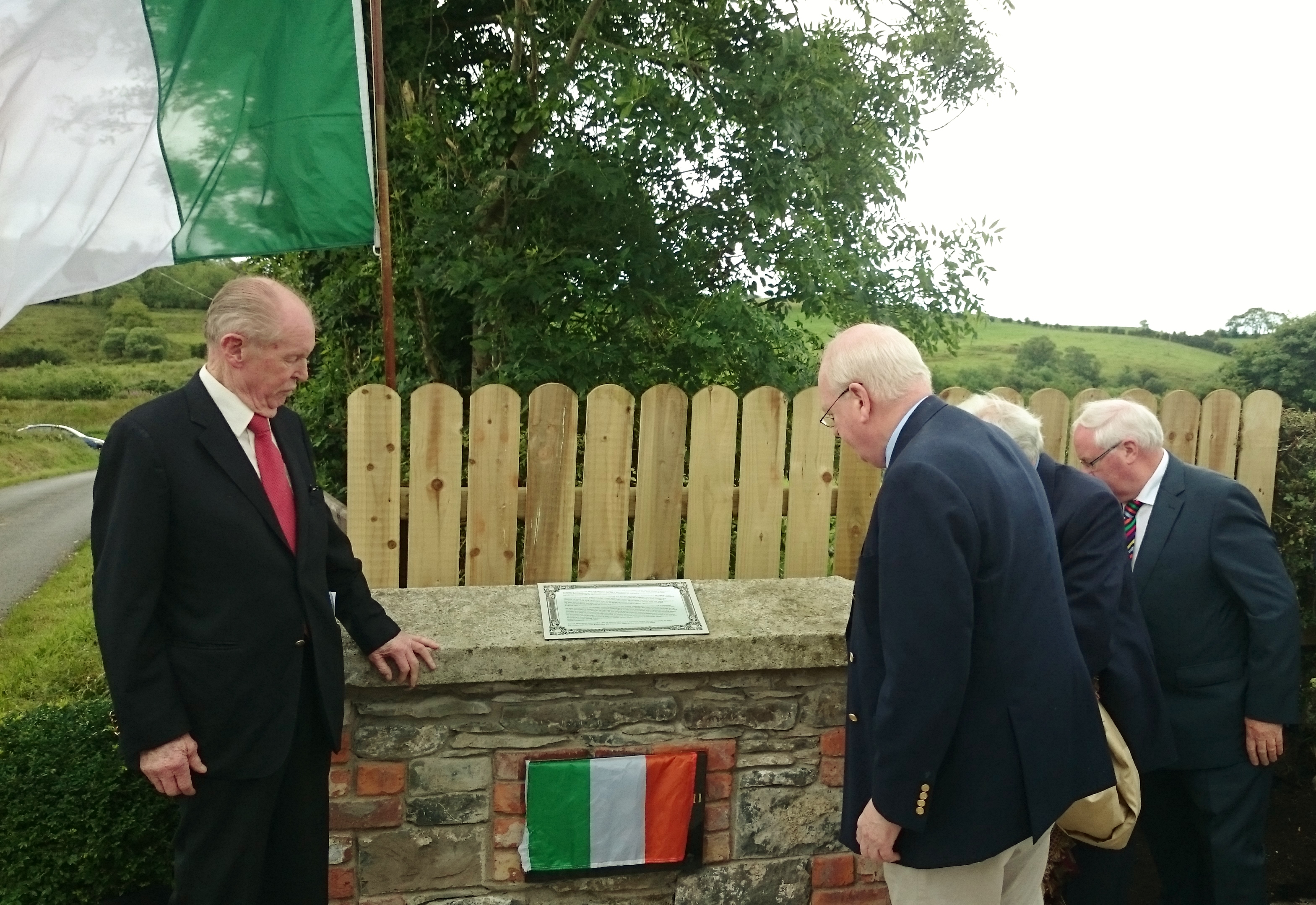
Memories of the War of Independence in County Monaghan and Civil War which divided the allegiances of some families were evoked during the unveiling near Threemilehouse on Sunday of a memorial plaque to honour former Monaghan TD Dr Paddy Mac Carvill.

Crowd listens as Mackie Moyna Jnr addresses the gathering Photo:  © Michael Fisher

Crowd listens as Mackie Moyna Jnr addresses the gathering Photo: © Michael Fisher

The ceremony was performed by the former Tánaiste and Minister for Justice, Michael McDowell S.C., who is married to Niamh Brennan, a granddaughter of Dr Mac Carvill. The former leader of the Progressive Democrats said Dr Mac Carville whose background and history, elected three times to Dáil Éireann, contained lessons for us all. He told the assembled crowd he was proud that his three sons had the blood in their veins of such a patriot, scholar and gentleman. It was most important that his memory and great patriotism be kept and observed in his native county, especially in this decade of centenaries.

Mackie Moyna Junior (Dublin) raises a laugh as he addresses the gathering Photo:  © Michael Fisher

Mackie Moyna Junior (Dublin) raises a laugh as he addresses the gathering Photo: © Michael Fisher

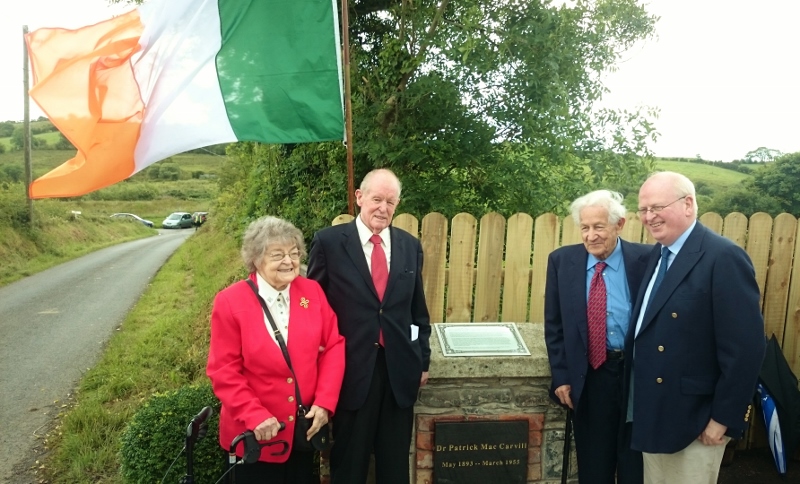
The simple black stone plaque is engraved with the name of Dr Mac Carvill and the dates May 1893 – March 1955. The plaque is set into a rebuilt stone wall at the entrance to the former MacCarvill homestead at Blackraw in the parish of Corcaghan.

Michael McDowell SC is watched by Paddy Mac Carvill's son Niall (left) and Brendan Smith T.D. (right) as he unveils the plaque and memorial at Blackraw  Photo:  © Michael Fisher

Michael McDowell SC is watched by Paddy Mac Carvill’s son Niall (left) and Brendan Smith T.D. (right) as he unveils the plaque and memorial at Blackraw Photo: © Michael Fisher

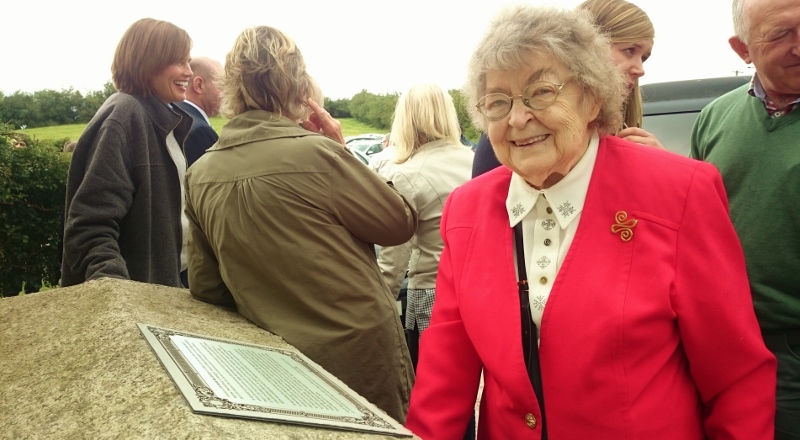
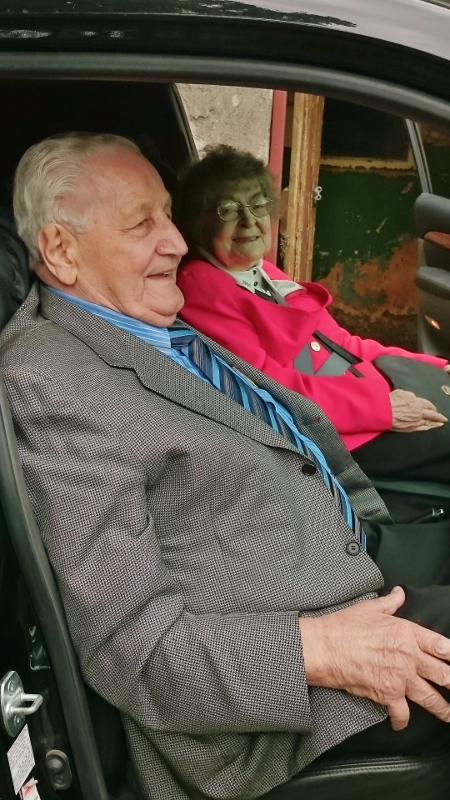
Dr Mac Carvill’s daughter, 90 year-old Maire Brady from Cork, travelled to Monaghan for the occasion as did his son Niall from Dublin. Two of his five children, Éilish and Éimhear (also a medical doctor) passed away in recent years. The Moyna family were also represented, with twins Mackie (Dublin) and Tommy both present, as well as Tommy (junior), Scotstown. Mackie Moyna (junior) read a speech on behalf of his uncle.

Dr Mac Carvill's daughter Maire Brady from Cork at the memorial to her father Photo:  © Michael Fisher

Dr Mac Carvill’s daughter Maire Brady from Cork at the memorial to her father Photo: © Michael Fisher

Following the unveiling, some of the relatives took the opportunity to stroll up the lane and visit the former family homestead, now derelict and owned by the Reilly family. It used to be a thatched house with two bedrooms and the sleeping accommodation for Paddy and his four brothers was in the loft.

Two of Dr Mac Carvill's children, Maire Brady (Cork) and Niall Mac Carvill (Dublin), with their cousin Mackie Moyna (Dublin) and guest speaker Michael McDowell Photo:  © Michael Fisher

Two of Dr Mac Carvill’s children, Maire Brady (Cork) and Niall Mac Carvill (Dublin), with their cousin Mackie Moyna (Dublin) and guest speaker Michael McDowell Photo: © Michael Fisher

In the speech read out on behalf of Mackie Moyna, he detailed how Paddy’s mother Susan was a Moyna before marriage and it was thanks to the generosity of her brother Fr Michael Moyna, Dean of the diocese of Toronto, that the ten children of John and Susan Mac Carvill received an education.

Caoimhghín Ó Caokain T.D. speaking to Mackie Moyna after the unveiling of the plaque  Photo:  © Michael Fisher

Caoimhghín Ó Caokain T.D. speaking to Mackie Moyna after the unveiling of the plaque Photo: © Michael Fisher

Paddy, the youngest of the clan, attended Drumsheeny National School until he was twelve and then entered St Macartan’s College in Monaghan as a boarder, followed by St Michael’s in Enniskillen, where his older brother, Fr Michael, was a curate. At 18 he entered UCD as a medical student and took first place in Ireland in his final exams.

Two of Dr Mac Carvill's children, Maire Brady (Cork) and Niall Mac Carvill (Dublin), with Brendan Smith T.D. (left)  Photo:  © Michael Fisher

Two of Dr Mac Carvill’s children, Maire Brady (Cork) and Niall Mac Carvill (Dublin), with Brendan Smith T.D. (left) Photo: © Michael Fisher

As a young doctor Patrick Mac Carvill and his brother Johnny were involved in the IRA in Monaghan in 1919 in the war against the Black and Tans. He was elected as a Republican TD, imprisoned at different times by the British and Free State governments in Belfast, Wormwood Scrubs in London, Dartmoor, as well as Mountjoy and Kilmainham in Dublin. He also went on hunger strike at one stage. His fiancée and future wife, Eileen McGrane, was Michael Collins’s secretary when he was on the run, was captured and imprisoned by the British and later by the Free State government, joining McCarvill on hunger strike.

Some of Dr Mac Carvill's relatives visiting the family home after the unveiling of the plaque  Photo:  © Michael Fisher

Some of Dr Mac Carvill’s relatives visiting the family home after the unveiling of the plaque Photo: © Michael Fisher

Paddy Mac Carvill was medical officer to the 5th Northern Division of the IRA and was at the rescuing of Matt Fitzpatrick from the County Hospital in Monaghan.

In August 1923 President Cosgrave dissolved the Dáil and announced a snap General Election for the fourth Dáil.  This election caught the anti-Treaty Sinn Féin party unprepared, yet 44 members were elected and one of those was Paddy Mac Carvill, representing his county of Monaghan as he had also done in the election of June 1922.

In 1924 Paddy Mac Carvill returned to live in Dublin and in 1925 he married his fiancée Eileen McGrane, who hailed from Co Westmeath and who had been a prisoner in Mountjoy when Paddy was transferred there from Dartmoor.

In the June 1927 eletion Paddy Mac Carvill stood as a Fianna Fáil candidate and again was elected for County Monaghan.  He took his seat in August but when a snap election was called the following month he decided to retire from politics and concentrated on his medical practice.  .

Paddy Mac Carvill gained eminence in his profession, becoming a specialist in dermatology and lecturing on the subject in UCD. He was a consultant to St Anne’s and St Luke’s Hospitals as well as Temple Street Children’s Hospital and the National Maternity Hospital at Holles Street.

On May 22 1946, Paddy Mac Carvill wrote to de Valera regarding the sacking of his brother Johnny from his position as manager and secretary of Monaghan Bacon Company, of which Dr Con Ward T.D. was managing director.  Mr de Valera established a tribunal to investigate the allegations. The tribunal did not report that Dr. Ward was guilty of any improper conduct in the actual execution of the duties that pertained to his role as Parliamentary Secretary in the Department of Local Government and Public Health but he offered his resignation and it was accepted on July 12th 1946, exactly 69 years ago on Sunday.

Éamon de Valera called a snap general election in February 1948.  Paddy Mac Carvill came out of political retirement and stood again in Monaghan as a candidate for Séan Mac Bride’s Clann na Poblachta, as did his brother-in-law Aodh de Blacam for Co Louth.  Neither was elected. Representatives of the de Blacam family attended the plaque unveiling.

Tommy Moyna and his cousin Maire Brady (Mac Carvill) visiting the old family home  Photo:  © Michael Fisher

Tommy Moyna and his cousin Maire Brady (Mac Carvill) visiting the old family home Photo: © Michael Fisher

Reflecting on his other family connections, Michael McDowell, whose grandfather was Eoin Mac Neill, commented: “From the constitutional, nationalist Redmondite lawyer to the anti-Treaty Republican hunger strikers, my three sons’ eight great-grandparents span a broad spectrum of nationalist and separatist activity in those years (around 1919-22). Three of them became parliamentarians; three served multiple prison terms. They each endured a great deal of personal tragedy and sacrifice.”

Patrick Brady from Cork, grandson of Dr Mac Carvill, with his wife and daughter at the former Mac Carvill home   Photo:  © Michael Fisher

Patrick Brady from Cork, grandson of Dr Mac Carvill, with his wife and daughter at the former Mac Carvill home Photo: © Michael Fisher

In the Bureau of Military History records for 1913-21 there is a statement made in 1954 by a Monaghan man James McKenna, then a Garda Superintendent in Bandon Co. Cork, and a native of Aughaloughan, Glaslough. He was Captain of Donagh Company IRA, O/C North Monaghan Brigade, 5th Northern Division, in which Dr Paddy Mac Carvill served. Superintendent McKenna recounts the activities of the North Monaghan Flying Column:

“In September 1920 I joined a Flying Column which was organised by Comdt. D. Hogan who was i/c of the unit. It consisted of about sixteen men. Tom Coffey, Clones, was one Section Leader and I was the other. The other members were Matt Fitzpatrick, Frank Tummin, John Donohue, James Murphy, James Winters, Dr. P. McCarville, Phil Marron, Paddy McCarron, Tom Cosgrave, Billy McMahon, Paddy McGrory, Tom Clerkin and James Flynn. As a column we lay in position awaiting patrols on the Clones/Newbliss road, around Scotstown and near Clogher, Co. Tyrone, but in vain. We took the mails off the Belfast 8. to Clones; train at Smithboro and burned a military repair van at Bragan. The three members of the Column from Newtownbutler, Co. Fermanagh, Matt Fitzpatrick, Frank Tümmin and John Donohue, also John McGonnell, expressed their desire to return to their respectiye units as they felt that While our living quarters were in the Knockatallon Mountains we could not contact the enemy except in units too strong for our strength and equipment. Dan Hogan consented to their request and they immediately left for their units. Early next morning we heard the sound of army lorries coming. Some of them rushed up a mountain road (leading to a shooting lodge of Lord Rossmore) in an effort to cut us off. We all escaped except Dr. McCarville. He and Billy McMahon had stayed the previous night in a house which was nearer the main road than the house we: occupied. The Company Captain, John Brennan, who lived up the mountainside, rushed inland (on hearing the sound of the lorries) to guide the doctor and McMahon to safety. He took them by the course we had gone. As they approached a gap in a mountain ridge the military had advanced more than when we had passed, and fired an occasional shot at the three men. The doctor got nervous and took cover behind the bank of a mountain stream and was captured. Brennan and McMahon continued on and escaped safely. We were also under long range fire when retreating. There was snow on the mountains, not sufficient to completely cover the heather, which made visibility poor and favoured us. We fired an occasional shot on the military to delay their advance as we expected the doctor and McMahon to follow us. The military burned our living quarters and we all returned to our units.”  

Plaque and Memorial to Dr Patrick Mac Carvill at the family homestead in Blackraw, Threemilehouse, Co. Monaghan Photo:  © Michael Fisher

Plaque and Memorial to Dr Patrick Mac Carvill at the family homestead in Blackraw, Threemilehouse, Co. Monaghan Photo: © Michael Fisher

NLI PUTS PARISH REGISTERS ONLINE

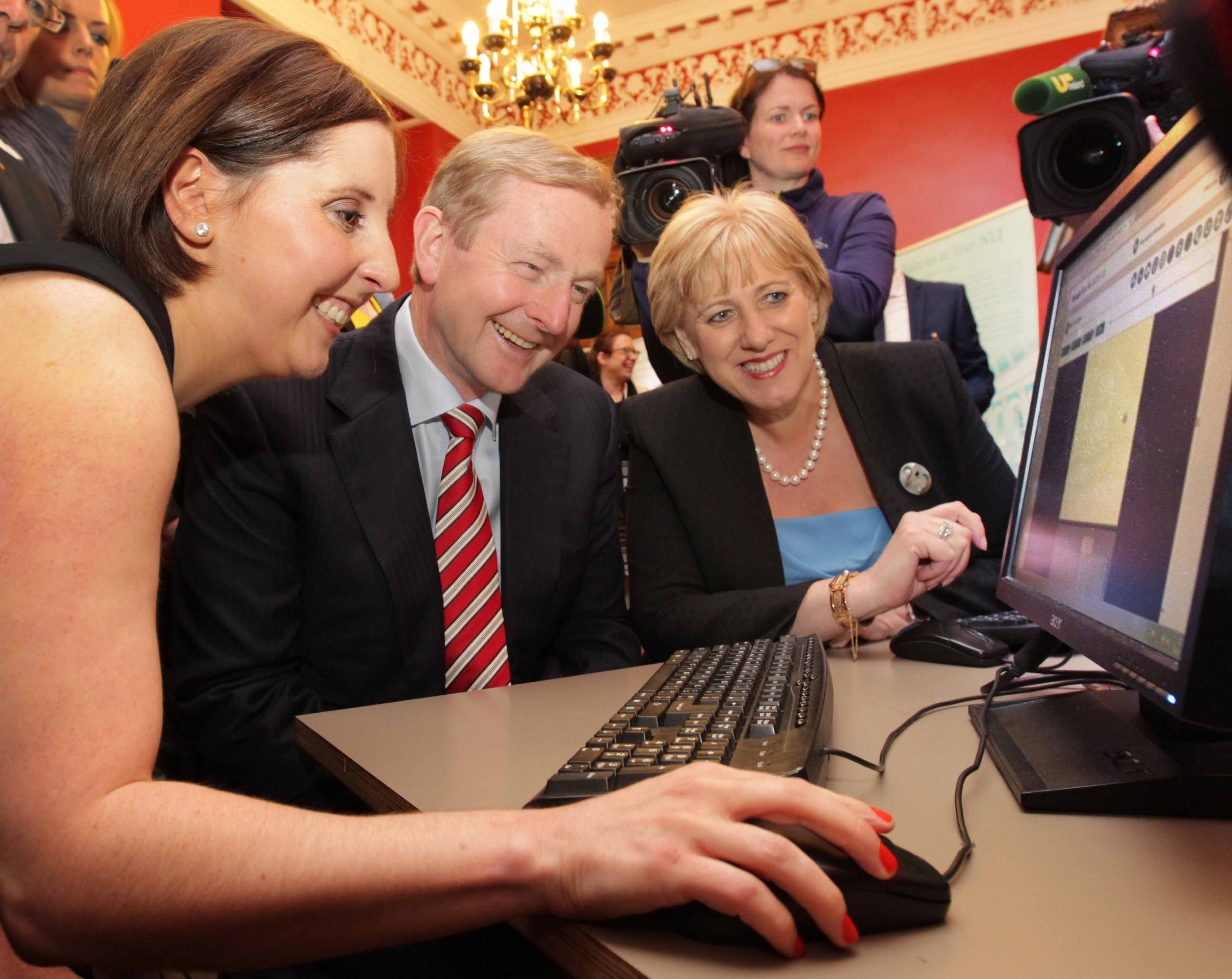
Pictured at the launch of the National Library of Ireland's new web-repository of parish records are Taoiseach, Enda Kenny T.D. and Minister for Arts, Heritage and the Gaeltacht, Heather Humphreys T.D., talking to Ciara Kerrigan, project manager of the digitisation of parish registers NLI. Photo Mark Stedman, Photocall Ireland

Pictured at the launch of the National Library of Ireland’s new web-repository of parish records are Taoiseach, Enda Kenny T.D. and Minister for Arts, Heritage and the Gaeltacht, Heather Humphreys T.D., talking to Ciara Kerrigan, project manager of the digitisation of parish registers NLI. Photo Mark Stedman, Photocall Ireland

National Library of Ireland Launches Parish Records Website

Michael Fisher  Northern Standard   Thursday 9th July

A new digital archive of Catholic parish records which is being made available free online by the National Library of Ireland should transform and greatly enhance the task of anyone tracing family history, according to the Minister for Arts, Heritage and the Gaeltacht, Heather Humphreys T.D. She was speaking at the launch by the Library of a web-repository of parish records, dating from the 1740s to the 1880s.

The Library’s holding of parish records is considered to be the single most important source of information on Irish family history prior to the 1901 Census. Up to now, they have only been accessible on microfilm, which meant that those interested in accessing the records had to visit the National Library. This new web resource provides unlimited access to all members of the public to records covering 1,086 parishes throughout the island of Ireland, including all parishes in the Catholic diocese of Clogher (although I could find no record for Eskra, near Newtownsaville, which was once part of Clogher parish in County Tyrone.

Minister Humphreys said: “This new digital resource will help people at home and abroad who are interested in tracing their ancestry. The website provides access to church records dating back up to 270 years and includes details like the dates of baptisms and marriages, and the names of the key people involved. The records feature the baptisms of some very well-known historical figures, such as the 1916 Leaders Padraig Pearse and Thomas MacDonagh.”

“Making this kind of material available online should help to boost genealogy tourism, and will complement the work of local historical centres in communities around the country. As we approach the centenary of the 1916 Rising next year, I am keen to make as much historical material as possible available online, so we can encourage people around the world to reconnect with their Irish roots”, she said.

Acting Director of the National Library, Catherine Fahy, said:

“This access to the parish records will be transformative for genealogy services, in particular as they will allow those based overseas to consult the records without any barriers.  Effectively, the digitisation of the records is an investment in community, heritage and in our diaspora-engagement.”

Pictured at the launch of the National Library of Ireland's new web-repository of parish records are Taoiseach, Enda Kenny T.D. and Minister for Arts, Heritage and the Gaeltacht, Heather Humphreys T.D., talking to former Taoiseach Liam Cosgrave. Photo: Mark Stedman, Photocall Ireland

Pictured at the launch of the National Library of Ireland’s new web-repository of parish records are Taoiseach, Enda Kenny T.D. and Minister for Arts, Heritage and the Gaeltacht, Heather Humphreys T.D., talking to former Taoiseach Liam Cosgrave. Photo: Mark Stedman, Photocall Ireland

The parish registers website contains more than 370,000 high-quality, digital images of microfilm reels.  The National Library microfilmed the parish records in the 1950s and 1960s.  Some additional filming of registers from a small number of Dublin parishes took place during the late 1990s.

As a result of this work, the NLI holds microfilm copies of more than 3,550 registers from the vast majority of Catholic parishes throughout Ireland. The start date of the registers varies from the 1740/50s in some city parishes in Dublin, Cork, Galway, Waterford and Limerick, to the 1780/90s in counties such as Kildare, Wexford, Waterford and Kilkenny. Registers for parishes along the western seaboard generally do not begin until the 1850/1860s.

Catherine Fahy said: “In using the website for family or community searches, we would recommend that members of the public consult with their local family history resource to help them refine their search.  The website does not contain any transcripts or indexes, so for a search to be successful, some known facts about a person’s life will be necessary.  Effectively, those who access the new online resource will be able to cross-reference the information they uncover, and identify wider links and connections to their ancestral community by also liaising with local genealogical services or family history resources.”

Speaking at the launch An Taoiseach, Enda Kenny T.D., said: “I would like to congratulate the National Library on their project to make the Catholic parish registers available online.  Given the devastating fire in the Four Courts in 1922, in which so many records were lost, these registers are considered the single most important record of Irish life prior to the 1901 census.

“They will be of great value to experts in the areas of history and genealogy, but also of tremendous interest to people here in Ireland and the Irish diaspora around the world.  No doubt the registers will contribute to the number of genealogical tourists to Ireland, as people of Irish descent access these records online and decide to visit their ancestral home place.”

Online access to the new website is free of charge. For more information, visit http://registers.nli.ie/.

In 1949, Dr Edward MacLysaght, Chief Herald of Ireland and Keeper of Manuscripts at the National Library of Ireland, approached the Bishop of Limerick offering the NLI’s services to help in the permanent preservation of the genealogical information contained within the Catholic Church’s collection of parish registers. The NLI’s offer to microfilm parochial registers was taken up by every member of the Hierarchy. Although civil registration of births, marriages and deaths began in 1864, records were not accurately kept for a number of years, so a cut-off date of 1880 was applied for the microfilming of registers.

The usual procedure followed in relation to the microfilming was to send a senior member of NLI staff to a diocese to collect the registers, bring them to the NLI in Kildare Street for filming, and then return the registers to the diocese. The filming of registers diocese by diocese began in the 1950s and was completed over a period of twenty years. Additional filming of registers from a small number of Dublin parishes took place during the late 1990s. As a result of this work, the NLI held microfilm copies of over 3500 registers from 1086 parishes on the island of Ireland. The start dates of the registers vary from the 1740/50s in some city parishes in Dublin, Cork, Galway, Waterford and Limerick, to the 1780/90s in counties such as Kildare, Wexford, Waterford and Kilkenny. Registers for parishes along the western seaboard do not generally begin until the 1850/60s.

Church registers of marriage and baptism are considered to be the single most important source for family history researchers prior to the 1901 census. In many cases, the registers contain the only surviving record of particular individuals and families. With growing numbers of people engaged in family history research and limited on-site facilities at the NLI in Dublin, the decision was taken in 2010 to digitise the parish register microfilms. Following a tender process, the contract for digitisation was awarded to AEL Data who converted 550 microfilm reels, containing over 3500 registers into approximately 373,000 digital images. These images correspond to a page or two-page opening within a register volume.

In October 2014 the NLI Board formally approved the making available of the microfilm images online on a dedicated free-to-access website. The individual registers have been reassembled virtually and made available to users via a topographical database. The development of the parish register website has been carried out by a small team in the NLI’s Digital Library section. The digitisation of the Catholic parish register microfilms is the NLI’s most ambitious digitisation project to date. It demonstrates the NLI’s commitment to enhancing accessibility through making its collections available online.

Information can be obtained relating to the following parishes in the diocese of Clogher:

Aghavea   (Brookeborough)    

Aughalurcher (Lisnaskea)

Aughintaine     (Fivemiletown)

Aughnamullen East

Aughnamullen West (Latton)

Carn (Devenish West, Belleek & Pettigo)

Cleenish  (Arney, Belcoo)

Clogher   

Clones

Clontibret

Devenish (Botha, Derrygonnelly)

Garrison

Donacavey (Fintona)       

Donagh (Emyvale, Glaslough)

Donaghmoyne

Dromore (Co. Tyrone)    

Drumsnat and Kilmore (Corcaghan)       

Drumully (Currin, Scotshouse)

Ematris (Rockcorry)       

Enniskillen (Inis Caoin Locha Eirne)

Errigal Truagh        

Galloon (Drumully, Newtownbutler)       

Garrison 

Inniskeen (Killanny)

Innismacsaint (Maghene, Bundoran)       

Irvinestown      (Devenish)

Killany (Inniskeen)

Killeevan (Currin, Aghabog)

Kilskeery (Kilskerry, Trillick)

Maghaire Rois (Carrickmacross)

Magheracloone        

Magheraculmany (Cúl Máine, Ederney)

Monaghan (Rackwallace)

Muckno (Castleblayney)

Roslea

Tempo (Pobal)

Tullycorbet (Ballybay)    

Tydavnet

Tyholland