BIG MUSIC WEEK5

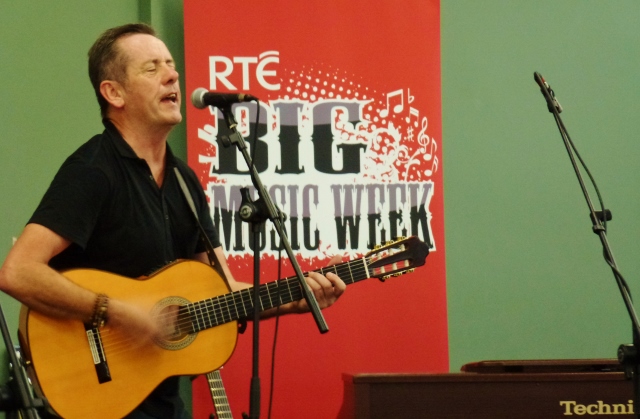
Luka Bloom sings  ‘Don’t be afraid of the light within you’ in Newbridge Photo: © Michael Fisher

Luka Bloom sings ‘Don’t be afraid of the light within you’ in Newbridge Photo: © Michael Fisher

Another busy day for the RTÉ Big Music promotion in association with Iarnród Eireann. Here is today’s schedule of broadcasts on radio and television: remember to watch the Late Late Show tonight with Ryan Tubridy as the train arrives back at Connolly station in Dublin.

07:00 RTÉ 2fm Breakfast with Hector Join Hector and friends for a great show live from the train in Boyle station, Co Roscommon Various
9:30, 12:35 & 16:10 RTÉjr The Beo Show This Big Music Week join stage manager Donie and wardrobe lady Gerty Gúna  as they prepare the Beo Theatre for children from across the country Various
10:00 & 14:35 RTÉjr Hubble Hubble is going musical so watch and listen as Emma and Ogié discover a musical world full of fun and interesting sounds. Various
12:00 RTÉ Radio 1 The Ronan Collins Show Ronan broadcasts live from Maynooth, capturing  beautiful performances from The Maynooth University Chamber Orchestra with Eimear Quinn, The Lost Brothers, Heathers, Gavin James and more The Maynooth University Chamber Orchestra with Eimear Quinn, The Lost Brothers, Heathers, Gavin James and more
Nightly RTÉ One RTÉ Big Music Week update A very special  update of all the day’s action from  RTÉ Big Music Week
21:35 RTÉ One The Late Late Show As the  RTÉ Big Music Week Train pulls back in to Connolly Station following an epic week, the RTÉ Concert Orchestra and the RTÉ Big Music Week House Band gather in studio for a one-off live performance of Irish song-writer Brendan Graham’s RTÉ Big Music Week song. Featuring some of Ireland’s biggest and best vocalists and musicians. The RTÉ Concert Orchestra & the RTÉ Big Music Week Train House Band with some of Ireland’s best vocalists and musical contributions collected throughout the week.
22:00 RTÉ Radio 1 The God Slot Eileen Dunne meets experts in liturgical music for Roman Catholic, Anglican and Jewish faiths, who discuss the origins of music in their various traditions

BIG MUSIC WEEK4

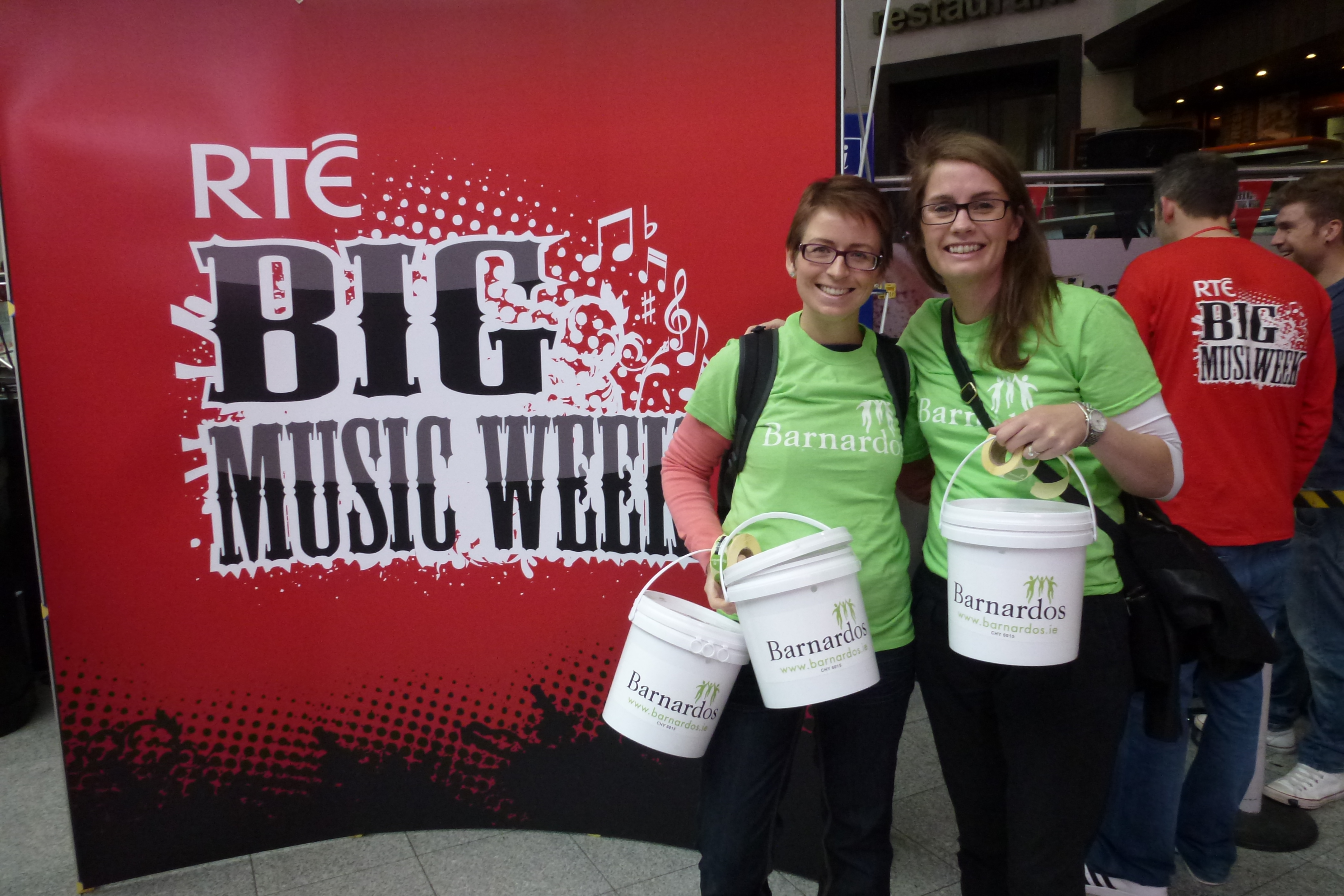
Collecting for Barnardos during the Big Music Week Photo: © Michael Fisher

Collecting for Barnardos during the Big Music Week Photo: © Michael Fisher

Day four of the RTÉ Big Music Week which began in Westport County Mayo with Marty Whelan live on Lyric FM with Declan O’Rourke, Brendan Graham, Laoise Kelly and other artists. The train then moved on to Carrick-on-Shannon in County Leitrim for a concert tonight at the Landmark Hotel with Robert Mizzell, Louise Morrissey and Patrick Feeney. On Saturday a charity concert for Barnardos will be held at Vicar Street in Dublin to bring the week to a conclusion.

BIG MUSIC WEEK3

Paul Brady singing at Connolly Station Photo: © MIchael Fisher

Paul Brady singing at Connolly Station Photo: © MIchael Fisher

Nationwide
Anne Cassin climbs aboard the RTÉ music train from Dublin to Newbridge and Carlow and looks back at the history of Six One as it celebrates 25 years of broadcasting. Watch the programme here on the RTÉ Player.  Broadcast on Wednesday October 2nd, 2013. You will see a brief picture of me listening to the music at Patrician Secondary School in Newbridge at 6:20 into the programme.

The Lost Brothers on board the RTÉ Music Train Photo: © MIchael Fisher

The Lost Brothers on board the RTÉ Music Train Photo: © MIchael Fisher

Today was Day Three of the RTÉ Big Music Week. The train travelled from Limerick via Galway to Westport in County Mayo. Tonight there was a concert in Matt Molloy’s pub, featuring Sharon Shannon, Mundy, Frankie Gavin & The Ríl De Danann, Julie Feeney, Máirtín O Connor, We Banjo 3, Matt Molloy & local musicians, Laoise Kelly and more.

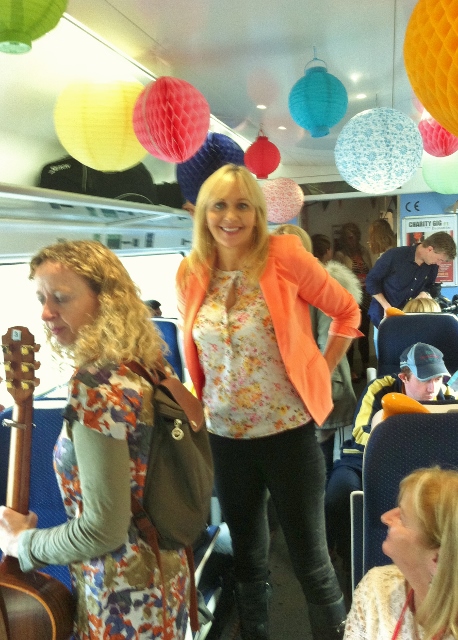
Miriam O'Callaghan on board the RTÉ Music Train Photo: © MIchael Fisher

Miriam O’Callaghan on board the RTÉ Music Train Photo: © MIchael Fisher

BIG MUSIC WEEK2

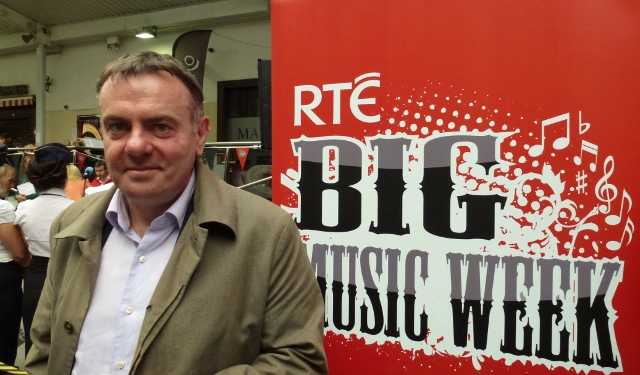
RTÉ Director General Noel Curran at Connolly station for Big Music Week Photo: © Michael Fisher

RTÉ Director General Noel Curran at Connolly station for Big Music Week Photo: © Michael Fisher

This was day two of the RTÉ Big Music Week designed to promote live music. It began yesterday at Bray station in County Wicklow with performances for early morning commuters by a host of starts including The Benzini Brothers featuring Liam Ó MaonlaÍ, Fiachna Ó Braonáin & Peter O’Toole,  Luan Parle, Lisa O’Neill, The Lost Brothers & Eleanor McEvoy. The special three carriage RTÉ Music Train then made its way to Dublin’s Connolly Station where I was able to join the event. I met the RTÉ Director General Noel Curran and managed to get his picture as the Artane Band prepared to broadcast live at the end of the John Murray Show with Miriam O’Callaghan.

Paul Brady singing at Connolly Station Photo: © Michael Fisher

Paul Brady singing at Connolly Station Photo: © Michael Fisher

The Artane Band played In Dublin’s Fair City or of you prefer Molly Malone or event Cockles and Mussels to bring the programme to a lively end. Earlier Miria had introduced various top acts including Paul Brady, Luka Bloom, Kodaline, Damien Dempsey, The Bugle Babes and Bronagh Gallagher. All this was a great example of public service broadcasting at its best.

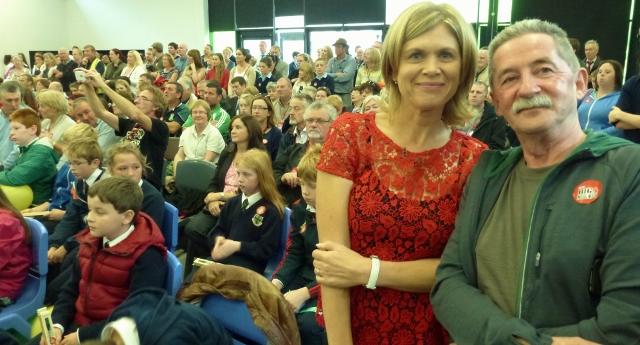
Anne Cassin RTÉ Nationwide with Doanl Lunny in Newbridge Photo: © Michael Fisher

Anne Cassin RTÉ Nationwide with Philip King in Newbridge Photo: © Michael Fisher

I met several former RTÉ colleagues along the way including Nationwide presenter Anne Cassin. She was working on a package for tomorrow’s programme (Wednesday) on RTÉ at 7pm viewable here. You can see me listening to the music in the hall at 6:20. When I was talking to her she was in Newbridge where former Planxty member Christy Moore performed at his alma mater, Patrician Boys’ Secondary School. Christy had developed his passion for singing as a pupil in 1958 and he was taught to play the piano by Sr Michael.

BIG MUSIC WEEK

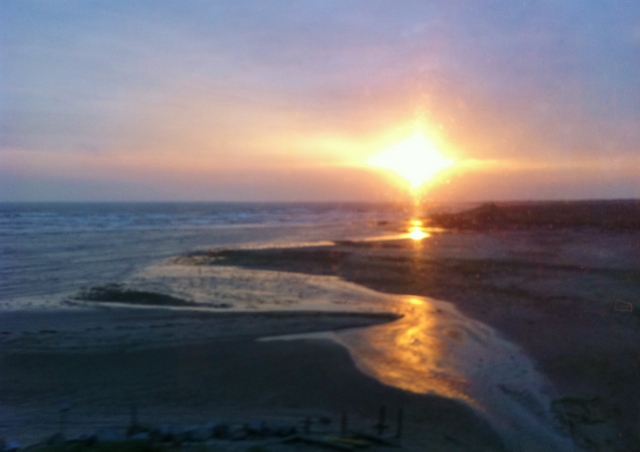
View of beach near Gormanston Co.Meath from train window Photo: © Michael Fisher

View of beach near Gormanston Co.Meath from train window Photo: © Michael Fisher

It was a beautiful morning for a journey and no better way to travel than by train. A great opportunity to see the sunrise over the sea as the train passed along the coast just after Gormanston in County Meath. My thirteen hour odyssey began at Newry station in County Armagh (it’s closer to Bessbrook!) with the departure of the 06:45 Iarnród Eireann commuter train to Dublin Connolly, a train that goes as far as Bray. Try planning a journey to Dundalk on the Translink website and you won’t find this particular service. It picks up at various stops as far as Donabate, by which time it’s a case of standing room only, then runs non-stop to Connolly. On arrival the place was buzzing with the sound of music, including the RTÉ Concert Orchestra.

Miriam O'Callaghan prepares to go on air with The John Murray Show at Connolly Station Photo: © Michael Fisher

Miriam O’Callaghan prepares to go on air with The John Murray Show at Connolly Station Photo: © Michael Fisher

A great start to the Big Music Week at Connolly Station with an hour long John Murray Show presented by Miriam O’Callaghan. Among the crowd (some of whom had joined the music train at Bray) was RTÉ’s Director General Noel Curran. Although he comes from a county (Monaghan) where the railway lines were dismantled over fifty years ago, he still has a love of trains having made the journey many times between Dublin and Dundalk, where I was writing this as I headed back to Newry on the Enterprise.

RTÉ Director General Noel Curran at Connolly Station

RTÉ Director General Noel Curran at Connolly Station Photo: Michael Fisher

The hour-long show at Connolly finished with the Artane Boys Band. The BIG MUSIC WEEK entourage then boarded the special three-carriage Iarnród Éireann train to Newbridge for the next stage of the proceedings.

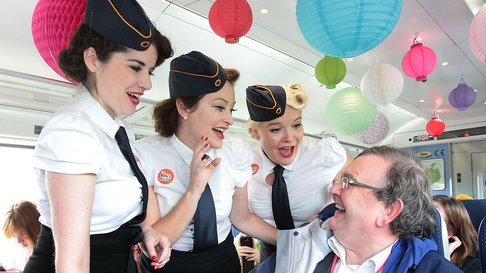
Entertained on the Music Train by the Bugle Babes Photo: RTÉ ten

Entertained on the Music Train by the Bugle Babes Photo: RTÉ ten

On board we were entertained by the Chattanooga Choo Choo from the Bugle Babes. Other stars  travelling included the Northern duo of Paul Brady from Strabane and Bronagh Gallagher from Derry, who made a special mention of Eamonn McCann when she sang Midnight Train to Georgia for Miriam, a broadcast that went out simultaneously on 2FM and Lyric FM.

Bronagh Gallagher on board the RTÉ Music Train Photo: © Michael Fisher

Bronagh Gallagher on board the RTÉ Music Train Photo: © Michael Fisher

Christy Moore joined the fun at the Patrician Seconday School at Newbridge in County Kildare. After a three hour stop that included a parade along the mmain street of the town led by the Army No.1 Band, it was time to head for the next stop in Carlow. More performances on the train and then in the station car park where Tullow native Selina O’ Leary was among the entertainers. After that the Music Train headed to Waterford for a concert at the Theatre Royal, a benefit gig in aid of Barnardos for whom collections were made along the way. The broadcast schedule for tomorrow, Tuesday 1st October, and other information can be found on the RTÉ Big Music Week (in association with Iarnród Eireann) website here.

9:30, 12:35 & 16:10 RTÉjr The Beo Show This Big Music Week join stage manager Donie and wardrobe lady Gerty Gúna  as they prepare the Beo Theatre for children from across the country Various
10:00 & 14:35 RTÉjr Hubble Hubble is going musical so watch and listen as Emma and Ogié discover a musical world full of fun and interesting sounds. Various
16:00 RTÉ Two elev8 Follow Diana Bunici’s progress as she picks up the guitar for the first time with the promise of a performance by the end of the week. Various
17:30 RTÉ Two Two Tube Throughout RTÉ Big Music Week Two Tube will be  on a quest to find the next big music act, as well as bringing great interviews from well-known Irish talent. Various
20:00 RTÉ Radio 1 The John Creedon Show For day two of RTÉ Big Music Week, John Creedon presents a live performance from Killarney’s INEC, featuring John Spillane, Ger Wolfe, Lumiere, Muireann Nic Amhlaoibh, I Draw Slow & others. John Spillane, Lumiere, Muireann Nic Amhlaoibh, I Draw Slow & others.

HIGH SPEED2 RAIL: LABOUR

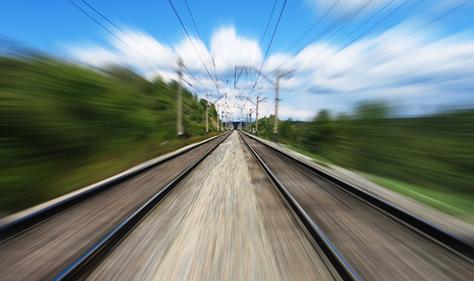
Example of High Speed Rail Track Photo: www.hs2.org.uk

Example of High Speed Rail Track Photo: http://www.hs2.org.uk

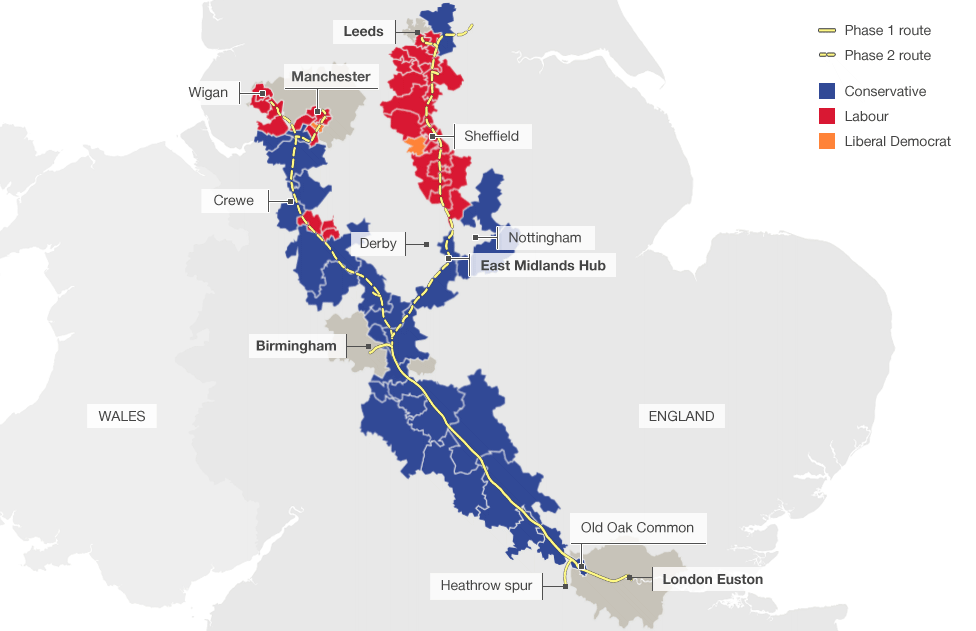
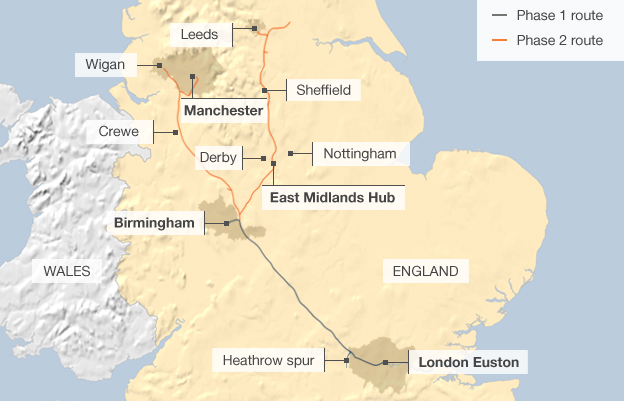
Earlier this month I wrote about the British government’s plans for a new HS2 high speed rail service in England. The first stretch would be between London Euston and Birmingham. Future development by 2033 would provide for two branches, one heading towards Manchester, the other an East Midlands hub through Nottingham to Leeds. The trains would operate at speeds up to 250mph. The estimated cost is £42.6 billion. Consultation on phase two began in July and is open for submissions until the end of January 2014.

HS2 Route through Parliamentary Constituencies: BBC News

HS2 Route through Parliamentary Constituencies: BBC News

So is all this just a dream? It is apparent from this map produced by BBC News that the routes go through constituencies mainly represented by Conservative MPs, particularly in areas such as Berkshire and Oxfordshire. Political pressure is mounting on some of these Conservative MPs, who have indicated they might vote against the government’s bill when it reaches Parliament, including former Welsh Secretary, Cheryl Gillan, Andrea Leadsom and Dan Byles.

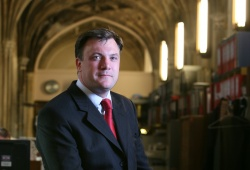
Ed Balls MP (Labour Party)

Ed Balls MP (Labour Party)

Now BBC News reports that with so many Tory MPs opposed to the plan, it might need the support of Labour. After today, that cannot be guaranteed, according to Political Editor Nick Robinson. This is because Shadow Chancellor Ed Balls told the Labour Party conference in Brighton although the party still backed the idea of a new north-south rail link, it would cancel it if costs rise:-

Conference, we support investment in better transport links for the future. And we continue to back the idea of a new North-South rail link. But under this government the High Speed 2 project has been totally mismanaged and the costs have shot up to £50 billion. David Cameron and George Osborne have made clear they will go full steam ahead with this project – no matter how much the costs spiral up and up. They seem willing to put their own pride and vanity above best value for money for the taxpayer. Labour will not take this irresponsible approach. So let me be clear, in tough times – when there is less money around and a big deficit to get down – there will be no blank cheque from me as a Labour Chancellor for this project or for any project. Because the question is – not just whether a new High Speed line is a good idea or a bad idea, but whether it is the best way to spend £50 billion for the future of our country. And Conference, in tough times it’s even more important that all our policies and commitments are properly costed and funded.”

Supporters say the project will provide much needed extra rail capacity. The Labour leader of Manchester City Council criticised his party for raising doubts about its viability, accusing Mr Balls of a “cheap shot”. Sir Richard Leese said the high-speed line was “essential” to prevent the North and Midlands “slowly grinding to a halt”. “There are better ways for the shadow chancellor to demonstrate fiscal responsibility than take a cheap shot at HS2,” he added.

Earlier another of Labour’s frontbench team, shadow treasury chief secretary Rachel Reeves, said the party would cancel it “if we don’t think it’s good value for money and costs continue to rise”. The estimated cost of the plan has risen in the past few months from £34.2bn to £42.6bn – plus £7.5bn for rolling stock – and some senior Labour figures such as Lord Mandelson and Alistair Darling now oppose the project.

The Stop the HS2 campaign said Mr Balls was “dead right”, adding that it was “only the vanity of politicians which is keeping this white elephant on life support”.

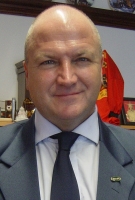
Bob Crow RMT General Secretary Photo: RMT

Bob Crow RMT General Secretary Photo: RMT

But the RMT union general secretary Bob Crow said ditching HS2 would set back for a decade the modernisation of the railways. “Britain is already in the slow lane when it comes to the railways and RMT will fight any plans by Ed Balls and the political class to leave us stuck there,” he said.

A Department for Transport spokesman said HS2 was right for the future of the country and had the support of civic leaders across the North and Midlands. “HS2 will free up vital space on our railways for passengers and freight, generate hundreds of thousands of jobs and deliver better connections between our towns and cities,” a spokesman said.

While a “tight lid” must be kept on costs, the CBI urged politicians to focus on the big picture. “HS2 will connect eight of our 10 biggest cities, boost regeneration projects across the country for years to come, and will avert a looming capacity crunch on the West Coast Main Line,” it said.

BBC transport correspondent Richard Westcott said it was a big shift in Labour’s stance. It meant the party would not commit to cancelling HS2 before the election, but would review it if they won. He said Labour would look at whether it was the best way to spend £50bn, or whether they should look at other options, like different routes or big improvements to existing lines.

STAR SPANGLED BANNER

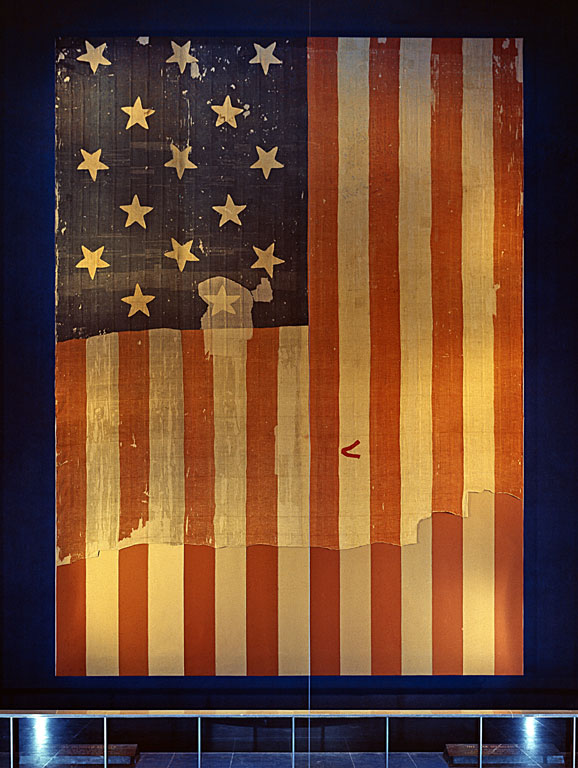
Stars and Stripes Photo: Smithsonian/NMAH

Stars and Stripes Photo: Smithsonian/NMAH

This is the original stars and stripes flag of the United States. You can see it on display at the Smithsonian Institution in Washington DC. It has an interesting history. 200 years ago  in July 1813, during a war between the Americans and the British, Mary Pickersgill, a hardworking widow known as one of the best flag makers in Baltimore, Maryland, received a rush order from American Major George Armistead. He had just taken over as commander of Fort McHenry and wanted an enormous banner, 30 by 42 feet, to be flown over the federal garrison guarding the entrance to Baltimore’s waterfront. I remember visiting Baltimore a few years ago and hearing the story of the star-shaped defensive fort, similar to those built by the British in Ireland such as Charles Fort in Kinsale, County Cork.

The United States had declared war in June 1812 to settle its disputed northern and western borders. During the summer of 1813, the enemies were trading blows across the Canadian border. Then British war vessels appeared in Chesapeake Bay, menacing shipping, destroying local batteries and burning buildings up and down the estuary. As Baltimore prepared for war, Armistead ordered his big new flag, one that the British would be able to see from miles away. It would signal that the fort was occupied and prepared to defend the harbour.
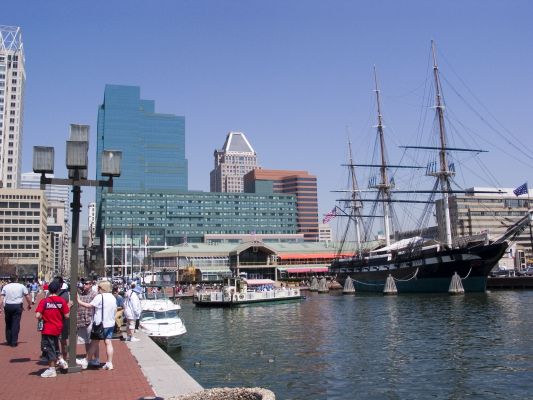
Tall Ship in Baltimore Harbour Photo:  © Adrian Jones Integration and Application Network, University of Maryland Centre for Environmental Science

Tall Ship Baltimore Harbour © Adrian Jones IAN, Uny of Maryland Centre for Environmental Science

With her 13 year-old daughter Caroline and others,  Pickersgill took more than 300 yards of English worsted wool bunting to the floor of Claggett’s brewery, the only space in her East Baltimore neighborhood large enough to accommodate the project, and set to work measuring, snipping and fitting. A rectangle of deep blue, about 16 by 21 feet, formed the flag’s upper left quarter. Sitting on the brewery floor, she stitched a number of five-pointed stars into it. Each one, fashioned from white cotton, was almost two feet across. Then she turned the flag over and snipped out blue material from the backs of the stars, tightly binding the edges; this made the stars visible from either side. (Smithsonian)

In August 1814, General Robert Ross and his seasoned troops landed near the nation’s capital. On August 24th at Bladensburg, Maryland, about 30 miles from Washington, his five-thousand-member British force defeated an American army twice its size. That same night, British troops entered Washington and set fire to the United States Capitol, the President’s Mansion, and other public buildings. With Washington in ruins, the British set their sights once again on Baltimore,  then America’s third-largest city. On the morning of September 12th, General Ross’s troops landed at North Point, Maryland, and progressed towards the city. They soon encountered the American forward line, part of an extensive network of defences established around Baltimore in anticipation of the British assault.

During the skirmish with American troops, General Ross was killed by a sharpshooter. Surprised by the strength of the American defences, British forces camped on the battlefield and waited for nightfall on September 13th, planning to attempt another attack under cover of darkness. Meanwhile, Britain’s naval force was poised to strike Fort McHenry and enter Baltimore Harbor.  At 6:30am on September 13th 1814, Admiral Cochrane’s ships began a 25-hour bombardment of the fort with Congreve rockets and mortar shells. After an initial exchange of fire, the British fleet withdrew to just beyond the range of Fort McHenry’s cannons and continued to bombard the American redoubts for the next 25 hours. Although up to 1,800 cannonballs were discharged at the fort, damage was light owing to recent fortification work.

At 7:30am on the morning of September 14th, Admiral Cochrane called an end to the bombardment and the British fleet withdrew. The successful defence of Baltimore marked a turning point in the War of 1812. Three months later on December 24th  1814, the Treaty of Ghent formally ended the war.

The attack on Baltimore also provided the inspiration for the American national anthem. Prior to the battle, Francis Scott Key, a Georgetown lawyer, had been negotiating for the release of an American prisoner, Dr Beanes. Boarding a British ship, Key dined with General Ross and other officers. Ross agreed to release Dr Beanes. Owing to the imminence of the British attack on Baltimore, Key was not permitted to return ashore and witnessed the massive bombardment unleashed by the Royal Navy on Fort McHenry.

The sight of the Stars and Stripes (or was it the smaller storm flag?) flying from the ramparts of Fort McHenry when the bombardment ceased is said to have inspired him to pen the lyrics of the Star Spangled Banner. These details came from the website ‘The Man who captured Washington‘ and I am grateful to John McCavitt in Belfast (@john_mccavitt) for drawing this anniversary to my attention on twitter.
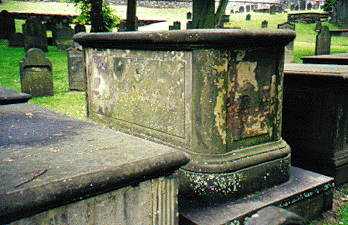
Tomb of Major General Robert Ross in Halifax Photo: ©  courtesy of Don Sucha, Calgary

Tomb of Major General Robert Ross in Old Burying Ground Halifax Photo: © courtesy of Don Sucha, Calgary

Since writing that last paragraph, my contact who introduced me to Baltimore reminds me that the corpse of Major General Ross who was killed in the Battle of Baltimore was pickled in 129 gallons of Jamaican rum. Although it was due to be returned to Ireland it was transported to Halifax in Nova Scotia, where it rests in the Anglican cemetery (see Don Sucha’s article on the Old Burying Ground).
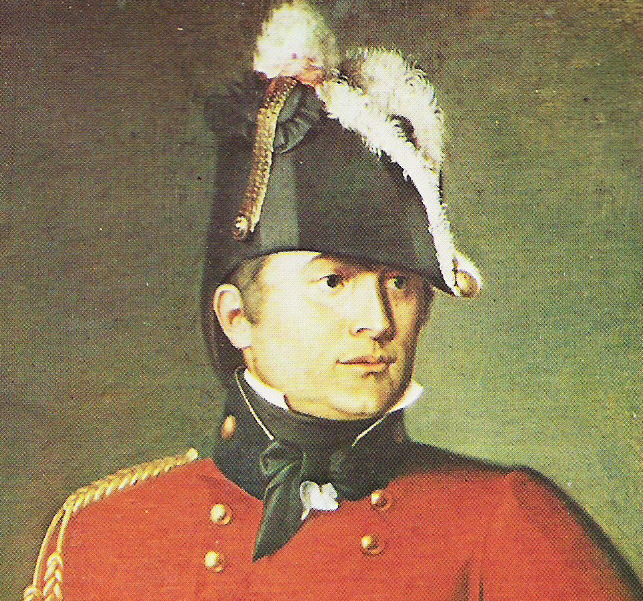
Major General Robert Ross Photo: Wikimedia Commons

Major General Robert Ross Photo: Wikimedia Commons

A weekend conference is being held in Rostrevor on October 18th-20th focusing on the life and career of Major General Ross of Rostrevor, with BBC veteran Peter Snow as a key speaker. The Ross conference which is free is supported by Newry and Mourne District Council, the Ulster Scots Agency and PEACE III Southern Partnership under the ‘Future Foundations’  programme delivered by Armagh City and District Council. There is an obelisk in memory of Ross in Rostrevor.

General Ross Obelisk Rostrevor Photo: www.carlingfordandmourne.com

General Ross Obelisk Rostrevor Photo: http://www.carlingfordandmourne.com


HIGH SPEED2 RAIL

Shinkansen: Japanese Bullet Train at NRM York Photo: © Michael Fisher

Shinkansen: Japanese Bullet Train at NRM York Photo: © Michael Fisher

Looking at the Shinkansen Japanese Bullet Train during a visit to the National Railway Museum in York in June, I wondered if such a high-speed service was any nearer in England. The new version of the train runs at speeds of up to 200mph in Japan. The original track opened in 1964 between Tokyo and Osaka and is the world’s busiest high-speed line.

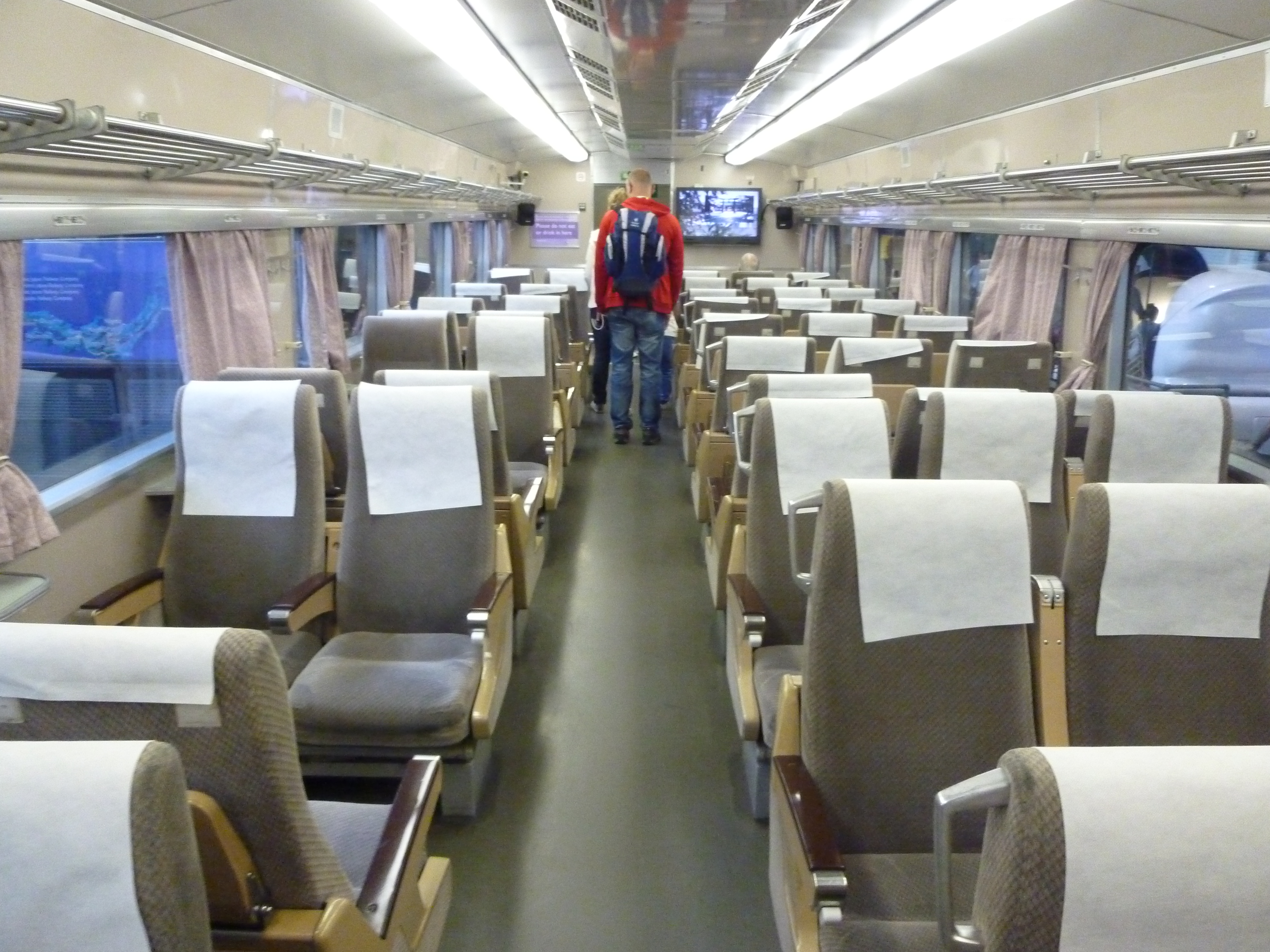
Interior Japanese Bullet Train at NRM York Photo: © Michael Fisher

Interior Japanese Bullet Train at NRM York Photo: © Michael Fisher

This is a “series O” train – serial number 22-141 – and was the first vehicle built and run outside the UK to be part of the museum’s collection. It began service in 1976 and was mothballed in October 2000 after more than 20 years of service on the 320-mile Tokyo to Osaka route. It was delivered to the NRM in June 2001.

HS2 Route Map: BBC News

HS2 Route Map: BBC News

Now the British government is planning a high-speed line in England HS2 which will initially run from London to Birmingham in a journey tie of less than 50 minutes, compared to the 75 minutes it currently takes from London Euston to Birmingham International on a Pendelino inter city express run by Virgin Trains. The initial plan is for a new line between London and the West Midlands, carrying 400m-long (1,300ft) trains, with up to 1,100 seats per train. They would operate at speeds of up to 250mph – faster than any current operating speed in Europe – and would travel up to fourteen times per hour in each direction.

There would be a second phase: a V-shaped route taking services from Birmingham to Manchester and Leeds. Intermediate stations in the East Midlands and South Yorkshire are also planned (BBC News).

A new report by accountants KPMG says the HS2 rail project could boost the British economy by £15bn a year, with regions outside the capital being the biggest beneficiaries. But it says the economic boost will not be felt until 2037. Transport Secretary Patrick McLoughlin presented the findings as he made the case for the new rail line.

ULSTER CANAL CLONES

Old Bridge over Ulster Canal near Clones, Co.Monaghan Photo: ©  Michael Fisher

Old Bridge over Ulster Canal near Clones, Co.Monaghan Photo: © Michael Fisher

It has been dubbed the “Clones Sheugh” by one blogger Irish waterways history, who believes the Canal restoration would be a folly. Another industrialheritageireland.info has questioned the viability of the planned restoration of a 13km section of the Ulster Canal and River Finn from Clones to Upper Lough Erne and wonders where the finance will come from to maintain the waterway and any associated buildings if the restoration goes ahead. But there are local groups which believe the project is viable and will help to preserve an important part of Ulster’s industrial heritage.

South Lough Neagh Historical Society at Ulste Canal Stores Clones Photo: © Michael Fisher

South Lough Neagh Historical Society at Ulster Canal Stores Clones Photo: © Michael Fisher

One such group of enthusiasts is the South Lough Neagh Historical Society which this afternoon visited the Ulster Canal Stores in Clones and took a trip along the section of canal due to be restored. The decision was announced at a meeting of the North/South Ministerial Council in Armagh in July 2007. I remember doing a report on the proposals having travelled along much of the same route as the visitors did today. However there are few visible signs of any progress in the past six years. The situation was discussed at the inaugural meeting of the North/South Inter-Parliamentary Association a year ago which produced a background paper on the cross-border plan.

Ukster Canal Stores Clones: could this become a marina? Photo: © Michael Fisher

Ulster Canal Stores Clones: could this become a marina? Photo: © Michael Fisher

The Ulster Canal opened in 1841 and linked Lough Neagh with Lough Erne. The plan was to create a navigable waterway connecting the ports of Belfast and Coleraine with the Shannon and onwards to Limerick or Waterford. It is 46 miles long with 26 locks. It left the River Blackwater below Moy and climbed through 19 locks to the summit on the far side of Monaghan. It ran through the counties of Fermanagh, Monaghan and Armagh. It originally passed through or close to Clones, Smithborough, Monaghan, Middletown, Tynan, Caledon, Milltown, Benburb, Blackwatertown, Moy and Charlemont.

Route of original Ulster Canal near Clones Photo: © Michael Fisher

Route of original Ulster Canal near Clones Photo: © Michael Fisher


MODEL RAILWAYS

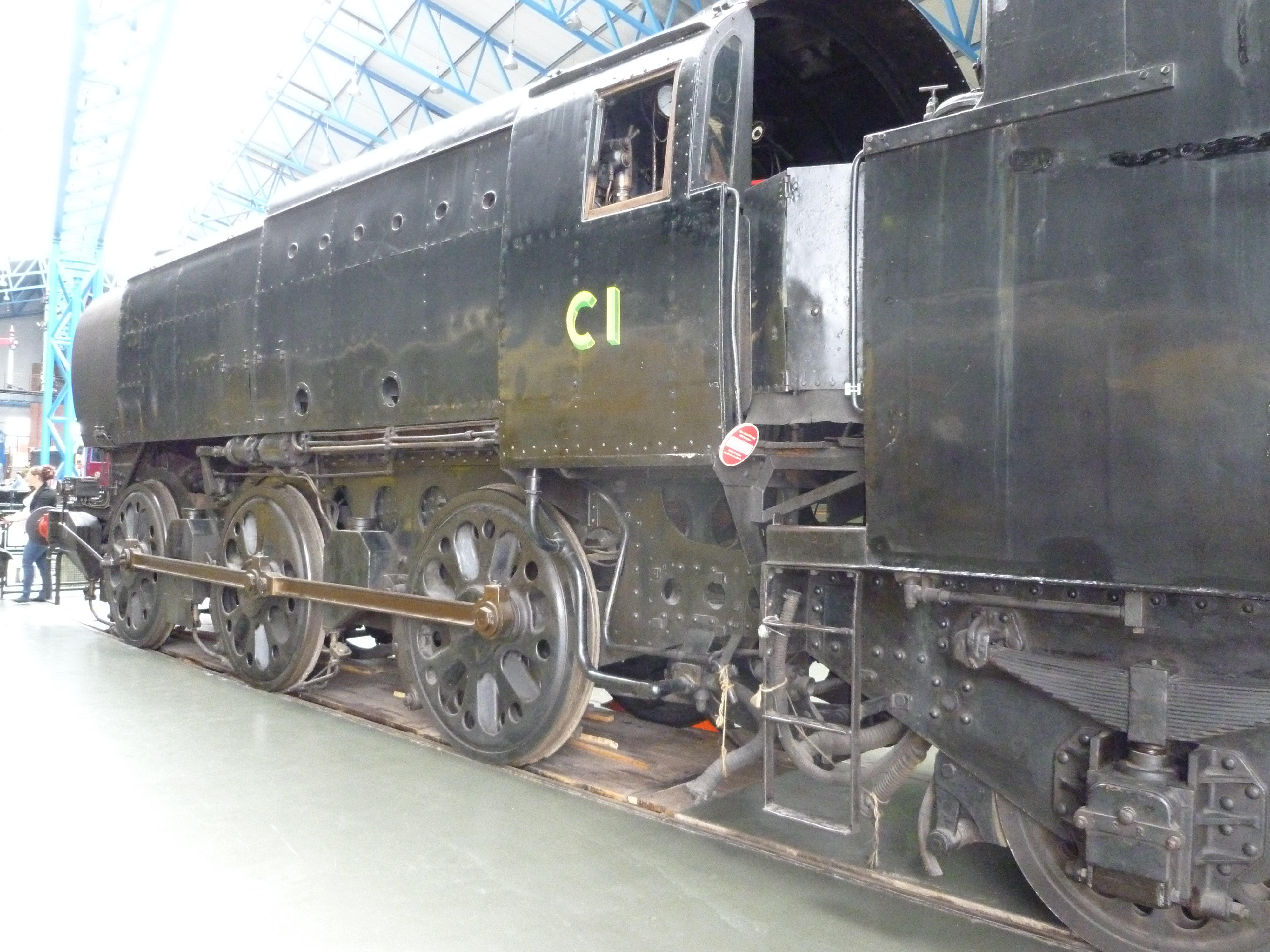
Southern Railway Bulleid Q1-class No.C1 (33001) at National Railway Museum, York Photo: © Michael Fisher

Southern Railway Bulleid Q1-class No.C1 (33001) at National Railway Museum, York Photo: © Michael Fisher

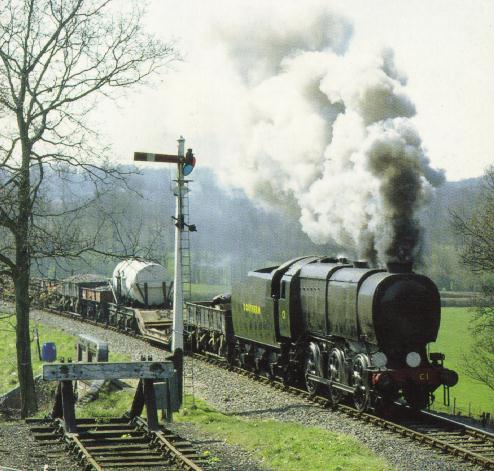
My interest in trains is largely owing to this locomotive: a Southern Railway Bulleid Q1-class No. C1 (33001). Known by their nick-name of Charlies or ‘Coffee Pots’, this class was designed as a wartime economy locomotive by Oliver Bulleid, making use of already existing patterns for many of their parts, as goods locomotives intended only for a short life. Although the same weight as the Q-class, their predecessors, they were 50 per-cent more powerful, and proved to be fine machines, lasting much longer than originally intended. Considered ugly by some, they are very popular with enthusiasts. The locomotive had two cylinders with Stephenson link outside admission piston valves, and was provided with a five-nozzle blast-pipe. It represents the final version of the goods 0-6-0 development on the Southern Railway (and for that matter, in the world) which can be traced through the examples preserved on the Bluebell Railway of the SER “O1”, through the SECR “C” and SR “Q” classes.

Bulleid Q1-class No.C1 (33001) on Bluebell Railway Photo: © Mike Esau

Bulleid Q1-class No.C1 (33001) on Bluebell Railway Photo: © Mike Esau

Withdrawals began in 1963, during the implementation of the British Rail modernisation plan, which saw the end of steam operations on Britain’s railways, the last example of the Q1 class being withdrawn in 1966. C1 is the sole survivor and was restored to working order by the Bluebell Railway in Sussex on two separate occasions under successive agreements with the National Railway Museum in York, where it is now on display and where I was delighted to come across it during a visit in June.

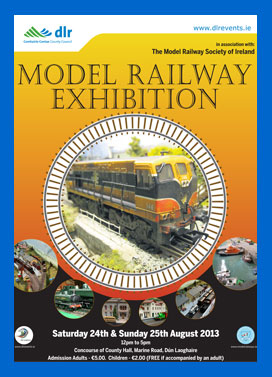
Model Railway Exhibition Dún Laoghaire Poster

Model Railway Exhibition Dún Laoghaire

Given my interest in railways which was developed at an early age in London, it was only natural that when I saw a poster for a model railway exhibition in Dún Laoghaire at the weekend that I should explore what was on display in the concourse of County Hall. There were some very interesting layouts including one made from Lego bricks.

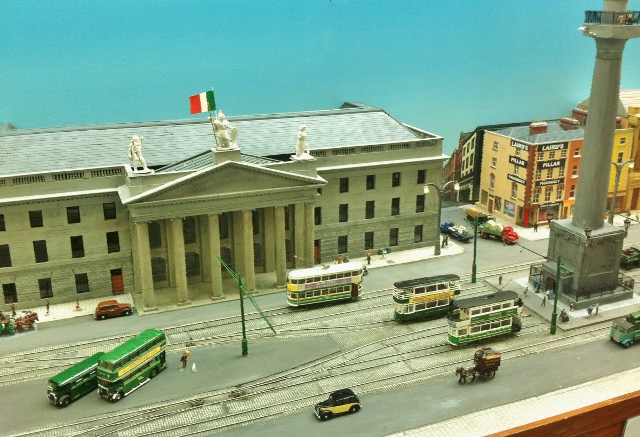
Visitors were asked by the Model Railway Society of Ireland to vote for their favourite display. I’m not sure who won top prize. But my vote went to stand number five, where onlookers were given a flavour of what O’Connell Street, the main thoroughfare of Dublin, looked like sixty or more years ago in the 1940s.

Nelson Pillar was the transport hub and trams used to set off from here to various parts of the city. The layout included cars, vans, pedestrians and even cyclists. To get an idea of the display I recommend this short vimeo by Brian Durcan.  The High Definition version is available here. Altogether there were fifteen layouts on show, including some from Northern Ireland.

O'Connell Street Layout Photo: © Michael Fisher

O’Connell Street Layout Photo: © Michael Fisher

O’Connell  Street: This layout is a 4mm scale (1:76) representation of the capital’s main street and its trams as it was in the last year  of tramway operated in 1949. The buildings on the west side of  the street were modelled using ordnance survey maps and photographs of the period. The civic monuments including the Nelson Pillar grace the centre of  the street. Many figures of people in  the  model including cyclists, horse  transport and “internal combustion engine vehicles” sharing space with working trams, busses and trucks.

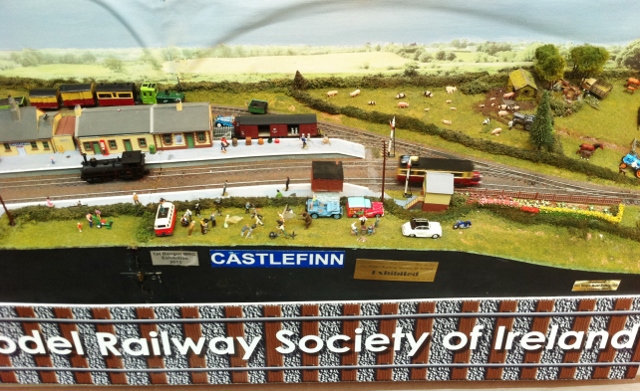
Castlefinn Photo: © Michael Fisher

Castlefinn Photo: © Michael Fisher

Castlefinn:  Built  by one of the MRSI members this is a OO9 gauge layout of Castlefinn station in County Donegal, on the  Donegal narrow  gauge railway  line. It shows Castlefinn as it would be today if it were reopened by a  preservation  society. The railcar is similar to one operated by the Clogher Valley Railway. At the exhibition I was able to purchase a copy of Edward Patterson’s book on the CVR.

Letterkenny Station: Donegal Railway Heritage Photo: © Michael Fisher

Letterkenny Station: Donegal Railway Heritage Centre Photo: © Michael Fisher

Other Layouts/Displays: Letterkenny Station  – Donegal Railway Heritage Centre. For details of their museum at the old station house in Donegal town, see here.