BALMORAL PARK

Closing stages of Balmoral Show 2013

Closing stages of Balmoral Show 2013

Thousands have again poured through the gates on the third and final day of the Balmoral Show at its new location on the site of what was once the high-security Maze prison near Lisburn. It used to house prisoners from republican and loyalist paramilitary groups, many of them serving life sentences for murder. Following a provision in the Good Friday agreement in 1998, the prisoners were released and the jail was closed in 2000 when the last four prisoners were freed. Demolition of the H-Blocks began on 30th October 2006 but after some controversy, part of the prison including the hospital block and one H-block were kept.

Unionists are now protesting against any plans to preserve these structures, which republicans feel are important because of their role during the 1981 hunger strike, in which ten inmates died. By chance, I am writing this while watching an RTÉ News report about the force-feeding by US authorities of prisoners at Guantanamo Bay detention camp at an American naval base in Cuba.

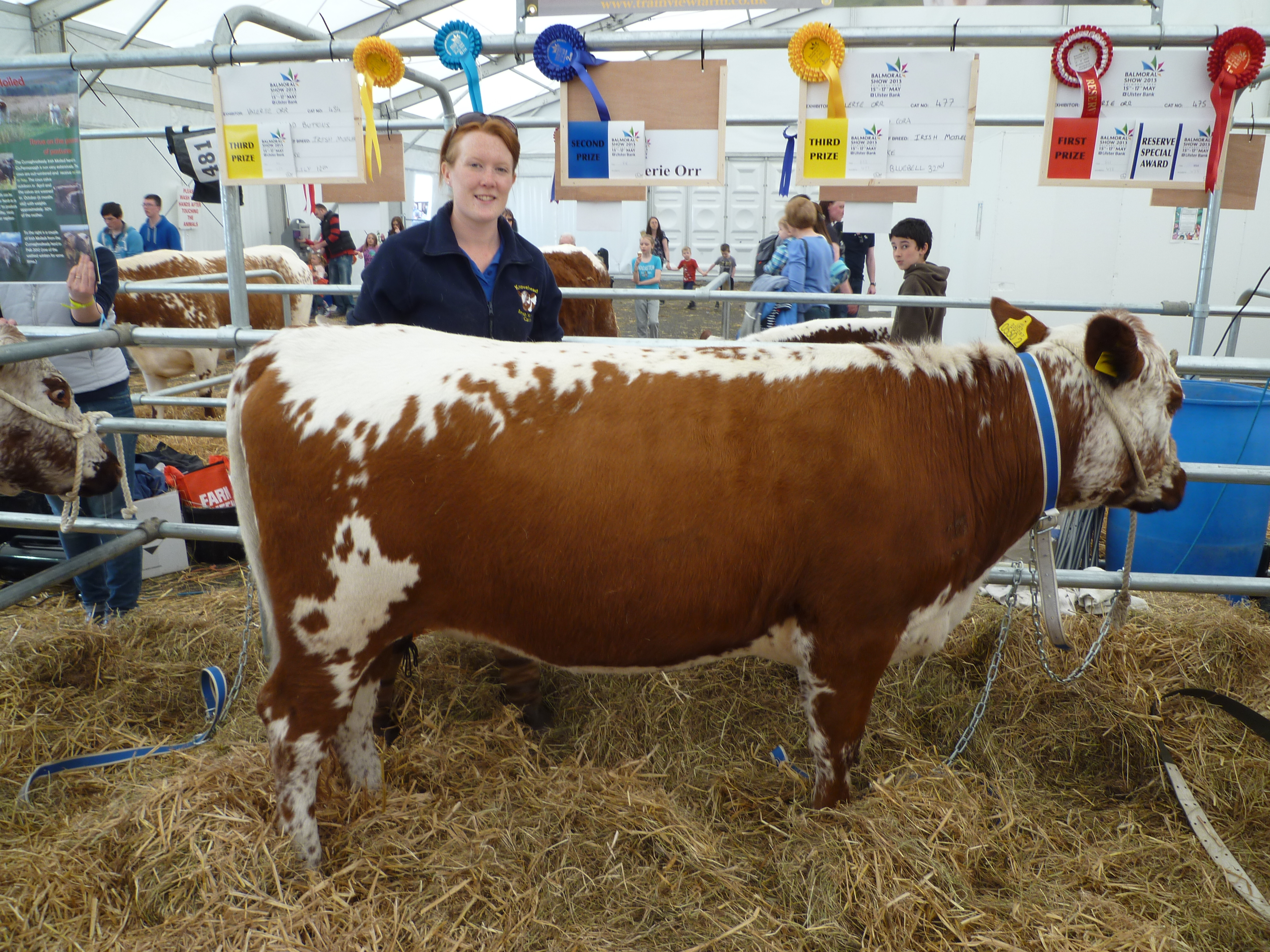
Valerie Orr, Ballygowan, with Irish Moiled breed

Valerie Orr, Ballygowan, with Irish Moiled breed

The farming community voted with their feet and gave their backing to the decision made last year by the Royal Ulster Agricultural Society to move from their long-standing home at the King’s Hall, Balmoral, in South Belfast and to settle down instead at a 65 acre site at the Maze. Several huge marquees helped to make the complex into a tented village. One of them housed all the cattle. Among the prizewinners in the Irish Moiled category which made a return to the show this year after a gap of 70 years was Valerie Orr from Trainview Farm in Ballygowan. Valerie featured at the launch of the show in March.

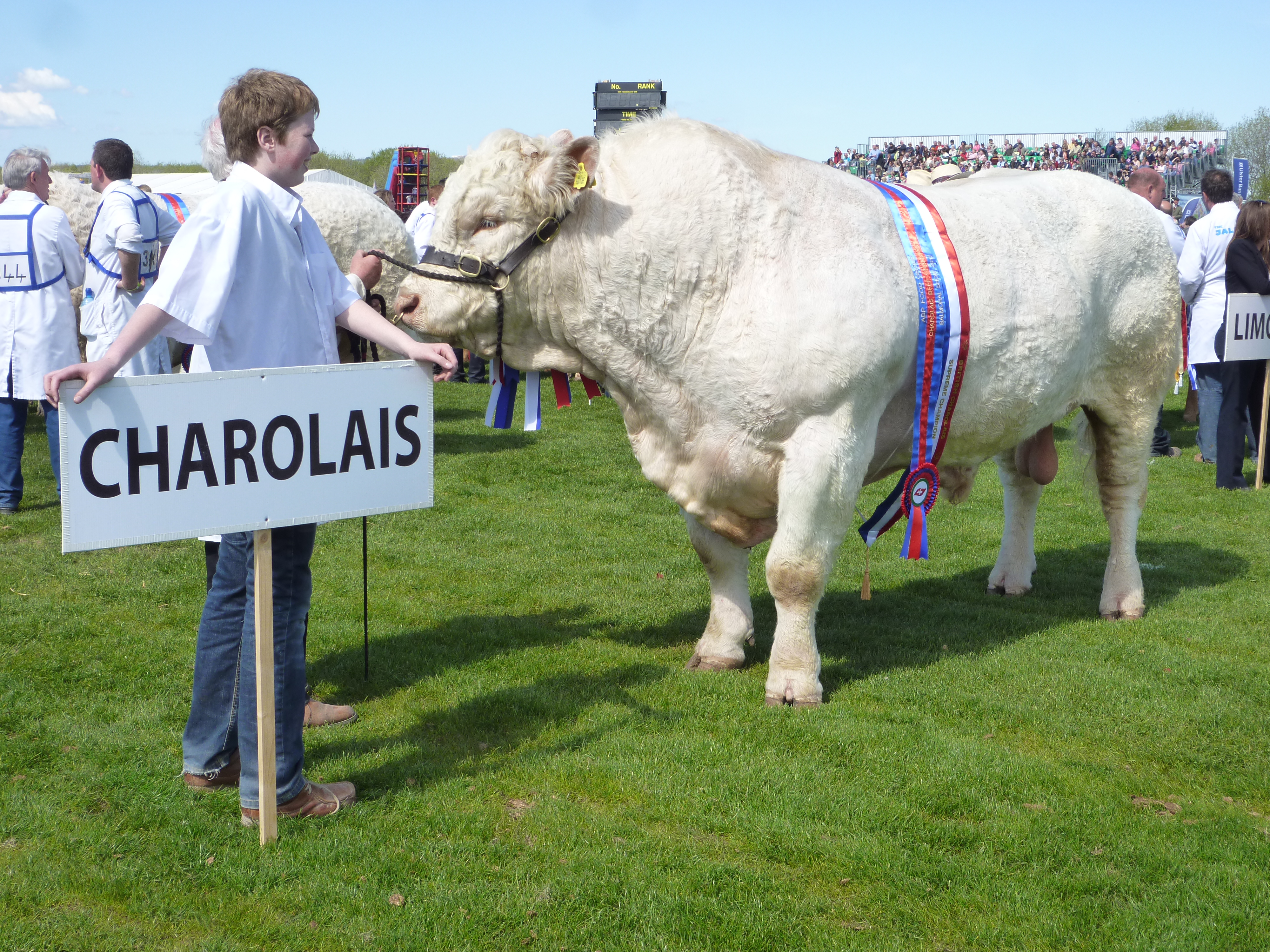
The grand parade in the main arena this afternoon with representatives of all the classes (except dairy cattle, which had to be milked!) was very impressive, with all the prize winners showing off their rosettes and cups.

Charolais on parade

Charolais on parade

There had been many problems with traffic arriving at the show on Wednesday. Although things had improved considerably by the final day, some motorists still reported difficulties on the approach roads, caused in one case by a filter traffic light for a right hand lane allowing only six cars through at a time. Although the police were nearby, they remained in a car apparently and did not attempt to override the lights in order to improve the traffic flow. My experience was that on the second day, I found no problem arriving by car in the late afternoon, but it took over twenty minutes to get out of the car park at 7pm. A slip road to the M1 motorway which runs alongside the perimeter of the site is urgently needed.

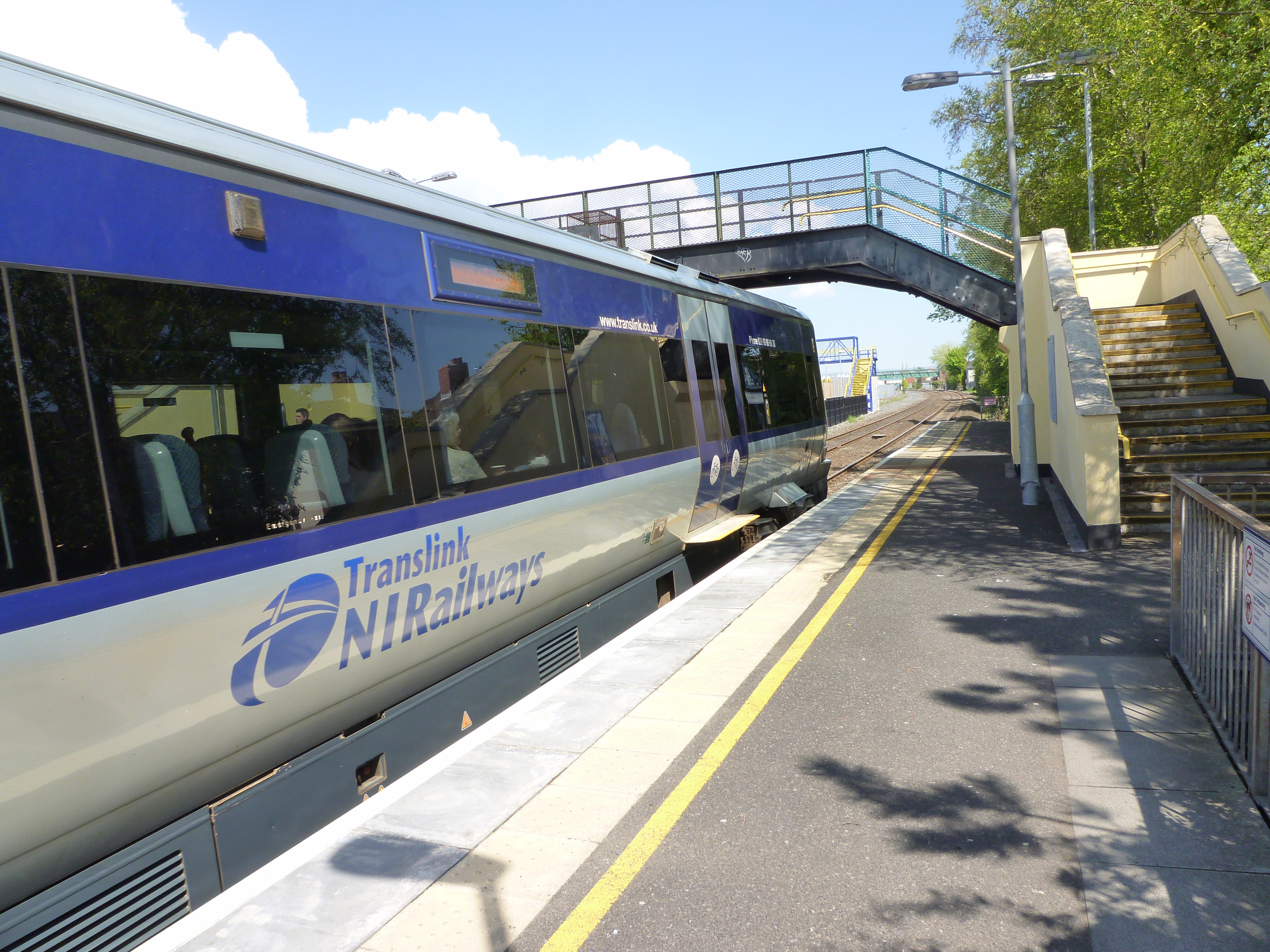
Adelaide Station (South Belfast)

Adelaide Station (South Belfast)

So for the other two days I let the train (and bus) take the strain. I travelled by train from Adelaide station past Balmoral and the King’s Hall to Lisburn where there was a shuttle bus to the Maze. Translink staff told me between 40 and 48 single and double-deck buses were used for the service. Leaving the show site at 5:10pm at peak time, I was back at Balmoral (station) in one hour, with hardly any delay at Lisburn station, although a signalling failure had caused delays on the line. So take a bow, Translink staff, for providing excellent public service and showing good co-operation between bus and train divisions. Perhaps next time something can be done to designate a route for buses only and to give them their own entry/exit point, in order to improve journey times.

Roll up, Roll up for the Racing Pigs!

Roll up, Roll up for the Racing Pigs!

BALMORAL SHOW AT MAZE

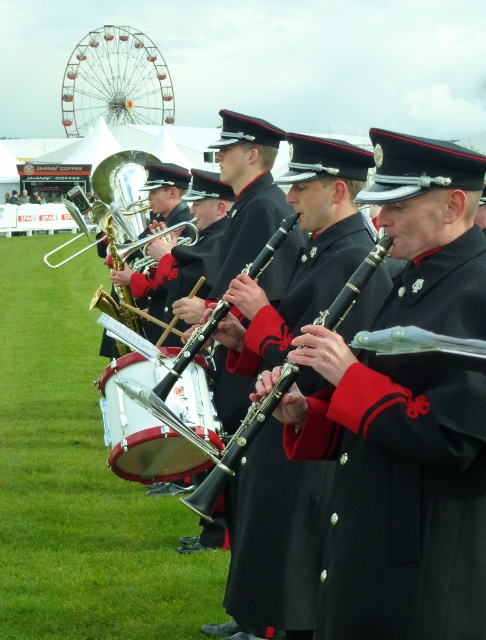
Army No.1 Band at Balmoral Park

Army No.1 Band at Balmoral Park

The Maze was once the site of Northern Ireland’s high security jail, spread out over 360 acres. Today saw a new chapter in its history as thousands made their way to Balmoral Park, the new venue for the annual Royal Ulster Agricultural Society show. Helping to entertain the crowds in the main arena was the Army No.1 Band from Cathal Brugha Barracks in Dublin, under the direction on this occasion of Captain Fergal Carroll.

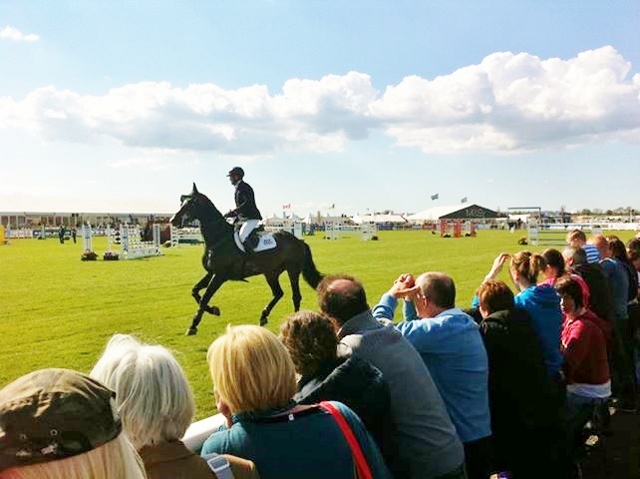
Who would have thought that 13 years after the closure of the prison in 2000 and the release under the Good Friday agreement of the remaining loyalist and republican paramilitaries who had served sentences, that an Irish Army presence would be welcomed there. In addition, I noticed the tricolour flying alongside the Union flag and the flag of Canada in the same arena, where the showjumping was held.

Capt. Geoff Curran & Army No.1 Band

Capt. Geoff Curran & Army No.1 Band

As the band was performing for the second time, the riders were coming out to inspect the course for their competition. Among them was Captain Geoff Curran from the Army Equitation School at McKee Barracks in Dublin, who met Queen Elizabeth during her visit to the National Stud in County Kildare in May 2011.

In the past, the cages on this site were the H-blocks, housing prisoners. Now the only cages and huts are those holding animals and livestock. There is just the hospital wing and part of the H-blocks remaining.

Looking towards remains of prison site with wall and watchtowers © Michael Fisher

Looking towards remains of prison site with wall and watchtowers © Michael Fisher

It has taken many months of planning to get the Balmoral Show to its new site at The Maze. I passed by recently on the M1 motorway and saw in the near distance the extensive tented village and the hard standing for the car park area. Today I was able to enjoy a visit to the complex. Translink had put on special transport arrangements for public transport, including a shuttle bus to and from Balmoral Park from Lisburn station.

Translink shuttle bus service from Lisburn

Translink shuttle bus service from Lisburn

The journey to the show via Hillsborough and Culcavy took half an hour but the return at 6:30pm took half the time. My sister-in-law travelling from Monaghan and others heading from West of the Bann trying to reach the show from the M1 motorway ran into great difficulty. She took four hours, having left at 9am. The former Ulster Unionist leader Tom Ellliott MLA had a similar story. He left Fermanagh at 8:30am along with two children in the car and did not reach the showgrounds until 1:30pm! His successor Mike Nesbitt though had no such problems and told me he had taken less than half an hour to reach Balmoral Park.

Ulster Unionist Leader Mike Nesbitt MLA

Ulster Unionist Leader Mike Nesbitt MLA

 For more background on the move to the Maze site and the programme of events see my post in March.

WILLIAM CARLETON SUMMER SCHOOL

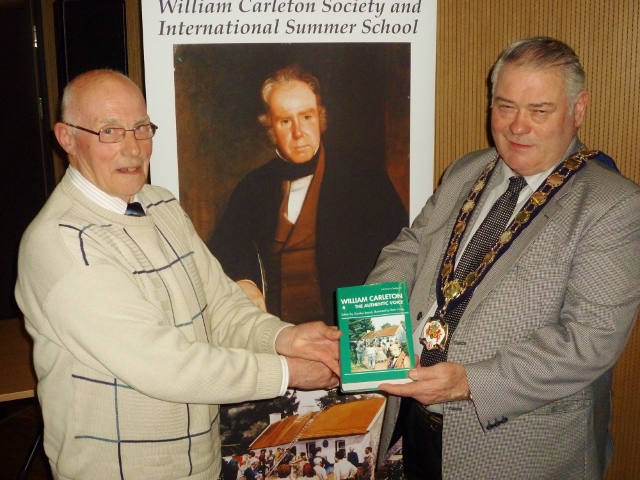
Pat Boyle presents a copy of The Authentic Voice to Mayor of Dungannon Cllr Phelim Gildernew

William Carleton Society Vice-Chair Pat Boyle presents “The Authentic Voice” to Mayor of Dungannon Cllr Phelim Gildernew

Details have been announced of the 22nd annual William Carleton summer school. The programme for 2013 was  launched at the Hill of the O’Neill Centre/Ranfurly House in Dungannon in the presence of the Mayor of Dungannon and South Tyrone Borough Council, Cllr Phelim Gildernew. He was presented with a copy of “The Authentic Voice”, edited by Gordon Brand and illustrated by Sam Craig, which contains articles about Carleton based on lectures to the summer school in previous years.

William Carleton

William Carleton

The summer school opens at 11:30am on Monday 5th August at Corick House Hotel in Clogher. The starting time has been put back to enable more people to attend who might have to travel, especially our friends and supporters in the Dublin area. Our Honorary Director Professor Owen Dudley Edwards will speak about Carleton, Caesar Otway and Irish literature. Otway was a Protestant clergyman in Dublin whose influence on the writer came at an important time in his career. Professor Thomas O’Grady from Boston will speak about “The Geography of the Imagination: Carleton’s story “The Donagh”. The final talk of the day will feature the broadcaster and poet Tom McGurk, who comes from Brackagh in County Tyrone, in conversation with one of his contemporaries at school, Aidan Fee, about Northern Ireland, past and present.

On Tuesday 6th August there will be a discussion about language in the 19thC Clogher Valley. Dr Ciaran Mac Murchaidh, St Patrick’s Drumcondra will talk about Irish and Ulster Scots will be the topic for  Dr Ian Adamson. There will be a session on literature with Ciaran Collins “The Gamal”, Tony Bailie, and Patricia Craig “Twisted Root”. Josephine Treanor will talk about her relative, Anne Duffy, the Miller’s Daughter from Augher, one of Carleton’s first loves.

Wednesday 7th August is devoted to dealing with the past and will feature Professor Jon Tonge (Liverpool), Mary O’Rourke on how different political strands can be accommodated, poet Siobhan Campbell and Mary Kenny talking about Edward Carson, unionist, Dubliner and Irishman. Actor Patrick Scully will present his one-man show on Carson, which he performed recently at the Lyric Theatre studio in Belfast.

Patrick Scully as Edward Carson

Patrick Scully as Edward Carson

The final day, Thursday 8th August, Gordon Brand and summer school deputy director Frank McHugh will act as guides for the annual coach tour. This year it will go to the neighbouring county of Fermanagh. It will focus on the work of Shan Bullock, who wrote “The Loughsiders”, based in the area around the Crom estate. The tour will depart from Corick House in Clogher at 10:30am and advance booking is necessary at wcarletonsociety@gmail.com.

Charles Gavan Duffy

Charles Gavan Duffy

This year there will be a number of events in Monaghan and Emyvale (which has a Carleton connection) preceding the summer school. On Friday 2nd August there will be a one-day conference at the Four Seasons Hotel, CARLETON, KAVANAGH and GAVAN DUFFY. Admission is free and the event is funded by the EU Peace III programme of Monaghan County Development Board.

Professor Thomas O’Grady from Boston will read some of his poems and talk about his research on the Monaghan poet, Patrick Kavanagh. Art Agnew from Inniskeen will read selected extracts from Kavanagh’s works, including The Green Fool. The afternoon is devoted to a study of Monaghan man Charles Gavan Duffy, a devotee of Carleton and one of the influential people who helped the writer to obtain a civil list pension in 1848. The speakers will be Brendan O Cathaoir from Bray and Aidan Walsh, a heritage consultant who was the first curator of Monaghan County Museum. Monaghan poet Mary O’Donnell, one of the William Carleton Society’s patrons, will read from some of her works. The programme will conclude with a talk on “The Shemus Cartoons” from the Freeman’s Journal by Felix M.Larkin from Dublin.

I am also pleased that the William Carleton Society will be hosting the launch of a book, “Memories Amidst the Drumlins: Cavan and Monaghan“, containing some of the poems and stories written about the area by the late Terence O’Gorman from Tydavnet and edited by his daughter, Patricia Cavanagh. Terence was a regular visitor to the summer school and many other similar events throughout Ireland.

On Saturday 3rd August, Grace Moloney of the Clogher Historical Society and Theresa Loftus (Monaghan Museum) will lead a walk through Monaghan town, starting at the Museum at Hill Street at 11am. This event is free. The following day, Sunday 4th August, there will be a ceremony to mark the Carleton plaque at the Blue Bridge near Emyvale. At 8pm in Emyvale Leisure Centre, the Carleton Players will perform a reading of the “Fair of Emyvale”, adapted by Liam Foley.   summerschoolad

Blue Bridge near Emyvale

Blue Bridge near Emyvale

FLAGS

Bratacha 2013 Festival

Bratacha 2013 Festival

No problems about flying flags here: it’s part of the Festival of Flags and Emblems, Bratacha 2013 in Dún Laoghaiare. The tricolour was carried along with the union flag and those of many other nations. Bratacha is the Irish word for flags. This afternoon there was a parade through the town featuring flags and emblems from different countries and groups. The Air Corps pipe band followed a colour party at the head of the parade, which featured people from several different nations. A very colourful event. Among the groups taking part were the local Fianna Fáil cumann and also representatives of Dún Laoghaire Lions Club.

THE FIGHTING IRISH

Myles Dungan

Myles Dungan

“The Fighting Irish” is the theme for a concert tonight featuring the music, songs and history of Irish wars and battles. The narrator is Myles Dungan, presenter of The History Show on RTÉ Radio 1. Music is by The Bonny Men and the venue at 8pm is the Pavilion Theatre at Dún Laoghaire. It’s part of the Festival of Flags and Emblems, Bratacha 2013. Bratacha is the Irish word for flags.

Tomorrow (Saturday) afternoon there will be a parade with bands featuring flags and emblems from different countries and groups at 3pm in Dún Laoghaire.

“NO IRISH NEED APPLY”

While finishing off my last post which featured London’s new buses, I tuned in to TG4 and watched a programme about the story of Irish emigrants in London. At one point I spotted the banner of the County Monaghan Association being carried at one of the Irish summer festivals. However the pictures did not last long enough for me to identify any of the people involved. My uncle the late Fr Reggie Smyth (St Patrick’s Kiltegan) was President of the Monaghan Association in London for many years and his friend the Bishop of Clogher Patrick Mulligan (succeeded by Bishop Joseph Duffy) used to travel over from Monaghan for their annual dinners.

Fr Reggie was based at Ilford and also at one stage in Slough. I was thinking about him earlier today when I was talking to a former colleague and neighbour, who mentioned that she had taken a relative for treatment recently to Mayo General Hospital in Castlebar. Fr Reggie died there in January 1991. Ordained in 1949, he served on the missions in Nigeria where he was education secretary in the Diocese of Calabar for many years, and later in Grenada. He had been chaplain at the Mother of the Church Convent in Newport, Co Mayo and also served at Cregg House in Sligo and the convent in Loughglynn, Co. Roscommon. But it was his work with the Irish community in England which I think gave him most satisfaction.

An tAthair Gearóid Ó Gríofa(TG4 picture)

An tAthair Gearóid Ó Gríofa (TG4 picture)

In the TG4 programme “An Taithí i Sasana”, a Galway priest An tAthair Gearóid Ó Gríofa reflected on his work as an emigrant chaplain with particular responsibility for emigrants in London from Gaeltacht areas in the 1980’s. The documentary, one of four in a (repeated) series “Séiplinigh na nImirceach” produced by Esras Films examined how today’s chaplains in London are working with the elderly and often lonely Irish emigrants, the same generation which the original chaplains were sent to help 50 years ago. In his current role as PP in the suburbs of Galway An tAthair Ó Gríofa also commented on the challenges of multicultural Ireland with examples of cooperation with local NGOs and foreign chaplains.

Using archive footage of chaplains and emigration in the 1960’s and the 1980’s the series revisited an Irish experience of faith and of life away from home. A few of the emigrants interviewed recalled seeing the signs “No Irish Need Apply” when they were seeking accommodation in London in the 1950s and 60s. Black people received similar treatment. Although they worked in areas such as the construction industry for many years, many of the Irish emigrants of that generation remained single and never returned home. Now there are groups such as the Innisfree Housing Association providing accommodation for them in 500 properties throughout London. A similar group is Irish Centre Housing (ICH) which runs a number of schemes including Conway House in Kilburn, which I wrote about in February.

Conway House, Kilburn

Conway House, Kilburn

As chaplains the priests sent from Ireland were there to provide pastoral care to the emigrants but more often found themselves much more deeply involved in the lives of the emigrants than they could possibly have imagined. For many emigrants the chaplain was seen as a first port of call, to sort accommodation, and employment and to deal with the difficulties many young Irish found themselves in in a strange land. In recent years, we have become very aware of our ‘Diaspora’ and their role in the development of today’s Ireland.

Just as historically we had a culture of emigration, today as a country we are learning to cope with immigration. People from other countries and cultures now emigrate to Ireland just as the Irish once emigrated across the world. Séiplinigh na nImirceach explores our national relationship with both sides of the migration experience. Examining the wealth of experience we have gained through Emigrant Chaplains, the series explored the contemporary parallels with the new immigrant communities in Ireland. One of the interviewees was Tríona Nic Giolla Choille, Director of the Galway Refugee Support Group. I studied German with her at UCD and her brother is the well-known broadcaster Cathal.

UNIONIST HISTORY & ROUTEMASTERS

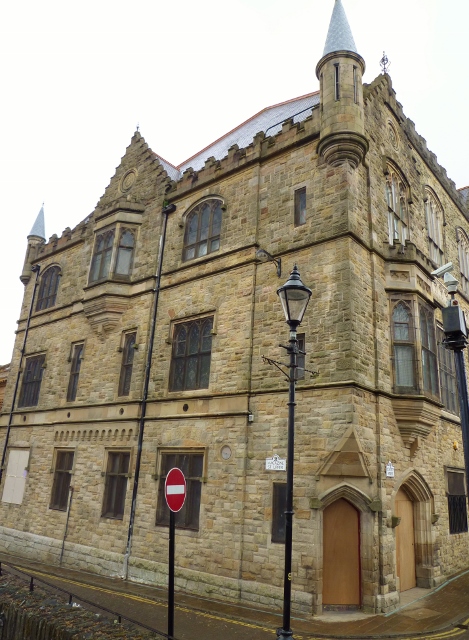
Apprentice Boys Hall, Londonderry

Apprentice Boys of Derry Hall

A day for studying unionist and Protestant history. First, another trip by train to Derry/Londonderry, the UK City of Culture. I reported in March on the re-opening of the railway line from Coleraine. This morning the train from Belfast was quite full, many people taking advantage of their 60+ (like me) or 65+ free travel passes, including the group of six other retired people I travelled with. On arrival at the Waterside the free shuttle bus was soon full to capacity, so we ended up walking in the direction of the former Ebrington Barracks site and then onto the Peace Bridge, which some were seeing for the first time.

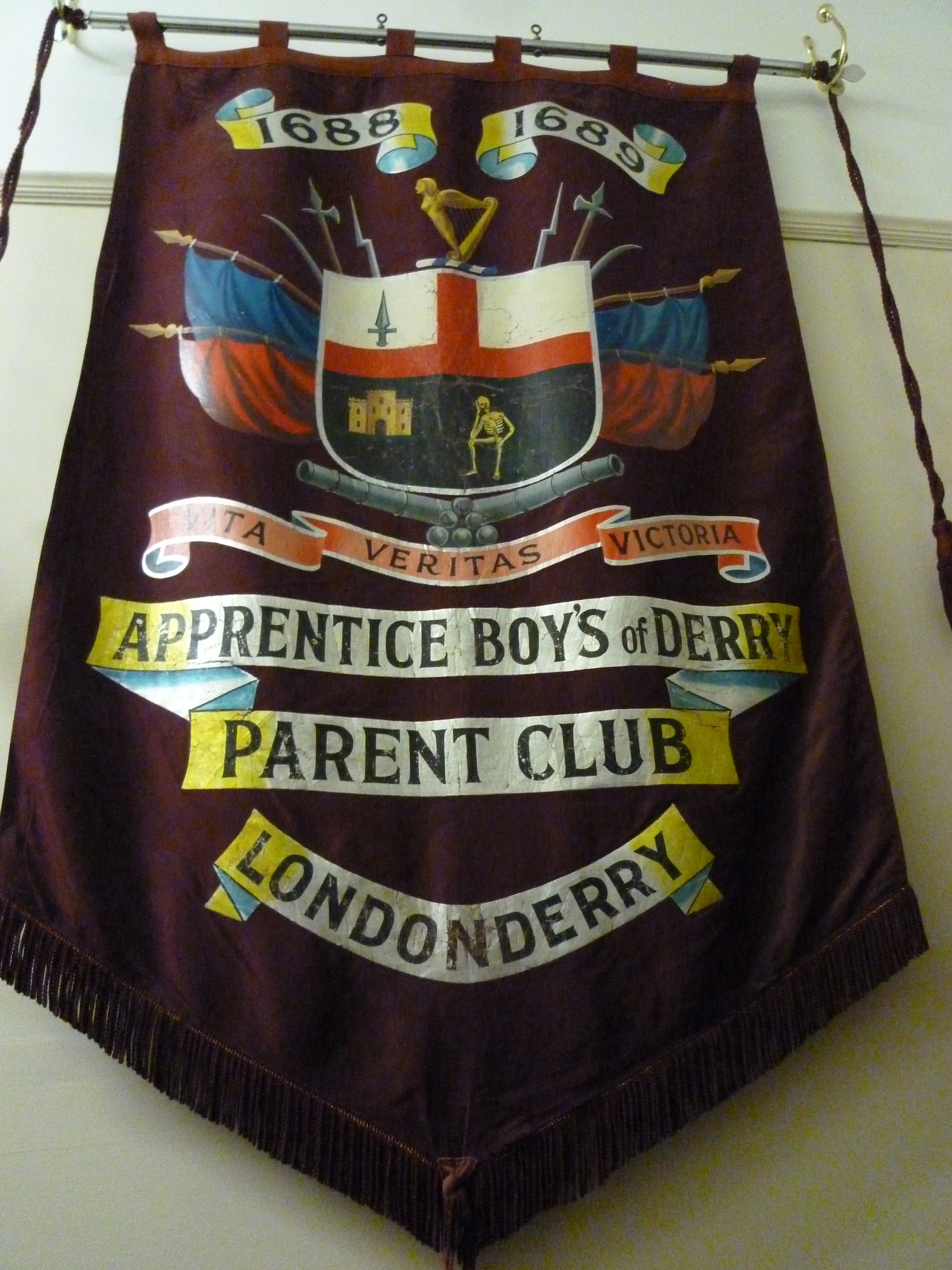
Apprentice Boys Banner

Apprentice Boys Banner

Stepping onto the City Walls at Magazine Gate beside the Guildhall, it was interesting to see that the iron fence security gates along this section had now been removed, a process that began a week ago. We walked as far as Society Street and our first stop was at the Apprentice Boys of Derry Hall, where we had arranged a tour of the premises. We were shown four short videos about the history of what was described as one of the largest historical and cultural groups in the UK and Ireland.

Four cannons found in basement of Apprentice Boys' Hall

Four cannons found in basement of Apprentice Boys’ Hall

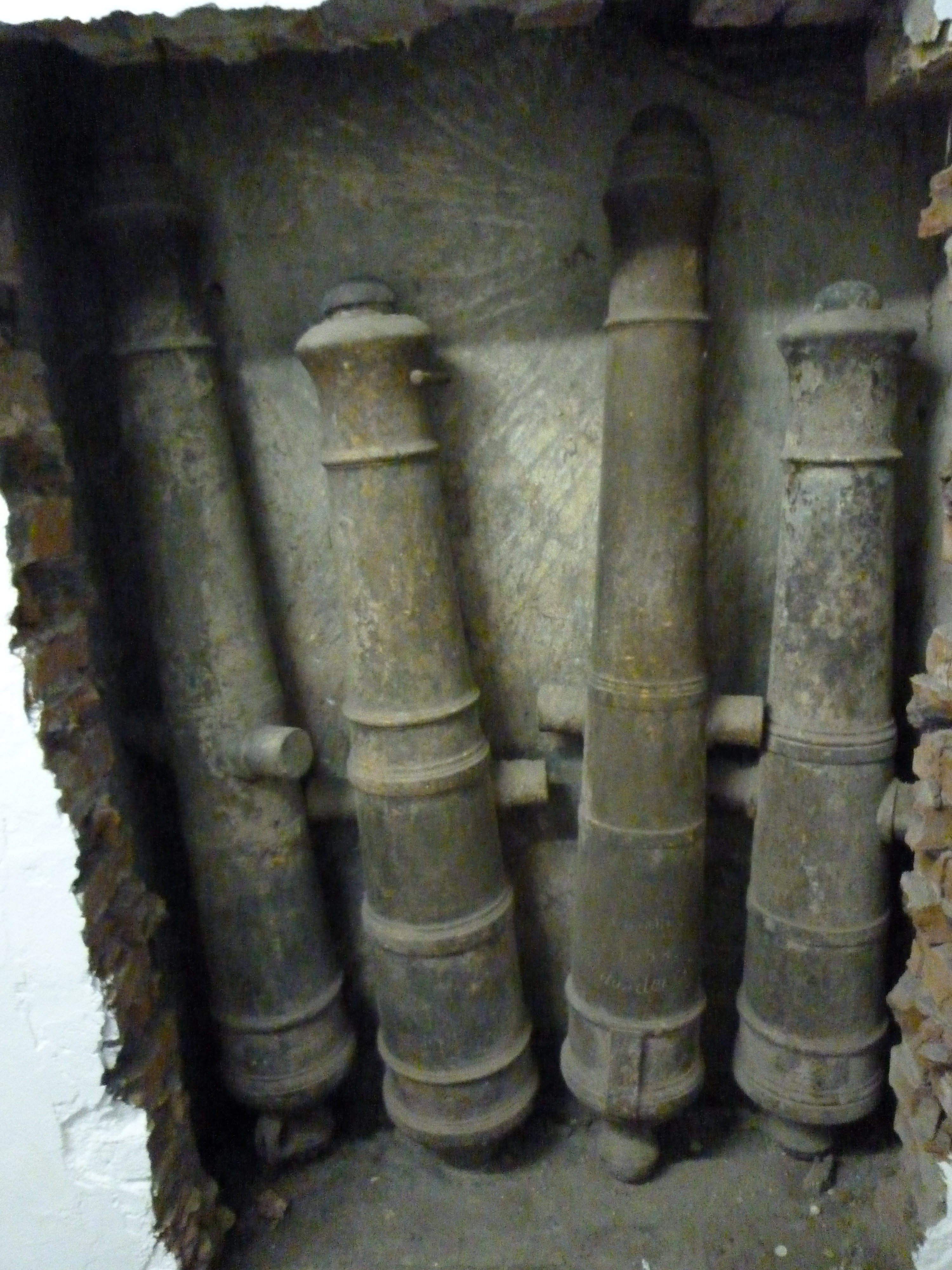
There are many artefacts inside the building. In the basement, during recent renovation work, four cannons were found concealed behind a wall. There is no date on them. Many items are directly related to the organisation, going back to the Siege of Derry in July 1689, when thirteen apprentice boys shut the gates of the city against the oncoming army of the Catholic King James II of England and Ireland. The History of the Siege of Londonderry 1689, written in 1951 by Cecil Milligan, lists the 13 as: Henry Campsie, William Crookshanks, Robert Sherrard, Daniel Sherrard, Alexander  Irwin, James Steward, Roberet Morison, Alexander Cunningham, Samuel Hunt, James Spike, John Coningham, William Cairnes and Samuel Harvy, all of whom are remembered in various ways by the organisation.
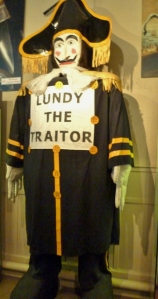
Governor Lundy Effigy

Governor Lundy Effigy

It is hoped to open an extension to the museum within the next few weeks. It was interesting to see preparations already underway for making the huge effigy of Robert Lundy (Governor of Derry), regarded as a “traitor” for wishing to negotiate with King James during the Siege. The figure, stuffed with straw, will be set alight during the annual December celebrations marking the anniversary of the closing of the gates.  In August 1969, the Apprentice Boys’ parade around the walls of Derry sparked off three days of intensive rioting in the city, known as the Battle of the Bogside. The disturbances are widely seen as the start of the troubles in the North. But there is little about this period in either the videos or the displays. Admission to the exhibition costs £3 and tours should be booked with the museum in advance.

Routemaster bus in (London)Derry

Routemaster bus (RML2659) in (London)Derry

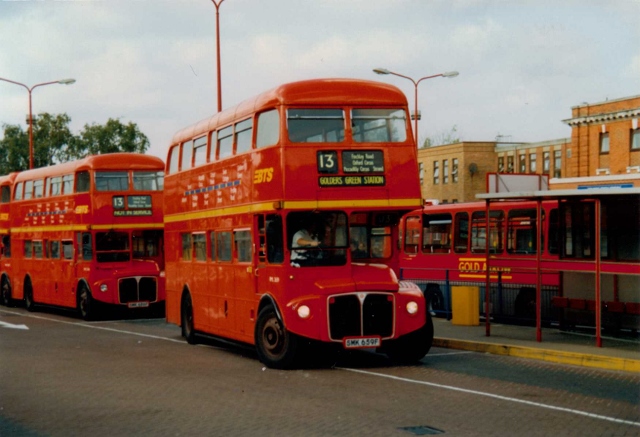
While walking through the centre of (London)Derry near the Diamond, the London link suddenly became very real when a familiar red Routemaster bus passed by on the tourist trail. The square windows in the middle of the upper and lower decks show that this was one of the elongated buses built by AEC at Park Royal, which could hold more passengers. They used the designation RML and based on the registration, the number for this bus (although it is no longer painted on the driver’s side) is 2659.
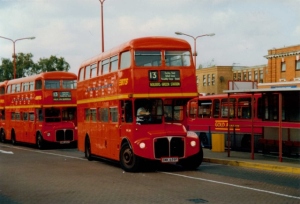
RML2659 at Golders Green: Photo ndl642m NonCommercial-NoDerivs 2.0 Generic Creative Commons Licence

RML2659 at Golders Green: Photo ndl642m NonCommercial-NoDerivs 2.0 Generic Creative Commons Licence

A quick check using a web search revealed that RML2659 registration number SMK659F was brought into service by London Transport in September 1967 and had seats for 72 passengers compared to 64 in the standard design. A further search shows it running on the number 38 route from Victoria to Leyton Green and based at Leyton garage in 1987. In 1995 the bus was operated by Borehamwood Transport on the number 13 route to Golders Green Station from Aldwych.

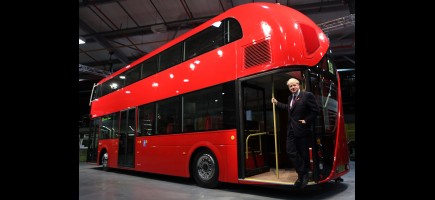
A friend has just reminded me that the new version of the Routemaster, the so-called “Boris bus” because Boris Johnson began the commissioning process as Mayor of London, has started rolling off the production line at the Wrightbus factory in Ballymena, a town we passed on the rail journey to Derry. A few vehicles each week are being delivered to London. The County Antrim company won a contract worth £180m to supply 600 of the vehicles to Transport for London over the next three years, which works out at £300,000 per bus. If you are driving along the M2 motorway you might spot some of the distinctively coloured vehicles being driven from Ballymena towards Belfast for the ferry to Britain.

Route 24, which Metroline operates between Pimlico and Hampstead Heath, will become the first to operate exclusively with new bus for London vehicles starting on Saturday 22nd June. It runs 24 hours a day from Hampstead Heath to Pimlico, via Camden, Trafalgar Square, Parliament Square and Victoria. During peak hours, 27 of the new buses (and five spares)will be in passenger service to carry the 28,000 people who use the route daily. After route 24, another route will be converted in the autumn.  In total around 90 new buses will be delivered to TfL in 2013.

New Routemasters leaving Wrightbus

New Routemasters leaving Wrightbus

The 600 buses represent a 200 per cent increase in the current hybrid bus fleet which is set to grow by a further 180 vehicles already on order and boosted by a commitment to deliver 600 conventional hybrids over the next three years.  When the final batch of new bus for London vehicles is delivered in 2016 more than 1,600 hybrid buses (representing around 20 per cent of London’s 8,500 strong bus fleet) will be in service on the streets of London.

Many components of the new bus, including engines, chassis, superstructure and seats, are manufactured in the UK.  The order of components from companies across the UK will also further stimulate the economy. The order represents the largest order of hybrid buses ever placed in Europe and will deliver significant environmental benefits, reducing CO2 emissions in the capital by capital by almost 20,000 tonnes a year. Transport for London has confirmed that independent emission testing of a prototype vehicle has shown that this is the cleanest and greenest bus of its type anywhere in the world.

Boris Johnson on a new Routemaster bus (Photo: London.gov.uk)

Boris Johnson on a new Routemaster bus (Photo: London.gov.uk)

The Mayor of London, Boris Johnson, said: “I am delighted that our first gleaming new buses have driven off the production line, through the gates of Wrightbus and are now London-bound.  These fabulous machines meld the very best in design, engineering and green engine technology.  I believe they will be hugely popular with passengers and they will be joined by hundreds more of their brethren in the coming years.”

Boris must be very interested in these buses because on Friday 10th May he returned to Northern Ireland to open a new plant in Antrim where the chassis of the vehicles is produced. Forty people are currently employed there but the BBC reports this is expected to increase to ninety. Boris also visited the main Wrightbus plant in Ballymena.

Update: On Saturday June 22nd, the first of the “Boris buses” entered service on route 24.

HEINRICH BӦLL

With his permission, I am re-publishing Patrick Comferford’s blog: Remembering Heinrich Böll on Achill Island

Heinrich Böll … commemorated on Achill Island this weekend
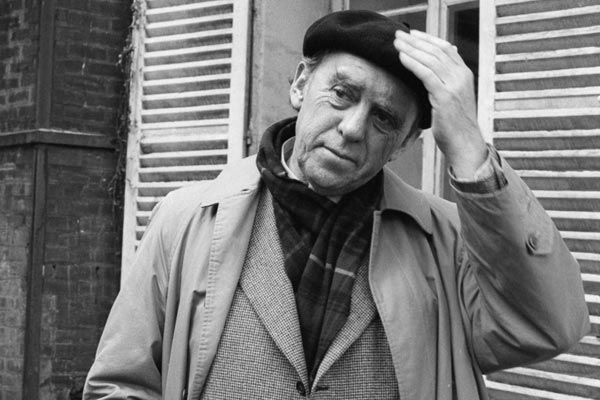
I am staying on Achill Island this weekend, taking part in the ninth annual Heinrich Böll Memorial Weekend which opened on Friday, 3rd May and which continues until Monday 6th May. Heinrich Theodor Böll (1917-1985) was one of Germany’s foremost writers in the aftermath of World War II and was awarded the Nobel Prize for Literature in 1972. He was a leader of the German writers who tried to come to grips with the memory of World War II, the Nazis, and the Holocaust and the guilt that came with them. Böll lived with his wife in Cologne and in the Eifel region, but they also spent time on Achill Island off the coast of Co Mayo during the 1950s and 1960s.

I am staying in Gray’s Guest, close to his cottage in Dugort, which is now used as a guesthouse for international and Irish artists. Many of his experiences in Achill are recalled in his book, Irisches Tagebuch (Irish Journal), which describes in loving detail his journey to Achill and his observations of island life. Heinrich Böll was born into a liberal Catholic and pacifist family in Cologne on 21 December 1917. He was conscripted into the German army during World War II and fought on the Russian and French fronts. He was wounded four times before being captured and held in a US prisoner-of-war camp. He began writing after World War II, drawing on his experiences as a soldier. His first novel was published in 1949 and he went on to publish over 20 books. He also translated Irish writers, including GB Shaw and JM Synge, into German.

Like Paul Henry and Graham Greebe, Böll may have read Synge before he first visited Achill. Böll first travelled to Achill Island in the early 1950s, travelling by train from Dublin to Westport with his family. The details of this visit, along with his observations of Irish ways and customs – from tea drinking to priests wearing safety pins to the popularity of ice cream – are recorded with humorous detail in his Irish Journal.

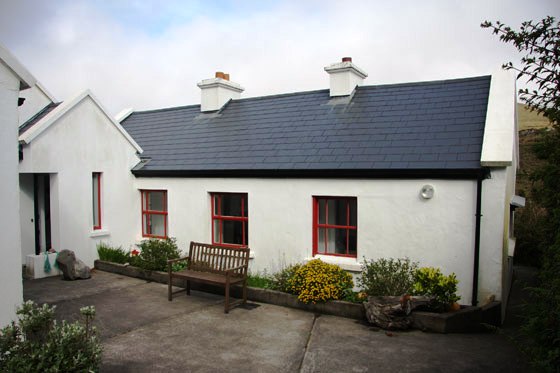
Heinrich Böll’s cottahe near Dugort on Achill Island
Life on Achill in the 1950s gave him plenty of material to indulge his penchant for the absurd and the incongruous, not least the casual relationship with time. His first book was called The Train Was On Time, and that first train from Dublin arrived in Westport right on time. Böll was soon introduced to the Irish saying: “When God made time he made plenty of it.” Achill Island, with its “classless society” and its casual attitude to time, held an immense appeal for him.

Recounting the time he went to a movie in Keel, Böll noted that regardless of the advertised start time the movie could only begin when all the priests – “the local ones as well as the ones on holiday” – were assembled in full strength. In the mid-1950s, Böll wrote in his Irish Journal: “Of the eighty children at Mass on Sundays, only forty-five will still be living here in forty years; but these forty-five will have so many children that eighty children will again be kneeling in church.”

Sixty years later I wonder if 80 people will be kneeling at Mass in the same church in Achill tomorrow morning. Heinrich Böll and his family continued to travel to Achill during the 1950s and 1960s, living in a cottage in Dugort, close to Saint Thomas’s Church. Heinrich Böll died on 16 July 1985. Thanks to his family, the Böll Stiftung in Cologne, and Mayo County Council, his cottage is now an artists’ residence, providing a short-term retreat for writers, poets and artists.

MAY DAY MARCH

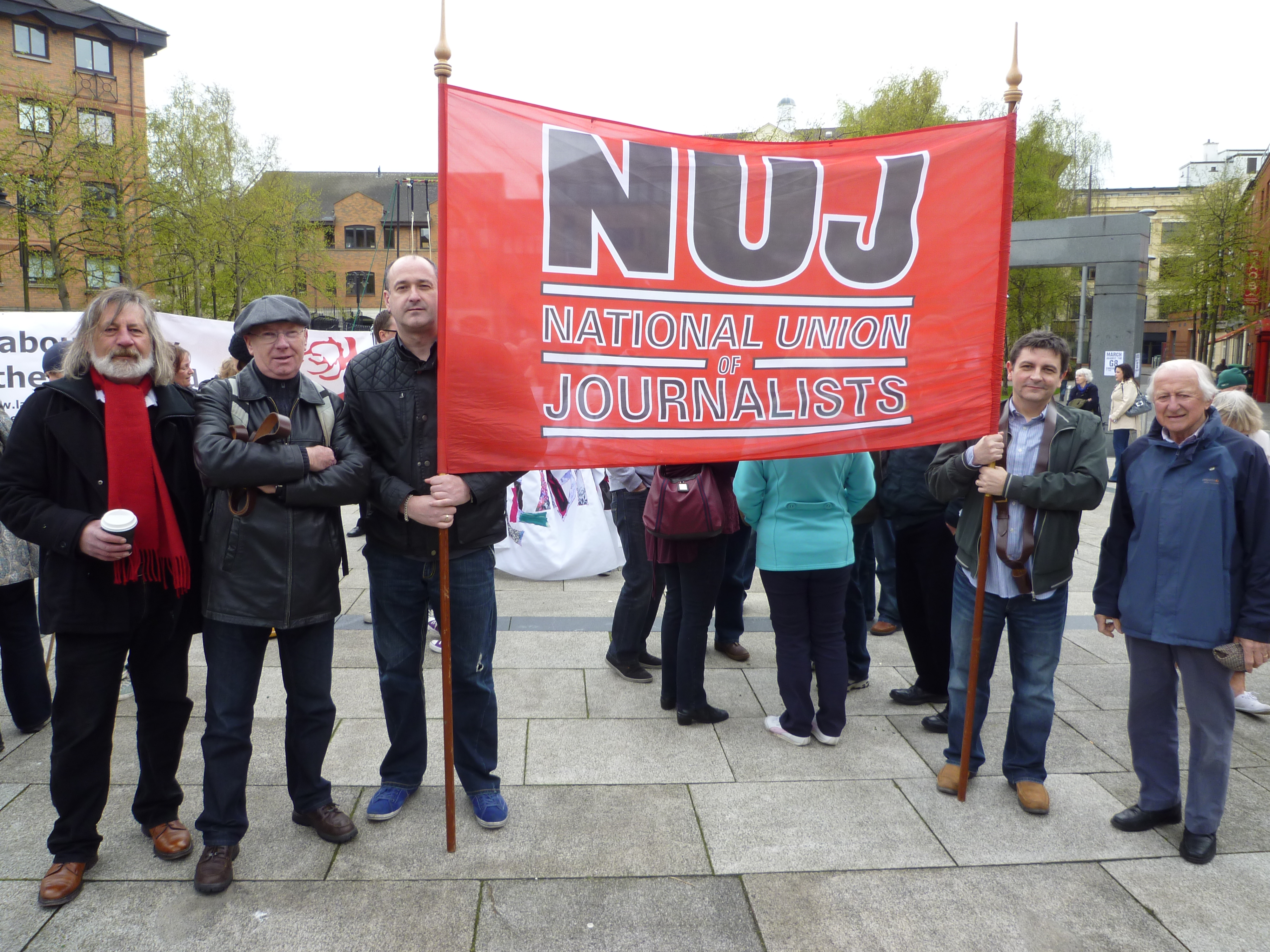
NUJ Members at May Day March

NUJ Members at May Day March

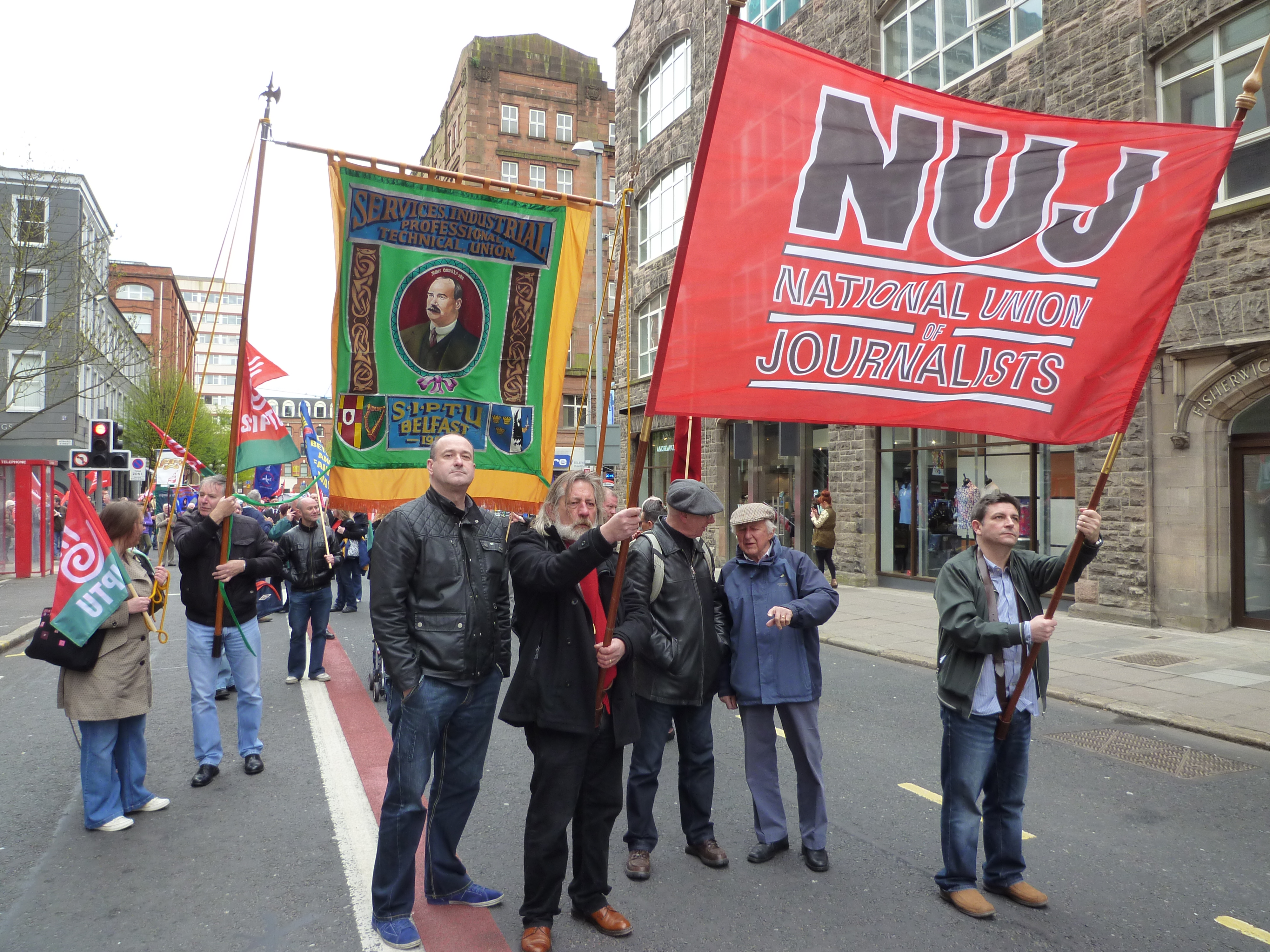
The annual ICTU May Day rally and parade was held in Belfast on Saturday 4th May. A number of members gathered beside the NUJ banner at Writers’ Square near St Anne’s Cathedral at 12 noon for speeches followed by a march through the city centre accompanied by brass, pipe and samba bands. The march took a slightly different route and finished back at Writers’ Square. It was one of a series of events organised by Congress on the occasion of the centenary of the 1913 Dublin lockout.

May Day Rally, Belfast

May Day Rally, Belfast

The May Day march is among the biggest in the UK and Ireland, and featured speeches from leading union activists. With sponsorship from the European Union Regional Development Fund, Belfast City Council and the Community Relations Council, are presenting an extended festival programme with events for everyone, including walking tours, exhibition launches, lectures and the May Day and Diversity Festival.

NUJ & SIPTU

NUJ & SIPTU

Amongst the numerous events taking place will be the collaborative exhibition World of Work (WOW) at the Golden Thread Gallery, to celebrate the essence of May Day and showcase the often hidden value of trade union learning initiatives. The gallery will also host the Through the Lens Photographic Exhibition. Over the last six months groups of trade union members and activists have worked to interpret ‘Diversity’ through digital photography. They have come up with images of diversity in all its forms.

There was a good turnout from the main unions including Unison, Unite, NIPSA and the GMB.

NIPSA contingent

NIPSA contingent

MAY DAY PARADE

maydayThe annual ICTU May Day rally and parade is taking place in Belfast on Saturday 4th May. Gather beside the NUJ banner at Writers’ Square near St Anne’s Cathedral at 12 noon for speeches followed by a march through the city centre accompanied by brass, pipe and samba bands. The march will finish back at Writers’ Square where food and entertainment will be provided. Help celebrate the wins and achievements of the trade union movement over the years and show that we are proud to be trade unionists. It’s one of a series of events organised by Congress on the occasion of the centenary of the 1913 Dublin lockout.

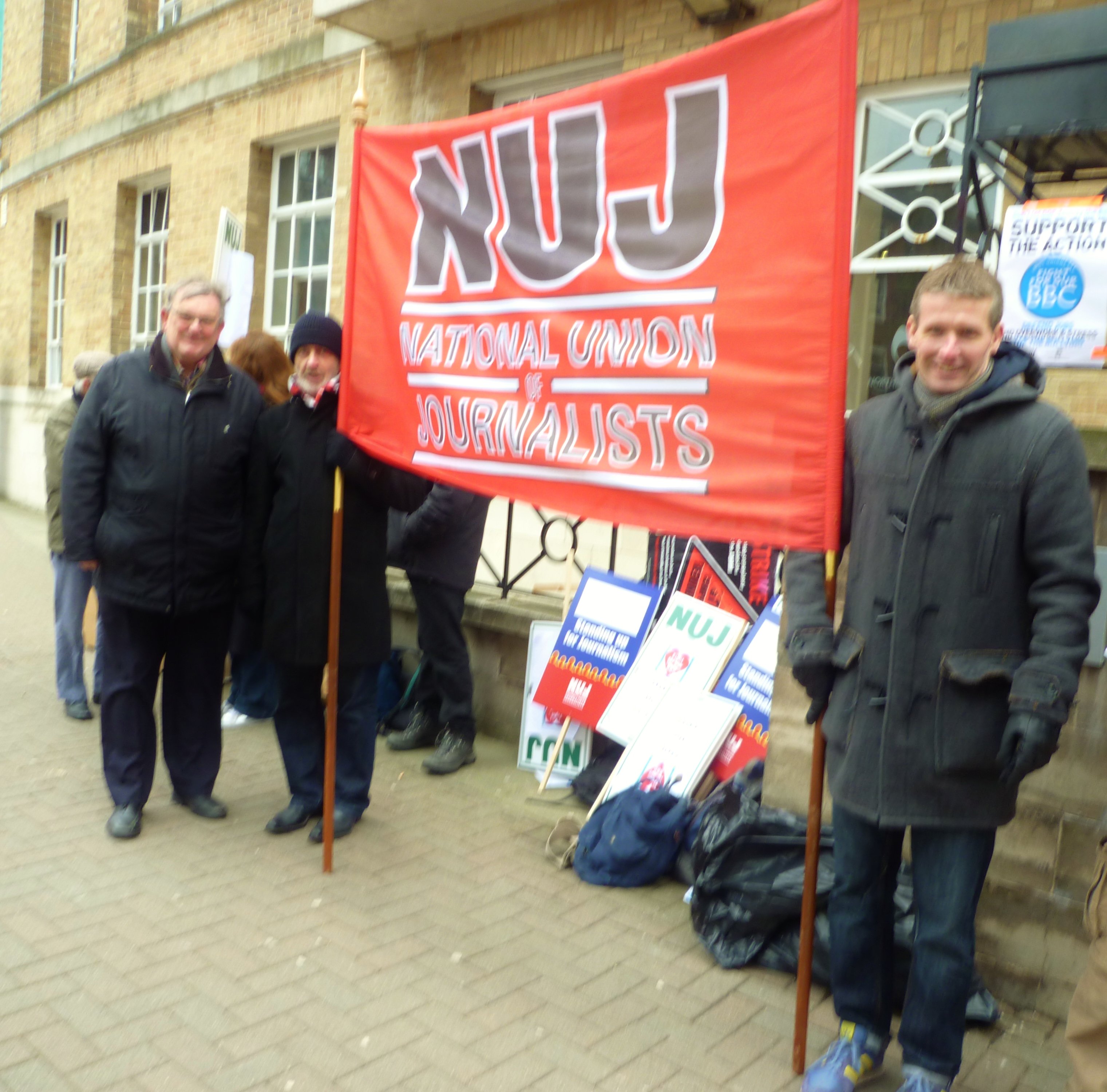
BBC Strike, March 2013

BBC Strike, March 2013

The May Day march is among the biggest in the UK and Ireland, and will feature speeches from leading union activists. With sponsorship from the European Union Regional Development Fund, Belfast City Council and the Community Relations Council, are presenting an extended festival programme with events for everyone, including walking tours, exhibition launches, lectures and the May Day and Diversity Festival. Amongst the numerous events taking place will be the collaborative exhibition World of Work (WOW) at the Golden Thread Gallery, to celebrate the essence of May Day and showcase the often hidden value of trade union learning initiatives. The gallery will also host the Through the Lens Photographic Exhibition. Over the last six months groups of trade union members and activists have worked to interpret ‘Diversity’ through digital photography. They have come up with images of diversity in all its forms. The opening night will include a DJ set from Love Music Hate Racism and a performance piece from Scream Blue Murmur.