PIPERS’ MEMORIAL

Piper’s Memorial at Longueval

A Scottish soldier playing the bagpipes is depicted as stepping forward over the parapet of a trench to pipe forward the troops for an array on German lines. The Pipers’ Memorial was unveiled in July 2002 in the centre of the village of Longueval, not far from Ginchy and Guillemont.

Pipers’ Memorial at Longueval

The statue itself by sculptor Andrew de Comyn received some criticism at the time it was unveiled because it is composed of a bright white alabaster stone about 3m in height. However when the sun is shining on it, as it was on the day of our visit when temperatures reached a record high of over 42C, this made it more spectacular. In contrast to the white figure of the soldier, the bagpipes are jet black in colour.

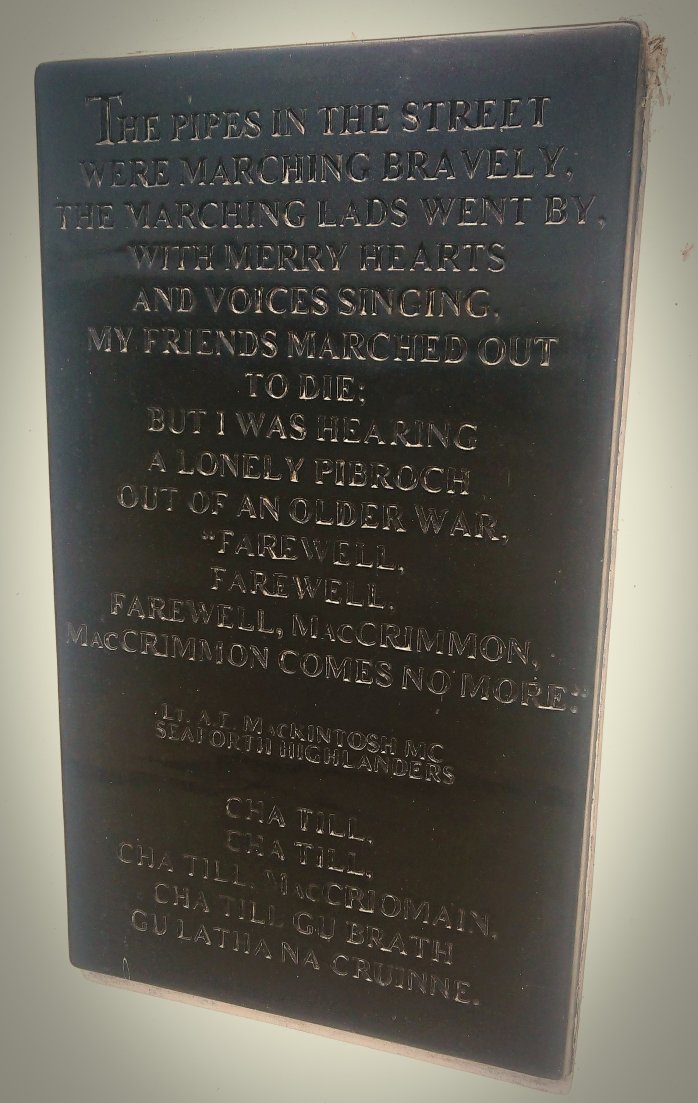
Inscription on Piper’s Memorial

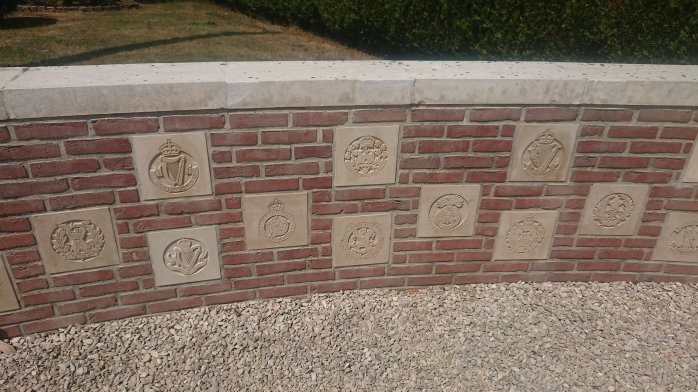
Crests of various regiments that had pipers

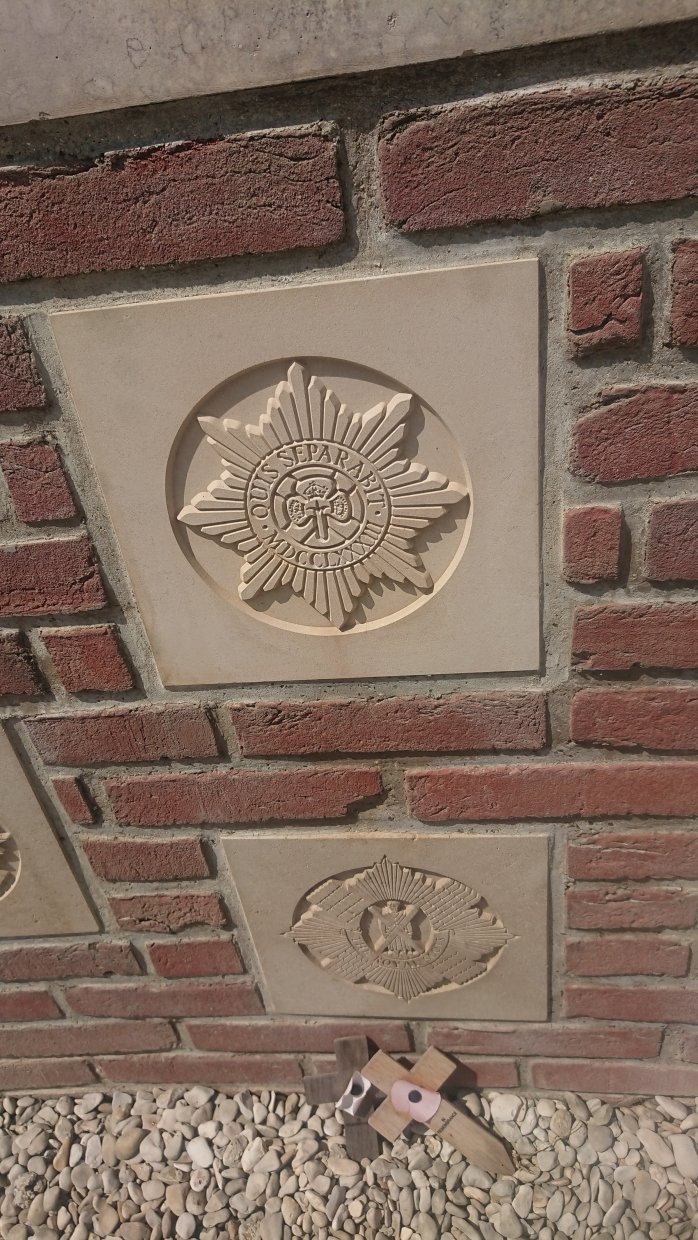
The crests of various Scottish and Irish regiments that had pipers are incorporated in a wall beside the statue. They include the Irish Guards and the Royal Irish Regiment.

Crest of the Irish Guards

Crest of the Royal Irish Regiment

Longueval

Our visit to the memorial was brief and unfortunately we missed the group from Campbell College Belfast CCF Pipe Band who stopped off there just before us. Pipe Sergeant Matthew played a lament. (Reproduced by kind permission of Campbell College CCF Pipe Band).

Pipe Sergeant Matthew of Campbell College Pipe Band at Longueval

LIVERPOOL PALS

dsc_2634

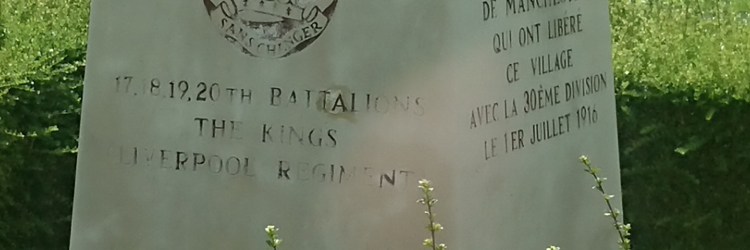
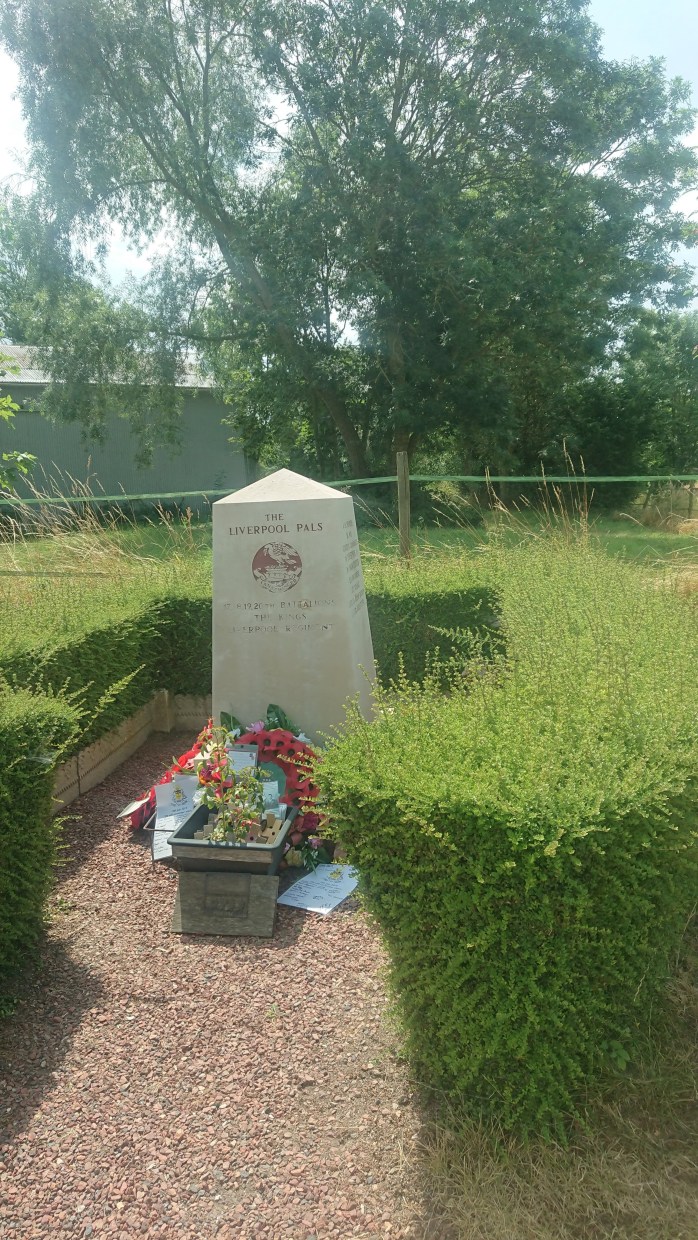
Liverpool Pals Memorial

The Liverpool Pals were battalions of Pals who joined the British Army togerher and formed up during the First World War as part of the King’s (Liverpool) Regiment. Along with the Manchester Pals, they are commemorated at a small memorial at Montauban in France. They captured the village on 1st July 1916, the first day of the Battle of the Somme.

Liverpool Pals Memorial

The Liverpool Pals consisted of:

    • 17th (Service) Battalion – 1st City, formed at Liverpool by Lord Derby on 29th August 1914;
    • 18th (Service) Battalion – 2nd City, formed at Liverpool, 29th August 1914 by Lord Derby;
    • 19th (Service) Battalion – 3rd City, formed at Liverpool, 29th August 1914 by Lord Derby;
    • 20th (Service) Battalion – 4th City, formed at Liverpool, 16th October 1914 by Lord Derby;
    • 21st (Reserve) Battalion – formed at Knowsley Park, August 1915 from depot companies of 17th and 18th Battalions;
    • 22nd (Reserve) Battalion – formed at Knowsley Park, August 1915 from depot companies of 19th and 20th Battalions.                        Further information on the Liverpool Pals can be found on this website:          http://thebignote.com/2016/07/03/a-brief-stop-in-montauban-the-liverpool-manchester-pals-memorial/

      dsc_26724510939223979732999.jpg

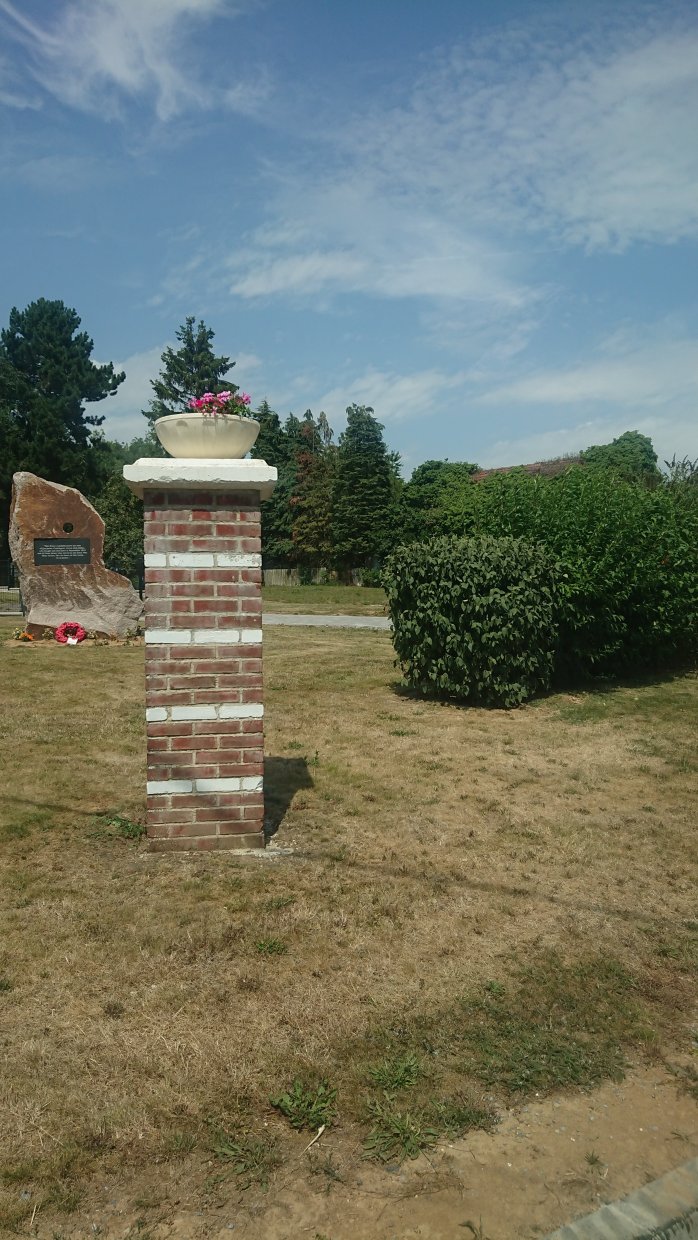
      Jersey Pals Memorial near Guillemont

Ian Ronayne’s story of the 326 volunteers known as the Jersey Pals can be found here.

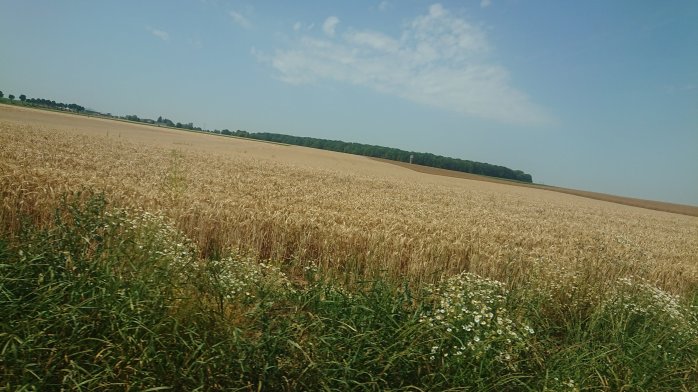
  • Countryside around Ginchy

    “The Pals battalions began in a communal spirit of patriotism and camaraderie. They left behind communities saturated with loss.” See Andrew Knighton’s article in War History Online.

    dsc_2671

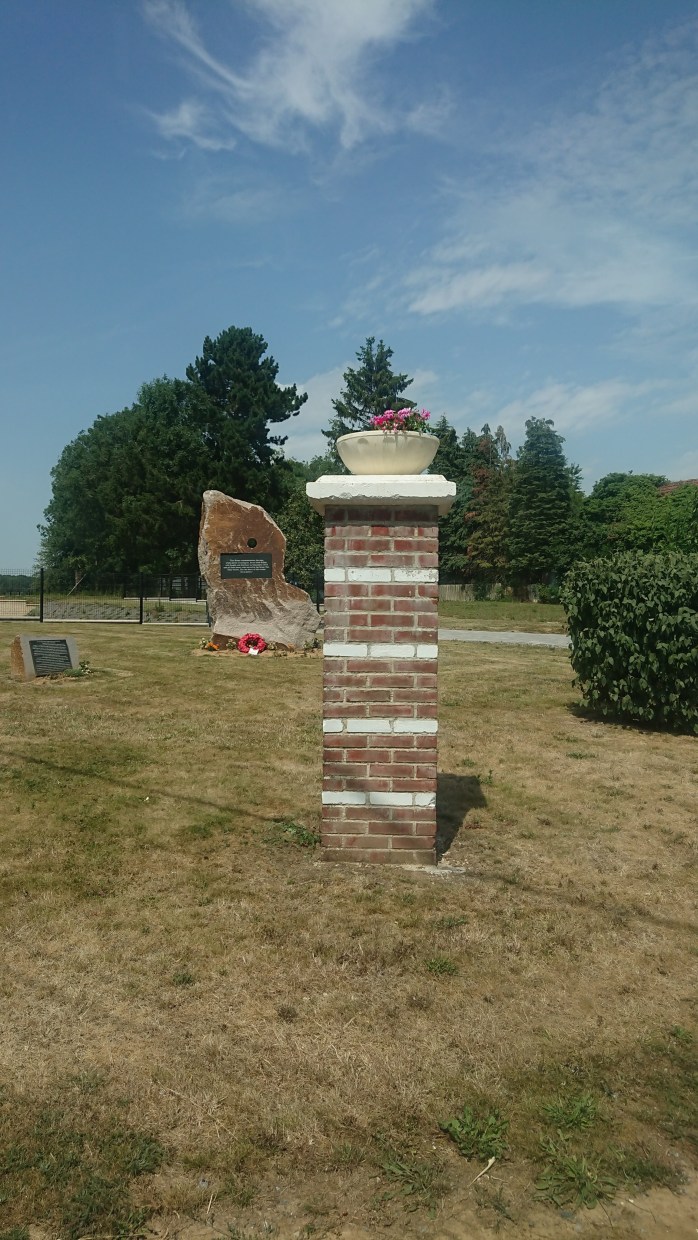
    Jersey Pals Memorial near Guillemont

GUILLEMONT

16th Irish Division Memorial outside Guillemont Church

Memorial to 16th Irish Division at base of Celtic Cross

Interior of Guillemont Church with shamrock symbols

Plaque commemorating 16th Irish Division

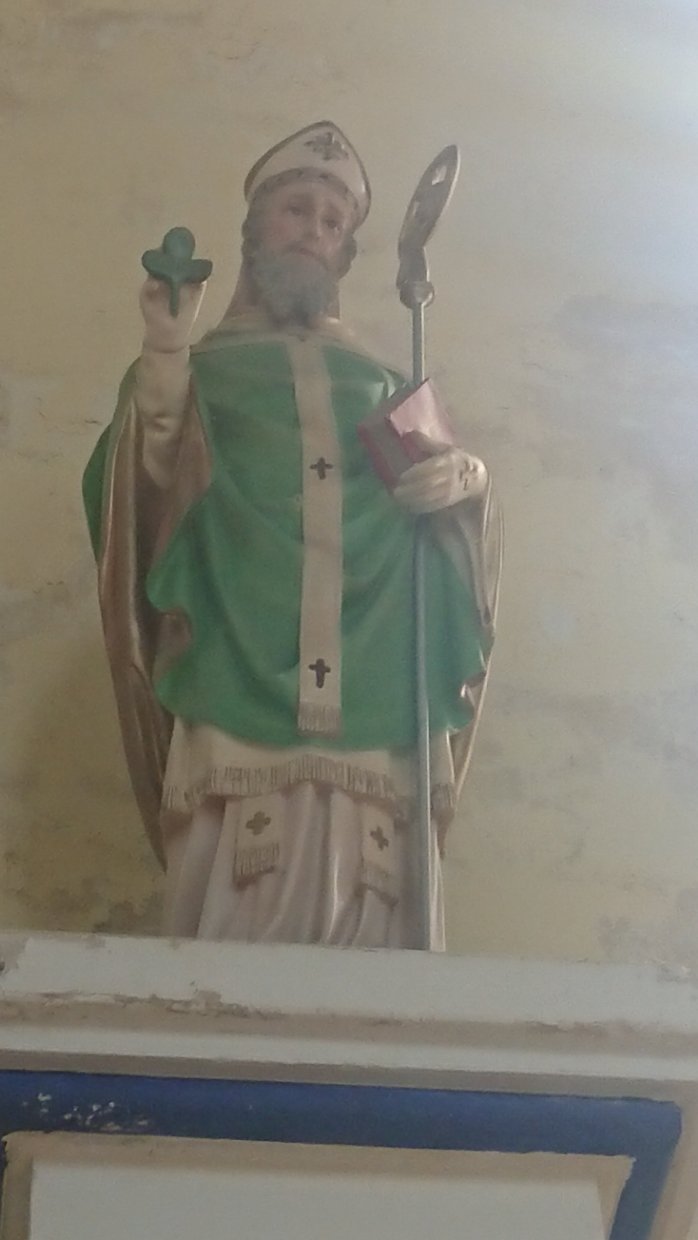
Statue of St Patrick in Guillemont Church

Plaques placed on the wall by visiting groups

Royal Dublin Fusiliers plaque

LT TOM KETTLE

Looking out at Trônes Wood near Ginchy from Guillemont Road Cemetery

From Guillemont Road cemetery you can look across the fields to what was once known as Trônes Wood, outside the village of Ginchy. Although the scene today is that of a beautiful rural landscape, it would have been very different during the Somme offensive in 1916.

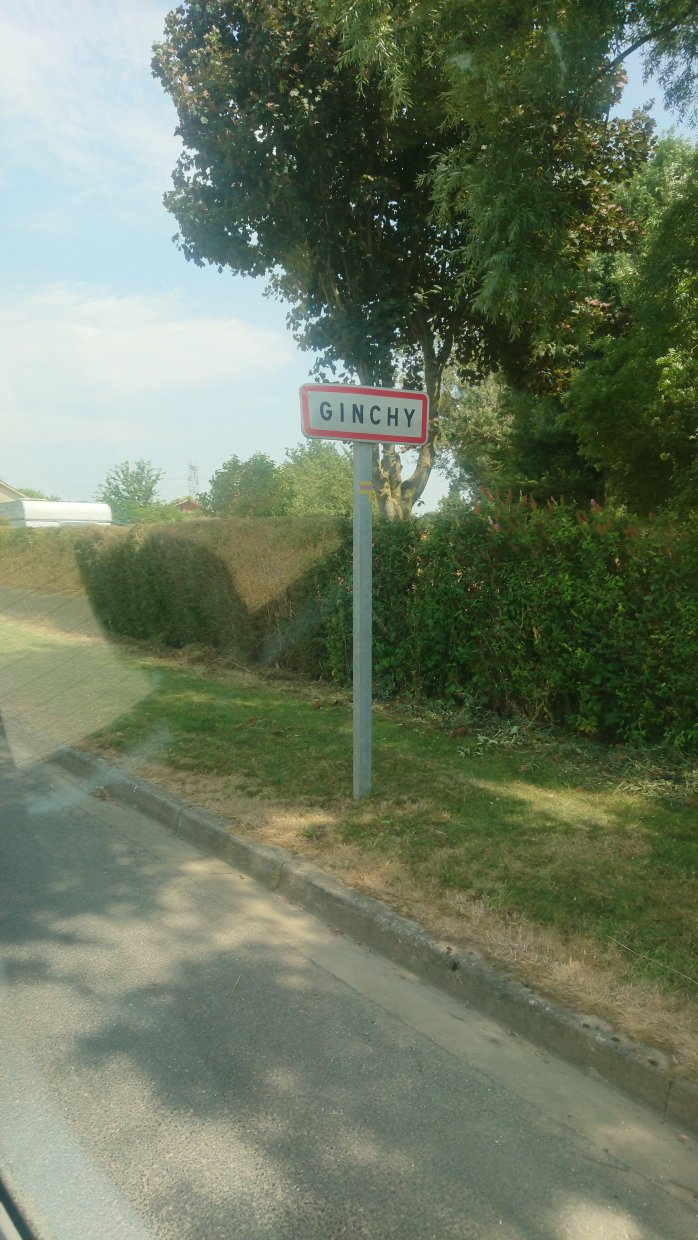
Ginchy is a small village

The trees in the wood would have been burned down and just scarred and scorched trunks remained.

The countryside near Ginchy

It was in this area that Lt Tom Kettle met his death. He was a temporary Captain with ‘B’ Company of the 9th Battalion of the Royal Dublin Fusiliers.

Tom_Kettle

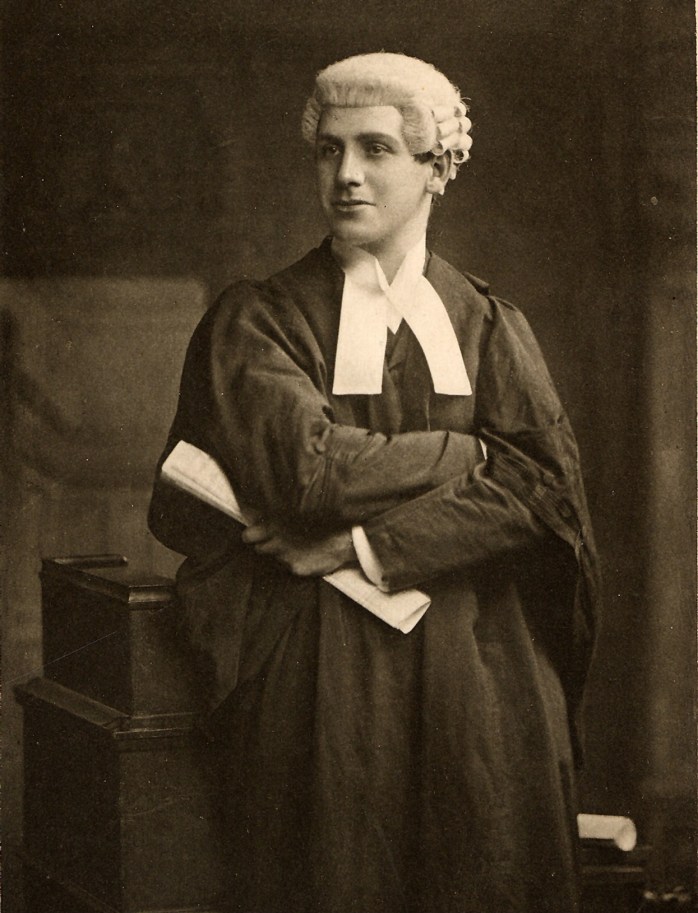
Tom Kettle BL c.1905

Kettle (then aged 36) was involved in an attack on German lines on 9th September 1916, near the village of Ginchy. During the advance Kettle was felled when the Dublin Fusiliers were ‘struck with a tempest of fire’. Having risen from the initial blow, he was struck again and killed outright.

The view from Guillemont Road Cemetery

His body was buried in a temporary grave by the Welsh Guards, but it could not be located when hostilities ceased. His name is etched on the huge monumental arch for the missing of the Somme at Thiepval.

Thiepval Memorial

The erection by of a commemorative bronze bust of Kettle in Dublin, commissioned from the sculptor Albert Power and finished in 1921, was beset for almost twenty years by controversy and bureaucratic obstruction owing to the antipathy of the state authorities post-Independence towards Irishmen who had fought in World War 1. It was finally raised in 1937, without an unveiling ceremony, in St Stephen’s Green.

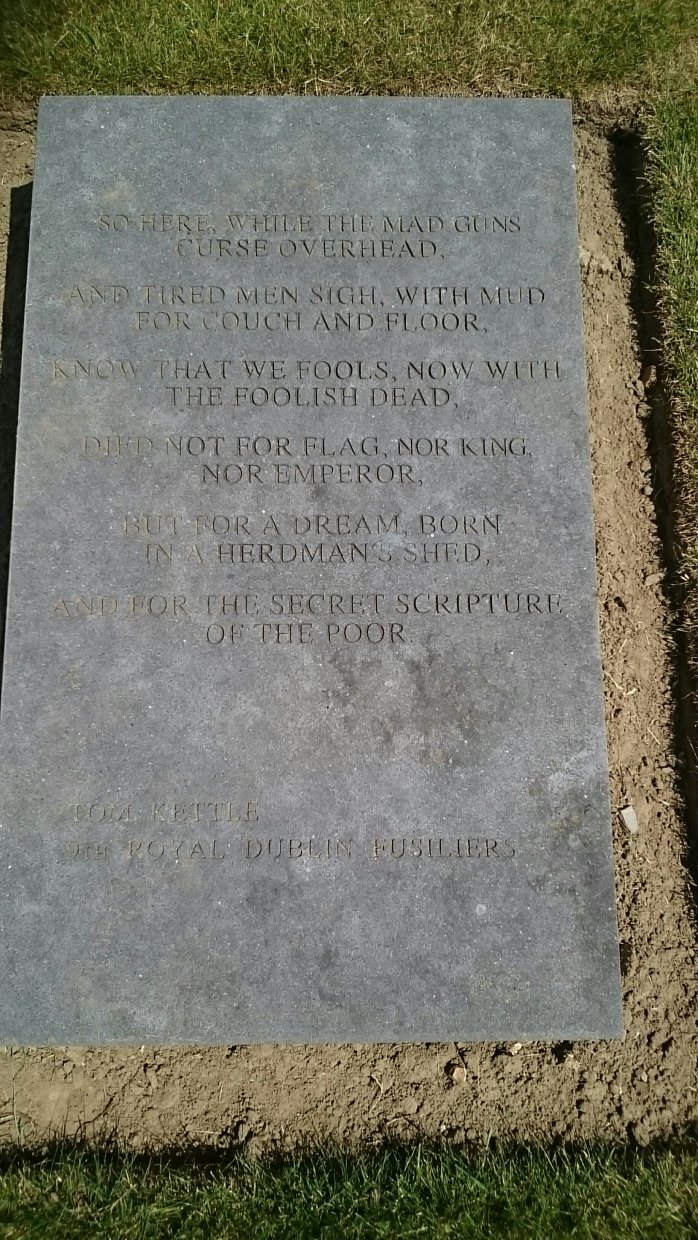
A stone tablet commemorates him in the Island of Ireland Peace Park at Messines in Belgium.

Memorial at Irish Peace Park quoting Lt Tom Kettle, poet and soldier

He is listed on the bronze plaque in the Four Courts in Dublin which commemorates the 26 Irish barristers killed in the Great War. Kettle is also commemorated on the Parliamentary War Memorial at Westminster Hall in London, one of 22 present and former Members of Parliament that lost their lives during World War 1 to be named on that memorial.

WWI Memorial at Westminster Hall

A further act of commemoration came with the unveiling in 1932 of a manuscript-style illuminated book of remembrance for the House of Commons, which includes a short biographical account of the life and death of Kettle.

GUILLEMONT ROAD CEMETERY

Guillemont Road Cemetery

This CWGC cemetery is just outside the village of Guillemont, which has a special significance for the 16th Irish Division and the Battle of the Somme in July 1916. It is 12km east of Albert. The first grave we searched for was that of Private John Hayden of the 6th Battalion, Connaught Rangers. He died on September 3rd 1916.

Finding the grave of Pte John Hayden of the Connaught Rangers

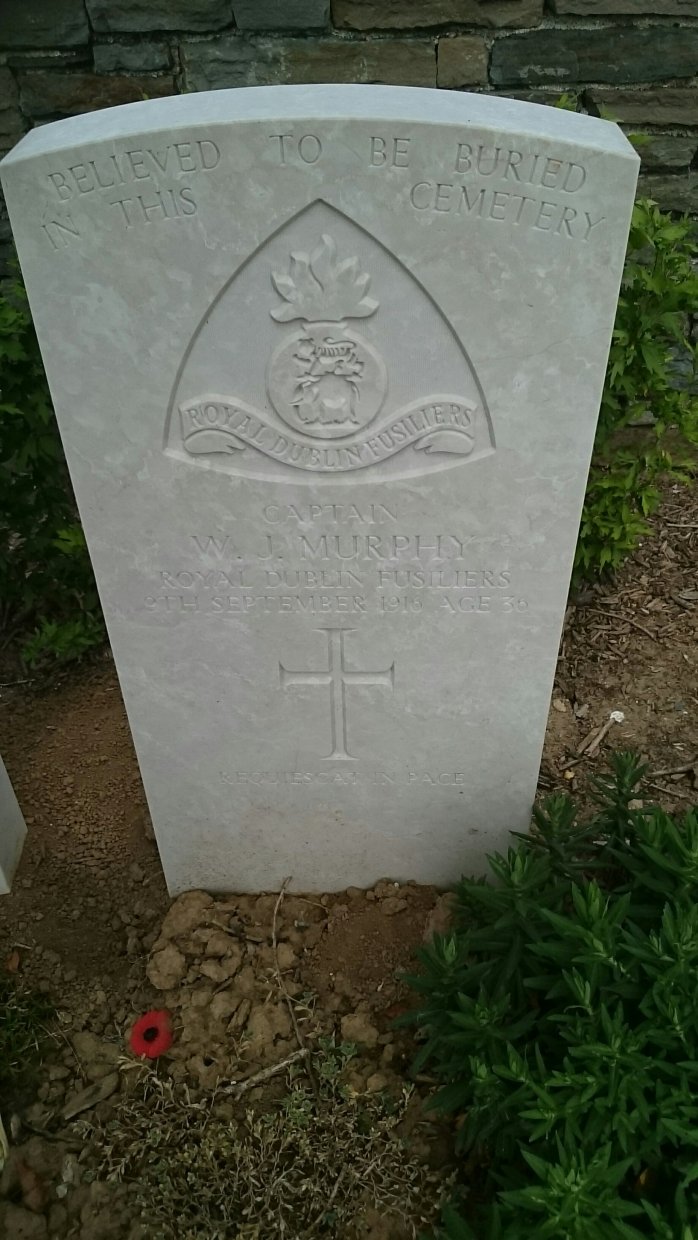
Captain William Joseph Murphy of the 9th Battalion Royal Dublin Fusiliers died on 9th September 1916, aged 36. He was mentioned in despatches. He was the son of Edward and Mary Murphy from Tullow in Co. Carlow. Joined the Cadet Corps, Leinster Regiment, in November 1914; appointed Lietenant in the 9th Dublins the following month and was promoted to Captain in March 1915.

Headstone for Captain J. Murphy, Royal Dublin Fusiliers

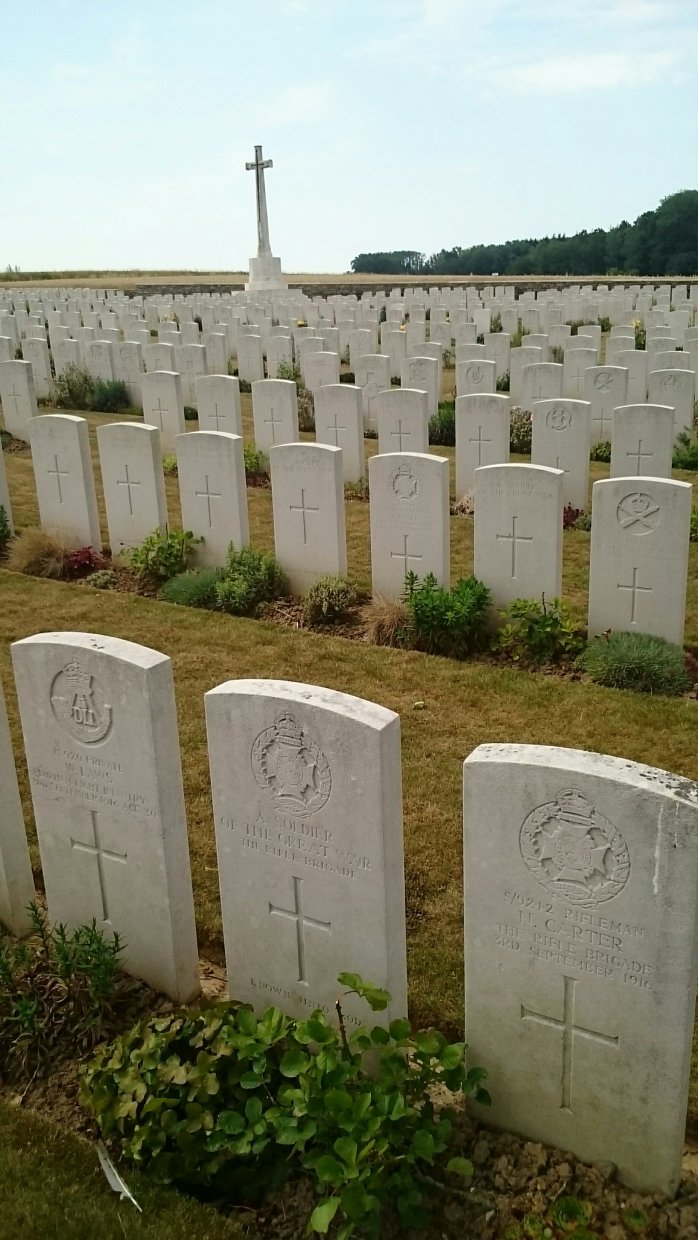
Guillemont was an important point in the German defences at the beginning of the Battle of the Somme in July 1916. It was taken by the 2nd Royal Scots Fusiliers on 30th July but the battalion was obliged to fall back, and it was again entered for a short time by the 55th (West Lancashire) Division on 8th August. On 18th August, the village was reached by the 2nd Division, and on 3rd September (in the Battle of Guillemont) it was captured and cleared by the 20th (Light) and part of the 16th (Irish) Divisions. The cemetery was begun by fighting units (mainly of the Guards Division) and field ambulances after the Battle of Guillemont, and was closed in March 1917, which it contained 121 burials. It was greatly increased after the Armistice when graves (almost all from July to September 1916) were brought in from the battlefields immediately surrounding the village and certain smaller cemeteries.

Grave of an unknown soldier at Guillemont Road Cemetery

Guillemont Road Cemetery now contains 2,263 Commonwealth burials and commemorations of the First World War. 1,523 of the burials are unidentified but there are special memorials to eight casualties known or believed to be buried among them. The cemetery was designed by Sir Herbert Baker.

2Lt G.C.M. Hamilton of the Royal Dublin Fusiliers

Second Lieutenant G.C.M. Hamilton from the 8th Battalion Royal Dublin Fusiliers was killed on 7th September 1916.

QUARRY CEMETERY

Margaret Nolan places a wreath at the grave of Pte O’Keeffe from Co. Kilkenny

Margaret Nolan from Bennettsbridge, Co. Kilkenny, who was part of our group guided us to the Quarry Cemetery at Montauban in France.

Remembering 2110 Pte Patrick O’Keeffe

Private Patrick O’Keeffe from Clinton, Co. Kilkenny, is buried here. He served in the 6th Battalion Royal Irish Regiment and died on September 1st 1916, aged 22. His Battalion was part of the 16th (Irish) Division and was involved in the Battle of the Somme (July 1st 1916).

An unknown soldier is buried beside Pte O’Keeffe

Quarry Cemetery Montauban

Quarry Cemetery Montauban

A small tricolour marked the nearby grave of Corporal J Conroy from the Leinster Regiment.

Grave of Cpl J. Conroy Leinster Regiment

Among the other Irish born soldiers to be buried at Montauban are two from Longford. The website longfordatwar.ie records them as Corporal James J. Gilchrist or Gilchrest from St Michael’s Road in Longford town, and Gunner John Mallon from Kilcourcey, Edgeworthstown.

Grave of Cpl J. Gilchrist Leinster Regiment (longfordatwar.ie)

James Joseph was born in Naud’s Yard, c. 1886. He was married to Ann (later O’Connor), and by 1911 they had one daughter, Mary-Kate. Ann lived at 54 St. Michael’s Road, Longford during the war. James left his property and effects to Ann after his death.

The Longford Leader dated25th September 1915 printed a letter Gilchriest sent to his father, which talks about his leisure time, but is especially noteworthy as it mentions other men from Longford town with him in a Longford Section of the 2nd Leinsters at the Yser Canal, now known as the Ieperlee, a canalised river in Belgium. The article reads:

James J. Gilchriest, son of Mr. Patk. Gilchriest, of Ross’s Yard, Longford who has been at the Front with the 2nd Leinsters since the outbreak of the war, writing home to his father under the date 14th September, says:-

“I am enjoying a day’s eel fishing, but my tackle is not the best; I have a safety pin for a hook, and a telephone wire for a line, but still I am catching some good ones. We are on the bank of the Yser Canal, and there is plenty of bream.
“I may tell you we are not strong enough for the firing line, so if you see any stragglers, you might send them to the old “109 Royal Canadians”, or the “Mad Mullahs”, as we are called since the last engagement, for we want Irishmen and nothing else.
“We have Dick Healy, here, another of the Gods; that is the sort we want. I have a fine selection in my section, the Longford Section – Shiels, Reilly, Lenehan, Cowan, Hayden, Healy, and myself. We are game for anything; nothing cows us, and we live high as far as poaching goes. I was expecting a few more of the boys, but they are gone to the Dardanelles.” And he then breaks into rhyme on the subject of the “Charge of the 2nd Leinsters” and at the end adds “feeling thirsty, but no relief,” and by postscript he writes: “Tell Jim McNally there is plenty of hides and skins..”

Grave of Gunner J. Mallon Royal Artillery (longfordatwar.ie)

Gunner Mallon (101166) was killed during the Battle of the Somme. According to longfordatwar.ie:

He enlisted in Warwickshire in England. John was was born c.1895 and was the eldest of the children of John and Annie Mallon, Kilcourcey, Edgeworthstown. He and his brother James joined the British army in 1915. James was later discharged because it was discovered that he had lied about his age.

John served as a Gunner in the Ammunition Column, 86th Brigade, Royal Field Artillery. He was on active service for only two or three months before being killed on 25th July 1916. its believed the Battery he was serving with came under shelling from the Germans at Caterpillar Wood near Guillemont. The Longford Leader on the 19 August said the following on his death:

Edgeworthstown Notes: Obituary – We regret very much to record the death of Gunner John Mallen [sic] R.F.A., eldest son of Mr. James Mallon, D.C., Cranleybeg, Edgeworthstown, who was killed in action in France, on the 25th July last. Gunner Mallon enlisted with his brother last year, and has been on active service in France for the past two or three months. He has not yet reached his 21st birthday, and was a fine handsome young Irishman. The greatest possible sympathy is felt for his father and mother in their very sad bereavement, and the only consolation they have is in the thought that their son dide [sic] gallantly, with his face to the foe, and was well-prepared to make the great sacrifice. -R.I.P.’

FLANDERS DAY THREE

Monument at Lochnagar Crater

Day three of our travels saw the group leave Ieper and head back across the border towards the town of La Boiselle in France. There we visited the Lochnagar crater.

Paying respect at Lochnagar Crater

Lochnagar Crater

Lochnagar Crater is in private ownership. The site was bought by Richard Dunning and the area is now run by a Trust.

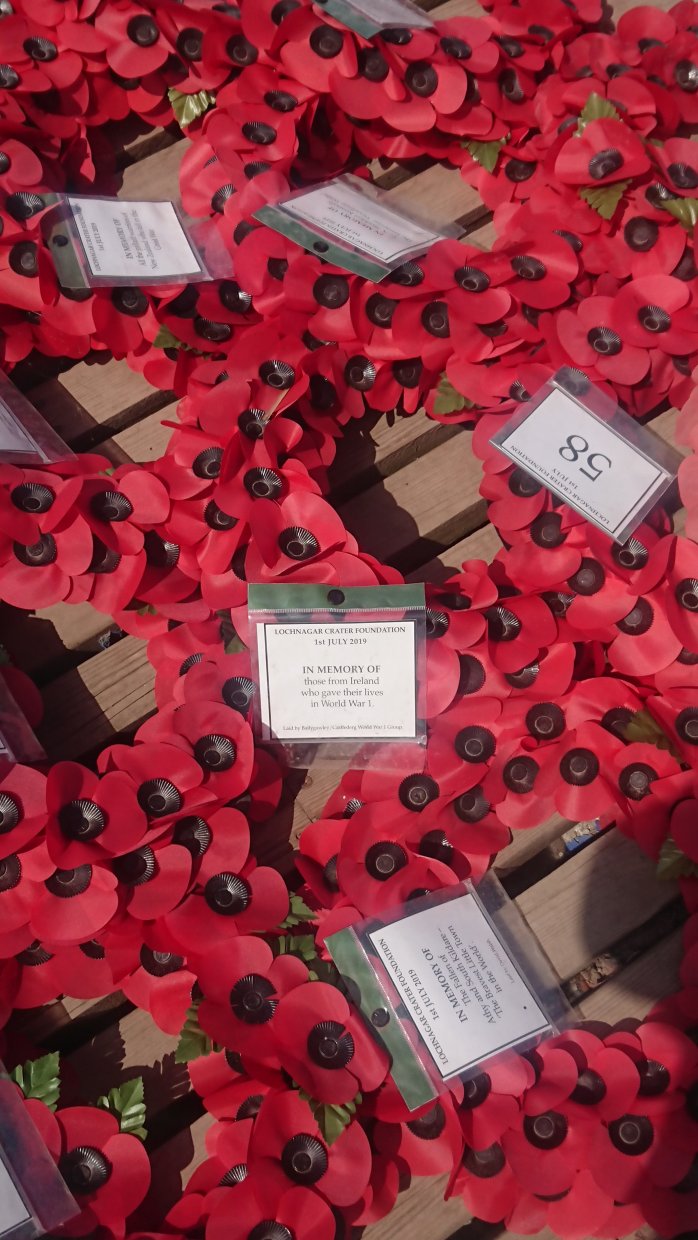
Wreaths left at the Lochnagar Crater

The British named the mine after Lochnagar Street, the British trench from which the gallery was driven. The charge at Lochnagar was one of nineteen mines that were placed beneath the German lines on the British section of the Somme front, to assist the infantry advance at the start of the battle.

The mine was sprung at 7:28 a.m. on 1 July 1916 and left a crater 98 ft (30 m) deep and 330 ft (100 m) wide, which was captured and held by British troops. The attack on either flank was defeated by German small-arms and artillery fire, except on the extreme right flank and just south of La Boisselle, north of the Lochnagar Crater. The crater has been preserved as a memorial and a religious service is held annually on 1st July.

Lochnagar Crater

More pictures of the Lochnagar Crater.

Path around the Lochnagar Crater which is owned by a Trust set up by Richard Dunning

Lochnagar Crater

Memorial to women who lost their lives serving in WWI

CHAPELLE D’ARMENTIÈRES CEMETERY

This CWGC cemetery where Captain Norman Leslie from Glaslough Co. Monaghan is buried is in France.

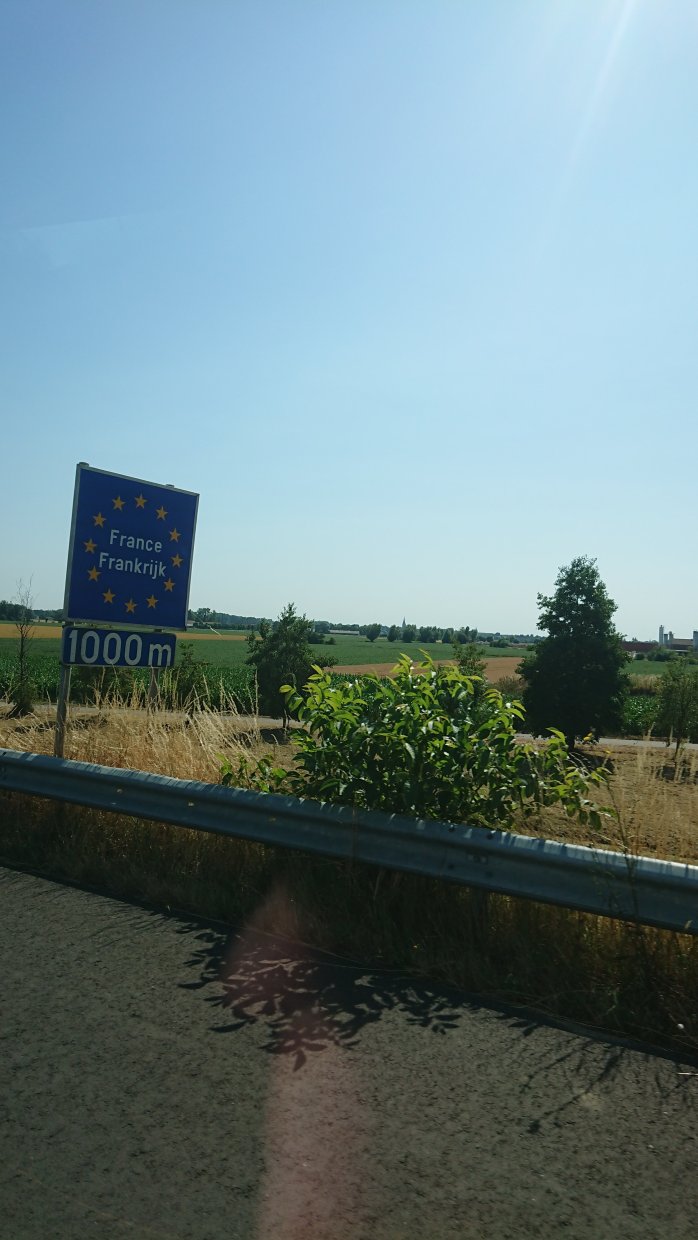
The seamless border between Belgium and France both in the Schengen Agreement

It is close to the border with Belgium at Houplines, and outside the village of La Chapelle-d’Armentieres, not far from Armentières itself.

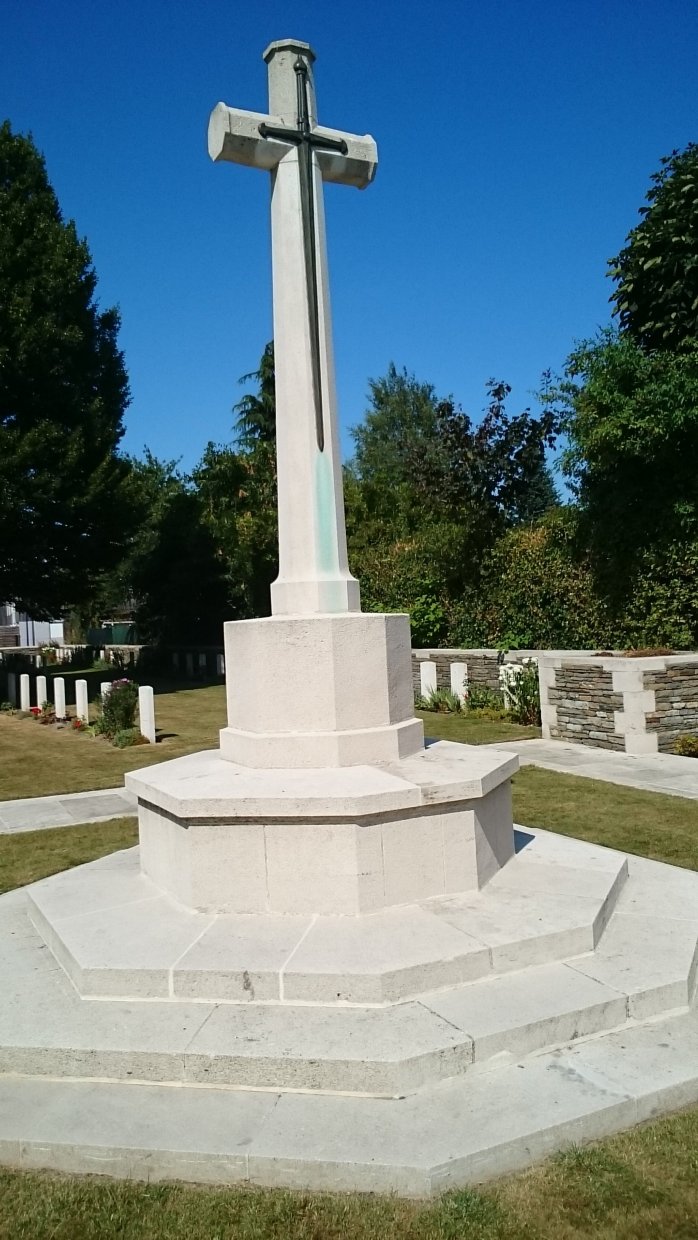
Cross of Sacrifice at Chapelle d’Armentières military cemetery

This area was in the hands of Commonwealth forces from October 1914 until the fall of Armentières on 10th April 1918. It was retaken in the following October.

Cross of Sacrifice at Chapelle d’Armentières military cemetery

During the Allied occupation, the village was very close to the front line and its cemeteries were made by fighting units and field ambulances in the earlier days of trench warfare.

Rifleman Brown of the Rifle Brigade

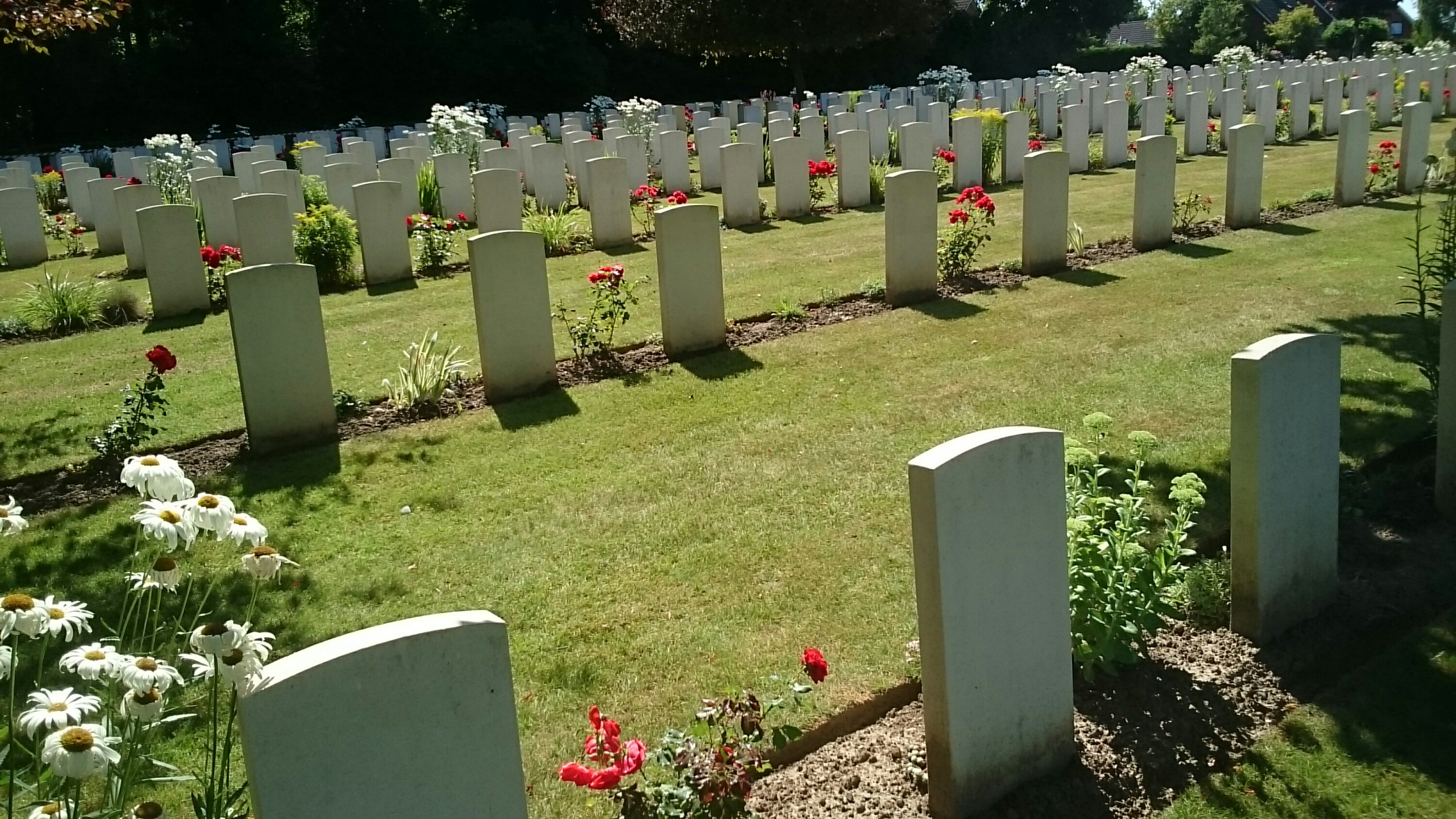
Chapelle-d’Armentières Old Military Cemetery was begun in October 1914 by units of the 6th Division and used until October 1915. The cemetery contains 103 First World War burials, three of them unidentified. The cemetery was designed by W H Cowlishaw.

Two graves of members of the Leinster Regiment

CAPTAIN NORMAN LESLIE


Untitled copy3edit

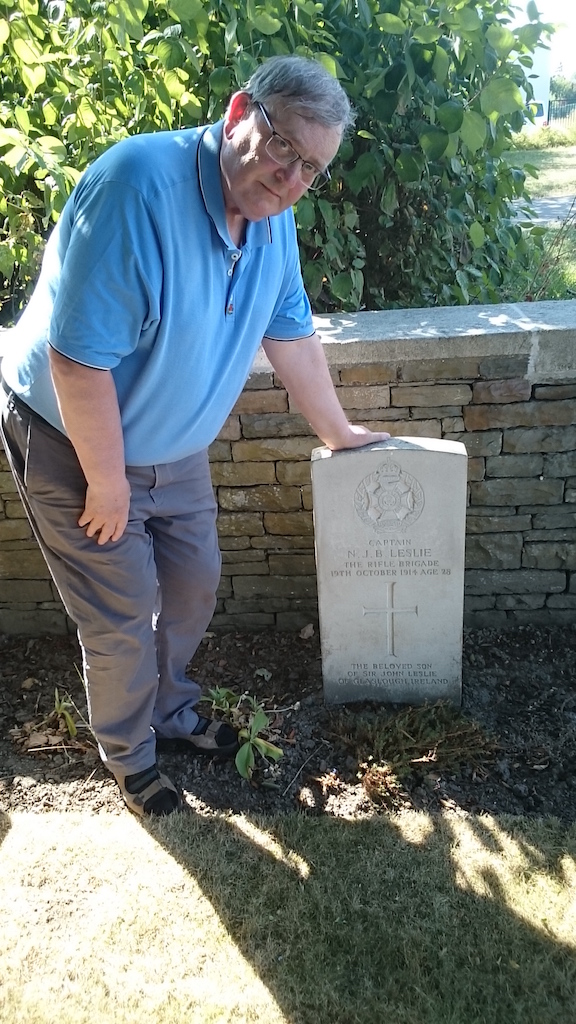
Paying respect at the grave of Captain Norman Leslie from Glaslough

Captain Norman Jerome Beauchamp Leslie from Castle Leslie, Glaslough died in the early stages of World War I. He served in the Third Battalion, the Rifle Brigade. 

Untitled copy4edit

Gravestone of Captain Norman Leslie

He was 28 when he was killed in action near Armentières on October 19th 1914. Mentioned in despatches. His grave is at La Chapelle d’Armentières military cemetery in France, not far from the border with Belgium.

Untitled copy1edit

Cross of Sacrifice 

He was the second son of Sir John Leslie 2nd Bart and Lady Leonie Leslie of Glaslough. His mother was a member of the wealthy Jerome family from New York and her sister Jennie married Lord Randolph Churchill, father of Winston. Rest in Peace.

Untitled copy2edit

Graves of Captain Norman Leslie and Captain George H Hume Kelly

Captain George Harvey Hume Kelly aged 34 of the First Battalion North Staffordshire Regiment died the day after Captain Leslie and is buried alongside him. His mother lived in East Putney, London.

LESLIE_NORMAN_JEROME_BEAUCHAMP

Around the time of the centenary of his death, Iain d’Alton wrote about the life of Captain Leslie in An Irishman’s Diary in The Irish Times. Here is some of the article:

“(Leslie) was educated at Eton and Sandhurst, was commissioned a 2nd Lieutenant in 1905 and joined the prestigious Rifle Brigade in October that year. He served as ADC to Sir John Maxwell (the suppressor of the Easter Rising) in Egypt from September 1908 to April 1910. In 1910, he was the last British officer to fight a duel – with a Turkish diplomat, over said diplomat’s wife. Packed off to India, he became ADC to Lord Carmichael, the governor of Bengal where, again, he had a scandalous romantic entanglement with a married woman.”

“When war broke out, he exhibited an almost unbelievable heartlessness about early casualties, writing to his mother in October 1914: ‘I can’t see that our losses have been heavy at all. What are 2,000 killed and 8,000 wounded out of a force of 80 or 90,000 British who repelled 200 or 300,000 Germans. It’s wonderfully small…only 2½% killed. One would imagine it would be much more like 10%.’ Leslie’s war was about the merit of being honourable. At its outbreak, he wrote to a friend: ‘Let us forget individuals and let us act as one great British unit, mixed and fearless. Some will live and many will die, but count the loss not. It is better far to go out with honour than survive with shame.'”

Less than three months after the War started, on October 18th, 1914, Captain Leslie  “was killed by a German sniper while on reconnaissance at Armentières, near Lille, and was hastily buried. His brother Shane, later a writer of renown, and serving in France, organised for his body to be recoffined in December 1914. He wrote to Leonie that: ‘He lies about a mile behind the trenches occupied by his regiment and within sound of the guns of both armies whose shells pass daily above his head . . . the sky was ripped with the flashes of the guns, while a gigantic German searchlight threw the surrounding countryside into sepulchral relief.’”

“Shane said that when the grave was opened, Norman’s clothes were unsoiled and clean. His hands were white and pink at the edges, and rested on the wound which killed him. To fit him in the new pine coffin, they had to unshoe him. Shane wrote that he did not cry until he saw ‘that lonely pair of boots’ sitting on the wretched earth. Norman, he said, seemed to have borne ‘no trace of suffering or contortion . . . as one who had reached his appointed end with credit and dignity’. Thus he acted his part, even beyond death.”

Lady Leonie Leslie “immediately wanted to visit her son’s grave, but Shane advised against it. ‘Stay at Glaslough where Norman’s memory is vivid in the minds of all whom you meet… stay there where the whole atmosphere yearns for him and where his name will outlive ours.’ But his parents could not stay away forever. Sir John Leslie wrote to his wife in late November 1918, a few days after the Armistice: ‘I should like to go to Armentières in the spring, not in cold dreary winter, and lay spring flowers on our boy’s grave, both of us together. His spirit knows what is going on, and that his life was not lost in vain.'”


KEMMEL CHATEAU CEMETERY

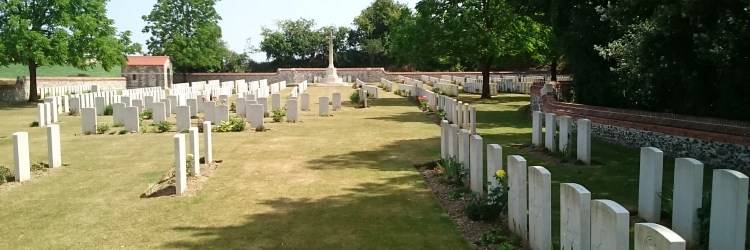
Kemmel Chateau Cemetery

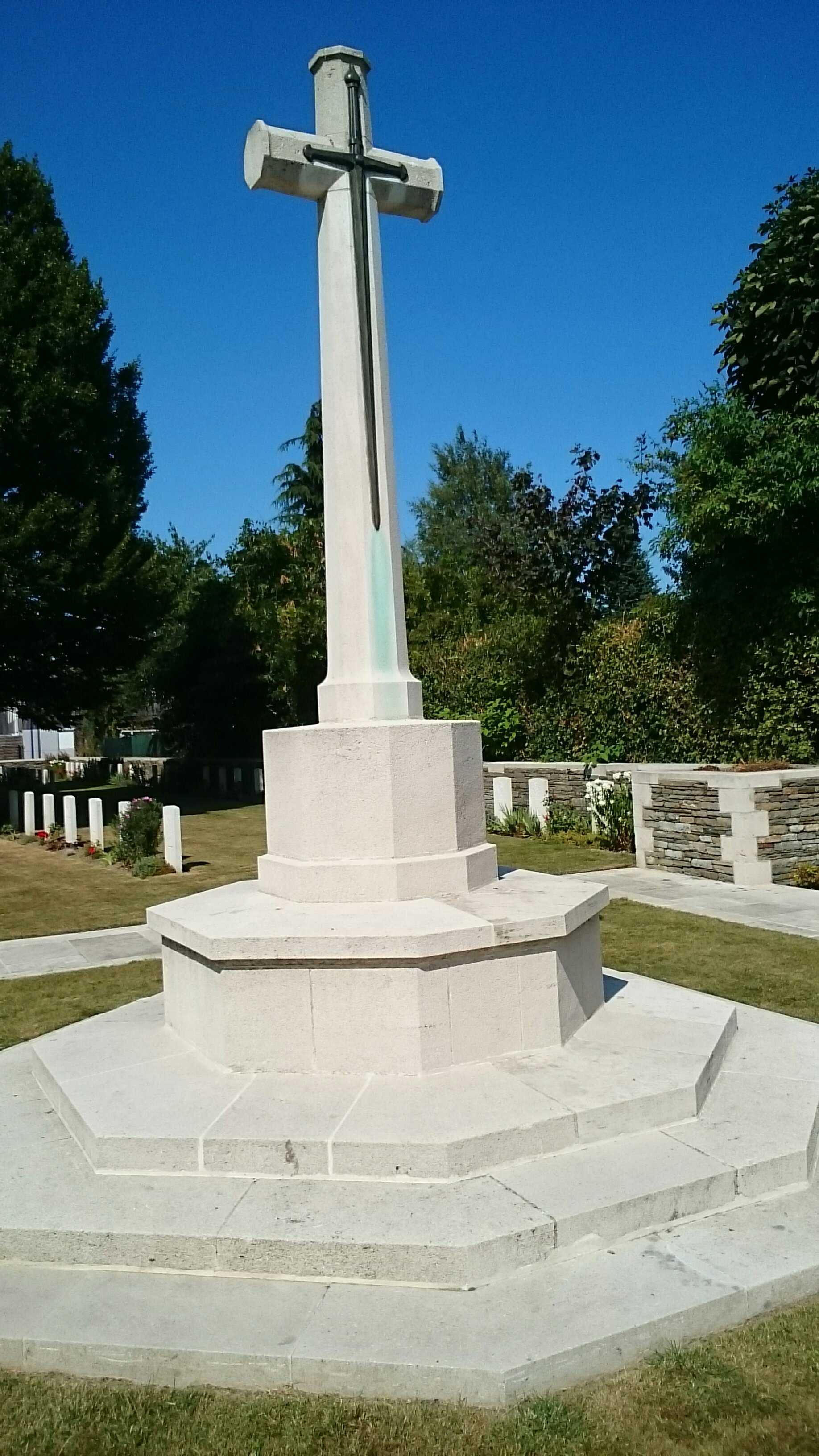
Kemmel Chateau Cemetery outside the village of Kemmel was one of the many such graveyards and memorials designed by the famous British architect Sir Edwin Lutyens, whose work included the Irish National War Memorial Gardens at Islandbridge in Dublin.

Kemmel Chateau Cemetery Cross of Sacrifice


The Chateau itself was north-east of Kemmel village which is on the road between Ieper and Armentières, close to the border with France. The cemetery was established on the north side of the chateau grounds in December 1914. It continued to be used by divisions fighting on the southern sectors of the Belgian front until March 1918, when after fierce fighting involving both Commonwealth and French forces, the village and cemetery fell into German hands in late April.

Kemmel Chateau Cemetery

The cemetery was retaken by the Allies later in 1918, but in the interval it was badly shelled and the old chateau was destroyed. There are now 1,135 Commonwealth burials of the First World War in the CWGC cemetery and 21 from the Second World War.

Kemmel Chateau Cemetery Cross of Sacrifice

Here I found several graves of members of the Royal Dublin killed between November 30th 1916, December including  St Stephen’s Day 1916 and March 8th 1917.