WEB SUMMIT: DUBLIN

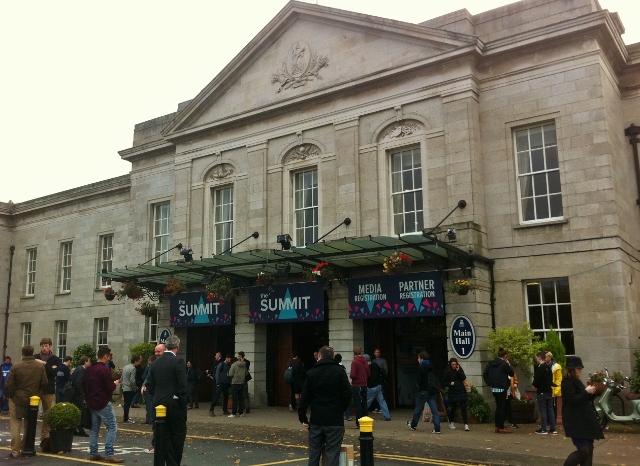
RDS Dublin: venue for Web Summit Photo: © Michael Fisher

RDS Dublin: venue for Web Summit Photo: © Michael Fisher

Entering the Royal Dublin Society headquarters in Ballsbridge I wasn’t sure what to expect from the web summit. Pre-summit publicity suggested there would be 10,000 people from over 90 countries gathered in the various halls, a big increase on the few hundred at the start four years ago when Paddy Cosgrave and his team began work. Was it just a big PR exercise for Irish and international technology companies, or was it a chance for app developers, many of them young graduates, to do business?

Main Stage at the Web Summit, RDS  Photo: © Michael Fisher

Main Stage at the Web Summit, RDS Photo: © Michael Fisher

It was certainly a major logistical exercise and the hotels and restaurants in Dublin are no doubt benefitting from the influx, although having to cope with water supply problems doesn’t do much to promote the interests of the capital. I noticed there was another major gathering in town: at the National Conference Centre, the International Air Travel Association is holding the third World Passenger Symposium with some 650 delegates. So Dublin is certainly attracting plenty of business.

Múirne Laffan, Head of RTÉ Digital  Photo: © Michael Fisher

Múirne Laffan, Head of RTÉ Digital Photo: © Michael Fisher

The RDS complex was bustling with summit participants packed into various halls. It was late on that I discovered the impressive main stage, where An Taoiseach rang the bell for the US NASDAQ stock exchange this afternoon, the first time it had been opened on Irish soil. I found the RTÉ lounge in a good spot in the main hall. Managing Director RTÉ Digital Múirne Laffan was there and she had been one of the speakers this morning on digital marketing, examining the topic ‘Content is King’. I notice there was some criticism on social media about the low percentage of female speakers at the summit.

(to be continued)

COMMEMORATION OF 1913 LOCKOUT

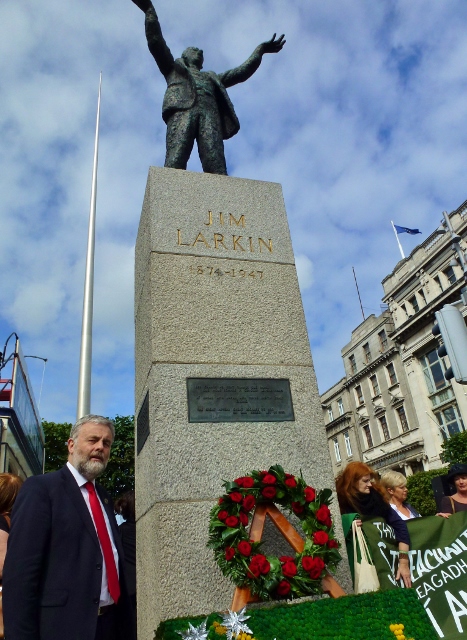
SIPTU President Jack O'Connor at Jim Larkin statue Photo: © Michael Fisher (NUJ)

SIPTU President Jack O’Connor at Jim Larkin statue Photo: © Michael Fisher (NUJ)

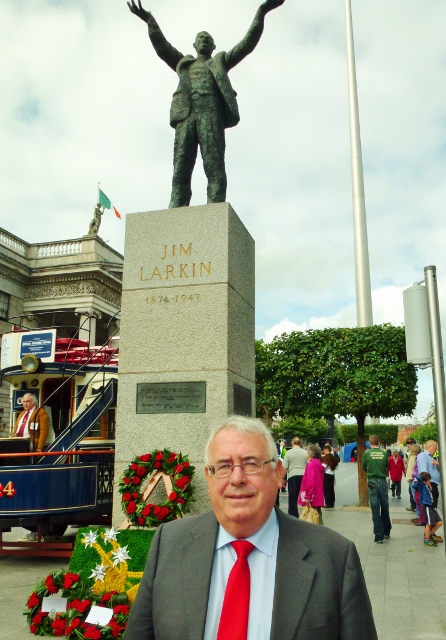
Thousands of people gathered in Dublin’s O’Connell Street yesterday (Saturday 31st August) to commemorate the 1913 Lockout in which an estimated 20,000 workers had been involved. President Higgins laid  a wreath at the Jim Larkin statue after a salute by the Army No 1 band. Tánaiste Eamon Gilmore attended along with Ministers Ruairi Quinn, Pat Rabbite, Jimmy Deenihan and Minister of State Joe Costello. Trade unionists were led by ICTU General Secretary David Begg and included SIPTU President Jack O’Connor (the successor of the ITGWU, founded by Larkin).

In traditional costumes and dress people recreated scenes from the 100-year old events, chanting “Down with Murphy, up with Larkin” while DMP police stood by. Readings from the novel Strumpet City were performed by by Bryan Murray and Angela Harding and an excerpt from the play “Lockout 1913”,  set on top of a tram placed in front of the GPO.

The Lord Mayor of Dublin Oisin Quinn welcomed everyone to the event saying it was about paying tribute to “thousand of working men and women who took part in this campaign to achieve decent treatment and fairness of work”. Hundreds of people dressed in period costumes as dockers, some as Jacobs workers and others as the poor of Dublin. This part of the event was organised by the North Inner City Heritage Group with Dublin Council of Trade Unions. The President remained as a spectator for a dramatisation of Larkin’s famous speech from a hotel window off O’Connell Street, his subsequent arrest and the riot that led to a police baton charge resulting in more than 300 injuries.

Joe Costello TD, Minister for Trade & Development at Jim Larkin statue Photo: © Michael Fisher (NUJ)

Joe Costello TD, Minister for Trade & Development at Jim Larkin statue Photo: © Michael Fisher (NUJ)

JIM CANTWELL

 Jim Cantwell RIP 1938-2013

Jim Cantwell RIP 1938-2013

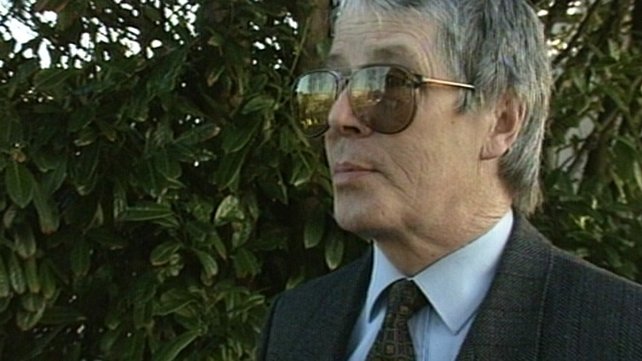
Jim Cantwell who died on Thursday aged 75 was “a seeker after the truth in his professional and private life”, according to a priest at his funeral this morning at St Michael’s church in Dún Laoghaire. The man who skilfully oversaw the worldwide coverage of Pope John Paul II’s visit to Ireland in 1979 was the first director of the Catholic Press and Information Office in Ireland. He was present in Rome for many of the major events in the Catholic Church over the decades.

The former Head of Religious Programming at RTE, and chief celebrant of the requiem Mass, Fr Dermod McCarthy, described Mr Cantwell as a “mine of information” on the famous papal conclaves to elect a new pope. “He led the media coverage of the papal visit in 1979, which was an enormous event, with 1.4 million people descending on the Phoenix Park,” he said. He was in Rome to pass on the finer details to reporters of major events, such as the canonisation of Saint Oliver Plunkett, the death of Pope Paul VI and the elections of Pope John Paul I and Pope John Paul II.

Fr McCarthy said the retired journalist and native of Waterford had originally faced some opposition when he first returned from London, where he had been reared and had worked at ‘The Universe’, to become head of the Catholic Press and Information Office in Dublin in 1975. “Not everyone in the church or the media either approved or understood the church needing a press office in the first place,” explained Fr McCarthy. It was a very difficult decision to make to come to Dublin with his wife and family.

Fr McCarthy told mourners that Jim’s qualities as summed up by his family included his optimism, his gentleness and his humour. “He was an articulate and knowledgeable man and throughout his career he was always well liked and highly respected by fellow journalists”, he said. He had educated the hierarchy about the media and had also enlightened journalists about Catholic church teaching.

The Mass was concelebrated with auxiliary Bishop of Dublin Éamonn Walsh, Monsignor Daniel O’Connor PP Dún Laoghaire and Fr Eugene Kennedy, a schoolmate. Cardinal Séan Brady represented the church in Ireland and he was accompanied by the Archbishop of Dublin, Dr Diarmuid Martin.

The former Bishop of Derry, Dr Edward Daly, who was tasked with setting up the press office, told in a statement yesterday how Mr Cantwell served in the post for the next 25 years until he retired in 2000. “Jim Cantwell was a man who served the church and people who worked in the media with unfailing courtesy, respect and professionalism,” he said. “In his latter years, he had the most difficult task of dealing with the fallout from the various issues that beset the church in the 1990s.”

Bishop Daly said Jim Cantwell had been a good friend and colleague. He recalled how it had decided at a special meeting of the Irish Episcopal Conference in Mulrany in 1974 that, in line with recommendations of the Second Vatican Council, a Press and Information Office should be established to serve the Irish Church and the Irish and international media. Dr Daly was tasked with setting up the office, which was opened at Booterstown Avenue in South Co. Dublin in February 1975. Jim Cantwell was chosen from a multitude of candidates to head the office and was appointed as the first Press and Information Officer for the Irish Episcopal Conference.

Bishop Daly described Jim as a fine journalist and a most pleasant, affable person. He was greatly respected and liked by his fellow journalists and bishops. He gained an encyclopaedic knowledge of the Church here in Ireland and around the world. Jim had vast knowledge of conclaves and papal elections and was the author of various authoritative articles on these matters. He always prepared his work methodically and with great diligence. Jim Cantwell was a man who served the Church and people who worked in the media with unfailing courtesy, respect and professionalism.

Mr Cantwell is mourned by his wife Eileen and his four children Nina, Rhona, Paul and Michael. Ar dheis Dé go raibh a anam dílis.

Jim Cantwell Photo: RTÉ News

Jim Cantwell Photo: RTÉ News

NATIONAL DAY OF COMMEMORATION

Commemoration at Kilmainham Photo: RTE News

Commemoration at Kilmainham Photo: RTE News

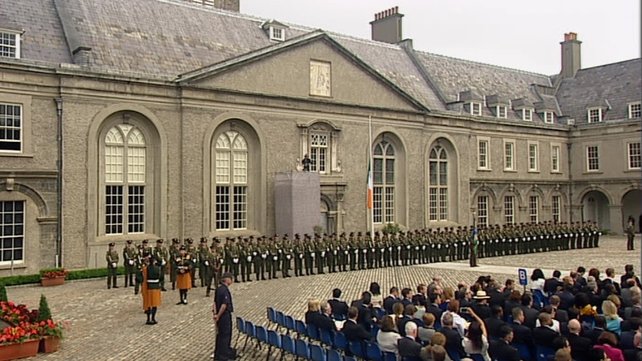
Uachtarán na hÉireann Michael D Higgins led the national Day of Commemoration ceremony this morning at the Royal Hospital Kilmainham in Dublin. Similar ceremonies took place at seven other locations across the state. The multi-faith and military ceremonies honoured all Irishmen and Irishwomen who died in wars or on service with the United Nations. The Dublin event was attended by the President, the Taoiseach, the Government and Council of State, as well as members of the diplomatic corps, Defence Forces, veterans’ organisations, the judiciary and Northern Ireland representatives. In this latter category it was interesting to note the presence of the Ulster Unionist leader Mike Nesbitt along with the Lord Mayor of Belfast, Máirtín Ó Muilleoir of Sinn Féin.

I watched the service which was broadcast live on RTE1 television. The military part of the ceremony was carried out with great precision and the music played by the Army No.1 Band under the baton of Lt Col. Mark Armstrong added to the solemnity of the occasion.

A NOT SO FRIENDLY MATCH

Final match win v Fleetwood assures League status

Final match win v Fleetwood assured League status

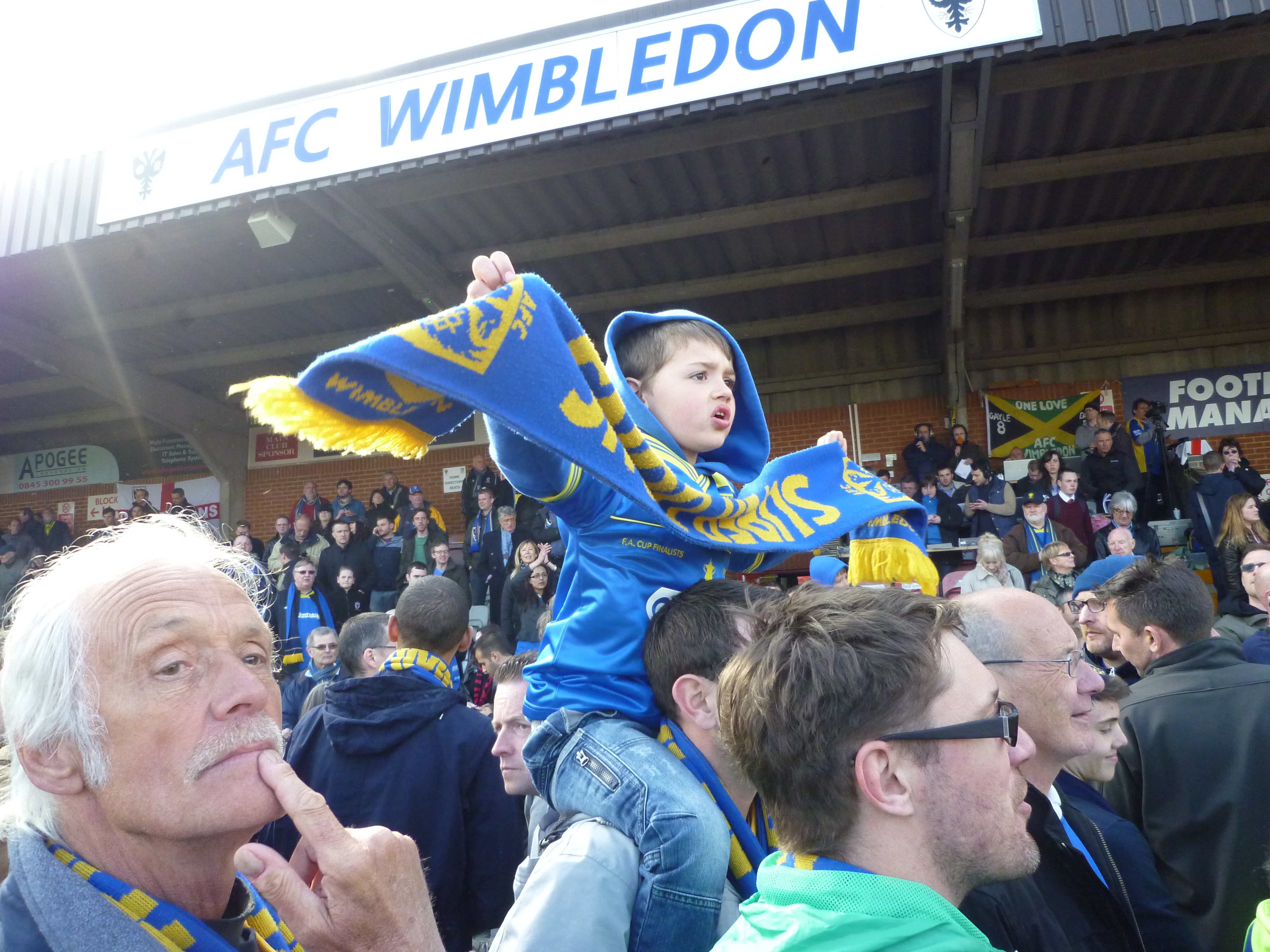
We are Wimbledon: see my blog last December to know the reasons why. I am a founder member of the Dons Trust in 2002, a decision which led to the formation of AFC Wimbledon, a team that started off in the Combined Counties League and (re-)entered the Football league in 2011/12. We just about survived in League Two last season: see my article AFCW: We’re Staying Up! in April.

AFC Wimbledon 2 Fleetwood Town 1

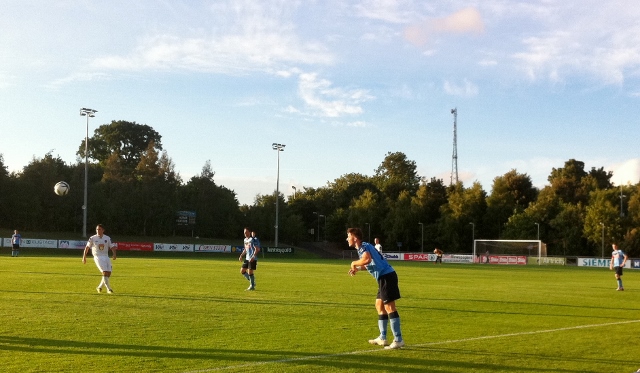
Spot the Ball: AFC Wimbledon 2 Fleetwood Town 1

On 28th May 2002, the Football Association backed a three-man independent commission decision to allow Wimbledon F.C. to relocate 56 miles North to the new town of Milton Keynes in Buckinghamshire (otherwise known as roundabouts, like Craigavon).  The Wimbledon chairman at the time Charles Koppel claimed such a move was necessary in order to prevent the club from folding. This franchising of a club was unprecedented in English football. By moving so far from their original base in London SW19, Wimbledon F.C. were cutting all ties with the area. Although the club was unable to move to Milton Keynes for over a year, their small band of loyal fans stayed put.

On 30th May 2002 a group of supporters led by Kris Stewart and fellow founding members Marc Jones and Trevor Williams, announced plans to create a new club , AFC Wimbledon.  On 13th June 2002, a new manager, kit, crest and ground (shared with Kingstonian FC in Norbiton, in the nearby Borough of Kingston-on-Thames and on the 131 bus route from Wimbledon) were unveiled to fans and the media at Wimbledon Community Centre.

In order to assemble a competitive team at short notice, AFC Wimbledon held player trials on 29th June 2002 on Wimbledon Common, open to any unattached player who felt he was good enough to try out for the team. The event attracted 230 players, from whom the club’s squad for their inaugural season was chosen, under the captaincy of former Chelsea player Joe Sheerin, who ended up at Leatherhead in 2006. Forward Kevin Cooper (no relation to my friend in Belfast!) was the player of the year.

In March 2003 the Dons Trust members voted to purchase part of the lease for the ground at Kingsmeadow and in June 2003 the contract for buying the lease to the stadium was agreed with the owner Rajesh Khosla. £2.4 million needed to be raised, and a share issue in which I was an investor raised over one-third of the required amount. Further amounts were raised through a bond issue (in which I also invested) and a commercial loan was organised through Barclays Bank, not an easy task for a completely new entity which had no financial record.

CEO AFC Wimbledon Erik Samuelson (on right)

CEO AFC Wimbledon Erik Samuelson (on right)

AFCW PLC was placed under the ownership of The Dons Trust, a supporters’ group which is pledged to retain majority control of that ownership. The Dons Trust is an Industrial and Provident Society registered with the Financial Services Authority as “Wimbledon Football Club Supporters’ Society Limited”. The Chief Executive of AFC Wimbledon (previously Finance Director) is longstanding fan Erik Samuelson, a retired accountant with PwC, whose influence and experience was crucial in securing the commercial loan. In an online question and answer session, he explained how the finances worked from the start:-

“We paid £2.4m for the stadium – remember it was a non-league stadium, although it had already been upgraded for Football Conference national standards in line with the rules in place 11 years ago. We paid for it in stages:

  • We created an intermediate holding company called AFCW PLC and issued shares.  After expenses this raised about £1.25m;
  • We couldn’t get anyone to lend us the balance but fortunately for us the people who sold us the stadium agreed that they should become our creditors and we paid them a high, but not usurious, rate of interest on the debt;
  • So we decided to issue a Bond.  These were for four years, but capable of being extended (and most have done so) and you could select your own interest rate, subject to a cap.  We raised about £300k.  About half the Bond holders chose 0% and the average rate paid was about 2%, a nice cheap loan;
  • Then we decided to spend some of our five year ST money on reducing the debt.  Spending next year’s income can be a very risky option but we knew we had a pretty certain stream of income coming from the Trust’s fundraising and so it was set aside for the purpose of replacing the annual ST income we’d spent on repaying some debt.  In effect, we were spending the next five years’ fundraising on reducing the debt;
  • Then we, astonishingly, managed to get a bank loan which cleared the final tranche of the debt on purchase.  We make the capital repayments on the loan from the Trust’s fundraising and the interest is paid by the operating company.

As for subsequent fundraising, we’ve self funded substantial improvements to our stadium to make it Football League compliant (plus about £600k of Football Stadia Improvement Fund grants). For our hoped-for new stadium* we expect most of it to be paid for by enabling development but we are also changing our constitution to allow us to issue Community Shares in the Trust, hopefully qualifying as an Enterprise Investment Scheme, so that investors get 30% tax relief up front on their investment. Supporters Direct have been a great help in pulling the Community Shares plans together.” 

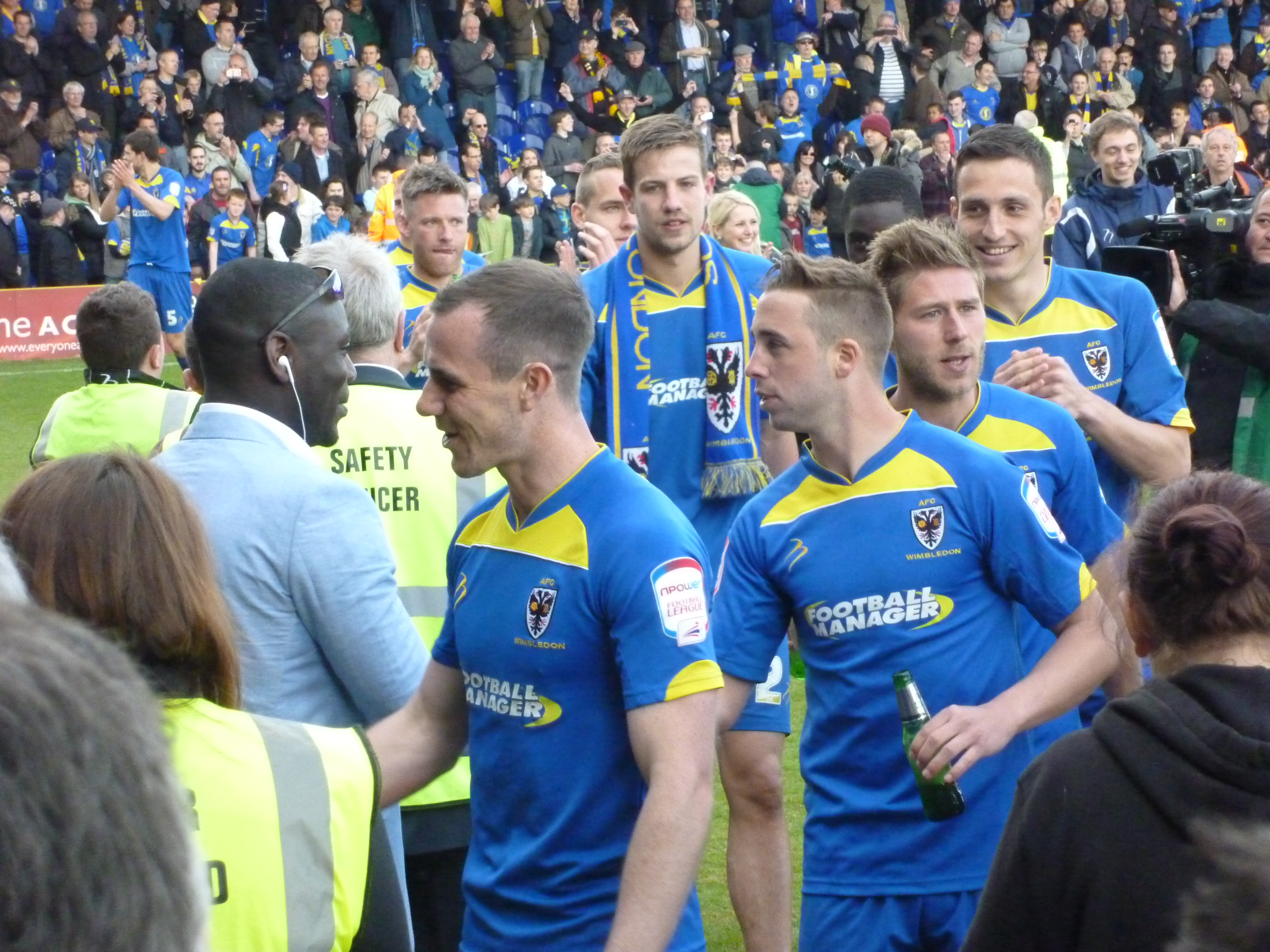
Celebrations as League Status Assured for 2013/14

Celebrations as League Status Assured for 2013/14

*The plan for a new stadium is based on proposals for the redevelopment of the greyhound stadium at Plough Lane in Wimbledon, alongside what was once the home of Wimbledon FC and is now a housing estate. Remember what happened to Glenmalure Park and now Shamrock Rovers FC are in a brand new stadium in Tallaght, with the support of South Dublin County Council? This afternoon I passed by the Glenmalure Park memorial at Milltown and memories came flooding back, just as they do whenever I am near Plough Lane.

At Glenmalure Park Shamrock Rovers FC memorial today

At Glenmalure Park Shamrock Rovers FC memorial today

I am one of the AFC Wimbledon five year season ticket holders, in the front row of the main stand near the middle of the pitch. If I cannot make it to a home match, the Club can re-sell my seat and gain added income, as well as reclaiming the VAT on my ticket. Given the level of my commitment to AFC Wimbledon, you can now see why I am opposed to the visit of Franchise FC to my other “home patch” at UCD in Belfield, where I went to University in the first year of the Arts/Commerce Block and just a short walk away from where I am typing this article in the family home.

So once again I will say it: UCD AFC are entitled to play whoever they choose. But let’s not give Franchise FC the traditional Irish “Céad Mile Fáilte” when they arrive in Dublin for pre-season training. To the FAI and Airtricity League my message is this: Franchise FC were supposed to be coming to Dublin at one stage (or even Belfast) and a few prominent businessmen and commentators were doing their best to encourage a move across the Irish Sea to set up the “Dublin Dons” in the English Premiership. Wisely, in my view, the FAI said “NO” but that did not stop a certain pop music executive now property developer from setting up a soccer franchise in Milton Keynes, with the blessing of the Football Association. They took away our Club and eleven years on, we have given them the answer.

Mascot Haydon the Womble

Mascot Haydon the Womble

FRANCHISE FC UNWELCOME IN DUBLIN

UCD v Cork City

UCD v Cork City

UCD 3 CORK CITY 0 AIRTRICITY LEAGUE PREMIER DIVISION

I left the Belfield Bowl delighted to have seen a College victory over the Leesiders, having kept a clean sheet in the process. After the final whistle had blown, however, the PA announcer said something that made me seethe with rage. He was announcing a series of three mid-season friendly games to be hosted in the coming fortnight by the UCD Club.

UCD v Cork City

UCD v Cork City

League One side Peterborough are first up next Wednesday, 3rd July. But then came the dreaded words “MK Dons”, known to us AFC Wimbledon fans and many other true football supporters simply by the name “Franchise FC”. The match is due to take place at Belfield on Tuesday 9th July and the third one in the series is against Aberdeen (July 16th), coincidentally nicknamed the Dons and in my view the only other Club worthy of that sobriquet apart from AFC Wimbledon. To see how strongly I feel about the issue, see my post in December “We are Wimbledon” when I went to Kingsmeadow to watch the Dons playing Franchise FC in the FA Cup, rather than go to a place sixty miles from London.

UCD v Cork City

UCD v Cork City

I’m sure UCD badly need the revenue from these games. There were only a few hundred fans at tonight’s match, about fifty of them following Cork City. As the away team came off the pitch, their followers chanted slogans at them about being “rubbish” and not fit to wear the club shirt.

So I do not want to advise a total boycott of the game. Every Euro that comes into the UCD Club is I’m sure put to good use. But what I will say is that should I decide to attend Belfield that night, I will be asking all true soccer supporters, including my friends from Shamrock Rovers who I met on the Milltown 25 walk, please do nothing to give this Franchise Club a welcome in our capital city.

For those who do not know my background, I am a UCD Arts Graduate (1973) having arrived back in Dublin in 1967 from Wimbledon, where I began my support of the Dons in their amateur Isthmian League days when Irishman Eddie Reynolds was my hero. During my time at College I was a Shamrock Rovers supporter, (Eddie Bailham left Rovers and went to Wimbledon) having discovered their Glenmalure Park ground backed onto the sports pitches where we played rugby at Gonzaga College.

UCD Rugby Club Centenary Wall

UCD Rugby Club Centenary Wall

One of the stars of the Zaga team of that era was Tony Ensor who played for Ireland as full back. By coincidence I spotted his name at half time on the UCD Rugby Club Centenary Wall which has been added to one side of the changing rooms. I  was told it had gone up only in the past month. Other Gonzaga greats on it include Peter Sutherland, Barry Bresnihan and Kevin McLaughlin.

WILLIAM CARLETON SUMMER SCHOOL

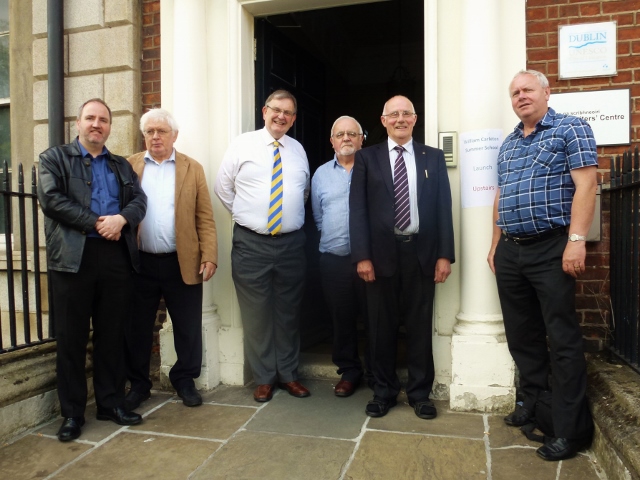
William Carleton Society committee members at Irish Writers' Centre, Dublin

William Carleton Society committee members at Irish Writers’ Centre, Dublin

Launch of the William Carleton summer school programme 2013

The William Carleton Society made another trip to Dublin this evening for the launch of the programme for the 22nd William Carleton international summer school. The line-up this year is broader than before, with a number of events in Monaghan and Emyvale before the start of the school itself on Monday 5th August at Corick House in Clogher.
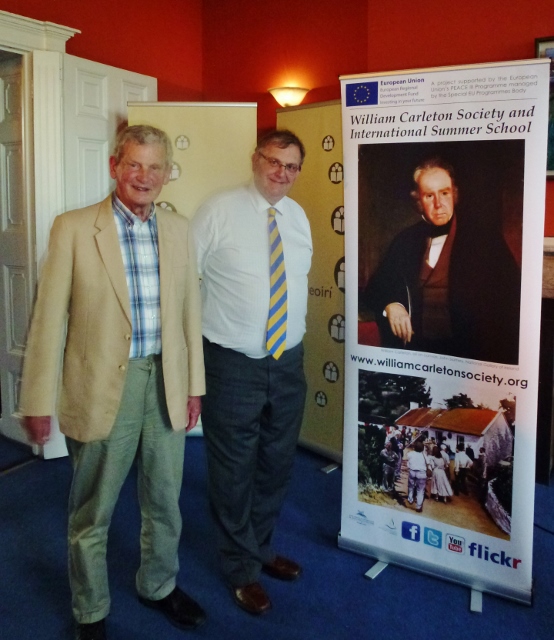
Maurice Harmon and summer school director Michael Fisher

Maurice Harmon and summer school director Michael Fisher

Our patron Maurice Harmon read four of his poems and the President of the William Carleton Society, Jack Johnston from Clogher, revealed details of his recent research on Carleton’s addresses in Dublin, where the famous 19thC author spent most of his life, although he was born near Clogher in 1794 and was a Tyrone man!

William Carleton Society President Jack Johnston talking about Carleton

William Carleton Society President Jack Johnston talking about Carleton

Committee member Patricia Cavanagh from Tydavnet gave more details of her late father Terence O’Gorman’s book, which she has compiles from his poems and stories, “Memories Amidst the Drumlins: Cavan and Monaghan”. The book will be launched at the Four Seasons Hotel at 6pm on Friday 2nd August.
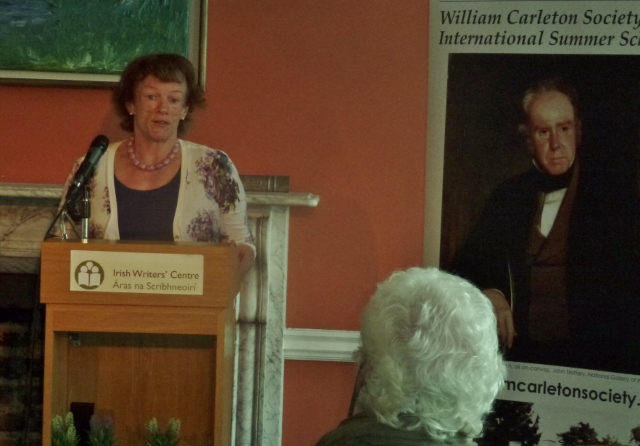
Patricia Cavanagh, Tydavnet, at William Carleton summer school launch

Patricia Cavanagh, Tydavnet, at William Carleton summer school launch

WILLIAM CARLETON INTERNATIONAL SUMMER SCHOOL 2013

Friday 2nd August    

Four Seasons Hotel, Coolshannagh, MONAGHAN    CONFERENCE:        CARLETON, KAVANAGH & GAVAN DUFFY

10:30am registration FREE ADMISSION            Tea/coffee

11am  Professor Thomas O’Grady (Boston/Prince Edward Island) on his poetry and Patrick Kavanagh

12 noon  Art Agnew (Inniskeen) on Patrick Kavanagh

Lunch Break

2:30pm Charles Gavan Duffy: Journalist and Patriot:  Brendan O Cathaoir (ex Irish Times) and Aidan Walsh (former curator, Monaghan County Museum)

3:30pm  Break

3:40pm  Mary O’Donnell (Monaghan poet and author)

4:45pm  Shemus cartoons in The Freeman’s Journal: Felix M. Larkin

6:00pm Reception and Book Launch:

Memories Amidst the Drumlins: Cavan & Monaghan: Terence O’Gorman poems and stories

 Saturday 3rd August

11am meeting at Monaghan museum, Hill Street.

Walking tour of Monaghan town with Grace Moloney, Clogher Historical Society, & Theresa Loftus, Monaghan Museum. FREE.

Lunch afterwards at pub with traditional music.

 Sunday 4th August  

4:00pm Assemble at Emyvale Leisure Centre (refreshments) or Edenmore school.

4:30pm walk to Blue Bridge, Emyvale

5:00pm to 6:00pm

Carleton commemoration at the Blue Bridge Emyvale and new plaque unveiled

6:30 Gather at Emyvale Leisure Centre

7:00pm Fair of Emyvale reading at Emyvale Leisure Centre. FREE. All Welcome.

8:00pm Refreshments.

***All Monaghan events are part funded by the EU’s ERDF through the Peace III programme financed through Monaghan Peace III Partnership***

Monday 5th August

Corick House Hotel,  Corick, CLOGHER, Co. Tyrone  BT76 0BZ

10am Registration, tea and coffee

11am Photocall

11:30am   Opening by Mayor of Dungannon & South Tyrone Borough Council

11:40am   Summer School Honorary Director:

Prof. Owen Dudley Edwards on “Carleton, Otway and Irish Literature”

1pm Lunch

2:30pm Keynote address Professor Thomas O’Grady, Boston

The Geography of the Imagination: Carleton’s “The Donagh”

3:30pm Tea/coffee break & bookstall

3:45pm Author Gerry McCullough (“Belfast Girls”) & Raymond McCullough

(singer & songwriter)

4:45pm  Broadcaster & commentator Tom McGurk in conversation with Aidan Fee:  “Northern Ireland: past and present”

6pm Close of session

 Tuesday 6th August                                           

09:30am registration  Tea/coffee

10:15am Language in the Clogher Valley of 19th Century. Irish: Dr Ciaran Mac Murchaidh, St Patrick’s Drumcondra.  Ulster Scots: Dr Ian Adamson

11:50am break

12:00 noon  President of the William Carleton Society, Jack Johnston:

“Augher: from landlord, Sir Thomas Ridgeway to George Duffy, the Miller”

12:45pm lunch

2:15pm  Josephine Treanor tells the story of her relative, mentioned by Carleton:

“Anne Duffy, the Miller’s daughter from Augher”

3:00pm  Break

3:15pm Focus on modern Irish writing: Ciaran Collins (“The Gamal”) + Patricia Craig (“Twisted Root”) + Anthony Quinn (“Disappeared”) + Tony Bailie (“A Verse to Murder”)

4:15pm Tea/coffee break

4:30pm Seminar continues & discussion to close of session 6:00pm.

Wednesday 7th August     

09:30am registration tea/coffee

10:00am Dealing with the past: Professor Jon Tonge (Liverpool)

Discussion: Alex Kane and Dr Margaret O’Callaghan (QUB), chair John Gray

11:45am Break

12:00pm  Former politician and commentator Mary O’Rourke on how differences can be accommodated

1:00pm  Lunch

2:30pm Poet Siobhan Campbell MA on writing about the past

3:30pm  Tea/coffee Break

3:45pm Patrick Scully extracts from one man show on Edward Carson

4:30pm Writer & author Mary Kenny (Edward Carson: Dubliner, Unionist, Irishman)

6:00pm Close of summer school

Thursday 8th August

Coach tour in Co.Fermanagh by Frank McHugh & Gordon Brand with particular reference to Shan Bullock: “The Loughsiders”, based around Crom estate. Booking required: for more details contact Frank McHugh e: f.mchugh4@btinternet.com

Cost: £30 including meals

Evening Events: (supported by Shared History, Shared Future Project funded by South West Peace III partnership )

Monday 5th August

Traditional Music session with female Irish traditional group Síoda &

singer Seosaimhin Ni Bheaglaoich,   Rathmore Bar, Main St Clogher 8pm

Tuesday 6th August

Walk on the Carleton Trail with the Clogher Valley Ramblers.  7:00pm

Bagpipers & traditional Music with the McKenna family (Clogher) at Somers Cafe, Fardross (off A4 road)  8:30pm   Free admission

Wednesday 7th August

Concert at Fivemiletown Wesleyan Hall 8pm

Murley Silver Band and Monaghan Gospel Choir: Special Guest Gloria  Admission Free.

More information at: www.williamcarletonsociety.org

e: wcarletonsociety@gmail.com

Costs:-
Daily: £40/€47 including lunch and tea/coffee break;
concession £33/€35 (saving of €3)
Morning:  £13/€15 or one session £7/€8   including tea/coffee;
concession £10/€12  or one session  £4/€5
Afternoon: £16/€20 or one session £8/€10 including tea/coffee;
concession £12/€14  or one session  £4/€5
Lunch £11/€13  

Tour Thursday including meal: £30/€35
Season ticket 4 days £150/€175 or concession £130/€140 (saving of €10)

Accommodation:

Dinner, B&B Packages at Corick House Hotel, Clogher:

3B&B plus 2 Evening Meals@ £170pps (double/twin occupancy)

3B&B plus 2 Evening Meals @ £220 (single occupancy)

2B&B plus 2 Evening Meals @ £140pps (double occupancy)

2B&B plus 2 Evening Meals @ £180 (single occupancy)

Double Room Rates B& B only

1 night £55pps

2 nights £50pps

3 nights or more £45pps

Single Rate B&B only

1 night B&B £70

2 nights or more B&B £65 per night

Accommodation also available at Glenvar guest house, 111 Tullyvar Road, Aughnacloy BT69 6BL

MOUNT ANVILLE ALUMNI

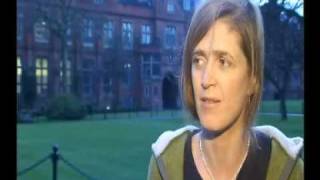
Samantha Power, interviewed by me for RTÉ News March 2008

Samantha Power, interviewed by me for RTÉ News March 2008

The appointment by President Obama of human rights adviser Samantha Power to the post of US ambassador at the United Nations was greeted with particular interest at Mount Anville girls’ school in Goatstown in South Dublin. It means that three past pupils educated there by the Sacred Heart nuns now hold some of the most important positions in the world. It is also the Alma Mater of the former Irish President Mary Robinson, now UN Special Envoy to the Great Lakes in central Africa,  and of the Secretary General of the European Commission, Catherine Day, who was a near neighbour of ours in Mount Merrion when I moved back to Dublin in 1967.

I was already familiar with Mount Anville from the 1960s as my aunt is a member of the Sacred Heart congregation (RSCJ) and entered the religious life there. She taught for a while in the Montessori school, where she ran soccer games for the children, as my former secondary school class colleague Peter Mathews TD once recalled! Over the years we have been privileged to celebrate a number of important family occasions with the community there. Now as in many towns and cities in Ireland, the nuns no longer occupy the convent, but tomorrow (June 7th) on the feast of the Sacred Heart, they will be gathering for Mass at the original convent building, once the home of engineer William Dargan. The school has a classical-style chapel, designed by EW Pugin and GC Ashlin in 1866. I understand they are hoping to open a heritage centre later this year, in which the history of the convent and the associated schools will be displayed.

Mary Robinson

Mary Robinson

One of the highlights of the calendar last year was the visit by President Robinson to deliver the Barat lecture, named after the founder (1826) of the Society of the Sacred Heart, St Madeleine Sophie.  In her speech Mary Robinson spoke warmly and movingly about the main points of her career as a lawyer, Senator, President of Ireland (her greatest honour she said), UN High Commissioner for Human Rights, and lately, her work for climate justice.  She also participated in a questions and answers session with the secondary school students.  She spoke about her time spent as a boarder in Mount Anville in the late 1950s (Mary Bourke from Ballina in County Mayo). She recalled reading in the school library about Eleanor Roosevelt, someone she said who had inspired her in her formative years. In March, she was in Belfast for a memorial service to celebrate the life of the former trade unionist and human rights activist, the late Inez McCormack.

Catherine Day

Catherine Day

Catherine Day was profiled recently in the Village magazine. She was appointed Secretary General of the European Commission in Brussels in 2005.  Born in Dublin in 1954, she was brought up in Mount Merrion and educated at Mount Anville. She has a BA in economics and an MA in International Trade and Economic Integration from University College Dublin. I remember her interest in the “Yes to Europe” campaign which we ran as students (Young European Federalists) in the 1972 referendum on Ireland’s entry to the EEC, as it was then known.  She joined the European Commission in 1979 and the cabinet of Ireland’s Richard Burke in 1982 at the age of 28, staying for a term with his Irish successor, Peter Sutherland, competition commissioner. She then transferred to the cabinet of the UK’s Leon Brittan for two terms. She returned to work for him in 1996 as director for relations with third-world countries. She became deputy director in Chris Patten’s external relations where she was deeply involved with the enlargement of the Union from 15 countries to today’s 27. Before her appointment as head civil servant she was in charge of the Environment Directorate-General.

Samantha Power (Photo: broadsheet.ie)

Samantha Power (Photo: broadsheet.ie)

Samantha Power was interviewed by Donal Lynch for the Irish Independent during a visit to Galway in April 2008 shortly after she had made a “blooper” about Hillary Clinton (I was able to get Samantha’s response during an earlier visit to Belfast). She explained how her parents had lived in Ballsbridge in Dublin. Her father, from Athlone, was a dentist and her Cork-born mother was training to be a doctor. She attended the Montessoro school at Mount Anville.  Her parents’ marriage was floundering and her mother went for further study to America, taking Samantha then aged nine and her five-year-old brother with her.

“I can clearly remember my first day of American public school in Pittsburgh. I had to wear my Mount Anville school uniform in front of all those kids because my mom didn’t have any money for new clothes. It was totally humiliating for life. The shirt, black leather shoes and pleated skirt. Years of therapy later I’m still not over it”, she laughs. “If you really want to know how I got interested in war zones you’d have to go back to that first day of school in the Mount Anville uniform.”

Those remarks were picked up by a blogger “Irish Media” in an article on “Samantha Power and Sacred Heart nuns – Magan’s World, Sept 2008”. She recalled that:-

my very best friend between the ages of four to eight in Mount Anville, Montessori School, at the Sacred Heart convent in Dublin had been called Samantha Power. We had spent every free moment together, gossiping and playing make-believe in our special den under a bush beside the tennis courts“.

So confirmation of her association with the nuns.

In 2007 the nuns handed over control to the laity and the schools now come under the aegis of the Sacred Heart Education Trust. The boarding school which my sister attended for a while on our return from London closed in 1981. Other famous past pupils include former Fine Gael Education Minister and TD Gemma Hussey, consultant geriatrician and former IMO President Dr Christine O’Malley, Sheila Humphreys of Cumann na mBan, an activist during the war of independence, the late television documentary maker Mary Raftery, the actress and model Alison Doody and the social entrepreneur Caroline Casey of Kanchi (formerly the Aisling Foundation), to name but a few!

DUBLIN’S FALLEN HERO

Nelson Pillar after the explosion March 1966 NLI Ref.: WALK138A  National Library of Ireland on The Commons @ Flickr Commons

Nelson Pillar after the explosion March 1966 NLI Ref.: WALK138A
National Library of Ireland on The Commons @ Flickr Commons

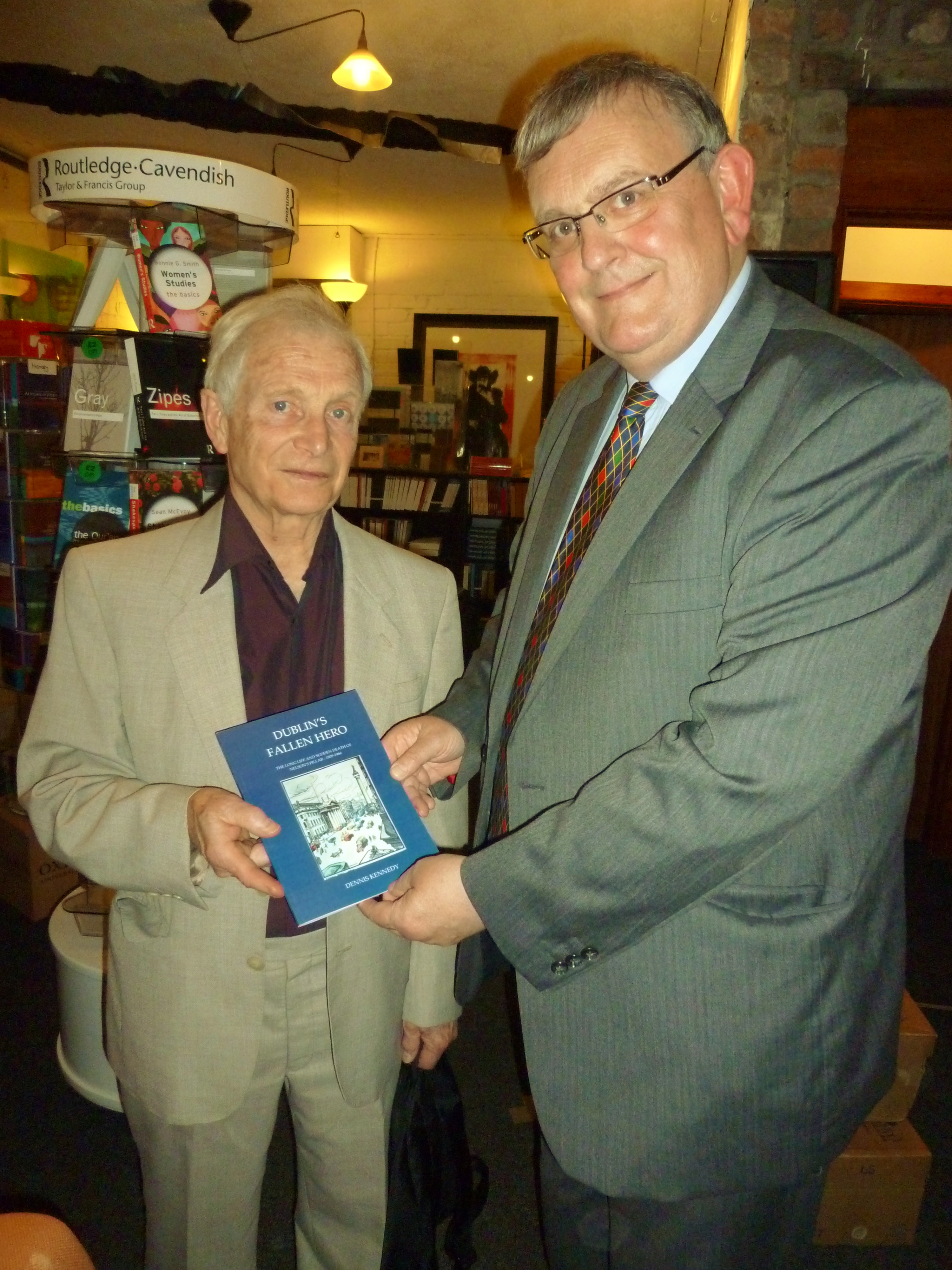
Author Dennis Kennedy and myself

Author Dennis Kennedy and myself

This evening (Tuesday) I launched a book in Belfast by the former Irish Times journalist Dennis Kennedy about the history of the Nelson Pillar in Dublin. It used to mark the centre of the city in O’Connell Street (formerly Sackville Street) beside the GPO. Now we have The Spire.

The Spire: Photo  © Michael Fisher

The Spire: Photo © Michael Fisher

A bomb explosion in the early hours of March 8th 1966 toppled Admiral Horatio Nelson from his perch and damaged a section of the 121 ft high column. The remaining stump and the large base which contained the entrance where you used to be able to go in and climb up 168 steps to the top to view the skyline had to be blown up by Irish Army engineers six days later. In the process they succeeded in causing more damage to premises in the surrounding area than the original explosion. The blast is thought to have been the work of a couple of former IRA members, although that group denied responsibility. It coincided with the 50th anniversary of the Easter Rising. The pillar had been opened in October 21st 1809, the fourth anniversary of the Battle of Trafalgar. The inscription on the memorial plaque read as follows:-

 “By the blessing of Almighty God To Commemorate the Transcendent Heroic Achievements of the Right Honourable Horatio Lord Viscount Nelson Duke of Bronti in Sicily, Vice-Admiral of the White Squadron of his Majesty’s Fleet, Who fell gloriously in the Battle of Cape Trafalgar On the 21st Day of October, 1805, when he obtained for his Country a Victory over the Combined Fleets of France and Spain, Unparalleled in Naval History. This first stone of a Triumphal Pillar was laid by His Grace, Charles Duke of Richmond and Lennox, Lord Lieutenant General & General Governor of Ireland, On the 15th Day of February, In the Year of Our Lord 1808, And in the 48th Year of the Reign of our most Gracious Sovereign, GEORGE THE THIRD, In Presence of the Committee, appointed by the Subscribers, for erecting this Mounument“.

Dublin's Fallen Hero: Dennis Kennedy

Dublin’s Fallen Hero: Dennis Kennedy

The book launch was at No Alibis bookshop on Botanic Avenue at 5:30pm. The book is published by Ormeau Books, 3 Mornington, BELFAST BT7 3JS and costs £10 or can be purchased for €15 including free postage.

Author Dennis Kennedy and myself outside No Alibis bookstore

Author Dennis Kennedy and myself outside No Alibis bookstore

Nelson’s Pillar was the subject of a Scannal documentary on RTE1 in 2010. In January 2010 my nephew wrote the following in his blog on Dublin life and culture “Come Here to Me“:

For 157 years, he kept “a watchful half-eye over Ireland’s capital city”.

January 28, 2010 by Sam:

Earlier this week, RTE broadcast a very well made documentary on the history of Nelson’s Pillar. The programme contains amazing archive footage along with contributions from Des Geraghty, Jimmy Magee and David Norris……Though it focuses on the bombing of 1966, the documentary tells also tells the fascinating story of how in 1955 a group of UCD students, involved with the Irish National Student Council (INSC), occupied the pillar. Dropping a banner of Kevin Barry over the edge, they tried to melt Nelson’s statue with homemade “flame throwers”. Gardaí used hammers to break into the pillar and tried to arrest the students but they had to be released after the Gardaí were attacked by sympathetic members of the public. After the statue was blown up in May 1966, Nelson’s head was stolen by NCAD students from a storage shed in Clanbrassil Street as a fund-raising prank to help clear their debts. Wearing sinister black masks, they held a very civil press conference explaining their motives. The head made several secret appearances over the next six months including making its way onto the stage of a Dubliners concert in The Olympia Theatre!

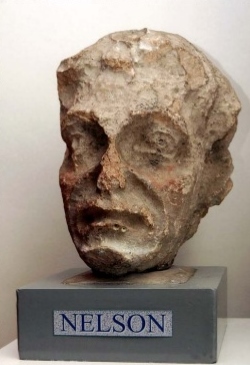
Nelson’s head now rests peacefully in the Gilbert Library in Pearse Street. Photo by Alastair Smeaton, Dublin Public Libraries.

Head of Nelson

Head of Nelson

COMMEMORATION OF CARLETON

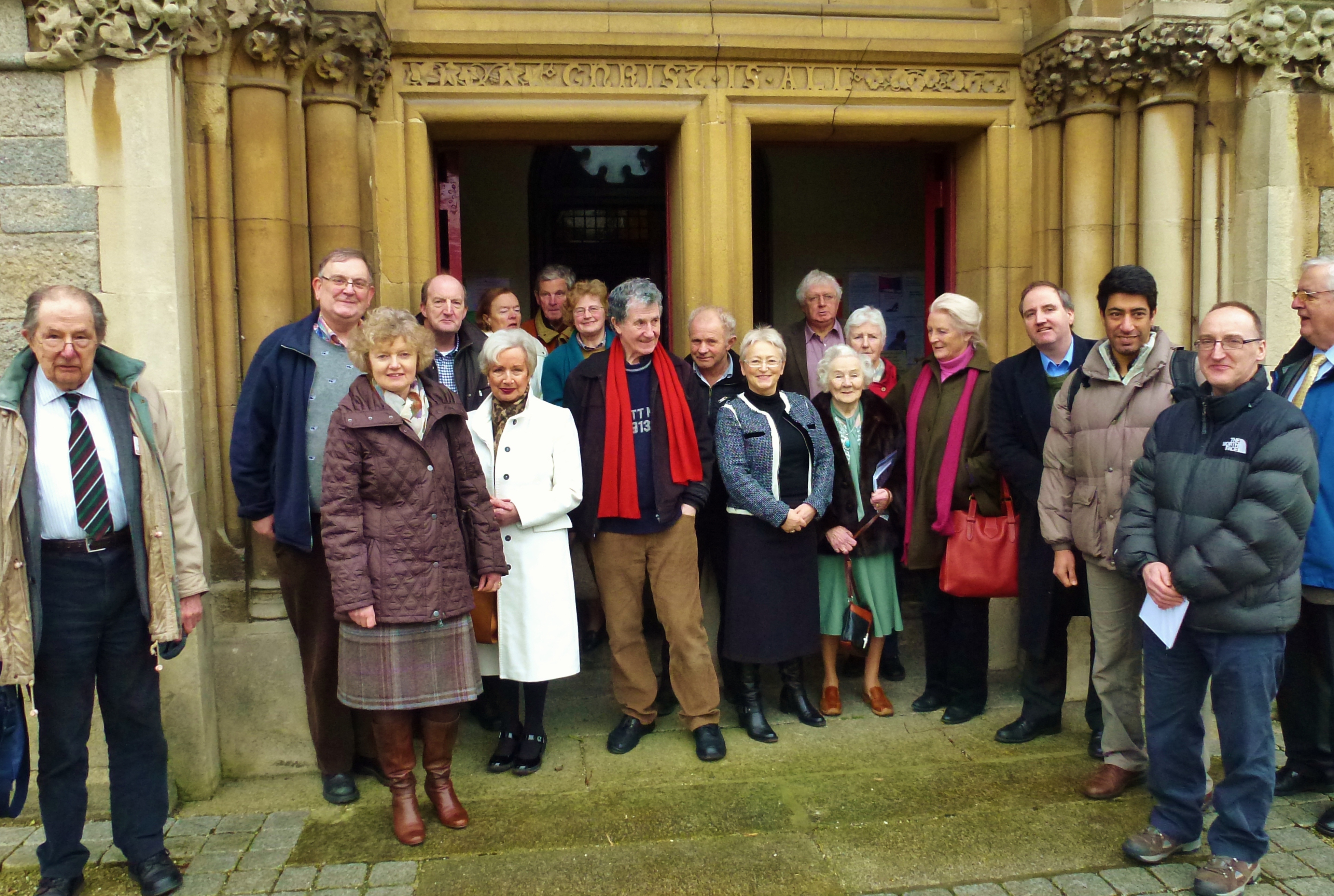
William Carleton Society at Sandford Parish Church

William Carleton Society at Sandford Parish Church

IN THE FOOTSTEPS OF CARLETON:

The William Carleton Society based in the Clogher Valley and Monaghan came to Dublin to mark the 144th anniversary of the death of the famous 19thC Irish author from County Tyrone. Carleton grew up as a Catholic, but would later convert to Protestantism in the Anglican church. He was the youngest of fourteen children born to a small farmer in  Clogher. Dr Frank Brennan a member of the Executive Committee met us at Castleknock and gave our coach party a guided trip through the city centre, starting with the Phoenix Park with its numerous historical monuments and associations going back hundreds of years. We passed Aras an Uachtaráin, the Polo Grounds, Phoenix Cricket Club, the oldest cricket club in Ireland and Dublin Zoo, also taking in the Wellington monument.  We then travelled along Dublin’s quays, with views of Collins Barracks which I have fond memories of, now part of the National Museum of Ireland. On the other side of the Liffey we saw Heuston station and the HSE Headquarters at what was Dr Steevens’ Hospital, with St Patrick’s Hospital and beside it Guinness’ brewery. We saw the Four Courts and crossed Grattan bridge travelling towards City Hall and what was once the headquarters of the British administration In Ireland, Dublin Castle, now in use for the state’s Presidency of the European Union.

P1050799 (2) (960x1280)

Reverend Precentor Noel Regan

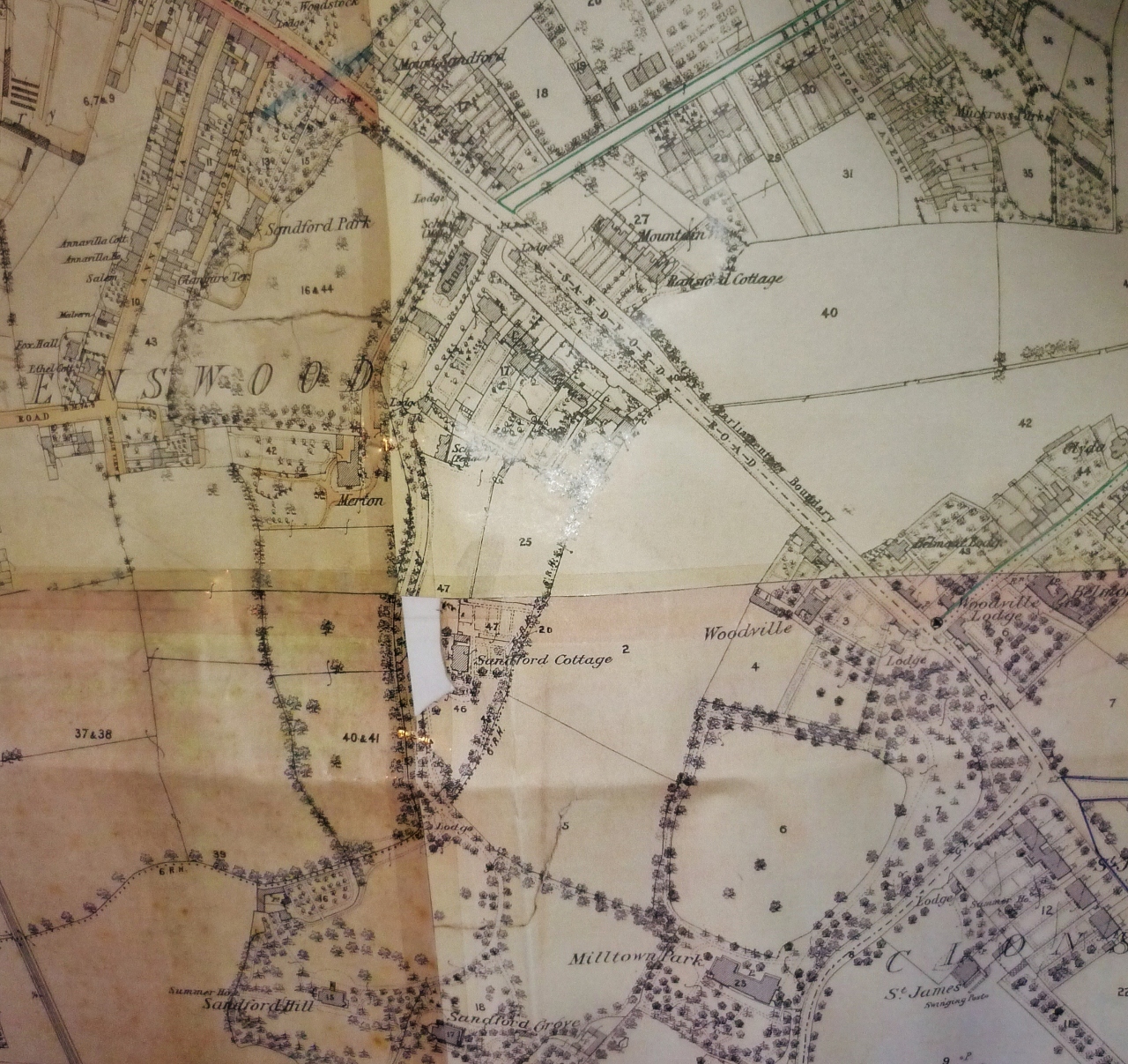
On then to the two cathedrals, Christ Church where there was a festival on in the grounds and St Patrick’s Cathedral where the Reverend Precentor Noel Regan from St Macartan’s Cathedral in Clogher provided some useful background about the two buildings. We moved on through the former Jewish area and into Ranelagh which developed as a genteel middle class suburb after the Act of Union. At Sandford Church we were addressed by a local teacher, who is a member of the congregation, on the history of Sandford church and its connection with Carleton. Susan Roundtree, an architectural historian, also spoke about the development of 19thC Ranelagh and brught along an old map of the area from 1870, which showed Woodville, a row of houses along the Sandford Road close to the entrance to Milltown Park, where Carleton had spent his final years.

1870 map shows Woodville

1870 map shows Woodville

 The residence at Woodville, (beside the entrance to Milltown Park) is now demolished. In his latter years Carleton was friendly with a Jesuit priest Fr Robert Carbery, who was based at Milltown Park. Brian Earls reminded us that in the last weeks before his death in January 1869, the priest offered through Carleton’s wife Jane to give him the last rites of the Catholic church. In response, in one of his last communications, the author told the Jesuit:

“For half a century & more I have not belonged to the Roman Catholic religion. I am now a Protestant and shall will die such”     (LA15/319 DJ O’Donoghue papers, UCD Archives)

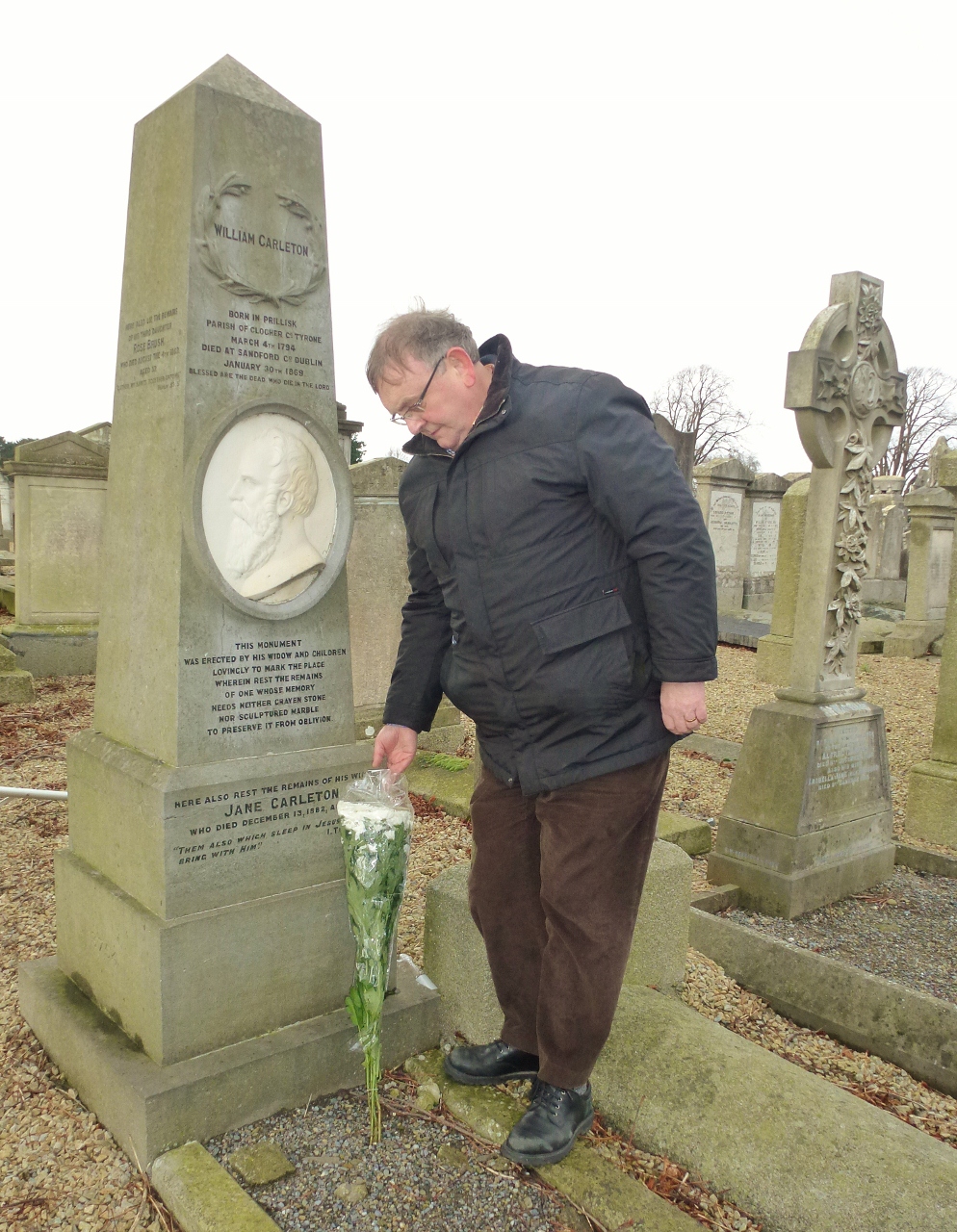
We then went to Mount Jerome cemetery for a short ceremony to commemorate the 144th anniversary of William Carleton’s death, followed by a short tour of the graveyard. We travelled to lunch at O’Briens at Sussex Place, Upper Leeson Street, one of Patrick Kavanagh’s haunts, which as a 1900’s grocery and bar reminded him of Carrickmacross. The journey to lunch took us through two Georgian squares (Fitzwilliam and Merrion) and past Leinster House and Government Buildings. Finally after lunch Frank Brennan brought us into Donnybrook and Ballsbridge, passing the British Embassy, AIB and the Aviva Stadium otherwise known as Lansdowne Road. We passed the Grand Canal Theatre, National Convention Centre, and saw some relics of the Celtic Tiger on our route home. Thanks to all who came and I hope you enjoyed the day.

At grave of William Carleton

At grave of William Carleton

The William Carleton Society is a partner in the Shared History, Shared Future project run by Dungannon and South Tyrone Borough Council through the EU funded South West Peace III Partnership Programme and this activity is being delivered through it.

DSTBC LogoSWPeaceIII_logo_options_2berdfimages