MEMORIES AMIDST THE DRUMLINS


New Publication Compiles Work of Noted Tydavnet Literary Figure

New Publication Compiles Work of Noted Tydavnet Literary Figure: Northern Standard 19/07/13

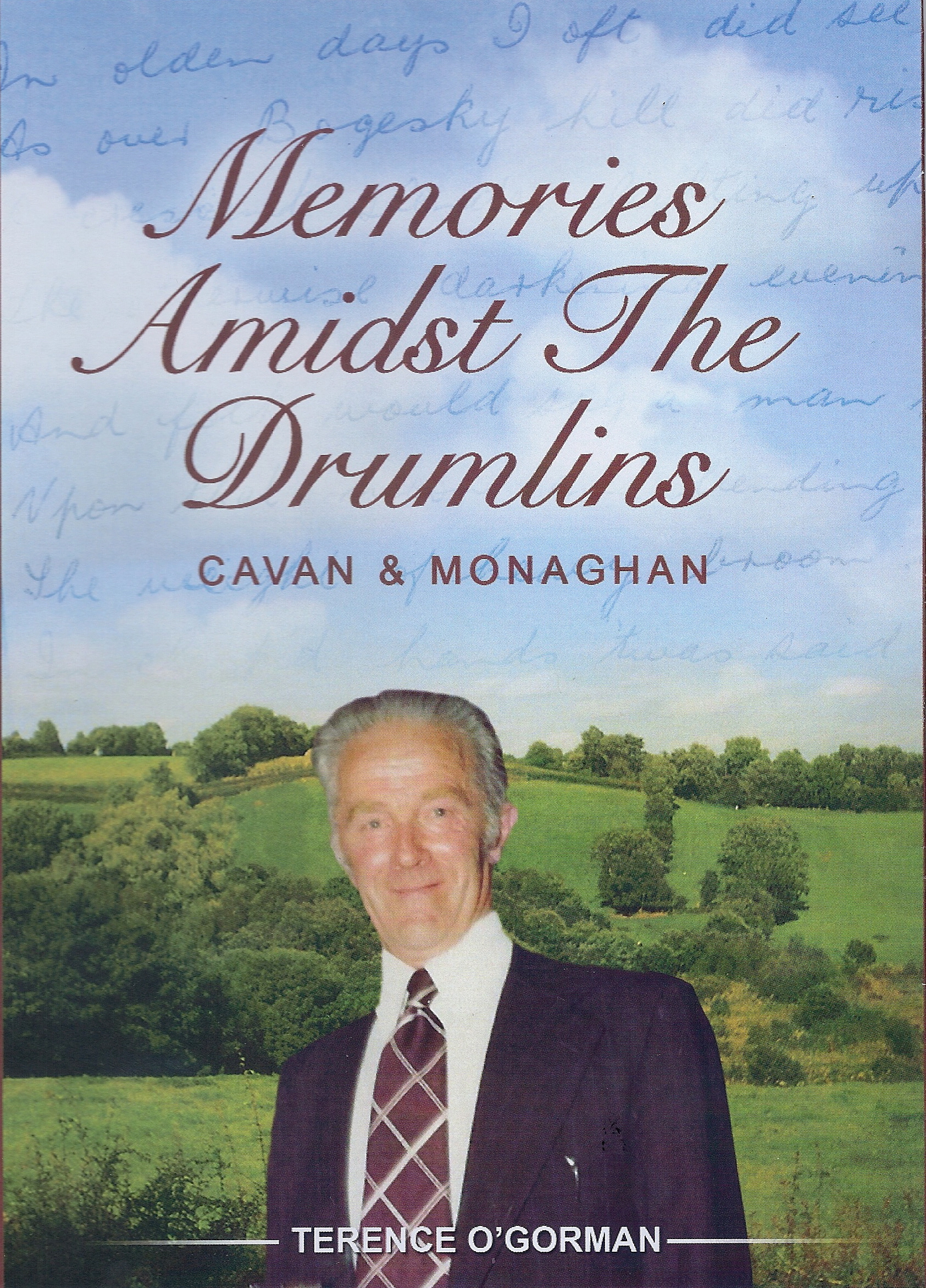
“Memories Amidst the Drumlins: Cavan and Monaghan”, a compilation of  the stories and poems of the late Terence O’Gorman of Tullyvogey, Tydavnet, will be officially launched at a function in Monaghan’s Four Seasons Hotel on Friday, August 2nd next. A well-known North Monaghan personality, Mr O’Gorman, who passed away in 2003, had some of his literary contributions published in the columns of this newspaper over the years.

His daughter Patricia Cavanagh, the current President of the ICA in Co. Monaghan, has now brought together dozens of poems and stories penned by her father in a volume that will be launched by the Director of the William Carleton Summer School, Michael Fisher. Over the past two years Patricia has carefully compiled and edited what amounts to a wonderful record of the lifestyle of South Ulster from the 1930s until the turn of the century.

Memories Amidst the Drumlins: Cavan & Monaghan

Memories Amidst the Drumlins: Cavan & Monaghan

Some of the poems were written to mark special occasions such as birthdays and weddings of family and friends and there were also tributes to those who had passed away. This collection is a wonderful tribute to Terence, who came from Lavey in Co. Cavan and who was a familiar figure in and around Tydavnet and Monaghan, where he worked at St Davnet’s Hospital for many years. The book includes a number of poems he wrote for his friends and work colleagues on their retirement from St Davnet’s.  He died in 2003. The 340-page book will retail for €15.

The launch will be performed on the opening day of the William Carleton Summer School events taking place in Monaghan and Emyvale from August 2-4. Terence was a regular visitor to the annual Carleton event as well as attending other literary festivals throughout the country. Patricia Cavanagh spoke about the book at the launch of the William Carleton Summer School programme at the Writers’ Centre in Dublin in June.

WILLIAM CARLETON LAUNCH

William Carleton Summer School Launch at Corick House, Clogher: Sam Craig, Isabel Orr & Liam Foley, Committee Members

William Carleton Summer School Launch at Corick House, Clogher:
Sam Craig, Isabel Orr & Liam Foley, Committee Members

Lively Programme for Carleton Summer School: Ulster Herald Thursday July 18th 2013

Tom McGurk returns to his Tyrone roots to appear at what promises to be one of the liveliest William Carleton summer school programmes in Clogher next month. It will include three nights of music of various types, including a session by a young female Irish traditional group Síoda.  

Tom McGurk returns to his roots

Tom McGurk returns to his roots

A native of Brockagh near the shore of Lough Neagh, Tom McGurk is one of the most distinguished journalists and broadcasters in Ireland. He will be in conversation with Aidan Fee (like him, a past pupil of St Patrick’s College Armagh) on the subject of ‘Northern Ireland, Past and Present’ on the opening day of the school at Corick House Hotel on Monday 5th August at 4:30pm. As a student at Queen’s University Belfast, he was active in the civil rights campaign in 1968 and was involved with the People’s Democracy group.

Tom’s RTE television credits include presenting programmes like ‘Tangents’, ‘Last House’, ‘Folio’ and he currently anchors major RTE sports coverage especially rugby. He played rugby for Ulster. In Britain, he fronted ‘Granada Reports’ and reported for ‘Channel 4 News’ and ‘Newsnight’ on BBC2. In the late 1980s he was Foreign Correspondent with ‘The Mail On Sunday’ (London) reporting from Latin America, Africa and the USA and he covered the end of the ‘Cold War’ in Europe.

His extensive radio credits include presenting ‘Start the Week’ on BBC Radio 4 and a wide variety of interview and current affairs programmes with RTE. His screen writing credits include the television dramas ‘Dear Sarah’ (Thames TV/RTE) and ‘The Need to Know’ (BBC TV). He is also a poet and is a columnist with The Sunday Business Post in Dublin.

Síoda will perform at the Rathmore Bar, Main street Clogher (opposite the Cathedral) at 8pm on Monday 5th August. Admission free. They are a young and vibrant Irish traditional band. They have been making waves on the traditional music scene throughout Ireland for the last year. The band is comprised of Emma Robinson on flute, whistles and vocals, Joanna Boyle on banjo, guitar and vocals, Alana Flynn on bodhran, vocals and dancing, Rosie Ferguson on fiddle, vocals and dancing and the only male in the line-up Conor Murphy on guitar and vocals. Coupled with the singing and playing, the band contains an all Ireland champion Irish Dancer, creating an all-round exhibition of Irish culture. The band have featured on numerous radio and television programmes, including BBC Radio Ulster’s ‘Blas Ceoil’, UTV, U105 and TG4’s ‘Geantrai’. Síoda will be joined by well-lnown singer and broadcaster Seosaimhín Ní Bheaglaoich.

Wednesday 7th August will be an opportunity to meet the two Marys….Mary O’Rourke and Mary Kenny. Both will be speaking on a day devoted mainly to dealing with the past. From the sectarianism of Carleton’s time in the Clogher Valley of the early 19th Century up to modern Ireland. The first topic that day (7th) will be the Orange Order. Politics Professor Jon Tonge from Liverpool University is an expert on the subject, author of a book on Orangeism and Britishness. Commentators Alex Kane and Dr Margaret O’Callaghan will be contributing to a discussion afterwards.

Former Fianna Fáil Minister Mary O’Rourke will talk about her Memoir concerning her life as a politician and how different political strands can be accommodated. Another guest is Dublin-born poet Siobhan Campbell, currently working with US Army veterans to set down their experiences in writing. The closing sessions will be devoted to the Carson story, the great unionist leader. Actor and playwright Paddy Scully will present extracts from his one-man show ‘Lord Edward Carson Reflects’. Author and playwright Mary Kenny will talk about ‘Carson, Irishman, Unionist and Dubliner’.

The international aspect of the summer school will be reinstated with the presence of Professor Thomas O’Grady, Director of Irish Studies at the University of Massachusetts in Boston. He will talk about Carleton’s story ‘The Donagh’ on Monday 5th August. Honorary Director, Professor Owen Dudley Edwards, will give a talk on Carleton, Irish Literature and Caesar Otway, the Protestant clergyman who influenced Carleton to convert to the Anglican church in order to get his writings published.

The question of language will be discussed on Tuesday 6th August. Dr Ciaran Mac Murchaidh, St Patrick’s Drumcondra, will speak about the use of Irish in the Clogher Valley in the era of Carleton’s youth. Dr Ian Adamson from Belfast will present a paper on Ulster Scots. The William Carleton Society President Jack Johnston will talk about Augher from the time of plantation landlord Sir Thomas Ridgeway to George Duffy, the Miller. The Miller’s daughter, Anne Duffy, Carleton’s earliest love, is the subject of a story by Josephine Treanor, who is related to her.

In a session devoted to literature, four writers will discuss their works:  Ciaran Collins from Kinsale, Co.Cork, ‘The Gamal’, Patricia Craig from Belfast, ‘Twisted Root’, Anthony Quinn from Tyrone,’Disappeared’ and Tony Bailie from Co.Down, ‘A Verse to Murder’. 

There will be entertainment each evening, including a concert at Fivemiletown Wesleyan Hall, opposite the creamery, at 8pm on Wednesday 7th August. Murley Silver Band, a local group, will be joined by Monaghan Gospel Choir, with a star guest, Gloria, famous for her recording of ‘One Day at a Time’. The previous evening (Tuesday 6th) at 8:30pm at Somers cafe, Fardross (Clogher Valley Caravan Park), the sound of bagpipers Jim Brady and Frank Gildernew along with the young pipes and drums Ulster Scots group will mix with the sound of Irish traditional musicians, the McKenna family from Clogher. The Clogher Valley ramblers have also organised a Carleton walk to finish at Fardross in time for the entertainment (departing Corick House 7pm for summer school participants). All evening events are FREE and are part-funded by the EU’s PEACE III Programme for PEACE and Reconciliation through the ‘Shared History Shared Future’ Project administered by Dungannon and South Tyrone Borough Council.

On Thursday 8th there will be a literary tour to Fermanagh including the Crom estate and Enniskillen. Cost £30 to include snack, light lunch and evening meal. Departing Corick House 10am sharp. Bookable via tour guide Frank McHugh e: f.mchugh4@btinternet.com.

The full programme can be found on our website, www.williamcarletonsociety.org or by contacting wcarletonsociety@gmail.com

WIND FARMS

Clogher Valley with Knockmany in distance

Clogher Valley with Knockmany in distance

My journey today was close to the Carleton trail, looking towards Knockmany hill near Clogher in County Tyrone. But there was a very different view on the other side of the road between Fintona and Fivemiletown: a wind farm. Opinions about this form of ‘green’ energy are divided. But this is just one of the views I had on top of the mountain (well hill, actually!).

Wind Farm near Fivemiletown, Co. Tyrone

Wind Farm near Fivemiletown, Co. Tyrone

FROM CULLAMORE TO SHIPLEY

Lough More, Cullamore on Tyrone/Monaghan border

Lough More, Cullamore on Tyrone/Monaghan border

After finishing some work on the programme for the 2013 William Carleton summer school next month, I travelled back through Carleton country to North Monaghan. I went past Kilrudden, home of the late Mary McKenna, a former President of the William Carleton Society. I had earlier visited her grave at St Macartan’s (the Forth) chapel, where I also tidied up the grave of my McCann relatives, two of whom had made the journey from this beautiful Tyrone countryside to work as doctors in Shipley in England. I will tell you more about them later and how I found myself following their footsteps to Yorkshire last month.

Grave of Mary McKenna, Kilrudden House

Grave of Mary McKenna, Kilrudden House

The old road from Augher towards Monaghan takes you past Kilrudden and up Dunroe hill. Heading towards the border along a road that has now been re-connected with County Monaghan, you pass the townland of Cloonycoppoge where the McCanns came from before they moved to Aughnacloy, and then you come to Cullamore. I remember talking to Mary about them as she brought us on a Carleton tour one year.

Although it was 10pm it was still bright and I met a couple who were out walking. I stopped to look across at Lough More, a lake that marks the boundary between the UK and Republic of Ireland. The lake covers approximately 30 hectares and contains a good stock of wild brown  trout including the Ferox trout. The Lough More Anglers Association controls  fishing  on this water and day permits are available.

Carleton tells us in the Preface to The Black Baronet (1858) that “the titles of Cullamore and Dunroe are taken from two hills, one greater than the other, and not far asunder, in my native parish; and I have heard it said, by the people of that neighbourhood, that Sir William Richardson (of Augher), father to the late amiable Sir James Richardson Bunbury, when expecting at the period of the Union to receive a coronet instead of a baronetcy, had made his mind up to select either one or the other of them as the designation of his rank“.

ROYAL VISITORS IN CALEDON

Arrival of Prince of Wales & Duchess of Cornwall in Caledon

Arrival of Prince of Wales & Duchess of Cornwall in Caledon

The border village of Caledon in County Tyrone was looking its best as it welcomed a royal visitor, His Royal Highness the Prince of Wales who is on a two-day visit to Northern Ireland along with Her Royal Highness the Duchess of Cornwall.  It’s a while since any member of the British royal family came here, although the area is the seat of the 7th Earl of Caledon, Lord Lieutenant for County Armagh, which lies on the other side of the River Blackwater and where some of his 5000 acre estate is situated. It adjoins two other estates, Tynan Abbey (Armagh) and Castle Leslie across the border in Glaslough, County Monaghan. Sir Shane Leslie and his parents would have been in contact with their Caledon neighbours, as well as the Stronges. Sir John Leslie arrived to meet the royal visitors and remind them of his family’s connection with Winston Churchill.

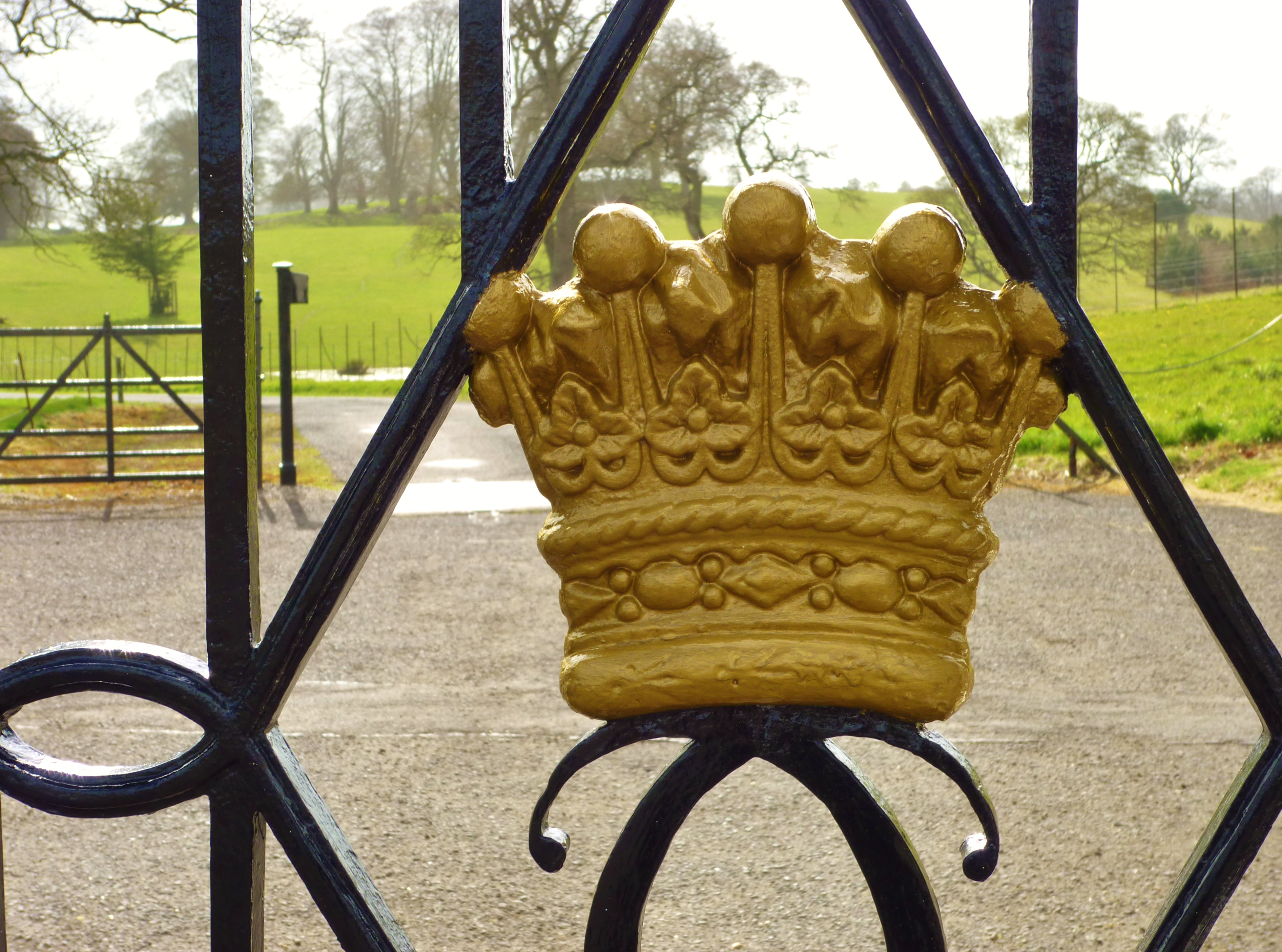
Detail on Gate

Detail on Gate

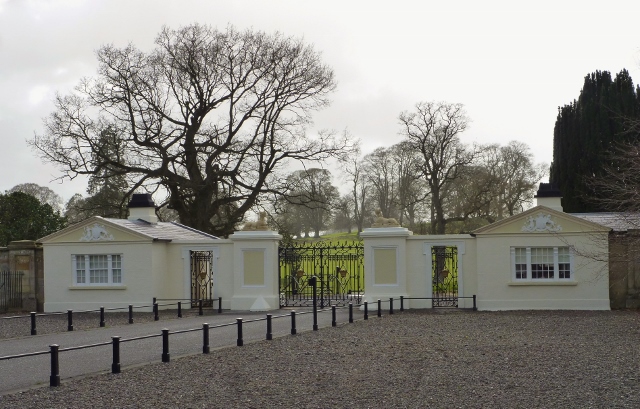
Entrance to Caledon Castle

Entrance to Caledon Castle

Tynan Abbey was destroyed in an IRA gun and bomb attack on January 21st 1981. The elderly Sir Norman Stronge (86), a former Stormont Speaker, Ulster Unionist politician and former British Army officer, was shot dead along with his only son James, a former Grenadier Guards officer and Unionist MP who was also an RUC Reservist.

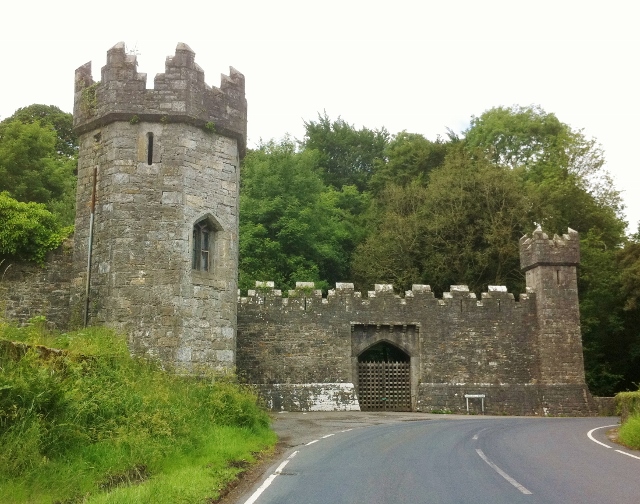
Entrance to Tynan Abbey estate

Entrance to Tynan Abbey estate

There are other reminders that this was one of the areas targeted by the IRA during the “troubles”. In the cemetery beside St John’s parish church, I came across the grave of an RUC Reservist Joshua Willis. The 35 year-old was killed when an IRA landmine containing at least 1000 lbs of explosives was detonated as his armoured patrol car passed along the Killylea Road outside Armagh. Two of his colleagues also died in the attack in July 1990. There was a fourth victim who was passing with a companion in another car, a Catholic nun, Sr Catherine Dunne of the St Louis sisters. She was based at Middletown. The IRA said the nun was the victim of ”unforeseen and fluke circumstances”. One of the nuns from Middletown was at a reception involving community groups who met the VIPs.

Grave of Reserve Constable Joshua Willis

Grave of Reserve Constable Joshua Willis

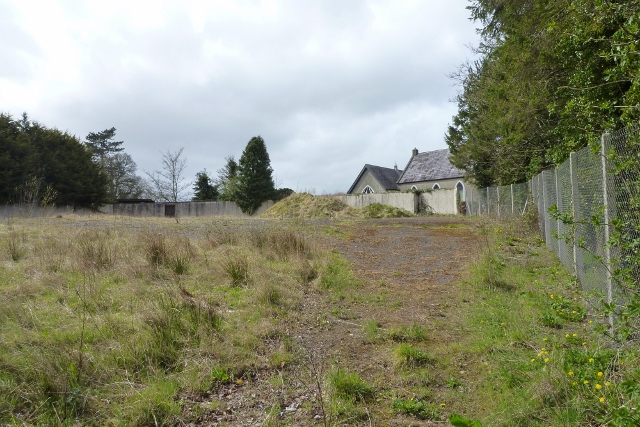
Not far away on the road towards Aughnacloy there is a memorial erected by local people in memory of the three policemen who were killed. It is close to the site of the former RUC/PSNI barracks, which has now been demolished. The site has now been sold for redevelopment.

Site of former Police Station

Site of former Police Station

Memorial to RUC Reservists

Memorial to RUC Reservists

Prince Charles however was probably concentrating on other parts of this former mill village, where an extensive regeneration project has been carried out over the past few years, led by an enthusiastic committee. I wrote about the work of Caledon Regeneration project last April.

Caledon Regeneration Partnership was formed in 1994 to take forward a planned social, economic and environmental regeneration strategy for the County Armagh village. It is made up of representatives from the local community, local authority and Caledon Estates Company, which has an office in the main street.

Caledon Post Office, Main Street

Caledon Post Office, Main Street

One of the projects being undertaken is the restoration of a beam engine and engine house. Last year a total of £220,000 in funding was secured to finance the first phase.  It is hoped that the engine will eventually be restored to a fully operational state, and become a tourist attraction for the area. The unique piece of equipment dates back to the early 1830s and is one of the earliest surviving steam engines in Ireland. It was once used to power the Caledon Flour Mill and then Caledon Woollen Mills.

Beam Engine, Caledon

Beam Engine, Caledon

In 1984 the village was designated as a Conservation Area and six years later, this was reviewed and the boundary extended. DoE (NI) Planning Service produced a Conservation Area Guide to accompany the original designation, which included design guidance intended to help protect the historic fabric of the village. In November 2001 a unique restoration scheme was officially opened by then Social Development Minister Nigel Dodds of the DUP.

Mill Terrace, Caledon

Mill Terrace, Caledon

The £500,000 project involved the sympathetic restoration of a historic terrace of former mill houses and the implementation of an environmental improvement scheme in the Mill Street area of Caledon. Speaking at the opening ceremony, Mr Dodds said:-

Caledon has a host of unique and beautiful buildings which represent an important part of our architectural heritage. The restoration work and the environmental improvements have made a very significant impact on the appearance and life of the village. The regeneration of towns and villages across Northern Ireland is an important priority for the Department for Social Development. The Mill Street project is an example of what can be achieved through partnerships between local communities, statutory agencies and funding bodies.”

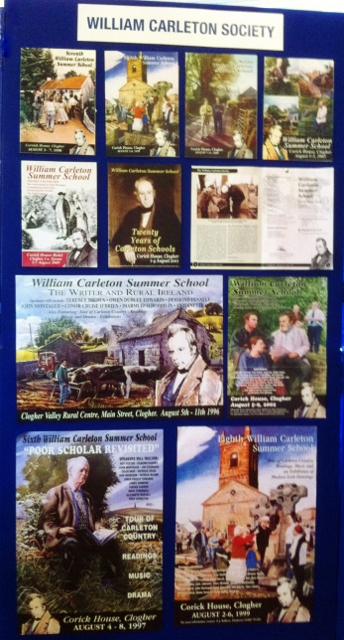
William Carleton Society display

William Carleton Society display

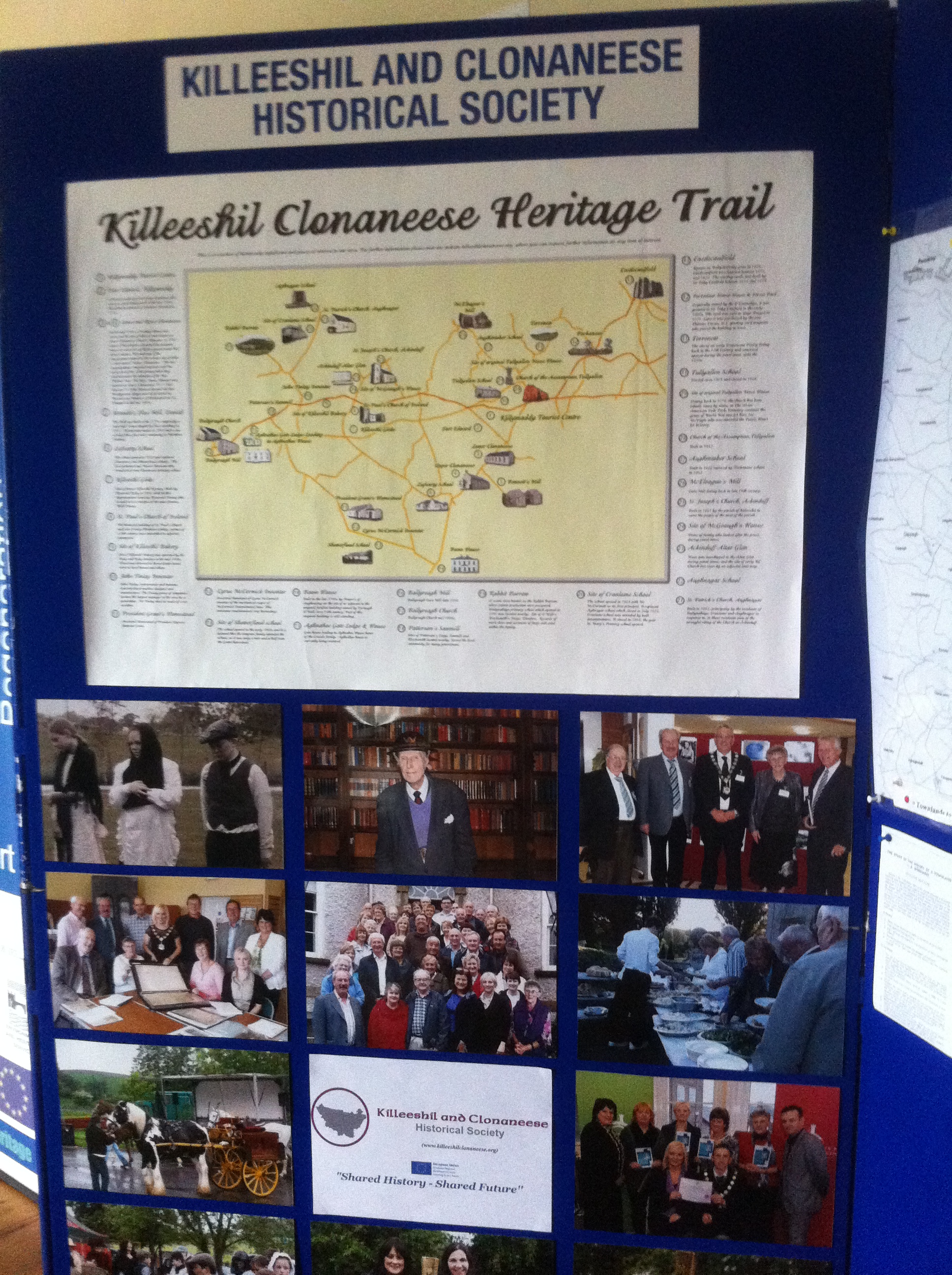
Killeeshil & Clonaneese Historical Society Display

Killeeshil & Clonaneese Historical Society Display

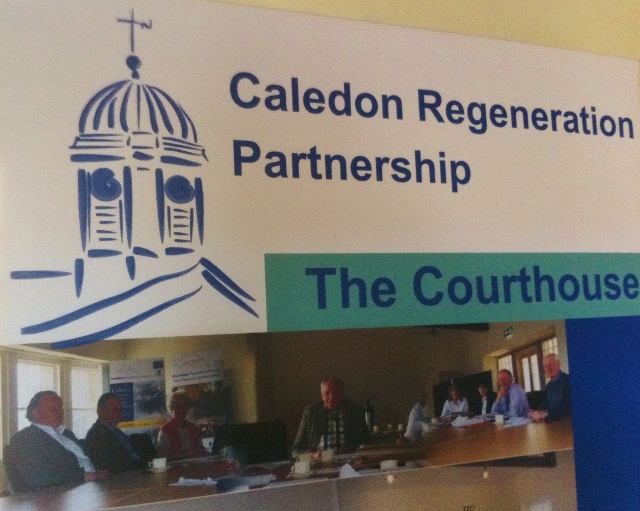
Caledon Regeneration Partnership

Caledon Regeneration Partnership

William Carleton Society & Donaghmore Historical Society

William Carleton Society & Donaghmore Historical Society

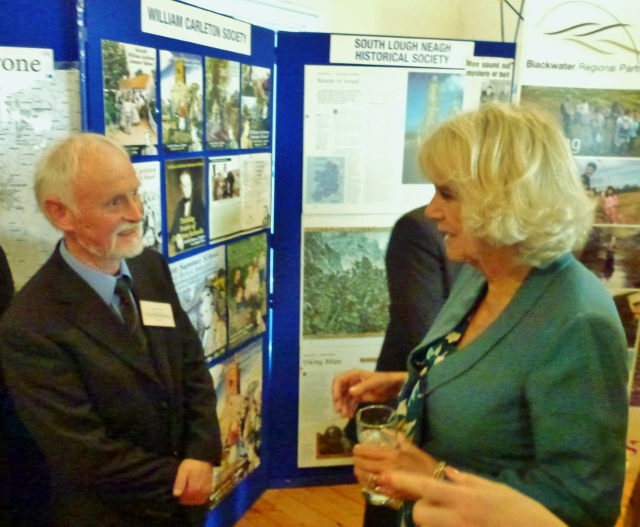
Caledon Regeneration is one of five groups taking part in the “Shared History, Shared Future” project under the Peace III programme run by Dungannon and South Tyrone Borough Council. They had a display at the Courthouse along with the William Carleton Society, Killeeshil and Clonaneese Historical Society, Donaghmore Historical Society and South Lough Neagh Historical Society, which is working on a project about the Ulster Canal. The historian Jack Johnston President of the William Carleton Society represented the group at the Caledon event along with Patron Sam Craig and Summer School Director Michael Fisher.

William Carleton Society Patron Sam Craig & Duchess of Cornwall

William Carleton Society Patron Sam Craig & Duchess of Cornwall

The Northern Ireland Office news release:-

On the second day of engagements (in Northern Ireland), TRH The Prince of Wales & The Duchess of Cornwall this morning visited the historical village of Caledon.  They were accompanied by Lord Caledon and his wife, Lady Caledon.

TRHs visited Mill Street Cottage and they met with the owners of one of the refurbished cottages, Denver and Michelle Irvine.  This is one of the first projects to be completed by the regeneration scheme which had lain idle since the early 1970s.  The terraced two-story stone cottage, which was constructed around 1850 to house mill workers and their families, received Grade B1 listing in 1983 and are now the pride of this lovely village.

The Prince of Wales and the Duchess of Cornwall then moved to the Beam Engine and Engine House which dates from the early 1830s and once powered a flour mill and subsequently a woollen mill.  They are now all that remain of what was once a massive mill complex.  TRHs were then presented to members of the Caledon Regeneration Partnership by the founding member, William Beattie.  Following a short overview of the Beam Engine Conservation project, TRHs had the opportunity to view the Beam Engine.  This engine is one of only eight beam engines to survive in Ireland, a rare example of 19th century steam engine technology

Prior to departing the Beam House, William Beattie  invited HRH The Prince of Wales to unveil a plaque to officially open the complex.

TRHs then made the short journey to the centrepiece of the village – the Court House and Clock Tower.  On arrival at the Courthouse they had the opportunity to meet with children and teachers from St Joseph’s and Churchill Primary Schools, as well as representatives of the Blackwater Regional Partnership, South Tyrone Historical Group, local church leaders and members of the Women’s Institute.

Prior to farewells, TRH The Prince of Wales and The Duchess of Cornwall were presented with a Food Hamper by two local school children.

ORANGE BANNERETTE IN TYRONE

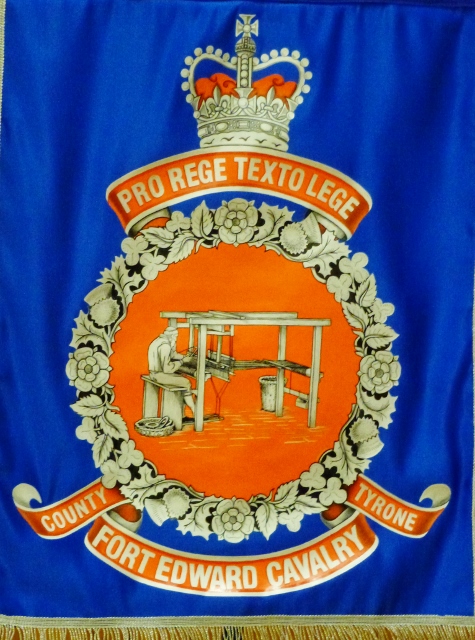
Fort Edward Bannerette, Aughintober LOL 37

Fort Edward Bannerette, Aughintober LOL 38

In April I wrote about the banners and sashes from orange and green traditions on display in an interesting exhibition “Walking the Colours” at Monaghan County Museum until the end of July. Tonight there was an unveiling of a new bannerette at Aughintober orange hall near Castlecaulfield in County Tyrone. The News Letter reports that it uses the description of the original banner dedicated to a former local lodge, Fort Edward Cavalry 677, which was formed from a local Yeomanry unit in 1798. The bannerette was commissioned by Raymond Cuddy, a pig farmer, who is a long-standing member of Aughintober LOL 38  and a past worshipful master and secretary, who gave some 20 years’ service as an officer with the lodge. The unveiling was carried out by the Grand Master of the Grand Orange Lodge of Ireland, Edward Stevenson.

Aughintober Orange Hall

Aughintober Orange Hall

The presentation of Fort Edward Cavalry’s original banner on July 12 1798 was recorded in the News Letter. This was discovered by Raymond Cuddy and fellow historian Jonathan Gray, who was born in Belfast but now lives in Castlecaulfield, following extensive research carried out over the past year. At tonight’s unfurling, which took  place in Aughintober Orange Hall, both Raymond and Jonathan Gray presented a talk on the Fort Edward Cavalry, tracing their origins in the Clonaneese volunteers, their relationship with Lower Clonaneese Presbyterian Church and their legacy in this area. The talk included the military career of their Captain, Waterhouse Crymble Lindsay. Raymond, who along with Jonathan is a member of Killeeshil and Clonaneese Historical Society, has plans to write a book about the legacy of the local lodge. The talk will be repeated next Wednesday 3rd July at 7:30pm at Ranfurly House in Dungannon.

Although tonight’s event is not part of the same programme, the Killeeshil and Clonaneese Historical Society is one of five groups including the William Carleton Society involved in the “Shared History, Shared Future” project supported by Dungannon and South Tyrone Borough Council. It recently held an open day at a former flax mill at Ennish near Lower Clonaneese church.

Bannerette unveiled by Grand Master

Bannerette unveiled by Grand Master

WILLIAM CARLETON SUMMER SCHOOL

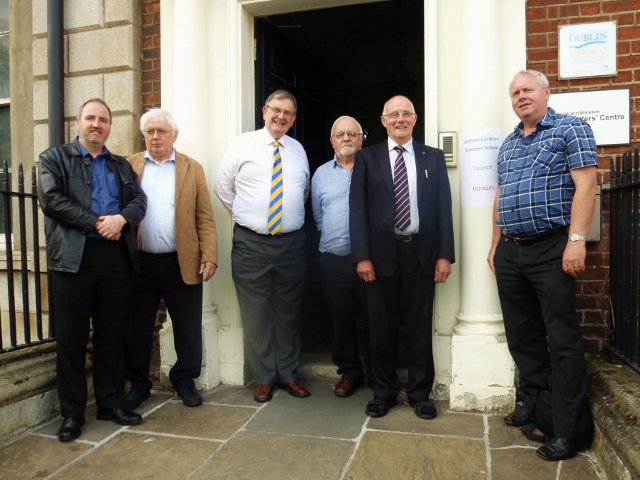
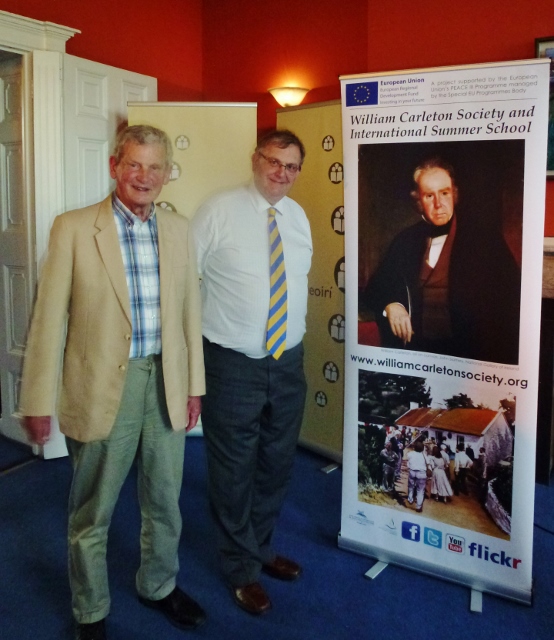
William Carleton Society committee members at Irish Writers' Centre, Dublin

William Carleton Society committee members at Irish Writers’ Centre, Dublin

Launch of the William Carleton summer school programme 2013

The William Carleton Society made another trip to Dublin this evening for the launch of the programme for the 22nd William Carleton international summer school. The line-up this year is broader than before, with a number of events in Monaghan and Emyvale before the start of the school itself on Monday 5th August at Corick House in Clogher.

Maurice Harmon and summer school director Michael Fisher

Maurice Harmon and summer school director Michael Fisher

Our patron Maurice Harmon read four of his poems and the President of the William Carleton Society, Jack Johnston from Clogher, revealed details of his recent research on Carleton’s addresses in Dublin, where the famous 19thC author spent most of his life, although he was born near Clogher in 1794 and was a Tyrone man!

William Carleton Society President Jack Johnston talking about Carleton

William Carleton Society President Jack Johnston talking about Carleton

Committee member Patricia Cavanagh from Tydavnet gave more details of her late father Terence O’Gorman’s book, which she has compiles from his poems and stories, “Memories Amidst the Drumlins: Cavan and Monaghan”. The book will be launched at the Four Seasons Hotel at 6pm on Friday 2nd August.

Patricia Cavanagh, Tydavnet, at William Carleton summer school launch

Patricia Cavanagh, Tydavnet, at William Carleton summer school launch

WILLIAM CARLETON INTERNATIONAL SUMMER SCHOOL 2013

Friday 2nd August    

Four Seasons Hotel, Coolshannagh, MONAGHAN    CONFERENCE:        CARLETON, KAVANAGH & GAVAN DUFFY

10:30am registration FREE ADMISSION            Tea/coffee

11am  Professor Thomas O’Grady (Boston/Prince Edward Island) on his poetry and Patrick Kavanagh

12 noon  Art Agnew (Inniskeen) on Patrick Kavanagh

Lunch Break

2:30pm Charles Gavan Duffy: Journalist and Patriot:  Brendan O Cathaoir (ex Irish Times) and Aidan Walsh (former curator, Monaghan County Museum)

3:30pm  Break

3:40pm  Mary O’Donnell (Monaghan poet and author)

4:45pm  Shemus cartoons in The Freeman’s Journal: Felix M. Larkin

6:00pm Reception and Book Launch:

Memories Amidst the Drumlins: Cavan & Monaghan: Terence O’Gorman poems and stories

 Saturday 3rd August

11am meeting at Monaghan museum, Hill Street.

Walking tour of Monaghan town with Grace Moloney, Clogher Historical Society, & Theresa Loftus, Monaghan Museum. FREE.

Lunch afterwards at pub with traditional music.

 Sunday 4th August  

4:00pm Assemble at Emyvale Leisure Centre (refreshments) or Edenmore school.

4:30pm walk to Blue Bridge, Emyvale

5:00pm to 6:00pm

Carleton commemoration at the Blue Bridge Emyvale and new plaque unveiled

6:30 Gather at Emyvale Leisure Centre

7:00pm Fair of Emyvale reading at Emyvale Leisure Centre. FREE. All Welcome.

8:00pm Refreshments.

***All Monaghan events are part funded by the EU’s ERDF through the Peace III programme financed through Monaghan Peace III Partnership***

Monday 5th August

Corick House Hotel,  Corick, CLOGHER, Co. Tyrone  BT76 0BZ

10am Registration, tea and coffee

11am Photocall

11:30am   Opening by Mayor of Dungannon & South Tyrone Borough Council

11:40am   Summer School Honorary Director:

Prof. Owen Dudley Edwards on “Carleton, Otway and Irish Literature”

1pm Lunch

2:30pm Keynote address Professor Thomas O’Grady, Boston

The Geography of the Imagination: Carleton’s “The Donagh”

3:30pm Tea/coffee break & bookstall

3:45pm Author Gerry McCullough (“Belfast Girls”) & Raymond McCullough

(singer & songwriter)

4:45pm  Broadcaster & commentator Tom McGurk in conversation with Aidan Fee:  “Northern Ireland: past and present”

6pm Close of session

 Tuesday 6th August                                           

09:30am registration  Tea/coffee

10:15am Language in the Clogher Valley of 19th Century. Irish: Dr Ciaran Mac Murchaidh, St Patrick’s Drumcondra.  Ulster Scots: Dr Ian Adamson

11:50am break

12:00 noon  President of the William Carleton Society, Jack Johnston:

“Augher: from landlord, Sir Thomas Ridgeway to George Duffy, the Miller”

12:45pm lunch

2:15pm  Josephine Treanor tells the story of her relative, mentioned by Carleton:

“Anne Duffy, the Miller’s daughter from Augher”

3:00pm  Break

3:15pm Focus on modern Irish writing: Ciaran Collins (“The Gamal”) + Patricia Craig (“Twisted Root”) + Anthony Quinn (“Disappeared”) + Tony Bailie (“A Verse to Murder”)

4:15pm Tea/coffee break

4:30pm Seminar continues & discussion to close of session 6:00pm.

Wednesday 7th August     

09:30am registration tea/coffee

10:00am Dealing with the past: Professor Jon Tonge (Liverpool)

Discussion: Alex Kane and Dr Margaret O’Callaghan (QUB), chair John Gray

11:45am Break

12:00pm  Former politician and commentator Mary O’Rourke on how differences can be accommodated

1:00pm  Lunch

2:30pm Poet Siobhan Campbell MA on writing about the past

3:30pm  Tea/coffee Break

3:45pm Patrick Scully extracts from one man show on Edward Carson

4:30pm Writer & author Mary Kenny (Edward Carson: Dubliner, Unionist, Irishman)

6:00pm Close of summer school

Thursday 8th August

Coach tour in Co.Fermanagh by Frank McHugh & Gordon Brand with particular reference to Shan Bullock: “The Loughsiders”, based around Crom estate. Booking required: for more details contact Frank McHugh e: f.mchugh4@btinternet.com

Cost: £30 including meals

Evening Events: (supported by Shared History, Shared Future Project funded by South West Peace III partnership )

Monday 5th August

Traditional Music session with female Irish traditional group Síoda &

singer Seosaimhin Ni Bheaglaoich,   Rathmore Bar, Main St Clogher 8pm

Tuesday 6th August

Walk on the Carleton Trail with the Clogher Valley Ramblers.  7:00pm

Bagpipers & traditional Music with the McKenna family (Clogher) at Somers Cafe, Fardross (off A4 road)  8:30pm   Free admission

Wednesday 7th August

Concert at Fivemiletown Wesleyan Hall 8pm

Murley Silver Band and Monaghan Gospel Choir: Special Guest Gloria  Admission Free.

More information at: www.williamcarletonsociety.org

e: wcarletonsociety@gmail.com

Costs:-
Daily: £40/€47 including lunch and tea/coffee break;
concession £33/€35 (saving of €3)
Morning:  £13/€15 or one session £7/€8   including tea/coffee;
concession £10/€12  or one session  £4/€5
Afternoon: £16/€20 or one session £8/€10 including tea/coffee;
concession £12/€14  or one session  £4/€5
Lunch £11/€13  

Tour Thursday including meal: £30/€35
Season ticket 4 days £150/€175 or concession £130/€140 (saving of €10)

Accommodation:

Dinner, B&B Packages at Corick House Hotel, Clogher:

3B&B plus 2 Evening Meals@ £170pps (double/twin occupancy)

3B&B plus 2 Evening Meals @ £220 (single occupancy)

2B&B plus 2 Evening Meals @ £140pps (double occupancy)

2B&B plus 2 Evening Meals @ £180 (single occupancy)

Double Room Rates B& B only

1 night £55pps

2 nights £50pps

3 nights or more £45pps

Single Rate B&B only

1 night B&B £70

2 nights or more B&B £65 per night

Accommodation also available at Glenvar guest house, 111 Tullyvar Road, Aughnacloy BT69 6BL

MONAGHAN IN LOURDES

Fr Jerry Caroll, Carrickmacross, Air Corps chaplain in Baldonnel

Fr Jerry Caroll, Carrickmacross, Air Corps chaplain in Baldonnel

NORTHERN STANDARD Thursday 6th June 2013

With around 30,000 pilgrims in Lourdes last weekend most of them attending the 55th annual international military pilgrimage, Michael Fisher managed to find several Monaghan connections among the Defence Forces contingent that travelled from Dublin……
Among the six chaplains with the 300-strong party was Fr Jerry Carroll from Carrickmacross. He is chaplain to the Air Corps at Baldonnel in Co. Dublin.

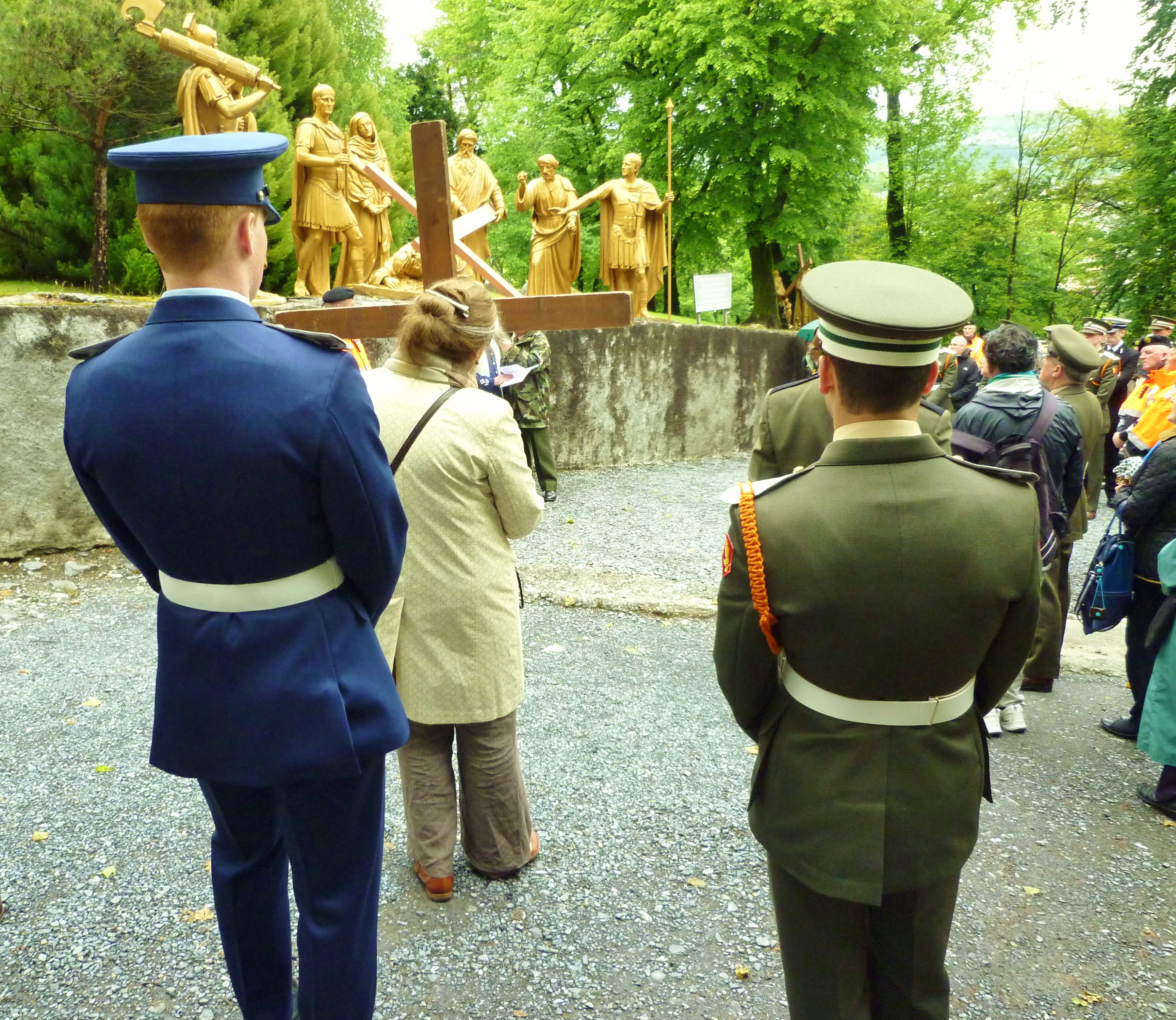
Stations of the Cross at Lourdes

Stations of the Cross at Lourdes

He led the group in making the Stations of the Cross. During the procession Evelyn Fisher from Drumcoo Woods, Tydavnet, was asked to carry the cross at the eighth station (Jesus meets the women of Jerusalem) to the next one (Jesus falls the third time).

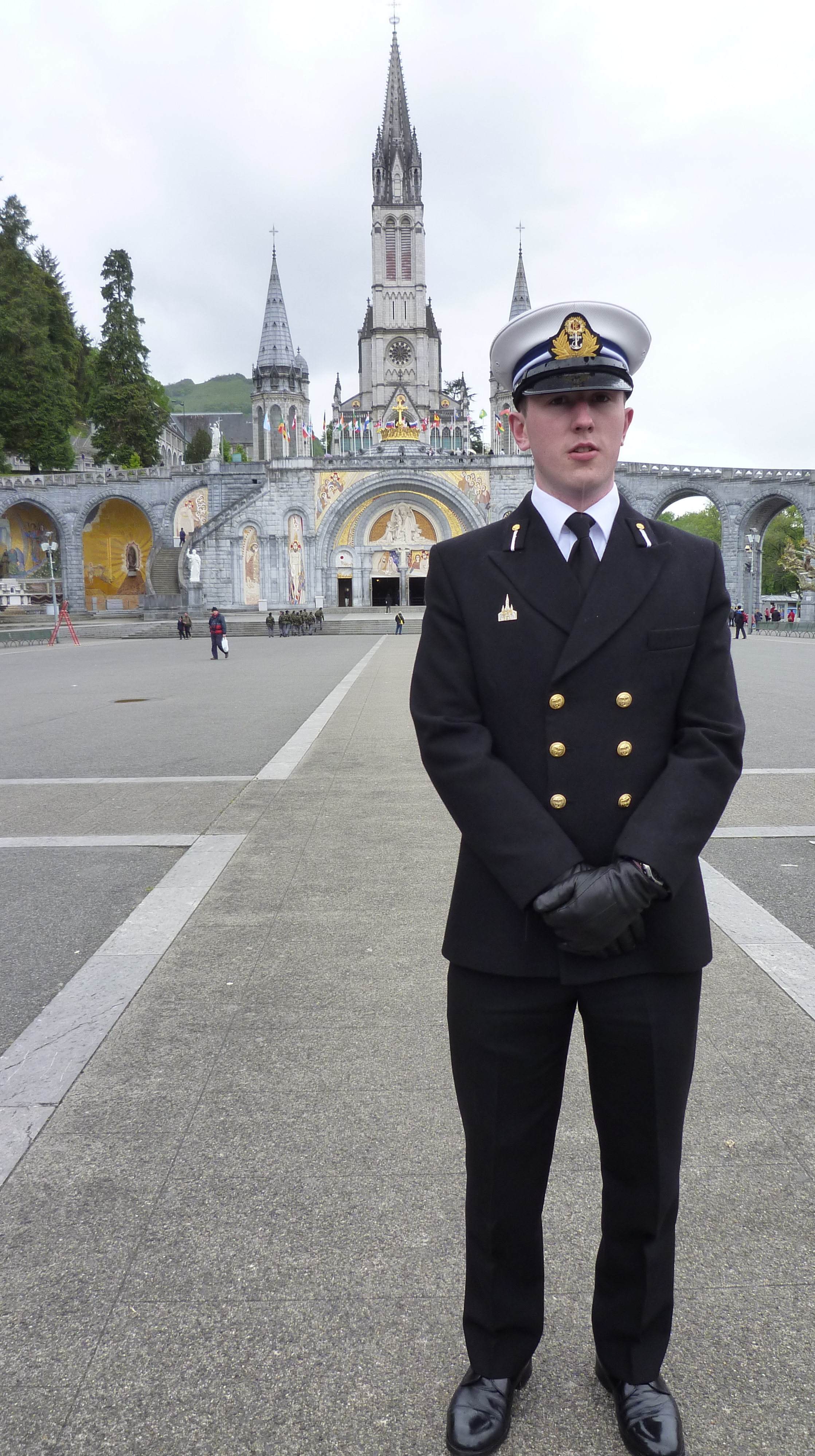
Naval Cadet and former member of the Reserve Defence Force in Monaghan, Aron Nutley, was among the 51st cadet class who travelled overland from Haulbowline in Cork with their chaplain Fr Des Campion to take part in the visit to the shrine of Our Lady and to the Grotto.

Naval Cadet Aron Nutley, Monaghan

Naval Cadet Aron Nutley, Monaghan

Mass for English-speaking countries including Ireland, the UK, USA and Norway was concelebrated by Bishop Richard Moth, Chaplain to the British forces along with the Defence Forces Head Chaplain Monsignor Eoin Thynne and a number of other priests. Aron from Coolshannagh is a former pupil of Beech Hill College in Monaghan. Accompanying the party from the 89th Army Cadet Class at the Curragh, the Air Corps and Navy cadets was a group of nineteen from the Civil Defence drawn from eight counties.

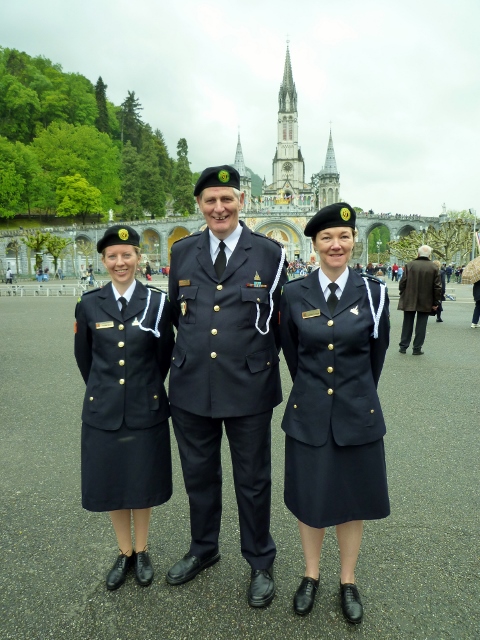
They included a number from Westmeath, based in Mullingar. One of them was Siobhan Courtney from Clones, a former pupil at Largy College. The Civil Defence have been accompanying the military on the pilgrimage since 1994 and for three of them, this was their 20th trip.

Siobhan Courtney & Civil Defence group from Co.Westmeath

Siobhan Courtney & Civil Defence group from Co.Westmeath

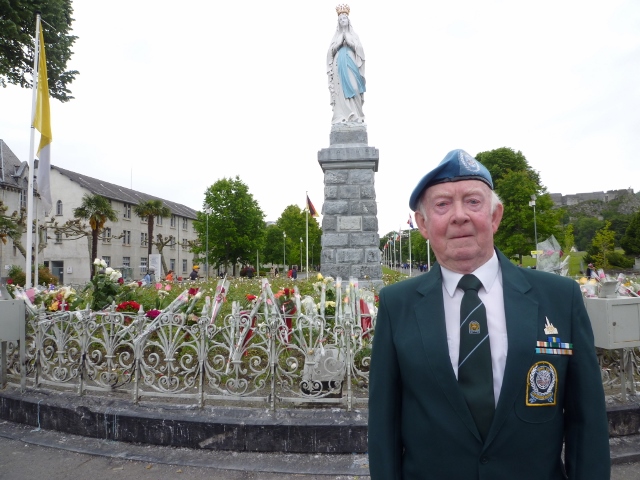
Paddy Reilly, Monaghan

Paddy Reilly, Monaghan

A number of former soldiers took part in the pilgrimage, including Paddy Reilly from Glenview Drive in Monaghan. He is a UN Veteran who served in Monaghan town and for a number of years was in charge of the local FCÁ unit (now the Reserve Defence Force). He was also active with the Civil Defence. The final Monaghan connection was through one of the Joe Walsh Tours guides, Carmel Power (McGinty). She lives in Skerries, Co. Dublin and is a former pupil of Clochar Lughaidh Muineachain, where she was a boarder for a number of years.

Former St Louis Monaghan pupil Carmel Power (McGinty), JWT travel rep in Lourdes

Former St Louis Monaghan pupil Carmel Power (McGinty), JWT travel rep in Lourdes

Groups from the Dioceses of Raphoe (Donegal) and Ossory (Kilkenny) were in Lourdes at the same time as the military pilgrimage. The Minister of State for Defence Paul Kehoe TD joined the group and read one of the lessons at the International Mass on Sunday in the underground basilica of St Pius X. He also laid a wreath at the Irish memorial at the town cemetery in Lourdes which commemorates all those Irish pilgrims who died there, including Monsignor James Horan from Knock and Cardinal O Fiaich.

Minister of State Paul Kehoe TD lays wreath at Irish memorial in Lourdes

Minister of State Paul Kehoe TD lays wreath at Irish memorial in Lourdes

ST MACARTAN’S CATHEDRAL CLOGHER

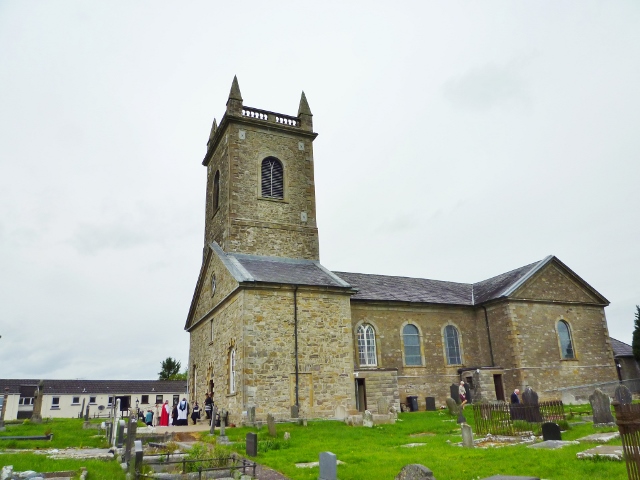
St Macartan's Cathdral, Clogher

St Macartan’s Cathdral, Clogher

The Bishop of Clogher Right Reverend John McDowell has praised those who help to preserve small Anglican Cathedrals in towns throughout Ireland. It’s not an easy task with small congregations in many parishes. In the case of St Macartan’s, the Friends of Clogher Cathedral have made a major contribution over the years to keeping the structure and the interior maintained. The William Carleton Society has co-operated with them on a number of occasions during the annual summer school. The Society held a talk there about the Ulster English on St George’s Day. In March, the Cathedral organised a number of events to celebrate St Patrick’s Day.
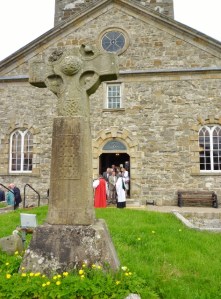
St Macartan's Cathedral

St Macartan’s Cathedral

The Friends  come from different Christian churches, including Presbyterians, Methodists and Catholics. Every year they hold a service in the Cathedral to coincide with their AGM. I attended their Choral Evensong this afternoon, led by the Precentor Noel Regan, a Sligoman, along with the curate Reverend Alistair Warke. Bishop McDowell preached the homily.

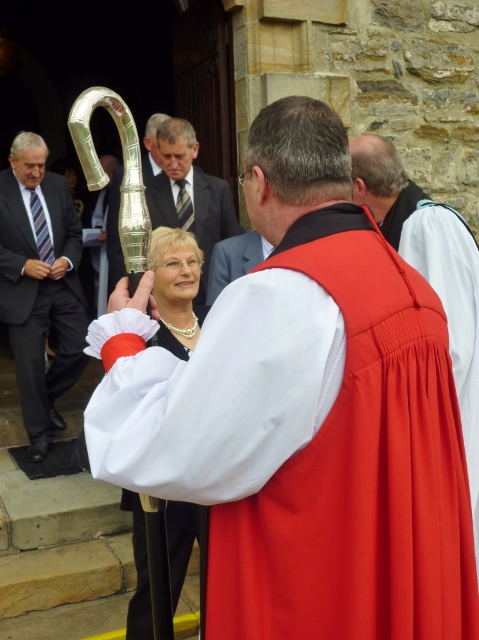
Bishop McDowell & Canon Noel Regan greet members of the congregation

Bishop McDowell & Canon Noel Regan greet members of the congregation

ORDER FOR EVENING PRAYER

The Precentor sang the Vestry Prayer

Processional Hymn:  Praise My Soul the King of Heaven

Sentences of Scripture

Bishop of Clogher Rt Rev John McDowell

Bishop of Clogher Rt Rev John McDowell

Exhortation: Dean of Clogher Kenneth Hall, St Macartin’s Cathedral, Enniskillen

General Confession

The Absolution: Pronounced by the Bishop

Opening Versicles according to the Book of Common Prayer:

Priest: O Lord, open thou our lips: Choir: And our mouth shall shew forth thy praise. Priest: O God, make speed to save us: Choir: O Lord, make haste to help us. Priest: Glory be to the Father, and to the Son, and to the Holy Ghost. Choir: As it was in the beginning, is now, and ever shall be, world without end. Amen. Priest: Praise ye the Lord. Choir: The Lord’s Name be praised.

Bishop McDowell greeting the congregation

Bishop McDowell greeting the congregation

The Psalm: Psalm 84 How lovely is your Dwelling Place, O Lord of Hosts!

Lesson from the Old Testament Genesis 4: 1-16

Bishop McDowell greets the congregation

And Bishop McDowell greets the congregation

Magnificat: The Song of the Blessed Virgin Mary St Luke 1: 46-55

My soul doth magnify the Lord, and my spirit rejoiceth in God my Saviour. For he hath regarded the lowliness of his hand-maiden. For behold, from henceforth, all generations shall call me blessed. For he that is mighty hath magnified me, and holy is his Name. And his mercy is on them that fear him throughout all generations. He hath shewed strength with his arm, he hath scattered the proud in the imagination of their hearts. He hath put down the mighty from their seat, and hath exalted the humble and meek. He hath filled the hungry with good things, and the rich he hath sent empty away. He remembering his mercy hath holpen his servant Israel, as he promised to our forefathers, Abraham and his seed for ever. Glory be to the Father, and to the Son, and to the Holy Ghost; As it was in the beginning, is now, and ever shall be: world without end. Amen.

St Macartan's Cathedral, Clogher

St Macartan’s Cathedral, Clogher

Lesson from the New Testament: St Mark 5: 21-43

Nunc Dimittis: The Song of Simeon  St Luke 2: 29-32

Lord now lettest thou thy servant depart in peace: according to thy word. For mine eyes have seen thy salvation, which thou hast prepared before the face of all people. To be a light to lighten the Gentiles, and to be the glory of thy people Israel. Glory be to the Father, and to the Son, and to the Holy Ghost; As it was in the beginning, is now, and ever shall be: world without end. Amen
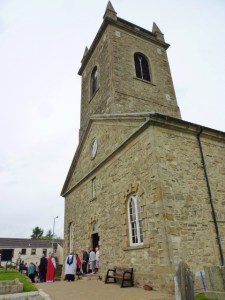
St Macartan's Cathedral, Clogher

St Macartan’s Cathedral, Clogher

The Apostles’ Creed

I believe in God the Father Almighty, Maker of heaven and earth: And in Jesus Christ, His only Son our Lord, who was conceived by the Holy Ghost, born of the Virgin Mary, suffered under Pontius Pilate, was crucified, dead and buried. He descended into hell; the third day he rose again from the dead; he ascended into heaven, and sitteth on the right hand of God the Father Almighty; from thence he shall come to judge the quick and the dead. I believe in the Holy Ghost; the holy Catholic Church; the Communion of Saints; the forgiveness of sins; the Resurrection of the body, and the life everlasting. Amen

Priest: The Lord be with You Choir: And with Thy Spirit Priest: Let us Pray Choir: Lord, have mercy upon us. Christ have mercy upon us. Lord have mercy upon us.

The Lord’s Prayer

Our Father, which art in heaven, Hallowed be thy Name; Thy kingdom come; Thy will be done in earth; as it is in heaven. Give us this day our daily bread. And forgive us our trespasses, as we forgive them that trespass against us. And lead us not into temptation: but deliver us from evil. Amen

O Lord, shew thy mercy upon us:  And grant us thy salvation.

O Lord, save the Queen: And mercifully hear us when we call upon thee.

Endue thy ministers with righteousness: And make thy chosen people joyful.

O Lord, save thy people: And bless thine inheritance.

Give peace in our time, O Lord: Because there is none other that fighteth for us, but only thou, O God.

O God, make clean our hearts within us: And take not thy Holy Spirit from us.

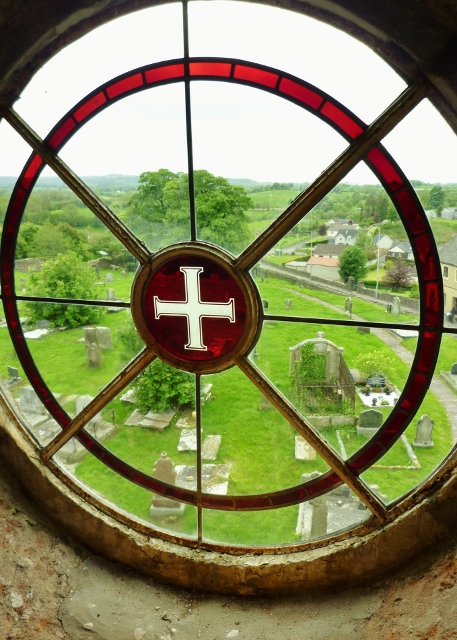
Bell Tower window

Bell Tower window

The Collect of the First Sunday of Trinity:  The Precentor sings:

O God, the strength of all them that put their trust in thee, mercifully accept our prayers; and because through the weakness of our mortal nature we can do no good thing without thee, grant us the help of thy grace, that in keeping of thy commandments we may please thee both in will and deed, through Jesus Christ our Lord. Amen.

The Second Collect: for Peace

O God, from whom all holy desires, all good counsels and all just works do proceed: Give unto thy servants that peace which the world cannot give; that both our hearts may be set to obey thy commandments and also that by thee we being defended from the fear of our enemies may pass our time in rest and quietness; through the merits of Jesus Christ our Saviour. Amen

The Third Collect for Aid against all Perils

Lighten our darkness, we beseech thee, O Lord; and by thy great mercy defend us from all perils and dangers of this night for the love of thy only Son, our Saviour, Jesus Christ. Amen

Hymn: All People that on Earth do Dwell

St Macartan's Cathedral, Clogher

St Macartan’s Cathedral, Clogher

The Sermon: The Right Reverend F John McDowell, Bishop of Clogher

Hymn: (The Breastplate of St Patrick)

Christ be with me, Christ within me,
Christ behind me, Christ before me,
Christ beside me, Christ to win me,
Christ to comfort and restore me.

Christ beneath me, Christ above me,
Christ in quiet, Christ in danger,
Christ in hearts of all that love me,
Christ in mouth of friend and stranger.

PRAYERS led by the Diocesan Curate Reverend Alistair Warke

Almighty and merciful God, who in days of old didst give to this land the benediction of thy holy Church, withdraw not, we pray thee, thy favour from us, but so correct what is amiss, and supply what is lacking, that we may more and more bring forth fruit to thy glory, through Jesus Christ our Lord.

The General Thanksgiving:

Almighty God, Father of all mercies,  we thine unworthy servants do give thee most humble and hearty thanks for all thy goodness and loving kindness to us and to all men. We bless thee for our creation, preservation, and all the blessings of this life; but above all for thine inestimable love in the redemption of the world by our Lord Jesus Christ; for the means of grace, and for the hope of glory. And, we beseech thee, give us that due sense of all thy mercies, that our hearts may be unfeignedly thankful; and that we show forth thy praise, not only with our lips, but in our lives, by giving up our selves to thy service, and by walking before thee in holiness and righteousness all our days; through Jesus Christ our Lord, to whom, with thee and the Holy Spirit, be all honour and glory, world without end. Amen.

A Prayer of St Chrysostom:

Almighty God, who hast given us grace at this time with one accord to make our common supplications unto thee and dost promise that when two or three are gathered together in thy Name thou wilt grant their requests. Fulfil now, O Lord, the desires and petitions of thy servants as may be most expedient for them; granting us in this world knowledge of thy truth, and in the world to come life everlasting.

The grace of our Lord Jesus Christ and the love of God and the fellowship of the Holy Spirit be with us all evermore. Amen.

Hymn with the Collection of Alms: God, whose city’s sure foundation

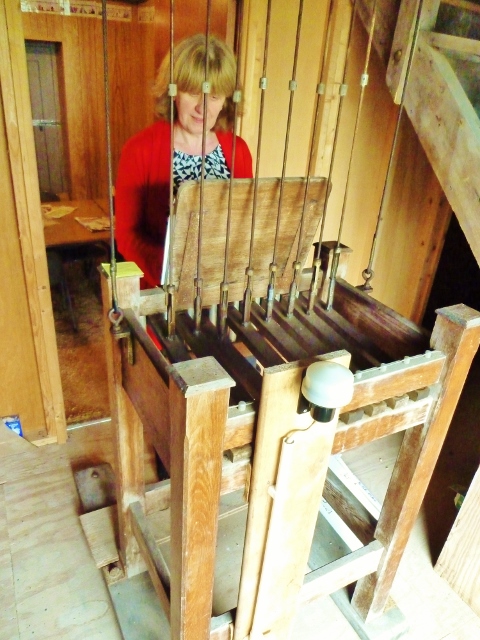
Heather McKeown playing the bells

Heather McKeown playing the bells

God, whose city’s sure foundation
stands upon his holy hill,
by his mighty inspiration
chose of old and chooseth still
men of every race and nation
his good pleasure to fulfil.

Here in Ireland through the ages,
while the Christian years went by,
saints, confessors, martyrs, sages,
strong to live and strong to die,
wrote their names upon the pages
of God’s blessed company.

Some there were like lamps of learning
shining in a faithless night,
some on fire with love, and burning
with a flaming zeal for right,
some by simple goodness turning
souls from darkness unto light.
As we now with high thanksgiving                                                                                                                                                                                                                                                                                     their triumphant names record,

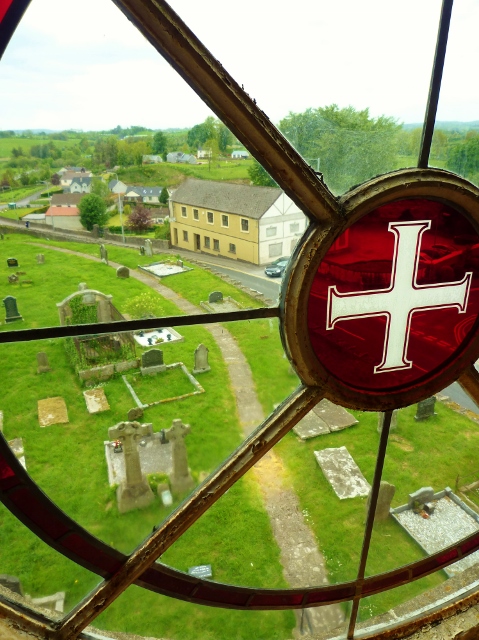
View of graveyard from bell tower window

View of graveyard from bell tower window

grant that we, like the, believing
in the promise of thy word,
may, like them, in all good living
praise and magnify the Lord.

The Blessing: The Bishop sings the blessing

The peace of God, which passes all understanding, keep you in your heart and mind in the knowledge and love of God, and of his Son, Jesus Christ our Lord, and the blessing of God Almighty, the Father, the Son. and the Holy Spirit, be with you and remain with you always. AMEN.

Hymn: Abide with me

Abide with me; fast falls the eventide;
The darkness deepens; Lord with me abide.
When other helpers fail and comforts flee,
Help of the helpless, O abide with me.

Swift to its close ebbs out life’s little day;
Earth’s joys grow dim; its glories pass away;
Change and decay in all around I see;
O Thou who changest not, abide with me.

I need Thy presence every passing hour.
What but Thy grace can foil the tempter’s power?
Who, like Thyself, my guide and stay can be?
Through cloud and sunshine, Lord, abide with me.

I fear no foe, with Thee at hand to bless;
Ills have no weight, and tears no bitterness.
Where is death’s sting? Where, grave, thy victory?
I triumph still, if Thou abide with me.

Hold Thou Thy cross before my closing eyes;
Shine through the gloom and point me to the skies.
Heaven’s morning breaks, and earth’s vain shadows flee;
In life, in death, O Lord, abide with me.

As I arrived at the service, it was nice to hear the Cathedral bells ringing. So afterwards as they rang again while the congregation left the church, I went into the bell tower to look at them, expecting to find a group of bell ringers pulling ropes. Instead I found Heather McKeown at the console of the chime, with eight bells individually numbered and a wooden lever to press down to ring the bell.

"Be Still and Know" on the Chime

“Be Still and Know” on the Chime

She encouraged me to have a go, so I tried playing the hymn “Be Still and Know”. If it sounded a bit strange, I can only apologise, and I did make at least one error in ringing the wrong bell! But second time round it proved a lot easier to ring the bells in the right order and tempo.

Heather McKeown & the 8-bell chime

Heather McKeown & the 8-bell chime

Diocese of Clohger: Arms
Diocese of Clogher: Arms

For more information about the Friends of Clogher Cathedral, please contact the Reverend Precentor Noel Regan, The Deanery, 10 Augher Road, Clogher.

Copyright: photos © Michael Fisher

Material from Book of Common Prayer: © The Representative Body of the Church of Ireland 2004

The Irish Church Hymnal — Fifth Edition:  © The Standing Committee of the General Synod of the Church of Ireland 2000

ENNISH FLAX MILL

Howard Bennett at Ennish Scutch Mill

Harold Bennett at Ennish Scutch Mill

For over ten years Harold Bennett from County Tyrone has been devoted to preserving an important part of Ulster’s industrial heritage. Ennish Flax Mill between Aughnacloy and Dungannon is the third generation of his family to own the mill., which closed in 1950. In the early 2000s he decided to renovate the mill, a project which has taken considerable time, money and effort an is still a wok in progress. He has been supported in his efforts by the Killeeshil and Clonaneese Historical Society, which is currently undertaking a project on engineering in the area under the “Shared History, Shared Future” project, of which the William Carleton Society is a member.

Barbeque at Ennish Mill

Barbeque at Ennish Mill

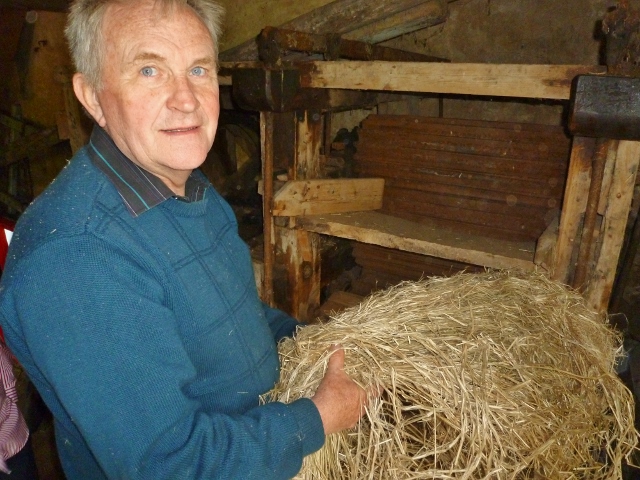
Flax after scutching

Flax after scutching

An open day and barbeque was held at the mill to show it in operation and to give a younger generation an idea of how the mill operated. Ennish started off as a corn mill around 1770 and was owned by the Burges family of Parkanaur Manor near Castlecaulfield. In 1917 William S Bennett purchased the mill from Colonel YS Burges for £255. At that time the flax industry, which was important in Ulster in the 18th and 19th Centuries, was booming. The mill was converted to process flax, which was first scotched in October 1917.

Mill Wheel at Ennish

Mill Wheel at Ennish

Up to 1944 the mill was driven by the mill wheel but because of dry seasons there was insufficient water to turn the wheel. The then owner, William Bennett’s son Hugh John, was obliged to instal an engine to drive the mill. It was installed by AS McKee & Sons of Cranslough, who also carried out a number of renovations in order to accommodate the new engine. Farmers came from surrounding areas such as Crilly, Minteburn, Rehaghey, Brantry, Newmills, Clonavaddy and Castlecaulfield to get their flax scutched. After flowering and ripening in July, the farmers pulled the flax by hand and then soaked it in a water-filled dam for one to two weeks to ret (break down the outer coating). It was then spread on a field to dry before being taken to the mill.

Scutching handles behind the berths

Scutching handles behind the berths

The mill has seven “berths”, the space in front of each flax handle where the scutchers worked. Sometimes they worked in pairs. The first was a “buffer”, who took the rough off the flax, the second was the “cleaner”, who completed the scutching. Good flax could be scutched into long, strong fibres, which could eventually be turned into fine linen cloth. When the scotching was finished, the flax was taken to Union Street in Cookstown for inspection and if it passed the grading process, it was then taken to a linen mill in Belfast and woven int linen fabric. The poorer quality flax containing many shorter fibres was called “tow” and was less valuable. Any cloth made from it was rough and inferior. Usually the mill owner kept the tow as payment or part payment for the scutching.

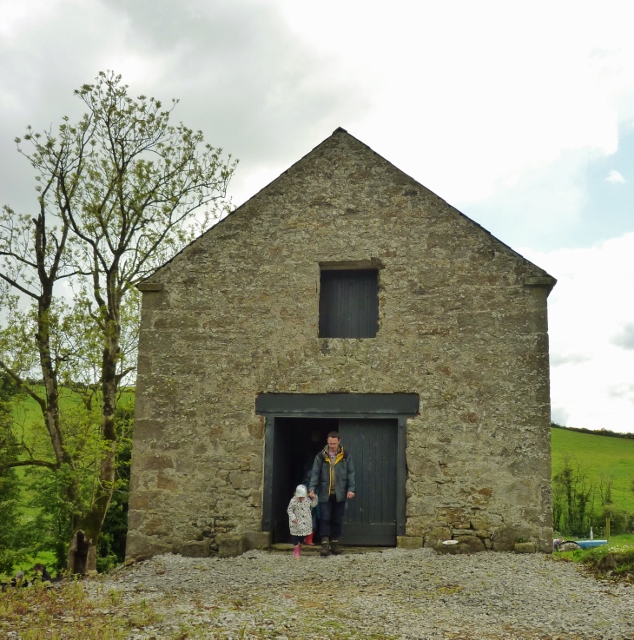
Ennish Flax Mill

Ennish Flax Mill

Scutching: a dusty process

Scutching: a dusty process

The waste from scutching known as “shoves” or “shows” was a cheap and popular fuel on the hearths of mill workers. A properly lit fire of shoves would burn for hours, emitting an intense heat. It must have been difficult for the seven scutchers working in a confined space and with the noise of the machinery as well as the dust. Harold’s demonstration gave an idea of what conditions must have been like for them, but this picture was with only one blade in action!

According to the mill records for 1945, the workforce consisted of six scutchers, three strickers, one roller and a handyman, whose job it was to remove the shoves from behind the handles. Scutchers were paid by the number of stones scutched and in a good week would earn between £3 and £4. The roller was on a set wage of £2.14.6 and the strickers earned £2.10.0 a week. In 1918 scutchers were paid a bounty of £6.0.0. to secure their services for the next scutching season. The details are taken from an information leaflet kindly provided by Harold Bennett.

Thresher in action

Thresher in action

This is one of only three such flax mills still remaining in Northern Ireland. Another one is at Gorticashel near Gortin, also in Tyrone. The scutching  demonstration was complemented by a display of threshing in the adjoining field. The straw was brought in for the occasion. The thresher carried the name “Boyd” and appeared to come from Maghera.

While researching the history of the linen industry, I discovered a newspaper cutting from the USA which shows that even before the new engine was installed at Ennish, the linen industry was in decline. The Delmarva Star from Wilmington in Delaware carried a report on March 3rd 1935 (p.22) headlined: “Shortage of Flax Threatens Ulster Makers of Linen: Numbers of Mills Face Necessity of Closing Down: Prices Have Made Unexpected Rise“. The news from Belfast (March 2) states that:-

Ulster’s world-famed linen industry today finds itself menaced by an acute shortage of its necessary raw material, flax.

Unless the crisis in the industry is overcome within the next few months, numbers of linen mills in Northern Ireland will be faced with the necessity of closing down.

The outstanding reason for the present crisis is a shortage of flax from Soviet Russia. The linen mills of Northern Ireland, which employ about 85,000 workers, are dependent on Soviet Russia for more than 90 per cent of their raw materials. The Soviet Union itself is the world’s biggest flax producer, growing between 90 and 95 per cent of the world’s total flax supply.
In recent months Germany has bought ever-increasing quantities of Russian flax to take the place of wool and cotton which it has been unable to import owing to exchange restrictions. At the same time the Soviet Union itself has begun to absorb large quantities of its own raw flax to manufacture in its new factories.

The result of these unexpected developments has been a leap upwards in the price of flax. Ulster linen manufacturers state that they have only sufficient flax on hand to meet the needs of the next four or five months, after which they expect the cost of flax to be so prohibitive that it will be impossible to produce linen goods in Northern Ireland at economic prices.

With a steep rise in the price of linen goods expected the next few months, it is understood that United States and other foreign importers of Irish linen have made large purchases in Belfast before prices soar still higher“.