GERTRUDE ROSE

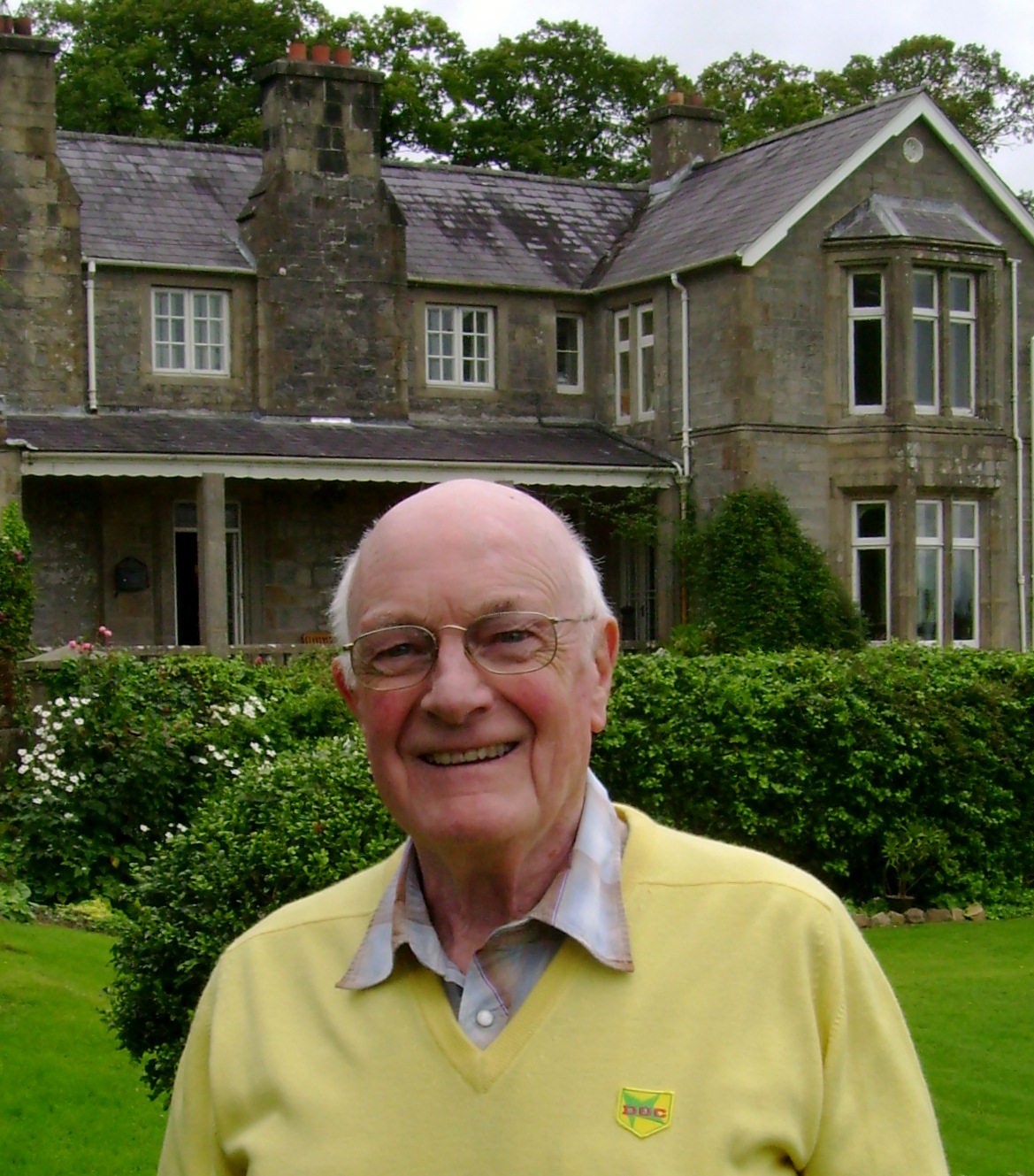
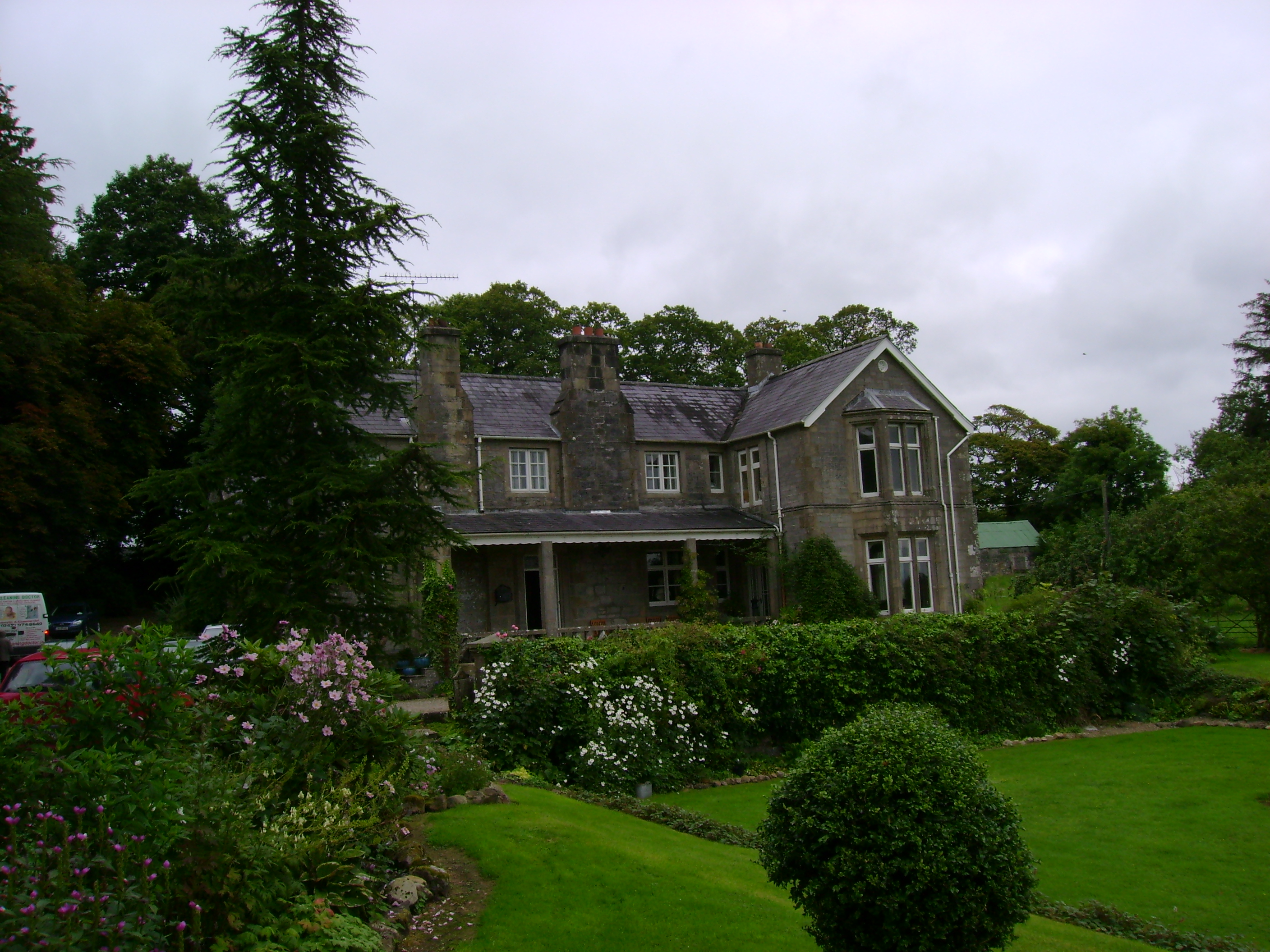
Mullaghmore House, 2007

Mullaghmore House, 2007

The story of Mullaghmore House in the parish of  Tydavnet, County Monaghan and the Rose estate yesterday gave only a brief mention to one of its most interesting landlords, Gertrude Rose. If anyone can provide a picture of her, I will add it to the blog. (This image has been sourced by Grace Moloney of the Clogher Historical Society and it is from a catalogue published by Dreweatts Auctions in England: added 29th May 2013).
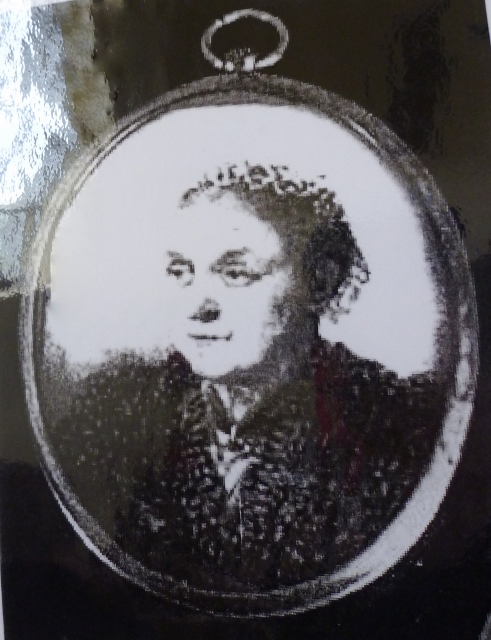
Brooch Picture of Gertrude Rose: Created by artist Kathleen Rashleigh. Image courtesy of Dreweatts Auctions, England

Brooch Picture of Gertrude Rose: Created by artist Kathleen Rashleigh. Image courtesy of Dreweatts Auctions, England

I have found a picture of the Anglican clergyman who was her friend and adviser, Frederick Temple, who went on to become Archbishop of Canterbury. What we did get at the very interesting talk at Cornagilta school on Thursday evening, courtesy of Patsy Brady, was a copy of an obituary from, I think, The Northern Standard in January 1907. I am reproducing it here, to give some idea of the background of this progressive and forward-thinking landlord:-

THE LATE MISS ROSE, MULLAGHMORE

“A gentleman who was for many years an intimate personal friend of Miss Rose, of Mullaghmore, whose lamented death we referred to in last week’s issue, has sent us the following interesting sketch:-

By the death of Miss Rose the neighbourhood of Monaghan has lost one of its most interesting inhabitants. She was a lady of many parts, of great initiative, ability, and kindness of heart, a sterling friend, and a good neighbour. She has left a void which cannot easily be filled. Coming into the property of Mullaghmore about 50 years ago, on the death of her uncle, she at once set herself to perform the duties of her position with zeal and devotion. We believe it was her first intention to sell the property, but the late Archbishop Temple, with whom she was on terms of intimate friendship, impressed upon her the duties of her position; so she retained the property and faced its duties with very high ideals which she ever kept before her and strive to realize. She was a young woman then*, and from that time, till now that she has been removed by death, she had devoted herself to the service of her people and the betterment of their condition.

Scotch by race, English by birth, French by education, she expressed the sterling qualities of each nation. She had the fixity of purpose, the unbending, uncompromising character of the one, — the ‘granite’, — (but ‘granite on fire’, as her friend Archbishop Temple** was described); the great common sense and love of justice of the other, and with this the graceful winning courtesy of the French. As soon as she came into the property, she built herself a home suitable to her position, and from that time till now, she has lived continuously amongst her people, ever influencing them, inspiring them by her example and sympathy. Improved farms, stock, tillage were brought about by her efforts, and on her ‘home-farm’, was to be seen some of the finest live stock in the north of Ireland.

But not merely in the material improvement of her tenants was Miss Rose interested. She built a large school***, and supplemented the teacher’s income, so that the children might have the benefit of a good education. In many ways was Miss Rose considerably before her time, and because of this, was likely to be misunderstood, but time has proved she was right. Around her, at Mullaghmore, she kept a large staff of employees, and on them she expended a wealth of devotion and care. Were they sick she attended them; and everything that her house contained, that would be for their good, was at their disposal. A doctor told us that 28 years ago, he first met Miss Rose. When he was a very young man, he was called upon to attend a herd(sman) in her farm yard, and by the patient’s bed-side, ministering to him, he met her. Since then the acquaintance casually made ripened into the closest friendship; and he found Miss Rose ever the same — ministering to the wants of others.  

How much will her social qualities be missed. Her house was ever open; she was the essence of hospitality. The friend and associate of the very highest in the land next Royalty; the friend and patron of the poor; the valued friend of many in the neighbourhood of Monaghan. Who will understand more fully their loss by experiencing it? 

Any remarks regarding Miss Rose would be imperfect that would omit noticing her intellectual capacity. She possessed mental powers of a high order. Hughly educated, she read books of a high class, and brought her mind to bear on the ethical and social problems that are agitating the thinking world of to-day. She was a delightful and instructive person to meet; and one always felt, whether one agreed with her conclusions or no, they were not formed without thought and consideration. She has gone to rest in a good old age, but we can ill spare her. It may be said of her — ‘She did her duty’.

____________________

Miss Rose was the daughter of Dr. Thomas Rose, a surgeon in the 2nd Life Guards, and she was the youngest of seven children, three of whom died in one week of diphtheria.”  (end of page)

*Gertrude Rose was 21 when she inherited the estate from her uncle in March 1849.

**Archbishop Frederick Temple, who died four years before Gertrude Rose, was Archbishop of Canterbury 1896-1902 and had been a chaplain-in-ordinary to Queen Victoria.

***the school she built was at Cornagilta, described in yesterday’s blog.
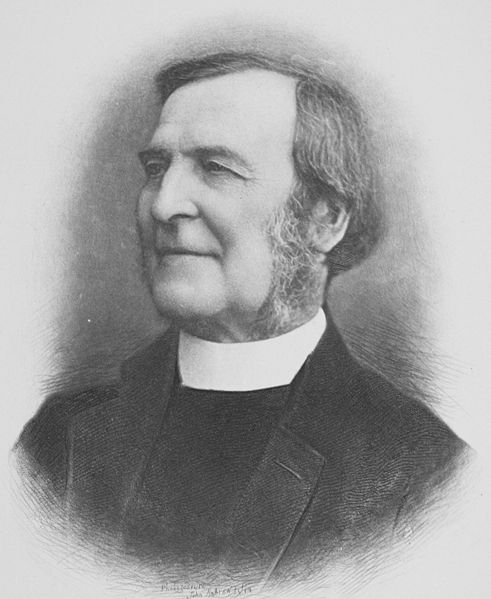
Archbishop Frederick Temple (photo: Wikimedia Commons)
Archbishop Frederick Temple (photo: Wikimedia Commons)
ROSE ESTATE

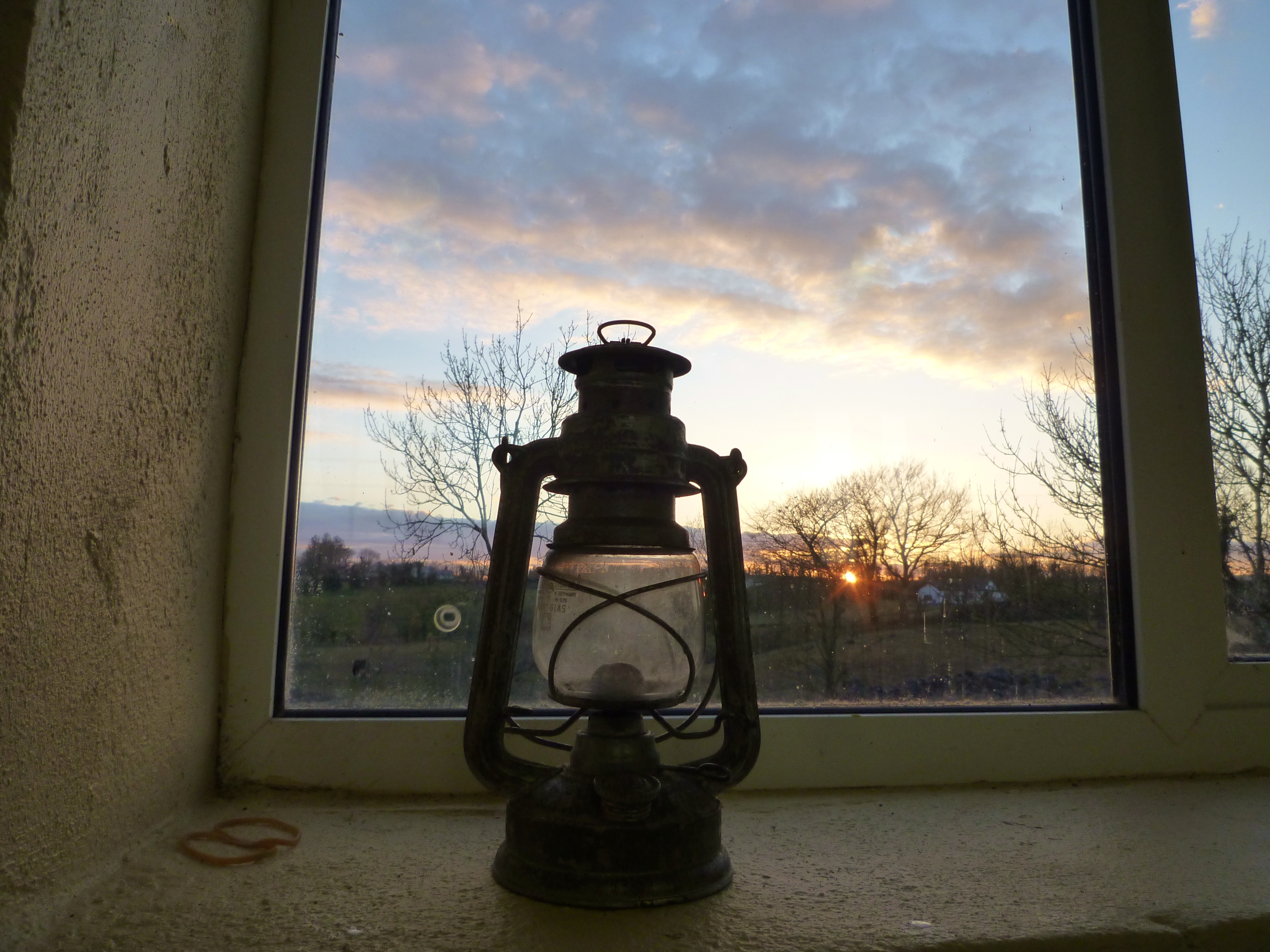
Sunset at Cornagilta: Photo © Michael Fisher

Sunset at Cornagilta: Photo © Michael Fisher

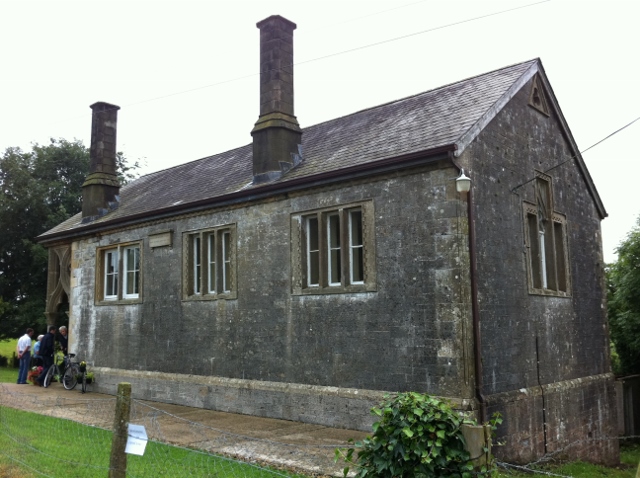
The sun was setting around Bragan as a crowd of over fifty people gathered at the former National School at Cornagilta, a few miles from Tydavnet, for an evening devoted to the history of what was once part of the Rose estate. Since 2001 when the late Canon Jackie Gilsenan was Parish Priest of Tydavnet, a group of locals has been working hard to preserve the building, which has some interesting stonework features, particularly at the entrance.

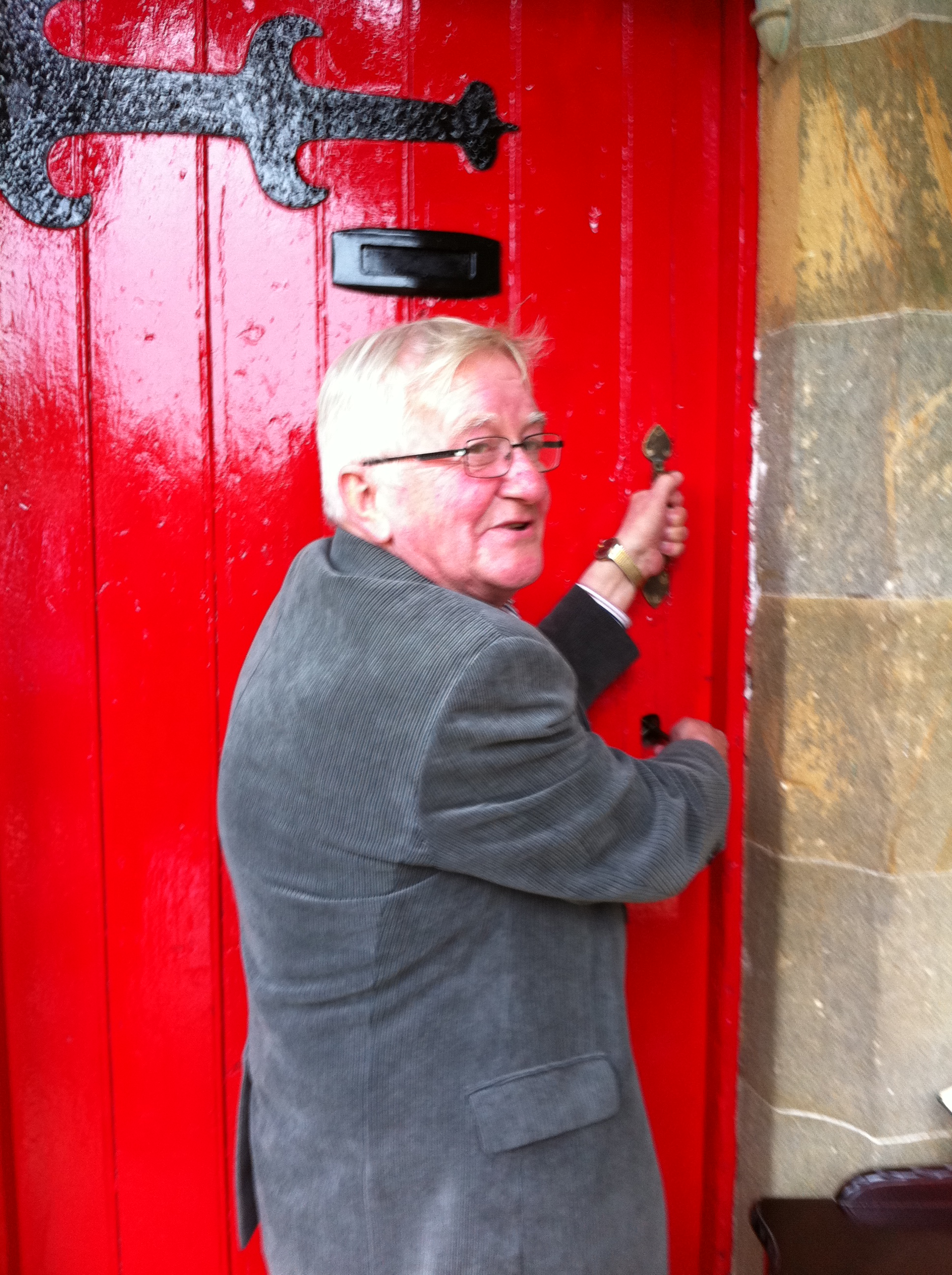
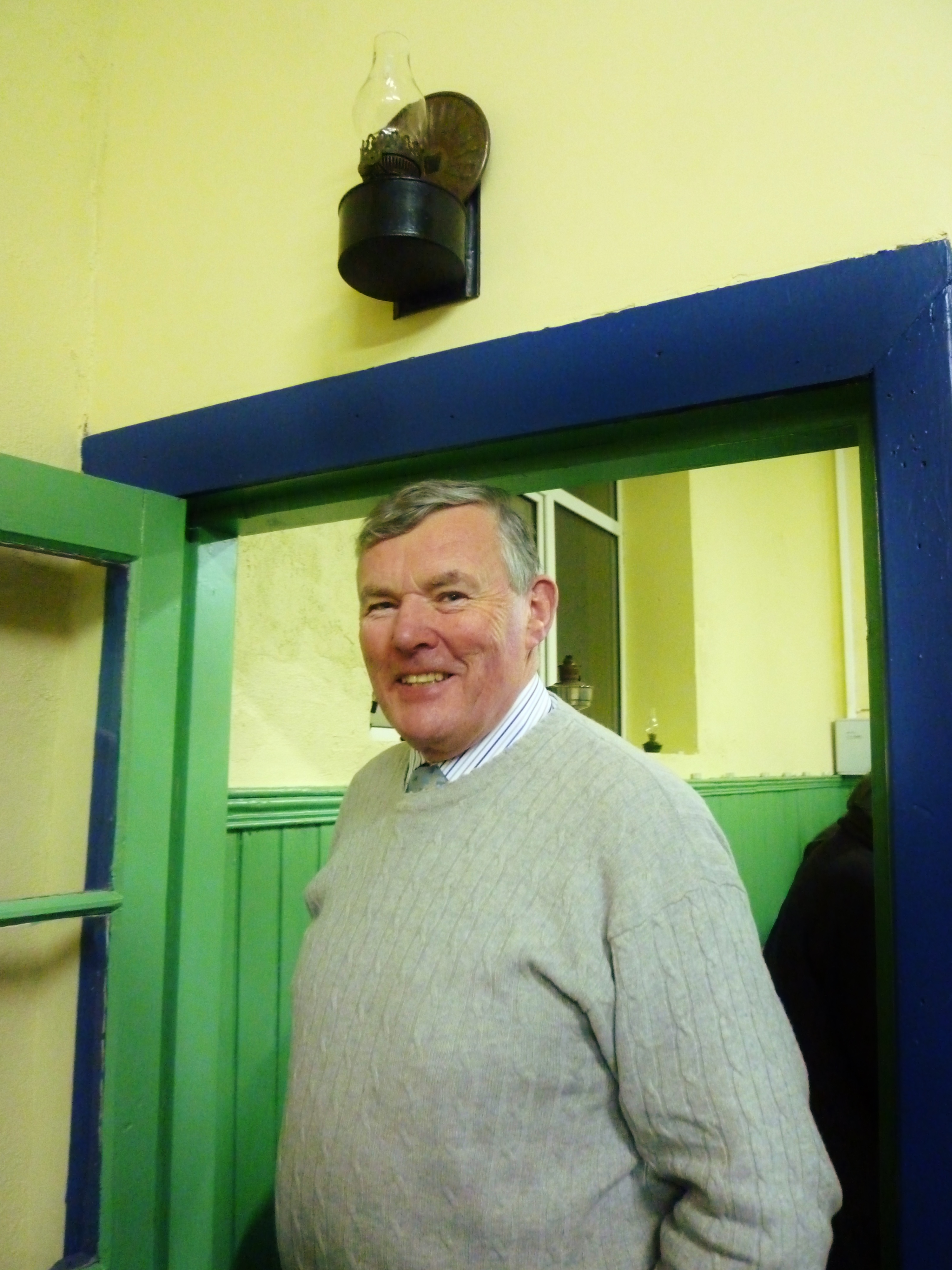
Theo McMahon at entrance to school

Theo McMahon at entrance

The small rural school was one of a number in the parish, which includes Scotstown (Urbleshanny), Knockatallon, Ballinode and Tydavnet, where the old school has already been restored and now serves as a community centre. Among the visitors was the former GAA President and former Principal at Urbleshanny NS, Seán McCague from Scotstown. A former teacher and a number of former Cornagilta pupils gathered to listen to one of their own, Patsy Brady, describe the history of the school.

Seán McCague NT

Seán McCague NT

The records show that the school opened on July 9th 1912 with a total of 68 pupils: 36 boys and 32 girls. It was closed in June 1984, when the roll call had reduced to 28 children. Over a 72 year period, 671 attended classes there, 351 boys and 320 girls. An important contribution to education in North Monaghan. In view of our visit there with the William Carleton Society in August 2011 during the summer school, I was interested to heard Patsy refer to a hedge school being run nearby in the 1820s.

Brian Deery at Cornagilta (August 2012)

Brian Deery at Cornagilta, 2012

Patsy described the different Masters who had run the school. They included Master (Brian) Deery, who was there from 1967 to 1978. The first was Master Luke Owens who later took over as Master at Barritatoppy school, also in the parish. In 1928 he moved into what was the service wing of Mullaghmore House between Tydavnet and Scotstown. I remember visiting Mullaghmore with a group from the Clogher Historical Society that include his son, the late Dr Cahal Owens from Clonskeagh in Dublin. He also came to Cornagilta on the same occasion, where Brian Deery was there to open the school door once again.

Late Dr Cahal Owens at Mullaghmore, 2007

Late Dr Cahal Owens at Mullaghmore, 2007

The original house was demolished after being destroyed in a fire on 24th January 1925. Those at the talk recalled how some local people then children remember seeing the flames in the distance as the large house burned (it was not a “castle”, as some described it). In a useful article about the property, a fellow blogger Timothy Belmont has a description of the fire and more information about the owners of the house, now the property of the Ronaghans.

The fire razed all but the servants’ wing and the stable block behind. The family (Captain S.R. Tufts) were away visiting friends in County Tyrone and there were no servants in  the house at the time. No cause for the fire was discovered. Previously the house was owned by Sir Robert Anderson, a Belfast businessman and founder of the Anderson & McAuley store in 1861, who had acquired Mullaghmore on the death in January 1907 of Gertrude Rose. 

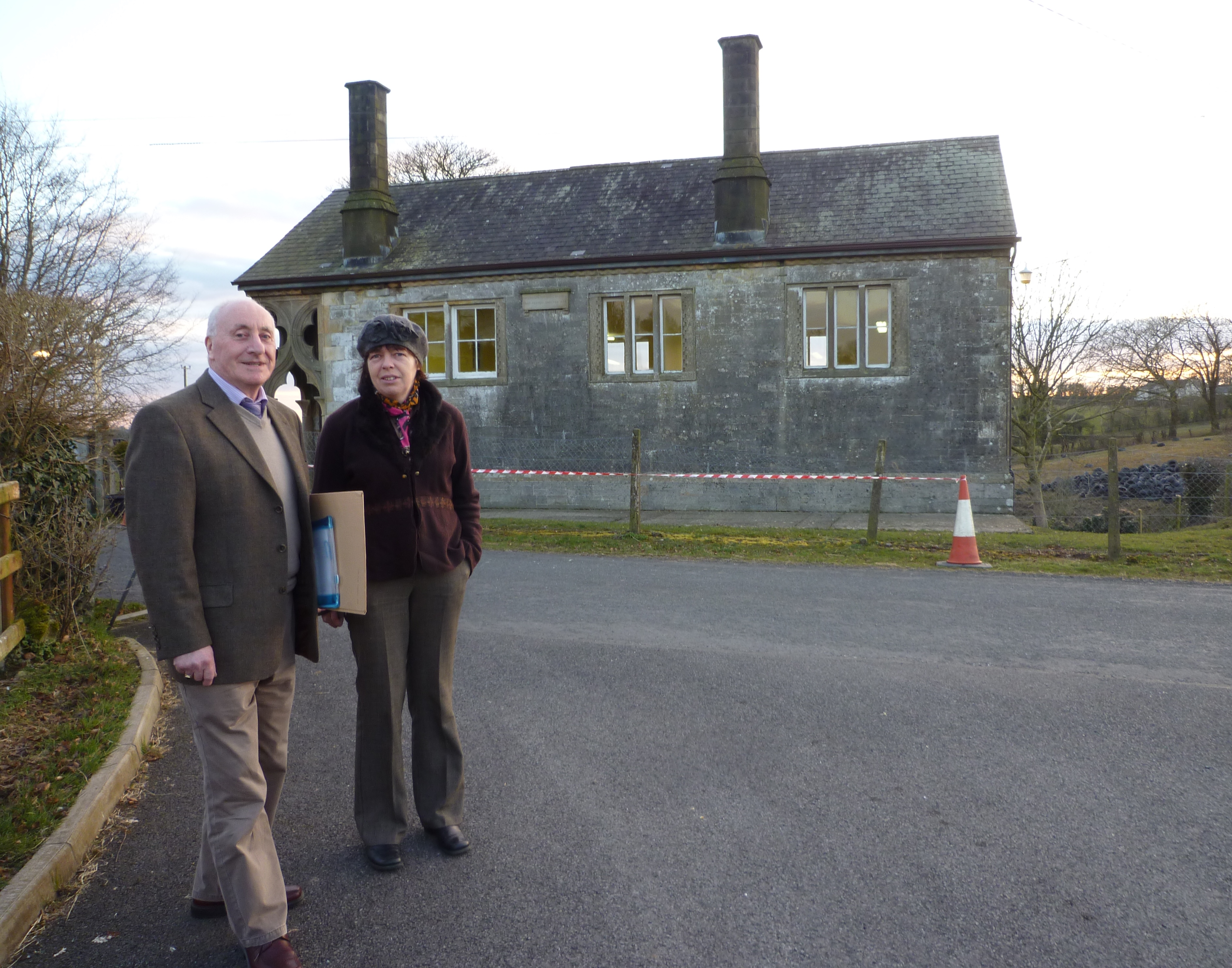
Grace Moloney, CHS & Theo McMahon

Grace Moloney, CHS & Theo McMahon

Gertrude became the landlord after her uncle James Rose died in 1841 and on reaching 21 in 1849 she inherited the holding of 2810 acres, which comprised 21 townlands. Her relative had bought the lands from the Bishop of Clogher for £20,000 in 1821. The list of townlands was discovered by Theo McMahon in a letter to the new owner written around the late 1840s by an agent in the estate. It was part of the records of a “defunct estate” that were about to be disposed of in Monaghan a number of years ago, when Theo stepped in at a fortuitous moment and rescued the documentation.

The same letter gives Gertrude, who was then quite young, some advice on how to proceed. Better to get people to work, the writer advised, at a time when tenants had great difficulty paying rents, arising from the famine. Gertrude Rose ensured that a school was built at Cornagilta in 1859, using the locally quarried limestone and sandstone. In the early 1900s the building was closed and for a time was used for storing grain. Gertrude was a progressive and forward thinking landlord. For more details see Theo McMahon’s article on the Rose estate in the Clogher Record Vol. 18, No. 2  (2004), pp. 218-256. Theo’s talk was introduced by Grace Moloney of the Clogher Historical Society.

Talk by Patsy Brady at Cornagilta

Talk at refurbished Cornagilta School

The Cornagilta heritage committee will be holding another open day at the school on Sunday May 12th. They have done a lot in recent years to tidy up the building, make repairs and restore lighting. Their hope is that once more the school can become a centre for learning and other cultural activities.

CORNAGILTA HISTORY

The following notification about an event near Tydavnet in North Monaghan this evening (Thursday 4th April) appears on the website www.tydavnet.com. I hope to attend.

Cornagilta School

Cornagilta School

Cornagilta History night: A history night focusing on the Rose Estate and Cornagilta School will take place next Thursday night 4th April 2013 in CornagiltaSchool. Local historians Theo McMahon and Grace Moloney (Clogher Historical Society) will be in attendance. Perhaps you worked on the estate, or you remember the night the “Big House” burned down, or do you know any wee snippet of information or have photos that you’d like to share about the school, who the teachers were etc. Doors open at 7pm, with the presentation starting at 8pm sharp, please be early to get a seat. Contributions will be most welcome from all sections of the community.

Entrance to Cornagilta School

Entrance to Cornagilta School

RURAL ELECTRICITY

Erecting first pole at Kilsallaghan, Co. Dublin 1946 Picture: ESB Archive

Erecting first pole at Kilsallaghan, Co. Dublin 1946       Picture: ESB Archive

Watching a film on television (RTE1) brought a glimpse of what it was like when the ESB rural electrification scheme began in Ireland over 66 years ago. The first pole was erected at Kilsallaghan in North County Dublin (now comes under Fingal County Council) on the road between St Margaret’s and The Naul in November 1946. Planning for the project had begun a few years earlier during the Second World War, or Emergency as it was known.

More details of the scheme that helped to transform Ireland can be found on a website about Tinryland in County Carlow and the important role played by one of its inhabitants, Paddy Dowling. It was among the first parishes to receive a connection to the national grid.

The film that prompted me to put down these thoughts is “Stella Days“, directed by Thaddeus O’Sullivan. Martin Sheen plays the scholar-priest and forward-thinking Father Barry, whose hopes of reappointment to Rome are dashed by the tenacious Bishop Hegarty (played by Tom Hickey), whose sole objective is to control the ‘hearts and minds’ of the dwindling population by building modernist churches designed to dominate horizons around the country.

The film is apparently based on a memoir about the establishment of a cinema by a Canon in a small Tipperary town in 1957, although I notice at the end the statement that all characters are fictitious. This experience portrayed of the local priest at the forefront of a community enterprise was not unique. At the start of the film, Fr Barry is shown with a cine camera in his hands, capturing the work of the ESB crews when they arrived in his parish. The sequence is then shown as a black and white clip from the film he had taken, with a sequence very similar to the picture above, which is from the ESB archive.

It reminded me immediately of the work done by a Clogher priest, the late Canon Benny Maguire, who was 96 when he died. In the homily at his funeral in Urbleshanny, Scotstown, four years ago on April 4th 2009, the then Bishop of Clogher Dr Joseph Duffy recalled how Fr Maguire brought Muintir na Tíre to Monaghan and following a very successful Rural Week, the group’s annual national assembly was held in St Macartan’s College in the summer of 1947.  As a result the parish of Tydavnet had the first rural electrification scheme in the county and his enthusiasm helped to establish the Tydavnet Show which has been such a success annually since then.  The development of the Our Lady of Fatima Hall at Knockatallon in November 1952 was another by-product, now the site of another community-run facility, the Sliabh Beagh Hotel. A predecessor of Canon Maguire as parish priest, Canon Kirk, also used a cine camera to record some of the activities in this rural area.

A BRIDGE TOO FAR?

Proposed Narrow Water Bridge

Proposed Narrow Water Bridge

First things first. If you came here looking for a commentary on the Allied advance in the Second World War and battles such as the bridge at Arnhem, then you will be disappointed. I am sorry if I misled you. But the title seemed appropriate for the ongoing controversy over the proposed bridge at Narrow Water at the head of Carlingford Lough. They have been talking about the project since 1976 when the East Border Region committee was formed by ten councils on both sides of the border, years before the Anglo-Irish agreement or the Good Friday agreement.

The proposed structure would link County Down just beyond Narrow Water Castle with the opposite side of the shore near Omeath in County Louth. The project eventually received planning permission and the prospect of EU funding of €17.4m last year. This green light was welcomed by the East Border Region Committee Chair, Councillor Jackie Crowe, a Sinn Féin member from Monaghan.

Proposed Bridge

Proposed Bridge

The approved scheme is for a single carriageway cable-stayed bridge across Carlingford Lough, which will be able to open to enable tall ships, leisure craft and other marine vessels access to Victoria Lock and the Albert Basin in Newry. The total length of the scheme is 620m while the towers have a height of 90m and 37m respectively. The design is by Roughan O’Donovan Consulting Engineers, who were also responsible for the new Boyne Bridge on the M1 near Drogheda.In his statement welcoming the project on 24th October 2012, Councillor Crowe is quoted as saying that the proposed bridge was:-

a genuinely symbolic cross border project providing the first bridge linking Ireland and Northern Ireland and will provide a momentous tourism and economic catalyst for the whole of the region. The Bridge development will provide much needed jobs in the construction sector in the short term and will undoubtedly enhance the tourism potential of the region as it acts as a gateway to the Mournes and Cooley Mountains”.

And I thought Sinn Féin always referred to the island of “Ireland” as a 32-county entity……but perhaps this was a statement drawn up by someone else. It also seems to contain an error often repeated by others that this is the first such cross-border bridge. Surely Councillor Crowe has heard of the projects successfully pursued with the Irish government by his party colleagues in Monaghan to get two small cross-border bridges rebuilt which the British Army had blocked in the early 1970s? Annaghroe and Knockaginny bridges across the River Blackwater connected Glaslough in County Monaghan and Caledon in County Tyrone and were re-opened in October 2010 by the then Transport Minister Noel Dempsey, whose colleague in government Dermot Ahern was very supportive of the Narrow Water project as a Louth TD and Minister for Justice.

It seems the progress of the Narrow Water project, described by its promoters as “iconic” and “histooric”, is not going to be as smooth as they hoped. Is it a bridge too far for unionists? Last November the First Minister and DUP leader Peter Robinson requested an investigation into the decision to grant EU funding. He rejected a claim by the SDLP MP for South Down Margaret Ritchie that he wanted money channelled away from North-South infrastructure schemes towards community projects involving former loyalist paramilitaries. The following month, Finance Minister Sammy Wilson told the Assembly there was a “political smell” about the application for funding. He questioned the speed with which the Stormont Environment Minister, Alex Attwood of the SDLP, had granted planning permission for the bridge.

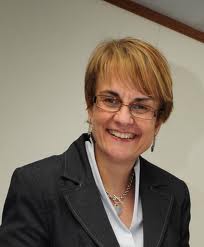
Margaret Ritchie MP

Margaret Ritchie MP

Now Margaret Ritchie has accused Sammy Wilson of dragging his feet and hiding behind other government departments when it comes to approving funding for the project. She quoted Mr Wilson’s argument that he could not approve the outstanding £2m for the Narrow Water Bridge until the Department of Regional Development had prepared a Roads Order. Ms Ritchie said she had now received confirmation from the Department for Regional Development that it is currently preparing the draft Roads Order, which is expected to published next month. But according to the Minister Danny Kennedy, she said, the formal making of the Order will not happen until the Department for Finance approves the business case.

Ms Ritchie said this response clearly states that the Minister for Finance can make the decision to approve the Narrow Water Bridge funding now and that this decision is not held back by the work of the Department of Regional Development, despite claims to the contrary. She said if it remained the case that Sammy Wilson is not prepared to approve the funding then the First and Deputy First Ministers must ensure a decision is taken without further delay, in the interests of the wider community and the tourism industry in the Mourne area and throughout the island. Furthermore as this is an important North-South economic development project there is now a clear need for the direct intervention of the British and Irish Governments to ensure that this project faces no more unnecessary delay, she added.

The MP has taken a keen interest in the project since her involvement with the East Border Region Committee as a Councillor in 1985. She paid tribute to people such as her predecessor Eddie McGrady, Jim McCart, Donal O’Tierney and Barney Carr, who she said had never faltered from their belief in the bridge and who had shaped the economic debate for it and kept the project alive during very difficult political times in the North.

Narrow Water project

Narrow Water project

CLOGHER CELEBRATES

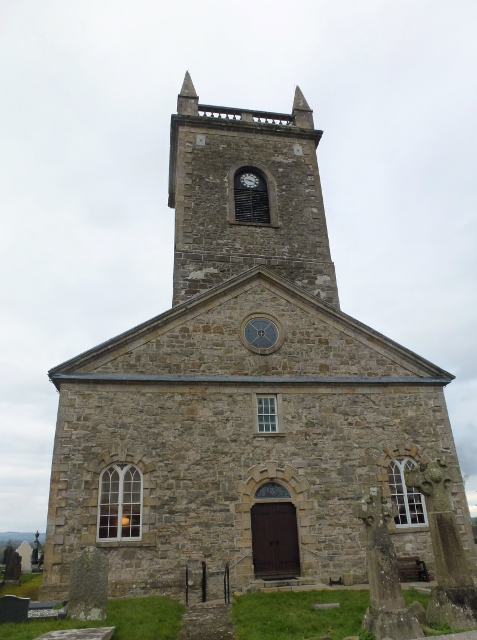
St Macartan's Cathedral, Clogher

St Macartan’s Cathedral, Clogher

Saint Patrick might be known widely for the foundation of his see in Armagh, of which he was the first Bishop. But it is predated by his legacy in Clogher. To mark Saint Patrick’s Day, archivist Jack Johnston gave a talk on the history of Saint Macartan’s Anglican Cathedral. He pointed out that Saint Patrick came to Clogher and established a church there under Macartan before he went to Armagh, which is now the seat of the all-Ireland Primate in both the Church of Ireland and Catholic churches. The see of Clogher was founded by Saint Patrick, who appointed one of his household, Macartan, as first bishop in 454. Macartan was the ‘strong man’ of Patrick, who established the church in Clogher and spread the gospel in Tyrone and Fermanagh. It is said that Saint Brigid, Macartan’s niece, was present at the founding of the see.

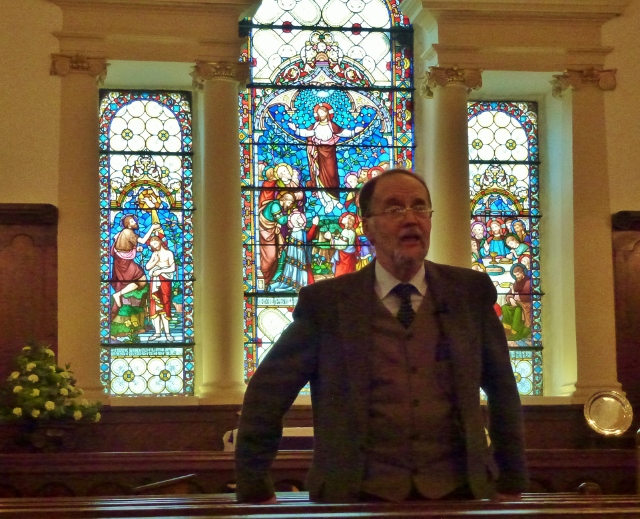
Jack Johnston talk

Jack Johnston talk

Jack Johnston's talk

Jack Johnston’s talk

The Precentor of Saint Macartan’s Cathedral Chapter, Reverend Noel Regan, who is originally from Sligo, organised a series of events to mark Saint Patrick’s Day, starting with the weekly Sunday morning Holy Communion service. There was a Lenten lunch to raise funds for  the Us missionary organisation. It was followed by some musicians playing in the Cathedral, including a chance to hear the wonderful organ played by Glenn Moore, Director of Music at the other (later) diocesan Cathedral, St Macartin’s in Enniskillen.

The day was rounded off with an ecumenical evensong, featuring the choir of the Cathedral group of parishes and members of the choir from St Patrick’s Catholic church in Clogher, to a setting by Thomas Tallis. Canon Regan said, “As members of the Church of Ireland we have the great privilege of worshipping in some of the most significant and important sites in the Christian history of this land. In Clogher we have a fine Cathedral which stands on one of the most important Christian sites in the area. We are delighted to open our doors that others might come and together with us learn something of our common heritage and enjoy the surroundings of this holy and special place”.

St Macartan's Cathedral, Clogher

St Macartan’s Cathedral, Clogher

IN PATRICK’S PATHS

Fr Denis Hartnett MHM

Fr Denis Hartnett MHM

Imagine the surprise of the congregation at Mass this morning when instead of the usual (retired) priest or the parish priest, they saw someone who looked a bit like St Patrick himself! Long grey-white hair and a plentiful beard. The usual celebrant had been temporarily replaced by someone who, appropriately for the feast day of the patron saint, turned out to be a missionary priest.

Massgoers in Tydavnet, County Monaghan in the Clogher diocese, listened with interest as Fr Denis Hartnett MHM introduced himself. He was there to promote the St Joseph’s Advocate magazine of the Mill Hill Missionaries, who took that name from the location of their motherhouse in North London and were founded by Cardinal Vaughan in the late 19thC. But it wasn’t a hard sell.

Instead, Fr Hartnett shared with the congregation his story of being a missionary in Sudan for over twenty years. His order came there in the 1930s. It was a fascinating story of life in this African country. He explained in a very vivid way how the peaceful existence of village life was suddenly shattered by war. Clapping his hands once to produce a startling “bang!” that would have awoken anyone not paying attention, he explained how one day he was  startled by the sound of gunfire and came out to discover that all the surrounding huts had been set on fire.

At this stage, he said all he could do was run for his life as men armed with AK47 rifles descended on the village. The local women were rounded up, taken to a stockade and were raped. Plunder, rape and pillage: a very different story than usual for Saint Patrick’s Day!

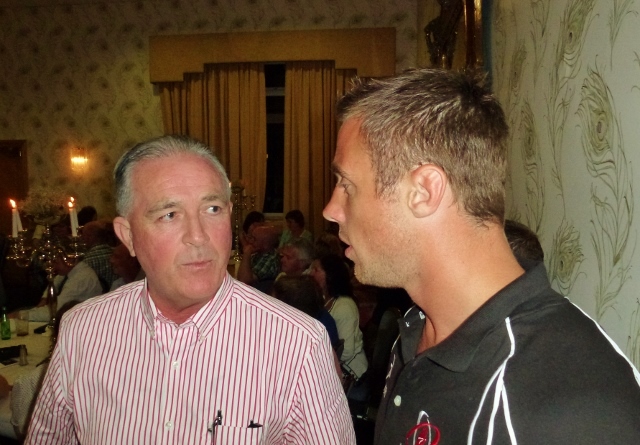
Fr John Skinnader & Tommy Bowe

Fr John Skinnader & Tommy Bowe

After the Mass, I asked Fr Hartnett if he had come across Fr John Skinnader CSSp, a missionary priest who comes from the neighbouring parish of Donagh (Emyvale) and who returned last October to Southern Sudan. During his time back in County Monaghan he attended the celebrations for the centenary of Edenmore national school, of which rugby international Tommy Bowe is also a past pupil. Fr Hartnett knows him but his work was in a different area. Fr Hartnett has been going around the country telling his story on behalf of his missionary order. After saying Mass in Tydavnet, he immediately went to another chapel in the parish to say Mass, at Urbleshanny in Scotstown. So if you did not get a chance to hear him, you can find out more about St Joseph’s Missionary Society here.

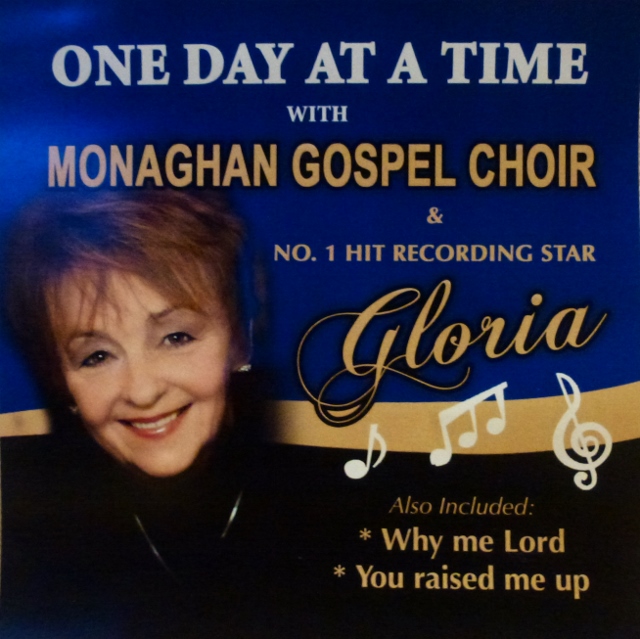
ONE DAY AT A TIME

One Day at a Time

One Day at a Time

One of Ireland’s most popular country music singers, Gloria, has come out of retirement to record a fresh version of her chart-topping single “One Day at a Time”. She has teamed up with the Monaghan Gospel Choir, under the direction of David Drum. The choir was formed in 2007 and has just acquired new premises in Monaghan town (appropriately perhaps, a former gospel hall) for rehearsals.

The well-known country and Western-style Christian gospel song was written by Marijohn Wilkin and Kris Kristofferson. Under the watchful eye of Marijohn it was recorded in Nashville by Gloria who released it as a single in Ireland in August 1977. It remained in the Irish charts for 90 weeks in the top 30 until 1979 and was Number One from 30th September to 11th November in 1978. This made it the longest run by any song in Irish chart history and it still holds that record.

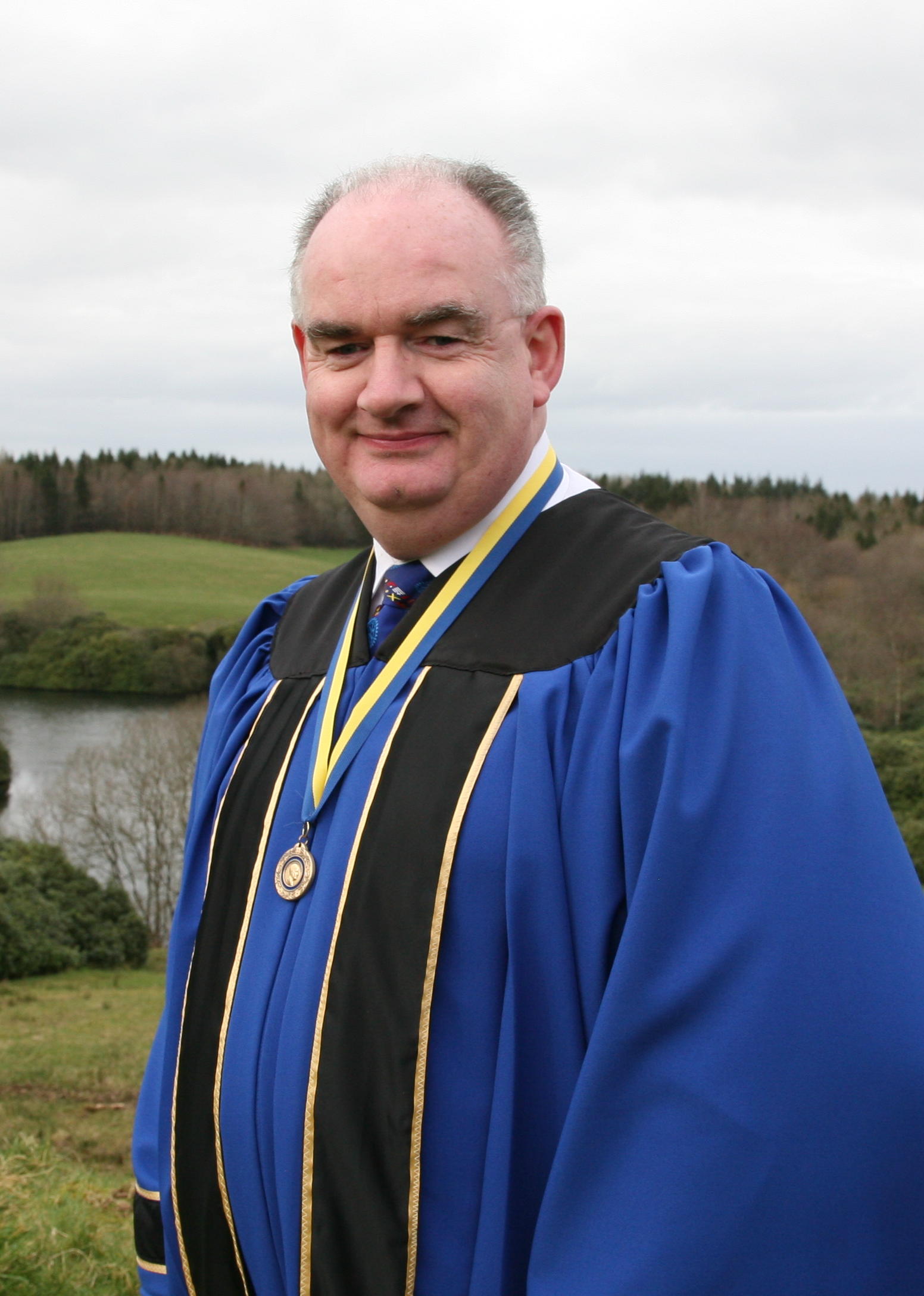
David Drum

David Drum

David Drum says that after nearly 40 years Gloria is delighted to re-release this Gospel Song along with the Monaghan Gospel Choir. He thanked the members of the choir for their work in this release and for their musical endeavours since their formation. He also thanked Gloria for the warm way she had embraced the request because, he said, songs like this never die, they just get better and more meaningful as the years go by.

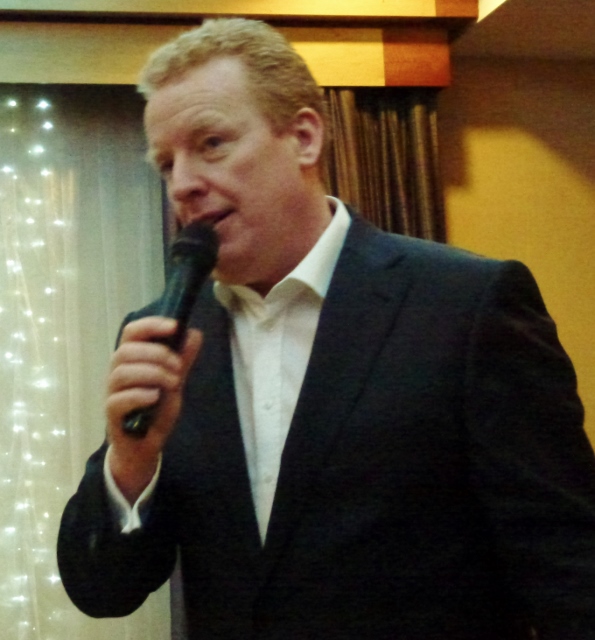
Joe Finnegan

Joe Finnegan, Northern Sound

The album was launched tonight at the Hillgrove Hotel in Monaghan. The Compere for the evening  was Joe Finnegan from Shannonside – Northern Sound FM. The CD which was recorded at Attic Studios in Monaghan can be purchased via the Choir’s website for €4.99. It will also be available through iTunes. The accompanist for the Choir is Seamus Mc Fadden, who also performed with Gloria in her band for over ten years.

Monaghan Gospel Choir has a membership of 80 people, male and female, divided into three sections, 40 Adults, 10 Junior Leaders, 30 juniors and they represent all parts of County Monaghan. They age from the youngest member aged 7 to 70 plus. The children are not performing tonight because of school commitments.

Gloria & Monaghan Gospel Choir

Gloria & Monaghan Gospel Choir

Gloria was born in Monaghan and lives in the parish of Tydavnet. Her first experience on stage was aged 10 when she danced and played accordion with her father’s showband. After leaving school, she found work playing piano with another band, but it was as a singer that she made her name in the 1970s. Gloria toured around Ireland singing alongside Johnny McEvoy during the early 1970s before breaking out on her own. When she released “One Day at a Time” originally, she was very popular in the dancehalls, along with her backing band, The Mississippi. Gloria retired in May 2001, when she turned 50.

TERRY’S SUPER HEXAGON

Terry Cavanagh

Terry Cavanagh

A big night in London tonight for Terry Cavanagh from Tydavnet in County Monaghan, developer of Super Hexagon. It was in the running for a BAFTA video games award in the Best British game category. Terry is based in Cambridge and his parents were with him at the finals at the Hilton Hotel in the West End. Dara O Briain was compere. Here’s how The Guardian described the ceremony:-

10.31pm:

Now it’s time to turn to the award for British game. Not the game that best embodies Britishness (croquet? cricket? cluedo?) but the best game made by a Brit. A difficult award to judge this. The nominees are:

·  Forza Horizon ·  LEGO: The Lord of the Rings ·  Need for Speed Most Wanted · (these three are “hefty multiplatform blockbusters” according to the blog)

· Dear Esther · The Room ·  Super Hexagon (Terry’s game is among three independent creations, self-funded by their developers). These two different groups “exemplify the current tussle at the creative and commercial heart of the industry”, says the Guardian video games journalist, Simon Parkin.

10.34pm:

And the winner is: The Room, an iOS puzzle game that’s heavy on atmosphere and light on scarves.

The game, according to a BBC report, challenges players to solve puzzles in a 3D environment in order to reveal the secrets of a mysterious box. It was created by Guildford-based Fireproof Studios and had previously won Apple’s 2012 iPad game of the year.

Well done Terry, who no doubt might disagree strongly with that description of the category namely “the best game made by a Brit”!!    gamegames-awards-logo-2926

For a full list of the nominations in the nineteen categories, you can go to the BAFTA website here. The Best Game award went to Dishonored, as the BBC News technology section reports. This was the fifth year O’Briain acted as master of ceremonies. The Guardian said he took to the stage and opened his remarks “by expressing his dismay at continually being asked to defend video games in the role of ‘token’ game playing celebrity”.

Dara O Briain

Dara O Briain

SHARED HISTORY: SHARED FUTURE

Shared History: Shared Future Launch

Shared History: Shared Future Launch

“Shared History: Shared Future” brings together six historical, literary and regeneration groups from South Tyrone in a cross-community project delivered by Dungannon and South Tyrone Borough Council through the Peace III phase 2 programme financed by the European Union.  It was launched at the Hill of the O’Neill and Ranfurly House Visitor Centre in Dungannon by the Mayor of Dungannon and South Tyrone, Councillor Phelim Gildernew. Brian Lambkin, Director of The Ulster American Folk Park in Omagh, was the guest speaker.

 Mr Lambkin gave an informative talk on comparative local history: what do we tell the children? He spoke about the significance of townlands, the smallest unit in civil administration, and said they were the key to a better understanding of any local area. He hoped there would be a synergy between the various groups and that their projects would have a wider value in the areas of tourism and genealogy.

 The Shared History Shared Future Project is funded through the European Union’s Peace & Reconciliation Fund and delivered by the South West Peace Cluster and Dungannon & South Tyrone Borough Council. The project was awarded over £25,000 to develop an interlinked schedule of activities over the coming months. It promises to be a very interesting and informative project which encapsulates figures of literary importance such as William Carleton right through to the social history of local engineering and entrepreneurship of John Finlay and Sylvester Mallon, pioneers in quarry engineering to exploring the history of our waterways and townlands.

The project is made up of six societies who have come together to share with each other and with the wider community an awareness of their own fields of expertise and use it towards a shared understanding of our history and future. The groups are:-

O’Neill Country  Historical Society;

Caledon Regeneration Partnership;

William Carleton Society;

Donaghmore Historical Society;

Killeeshil and Clonaneese Historical Society;

South Lough Neagh Regeneration Association.

During the evening, each group gave an overview of their origins and the focus of previous work. While maintaining the individuality of each of their projects all agree that the contribution to  this project enhances and increases awareness of who they are and what they are about.

Brian Lambkin & O'Neill Country Historical Society

Brian Lambkin & O’Neill Country Historical Society

The O’Neill Country Historical Society, represented by Art Daly from Benburb, was established in 1985. Their aim is to research, record and publish the history of the area along the valley of the River Blackwater straddling the border between counties Armagh and Tyrone. The group promote knowledge and understanding of this area’s heritage and folklore through publications, lectures and seminars and interact with other local historical groups and bodies with a view to promoting interest in our history.

Caledon Regeneration Partnership was established in 1996 and comprises representation from the local community, Dungannon and South Tyrone Borough Council and Caledon Estates Company.  William Beattie outlined how the Partnership actively promote the conservation and protection of the built and natural heritage of the area and have undertaken a number of major restoration projects within Caledon Village. The restoration of the Caledon Beam Engine Complex is currently underway.  Caledon Regeneration Partnership are actively involved in a number of community projects. Caledon Village Allotments were opened in 2011. Chairman Jim Brady said “the Partnership are delighted to join together with like-minded groups across the region in this exploration of our cultural and industrial heritage”.

Pat Boyle & Jim Cavanagh

Pat Boyle & Jim Cavanagh

The William Carleton Society is a cross-community, cross-border group which is dedicated to promoting the works of the well-known Irish author from County Tyrone and his life and times. The Chair, Jim Cavanagh, explained how it seeks to use his stories of faction-fighting and sectarianism in 19th Century Ireland as the basis for talks and discussions on history and literature and the lessons for modern-day society. By discussing issues such as sectarianism the Society hopes to open up a meaningful debate and an educative process around this issue, which is still relevant to the current situation in Northern Ireland. Its main event is a four-day annual international summer school in Clogher in the first week of August . This year’s is the 22nd since its inception in 1992.

The Society will be organising a cross-community concert in Fivemiletown Methodist Hall with the Murley Silver Band and Monaghan Gospel Choir on Wednesday August 7th. On the previous evening, August 6th, there will be a cross-community walk “in the footsteps of Carleton”, followed by music from the diferent traditions. There will also be a series of talks in the coming months including one by Dr Paddy Fitzgerald on the “Ulster English” and two others given by members of the Society about Carleton and the Clogher Valley area. Although Carleton grew up in the Clogher area and one of the places he lived at Springtown still survives, “Carleton’s Cottage”, he spent most of his life in Dublin, where he changed his religion to Anglicanism. In January, members of the Society in Tyrone held a study trip to Dublin to visit Sandford Church of Ireland in Ranelagh, where he worshipped. They also visited his grave at Mount Jerome cemetery, where Precentor Noel Regan from St Macartan’s Cathedral in Clogher led a prayer and summer school director Michael Fisher laid flowers to mark the 144th anniversary of his death.

Donaghmore Historical Society’s Townlands project is dedicated to the importance of these geographical divisions of land that have existed for thousands of years, long before towns and villages developed. They are a most important element of our heritage. Since the Post Office ceased using town lands in the early 1970s and introduced road names instead, there has been a steady decline in the awareness of our town lands by all of us but more especially by the younger generations. Members of Donaghmore Historical Society intend to study a number of townlands in the parish of Donaghmore to find things like the acreage, the meaning of the name and any other features of interest and to chart the changes that have taken place in them over the past two hundred years.

Patricia Bogue outlined how they intend to research all available records of the people who lived in the townlands and to record all their findings in book form. The aim of the publication will be to help genealogists and family history researchers seeking information about the many emigrants from the parish, living in all parts of the world. To help raise awareness of townlands in the new generations, the group also intend to involve schools from the parish in the project.

Killeeshil and Clonaneese Historical Society described how it was formed in March 2009 from the coming together of people throughout the areas of Killeeshil and Clonaneese, Co. Tyrone who have a keen interest in local history. Richard Knox said the Society’s aims are to broaden the knowledge of the area’s long and wonderful history and to provide a mechanism whereby local people and those from further afield can access this knowledge through literature, talks & events and the internet.

The Society is keen to promote the fact that the area has a rich shared history which should be enjoyed by everyone and as such the Society’s ethos is cross-community. If you would like to become a member of the Society please contact the Secretary or come along to the various events they will be holding in the coming months through the Shared History Shared Future Project.

Six Groups in Shared History Project

Six Groups in Shared History Project

Like the other five members in the project, the South Lough Neagh Regeneration Association is a voluntary cross-community group. It aims to attract and encourage investment in the economic, social and environmental well-being of the southern shores of Lough Neagh; to generate activity, employment, enthusiasm and pride in the community. They are interested in the area of the “Derrys”: covering Derrymacash, Derryadd, Derrytrasna, Derryinver, Derrylard, The Birches, Maghery, Derryloughan and Derrytresk.

Local historian Tommy Glenny told the launch that the group plans to make a video about the walkways of the defunct Ulster Canal, which once played an important role in transportation in the area. There are plans by Waterways Ireland to restore part of the canal, which linked Lough Neagh through Monaghan and Clones with Upper Lough Erne in County Fermanagh, as part of a tourism project. The group takes a special interest in the stretch between Maghery and Benburb and will be holding events in May on the old canal towpath.

DSTBC LogoThe PEACE III Programme is part-funded by the European Union (€225 million from the EU with further national contributions of €108 million) through its Structural Funds Programme. The four Councils of Cookstown, Dungannon and South Tyrone, Fermanagh and Magherafelt came together to manage the PEACE III Programme for Measure 1.1 – ‘Building Positive Relations at a Local Level’ across the four Council areas. This area is referred to as the South West Cluster. The full title of the PEACE III Programme is the EU Programme for Peace and Reconciliation in Northern Ireland and the Border Region of Ireland. The programme is available in Northern Ireland and the Border Counties of the Republic of Ireland and covers the period 2007-2013.

The four Councils of the South West Cluster were allocated a budget of £3,461,440 for Phase I of the PEACE III Programme (2007-2010) and a further allocation of £3,461,743 has been awarded to deliver Phase II of the Programme for the period 2011-2013. The Phase II Action Plan has been developed after extensive consultation with local stakeholders and analysis of the needs of communities across the the South West Cluster.    erdfimages