WHAT IF?

CAFOD campaign

CAFOD campaign

During a visit to Bristol, I heard about the Enough Food for Everyone IF campaign. I saw a banner on display near Bristol’s Anglican Cathedral, a fine building. CAFOD along with over 100 charities in the UK is part of a coalition pushing for action by the G8 on the issue of global hunger, so that 2013 can be the beginning of the end of global hunger. The G8 leaders are due to meet at the Lough Erne resort, near Enniskillen in County Fermanagh in June.

Deacon David Brinn

Deacon David Brinn

CAFOD is the official overseas aid agency of the Catholic church in England and Wales. The group’s organiser in the Diocese of Clifton is Deacon David Brinn, who is based in the parish of Frome in Somerset. He was invited to speak at a Mass at the university chaplaincy in Bristol, at which he set out the aims of the campaign. He said there are four main “ifs”:-

There is Enough Food for Everyone….

IF  we force governments and investors to be honest and open about the deals they make in the poorest countries that stop people getting enough food.

IF  governments keep their promises on aid, invest to stop children dying from malnutrition and help the poorest people feed themselves through investment in small farmers.

IF  we stop poor farmers being forced off their land, and use the available agricultural land to grow food for people, not biofuels for cars.

IF  governments stop big companies dodging tax in poor countries, so that millions of people can free themselves from hunger.

CAFOD is a sister organisation of Trócaire, set up by the Irish Catholic Bishops forty years ago for overseas aid. This week representatives of Trócaire are at the 57th session of the Commission on the Status of Women at the United Nations. Both groups are affiliates of Caritas International. More details of the CAFOD campaign including details of how to lobby MPs can be found here. One in eight people in the world go hungry.

One final observation about the Catholic community in Bristol. While walking around the city centre I came across the church of St Mary on the Quay, Colston Street. In the pastoral care of the Divine Word Missionaries (SVD), it was a Jesuit parish from 1861 until 1996, when a lack of priests meant that the order had to withdraw their services. Now, for similar reasons, the Jesuits are leaving the Sacred Heart parish in Wimbledon, where I used to live.

St Ignatius of Loyola SJ

St Ignatius of Loyola SJ

Among the statues there which shows the Jesuit influence is one of St Ignatius of Loyola, founder of the Society of Jesus. Perhaps I should have taken the hint and speculated what if the new Pope were to be a Jesuit! Certainly the election of Cardinal Bergoglio from Buenos Aires as Pope Francis I is very welcome. I hope the first Jesuit to become Pontiff will bring a wind of change with him, as we were promised during the Papacy of John XXIII.

OPERATION SOUTHEND

Operation Southend

Operation Southend

Southend FC 1 AFC Wimbledon 3
Three well deserved points for the Dons. The win takes them up to 18th in League 2. The work I helped to do clearing snow from the pitch this morning paid dividends! Flying into Southend airport on Tuesday morning, all I could see from the plane window was a blanket of snow covering streets, gardens and playing pitches. A quick phone call to Southend FC established that they were still hopeful the match against my club AFC Wimbledon would go ahead, but expected there would not be any definite news until lunchtime.

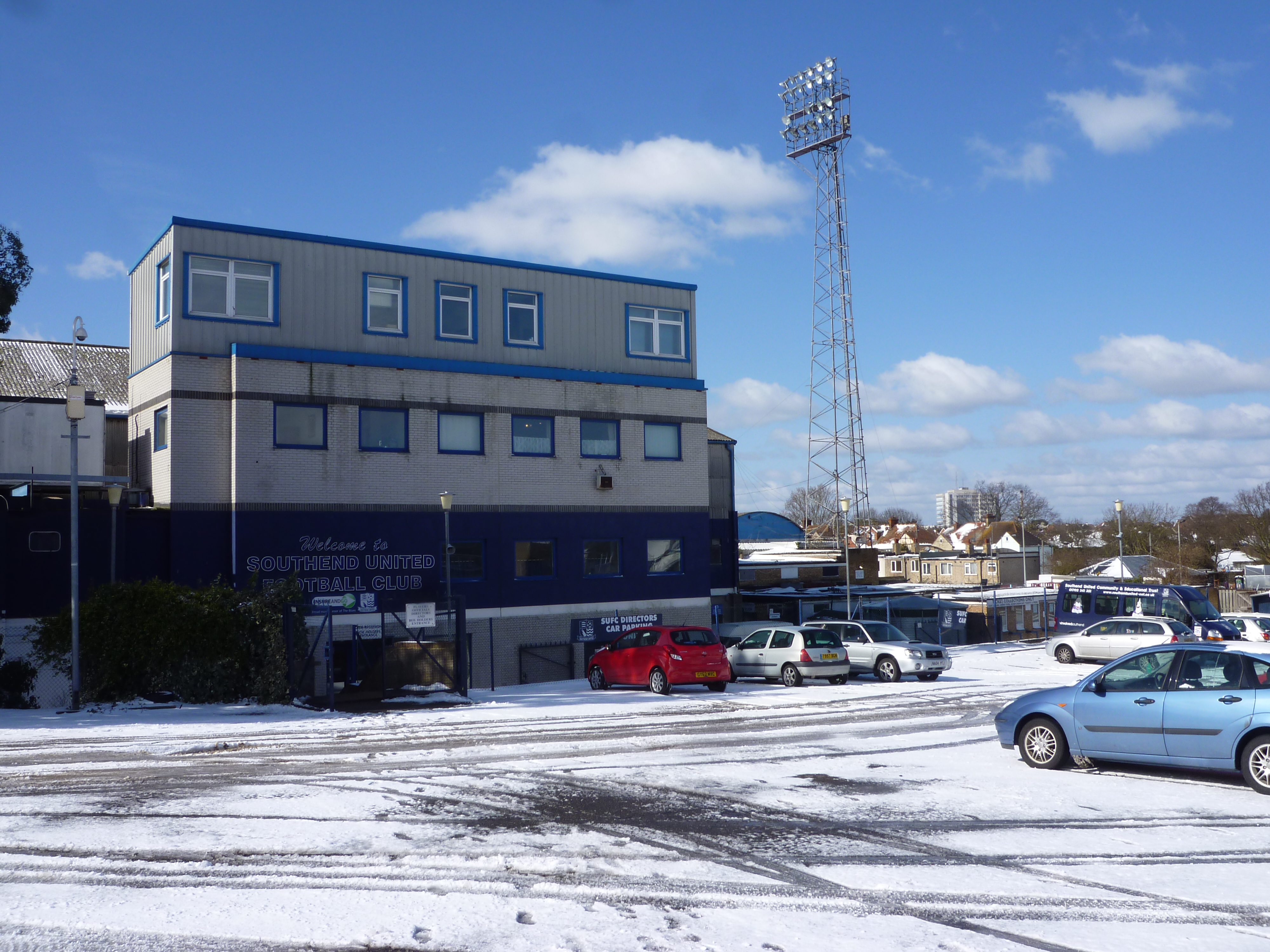
I asked if the pitch was being cleared and the receptionist confirmed that an operation was underway and that volunteers had been called in to help. She confirmed that an AFC Wimbledon helper would be welcome, when I offered my services. I had booked my match ticket in advance via the Dons’ online service, so I was hoping my flight over to England would not be wasted. A three minutes journey on the train from the airport to the next stop along the line brought me to Prittlewell, and I could see the floodlights of the Club in the distance. On arrival at Roots Hall, this was the scene that greeted me in the car park and inside the stadium:-

Roots Hall Stadium

Roots Hall Stadium

Roots Hall Pitch 11am

         Roots Hall Pitch 11am       

One of the first people I met outside the main entrance was the chief executive of the club, Steve Kavanagh, who acknowledged my offer of help. I was the first to add my name to the list of volunteers. On entering the pitch, the first person I spoke to turned out to be a fellow Dub, assistant manager Graham Coughlan from Clondalkin.  He started playing soccer as a youth for Cherry Orchard and his first senior club was Bray Wanderers in the League of Ireland. He also plays in the team as a central defender, but did not line out last night.

Snow clearance

Snow clearance

At this stage (11am), most of the snow had been removed from the covers in the penalty box area at one goalmouth, so over three-quarters of the pitch was still covered with a layer of white. Using snow shovels and wheelbarrows, the snow was removed section by section and more volunteers arrived to help. By noon, almost half the pitch had been cleared and I was able to send a photo to AFC Wimbledon and keep them updated via twitter. The sun was shining and the white of the snow was being gradually replaced by the green of the pitch, which remained soft underneath.

Another two hours’ work ensured that the remaining areas of the pitch were cleared and work began to ensure that the stand on one side of the ground where the snow had drifted in was cleared and made safe for spectators. As a “thank you” for their work, each volunteer was offered a free ticket for the game (although there seemed to be more interest in the tickets for the Johnstones Paint FA Trophy final against Crewe at Wembley next month: Southend have sold their allocation of 20,000 seats). I was given a refund for my ticket and the gesture was appreciated.

ONE DAY AT A TIME

One Day at a Time

One Day at a Time

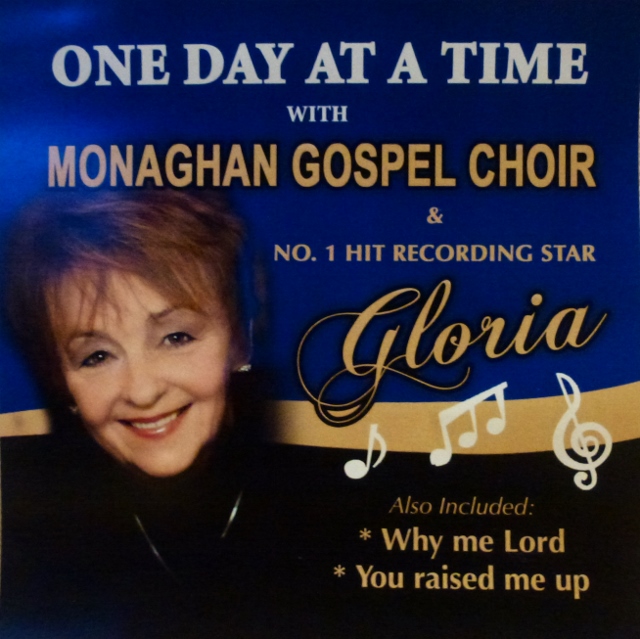
One of Ireland’s most popular country music singers, Gloria, has come out of retirement to record a fresh version of her chart-topping single “One Day at a Time”. She has teamed up with the Monaghan Gospel Choir, under the direction of David Drum. The choir was formed in 2007 and has just acquired new premises in Monaghan town (appropriately perhaps, a former gospel hall) for rehearsals.

The well-known country and Western-style Christian gospel song was written by Marijohn Wilkin and Kris Kristofferson. Under the watchful eye of Marijohn it was recorded in Nashville by Gloria who released it as a single in Ireland in August 1977. It remained in the Irish charts for 90 weeks in the top 30 until 1979 and was Number One from 30th September to 11th November in 1978. This made it the longest run by any song in Irish chart history and it still holds that record.

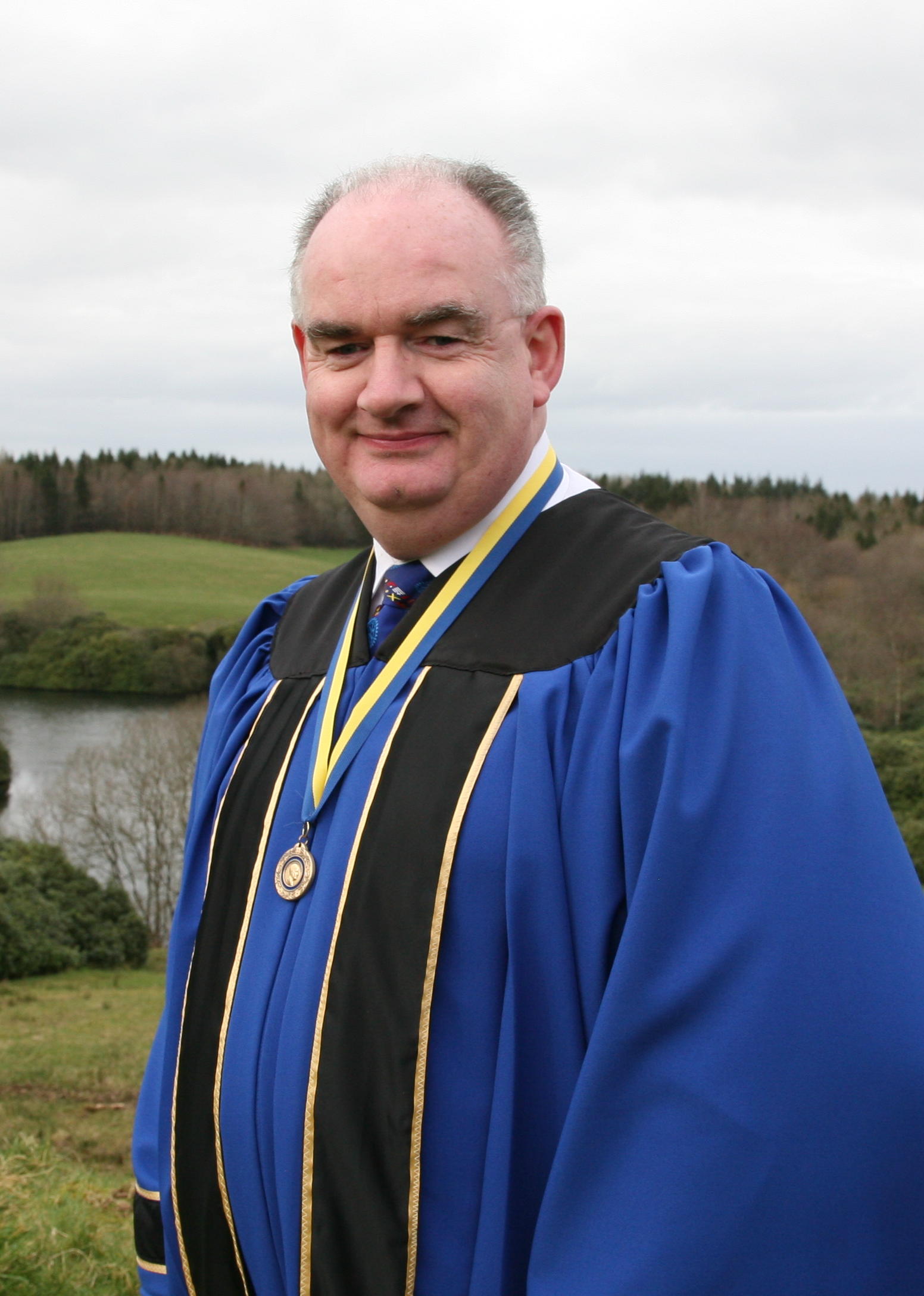
David Drum

David Drum

David Drum says that after nearly 40 years Gloria is delighted to re-release this Gospel Song along with the Monaghan Gospel Choir. He thanked the members of the choir for their work in this release and for their musical endeavours since their formation. He also thanked Gloria for the warm way she had embraced the request because, he said, songs like this never die, they just get better and more meaningful as the years go by.

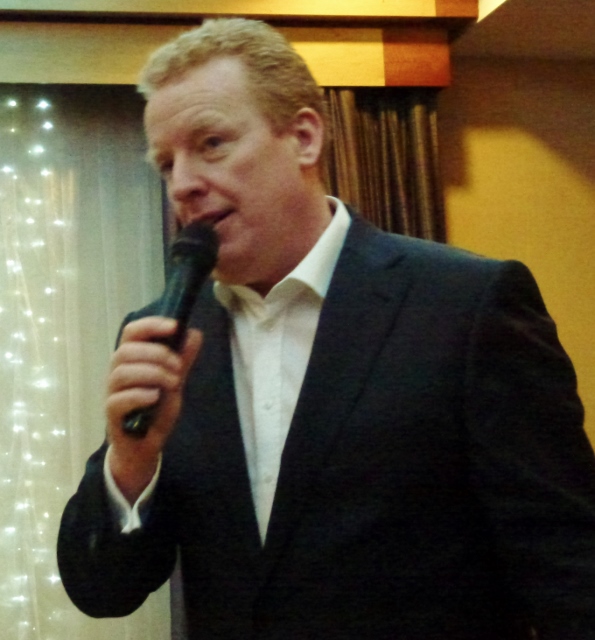
Joe Finnegan

Joe Finnegan, Northern Sound

The album was launched tonight at the Hillgrove Hotel in Monaghan. The Compere for the evening  was Joe Finnegan from Shannonside – Northern Sound FM. The CD which was recorded at Attic Studios in Monaghan can be purchased via the Choir’s website for €4.99. It will also be available through iTunes. The accompanist for the Choir is Seamus Mc Fadden, who also performed with Gloria in her band for over ten years.

Monaghan Gospel Choir has a membership of 80 people, male and female, divided into three sections, 40 Adults, 10 Junior Leaders, 30 juniors and they represent all parts of County Monaghan. They age from the youngest member aged 7 to 70 plus. The children are not performing tonight because of school commitments.

Gloria & Monaghan Gospel Choir

Gloria & Monaghan Gospel Choir

Gloria was born in Monaghan and lives in the parish of Tydavnet. Her first experience on stage was aged 10 when she danced and played accordion with her father’s showband. After leaving school, she found work playing piano with another band, but it was as a singer that she made her name in the 1970s. Gloria toured around Ireland singing alongside Johnny McEvoy during the early 1970s before breaking out on her own. When she released “One Day at a Time” originally, she was very popular in the dancehalls, along with her backing band, The Mississippi. Gloria retired in May 2001, when she turned 50.

AUSCHWITZ: A SURVIVOR

Kitty Hart-Moxon

Kitty Hart-Moxon

I am watching the story of a survivor of Auschwitz. Stephen Nolan on BBC1 Northern Ireland is talking to Kitty Hart-Moxon and hearing her “Story of a Lifetime”. She was sent to the Auschwitz labour camp in 1943 at the age of 16, where she survived for two years. She  was also imprisoned at other camps. Shortly after her liberation in April 1945 by American soldiers, she moved to England with her mother, where she married and dedicated her life to raising awareness of the Holocaust. She has written two autobiographies entitled I am Alive and Return to Auschwitz.

She was born Kitty Felix in 1926, in Bielsko in southern Poland. She had one brother, Robert, who was five years older. Her father operated an agricultural supply business. As a child, she represented Poland as part of the Youth Swimming Team in 1939. She won a bronze medal and was the youngest selected on the squad.

During a holiday when Kitty was 12, her parents decided to leave Bielsko because of the anti-Semitic mood that had swept the town, which was close to the borders with Germany and Czechoslovakia. To escape the danger, Kitty’s family moved to Lublin, in central Poland. They left on 24 August 1939. On September 1st 1939, Hitler’s Germany invaded Poland. A priest obtained false documents for her and her mother and the family split up to help their chances of survival. They blended in with a group of Poles heading for work in Germany and ended up at a rubber factory in Bitterfeld. They were rounded up with a number of other Jews and sent to Auschwitz.

Auschwitz

Auschwitz

Well over 1 million Jewish men, women and children died in Auschwitz/Birkenau. Other groups of people who died included Polish political prisoners, Soviet prisoners of war, gypsy families, homosexuals, people with disabilities and prisoners of conscience or religious faith (including several hundred Jehovah’s Witnesses). Kitty was 16 when she was taken to Birkenau. She witnessed the German soldiers sorting children and adults. Many were sent directly to the gas chambers. The buildings in this section now lie in ruins and for anyone who visits the site it is an emotional experience, reflecting on the mass murder that occurred. When I was there a few years ago, a group of orthodox Jews, some with Israeli flags, paused among the rubble to pray.

It was Kitty’s job at the concentration camp to sort through the mens’ jackets and remove all the valuables. In an exhibition there are piles of possessions, along with the hair removed from victims before they died and later used to make cloth. Block 25 was known as the death block. Female prisoners were held there before being taken to the gas chambers.

Kitty was fortunate to survive. Now she tells her story to others, to remind people about the genocide, in the hope that new generations can learn from the horrors of the past.

TERRY’S SUPER HEXAGON

Terry Cavanagh

Terry Cavanagh

A big night in London tonight for Terry Cavanagh from Tydavnet in County Monaghan, developer of Super Hexagon. It was in the running for a BAFTA video games award in the Best British game category. Terry is based in Cambridge and his parents were with him at the finals at the Hilton Hotel in the West End. Dara O Briain was compere. Here’s how The Guardian described the ceremony:-

10.31pm:

Now it’s time to turn to the award for British game. Not the game that best embodies Britishness (croquet? cricket? cluedo?) but the best game made by a Brit. A difficult award to judge this. The nominees are:

·  Forza Horizon ·  LEGO: The Lord of the Rings ·  Need for Speed Most Wanted · (these three are “hefty multiplatform blockbusters” according to the blog)

· Dear Esther · The Room ·  Super Hexagon (Terry’s game is among three independent creations, self-funded by their developers). These two different groups “exemplify the current tussle at the creative and commercial heart of the industry”, says the Guardian video games journalist, Simon Parkin.

10.34pm:

And the winner is: The Room, an iOS puzzle game that’s heavy on atmosphere and light on scarves.

The game, according to a BBC report, challenges players to solve puzzles in a 3D environment in order to reveal the secrets of a mysterious box. It was created by Guildford-based Fireproof Studios and had previously won Apple’s 2012 iPad game of the year.

Well done Terry, who no doubt might disagree strongly with that description of the category namely “the best game made by a Brit”!!    gamegames-awards-logo-2926

For a full list of the nominations in the nineteen categories, you can go to the BAFTA website here. The Best Game award went to Dishonored, as the BBC News technology section reports. This was the fifth year O’Briain acted as master of ceremonies. The Guardian said he took to the stage and opened his remarks “by expressing his dismay at continually being asked to defend video games in the role of ‘token’ game playing celebrity”.

Dara O Briain

Dara O Briain

GEORGE QUIGLEY RIP

George Quigley

George Quigley

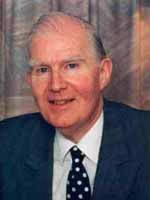
George Quigley had a vision for an all-island economy. It was not a matter of politics for him, but as a businessman he thought it made sense. I met him for interviews on a number of occasions in the different roles he performed so well. A former high-profile civil servant, he entered the private sector as Chairman of Ulster Bank from until 1989 until 2001. I wonder how he would have felt about some of their recent problems regarding IT systems!  Sir George also served as a non-executive director on the Main Board of Nat West bank and as Chair of the Royal Bank of Scotland Pension Fund. He also chaired Lothbury Property Trust. He was a director of the aerospace company Shorts (owned by Bombardier) and was appointed Chairman of the company in to succeed Sir Roy McNulty in May 1999.

He was a leading member of the Northern Ireland Economic Reform Group. ergNI consists of economists, accountants and businessmen based in Northern Ireland who wish to see a more successful and competitive NI economy, less dependent on a public sector subvention from taxpayers in Great Britain.  He led the debate about the benefits of introducing a lower rate of corporation tax in Northern Ireland that would match the Republic, which has this incentive to attract foreign direct investment.  He headed an industrial task force to examine the issue and claimed in 2006 a reduction from 30% to 12.5% would “double the growth rate of the local economy” and had the potential to create 180,000 jobs over 25 years.

Three years ago, Sir George along with the former Church of Ireland Primate Archbishop Robin Eames verified the decommissioning of weapons by the loyalist paramilitary group, the Ulster Defence Association. In a joint statement, the North’s First Minister Peter Robinson and deputy First Minister Martin McGuinness offered their condolences. They said he was “a strong advocate of mutual respect in building a cohesive and equal society“.

The Sinn Féin President Gerry Adams expressed his sadness and said “George was an experienced economist and a long-time advocate of the all-Ireland economy. Last year he participated in a Sinn Féin conference in Derry on the issue of uniting Ireland“. The former SDLP leader and Foyle MP Mark Durkan said “George Quigley was a man of energy, verve, compassion and humour. His warm instincts and sharp intelligence made him engaging and effective“.

Sir George Quigley (CBI picture)

Sir George Quigley (CBI picture)

Sir George played an active role in the Confederation of British Industry. Along with the late William Poole, he was a strong supporter of the IBEC-CBI Joint Business Council which promoted cross-border trade, business and transport co-operation. The Chairman of CBI Northern Ireland Ian Coulter described him as:-

a great man who achieved so much in his lifetime. He had an intellect and a sense of civic duty that set the standard and was passionate about securing the long term future of Northern Ireland. More recently he played a key role in championing the cause of Presbyterian Mutual Society depositors and effectively created the debate for a lower corporation tax in Northern Ireland. Most of all, Sir George will be remembered for the role he played within civic society. The term ‘business leader’ is overused – Sir George was one of the very few who actually was one.”

Elsewhere his roles in public life have included chairman of the NI Economic Council and the Royal Group of Hospitals and he conducted a review of the Parades Commission. He served on the Dearing Committee on the future of higher education in the UK (report published in 1997). In the Republic he had been president of the Economic and Social Research Institute and chairman of the board of the Institute of British-Irish Studies in University College Dublin. He was a member of the Royal Irish Academy.

William Poole (CBI picture)

William Poole (CBI picture)

Three months ago he told a Northern Ireland Assembly committee for finance and personnel how he had been invited some 13 years ago by the late William Poole, an official working for the CBI, and the then Northern Ireland officer of the ICTU, the late Terry Carlin, to meet them so that they could pick his brains on the matter of recruiting ex-prisoners. They felt that something needed to be done about the issue. Sir George told MLAs that before long, he found himself chairing a group of around 30 people consisting of the representatives of groups whose members had been involved with the IRA, INLA, UDA and UVF. There were also representatives of agencies with relevant interests, such as training, as well as employer and trade union representatives. Some of their meetings were held at the Ulster Bank when he was chairman.

Sir George was taken ill on Sunday as he attended his local Presbyterian church at Helen’s Bay in County Down. He was 83. I have had the privelege of dealing with all three men and talking to them at various stages about the Northern Ireland economy. Now they have departed for their eternal reward, but hopefully they have given encouragement for the future by their actions. The ICTU offices in Belfast are named after Terry Carlin. William Poole and George Quigley also deserve to be remembered in an appropriate manner.

May they all rest in peace.

ATHLONE: BORDER TOWN

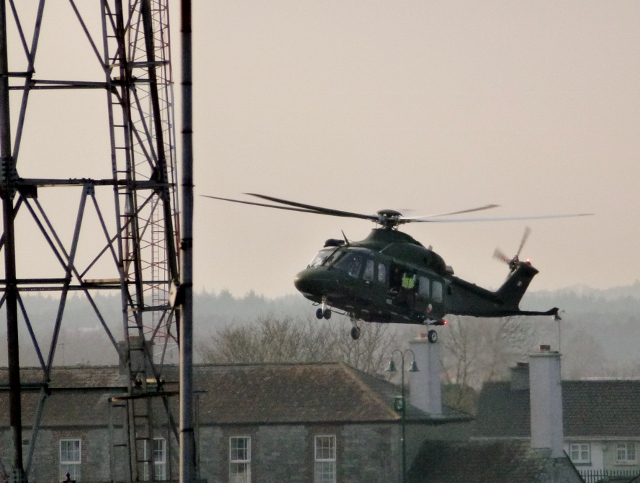
AgustaWestland AW139 Irish Air Corps Helicopter:Photo © Michael Fisher

AgustaWestland AW139 Irish Air Corps Helicopter:
Photo © Michael Fisher

An Irish Air Corps helicopter comes into land at an army barracks in a border town. But this is not near the state border between the Republic and Northern Ireland. As part of the peace process, Monaghan barracks has been demolished and is now an educational campus, with a new theatre.

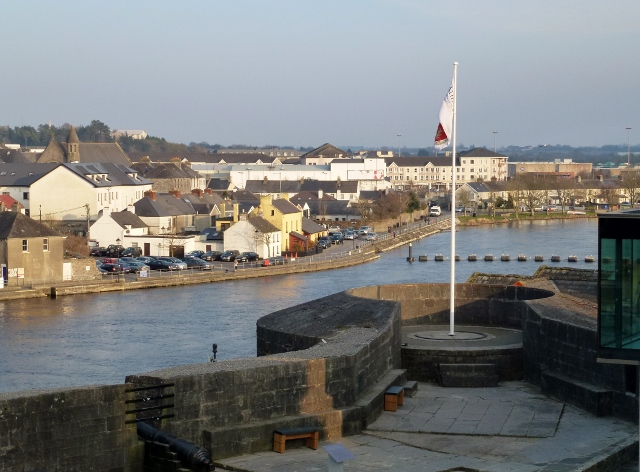
My picture of an AgustaWestland AW139 was taken this afternoon in Athlone. It is one of six such aircraft in the Air Corps fleet. The observation point was from the Castle, looking across towards Custume Barracks. Until last year, it was the headquarters of Western command, but under reorganisation the 1,000 soldiers based there became part of what is now 2nd Brigade, with headquarters at Cathal Brugha Barracks in Dublin. The helicopter is providing an air ambulance service (Emergency Aeromedical Service) with air corps crew and one HSE paramedic on a trial basis until June. At the moment the EC-135 helicopter normally used is being rebuilt after an accident and the Westland helicopter operates from Baldonnel, Co. Dublin.

Athlone Castle & River Shannon

Athlone Castle & River Shannon

Athlone is an important gateway on the River Shannon. It is where Leinster (Longford, Westmeath) meets Connacht (Roscommon). The river, which has its source in Ulster (Shannon Pot) is the border between East and West. This is close to the centre of the island of Ireland. I remember passing this point on what was then the main Dublin to Galway Road when our family was heading to the West for a holiday in the 1960s. In those days the Castle was not open to the public, except for a small museum run by the Old Athlone Society. But the complex has now been developed and last week a new €4.3million visitor centre was officially opened.

Unfortunately my visit to the complex was only brief, as the last admissions are one hour before closing time, to enable visitors to take full advantage of the interactive displays. Thanks to a very helpful staff member, who wanted to give me an idea of the displays, I got a chance to look at the first gallery, featuring the early (Celtic) history of the town.  The new participatory experience has been developed by Event Communications, the same company which designed displays at Titanic Belfast and the Giant’s Causeway Visitor Centre in County Antrim.

Luan Gallery, Áth Luain

Luan Gallery, Áth Luain

The new Luan Gallery just across the road was closed. A pity, because I would like to have seen the controversial H-Block art work “Fragmens Sur Les Institutions Républicaines IV” by Longford artist Shane Cullen. At the opening of the exhibition three months ago, the former Fine Gael Minister for Justice Paddy Cooney criticised the display and called on the Town Council to get it removed. Perhaps he has forgotten his history.

IRA Statue, Athlone

IRA Statue, Athlone

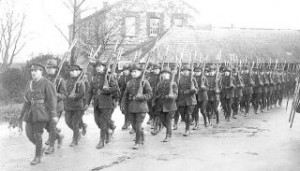
Only a few hundred metres away at the other end of the bridge there is a statue by Desmond Broe of an IRA volunteer in memory of members of the Athlone Brigade who lost their lives in the fight for independence. The same men who marched into the garrison (then Victoria Barracks) on February 28th 1922 to take it over from the British forces after the Anglo-Irish Treaty was signed. They were led by General Seán Mac Eoin,  accompanied by Brigadier George Adamson.

Free State soldiers march into Victoria (Custume) Barracks

Free State soldiers march into Victoria Barracks Photo:  IrishVolunteers.org

 Two months later Adamson was shot dead by anti-treaty forces. His is one of the names on the memorial, along with John Blaney, although the inscriptions on two sides written in Irish and English give the dates as 1916 (Easter Rising) to 1921. Athlone Castle was later renamed Adamson Castle in his honour. Thank you to a reader who drew my attention to the silent film of the event which was is copyright © British Pathe and can be previewed here. Well worth looking at to see the picture of Commandant General Mac Eoin (the “Blacksmith of Ballinalee”) addressing his troops.

Count John McCormack

Count John McCormack

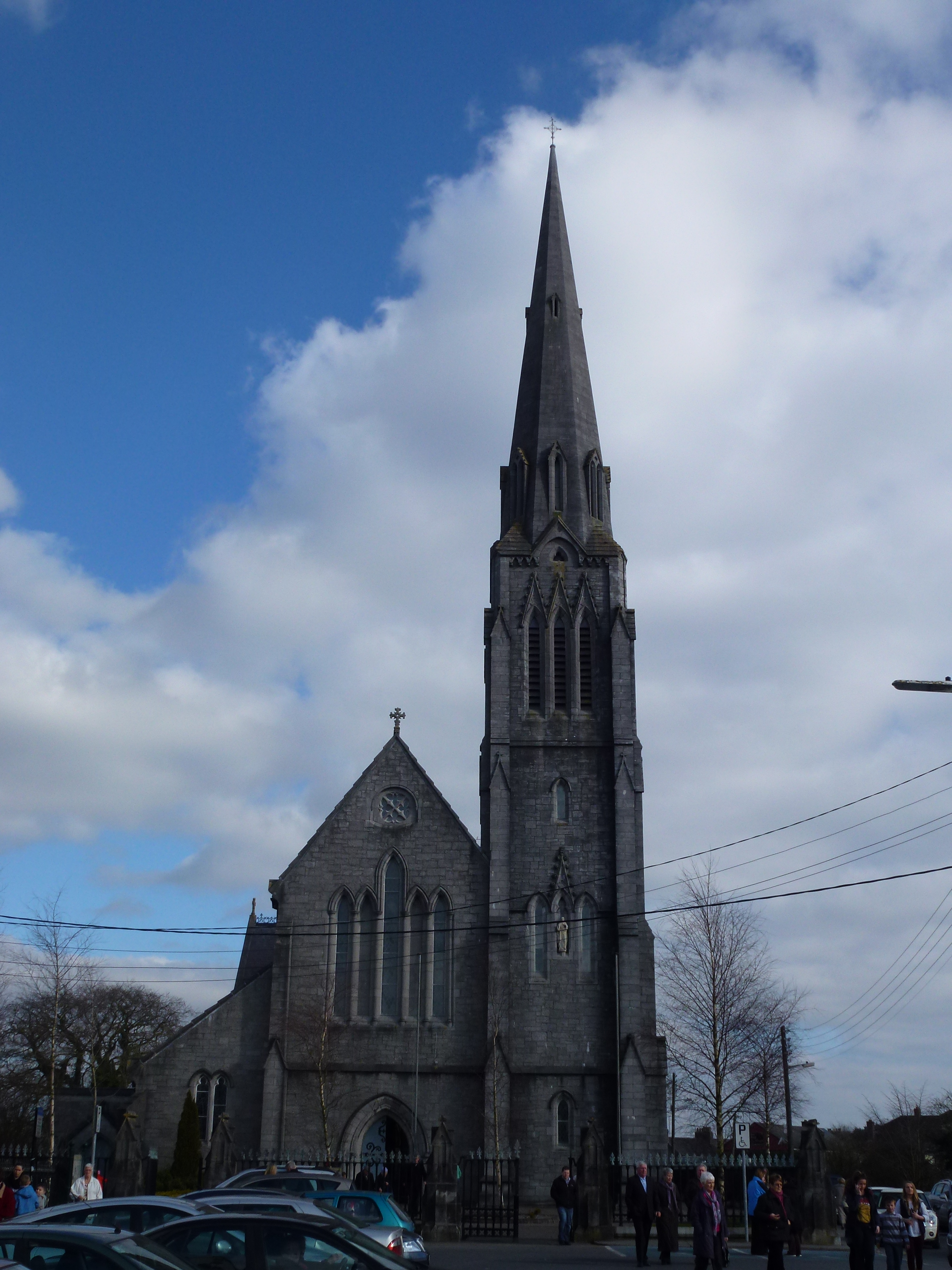
Another interesting statue along the bank of the River Shannon and close to the Luan Gallery is that of the internationally renowned tenor, Count  John McCormack. Born in Drumsna, he was baptised at St Mary’s Church in Athlone on 23rd June 1884. His parents were employed at the Athlone Woollen Mills. St Mary’s is on the Westmeath side of the town. At the moment, it is upgraded to a pro-Cathedral, following the fire at St Mel’s in Longford, which is undergoing a €30 million restoration. This means it serves as the seat for the Bishop of Ardagh and Clonmacnois, Dr Colm O’Reilly. Which reminds me of one other border in the town: the ecclesiastical one. The impressive church of St Peter and St Paul beside the Castle on the Roscommon side of the river is in the Diocese of Elphin, which stretches as far as Sligo. So there are plenty of interesting things to see and do here.

St Mary's Athlone

St Mary’s Athlone

If you want to go for a meal, there is a good selection of restaurants on both sides of the bridge. I lunched at the Olive Grove and sat at a table with a splendid view alongside the River, immediately opposite the Castle. When I went over to the Castle after the meal, I noticed that two cannons dating from the 18th Century were pointing across at the restaurant!  They are marked “GR” referring to the reign of George II. The lunch was very enjoyable and contained a range of fresh Irish products, including  Fivemiletown goat’s cheese from County Tyrone. It also had two main courses based on Silver Hill duck, from Emyvale in County Monaghan. It’s important to know the source of your food nowadays.

Cannon at Athlone Castle

Cannon at Athlone Castle

SS Peter & Paul, Athlone

SS Peter & Paul, Athlone

SUICIDE PREVENTION

Joan Freeman, Pieta House (Lucan)

Joan Freeman, Pieta House (Lucan)

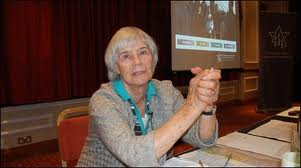
The statistics make grim reading. Around 520 people a year in the Republic of Ireland take their own lives. The figures equate to ten deaths by suicide a week, and of those, eight are male. Joan Freeman from Pieta House in Lucan, County Dublin was the guest speaker at the Lions Clubs annual district convention at the Hodson Bay hotel near Athlone in County Roscommon. She revelaed that they were going to start up a campaign to “Mind your Males” and would be revealing more details in the near future.

Pieta House was founded by Joan, who was a practising psychologist seven years ago. Her own sister died by suicide. The group now has outreach centres in other parts of Dublin, including Tallaght and Finglas. It has also been working with Athlone and Roscommon Lions Clubs to set up a similar centre to serve the West of Ireland and has been running suicide awareness courses in Athlone.

At the moment there are no plans to extend the operation to Northern Ireland. At last year’s convention in Kilkenny, Lions heard about the work of PIPS when they were addressed by Philip McTaggart. The problems are the same on both sides of the border.

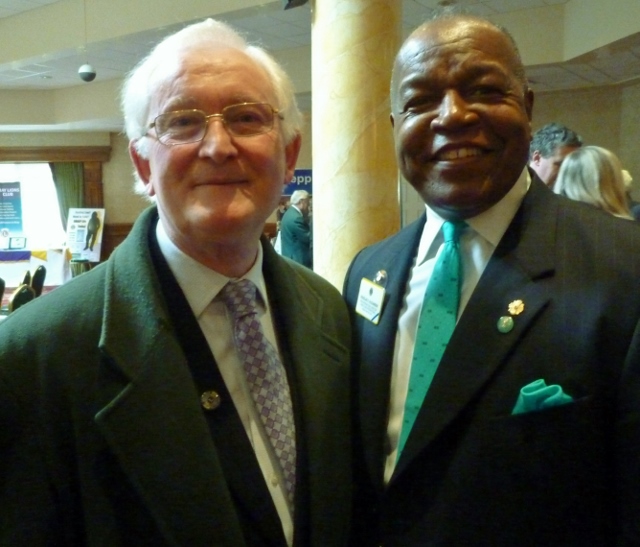
Christy Kenneally (Cork) and past international director Douglas Alexander (New York)

Christy Kenneally (Cork) and past international director Douglas Alexander (New York)

The subject was also dealt with in a very motivational speech by tv presenter and author Christy Kenneally from Cork.

GOD SLOT

Dad (500x640)

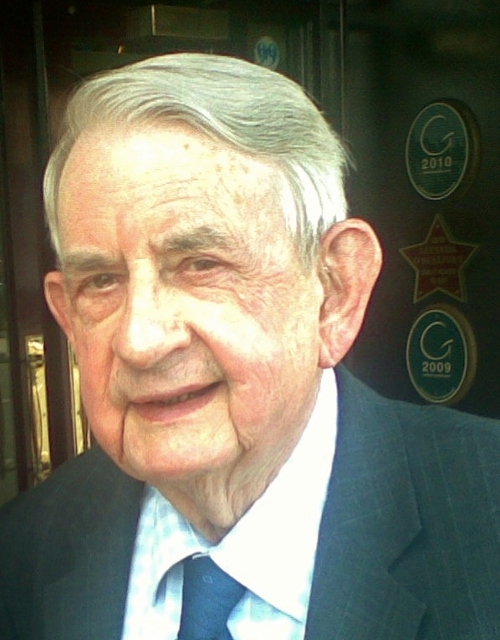
Desmond Fisher

The departure of Pope Benedict XVI into retirement took everyone by surprise, as no pontiff had done so for 600 years and that time it was under duress, whereas this departure was voluntary. It’s a suitable time  to look back at the career of Josef Ratzinger, who had been elected Pope in 2005. My father Des Fisher as Editor of the Catholic Herald in London was one of the international press corps who covered the Second Vatican Council in Rome, which began in 1962. Now 92, he has been reflecting on the time when he produced what he believed was the best work of his long journalistic career, at what was a most interesting time to be a Catholic.

He spoke to Eileen Dunne for the God Slot on RTÉ Radio 1 and during their conversation, he gave his views on the German theologian who later became Pope. He also disagreed with the view expressed by Pope (Emeritus) Benedict, who told priests from the diocese of Rome in one of his final addresses last month that many of the misrepresentations of Vatican II were caused by the media promoting its own version of what was happening.

He relates the story about the period when Ratzinger was a Professor at Bonn University and was asked by Cardinal Frings of Cologne to write a speech for him for a talk in Genoa. Frings then took him to the Vatican Council as an advisor. At this stage, he was a very progressive theologian. He was also a friend of Hans Küng and with his help got a post in dogmatic theology at the university of Tübingen, where according to Küng, he put forward some very progressive ideas. Student riots there in 1968 seem to have had an effect on Ratzinger though; he did a U-turn and became a great conservative overnight.

SHARED HISTORY: SHARED FUTURE

Shared History: Shared Future Launch

Shared History: Shared Future Launch

“Shared History: Shared Future” brings together six historical, literary and regeneration groups from South Tyrone in a cross-community project delivered by Dungannon and South Tyrone Borough Council through the Peace III phase 2 programme financed by the European Union.  It was launched at the Hill of the O’Neill and Ranfurly House Visitor Centre in Dungannon by the Mayor of Dungannon and South Tyrone, Councillor Phelim Gildernew. Brian Lambkin, Director of The Ulster American Folk Park in Omagh, was the guest speaker.

 Mr Lambkin gave an informative talk on comparative local history: what do we tell the children? He spoke about the significance of townlands, the smallest unit in civil administration, and said they were the key to a better understanding of any local area. He hoped there would be a synergy between the various groups and that their projects would have a wider value in the areas of tourism and genealogy.

 The Shared History Shared Future Project is funded through the European Union’s Peace & Reconciliation Fund and delivered by the South West Peace Cluster and Dungannon & South Tyrone Borough Council. The project was awarded over £25,000 to develop an interlinked schedule of activities over the coming months. It promises to be a very interesting and informative project which encapsulates figures of literary importance such as William Carleton right through to the social history of local engineering and entrepreneurship of John Finlay and Sylvester Mallon, pioneers in quarry engineering to exploring the history of our waterways and townlands.

The project is made up of six societies who have come together to share with each other and with the wider community an awareness of their own fields of expertise and use it towards a shared understanding of our history and future. The groups are:-

O’Neill Country  Historical Society;

Caledon Regeneration Partnership;

William Carleton Society;

Donaghmore Historical Society;

Killeeshil and Clonaneese Historical Society;

South Lough Neagh Regeneration Association.

During the evening, each group gave an overview of their origins and the focus of previous work. While maintaining the individuality of each of their projects all agree that the contribution to  this project enhances and increases awareness of who they are and what they are about.

Brian Lambkin & O'Neill Country Historical Society

Brian Lambkin & O’Neill Country Historical Society

The O’Neill Country Historical Society, represented by Art Daly from Benburb, was established in 1985. Their aim is to research, record and publish the history of the area along the valley of the River Blackwater straddling the border between counties Armagh and Tyrone. The group promote knowledge and understanding of this area’s heritage and folklore through publications, lectures and seminars and interact with other local historical groups and bodies with a view to promoting interest in our history.

Caledon Regeneration Partnership was established in 1996 and comprises representation from the local community, Dungannon and South Tyrone Borough Council and Caledon Estates Company.  William Beattie outlined how the Partnership actively promote the conservation and protection of the built and natural heritage of the area and have undertaken a number of major restoration projects within Caledon Village. The restoration of the Caledon Beam Engine Complex is currently underway.  Caledon Regeneration Partnership are actively involved in a number of community projects. Caledon Village Allotments were opened in 2011. Chairman Jim Brady said “the Partnership are delighted to join together with like-minded groups across the region in this exploration of our cultural and industrial heritage”.

Pat Boyle & Jim Cavanagh

Pat Boyle & Jim Cavanagh

The William Carleton Society is a cross-community, cross-border group which is dedicated to promoting the works of the well-known Irish author from County Tyrone and his life and times. The Chair, Jim Cavanagh, explained how it seeks to use his stories of faction-fighting and sectarianism in 19th Century Ireland as the basis for talks and discussions on history and literature and the lessons for modern-day society. By discussing issues such as sectarianism the Society hopes to open up a meaningful debate and an educative process around this issue, which is still relevant to the current situation in Northern Ireland. Its main event is a four-day annual international summer school in Clogher in the first week of August . This year’s is the 22nd since its inception in 1992.

The Society will be organising a cross-community concert in Fivemiletown Methodist Hall with the Murley Silver Band and Monaghan Gospel Choir on Wednesday August 7th. On the previous evening, August 6th, there will be a cross-community walk “in the footsteps of Carleton”, followed by music from the diferent traditions. There will also be a series of talks in the coming months including one by Dr Paddy Fitzgerald on the “Ulster English” and two others given by members of the Society about Carleton and the Clogher Valley area. Although Carleton grew up in the Clogher area and one of the places he lived at Springtown still survives, “Carleton’s Cottage”, he spent most of his life in Dublin, where he changed his religion to Anglicanism. In January, members of the Society in Tyrone held a study trip to Dublin to visit Sandford Church of Ireland in Ranelagh, where he worshipped. They also visited his grave at Mount Jerome cemetery, where Precentor Noel Regan from St Macartan’s Cathedral in Clogher led a prayer and summer school director Michael Fisher laid flowers to mark the 144th anniversary of his death.

Donaghmore Historical Society’s Townlands project is dedicated to the importance of these geographical divisions of land that have existed for thousands of years, long before towns and villages developed. They are a most important element of our heritage. Since the Post Office ceased using town lands in the early 1970s and introduced road names instead, there has been a steady decline in the awareness of our town lands by all of us but more especially by the younger generations. Members of Donaghmore Historical Society intend to study a number of townlands in the parish of Donaghmore to find things like the acreage, the meaning of the name and any other features of interest and to chart the changes that have taken place in them over the past two hundred years.

Patricia Bogue outlined how they intend to research all available records of the people who lived in the townlands and to record all their findings in book form. The aim of the publication will be to help genealogists and family history researchers seeking information about the many emigrants from the parish, living in all parts of the world. To help raise awareness of townlands in the new generations, the group also intend to involve schools from the parish in the project.

Killeeshil and Clonaneese Historical Society described how it was formed in March 2009 from the coming together of people throughout the areas of Killeeshil and Clonaneese, Co. Tyrone who have a keen interest in local history. Richard Knox said the Society’s aims are to broaden the knowledge of the area’s long and wonderful history and to provide a mechanism whereby local people and those from further afield can access this knowledge through literature, talks & events and the internet.

The Society is keen to promote the fact that the area has a rich shared history which should be enjoyed by everyone and as such the Society’s ethos is cross-community. If you would like to become a member of the Society please contact the Secretary or come along to the various events they will be holding in the coming months through the Shared History Shared Future Project.

Six Groups in Shared History Project

Six Groups in Shared History Project

Like the other five members in the project, the South Lough Neagh Regeneration Association is a voluntary cross-community group. It aims to attract and encourage investment in the economic, social and environmental well-being of the southern shores of Lough Neagh; to generate activity, employment, enthusiasm and pride in the community. They are interested in the area of the “Derrys”: covering Derrymacash, Derryadd, Derrytrasna, Derryinver, Derrylard, The Birches, Maghery, Derryloughan and Derrytresk.

Local historian Tommy Glenny told the launch that the group plans to make a video about the walkways of the defunct Ulster Canal, which once played an important role in transportation in the area. There are plans by Waterways Ireland to restore part of the canal, which linked Lough Neagh through Monaghan and Clones with Upper Lough Erne in County Fermanagh, as part of a tourism project. The group takes a special interest in the stretch between Maghery and Benburb and will be holding events in May on the old canal towpath.

DSTBC LogoThe PEACE III Programme is part-funded by the European Union (€225 million from the EU with further national contributions of €108 million) through its Structural Funds Programme. The four Councils of Cookstown, Dungannon and South Tyrone, Fermanagh and Magherafelt came together to manage the PEACE III Programme for Measure 1.1 – ‘Building Positive Relations at a Local Level’ across the four Council areas. This area is referred to as the South West Cluster. The full title of the PEACE III Programme is the EU Programme for Peace and Reconciliation in Northern Ireland and the Border Region of Ireland. The programme is available in Northern Ireland and the Border Counties of the Republic of Ireland and covers the period 2007-2013.

The four Councils of the South West Cluster were allocated a budget of £3,461,440 for Phase I of the PEACE III Programme (2007-2010) and a further allocation of £3,461,743 has been awarded to deliver Phase II of the Programme for the period 2011-2013. The Phase II Action Plan has been developed after extensive consultation with local stakeholders and analysis of the needs of communities across the the South West Cluster.    erdfimages