ANTI PYLON REACTION

images.jpeg

Padraig O’Reilly NEPPC Pic.Michael Fisher

Anti-pylon action will dwarf Shell to Sea campaign, says NEPPC
Group says campaign against EirGrid will make Corrib protests ‘look like walk in park’

Michael Fisher THE IRISH TIMES

Unknown.jpeg

Anti-pylon sign in Co.Meath  Pic. Michael Fisher

Campaigners have warned that the battle to stop the erection of hundreds of electricity pylons will make the Shell to Sea campaign “look like a walk in the park”.
Responding furiously to An Bord Pleanála’s decision to approve EirGrid’s plans to build a North South electricity interconnector, the North East Pylon Pressure Campaign (NEPPC) described it as “deplorable” and “an affront to democracy”.
Describing it as “biased”, Padraig O’Reilly, of the NEPPC, claimed it would only deepen public cynicism towards bureaucracy and intensify local opposition to the pylons.
However, he drew comfort from the fact that the project still has to navigate Northern Ireland’s planning system, while court battles will continue in both jurisdictions.
Woefully inadequate
A “viable, realistic and publicly acceptable option” to put much of the electricity line underground along public roads does exist, but it has never been properly examined, he went on. However, EirGrid had already decided on an overhead line and had put out, and awarded, a contract tender even before public consultation had taken place, he charged. EirGrid’s planning application was woefully inadequate and failed to contain enough information for an acceptable environmental study, he claimed.

Meanwhile, the utility had not accessed 75 per cent of the lands proposed for the 300 pylon towers and had communicated with only 5 per cent of the landowners, he added.
The planning decision ignores these deficiencies and heralds the end of An Bord Pleanála’s status in the public eye as an objective, independent decision-making body, he continued.

However, the anti-pylon group insists that there is still time for EirGrid to be ordered by Minister for Communications, Climate Action and Environment Denis Naughten to place the lines underground. “If political action is not taken, this project will make the Shell to Sea debacle look like a walk in the park. The will of the people will prevail,” said the NEPPC.

Meanwhile, opponents in Monaghan are equally determined in their opposition, saying An Bord Pleanála had “waved the application through”. “It’s a bad day for the Irish planning system,” said Nigel Hillis, who was particularly critical of the decision to issue such a finding so close to Christmas.

Monaghan County Council chairman PJ O’Hanlon described it as “very unfortunate” and supported calls for an emergency council meeting early in January.
There, councillors – who are all united against the pylon plan – will, he said, examine the ruling in detail and look at ways to oppose it.

Opponents in Northern Ireland remain hopeful that the planning authorities there will make a different decision when they rule on the pylon plan.
“We are disappointed at this ruling by An Bord Pleanála,” said a spokesperson for the campaign group, Safe Electricity Armagh and Tyrone (SEAT).

DANNY MURPHY RIP

dannymurphy

Danny Murphy  Pic. Ulster GAA

DEATH OF GAA ULSTER COUNCIL SECRETARY

Northern Standard  Thursday 8th December

The GAA in Ulster is mourning the loss of the Ulster Council Secretary and Chief Executive Danny Murphy, who died yesterday (Wednesday) at the age of 67. He stood down from his role earlier this year because of ill health but was to remain in the post until February 2017. Mr Murphy’s funeral Mass will take place today Saturday 10th December at 12 noon in St Mary’s Church, Burren, near Newry. Ar dheis Dé go raibh a anam dílis.

Past President of the Ulster Council Martin McAviney from Ballybay said Danny had acted as a mentor to him in his thirty years’ involvement with the Council. He paid tribute to Mr Murphy who he said was a personal friend and had travelled with him to many places throughout the province on GAA business.

“He was a man of absolute honesty and integrity. He had the foresight to bring the Ulster Council to a whole new level in the sporting world, in areas such as coaching, protection issues and above all his role in the peace process since the signing of the Good Friday agreement in 1998. He was able to bring everyone with him when it came to taking initiatives. His legacy is that there is now a structure in place in Ulster GAA that is fit for purpose in the modern era”, he said.

Mr McAviney said the late Mr Murphy had a good knowledge of legal issues such as ownership of property. He also knew the fine details of the GAA rule book. He continued: “My last duty as President of the Ulster Council was to accompany Danny at the grounds awards last year. He was a guiding light for many people at club level. He was a very fair man, who always did things by getting agreement on them. His belief was that the only way of going forward was to ask people to take ownership of projects”.

The esteem in which he was held by other sports can be judged by the responses from organisations such as Ulster Rugby and the Irish Football Association. Irish FA Chief Executive Patrick Nelson said: “I got to know Danny very well and I enjoyed working with him. I was often able to count on his wise counsel.

“He was keen for the various sporting organisations in Northern Ireland to work together to improve facilities for all sports.”

The North’s First Minister Arlene Foster and deputy First Minister Martin McGuinness said in a statement: “Danny Murphy made a colossal contribution to sport over many years and his death will leave a massive void. Our thoughts and prayers are with his family and friends at this difficult time.”

SDLP South Down MP Margaret Ritchie said: “Danny was a powerful force for reconciliation on the island of Ireland, and between Britain and Ireland. He made an enormous contribution to the professionalism of the GAA in Ulster.

Uachtarán Chumann Lúthchleas Gael Comhairle Uladh, Michael Hasson said: “It was with profound sadness that we heard of Danny’s passing. We know that this sorrow is felt by all Gaels in Ulster, Ireland and throughout the wider GAA world. Danny was an outstanding leader who provided unstinting dedication to the GAA in Ulster for over 35 years. His contribution to every aspect of the GAA, from his initial involvement with St Mary’s GAC, Burren, his beloved County Down and his immense commitment to Comhairle Uladh brought unprecedented success to every unit of the Association he was involved in.”


ONLY ONE WIMBLEDON FC

Wimbledon_zpsqt9vth89.PNG

Six years ago I published this article with my views on Franchise. The clubs did not face each other that year as MK lost in the FA Cup first round. They did come up against each other in the Cup in 2012 with MK wining at home 2-1. How things have changed in the intervening period. On Saturday the Milton Keynes lot will take on AFC Wimbledon at their home place some sixty miles from Wimbledon. This time the sides are meeting in League One and the Real Dons are higher up the table than the other lot. So I will go there on Saturday to follow my team on the basis that they deserve our support especially after their recent successes. But I will contribute as little as I can in terms of spending at the MK base.

IM000916-Copy-300x232.jpg

AFC Wimbledon Supporters Pic: Michael Fisher

November 10th 2010: There’s Only One Wimbledon FC

Anyone who knows me will realise I am a Wimbledon supporter. That includes Hot Press readers thanks to Eamonn McCann’s article in the latest edition. The conversation sometimes starts along the lines of “you mean MK Dons?”. It’s a phrase I and many others cannot bear mentioning because of the way a once proud football club which won the FA Cup thanks to Lawrie Sanchez in 1988 v Liverpool was allowed by the football authorities to fold and move some sixty miles away to Buckinghamshire. There were plans at the time for the club to transfer to my home town of Dublin (or possibly even Belfast where I live). But I would not have gone to watch them in either place as I could not regard them as Wimbledon FC. I have followed the Dons since their days as amateurs in the Isthmian League. For me, their first major success was in winning the FA Amateur Cup final at Wembley in 1963 when they beat local rivals Suttton United 4-2.

UPDATE: ***Sutton United have been drawn at home to AFC Wimbledon in the 3rd round of the 2017 FA Cup next month***

Fast forward to the FA Cup 2nd round draw live on ITV on Sunday (November 7th 2010), presented by Jim Rosental, with whom I used to work in BBC Radio Birmingham. In fact I persuaded him to add to the station’s coverage of six league clubs by reporting a “minor match of the day”. I was motivated by the fact that Wimbledon were in the Southern League premier division at the time (1975) and the very first match of the new season was Nuneaton (at the edge of the station’s area) versus Wimbledon. The Dons won and Jim back-announced my report by saying “Mike Fisher, bit of a Wimbledon supporter himself”! Sunday’s draw has produced the possibility of a tie between AFC Wimbledon and the franchise outfit. But first both sides have to win replays. Headlines in some media have portrayed this as a glamour tie and one which the TV companies would no doubt seek to cover. But judging by the mood on the ground as expressed in blogs and on twitter, many AFCW fans would prefer such a clash not to happen. As a founder member of the Dons Trust I agree. AFC Wimbledon are not yet ready to meet the club that stole the Wimbledon heritage and wrapped themselves up in the comforts of league status. AFCW have started from scratch, even going back to the roots at Wimbledon Common where they began trials for players. Now the club is at an exciting stage, contenders for promotion to the Football League. But I would be glad enough to meet MK when we get there, in another year or two and who knows, maybe they will even be relegated to division two. So my first thoughts are that I will be delighted to see either Stevenage or Ebbsfleet or even both of them progress in the Cup. I will return to this issue after the replays.

If it does turn out to be AFCW v MK Dons then the club I am sure will be very professional in its response, as indicated in the statement at [new window] http://www.afcwimbledon.co.uk . However the real fans will have to decide. Do they boycott the game (which would mean the club would lose badly needed revenue) or if they do attend, how do they behave towards the visitors? Various options have been discussed so far, but I think that if this fixture is held, then my best approach as a season ticket holder would be to purchase a ticket and then not go to the game or else attend but not take a place on the terrace or in the stand. Anyway the 1st round replays have to be held before the Dons fans face what could be some difficult choices. Neutrals have a lot of sympathy for them and nothing must be done by supporters at Kingsmeadow that would alienate the wider soccer fraternity.

PARTY FOR THE LATE SIR JACK

cy8lguxweaaiepb

Monaghan County Museum Curator Liam Bradley with Antonia Leslie, Eimear Quinn and Tarka Leslie-King  Pic. Michael Fisher

TRIBUTE TO SIR JACK LESLIE ON WHAT WOULD HAVE BEEN HIS 100th BIRTHDAY

Michael Fisher   Northern Standard  Thursday 8th December 2016 p.14

It was just what Sir Jack ordered. A party, not a wake, with champagne (prosecco) and orange, tea and coffee, sandwiches and cake. A time to remember this remarkable character who died just eight months short of his 100th birthday, after a colourful life of 36,305 days. He passed away in April aged 99 a few months after he had received France’s highest honour, the Légion d’honneur, for his part in the defence of that country in the Second World War. Four generations of the Leslie family were around him when he passed away peacefully. The magnolia trees were in bloom as the horse-drawn hearse carrying his remains made its way along the driveway at Castle Leslie to his final resting place outside the walls of St Salvator’s church, where Catholic members of the Leslie family are buried.

At Monaghan Museum video footage of the funeral was shown. Mark and Antonia Leslie helped to carry the remains. Tarka King read a message of sympathy from the Brigade of Guards. On Monday night the family members gathered again for what Curator Liam Bradley said was an evening of remembrance and celebration. He described Sir Jack as a very wonderful man and said he had got to know him well in the last few years.

Tuesday 6th December would have been Sir Jack’s 100th birthday. Before he died he had asked for an evening to remember him in a cheerful way and definitely not a sombre mood. His was a life well lived. Liam Bradley then introduced Sir Jack’s niece and two nephews to share their memories of the fourth Baronet of Glaslough and Pettigo. They were followed by former Eurovision Eimear Quinn from Carrickmacross, who sang a medley of songs chosen from different times of the past one hundred years marking different events in Jack’s life.

Tarka Leslie King said his uncle Jack was an example of bravery. From his mother (Anita) he learned that Jack had a really bad start in life when at the age of three he developed an ear mastoid that meant he sometimes screamed with the pain. Anita and Jack became very close. He was younger than her.

Tarka recalled: “When mother died in 1985 he (Jack) was bereft because he had lost his main pillar of support who was always there for him even when he was in the prisoner of war camp (during the Second World War) and they corresponding with letters. Then when she died he was alone in Italy and did not quite know where he was going with himself. He came home and he was given another start and became the Jack the Boyo that we all got to know from the 1990s onwards. He had an inner strength from that really tough start.”

Antonia Leslie said in the last five months of her uncle’s life she had the privilege of being his full time carer. She got to know him as he deteriorated. “Being with him 24/7 over that time as he went downhill he really opened up to me in a way that touched me”, she said. He was great with people telling stories. She went on: “I realised he was a special gorgeous man which he really didn’t know he was. He was one of the sweetest individuals I have ever come across.”

Cy8k3DvXAAAjIx7.jpg

Mark Leslie with Eimear Quinn and Monaghan County Museum Curator Liam Bradley  Pic. Michael Fisher

Mark Leslie curated the exhibition on ‘Castle Leslie: Between Two Worlds’ which is now at the Castle in Glaslough. He also redesigned the Monaghan Museum displays in 2004. He told the gathering it was a great honour and an opportunity to thank the people of the county for the wonderful role they had played in Jack’s life. “He was bereft when complications meant he had to abandon his wonderful home in Italy. When he returned here his sister who he adored had died.”

He went on: “Everyone in the room has their own personal Jack story. He knew so much about people. But how did he stay so young and keep his mind so clear? The secret was he never did all the things that trammel our brains like a 9-5 job or got married or rear children. He had his whole hard drive clear for people. He just collected them and filed them away and would remember everything about those he met and their genealogy. We always called him Jack-apedia. When he returned to Ireland he had come back to die. He had lost his purpose in life, his sister and his house in Rome. The craic and fun he got out of the people of Monaghan gave him another 25 rip-roaring years, the best years of his life, whether it was at a disco at The Squealing Pig or supporting Glaslough Villa FC. Monaghan people are great craic and they kept him endlessly amused with a whole supply of stories about the past because he would remember your great grandmother or great aunt or whatever. Well done and thank you to the people of Monaghan for making the last 25 years of his life such a laugh.”
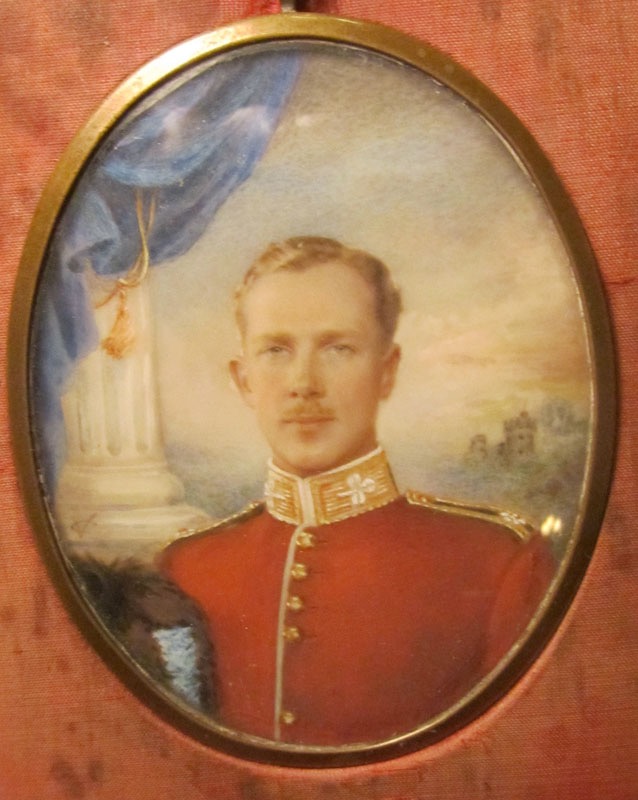
miniature

Miniature of Lt John (Jack) Leslie in Irish Guards uniform (courtesy of Mark Leslie)

Eimear Quinn’s Medley consisted of eight songs that reflected different periods in Jack’s life. A beautiful note on which to finish the evening.

1. The West’s Asleep by Thomas Davis

When all beside a vigil keep,

The West’s asleep, the West’s asleep-

Alas! and well may Erin weep,

When Connaught lies in slumber deep.

There lake and plain smile fair and free,

‘Mid rocks-their guardian chivalry-

Sing oh! let man learn liberty

From crashing wind and lashing sea…

And if, when all a vigil keep,

The West’s; asleep, the West’s asleep-

Alas! and well may Erin weep,

That Connaught lies in slumber deep.

But-hark! -some voice like thunder spake:

“The West’s awake, the West’s awake’-

Sing oh! hurra! let England quake,

We’ll watch till death for Erin’s sake!”

2. Rossmore’s Demesne (Dúchas Schools Collection Threemilehouse Vol. 0593 p.358-90)

“As I went a-walking

And for pleasure did rove

Down by Rossmore’s castle

And down by the grove

I s[ied a wee charmer

So neatly stepped she,

On the banks of yon river

Near the weeping ash tree.”
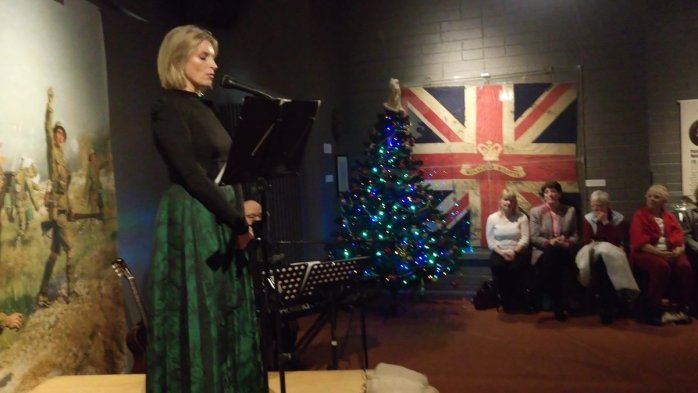
cy8lao-wqaa-0sk

Eimear Quinn  Pic. Michael Fisher

3. Abide with Me (sung at times of sympathy)

“Abide with me; fast falls the eventide;

The darkness deepens; Lord, with me abide;

When other helpers fail and comforts flee,

Help of the helpless, oh, abide with me…

Swift to its close ebbs out life’s little day;

Earth’s joys grow dim, its glories pass away;

Change and decay in all around I see—

O Thou who changest not, abide with me…

I need Thy presence every passing hour;

What but Thy grace can foil the tempter’s power?

Who, like Thyself, my guide and stay can be?

Through cloud and sunshine, Lord, abide with me.”

4. Someone to Watch Over Me (Gershwin)

“I’m a little lamb who’s lost in a wood

I know I could always be good

To one who’ll watch over me

Although I/he may not be the man some girls think of

As handsome to my heart

She/he carries the key

Won’t you tell her/him please to put on some speed

Follow my lead, oh how I need

Someone to watch over me.”

5. Lili Marlene (made popular by Vera Lynn during WWII and sung by Eimear against a WWI backdrop from the current exhibition at the Museum)

“Underneath the lantern

By the barrack gate

Darling I remember

The way you used to wait

‘Twas there that you whispered tenderly

That you loved me

You’d always be

My Lili of the lamplight

My own Lili Marlene…

Resting in our billet

Just behind the line

Even though we’re parted

Your lips are close to mine

You wait where that lantern softly gleamed

Your sweet face seems

To haunt my dreams

My Lili of the lamplight

My own Lili Marlene

My Lili of the lamplight

My own Lili Marlene.”

6. Libiamo from La Traviata

“Let’s enjoy the wine and the singing,

the beautiful night, and the laughter.

Let the new day find us in this paradise.”

7. I Feel Love (reflecting Jack;s love of ‘boom-boom’ music)

Ooh it’s so good, it’s so good

It’s so good, it’s so good

It’s so good

Ooh I’m in love, I’m in love,

I’m in love, I’m in love

I’m in love

Ooh I feel love, I feel love

I feel love, I feel love

I feel love.

8. O Holy Night!

“O Holy Night!

The stars are brightly shining

It is the night of the dear Savior’s birth!

Long lay the world in sin and error pining

Till he appear’d and the soul felt its worth.

A thrill of hope the weary soul rejoices

For yonder breaks a new and glorious morn!

Fall on your knees

Oh hear the angel voices

Oh night divine

Oh night when Christ was born

Oh night divine

Oh night divine”.

Cy8k6nyWQAEBA0R.jpg

Eimear Quinn   Pic. Michael Fisher

SIR JOHN LESLIE Bart born December 6th 1916, died April 8th 2016 (extracts from a Daily Telegraph obituary)

John Norman Ide Leslie, always known as Jack, was born on December 6th 1916 in New York where his father Shane, a writer, diplomat, convert to Rome, and supporter of John Redmond’s moderate nationalist party had gone to counter Irish-Americans trying to keep the United States out of the war. Jack’s mother, born Marjorie Ide, was a well-connected American whose father had been governor general of the Philippines.

Young Jack caught the Spanish Flu in the epidemic of 1918 and was given up for dead when his temperature reached 106. His father, he recalled, asked the nuns next door to pray for him; that night his mother woke with a start to find his temperature had returned to normal. Soon afterwards, however, he developed a mastoid that left him deaf in his left ear.

Jack was almost three when in 1919 he and his elder sister Anita were brought back by their parents to Castle Leslie, to be received by his grandfather, Sir John Leslie, 2nd Bt, and his American wife Leonie, whose sister Jennie was the mother of Winston Churchill. The Leslies had lost their eldest son Norman in the Great War, making Jack the ultimate heir apparent to the title and the vast estates that went with it. But his parents were based in London and, apart from blissful holidays in Ireland, it was there that Jack was brought up.

“My world was populated by lords and ladies,” he recalled, “and naturally I believed that they were the people who ruled England and the enormous British Empire. Although our cousin Winston Churchill was Chancellor of the Exchequer, I thought the House of Commons was a purely advisory committee.” By this time (aged 15) he was at school at Downside. At Magdalene College, Cambridge, he rowed in the college VIII and joined the officer training corps. On graduation in 1938 he was commissioned in the Irish Guards and enjoyed a short period as a “Deb’s delight” before war intervened.

 Ordered to cross to Boulogne after the German invasion of Holland in May 1940, Leslie’s platoon were rendered helpless when their bullets bounced off the advancing German tanks. They surrendered and were marched across Germany to a prisoner of war camp in Bavaria, Leslie spent the rest of the war in captivity.

On release, he returned to civilian life. His grandparents had died and he found himself the major shareholder in the company that owned Castle Leslie. Having planted thousands of trees on the demesne, he embarked on a peripatetic life in Britain, continental Europe and the United States.

In 1953 Leslie settled in Rome in a 16th century house he had restored in Trastevere. As a connoisseur of art, Leslie found much to enjoy in Rome, and as a devout Catholic he relished its religious life and was a pillar of the Order of Malta. He restored an ancient monastery and was rewarded with a papal knighthood.

He returned in 1994 to live in Castle Leslie, which was by then being run by his niece Sammy. In 2001 he celebrated his 85th birthday by travelling to Ibiza to party at Privilege, then the world’s biggest nightclub. In 2006 at the age of 90 Leslie drew on his great memory to write his autobiography, ‘Never a Dull Moment’. In November last year he was among Irish veterans of the Second World War whom the French government appointed to the Légion d’ honneur at a ceremony at the French embassy in Dublin.


GYPROC PLASTERBOARD RECYCLING

PLASTERBOARD RECYCLING SERVICE LAUNCHED BY GYPROC AT KINGSCOURT PLANT

INVESTMENT OF €1.5m IN MAJOR SUSTAINABILITY INITIATIVE

Michael Fisher  Northern Standard  Thursday 8th December  p.6

dickclerkin

Dick Clerkin, Health Safety Environment & Quality Manager, Gyproc Kingscourt  Pic. Michael Fisher

Plasterboard manufacturer Gyproc has announced Ireland’s first plasterboard recycling service for its construction industry customers. In a major sustainability initiative involving an investment of €1.5 million, Gyproc will recover leftover plasterboard waste from across the island for recycling at its plant outside Kingscourt, Co. Cavan. The new service will offer customers a legal and cost-effective means of disposing of their plasterboard waste. Currently the dumping of such waste at landfill sites is illegal.

Gyproc is the market leader in plaster, plasterboard and drylining systems. Over the next ten years it hopes to recycle half a million tonnes of plasterboard, enough to fill Croke Park one and a half times over. The investment will bring the number of people employed at Kingscourt to 220, a 20% expansion over the past two years. The company is the only manufacturer of plaster and plasterboard in Ireland. The majority of employees live in the surrounding area.

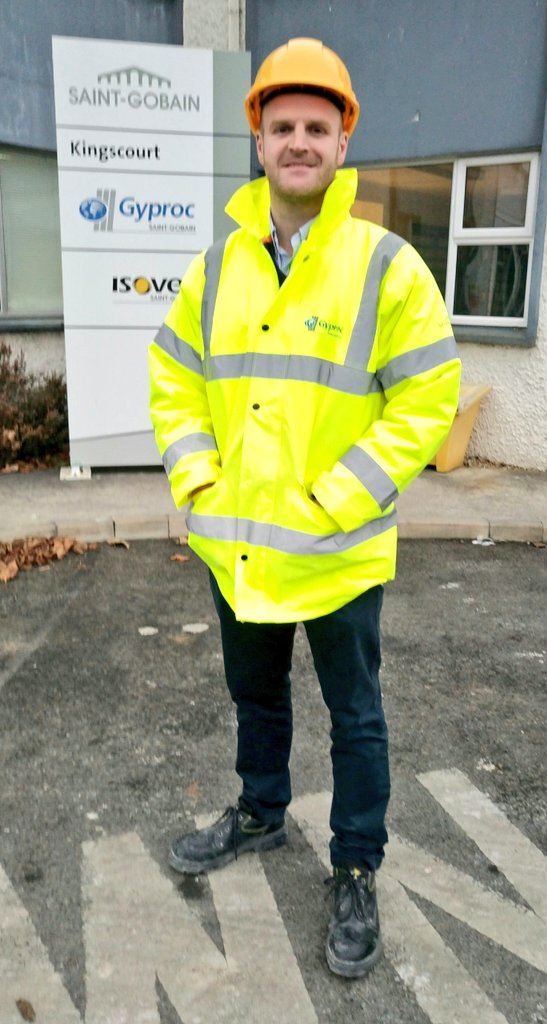
On arrival at the plant it is clear that the top priority in all areas is safety. The company has an excellent record. Vigilance ensures that around 5000 days have passed with no accidents. One of the people who helps them ensure that regulations are adhered to such as the wearing of protective equipment, high-vizibility jackets and shoes is former Monaghan county footballer Dick Clerkin, who is Environmental, Health Safety and Quality Manager. The profitability of the company and the quality of the product are the other main concerns.

Brian Dolan, Managing Director of Gyproc, explained: “We’re very proud to be the first and only plasterboard manufacturer in the country to offer recycling of our products on the island. As a market leader in this sector we are determined to be at the forefront of innovation in new products and services, and in the sustainability and environmental benefits of those services.”

“The new recycling service we’re launching will help to secure local employment into the future by providing additional supplies of a diminishing raw material, namely gypsum rock. All our plasterboard is manufactured in Kingscourt, and we source gypsum from our Drummond mine in Magheracloone, Co. Monaghan, so the connection to the local economy and community is very important to us.”

Manufacturing Manager Fergus Robinson and Operations Manager Darragh Monaghan explained how Gyproc had developed a cost-effective process to take back and recycle the plasterboard waste in the manufacturing process.

They said waste management was a priority for Gyproc in Ireland. From initial design to on-site testing, through to manufacturing and installation the company always believed that effective waste management made good environmental and business sense. A plasterboard recycling service (PRS) customer team is available to set up new accounts, order additional services and answer questions about the service.

The company is part of the St Gobain group, based in France. As a manufacturing company, Gyproc helps to build the environments that are an essential part of everyday life, from schools to hospitals, businesses to homes. Minimising the impact construction projects have on the environment is an important part of the firm’s activities. According to the management, the most effective way to encourage best practice, is to make the building process sustainable for business and sustainable for the environment.

Fergus Robinson said that over many years, Gyproc have committed significant time and resources to ensure they achieve high standards of environmental sustainability, to the point where they now recycle over 97% of the waste produced from their own manufacturing process. To match this internal commitment, the plasterboard off-cut recycling service will help the construction industry reduce its impact on the environment.

The process has been designed from the contractor’s perspective, to minimise processing time and maximise simplicity. Depending on preference, the company through its sub-contractor Allied Recycling can provide a number of different size blue skips to collect the plasterboard off-cuts (14, 25 & 40 yard skips) and collect them from a building site at convenient times. The process is flexible and reliable, and can be scaled up or down to suit any construction project.

The Gyproc system records the total tonnage of waste of plasterboard off-cuts for a project and the average weight per skip, allowing builders to see the financial savings compared to less environmentally sound options. The company stresses that the collected skips must contain only Gyproc plasterboard off-cuts. Any other materials such as metal, timber or non Gyproc manufactured materials will result in a contamination charge being levied at a rate of €160 a tonne.

With over 12,000 employees across 135 sites in 56 countries, St Gobain has an extensive global network combined with in-depth knowledge of local markets. This gives clients immediate access to international best practice in their interior building systems and solutions. They say they value and invest in long-term customer relationships and train 20,000 staff each year, so that building contractors can continue to rely on the integrity of their people, products and processes.

At Kingscourt there is a purpose-built Academy where quality controls can be carried out and where dry liners and plasterers can be trained in working with the latest products. The St Gobain Academy along with one in Dublin offers courses to up-skill and educate trade professionals, merchant staff and customers in all aspects of Gyproc’s range of products and their application in accordance with current construction techniques and standards. All courses are presented by experienced personnel. The facilities include dedicated product display areas and working areas for hands-on practical plastering and plasterboard system demonstrations.

Gypsum board, commonly known as drywall, is the technical product name used by manufacturers for a specific board with a gypsum core and a paper facing. It is the premier building material for wall, ceiling, and partition systems in residential, institutional, and commercial structures and is designed to provide a monolithic surface when joints and fastener heads are covered with a joint treatment system. One principal advantage of gypsum board over plywood, hardboard, and fiberboard is its strong fire resistance.

To produce gypsum board, calcined gypsum is mixed with water and additives to form a slurry which is fed between continuous layers of paper on a board machine. As the board moves down a conveyor line, the calcium sulfate recrystallizes or rehydrates, reverting to its original rock state. The paper becomes chemically and mechanically bonded to the core. The board is then cut to length and conveyed through dryers to remove any free moisture.

Gyproc has been manufacturing in Ireland since 1936. Their products have been used in many of the biggest and most prestigious commercial building projects on the island of Ireland including the National Convention Centre, Titanic Belfast, the Bord Gais Energy Theatre and the landmark Terminal Two at Dublin Airport.

Minister Heather Humphreys said she was delighted to see Gyproc’s new recycling service being launched. “It will deliver economic and environmental benefits both for the sector and for the local community in Cavan and Monaghan. The company has gone from strength to strength, and it’s great to see a local business success story that is leading the way in sustainability and environmental innovation”, she said.

Caoimghín Ó Caoláin TD of Sinn Féin said: “I very much welcome the announcement by Gyproc Kingscourt of the new plaster board off-cut recycling service. This represents a significant investment, is job creative and environmentally important. Well done to all concerned.”

Fianna Fáil Deputy Niamh Smyth also congratulated the company and said the investment would create much needed jobs in Kingscourt. “I know it will see the company recover leftover plasterboard, before recycling it in its Kingscourt facility. The dumping of plasterboard in landfills is illegal. This too can only benefit the environment, in my view”, she said.

Deputy Smyth concluded: “This is a very exciting day for Kingscourt and Drummond and the local economy in general. It follows the opening of a major SuperValu store in Kingscourt a few weeks ago which, will also create and sustain much need employment in the town.”


CARER OF THE YEAR

CARRICKMACROSS TALENTS AND SERVICES REWARDED

Michael Fisher  Northern Standard  Thursday 8th December

Over the past fortnight the achievements of Carrickmacross people, businesses and services have received recognition at national level. A local lady Leona Goodman was named as Carer of the Year by a home care company. A local dental team led by Dr Bernie Fee was in the finals for best dental practice in Ireland. University entrance awards and scholarships were presented to some local students. A local business Celtic Pure from Corcreagh founded by Pauric and Pauline McEneaney received another gold medal in London for its sparkling water. Each has a success story to tell and congratulations goes out to all of them.

LEONA GOODMAN NAMED AS CARER OF THE YEAR

Michael Fisher  Northern Standard  Thursday 8th December

CAREROFYEAR.jpg

(L-R) Bríd Gould, MD Comfort Keepers, Carer of the Year Leona Goodman from Carrickmacross and Marty Morrissey, RTÉ, who presented the award.

When Marty Morrissey called Leona Goodman to the stage at the Croke Park conference centre in Dublin recently, she says she was left temporarily speechless. The Carrickmacross woman had been named as Carer of the Year in a national competition run by home care providers Comfort Keepers. She received the award in recognition of her work with older people in Monaghan, Cavan and North Meath. She was ranked highest among the 1500 carers employed by the company. At the same event Rosanna Martin from Ballybay was crowned the company’s Employee of the Year.

Leona told the Northern Standard the award came as a total shock. She was “very touched and overwhelmed” when her name was called out. The award was handed to her in the presence of her two daughters, Kelsey and Laura.

Leona lives in Magheraboy on the outskirts of Carrickmacross and is a former pupil of St Louis National School and Secondary School. Her husband Brendan hails from Killanny and is a carpenter working in England, who will return home shortly for Christmas. They were married in New York where they spent four years before returning to Ireland. For many years Leona worked in the Post Office when it was situated at Main Street in Carrickmacross.

She has been working as a carer for some fifteen years, the last two with Comfort Keepers, based in Ardee. She said she loves her job, which brings her into contact with between four and six clients daily within a fifteen miles radius of Carrick, including Corduff, Lisdoonan and Inniskeen.

There are seven other carers in the same team and Leona was anxious that they all got a mention: Charlie, Carla, Lola, Rosemary, Mary, Martina and Geraldine. All providing care to elderly people in the area that enables them to stay in their own homes. The carer is sometimes the person who enables these people (aged between 75 and over 90) to remain in touch with the local community and what’s happening in the outside world, according to Leona.

“Leona has won the hearts of the people she cares for and the colleagues she works with,” said Bríd Gould, Managing Director of Comfort Keepers. “She’s a woman who truly believes in the value of care and is a strong advocate within the caring industry. She doesn’t just believe that her clients need the best care she can provide, but she also believes in the value and knowledge her clients bring into her life.”

Since 2005, Comfort Keepers has been helping people in Ireland and has always sought to ensure that all of its work practices exceed the expectations of both the state and those cared for. It remains unique in being the only home care provider to have been awarded the Q Mark, ISO9001, and Healthmark accreditations for the quality of care and the systems used to support its delivery.

“This is the sixth time we have run these awards,” Bríd Gould continued. “The reason we keep doing it is that our people keep doing the extraordinary. So extraordinary that their colleagues, clients and managers just have to nominate them. So my personal congratulations to everyone who was nominated and to all of our regional winners”, she said.

All of Comfort Keepers’ carers are insured, monitored and are required to undergo Garda vetting. The firm provides ongoing support during their training and in their day-to-day roles.  Staff in the management team come from a nursing or social care background to ensure superior care is provided to customers.


UK AMBASSADOR AT MUSEUM

181116PF0906.jpg

Carmel Thornton (Monaghan Co. Council) with Ambassador Robin Barnett, Eamonn O’Sullivan CEO Monaghan Co. Council and Museum Curator Liam Bradley

British Ambassador visits Monaghan County Museum

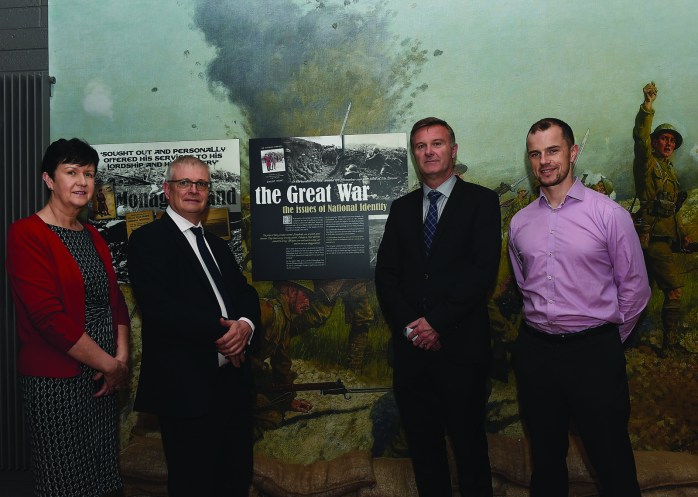
The British Ambassador to Ireland, Robin Barnett CMG, paid a visit to Monaghan County Museum recently. The Ambassador was met by the Curator, Liam Bradley, Monaghan County Council Chief Executive Eamonn O¹Sullivan and Administrative Officer Carmel Thornton. The Ambassador was taken on a tour of the museum¹s current exhibition, “From a Whisper to a Roar: Exploring the Untold Story of Monaghan 1916.” Liam Bradley explained what life was like in the county directly before the Easter 1916 Rising politically, economically and socially and how that changed so dramatically following the bombshell of the historic events in Dublin and around the country.

The other focus of the display is the Battle of the Somme. The Curator noted it was estimated that nearly one hundred Monaghan men died during that terrible battle which took place from July 1st to November 18th 1916. Ambassador Barnett noted that this year of commemorations was an opportunity to explore the full story of this period in Irish history. He remarked on the recent event at Glasnevin Cemetery in Dublin, where a Castleblayney man, Thomas Hughes, was commemorated for receiving the Victoria Cross during the Battle of the Somme. Private Hughes VC is one of the key characters explored in the museum¹s exhibition on the historic year of Monaghan 1916.

At the end of his visit the Ambassador thanked the Museum Curator and the staff of the museum for developing such a fascinating display. He expressed a keen interest to return when he had more time to view all of the museum displays. Chief Executive of Monaghan County Council Eamonn O’Sullivan thanked Ambassador Barnett for taking time out of his busy schedule to visit the museum and also thanked the museum staff. The exhibition formed the backdrop for the special celebration marking what would have been the 100th birthday of Sir Jack Leslie of Castle Leslie, Glaslough.

MCMAHON BURIAL VAULTS INNISKEEN

14207747_10208090917568200_6254796866809712953_o

Surviving walls of the McMahon burial vaults, Inniskeen old graveyard Pic. Mary Kerley/Monaghan Heritage

CONSERVATION PLAN FOR MCMAHON VAULTS INNISKEEN

(Thanks to Joe Callan for the information) Northern Standard Thursday 8th December

Inniskeen Heritage was reformed at a meeting in the Community Centre on Monday last. Great interest has been generated in heritage recently by the publication of Matt Kearney’s book on the McMahon burial vaults in the old graveyard. A heritage plan for the graveyard is being drawn up and the group intends to seek LEADER funding for the conservation of the vaults and the surveying and promotion of the whole village with respect to its early Christian heritage.

The group acknowledges the advice and assistance of the County Heritage Officer, Shirley Clerkin and of Larry McDermott, a member of the original group who now sits on Monaghan Heritage Forum.

At the initial meeting the following officers were elected: Chairperson: Brian Dooley; Vice Chairperson: Tom Lennon; Secretary: Joe Callan; Treasurer: Micheal Magee; Assistant Treasurer: Sean Rafferty and Public Relations Officer: Seamus Mulligan.

It is hoped to stimulate a wider interest locally in the history of the parish. The group plans to hold a public consultation meeting in the near future. You can contact them via email at: inniskeenheritagegroup@gmail.com or speak to any of the committee members with suggestions or contributions.

Monaghan County Council Heritage Office has sought to commission three conservation management plans and a programme of community engagement for a total of four Early Christian era sites. This action comes under the County Monaghan Heritage Plan 2012-2017. The project is funded by Monaghan County Council and the Heritage Council.

The four sites are:

  1. Inniskeen Glebe: Inniskeen round tower and graveyard (McMahon Vaults).
  2. Clones, Crossmoyle, Clones round tower and graveyard.
  3. Killahear, Corlat, Killahear graveyard (Lough Egish).
  4. Errigal Truagh medieval church.

The sites have a wide range of significance values including archaeological, historical, cultural, religious, social, natural and economic. They are geographically spread, and as a result involve a number of parishes and their associated communities. In all cases local groups exist that are keen to manage and understand these sites more effectively.

Historically, the sites are linked during the early Christian period, as well as thematically using contemporary heritage meanings. Inniskeen and Clones have round towers. Errigal Truagh and Killahear have church ruins. The sites have links to four Irish saints, St Daig (Inniskeen), St Tighernach (Clones), St Ceara (Killahear) and St Maudain (Errigal Truagh).

It’s proposed that three conservation plans in an appropriate and agreed format for the Early Christian sites at Clones, Inniskeen and Killahear should be developed with the communities. A series of evening and/or weekend workshops with the local communities who manage the sites would be held to develop an understanding of early Christian Ireland, monasticism and an appreciation of the wide range of heritage values associated with each place.

According to the County Council, the groups including Inniskeen are very enthusiastic about the project. They intend to help channel that enthusiasm into positive outcomes for the sites. It is intended that the groups will work together on common themes and will focus separately on the site in their own community.

TITLE FIGHT CANCELLED

TITLE FIGHT CANCELLED

Michael Fisher     Northern Standard  Thursday 1st December 2016

christina

Christina McMahon in Carrickmacross    Pic. Michael Fisher

‘Lightning’ Christina McMahon was due to be in the ring this Saturday in one of the toughest challenges in her career. But instead the professional boxer will be at home in Carrickmacross after the fight was cancelled. She told he supporters on her Facebook page she had received “unfortunate news that my opponent pulled out. No surprise in my world of professional boxing.” The boxer displayed her resilience saying that she wa snow fine, but had been “in a state of shock and annoyance” when the news reached her. Christina commented: “Its a tough cruel game and just too late to sort another opponent for the show, therefore the show is cancelled. Thank you for tremendous support and help. We won’t give up without a fight.”

The boxer thanked Frank Stacey of FS Promotions for trying to put the show on at the National Stadium in Dublin, the other boxers who had been willing to get in and box on the night and everyone who had already bought tickets to support her. 
Anyone who purchased a ticket (€40 for the gallery and €65 for ringside) was promised a refund via Paddy Kwan (087)9907876.

“This is not the end of the journey, just a frustrating situation that will look small in the years to come”, Christina said. She also expressed her appreciation to Shivana Inalsingh of the WBA and female boxing Advocate Eddie Montalvo for working hard with Frank Stacey on alternative options.

“Lightning” was due to face “Triple L” Linda Laura Lecca from Peru for the vacant World Boxing Association female flyweight title. 43 year-old McMahon controversially lost in Mexico to Zulina Muñoz in March and was afterwards promised a rematch. With the WBC continuing to stall on a return bout, her husband and coach Frick McMahon revealed in irishboxing.com a list of alleged indiscretions by the governing body, including glove irregularities, anti-doping procedural failings, and a failure to review the scorecards correctly. Christina was then informed by the WBC she had been suspended by that organization, but remains licensed by the Boxing Union of Ireland.

CHRISTMAS CRACKER FOR CARRICK

NEW CARRICKMACROSS LACE GALLERY GETS APPROVAL

Michael Fisher  Northern Standard  Thursday 1st December p.1

cyk0bagwgaezcbx

Current Carrickmacross Lace Gallery, Market House  Pic. Michael Fisher

The approval of funding for a new Lace Gallery in Carrickmacross could provide a major boost for tourism in the south Monaghan area and help to open up the town. That’s the view of Bill Cotter, chair of the South Monaghan Tourism Forum and honorary member of the Lace Co-op. The former Fine Gael TD said the tourism group had been working actively to promote Carrick and the grant was long overdue. The development of a lace centre in what used to be a branch library in Market Square would give the group confidence to continue their efforts to bring in visitors from different parts of the world, he said.

Mr Cotter was reacting to the announcement on Monday by the Minister for Arts, Heritage, Regional, Rural and Gaeltacht Affairs, Heather Humphreys TD, that the sum of €100,000 had been approved to develop the Market House site for multipurpose use including a new Lace Gallery, and to develop enterprise sites. Clones is also to receive funding as a heritage centre under the €5.3 million REDZ (Rural Economic Development Zones) initiative. (see separate story). The programme aims to stimulate economic development in rural towns and their hinterlands. The money is being spent on 41 projects nationwide, with €1.9 million going to projects in the northern and western region.

CyjQrABWEAAW108.jpg

Elizabeth Daly, Chair, Carrickmacross Lace Gallery  Pic. Michael Fisher

The good news reached the Lace Gallery Co-op Chair Elizabeth Daly on Tuesday afternoon. She said the members of the group were absolutely delighted at the prospect of moving to an enlarged and far superior display area next year. It would help to put lace at the forefront of tourism in south Monaghan.

Looking at the visitor book in the small unit that the gallery currently occupies, the entries range from Ireland (Dublin, Sligo, Glenties), Hillsborough and Bangor in Co. Down, England (Cambridge and London), France (Carhaix), Australia and several from the USA. The Co-op continues to receive orders from visitors and online. An order for a long lace veil for a wedding was recently completed for a bride from Virginia in the USA. She collected the finished work (which took seven months to produce) just in time for her wedding in County Wicklow.

cykz9hzxgae49nd

                 Elizabeth Daly, Chair, Carrickmacross Lace Gallery Pic. Michael Fisher

Almost 3000 people have called into them this year. Moving across to the other side of the Market Square and with more space to display their craftwork and range of gifts could potentially treble the number of visitors annually, according to the gallery. At the moment, a coach tour of fifty people has to be split up into small groups of six or seven if they want to visit the display. The larger area will enable them to handle the larger groups and to enhance the display of Carrickmacross lace, with its five special characteristics such as loops.

The Co-op began in 1984 and the first share was purchased by a St Louis nun Sr Cronin who had been involved with the promotion of lace at the convent in Carrickmacross. “Your mission is to keep this skill alive”, she told them. Elizabeth Daly now teaches lace-making and has organised a series of workshops in recent years. The new location will hopefully provide room for the classes.

cyjqpjrwqae2-jv

Carrickmacross Market House  Pic. Michael Fisher

The Co-op was originally situated in the old Shirley tollhouse but moved to the opposite side of Main Street in 1990. The renovation of the Market House building which dates back to 1861 was approved by Monaghan County Council in June last year. The idea is that the square should become a central focus for tourism in the town, where more walking trails are being developed. The nine-bay central section has a large gabled carriage entrance which will be transformed into a foyer between two large units. The one of the right which used to house a branch library will become the new Lace Gallery. The unit on the other side is earmarked for a shop and studio. The public toilets will be re-arranged and windows and doors will be refurbished with the objective of securing the preservation of this site of architectural and historical interest.

The Cathaoirleach of Carrickmacross Castleblayney Municipal District Cllr Aidan Campbell said he was delighted that the money had come through for the project. He looked forward to seeing the development started in the New Year and said it was very timely. He pointed out that Castleblayney had benefited in the past year from the same scheme, which had enabled buildings to be painted and new signage erected.

Announcing the funding, Minister Humphreys said: “The REDZ scheme aims to improve links between rural towns and their hinterlands to stimulate activity at a local level. It is one of a number of schemes which my department has been rolling out to boost economic activity and improve living standards across rural Ireland.”

“This initiative encourages local authorities to work with local communities, Chambers of Commerce, business interests and other state bodies, to identify areas of greatest economic need which can make better use of their local assets to generate economic activity. This is all about the regeneration of rural towns and villages and empowering local communities to provide local residents with local opportunities”, she added.

Other initiatives recently introduced by the government as part of this programme include the new €10 million Town and Village Renewal Scheme, the approval of almost €7.5 million to support rural recreation infrastructure, the establishment of a national taskforce to identify practical measures which can be taken in the short-term to improve broadband and mobile phone coverage in rural areas, and the establishment of two regional broadband action groups to prepare for the roll-out of broadband under the National Broadband Plan.

Carrickmacross is well known for the attractive lace bearing its name. The lace is worked in an individual style, devised by Mrs Grey Porter, wife of the rector of Donaghmoyne, who introduced it in 1820. When she left the district the teaching of lacemaking was continued by Miss Reid of Rahans, but it was only after the 1846 famine, when a lace school was set up by the managers of the Bath and Shirley estates at Carrickmacross as a means of helping their tenants, that the lace became known and found sales.

In the last decade of the 19th century the Sisters of St Louis founded their own lace school to revive the craft, and this was quite profitable for several years. Although the outbreak of the 1914–18 war marked the virtual end of commercial production of hand-made lace in Europe, the lace school kept the technique alive throughout most of the 20th century. Carrickmacross lace also featured on the late Princess Diana’s wedding dress.