GAMING CLUB FOR CARRICKMACROSS

Ground floor unit to be turned into a private members' gaming club in Carrickmacross  Photo: © Michael Fisher

Ground floor unit to be turned into a private members’ gaming club in Carrickmacross Photo: © Michael Fisher

GAMING CLUB GETS GO-AHEAD IN CARRICKMACROSS

© Michael Fisher  Northern Standard  Friday 5th May

Permission has been granted by Monaghan County Council, with a number of conditions attached, for the operation of a private members’ gaming club off the Main Street in Carrickmacross. When the initial application was made in January to the planning department on behalf of Carrick Gold Mine Ltd, it was strongly criticised by all six Councillors in the Carrickmacross-Castleblayney Municipal District. Councillors have since written to the Minister for Justice asking her to close a loophole in the gaming legislation that permits such private clubs and to bring in regulations that would restrict such establishments.

Ground floor unit to be turned into a private members' gaming club in Carrickmacross  Photo: © Michael Fisher

Ground floor unit to be turned into a private members’ gaming club in Carrickmacross Photo: © Michael Fisher

A number of local residents and businesses sent in objections to the Council in February on the basis that the town had never adopted by-laws allowing gaming. However it was discovered that there is a loophole in the legislation that permits private members’ clubs to organise card games such as poker.

The planners rejected the first application as incomplete and invalid. A new application was received by Monaghan County Council on April 13th. This time only one local resident made a representation (for which there is a charge of €20). The submission stated that Carrickmacross had never implemented the gaming by-laws.

In this person’s view, the town did not need any more gambling establishments as there was already an abundance on the Main Street. The objector also raised a question over the suitability of the entrance to accommodate a fire engine or emergency services vehicle.

Ground floor unit to be turned into a private members' gaming club in Carrickmacross  Photo: © Michael Fisher

Ground floor unit to be turned into a private members’ gaming club in Carrickmacross Photo: © Michael Fisher

According to the plan submitted with the application, there would be a total of 24 video machines in the club with three poker tables. A cashier would be based in one corner of the room where there would be a tea or coffee making facility.

Carrick Gold Mine Ltd sought full planning permission for a change of use from an existing vacant ground floor commercial unit to a private members gaming club with external signage, and including all other associated site works. The premises is situated beside the car park at the rear of Carrickmacross Shopping Centre at Drummond Etra, Main Street.

The proposed Private Members Gaming Club would provide card games like Baccarat and other games like Texas Holdem etc “for groups of dedicated card players”. It would be the Club’s intention to have weekly Poker tournaments, some of which would be for local sports teams and associations, according to the application. The club’s facilities would be open to members only, who must be over eighteen.

Original site notice (January): Ground floor unit to be turned into a private members' gaming club in Carrickmacross  Photo: © Michael Fisher

Original site notice (January): Ground floor unit to be turned into a private members’ gaming club in Carrickmacross Photo: © Michael Fisher

In a letter to the planning authority, consultants for the applicants outlined that the proposed opening hours would be from 10am to midnight, seven days a week. They said there would be no noise nuisance or other amplified sound from the club. The operators did not favour loud noises as this could affect the enjoyment of the card players. There would be no difference to the current ambient sound from the nearby street.

The applicants said that internal and external CCTV cameras would be installed to discourage anti-social behaviour in the area of the club. A downward facing light would illuminate the front of the building. There would be a single sign to the front of the building.

The conditions imposed by the planners require the applicants to pay a sum of €5825 towards car parking facilities beside the building and €199.50 towards community facilities. Other conditions relate to water and sewerage connections and to sound levels. Permission has been granted for the premises to open seven days a week between 10am and 1am the next day, an hour longer than the operating time submitted by the applicant.

The full details of the planning approval are as follows:

P15/107 – Carrick Gold Mine,  Rear of Shopping Centre, Drummond Etra, Carrickmacross.

  1. Prior to commencement of development the developer shall pay to Monaghan County Council a sum of €199.50 in accordance with the General Development Contribution Scheme 2013-2019 made under Section 48 of the Planning and Development Act 2000 (as amended), towards expenditure incurred or proposed to be incurred by the Council in the provision of community, recreation and amenity public infrastructure and facilities, which will facilitate the proposed development. The Development Contribution Scheme shall be updated by the Planning Authority on an annual basis, in accordance with the Wholesale Price Index for Building and Construction (Materials and Wages). The sum attached to this condition shall be revised from the date of the grant of planning permission to the value pertaining at the time of payment in accordance with the annual update and the amount of contribution attached therein.
  2. Prior to commencement of development the developer shall pay to Monaghan County Council a sum of €5825.00 in accordance with the General Development Contribution Scheme 2013-2019 made under Section 48 of the Planning and Development Act 2000 (as amended), towards expenditure incurred or proposed to be incurred by the Council in the provision of car parking facilities which will facilitate the proposed development. The Development Contribution Scheme shall be updated by the Planning Authority on an annual basis, in accordance with the Wholesale Price Index for Building and Construction (Materials and Wages). The sum attached to this condition shall be revised from the date of the grant of planning permission to the value pertaining at the time of payment in accordance with the annual update and the amount of contribution attached therein.
  3. a. Domestic  effluent  from toilets and  wash  hand  basins to  be  discharged  to the  public  foul  sewer  via existing  public  foul  sewer  collection  system  serving  this  premises  in  an  approved  manner  to water  services  specification.                                                                               b. The foul  sewer  connections  from any  new  facilities  shall be  connected  to  the  existing   foul  sewer collection  system , serving  this  premises.   All  new  manhole  and  connections  to  existing  manholes  to  be   constructed  watertight  with  benching  to  direct  discharge  into  flow  path  of  existing  sewer pipeline , all  to  the  approval  of  the  water  services  representative.                                                                                           c. Storm run off  only, to  be connected to   existing  storm sewer collection system   serving  this  development  and  discharged  to  existing  watercourse/storm  sewer  in an approved  manner.             d. You shall  be  required  to  pay  for  water  usage  by  this  premises  as  per  approved  rates  as  may  be  determined  by   Irish  Water ,  and  to  any  future  revisions  of  said  water  rates.  Applicant  shall  grant  Irish  Water and  their  agents  with  right  of  access ,  at  all  times,  to  all  water  pipelines , valves  and  meters.                                                         e. You shall  be  required  to  pay  for  discharge  of  effluent  by  this  premises  to  the  public  sewer  as  per  approved  rates  as  may  be  determined  by   Irish Water  ,  and  to  any  future  revisions  of  said   rates.  Applicant  shall  grant  Irish  Water  and  their  agents  with  right  of  access ,  at  all  times ,  to  trunk  public  foul  sewers  which  traverse this  site  and   all  associated  manholes  and  sewer  pipelines. 
  4. Prior to commencement of development, applicant to contact Irish Water regarding the provision of water services necessary to enable the proposed development and to confirm acceptability of the proposed development with regard to source/network infrastructure.
  5. The hours of operation of the business hereby permitted shall be from 10.00am to 01.00am daily (Monday to Sunday). The business shall be operated so as not to cause a noise nuisance in the vicinity.
  6. No additional advertising signs, flags, symbols, emblems, logos or other advertising devices other than signs indicated on lodged plans, to be erected externally on the building or anywhere on the site without prior grant of permission from the Planning Authority.
  7. The noise level from within the boundaries of the development not to exceed 55dB(A) equivalent continuous level (leq) at any point along the boundaries of the development between 8.00am – 8.00pm, at all other times, the noise level not to exceed 45Db(A) equivalent continuous level (leq). Where noise is impulsive in nature or has clearly audible tone components, the levels to be reduced by 5dB(A).
  8. Lighting shall be provided to the elevation of the building in accordance with the details submitted on the 13/04/15.
  9. Subject to the above the proposed development to be carried out in strict conformity with the plans and specifications submitted to the planning authority on 13/04/15.

THE REASONS FOR THE IMPOSITION OF THE ABOVE CONDITIONS ARE:

  1. It is considered appropriate that the developer should contribute towards the expenditure incurred or proposed to be incurred by the Council in the provision of community, recreation and amenity infrastructure and facilities, which will facilitate the proposed development.
  2. It is considered appropriate that the developer should contribute towards the expenditure incurred or proposed to be incurred by the Council in the provision of community, recreation and amenity infrastructure and facilities, which will facilitate the proposed development.
  3. To ensure a satisfactory standard of development.
  4. In the interest of sanitary services and orderly development.
  5. In order to prevent unauthorised development.
  6. In the interest of visual amenity.
  7. In the interest of amenity and orderly development.
  8. In the interest of a satisfactory standard of development.
  9. In order to prevent unauthorised development.

BOSE LOSS TO CARRICKMACROSS

Bose Factory Carrickmacross  Photo: © Michael Fisher

Bose Factory Carrickmacross Photo: © Michael Fisher

BOSE CLOSURE; THE EFFECTS ON CARRICKMACROSS

Michael Fisher  Northern Standard  Thursday 28th May p.7

Businesses in Carrickmacross are expecting to feel the impact of the Bose closure over the summer. Some of them have been speaking to the Northern Standard about the effect of the job losses. 

CATHAL O’GORMAN Market Square Shopping Centre

The loss of Bose will be a big blow to Carrick. The company employed many people since they left school. The weekly wages total of up to approximately €120,000 would now be lost to the town and surrounding area.

GARETH MARRON Butcher

This will take a lot out of the town and will have ongoing consequences. My uncle provided a courier service for Bose but has now retired. I have a van that was also used for courier work and it is now lying idle for most of the week. I hope a new business can be found for the Bose site in the next few weeks.

JIM HAND Carrickmacross Chamber of Commerce

The Bose workers were great ambassadors for the town. They were a credit to the company with their loyalty, which was highly prized but not often valued enough. They were a highly skilled workforce with excellent industrial relations and no disputes. Both the IDA and Enterprise Ireland are actively looking for a replacement. People need to be patient and hope that something will turn up. The Local Enterprise Office in Monaghan is there to help anyone with a business idea. The Chamber will be supportive and will help in any way it can for any alternative use of the site. A “start your own business” programme is beginning shortly and the C-Tek premises will shortly be on stream in Carrick

BOSE FACTORY CLOSURE

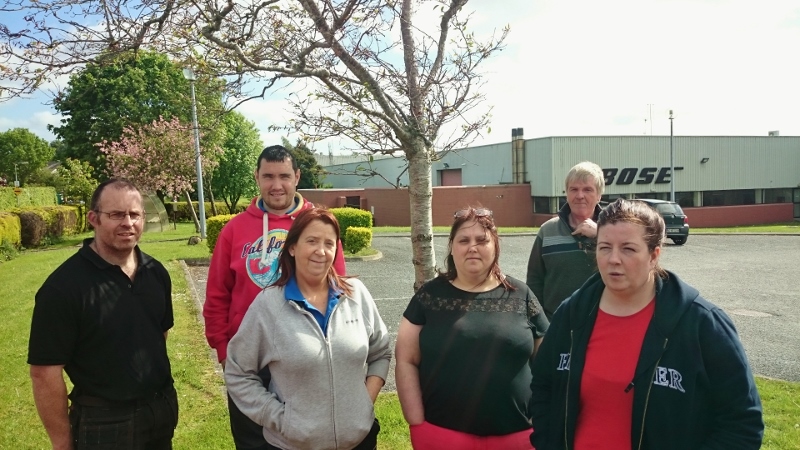
Six of the redundant workers at the Bose factory Carrickmacross  Photo: © Michael Fisher

Six of the redundant workers at the Bose factory Carrickmacross Photo: © Michael Fisher

LAST DAY AT BOSE FACTORY 

140 Jobs Go as Production Ends after 37 Years

Michael Fisher  Northern Standard Thursday 28th May p.7

It’s the end of the line for production at the Bose factory. It brought great expectations to Carrickmacross when it opened in 1978.  The plant provided final assembly for select home theatre systems and radios for the European market, as well as some remanufacturing for the region. It was chosen by the US company because of the local expertise in furniture making. Bose developed wooden cabinets for their high-fidelity speakers and these were sourced in County Monaghan.

Today at 4.30pm the machines will be silent and 140 workers will clock off for the last time. People like Pat McNally, who was there on Day 1 and spent his working life there.

THE WORKERS

Pat McNally

They were good employers to work for, Pat McNally told me. You worked hard and you certainly earned your money. The US-based company and helped local people and they would miss Bose. The closure decision was announced without warning in January and was originally to take effect at the beginning of April. But following intervention by union representatives along with government Ministers, the closure was postponed for several weeks to allow time for talks on redundancy terms. Pat McNally said it would take a few weeks for the effects to hit home. It meant that 140 wages were no longer going into the local economy. It would also have a knock-on effect on suppliers and the likes of couriers who had benefited from contracts with Bose.

Five of his six family worked here: four daughters and one son, and his wife spent fifteen years in a job there. He felt there was a great family atmosphere in the factory, where he worked in the receiving goods section. As it was a ‘closed shop’ in those days, he joined the union just before he started (then the ITGWU, now SIPTU) and has been a member ever since. He says it has been a pleasure working in the place, with everyone looking after everyone else. Pat has been one of the main fundraisers for charity helping to raise IR£75,000 for the Childrens Hospital in Crumlin and then taking part in activities to help the Friends of Carrick Cancer. The Bose factory with the help of  very supportive management raised over €1.2 million so far for this charity, a great achievement.

Aidan McMahon from Inniskeen was among nine married couples working for Bose. His wife Sandra who is in quality control was there for 25 years and he was there for 16 years. The couple are in their 40s and have three children to support, two young boys aged three and five, and a fourteen year-old daughter.

Aidan told me Sandra had been successful in obtaining alternative employment in Dundalk, one of only 20 former Bose employees to have found a new job. He also told me that any hope of obtaining assistance for retraining from the EU globalisation fund, as had been suggested by at least one MEP, had now faded as it applied only to companied with over 500 workers. The SIPTU representative Jim McVeigh visited the plant on Monday to reveal the bad news. There was further disappointment for workers when they discovered that if they were successful in obtaining places on higher education courses, their social welfare stamps would be used up, although they had originally been informed that this would not be the case. This arose from a measure in the last budget.

Aidan McGarrell from Magheracloone is 31 and was a Bose employee for eleven years. A married man, he has four children between the ages of three and ten. A very young family to provide for and a mortgage to pay. He was a lead machinist at the plant and joined the US-based company after spending some time working on cars. He described Bose as very good employers and said everyone enjoyed working for them. He thought he had a job almost for life when he started work at the plant.

Jennifer Cassidy from Corcuillog in Carrickmacross joined the factory after leaving the St Louis Convent in the town. She was with Bose for 27 years, working initially on the factory floor and then in the training department. She has three children, a 14 year-old boy who attends a local school, a daughter aged 22 and another son aged 25. Over the years Bose has provided employment for her brothers and sisters, cousins and other relatives. She was annoyed at the way the announcement was handled in January and since then there had been a lot of broken promises about a possible replacement industry.

Mai McCarthy from Carrickmacross was a line operator at Bose for over 12 years. Previously she had worked at Lissadell towels outside the town (now Wrights). She finds it hard to believe that this is her last day. She always felt Bose was a great company to work for and she had enjoyed going in to her daily work. She has three children, a daughter and two sons, all in their 20s and living in Australia because there were no jobs for them in Ireland. She might have to consider emigration herself, if things do not work out.

Fánchea Keenan comes from Lisdoonan. She started on the production line in Bose 25 years ago in October 1989 and was a cell leader. She is married with two grown-up children. A daughter Emma who had cystic fibrosis died in 2011.  She says there was always a massive pride in working for Bose. When her daughter was ill she says the company had been very accommodating and the workers had helped to raise money for a CF charity. Fánchea said the founder of the company Dr Amar Bose had been very loyal to the workers in Carrick and had great respect for them. The team had produced very high quality goods. When they signed on for the firm they never envisaged they would have to look for work elsewhere.

Fánchea told me the Irish plant was being closed even though it was always a profitable operation. The very committed workforce had reached all their targets and even to the end had carried out everything asked of them, she said. But greed had got the better of the US-based management as the company wanted to make more profits. She said the Carrickmacross team had pulled out all the stops whether working overtime when asked to do so or during holiday times. Their orders were always delivered on time. But the management had not taken into account the loyalty of the workforce when it decided to shift production to the Far East.

All the workers expressed their annoyance that although they had been promised several things by politicians from various parties after the closure announcement, including the Arts Minister Heather Humphreys T.D. But they said they had not heard anything since the meeting with public representatives in the Nuremore Hotel in January. At the time Minister Humphreys said she had immediately contacted the office of her Cabinet colleague Richard Bruton and the IDA. But she warned it would be wrong to raise any false hopes for the workers in halting the closure, as the company seemed to have embarked on a cost-saving exercise.

Tomorrow (Friday 29th May), one by one, the workers will enter the premises for the last time to receive their redundancy payments. The plant and machinery inside the factory will be sold off by McKay Auctioneers in a fortnight’s time, leaving the building an empty shell.

Six of the redundant workers at the Bose factory Carrickmacross  Photo: © Michael Fisher

Six of the redundant workers at the Bose factory Carrickmacross Photo: © Michael Fisher

PRE-ELECTION GUIDE

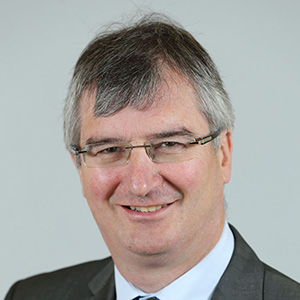
Tom Elliott (UUP)

Tom Elliott (UUP)

A GUIDE TO THE ELECTION IN THE NORTH  Northern Standard Thursday 7th May
Sinn Féin and UUP in close contest in Fermanagh/South Tyrone
Michael Fisher

Voters go to the polls (Thursday) for the Westminster general election in eighteen constituencies in Northern Ireland and throughout Britain. Many are predicting a hung Parliament, with David Cameron or Ed Miliband almost certain to need the support of other parties to form the next government. So the outcome in the North, as well as in Scotland, will be particularly important. Sinn Féin says it will continue its abstentionist policy, so if a unionist gained a seat currently held by a republican, that one MP could provide a vital vote for any new government.

One place that scenario is possible is Fermanagh/South Tyrone, where Sinn Féin’s Michelle Gildernew took the seat in 2010 by just four votes over her main rival, making it the most marginal seat in the House of Commons. This time around the incumbent will be facing a single unionist opponent, former Ulster Unionist leader and ex-UDR member Tom Elliott, as a result of a pact between the UUP and DUP.

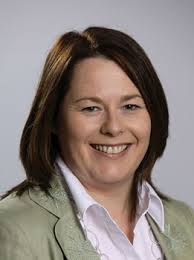
Michelle Gildernew (SF)

Michelle Gildernew (SF)

Driving through the constituency last week from Teemore to Aughnacloy, it seemed the campaign team for Michelle Gildernew was well organised, with her posters strategically placed along main roads. Carrickmacross-based MEP Matt Carthy of Sinn Féin was among the Monaghan representatives who spent a while canvassing for his party colleague.

Tom Elliott has received the support of the Orange Order, of which he is a prominent member, and (despite previous differences of opinion) the DUP, including some of its Councillors. He remains hopeful of winning, but the bookies indicate otherwise.

CONSTITUENCY HISTORY

Since 1950, Fermanagh/ South Tyrone has seen a precarious balance between unionists and nationalists, and has repeatedly had the highest turn-out of any constituency in the North. It was initially won in 1950 and 1951 by the Nationalist Party. Although a Sinn Féin candidate was successful in 1955, he was unseated on petition, on the basis that a criminal conviction for IRA activity made him ineligible. The seat was awarded to the unionist candidate.

At the start of the troubles and the campaign for civil rights, Frank McManus, standing on a (nationalist) Unity ticket, won in 1970. The arrival of the SDLP in February 1974 divided the nationalist vote and saw the UUP’s Harry West returned to Westminster, with the support of other unionists.

In October 1974 a nationalist pact saw Lisnaskea publican Frank Maguire returned as an Independent. He retained the seat five years later. When he died in early 1981, it was the time of the H-Block hunger strike. In the by-election, IRA hunger striker Bobby Sands stood as an anti-H-Block candidate and was elected. His death in prison followed 26 days later. In the second by-election his agent Owen Carron stood as a “proxy political prisoner” and was elected in his place. Republicans suffered a reversal in the 1983 general election, when the SDLP contested the seat. Former UDR officer Ken Maginnis won and held the seat for the UUP for the next eighteen years until he retired.

The 2001 general election saw Michelle Gildernew become MP for the first time, with a narrow win over the UUP’s James Cooper, in a situation where the unionist vote was split. The Brantry native and former Stormont Minister for Agriculture went on to hold the seat in two more Westminster contests.

Fermanagh/South Tyrone General Election Results since 1950
Election                    Member                         Party
1950                         Cahir Healy                   Nationalist
1951                         Cahir Healy                    Nationalist
1955                         Philip  Clarke                 Sinn Féin
1955                         Lord Robert Grosvenor  UUP
1959                         Lord Robert Grosvenor  UUP
1964                         Marquess of Hamilton    UUP
1966                         Marquess of Hamilton    UUP
1970                         Frank McManus              Unity
1974 (February)       Harry West                      UUP
1974 (October)        Frank Maguire                 Independent Republican
1979                         Frank Maguire                Independent Republican
1981 (April)             Bobby Sands                  Anti H-Block
1981 (August)          Owen Carron                  Anti H-Block
1983                         Ken Maginnis                 UUP
1986                         Ken Maginnis                 UUP
1987                         Ken Maginnis                 UUP
1992                         Ken Maginnis                 UUP
1997                         Ken Maginnis                 UUP
2001                         Michelle Gildernew        Sinn Féin
2005                         Michelle Gildernew        Sinn Féin
2010                         Michelle Gildernew        Sinn Féin
(the two elections in 1981 and one in 1986 were by-elections)

LUCIDTALK OPINION POLL PREDICTION

So what about the other seventeen constituencies in the North? According to an opinion panel poll last month by the LucidTalk market research company, (Managing Director: Bill White), it is extremely unlikely there will be any change in ten of them. These are:
North Antrim (DUP), East Antrim (DUP), East Derry (DUP), Lagan Valley (DUP), Strangford (DUP), Newry and Armagh (SF), West Belfast (SF), Mid Ulster (SF), West Tyrone (SF), and North Down (Independent). Of the other seven, predictions are that two of the three seats already held by the SDLP, in Foyle (where Mark Durkan succeeded John Hume) and South Down (Margaret Ritchie), will be retained.

The poll  also indicates a win in North Belfast for the incumbent, Nigel Dodds of the DUP, the second of four constituencies where a unionist pact was agreed. Gerry Kelly of Sinn Féin was criticised for his leaflets showing a sectarian headcount of the electorate. He has also used social media such as youtube to spread his message, acting out a bizarre sequence featuring a Star Wars character.

No such strange visions in South Antrim, which has apparently seen the level of DUP support drifting downwards for the past couple of months whilst increasing for Danny Kinahan of the Ulster Unionists. But the LucidTalk poll shows the DUP’s William McCrea is still at a favourite level of 75% to hold his seat. That leaves three areas where attention will be most focused later tonight (Thursday) as the ballot boxes are opened.
East Belfast
For some time now the DUP has been campaigning to take back East Belfast from Naomi Long of the Alliance Party, their first ever Westminster seat when she upset the odds in 2010 and defeated the DUP leader Peter Robinson. Now it’s another Robinson, Gavin (no relation), who has been given a clear run by unionists as the UUP has agreed not to stand. This will be a fascinating contest, as will the one in neighbouring South Belfast.
South Belfast
This area shows a major change in the LucidTalk April poll, with the SDLP jumping from a 65% score to 75% (i.e. a good favourite, but still not a certainty). The constituency ranges from the wealthy and now increasingly Catholic Malone Road to the loyalist Village area and Sandy Row. Boundary changes mean it includes parts of Castlereagh and Carryduff on the outskirts of the city. The Sinn Féin candidate, businessman and former Belfast Lord Mayor Máirtín Ó Muilleoir, is mounting a strong challenge for the nationalist vote. But South Belfast is one of the last seats where the SDLP is still ahead of Sinn Féin and this should favour the incumbent. It’s possible that Dr McDonnell would retain the seat with one of the lowest percentages of the vote in the whole of the UK, under 30%. Interestingly the LucidTalk poll shows UKIP (represented by another former Lord Mayor, ex-Ulster Unionist Bob Stoker) scoring well in this constituency, particularly in middle class areas and with the over 65′s in the panel.
Upper Bann
Finally, watch out for Upper Bann (taking in Lurgan, Portadown and Craigavon). In the opinion poll, it has dropped from an 80% score for the DUP to 65%. This seems mostly to be owing to the strong challenge that the UUP’s Joanne Dobson has mounted against the sitting MP, David Simpson of the DUP. However, what should worry the unionists is that the pollster’s models now show there is not just one alternative to the DUP, but two i.e. Sinn Féin and the UUP. It’s speculated that the Sinn Féin’s Catherine Seeley could come through the middle, if the DUP and UUP split the unionist vote evenly. The UUP say David Simpson’s line that the DUP are the only party that can stop Sinn Féin is scaremongering. At the last Westminster (2010) and Assembly (2011) elections the total unionist vote came in at around 55-60%, with the nationalist/republican vote on approximately 40%, and Alliance added to others on 5%. The DUP scored 34% in 2010, with the UUP (called UNCNF then) on 26%. So if say the DUP drop only 4 % points, and the UUP gain 4 % points, and Sinn Féin get about 3/4 of the possible nationalist/republican vote (which is 30% i.e. 3/4 of 40%) then Sinn Féin could narrowly snatch this seat from the Unionists in a very tight finish between the three parties.

Remember that a British general election is not counted through proportional representation, but is a first-past-the-post contest, and gaining one more vote than your opponents is enough to see a candidate through.
OPINION POLL:
The LucidTalk (NI) Opinion Panel has 440 participants and is carefully constructed to provide an accurate representation of Northern Ireland opinion – via gender, area of residence, age-group, community background, socio-economic group, and employment group. The opinion panel has a pool of approximately 1,200 members who regularly take part in poll projects, and for this project a representative sample of 440 opinions was collated.
Opinion Panel members were asked:
(a) Likelihood of voting in May 2015, and
(b) What party they currently plan to vote for, and
(c) Their current opinion regarding who would win in each of the ‘non-100%’ certainty seats (see results table).
Results are presented as a % likelihood of the named political parties winning in each of the 18 Westminster Parliamentary seats. Our forecasts do not predict vote share, size of vote, and/or size of majority etc., as to do this would require a much higher sample and more comprehensive poll. In this context, it should be noted that if the % scores go up or down for the main prediction, then it’s the alternative party or parties (right-hand column in the table) that is retreating or advancing by that same score. The full results are detailed in the attached table along with any changes from the March Opinion Panel poll, which enables us to see the trends, and any changes in opinion.

NORTHERN IRELAND: WESTMINSTER ELECTION
LUCIDTALK APRIL OPINION PANEL FORECAST – 1st May 2015
Opinion Panel Poll Period: 21st April – 30th April 2015.

NORTHERN IRELAND CONSTITUENCY

2010

Result – Party

2015

Forecast- Party

Probability % of correct Forecast
(e.g. 100% = certain)

Change since last Forecast
(March Opinion Panel)

Alternative – if main forecast doesn’t win

North Antrim

DUP

DUP

100%

No Change

South Antrim

DUP

DUP

75%

-5%

UUP

East Antrim

DUP

DUP

100%

No Change

Belfast North

DUP

DUP

95%

No Change

Sinn Fein

Belfast South

SDLP

SDLP

75%

+10%

DUP

Belfast East

Alliance

DUP

75%

No Change

Alliance

Belfast West

Sinn Fein

Sinn Fein

100%

No Change

North Down

Independent

Independent

100%

No Change

Mid-Ulster

Sinn Fein

Sinn Fein

100%

No Change

West Tyrone

Sinn Fein

Sinn Fein

100%

No Change

Fermanagh and South Tyrone

Sinn Fein

Sinn Fein

80%

+5%

UUP

Foyle

SDLP

SDLP

90%

No Change

Sinn Fein

East Londonderry

DUP

DUP

100%

No Change

Lagan Valley

DUP

DUP

100%

No Change

Upper Bann

DUP

DUP

 65%

-15%

UUP or Sinn Fein

Strangford

DUP

DUP

100%

No Change

South Down

SDLP

SDLP

95%

No Change

Sinn Fein

Newry and Armagh

Sinn Fein

Sinn Fein

100%

No Change

SDLP

UK GENERAL ELECTION 2015 – NORTHERN IRELAND:  LUCIDTALK FORECAST – as at 1st May 2015

POLITICAL PARTY

DUP

SINN FEIN

SDLP

INDEPENDENT

OTHER

2015 SEAT FORECAST – TOTALS

9

5

3

1

0

As an approximate guide the % predictions can be interpreted as follows:   +55% = too close to call, +60% = borderline, +65% = slight favourite, +70%-75% = moderate favourite/favourite, +80%-85%  = favourite/strong favourite, +90%-95% = strong favourite/near certain, 100% = full certain.
Copyright LucidTalk © 2015 and reproduced by permission

COUNCILLORS SAY BRUTON ‘SNUBBED’ THEM

CATHAOIRLEACH SAYS COUNCILLORS WERE SNUBBED OVER JOBS FORUM IN CARRICKMACROSS 

Michael Fisher  Northern Standard  Thursday 30th April p.1

Jobs Minister Richard Bruton T.D. with Martin O'Briend CEO Cavan Monaghan ETB in one of the workshops at the Carrickmacross jobs forum Photo:  © Michael Fisher

Jobs Minister Richard Bruton T.D. with Martin O’Briend CEO Cavan Monaghan ETB in one of the workshops at the Carrickmacross jobs forum Photo: © Michael Fisher

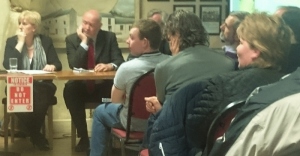
Monaghan Councillors especially Carrickmacross-Castleblayney Municipal District members have been snubbed by the Department of Jobs, according to the County Council Cathaoirleach, Councillor Padraig McNally (Fianna Fáil). He was addressing the April meeting of the District Council in Carrickmacross on Monday.

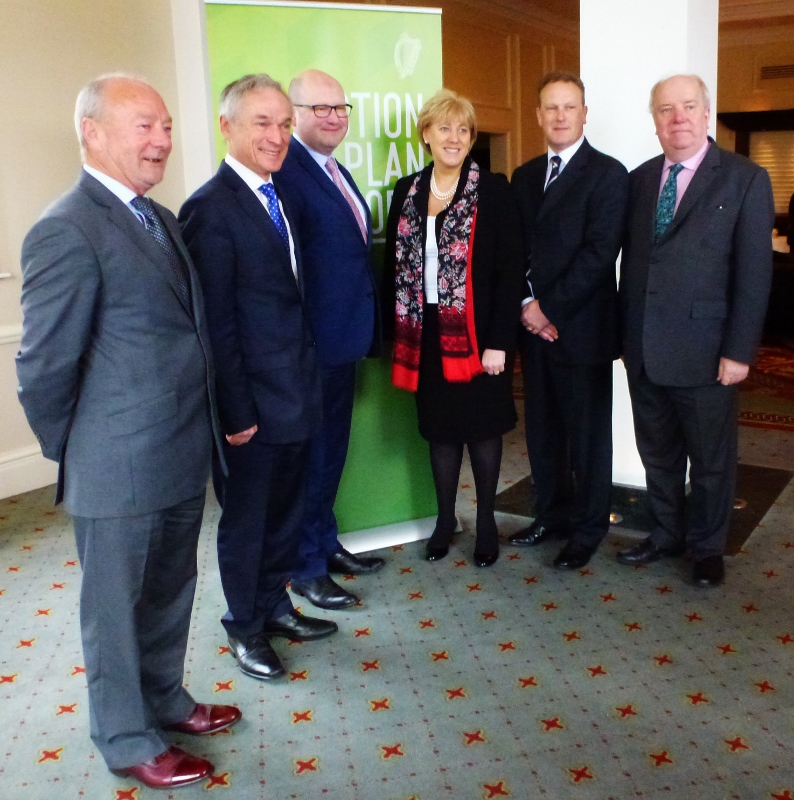
Three government Ministers, Richard Bruton and Ged Nash (Labour), with Heather Humphreys T.D. (centre), and two other Fine Gael Cavan/Monaghan TDs including Joe O'Reilly T.D. (right) attended the regional Action Plan for Jobs in Carrickmacross   Photo:  © Michael Fisher

Three government Ministers, Richard Bruton and Ged Nash (Labour), with Heather Humphreys T.D. (centre), and two other Fine Gael Cavan/Monaghan TDs including Joe O’Reilly T.D. (right) attended the regional Action Plan for Jobs in Carrickmacross Photo: © Michael Fisher

He expressed his disappointment and frustration that he had not been invited to a regional jobs forum held at the Nuremore Hotel and attended by three government Ministers, including the Jobs Minister Richard Bruton T.D. and Minister for the Arts, Heritage and the Gaeltacht and local T.D., Heather Humphreys.

Minister Heather Humphreys T.D. and Minister Ged Nash T.D. at the Carrickmacross jobs forum Photo:  © Michael Fisher

Minister Heather Humphreys T.D. and Minister Ged Nash T.D. at the Carrickmacross jobs forum Photo: © Michael Fisher

Councillor McNally told the meeting that if there had been a Fine Gael Cathaoirleach of the County Council then that person would have been there, but on this occasion, local representatives had been snubbed. We like to be contacted about such events, he said, and it was very easy to forget that hey were there.

Cathaoirleach of Monaghan County Council, Councillor Padraig McNally  Photo:  © Michael Fisher

Cathaoirleach of Monaghan County Council, Councillor Padraig McNally Photo: © Michael Fisher

He proposed that the Municipal District wrote to the Minister for Jobs, Enterprise and Innovation, Richard Bruton T.D. saying that in future they should invite elected representatives from Carrickmacross. He said there was not one person present at the jobs forum who could report back directly to the workforce at the Bose factory. It is due to close at the end of next month, with the loss of 140 jobs.

Cathaoirleach of Carrickmacross Castleblayney Municipal District, Councillor Jackie Crowe  Photo:  © Michael Fisher

Cathaoirleach of Carrickmacross Castleblayney Municipal District, Councillor Jackie Crowe Photo: © Michael Fisher

The Cathaoirleach of the Municipal District, Councillor Jackie Crowe (Sinn Féin) agreed that the elected local representatives had been snubbed. He seconded the motion. He said they had had no notification whatsoever about the meeting. It showed that the organisers had no time for them. He was disappointed that even the County Council Cathaoirleach had not been invited. It was not the first time that they had been snubbed and they should express their anger as a Municipal District.  It was agreed by the six Councillors present “That this Council writes to Minister Richard Bruton T.D. expressing our disappointment that neither the Muncipal District chairman or the county chairman were invited to the jobs meeting held in the Nuremore Hotel recently”.

Monaghan Councillor Colm Carthy from Carrickmacross  Photo:  © Michael Fisher

Monaghan Councillor Colm Carthy from Carrickmacross Photo: © Michael Fisher

Councillor Colm Carthy (Sinn Féin) said that last month the District had agreed to write to Minister Bruton to request an update on the Bose facility and asking him if he would confirm where he was on organising a replacement for the jobs and employment in the Carrickmacross plant. The Council received a standard letter in reply from a Private Secretary, stating that the correspondence would be brought to the Minister’s attention “at the earliest opportunity”. Councillor Carthy, a former Bose employee, said he was concerned that no elected members had been invited to the jobs meeting held locally. It was a matter of grave concern, as the facility would be closing shortly. He said it had come as a surprise to him that Minister Bruton had visited the area.

PUBLIC MEETING: MONAGHAN ROADS

Cllr PJ O'Hanlon  Photo:  © Michael Fisher

Cllr PJ O’Hanlon Photo: © Michael Fisher

PUBLIC MEETING TO BE HELD ON STATE OF LOCAL ROADS

Road Funding for local and regional Roads in Monaghan for the year 2015 is €7.1 million, a reduction of over €4 million in four years. The issue has been discussed at recent meetings of Carrickmacross-Castleblayney Municipal District by the six Councillors, including PJ O’Hanlon. Councillor O’Hanlon told the Northern Standard he had been raising this issue continuously, but nobody in power seemed to be listening or did not want to listen. He said he had Parliamentary Questions asked in the Dáil by Brendan Smith T.D. and the response was that ‘this is your allocation for the year’. Councillor O’Hanlon said this was not acceptable and he believed public representatives had to fight to get further funding.

“Our roads are in a deplorable state and if we are going to create local, indigenous jobs we need a proper road infrastructure. A survey is being carried out by the National Roads Authority in relation to the condition of the roads and this will be a waste of time unless we receive further funding”, he said.

Timmy Dooley T.D.

Timmy Dooley T.D.

“People cannot understand why they are paying road tax and property tax, and then the road funding has been reduced. As a result of this I have arranged a public meeting for Thursday 30th April in the Glencarn Hotel Castleblayney at 8pm.The guest speaker will be Timmy Dooley T.D., spokesman for transport, tourism and sport for Fianna Fáil. However this is not a Fianna Fáil party meeting, it is a public meeting and is open to everyone in the county. It is important that politicians from all sides stand up and say enough is enough. We want a proper road network as we are paying road tax and property tax and the funding has been reduced, so please come to this meeting and help us in our cause to get additional funding for our local road network”, Councillor O’Hanlon concluded.

CALLS FOR UNDER-GROUND INTERCONNECTOR

Heather Humphreys T.D. and Caoimhghin Ó Caolain T.D. at the anti-pylons meeting in Aughnamullen Social Centre Photo © Michael Fisher

Heather Humphreys T.D. and Caoimhghin Ó Caolain T.D. at the anti-pylons meeting in Aughnamullen Social Centre Photo © Michael Fisher

PACKED MEETING TELLS EIRGRID: MAKE THE INTERCONNECTOR UNDERGROUND

Michael Fisher  Northern Standard Thursday 23rd April p.16

It’s a controversial issue and feelings were running high at times. After nearly three hours a clear message emerged from the crowded hall in Aughnamullen Social Centre in Lough Egish on Monday night. The verdict of the meeting was that EirGrid’s proposed second North/South electricity interconnector must be put underground. Over 300 people attended the meeting organised by the County Monaghan anti-pylon committee. After hearing from four of the five local TDs and then a lively question and answer session, a motion was put forward by Fianna Fáil Councillor Seamus Coyle. It was seconded by Fine Gael Councillor Hughie McElvaney.

The motion instructs TDs to place a Dáil motion asking the government to instruct EirGrid to cease all work on the proposed North/South link and to direct Eirgrid to underground fully the North/South interconnector as a high-voltage direct current (HVDC-VSC) cabling along roads, as in the company’s proposal for a section of the GridWest link. Asked by a member of the large crowd if she supported the motion, local Fine Gael T.D. and Minister for the Arts, Heritage and Gaeltacht, Heather Humphreys said she would take time to read the motion before she agreed to it.
Seán Conlan T.D.  Photo:  © Michael Fisher

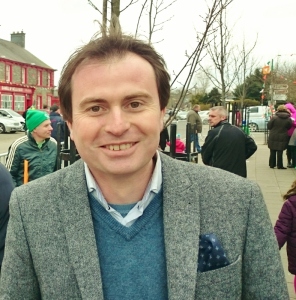
Seán Conlan T.D. Photo: © Michael Fisher

Deputy Sean Conlan said he would be bringing the motion to a meeting of the Fine Gael Parliamentary Party at Leinster House due to be held last night (Wednesday). Sinn Féin TD Caoimhghin Ó Caolain and Deputy Brendan Smith of Fianna Fáil also contributed to the meeting and there was an apology from Joe O’Reilly T.D. and Matt Carthy MEP.

COUNCILLORS PRESENT

Thirteen of the eighteen Monaghan Councillors were present, including all six from the Carrickmacross-Castleblayney Municipal District. An apology was received from Cllr Cathy Bennett. Concerns raised during the meeting that lasted nearly three hours ranged from the potential health impact of the overhead line, the devaluation of people’s land and property if the proposed project goes ahead and the environmental impact and unsightliness of the pylons. Many speakers claimed that the people of Monaghan, Cavan and Meath were being treated as second class citizens compared to those living in areas that would be affected by EirGrid’s two other major supply projects, GridWest and GridLink. They said communities in County Monaghan had not been consulted by EirGrid about a possible underground option for the 140km line, which the company has estimated would be five times more expensive than the overhead plans.

The meeting was opened by the Chairman of the Anti-Pylon Committee, Donal McDaid. He said it was probably the most important meeting ever to be held in this community in recent times. It might well decide for the next 100 or 200 years whether they would have a blight on the community for generations to come. He said if the proposed planning application by EirGrid ended up in the courts then the cost to everyone would be twice as much.

A planning application for the proposed interconnector route from Meath to Tyrone will shortly be put before An Bord Pleanála by EirGrid. Nigel Hillis set out the timetable of developments in the project since their last public meeting in January last year. He said if the planning application was lodged in May, with a seven weeks period for formal consultation, it was possible there would be an oral hearing held in September or October.

Each of the TDs present was given an opportunity to comment on the situation. Seán Conlan T.D. said land owners had made it clear they wanted the link put underground. Minister for the Arts, Heritage and the Gaeltacht Heather Humphreys T.D. told those present she supported them, but they must understand that she was limited as a Minister as to what she could do. Responding to a call by her party colleague Seán Conlan that she should veto at the Cabinet table any EirGrid decision on an overhead route for the interconnector, she said there was a misconception about her role in Cabinet and emphasized that she did not have any such veto. But if the issue was raised at Cabinet, then she would be making her views known.

The Minister said she had already raised local concerns with the Taoiseach, the Energy Minister Alex White T.D. and within the Fine Gael Parliamentary Party. “All I want is fair play and equal treatment for the people of this area”, she said. She repeated what EirGrid had said, that the proposed interconnector was a strategic and critical addition to the grid, allowing the operators on both sides of the border to operate a single market for electricity. The power requirements for the West and South-East of the country were different, she said. The Minister said she was in attendance to listen to the concerns of local people.

Sinn Féin T.D. Caoimhghín Ó Caolain told the meeting there had been a persistent refusal by EirGrid to engage properly on the proposed route. It would take the resolve of the local people and the support of political voices to change any decision. He would work with the committee and its supporters in passionate opposition to what was proposed.

Fianna Fáil T.D. Brendan Smith said the South East and West of the country were being treated differently from the North-East. The people of Cavan/Monaghan were not being offered the same treatment in the GridWest and GridLink options, which allowed for possible underground power lines. He would continue to lobby to have the interconnector put underground and would be conveying the concerns expressed at Tuesday’s meeting of the Joint Oireachtas Committee on Transport and Communications.

Terry Lynch from Ardragh, Corduff, whose family farm would be affected by one of the proposed pylons, claimed that they were being treated a second class citizens. He asked the speakers at the top table: “What are you going to do about it?” He said 400kV cables were being undergrounded all around Europe, across London, Madrid and even China and wondered why it could not be done in Ireland. “What kind of state are we in?”, he asked.

Naoise Gordon from Annyalla who lives adjacent to the proposed line asked Minister Heather Humphreys why the government was not supporting a clean and affordable underground option for the interconnector. Jim McNally, also from Annyalla, pointed out the effect it would have on the small farm homesteads in the area, many of them occupied by elderly residents.

The IFA Chairman in County Monaghan Brian Treanor told the meeting the Association’s position over the years had been very consistent since the project was first mooted in 2008. They would represent any farm families when EirGrid presented all its options, properly costed, to An Bord Pleanála, and the planning authorities would make the decision, which he hoped would be the right one. They needed to have all options on the table, he said. Mr Treanor said the farmers’ group was not anti-progress and they wanted to see development. He wondered if a smaller 250kV project was required, and whether there was a need for a high voltage interconnector to the North. There was a huge responsibility on EirGrid, he said, to do the least damage to the farm environment and to farm families. In response to criticism from the floor, he said the IFA had always demanded that EirGrid looked at all the options, but the IFA were not technicians or experts. They were demanding that best practice be operated.

The chair of the meeting Alan McAdam pointed out that over 90% of farmers on the proposed route were IFA members and they were against having pylons on their land. Patrick Lynch from Corduff asked who would want to buy any property where a pylon was situated: it would be left valueless. He claimed elected representatives had been shirking their responsibility.

In his closing remarks the Anti-Pylon Committee Chairman Donal McDaid said it was possible to get the government to change policy, as had been done when pressure was put on former Minister Pat Rabbitte T.D. over Irish Water. He re-iterated that people in Monaghan were being treated as second-class citizens. It was the duty of the Oireachtas to protect the Constitution and to ensure that all people were treated equally, he said. It was the duty of government to see to it that people in this community were not treated as second-class citizens. They wanted answers and an assurance that the government was prepared to protect the Constitution. We do not want to stop progress, but we do want justice, he concluded.

At the end of the meeting all present stood and observed one minute’s silence in memory of the anti-pylons campaigner, the late Councillor Owen Bannigan from Loughmorne, Castleblayney, who was described as ‘a giant of a man’. A vote of sympathy was passed to the local Fine Gael organization and to Mr Bannigan’s family. His son Councillor Eugene Bannigan was among those present.

EirGrid CEO Fintan Slye  Photo: www.agendani.com

EirGrid CEO Fintan Slye Photo: http://www.agendani.com

EIRGRID CHIEF’S STATEMENT TO OIRECAHTAS COMMITTEE 

On Tuesday, EirGrid’s Chief Executive Fintan Slye gave evidence to the Oireachtas Joint Committee on Transport and Communications in Dublin. Mr Slye was accompanied by Rosemary Steen, director of public affairs, John Fitzgerald, director of grid development and Aidan Geoghegan, EirGrid’s project manager on the North-South interconnector.

Fintan Slye outlined the history of the project thus far. He said that last month the company published a draft strategy for the development of Ireland’s transmission grid and was now seeking public feedback. It was shaped by three key pillars, namely open engagement with communities, making the most of new technologies and a commitment to make the existing grid work harder before building new transmission infrastructure. The strategic review included an independent report from Indecon which showed that investment in the electricity grid would directly benefit Ireland’s economy and could help to reduce energy costs. A modern transmission grid, he said, would put Ireland in a strong position to continue to attract foreign investment and support new and emerging opportunities in the energy sector. This approach would also support Ireland’s current policy objectives, including the government’s Action Plan for Jobs and the IDA’s regional development strategy.

He said the review showed there remained a clear need for the North-South interconnector project and that a 400 kV overhead line remained the most appropriate solution, linking a substation in Woodland, County Meath, with a new substation in Turleenan, County Tyrone. It would provide a second high capacity transmission line between the Republic and Northern Ireland. The project would more than double the power transfer capacity between North and South, thereby improving the efficiency of the all-island electricity market. It would enhance the security of the electricity supply throughout the island of Ireland, which Mr Slye said was essential for economic growth, the creation of jobs and improving the standard of living and quality of life for all. It would also enable more renewable energy supplies to be connected to the network.

Mr Slye said the interconnector was needed now, as a cross-border bottleneck had developed on the all-island electricity system, which was having serious financial consequences. Last year the Economic and Social Research Institute reported that the second interconnector would remove the bottleneck and reduce electricity costs by €30 million per year. The proposed scheme had been the subject of public scrutiny and debate for some time, with the focus on whether it could be put underground.

Several independent reports on the issue have been published. The government-appointed independent panel, headed by Mrs. Justice Catherine McGuinness, acknowledged that the evaluation of undergrounding of the North-South interconnector was compatible with the methodologies being employed on the Grid West and Grid Link projects. Two themes emerge from all the reports, the most prominent of which was the finding that undergrounding the project would be more expensive. The international expert commission’s report concluded that an underground solution would be three times more expensive than an overhead option.  eirgridLogo

Mr Slye said that EirGrid’s own estimate was that an underground system for the North-South route would cost in excess of €500 million more than the overhead option. As a state-owned company the mission of which was to develop, maintain and operate a secure, economical and efficient transmission system, this was an additional cost EirGrid could not pass on to consumers. It was an additional cost that would not be acceptable to the Commission for Energy Regulation.

Whilst undergrounding was the only technically feasible option available for the East-West interconnector, the same could not be said for the North-South interconnector project. There were technical options to be considered and they had been, Mr Slye told the Committee.

EirGrid has recently republished its proposed line route that will form the basis of a planning application in the coming weeks to An Bord Pleanála. The company had been liaising with the board on the application for some months and had been doing so because eighteen months ago the European Commission designated the interconnector a project of common interest. This meant that the project was subject to a new EU regulation for trans-European energy infrastructure that was designed to facilitate a more efficient permit granting process. An Bord Pleanála was designated as the competent authority for managing the PCI process in Ireland and, in accordance with the EU regulation, EirGrid submitted a draft application file to it for review. Last month we submitted additional information to the Board which it is now reviewing, he said. Once it is satisfied with the draft application, it will draw up a schedule for formally submitting the planning application and the company expects this to happen very soon.

Mr Slye said open engagement with communities was a key pillar of the draft strategy. During the course of the project the company had endeavoured to meet every landowner affected by the development and had had productive discussions with many. Others have chosen not to deal with EirGrid directly, appointing intermediaries to represent them. This was their undoubted right and prerogative but was also a barrier to effective engagement and the company encouraged all landowners to talk to them.

Offices have been opened in counties Meath and Monaghan (Carrickmacross) and a new office would open shortly in Cavan. Mr Slye said they were encouraging anyone interested in the project to call in and discuss it with the project team. These offices would remain open right through to the submission of the planning application and afterwards. EirGrid staff will be on hand in the local offices to provide assistance for landowners and members of the public who wish to make a submission to An Bord Pleanála once the statutory consultation process starts following the submission of the planning application.

Concluding his statement, Mr Slye said the North-South interconnector was critical to ensuring a safe, secure supply of electricity throughout the island of Ireland. It would bring major cost savings and address significant issues around security of electricity supply, particularly in Northern Ireland.

LOCAL TDs RESPOND TO EIRGRID CHIEF’S STATEMENT 

The first of three local TDs to be given an opportunity at the Oireachtas Committee to question the EirGrid Chief Executive Fintan Slye was Fine Gael Deputy Seán Conlan.

He said the communities in Cavan-Monaghan were very concerned that they had not been treated in the same fair and equitable manner as people in Grid Link and Grid West. There was a fundamental difference in the way they had been treated in terms of consultation compared with the people in the West and South. His constituents did not feel that they had been treated equally with people in other parts of the country. He said he had presented a petition from 95% of the landowners affected to the Minister for Communications, Energy and Natural Resources, Alex White T.D. They want a specific underground route option and they want to be consulted on it, he said.

He mentioned the meeting attended by around 350 people on Monday night in Aughnamullen community centre and said they were all totally opposed to the overgrounding of this project. There is huge community disquiet about the approach taken by EirGrid, he told the Committee. He also said there was no regional gain in Cavan or Monaghan from the interconnector project because the company had not included any converter stations. EirGrid had pointed out for the first time (in Mr Slye’s answers) that it was technically feasible to put the project underground for the 140km length of the line and that was welcome.

The company has said that it will take €500 million more to put it underground than the cost for overground. A number of questions were asked at last night’s meeting about the fact that the valuation of property has not been included in the cost of the overground option when compared with the underground option. There was also the question of the effect on tourism in the region if the lines were put overground. Deputy Conlan said Mr Slye had stated that the project was needed in its current form because of bottlenecks between transfer of energy between the North and South. But it was his understanding that the daily flow of electricity between the North and South was between 150 MW and 170 MW and that based on the company’s own figures and safety requirements, the current interconnector could take a capacity of 400 MW per day, but only 150 MW to 170 MW was being used at a maximum at tea time while the average is around 100 MW per day. There are three power stations in Northern Ireland producing up to 2,300 MW of energy per day.  The average daily consumption of energy in Northern Ireland is 1,200 MW to 1,300 MW. They can produce 2,300 MW per day. The maximum daily use ever of energy in Northern Ireland was 1,700 MW in December 2010 during the very bad weather, Deputy Conlan pointed out.

He went on: “Mr. Slye said there was consultation but the question I asked was why there was no public consultation about underground routes in the North-South project.

Mr Fintan Slye: Correct.

Deputy Seán Conlan:   So there was not?

Mr Fintan Slye: The underground routes were published and made available but there was not a specific consultation on an underground route. The Deputy is right. However, a specific underground route was examined and published. Members who have looked at the back of the PB Power report will see an Ordnance Survey map that sets out the route corridor.”

Mr Slye said EirGrid was proposing a community fund for the wider community and also a proximity allowance payable to householders in recognition of the fact that transmission infrastructure had a greater impact on those immediately adjacent to it in terms of their visual amenity. Responding to Mr Conlan he said:

“The Deputy raised the issue of bottlenecks in the current flow of the existing line, power capacity in Northern Ireland and projections for security supply in Northern Ireland…The Generation Capacity Statement, published every year and it approved by the regulators North and South clearly articulates the security supply issue that (would be) emerging in Northern Ireland in 2020 as security of supply margins dip below what is acceptable. That is due in part to the impending closure of some of the power stations in Northern Ireland. Security of supply is incredibly important to business, industry and the economy. Hence, reliance on the single line between North and South is limited by the fact that it is a single line and any one thing could potentially take it out of commission”, Mr Slye said in his response.

Deputy Conlan said the most significant point made by Eirgrid in his view was Fintan Slye’s admission that there had been no public consultation about any specific underground routes for the North- South interconnector. The international expert group had already reported in 2012 that undergrounding was feasible.
Caoimhghín Ó Caolain T.D.  Photo: Sinn Féin

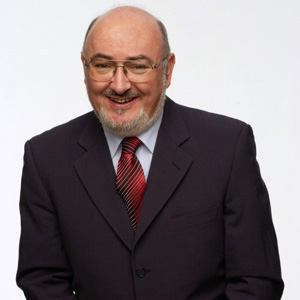
Caoimhghín Ó Caolain T.D. Photo: Sinn Féin

In a comment to The Northern Standard after the Oireachtas Committee engagement with Eirgrid’s Chief Executive, Sinn Féin Deputy Caoimhghín Ó Caoláin said that important acknowledgments were made and other important questions had yet to be answered. “Mr Slye’s acceptance that an undergrounding approach to the North-South interconnector project is both ‘engineering and technically possible’ is important and is now firmly on the record” stated Deputy Ó Caoláin. “His comments regarding ‘other advantages’, though unspecified, and that consideration of the underground option was not just about cost was also important. The acknowledgement in answer to Deputy Conlan that “no underground route consultation with the public” had taken place regarding the North-South project was also an important confirmation of a truth the public had all known.

“I am awaiting response to other questions I posed and additional detail, including regarding the estimated additional cost per consumer per annum, and over what timeframe, if the underground option is to be proceeded with. Mr Slye’s initial response suggested a 3% to 5% increase in the cost per consumer, with a likely greater cost being placed on non-domestic customers. Having already stated on the public record that I would be prepared to accept an additional cost as a domestic consumer rather than have my neighbours and friends across the path of Eirgrid’s planned pylon supported project suffer the imposition of these monstrosities, I am keenly interested to explore Mr Slye’s calculation. The bottom line from this encounter is that Eirgrid are under no pressure from this government regarding the North-South interconnector project proceeding as Eirgrid intends. Until senior government voices make it abundantly clear that the underground option is the only way to proceed, then Eirgrid will keep to its plan”, concluded Deputy Ó Caoláin.
Brendan Smith TD

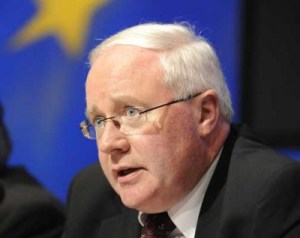
Brendan Smith TD

Fianna Fáil Spokesperson on Border Region Development Brendan Smith TD commented that a very important statement had been made at the Oireachtas All-Party Committee by the Chief Executive of Eirgrid. He said Fintan Slye had confirmed, in response to a question from the Fianna Fáil Energy Spokesperson Michael Moynihan TD, that the undergrounding of the North/South Interconnector was feasible in terms of engineering”.

Speaking to the Northern Standard Deputy Smith explained: “I outlined to the Eirgrid Chief Executive that there had been no meaningful discussions with local communities, that there was very serious concern and anger among communities in Monaghan, Cavan and Meath arising from the government’s decision to press ahead with the construction of overhead power lines for the North-South interconnector, despite carrying out a review of the other two GridLink and GridWest projects.  The people of the North- East will not allow themselves be treated as second-class citizens and will continue to demand an examination of the current proposals”, he said.

“In 2009 it was estimated that undergrounding the cables would cost more than 20 times the cost involved in keeping these transmission lines above ground.  This cost argument has been totally diminished and it is now widely accepted that the costs in laying the cables underground is now less than 1.7 times the cost of overgrounding.

The Cavan-Monaghan TD stated, “It is reprehensible that EirGrid are not factoring in the devaluation of land, the severe break-up of farm holdings, major disruption to households and the threat to the entire tourism and heritage landscape”.

Representatives of the County Monaghan Anti-Pylons Committee will appear before the Oireachtas Committee next Tuesday 28th April, at 11:30am when it’s expected they will respond to the EirGrid submission. The hearing can be watched on Oireachtas TV.

ANTI-PYLONS MEETING COUNTY MONAGHAN

Anti-Pylons meeting at Aughnamullen Social Centre Photo © Michael Fisher

Anti-Pylons meeting at Aughnamullen Social Centre Photo © Michael Fisher

Around 300 people packed into Aughnamullen Social Centre in Lough Egish tonight to protest against EirGrid plans for a second overhead North/South electricity interconnector. The anti-pylon protestors from County Monaghan agreed a motion put forward by Fianna Fáil Councillor Seamus Coyle and seconded by Fine Gael Councillor Hughie McElvaney. It instructs TDs to place a Dáil motion asking the government to instruct EirGrid to cease all work on the proposed North/South link and to direct Eirgrid to underground fully the North/South interconnector as a HVDC-VSC cabling along roads, as in the company’s proposal for a section of the GridWest link. Asked by a member of the large crowd if she supported the motion, local Fine Gael T.D. and Minister for the Arts, Heritage and Gaeltacht, Heather Humphreys said she would take time to read the motion before she agreed to it. Deputy Sean Conlan said he would be bringing the motion to a meeting of the Fine Gael Parliamentary Party at Leinster House on Wednesday evening. Sinn Féin TD Caoimhghin Ó Caolain and Deputy Brendan Smith of Fianna Fáil also contributed to the meeting and there was an apology from Joe O’Reilly T.D. and Matt Carthy MEP. At least thirteen of the eighteen Monaghan Councillors were present, including all six from the Carrickmacross-Castleblayney Municipal District. An apology was received from Cllr Cathy Bennett. Concerns raised during the meeting that lasted nearly three hours ranged from the potential health impact of the overhead line, the devaluation of people’s land and property if the proposed project goes ahead and the environmental impact and unsightliness of the pylons. Many speakers claimed that the people of Monaghan, Cavan and Meath were being treated as second class citizens compared to those living in areas that would be affected by EirGrid’s two other major supply projects, GridWest and GridLink. They said communities in County Monaghan had not been consulted by EirGrid about a possible underground option for the 140km line, which the company has estimated would be five times more expensive than the overhead plans. At the end of the meeting all present stood and observed one minute’s silence in memory of the anti-pylons campaigner, the late Councillor Owen Bannigan from Loughmorne, Castleblayney. Full report in Thursday’s Northern Standard.

Heather Humphreys T.D. and Caoimhghin Ó Caolain T.D. at the anti-pylons meeting in Aughnamullen Social Centre Photo © Michael Fisher

Heather Humphreys T.D. and Caoimhghin Ó Caolain T.D. at the anti-pylons meeting in Aughnamullen Social Centre Photo © Michael Fisher

“PARADE: FALL OUT”

Flag of 46th Infantry Battalion UNIFIL at the National Memorial  Photo © Michael Fisher

Flag of 46th Infantry Battalion UNIFIL at the National Memorial Photo © Michael Fisher

Paráid Aire! Paráid Lig Amach! The Irish UN veterans and ex-servicemen were on parade and the commands and the response to them (Parade: Attention! Parade: Fall Out!) were carried out with military precision and bearing. Pride of place in the parade at Merrion Square was given to members of the 46th Infantry Battalion. Wreaths were laid at the National Memorial to members of the Defence Forces who gave their lives in the service of the state. It was a very fitting end to the Smallhorne and Barrett campaign, which has now been stood down.

The pyramid shape of the memorial, which was designed by Brian King and opened in November 2008, captures references to burial and is a standing testament to the dead. It also reflects the shape of a military tent. Within the pyramid, four bronze figures, representing all elements of the Defence Forces, stand guard over the eternal flame that emanates from the badge of the Defence Forces. The flame burns in perpetual memory of those members of the Defence Forces who have made the ultimate sacrifice.

Last July a parade by former soldiers was held in Ballsbridge to the US Embassy seeking the extradition to Lebanon of 71 year-old Mahmoud Bazzi, the main suspect in the murder of the two Irish soldiers Private Derek Smallhorne and Private Thomas Barrett in Lebanon 34 years ago.

Minister for Defence Simon Coveney welcomed the arrest later that month of Mr Bazzi. He said he hoped it was the start of a process to bring the alleged perpetrator of a “heinous crime” to justice and said the Irish government would do “everything possible” to pursue justice.

The ice cream seller originally from Lebanon, was arrested at his home in Dearborn, Michigan by US immigration officials. He was subsequently deported to Lebanon in January.

Private Smallhorne and Private Barrett were abducted and shot dead in 1980 in south Lebanon after their UN peacekeeping convoy was stopped by armed members of a Lebanese militia. A third soldier, John O’Mahoney, was shot and injured but survived. The killings were believed to be revenge attacks after Irish soldiers killed a Lebanese militia member in an exchange of fire.

“The United States Government is asserting that Mr Bazzi does not have legal status in the United States and should not be present in the United States,” Vincent Picard of US immigration told RTÉ Radio. The deaths of the two Irish soldiers “was part of the investigation” into Mr Bazzi, he said.

Pte Barrett’s daughter Karen Barrett said the family have sought justice for her father’s killing for the past 34 years and exhausted all avenues in the Irish legal system.

Defence Minister Simon Coveney described it as a “first step” on what will “possibly be a further long and difficult road”. He and the government would “ do everything possible to pursue justice” for the peacekeepers, he said. Mr Coveney said the matter had been “continually pursued” over the years with all available channels in the Lebanon and US by successive Ministers for Defence, Foreign Affairs, officials and military authorities.

Taoiseach Enda Kenny raised the issue with the Lebanese authority during a visit last year to Irish troops serving with UNIFIL, he said. He said thoughts should be with the families of Privates Barrett and Smallhorne whose efforts and those of comrades “have ensured this issue was never forgotten”.

Campaigning on the families behalf, the group called Justice for Smallhorne and Barrett, met with American officials in Dublin last June to request US action against Bazzi. Ms Barrett said the families were ‘eternally grateful’ to the support group for their commitment and described the 34 year campaign for justice as ‘extremely difficult.’

Bazzi entered the US just over 20 years ago without proper documentation and admitted lying to obtain lawful immigraion status. He could ultimately stand trial for the abduction, torture and double killings while serving with a Christian militia. Mr Bazzi was transported in January on a commercial flight from Detroit, where he had been living, to Beirut under escort by officers with the Enforcement and Removal Operations agency. He was handed over to Lebanese authorities. Reacting to the news Karen Barrett, daughter of the late Thomas Barrett, said at the time the Barrett family was delighted to hear the Lebanese authorities had now detained Mr Bazzi.

She said it has been a long fight for justice and they hope the Lebanese authorities would give them justice for their father, Derek Smallhorne and John O’Mahony (who was shot an injured in the incident). She added her father gave his life protecting the Lebanese and the family hope this matter will now be addresssed. Ms Barrett also thanked those who have assisted them getting to this point including Simon Coveney and the Justice for Barrett and Smallhorne campaign.

Minister for Defence Simon Coveney welcomed the arrest and detention of Mr Bazzi. “I believe that this is a significant step in the pursuit of justice for Privates Thomas Barrett and Derek Smallhorne who lost their lives while on United Nations peace-keeping duty in Lebanon almost 35 years ago. It is an important day for the families and I wish to commend them for their continued commitment to securing justice for their loved ones.”

Mr Coveney added be believed the development to be very positive. Privates Smallhorne and Barrett were on duty with the UN Interim Force in Lebanon near the Israeli border on 18th April 1980 when they were captured. They had been in a three-vehicle convoy that was stopped by the South Lebanese Army, which was controlling the war-torn region at the time and in conflict with the Palestinian Liberation Organisation. Tension was high in the area on the day of the attack as the peacekeepers moved supplies to a border post. Twelve days earlier clashes between the SLA and Dutch and Irish soldiers serving with the UN left an Irish man and a militia man dead. The SLA had vowed to avenge the killing.

The field officer director for the Enforcement and Removal Operations agency Rebecca Adducci said: “ERO will continue to focus enforcement resources on individuals who lie and commit fraud to gain status in the United States. This removal should provide a stark warning to those who seek to game the system to obtain immigration benefits. This removal is the culmination of a sophisticated and meticulous investigation by several ICE components,” said Marlon Miller, special agent in charge of Homeland Security Investigations Detroit. “ICE is committed to ensuring the United States does not serve as a safe haven for individuals seeking to distance themselves from their pasts.”

The Final Salute  Photo © Michael Fisher

The Final Salute Photo © Michael Fisher