LONDON TRANSPORT

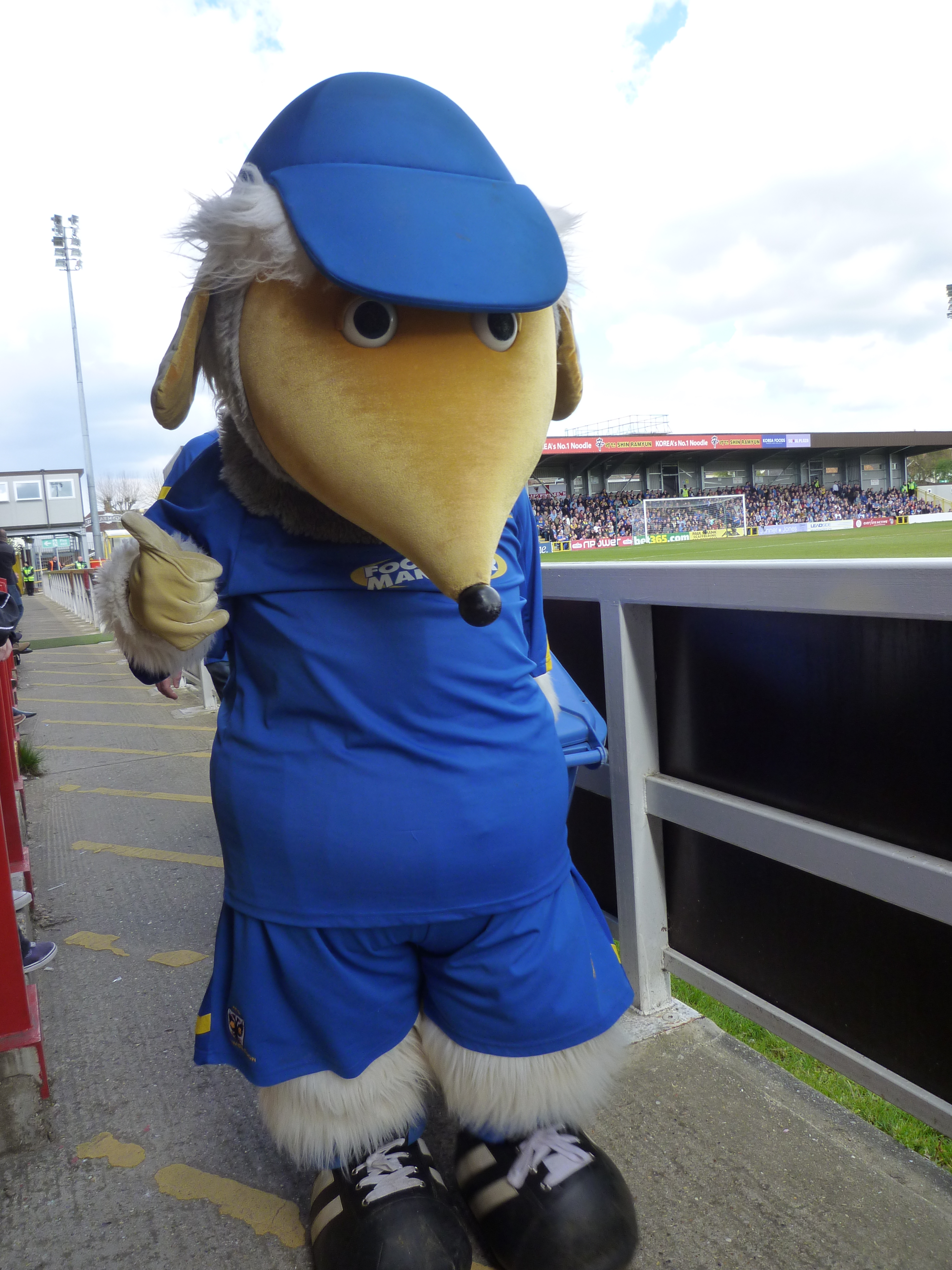
Haydon the Womble: AFC Wimbledon mascot

Haydon the Womble: AFC Wimbledon mascot

While I was writing yesterday about the Church of Ireland, one of its clergy the Reverend Patrick Comerford was blogging about a favourite subject of mine, the London Undeground: Mind the Gap, Avoid eye contact and Move along the Platform! He even mentioned my beloved Wombles of Wimbledon Common, a place where I used to go for walks around “Caesar’s Camp“, Cannizaro Park and the windmill (1817) near the golf course.

I think that title sums up well many of the features of tube travel, particularly during rush hour. He made the point that the largest part of the underground is in fact overground. Certainly many sections of the various lines run out into the suburbs. Even the original Metropolitan Line running from Baker Street and Aldgate now serves places like Amersham and Chesham in Buckinghamshire, Watford in Hertfordshire and Uxbridge. The section of the District line from Wimbledon as far as West Brompton (the stop for Chelsea FC at Stamford Bridge) is overground and crosses the River Thames at Putney.

There is now a London Overground network, interconnecting with many of the stations on the Underground. Construction is also proceeding on the £14.8 billion Crossrail project. In his blog Patrick also mentions one of my favourite London termini, namely Waterloo station, which serves Wimbledon and is the starting point for the South West routes to the Coast including Southampton and Portsmouth.

++++++++++++++++++++++++++++++++++++++++++++++++++++++++++++++++

Patrick Comerford

Mind the Gap, avoid eye contact,  and move along the platform

Harry Beck’s map of the Underground, first produced in 1931, was inspired by electrical circuit diagrams

For a few days recently, I took part in a number of meetings at the London offices of Us, the Anglican mission agency previously known as USPG (the United Society for the Propagation of the Gospel), including a planning meeting for the annual conference of Us at the High Leigh Conference Centre later this month.

The offices of Us are on the top floor of a former factory building in Great Suffolk Street, Southwark. On one side, we were looking out at the London Eye; on the other side was the Gherkin, a modern iconic building in the financial heart of the City of London; below us, trains were trundling away into the Tube station at Southwark.

During that week, I made a number of cross-London journeys on the Underground between the stations at Southwark and Westbourne Park for the Anglican Communion Office at Tavistock Crescent.
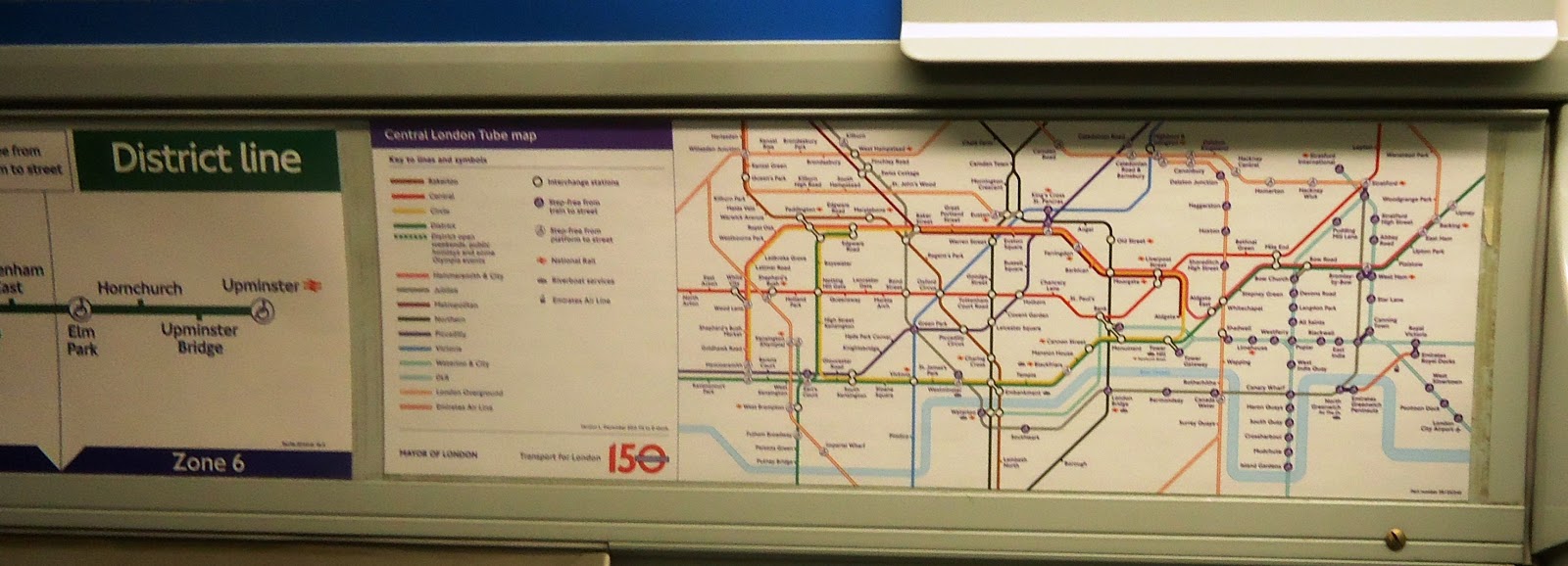
My mild colour-blindness and short-sightedness make it difficult for me to read the Tube maps in the heave-ho of rush-hour commuting (Photograph: Patrick Comerford)

The map of the Underground is so familiar to many people, that even if they never visit London they easily associate the primary colours with different lines: Red (Central), Yellow (Circle), Green (District), Blue (Victoria), and so on.

Constantly, though, my mild colour-blindness and short-sightedness make it difficult for me to read the Tube maps, particularly in the heave-ho of rush-hour commuting, at times unable to distinguish between Northern Black and Piccadilly Dark Blue, between Victoria Blue and Piccadilly Dark Blue, and Metropolitan Dark Red and Central Red. But then, colour-blindness and ham-fisted efforts to use my pidgin Italian recently left me boarding the wrong train, on the wrong platform, at the wrong time in Tuscany.

Mapping the Underground
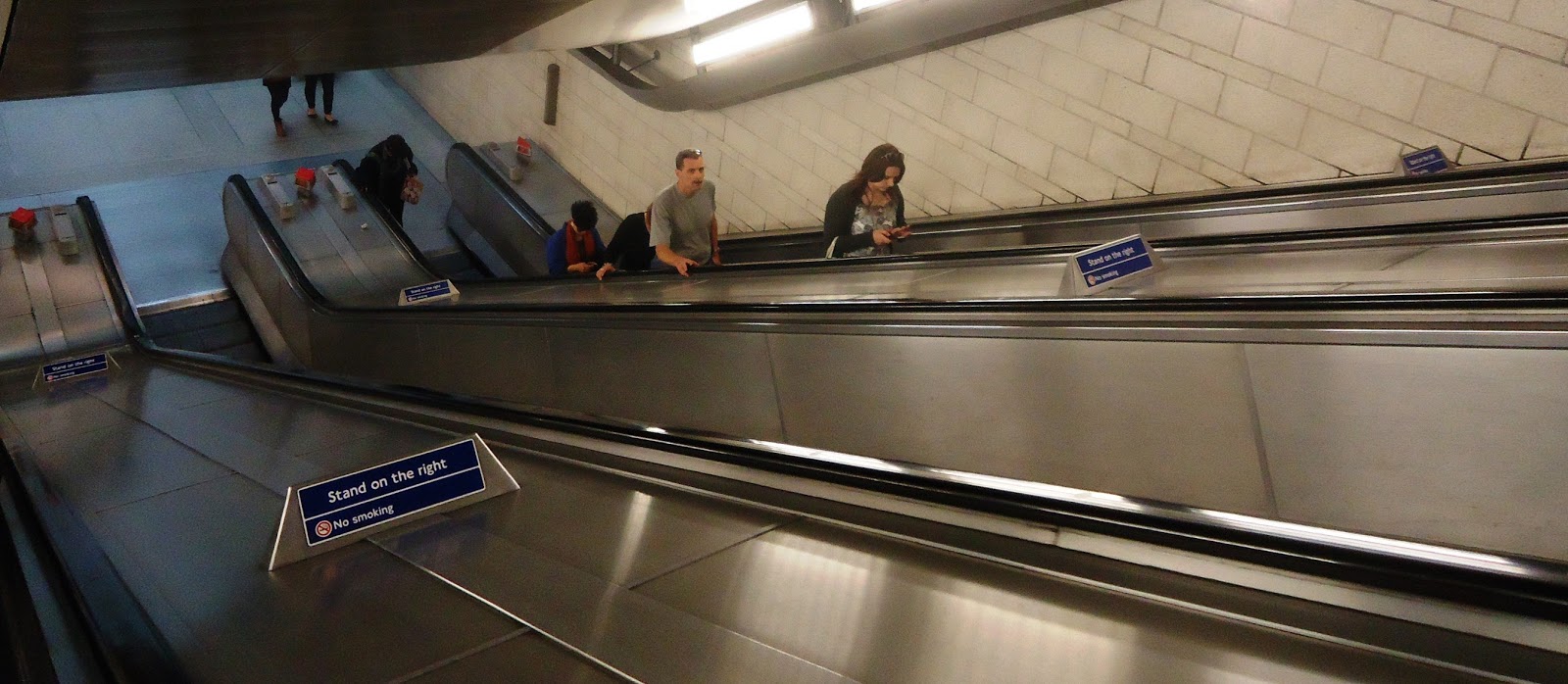
There are 426 escalators on the Underground and with 23 Waterloo has the most (Photograph: Patrick Comerford)

I suppose most of us who use the London Underground on a regular basis just keep our heads down, avoid eye contact and get into “auto-drive” mode as we work our way between stations and change lines. We never really get to appreciate where we are or where we are going.

At Southwark station one afternoon, a woman asked the cheapest way to her destination. “By walking” was the witty reply. “But it’s much slower.”

Many of us can read the London Underground map, but few of us would ever be able to follow the route if we had to walk between places more than one or two stations apart.

Mark Mason, in his new book Walk The Lines – The London Underground, Overground. has done precisely that. He has walked the entire length of the London Underground, but has walked it overground, passing every station on the way and flagging up all the sights, sounds and soul of what he claims is “the greatest city on earth.”
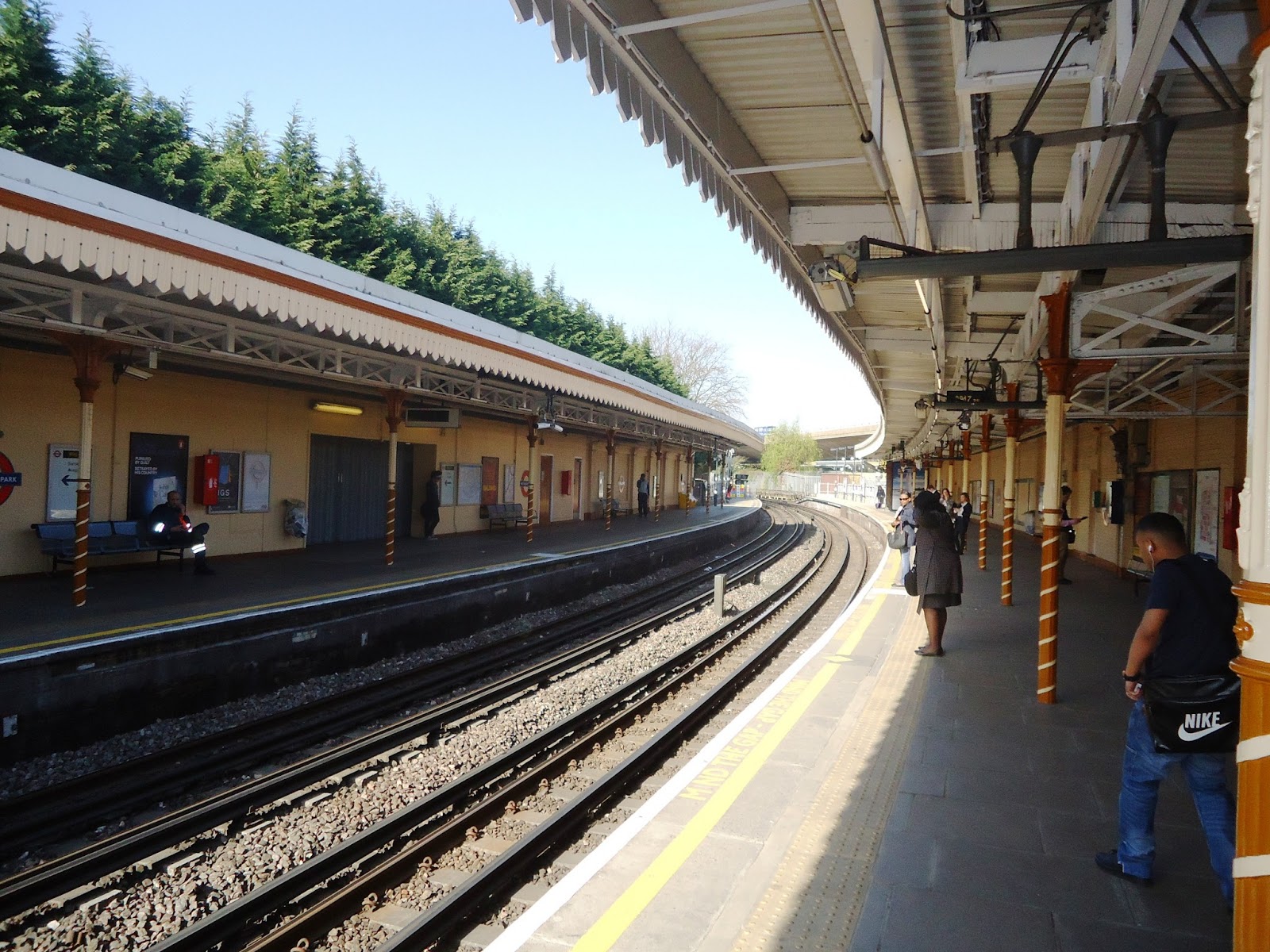
Underground mainly means overground … waiting on the platform at Westbourne Park (Photograph: Patrick Comerford)

Standing at Wetsbourne Park station in warm sunshine recently, I realised the largest part of the London Underground runs overground. I was reminded of ‘The Wombling Song’ from The Wombles:

Underground, overground, wombling free,

The Wombles of Wimbledon Common are we.

And, of course, Uncle Bulgaria came to mind too, “with his map of the world” that would take him to Tobermory.

Indeed, almost 60 per cent of the Underground runs overground – 146 miles or 58% of the 253 miles of the tracks run above ground; only 93 miles run in deep tunnels, and a further 20 miles in shallow tunnels. There is a prevalent north/south divide, with less than 10 per cent of stations south of the Thames.

Celebrating a century and a half
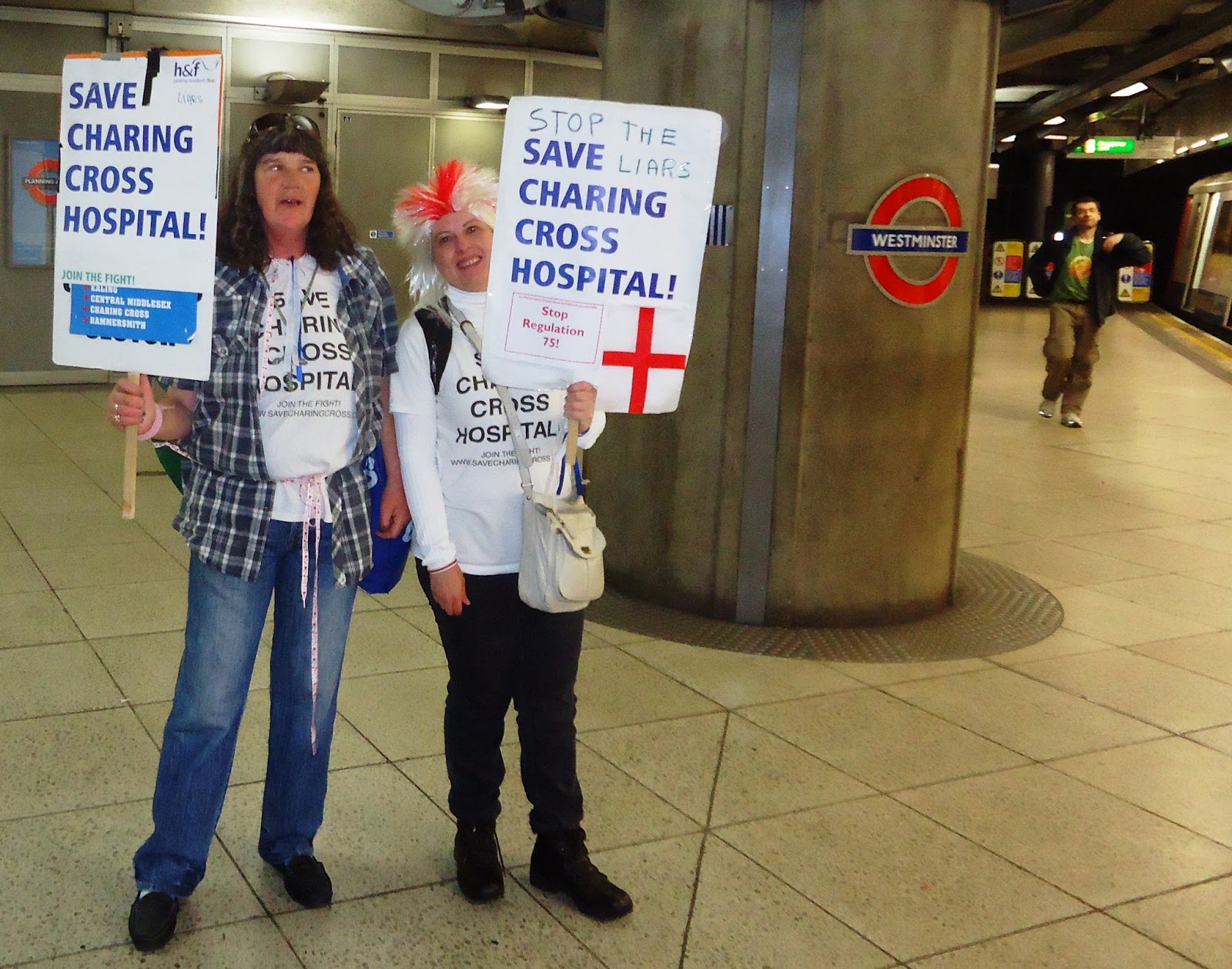
Protesters can be found at many stations any day, but since 2003 buskers need a licence (Photograph: Patrick Comerford)

Earlier this year, London Underground marked the 150th anniversary of the first Tube journey on 9 January 1863. The London Underground was the vision of Charles Pearson (1793-1862), who first thought of a Fleet Valley rail tunnel in 1845.

The engineering designs were produced by Sir John Fowler (1817-1898), who also designed the Forth Railway Bridge. Most of the District Line was designed by Sir John Wolfe-Barry (1836-1918), who also designed Tower Bridge. But the first Tube journey did not take place for another 20 years.

The first Tube line was built by the Metropolitan Railway, a private company. It took 21 years to complete the Inner Circle, and when the Circle Line opened in 1884, The Times described travelling on it as “a form of mild torture.”

By then, over 800 trains were running on the Inner Circle each day. A full journey from Stockwell to the City on the City and South London Railway, now part of the Northern Line, took just 18 minutes.

The Waterloo and City Line was the only other line built before the turn of the century. The Great Northern and City Line, between Moorgate and Finsbury Park, was mostly completed by 1902.

The Underground became known as the “Tube” in the early 1900s, when the Central London Railway (now the Central Line) was nicknamed the “Twopenny Tube” by the Daily Mail five days after it opened.

The “Twopenny Tube” line significantly boosted profits for shops around Oxford Street and Regent Street, and in 1909, Selfridges lobbied – unsuccessfully – to have Bond Street station renamed after Selfridges.

War-time shelter
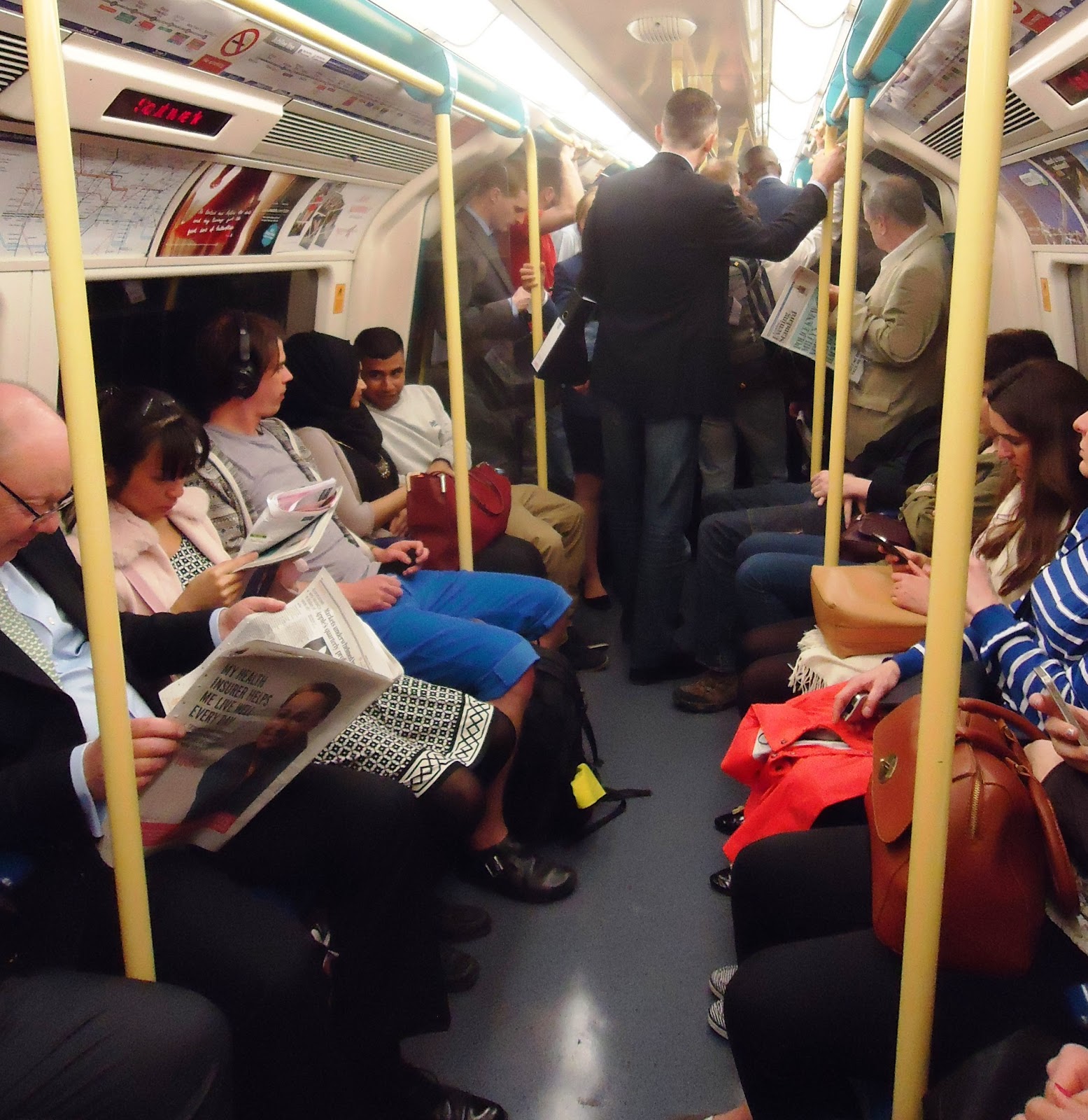
Passenger etiquette often demands “eyes down” and “avoid eye contact” (Photograph: Patrick Comerford)

Women began to make up staff shortages on the Underground during World War I. When Maida Vale station opened in 1915, it was entirely staffed by women.

Police reports estimate 300,000 people took shelter in Tube stations during the German bombing raids on London in 1917. A memorial at Baker Street commemorates 137 Metropolitan Line workers killed in World War I.
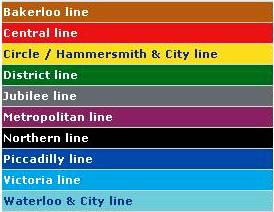
Finding the right line is a problem for anyone who is colour-blind

The Underground expanded rapidly in the 1930s. But this came to an abrupt halt with the outbreak of World War II. Within a few days, the Underground was used to evacuate 600,000 Londoners, mainly children and pregnant women, to the countryside.

During the war, signs at Underground stations warned passengers to carry their gas masks, and .posters warned them not to use the stations as air-raid shelters. However, when the East End suffered the first of many heavy bombing raids on 7 September 1940, there was a rush to the Underground stations.

Many got round the sheltering ban by buying cheap penny travel tickets and then refusing to leave the platforms. Trains continued to run throughout the Blitz, leading to crowded stations. Soon, about 177,000 people were sheltering in the Underground each night. A government U-turn on 8 October 1940 brought an end to the unenforceable ban on sheltering in the Tube.

Between September 1940 and May 1941, 198 people were killed when Tube shelters were hit directly by bombs. In one of the worst incidents, 64 people were killed. When Bank station was hit on 13 January 1941, 56 people were killed, but details were strictly censored. In the worst single incident on 3 March 1943, 173 people were crushed to death in a stairwell at Bethnal Green station – but not one bomb was dropped on London that night.

Maps and designs
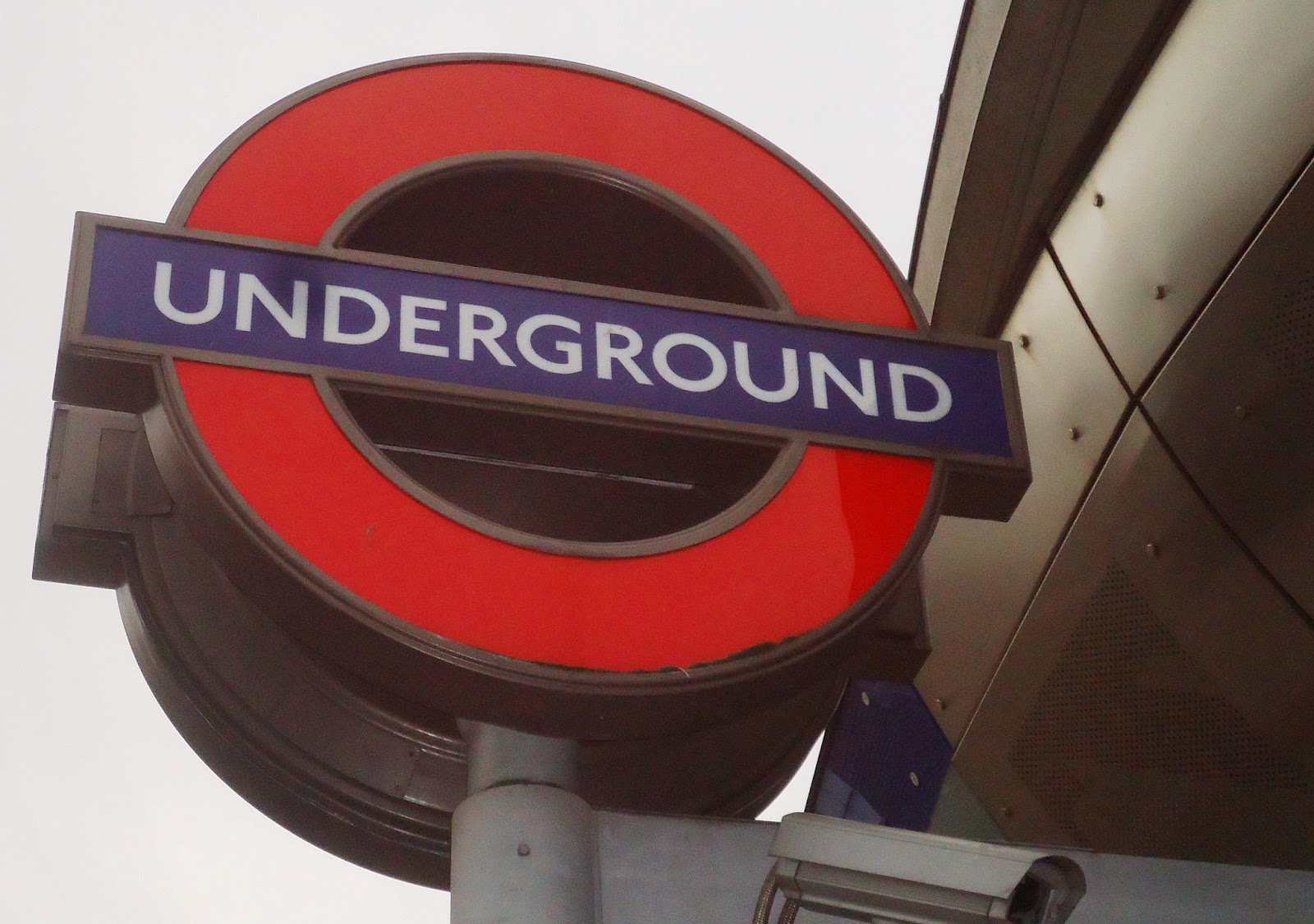
The Underground’s red circle logo first appeared in 1908 (Photograph: Patrick Comerford)

In the 1860s, there was only basic signage, with the station name and exit. The Underground’s red circle logo first appeared in 1908, although about 60 stations on the Metropolitan line continued to use a red diamond until the 1970s.

One of the first rail maps, produced by the District line in 1892, featured the slogan “Time Is Money.” The first free Underground map was published collaboratively in 1908 by companies running separate lines.

Harry Beck’s map of the Underground, first produced in 1931, was inspired by electrical circuit diagrams. He was paid 10 guineas (£10 10s) for his design. Beck’s map was received enthusiastically, and he remained involved with changes and updates for over 25 years. Eventually, he fell out with London Transport and his name was removed from the map in 1959. But his name reappeared on the map in the 1990s, when he was once again acknowledged as its designer.

In 2006, the London Underground map came second in a BBC competition to find the public’s favourite British design of the 20th century. The angular representation of the River Thames was briefly removed from the map in 2009, but was quickly replaced after a public outcry.

During the three-hour morning peak, the busiest Tube station is Waterloo, with 57,000 people moving through (Photograph: Patrick Comerford)

The Scottish sculptor Eduardo Paolozzi designed the mosaic murals at Tottenham Court Road station, which were completed in 1984. The ceramics on the City and South London Railway, now part of the Northern line, were inspired by the work of William Morris. Charles Holden based his design for Arnos Grove on Stockholm Public Library, while Gants Hill was inspired by the Moscow Metro.
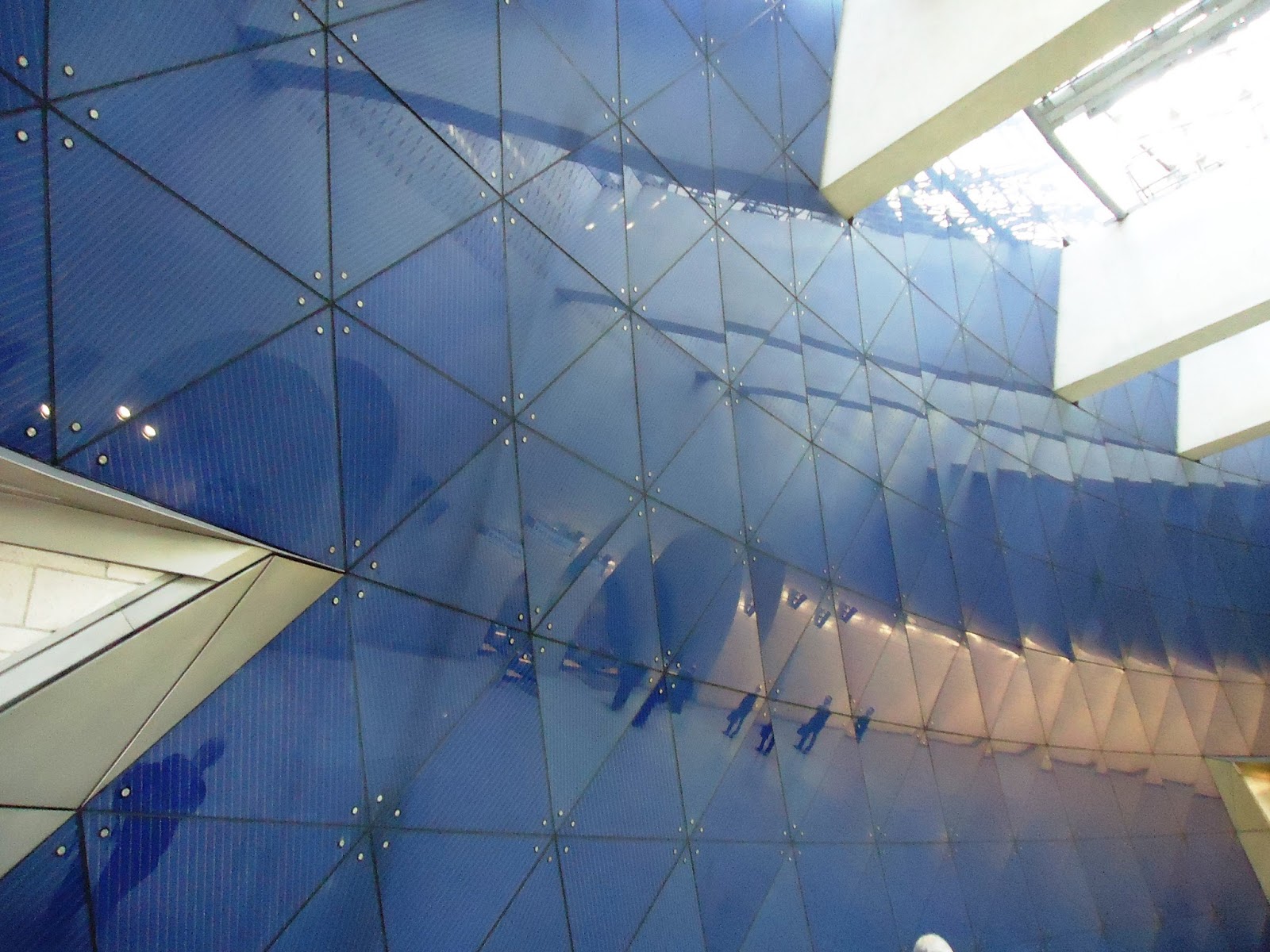
Southwark Station’s blue cone wall, built as part of the Jubilee line extension’s new generation of stations, was inspired by an 1816 stage set for Mozart’s ‘The Magic Flute’ (Photograph: Patrick Comerford)

The Victoria Line commissioned artists to produce original tile motifs for each station, including the seven trees that give Seven Sisters its name. All 46 stations designed by Leslie Green have distinctive tile patterns and all his stations – such as Covent Garden – were steel-clad to allow premises to be built on top of them.

Rush hours and busy hours
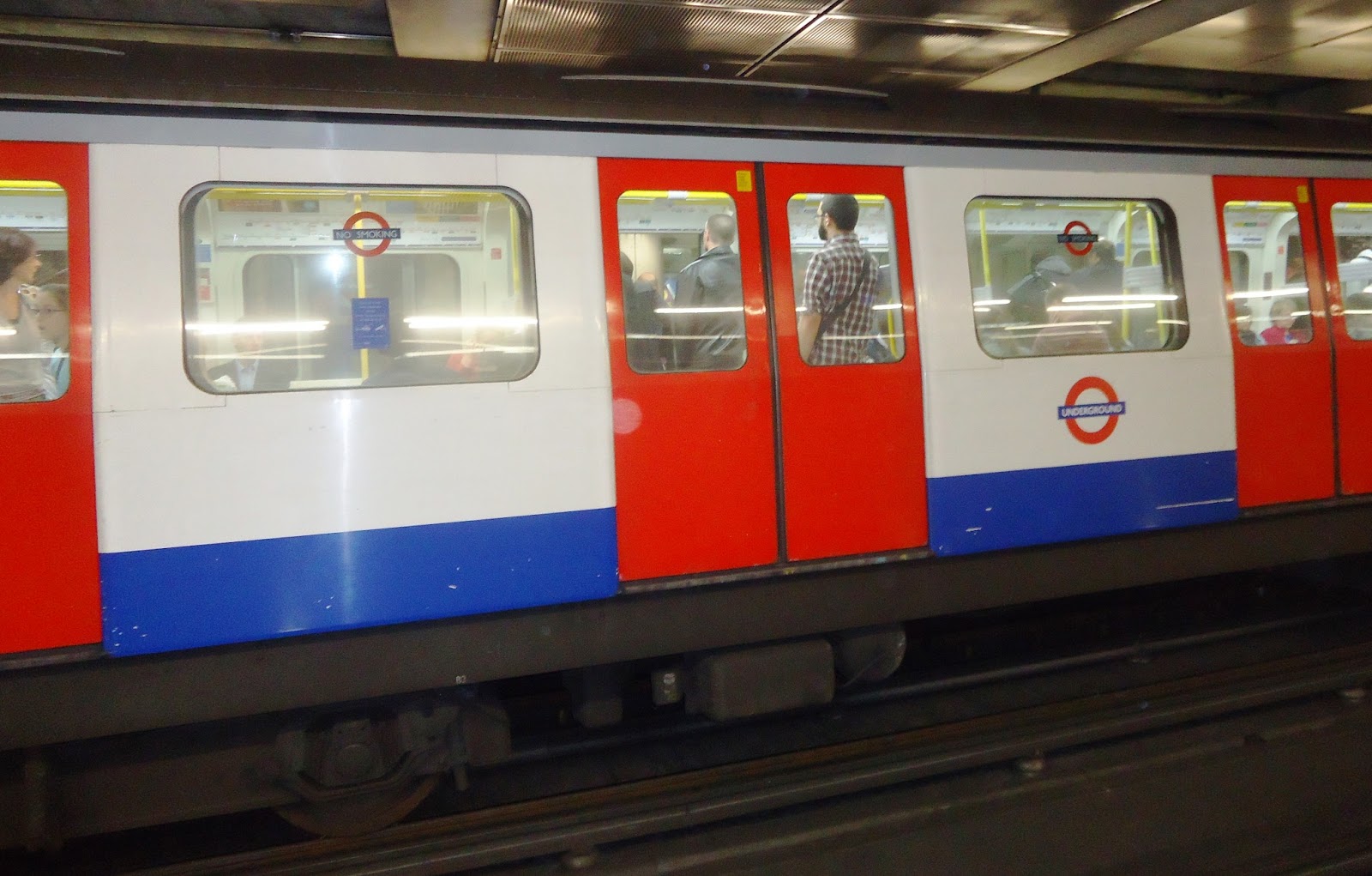
Due to a rise in graffiti, the silver tube trains were replaced in the 1990s with the red, white and blue ones seen today (Photograph: Patrick Comerford)

About 1.1 billion passengers now use the Underground each year. The busiest station is Waterloo, with 57,000 people passing through during the three-hour morning peak and 82 million passengers travelling through each year.
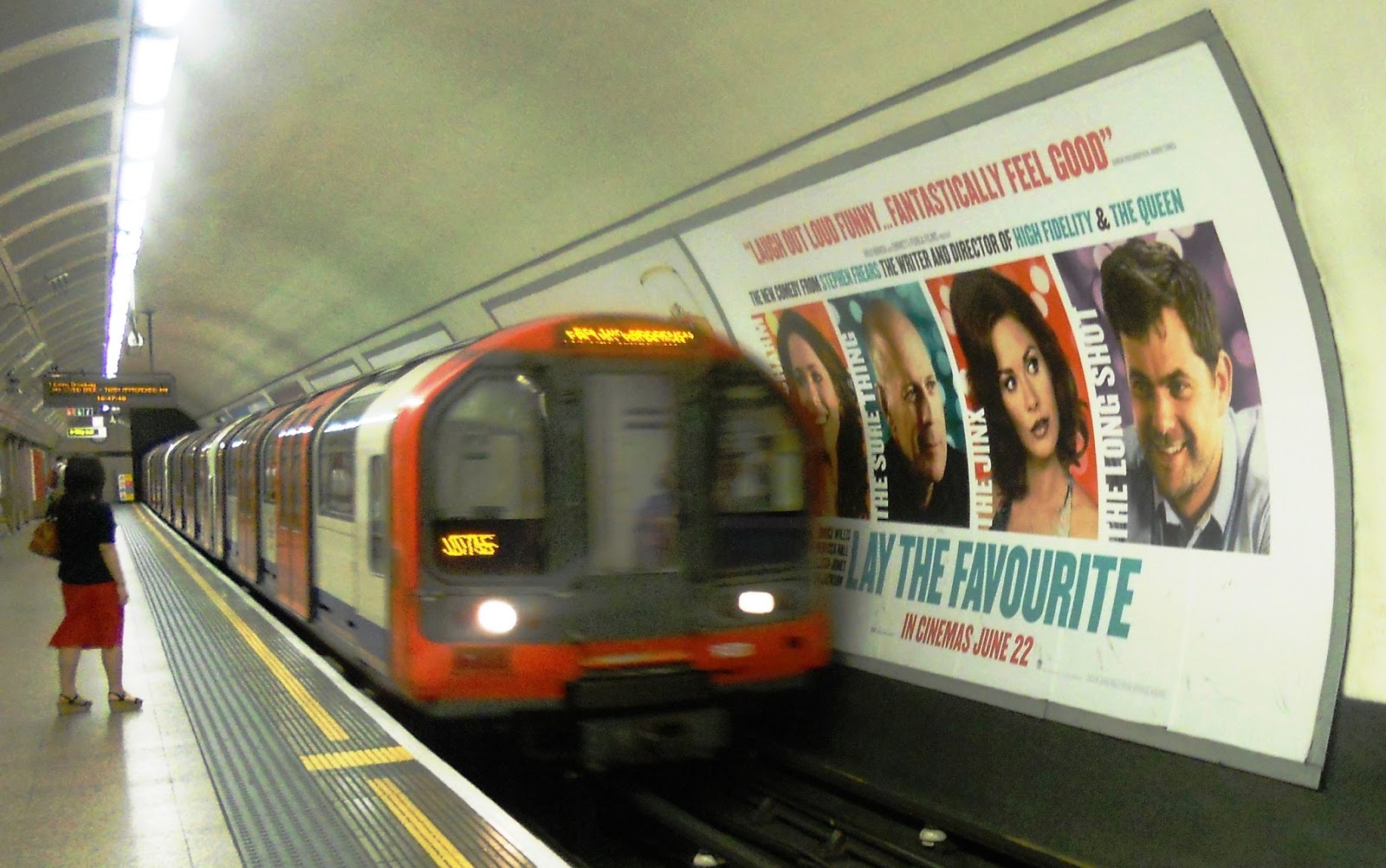
The average speed of a Tube train is 33 kph (Photograph: Patrick Comerford)

Each year, each Tube train travels 184,269 km, and the average speed is 33 kph. The longest distance between two stations is between Chesham and Chalfont and Latimer on the Metropolitan Line, which are 6.3 km apart. The shortest distance between two stations is from Leicester Square to Covent Garden on the Piccadilly Line, which are 300 metres apart. If you pay the full cash fare between Covent Garden and Leicester Square, a mere 0.16 miles, it works out at the equivalent of over £28 a mile.
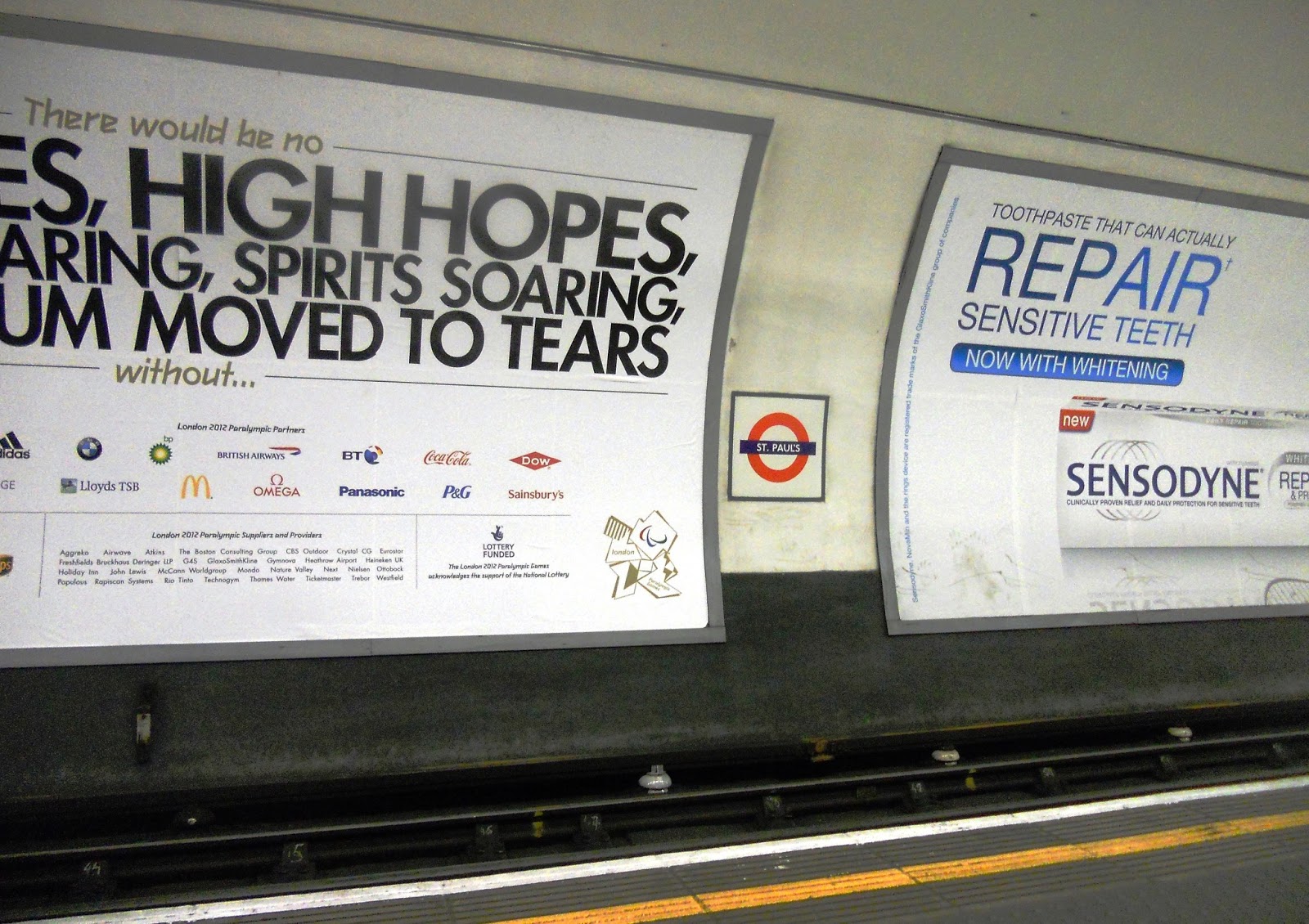
Advertising hoardings at Saint Paul’s Underground station (Photograph: Patrick Comerford)

The longest journey you can take without changing is 59.4 km from West Ruislip to Epping on the Central Line. The longest continuous tunnel, between East Finchley and Morden (via Bank), is 27.8 km long. The total number of stations in use today is 270; Waterloo station alone has 23 escalators, and Baker Street has 10 platforms.

In central London, trains cannot drive faster than 30-40mph because of the short distances between stations. But the Victoria Line can reach speeds of up to 50 mph because the stations are further apart. And the Metropolitan line has the fastest speeds, sometimes reaching over 60 mph.

‘Mind the Gap’
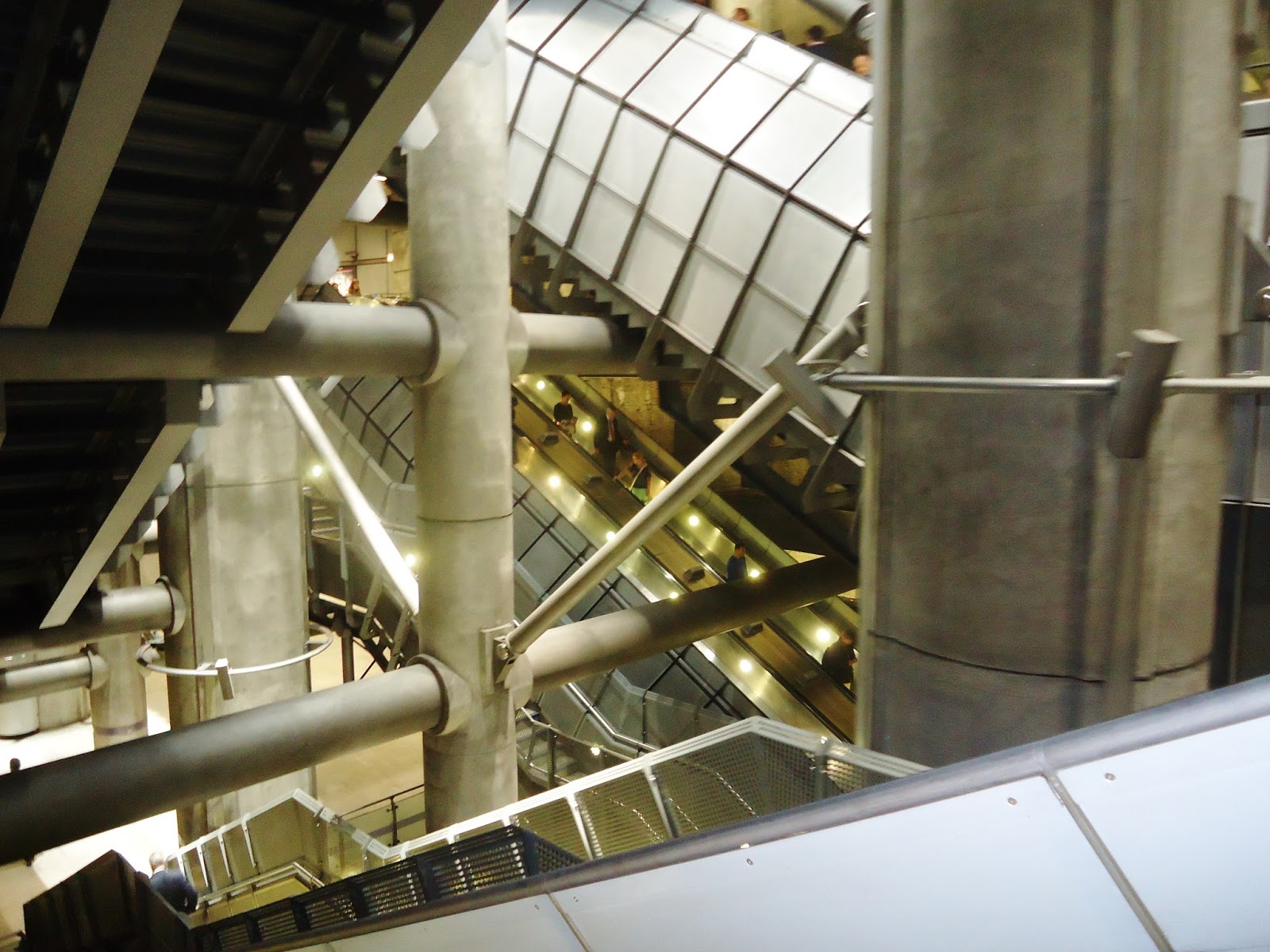
Rush-hour traffic and pressure can make it difficult to read maps and find your way (Photograph: Patrick Comerford)

But wherever you go this summer – underground or overground, slowly or at speed – always remember: “Mind the Gap.”

The original recording of “Mind the Gap” was made in 1968 featuring the voice of Peter Lodge. Most lines still use Peter Lodge’s recording, but others use a recording by voice artist Emma Clarke, and the Piccadilly Line uses the voice of Tim Bentinck, better known as David Archer from The Archers.

● Further reading: David Bownes, Oliver Green and Sam Mullins, Underground: How the Tube Shaped London (Allen Lane, £25); Andrew Martin, Underground Overground: A Passenger’s History of the Tube (Profile, £8.99); Mark Ovenden, London Underground by Design (Particular, £20).

Canon Patrick Comerford is Lecturer in Anglicanism and Liturgy, the Church of Ireland Theological Institute, and an Adjunct Assistant Professor, Trinity College Dublin. This essay was first published in the June 2013 editions of the Church Review (Dublin and Glendalough) and the Diocesan Magazine (Cashel and Ossory.
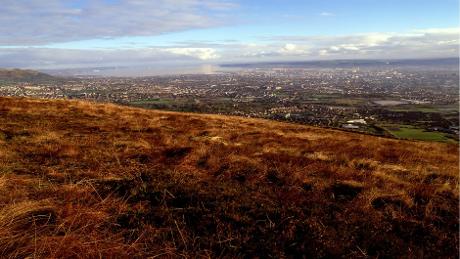
BLACK MOUNTAIN WALK

View from Black Mountain: Photo © National Trust

View from Black Mountain: Photo © National Trust

This morning I ventured towards Divis and the Black Mountain. I was on my way back from Belfast International Airport via Hannahstown at 6am and the sun was shining, so I thought it would be a good chance to look at the area now owned by the National Trust. The property contains the peaks of Divis Mountain, Black Mountain, Mount Gilbert and Armstrongs Hill, and also the headwaters of the Clady Water, Forth River, Ballygomartin River, Collin River and the Crumlin River. The landscape is home to a host of wildlife and there are walking trails along a variety of terrain: through heath, on stone tracks, along boardwalks and road surface.

However I was not properly prepared for hill walking so I spent half an hour or so on the road leading up towards the two mountains. Having reached Divis Lodge I turned back. The house and farm was the home of the Dobbin family until the 1950s. The whole site used to be owned by the Ministry of Defence and was out of bounds to the public for over fifty years. The communications centre on the top of Divis Mountain was used during the Cold War and later during the troubles. It was also used by the British Army as a training area. As I walked from the car park, I was on my own enjoying views across towards Lisburn and beyond to the Mourne mountains. The only other occupants were some cattle in a field. It was a beautiful start to the day.

I noticed that a walking festival will be taking place there in a fortnight’s time, organised by the North West Mountain Rescue Team to raise funds for the service. Routes of 10k and 20k are being offered on the day (Saturday June 15th).  There will also be a vintage tractor and vehicle extravaganza from 1pm to 3pm with the vehicles making their way to the top of Divis Mountain. More details can be found on the website of the Belfast Hills Partnership.

View from Divis Mountain: Belfast Hills Partnership

View from Divis Mountain: Belfast Hills Partnership

On a clear day Divis Mountain allows views of Belfast and Belfast Lough, south-west Scotland, the Isle of Man, Antrim Hills, the Mournes, Lough Neagh, Strangford Lough, the Sperrins, Donegal and mid-Ulster. My neighbour, an experienced hillwalker, has often told me about this beauty to be found on our doorstep. From our houses we can see the other side of Divis and White Mountain. I must now take the opportunity to explore further this scenic part of Belfast.

The City Council has produced a useful guide to the different paths. The Black Mountain route is 6km return and can be done in under two hours. The trek to Divis is a further 2.3km. A walk around the perimeter of the National Trust property takes around six hours. For a list of all walking routes in the city, see here.


CLARE & MARY ROSE

From time to time on my blog, I republish blogs from other people that have caught my attention. If you read my reports from Bristol earlier this year, you may have noticed my coverage of the SS Great Britain which was recovered from the Falklands and then brought back to Bristol for restoration. It is now a museum and it is well worth a visit if you are passing that way. I have still to visit the restored clipper Cutty Sark in the dry dock at Greenwich in London, but I did pass by that famous ship during a walk along the Thames in April last year.

The Mary Rose: Geoff Hunt painting

The Mary Rose: Geoff Hunt painting

My interest in today’s story of the Mary Rose developed because at the time the warship was salvaged from the Solent in October 1982, I was a senior journalist in RTÉ News in Dublin. A colleague from County Meath who worked with me on the television news desk turned out to be a distant relative of Sir George Carew, commander of the Mary Rose, who died when she sank at the entrance to Portsmouth harbour in 1545. The commander had just been created Vice Admiral of the fleet by Henry VIII. The Mary Rose will open as a museum tomorrow Friday May 31st in Portsmouth. The building cost £35m.

George Carew painting by Holbein

George Carew painting by Holbein

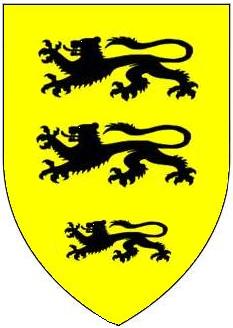
Carew Coat of Arms

Carew Coat of Arms

So here is the story of County Clare and the Mary Rose, as told by Irish Waterways History:

Clare and Mary Rose

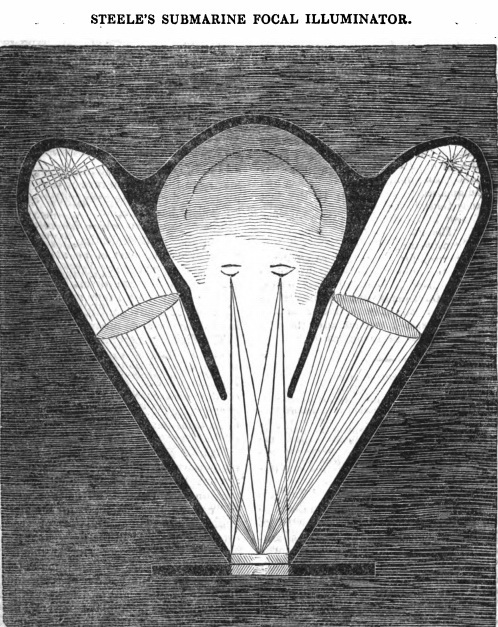
“A new museum dedicated to the Tudor warship Mary Rose will be opened in Portsmouth on 31 May 2013. Despite what the UK Independent says, the warship did not lie “undiscovered in the Solent until its exposed timbers were seen by divers in 1971″: the rather longer Guardian story points out that the Deane brothers dived on the wreck in the mid-nineteenth century. Charles Deane also worked on the recovery of the cargo of the Intrinsic, off the coast of Clare; he allowed Thomas Steele to wear his apparatus to descend on the wreck.

In September 1840, in the same issue that reported Mr Brunel’s rash wager of £1,000 that, when his Great Western Railway was finished, he could travel from Bristol to London in two hours [i], the Mechanics’ Magazine also reported that:-

‘Mr Steele, of the County Clare, in the prosecution of his new principle of submarine illumination of objects in dark and muddy water, has been this week down on the wreck in Mr Deane’s water-tight dress and diving helmet, making some observations and experiments’  [ii].

It may be, therefore, that it was a Clare man who cast the first light on the Mary Rose for almost three hundred years”.

From The Mechanics’ Magazine, Museum, Register, Journal, and Gazette No 867 Saturday March 21 1840

From The Mechanics’ Magazine, Museum, Register, Journal, and Gazette No 867 Sat. March 21 1840

[i] italics in the original

[ii] “Submarine Operations” in The Mechanics’ Magazine, Museum, Register, Journal, and Gazette No 893 Saturday September 19 1840

LOURDES RETURN

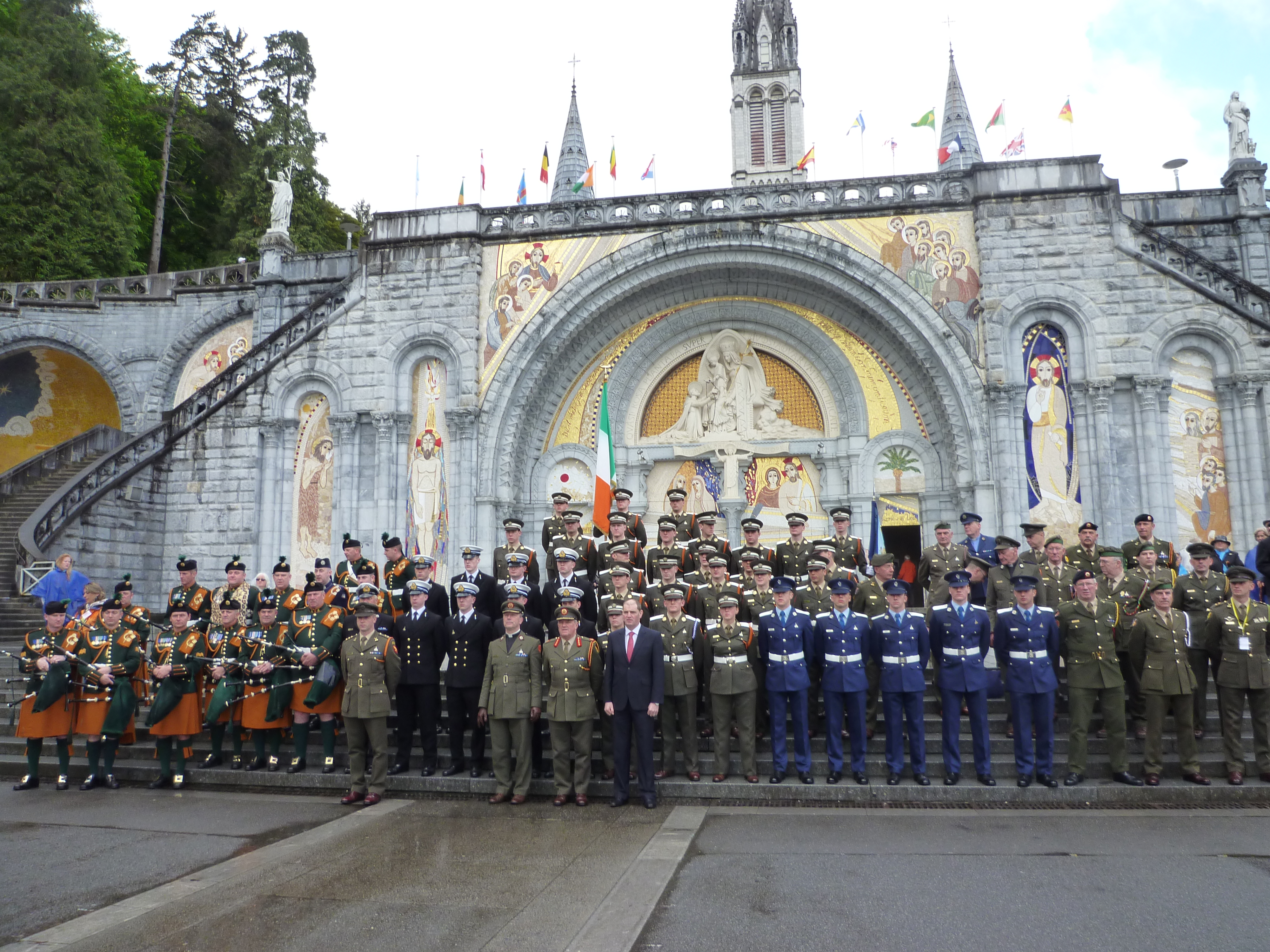
Defence Forces members on International Military Pilgrimage to Lourdes

Defence Forces members & Minister of State Paul Kehoe TD on International Military Pilgrimage to Lourdes

The 300-strong Irish contingent that took part in the 55th international military pilgrimage to Lourdes returned to Dublin this afternoon, having travelled on Wednesday to the famous shrine of Our Lady in the Pyrenees in southern France. Over 25,000 military personnel and their families and friends participated in the 2013 Pilgrimage. Since 1958, the shrine has seen soldiers from all over the world come in peace to venerate Mary. The tradition of the International Military Pilgrimage (IMP) began in 1958, after what was initially a regional then national pilgrimage was made international to recognise officially the many soldiers that had been arriving. The only glitch was a baggage handling delay at Lourdes-Tarbes airport, which meant that the departure of the two Dublin flights was two hours later than expected.

Air Corps cadets & chaplain Fr Gerry Carroll

Air Corps cadets & chaplain Fr Gerry Carroll

Along the way we met groups including young helpers from Ossory (Co.Kilkenny) and Raphoe (Co.Donegal) taking part in their diocesan pilgrimages. From England, there were groups from Middlesborough (staying in our hotel), Birmingham and Plymouth dioceses (staying in the hotel next door, where the UK contingent from the Royal Navy, RAF and British Army were based). The young people were a credit to their respective groups and in the case of the Defence Forces, the cadets from the 89th class at the Curragh Training Centre along with the Navy cadets from Haulbowline and Air Corps cadets from Baldonnell represented Ireland with distinction, along with the DF pipe band, who never seemed to go to bed and a group from the Civil Defence

Parading the Colours: Ireland with UK and Hungary

Parading the Colours: Ireland (Navy) with UK (RMAS) and Hungary

FERMANAGH AWAITS G8

Lough Erne Resort

Lough Erne Resort

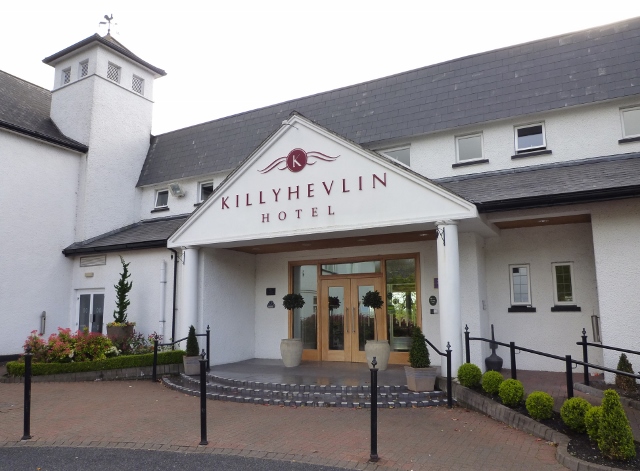
Fermanagh is preparing to host the G8 summit next month. The meeting of the heads of state of eight of the most powerful nations in the world will be held at the Lough Erne resort outside Enniskillen. Already arrangements are being made for a big influx of media personnel from all over the world. The Killyhevlin hotel in Enniskillen will serve as a media centre and indications are that it is booked up.

Killyhevlin Hotel, Enniskillen

Killyhevlin Hotel, Enniskillen

The BBC reports that the summit is expected to boost business in Northern Ireland by £40 million. Barclays Bank found almost 85% of businesses believe holding the summit in County Fermanagh will be good for the region. It said there was also longer-term potential to boost tourism, exports and foreign investment. A total of 213 telephone interviews were conducted with businesses in NI. The research was carried out by the Northern Ireland Centre for Economic Policy within the University of Ulster on behalf of Barclays. Across all sectors and geographically across Northern Ireland, two thirds of businesses expect the G8 Summit to have a positive or very positive effect on the economy. Businesses in the hospitality and tourism sector were the most positive about the summit (73%), though support was strong across all sectors with 69% of professional services supportive and 58% of manufacturers.

It is anticipated that demand for a total of 35,000 to 45,000 nights of accommodation could be generated in Northern Ireland as a result of the trips from the delegates, their entourages, security, international media and associated officials. The report from Barclays indicated that this could “feasibly generate” £5.5m to £7.5m for the tourist industry, predominantly in Fermanagh.

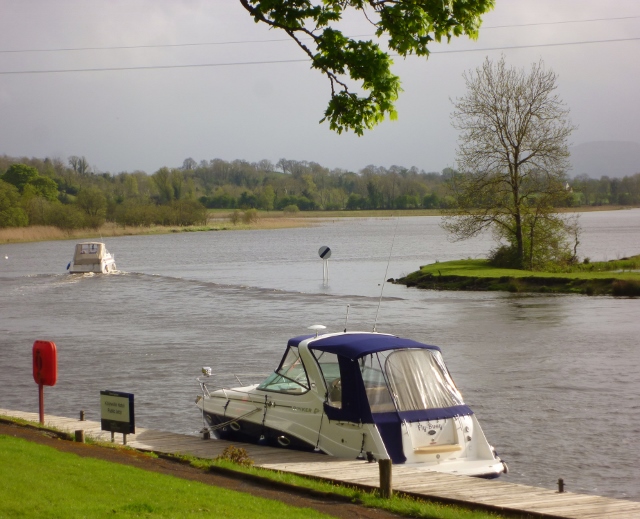
Lough Erne at Killyhevlin Hotel

Lough Erne at Killyhevlin Hotel

UNIONIST HISTORY & ROUTEMASTERS

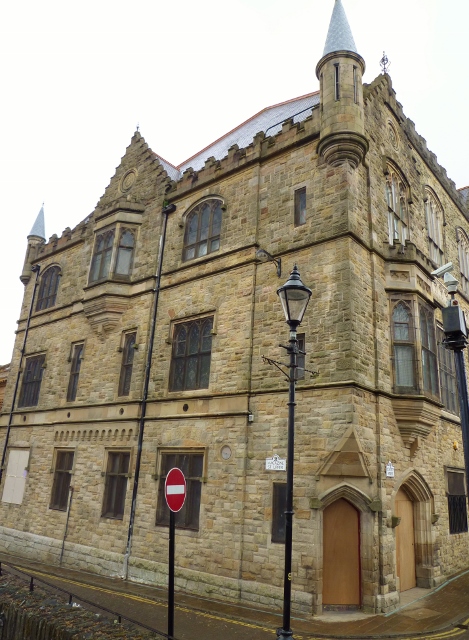
Apprentice Boys Hall, Londonderry

Apprentice Boys of Derry Hall

A day for studying unionist and Protestant history. First, another trip by train to Derry/Londonderry, the UK City of Culture. I reported in March on the re-opening of the railway line from Coleraine. This morning the train from Belfast was quite full, many people taking advantage of their 60+ (like me) or 65+ free travel passes, including the group of six other retired people I travelled with. On arrival at the Waterside the free shuttle bus was soon full to capacity, so we ended up walking in the direction of the former Ebrington Barracks site and then onto the Peace Bridge, which some were seeing for the first time.

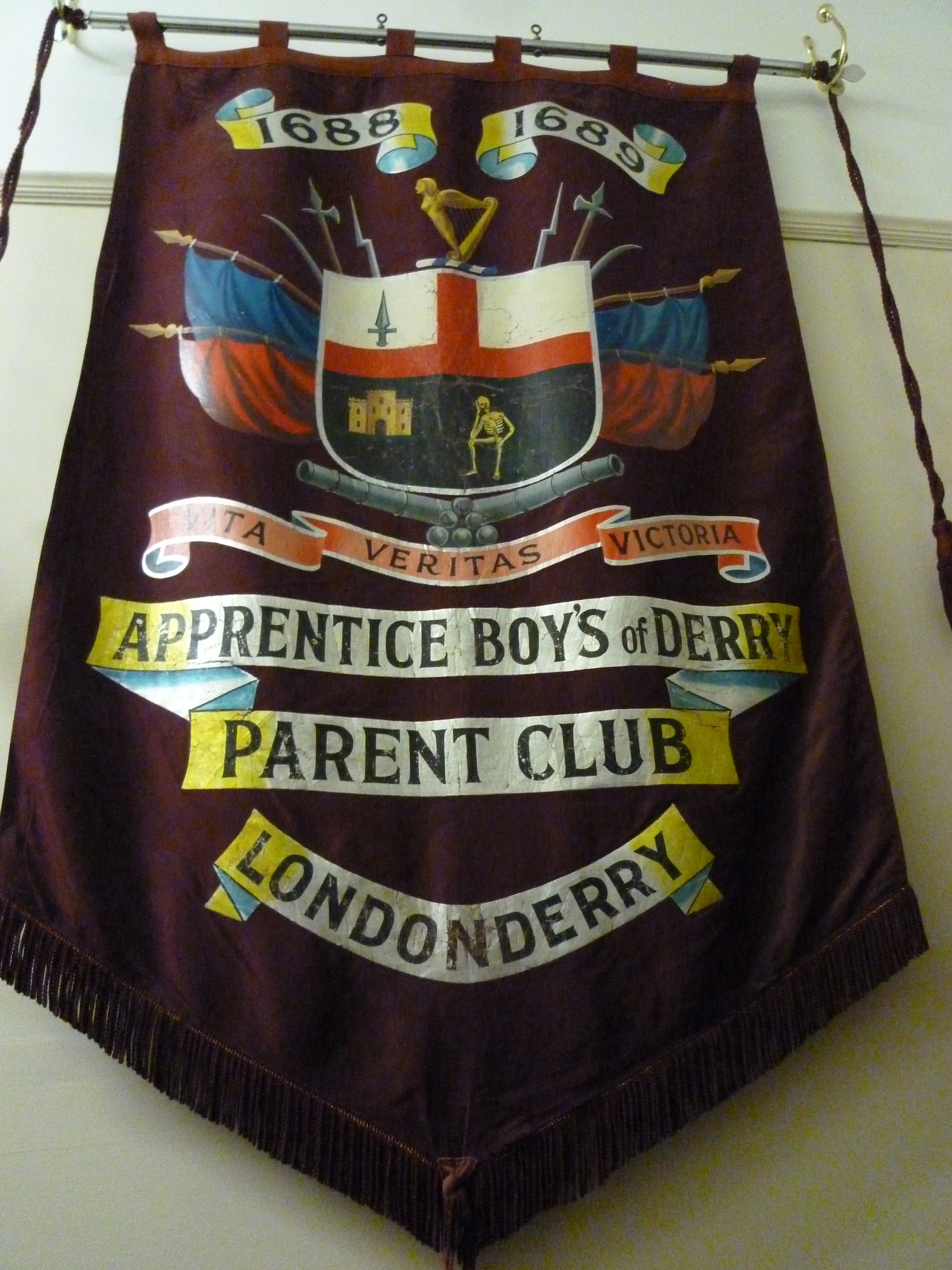
Apprentice Boys Banner

Apprentice Boys Banner

Stepping onto the City Walls at Magazine Gate beside the Guildhall, it was interesting to see that the iron fence security gates along this section had now been removed, a process that began a week ago. We walked as far as Society Street and our first stop was at the Apprentice Boys of Derry Hall, where we had arranged a tour of the premises. We were shown four short videos about the history of what was described as one of the largest historical and cultural groups in the UK and Ireland.

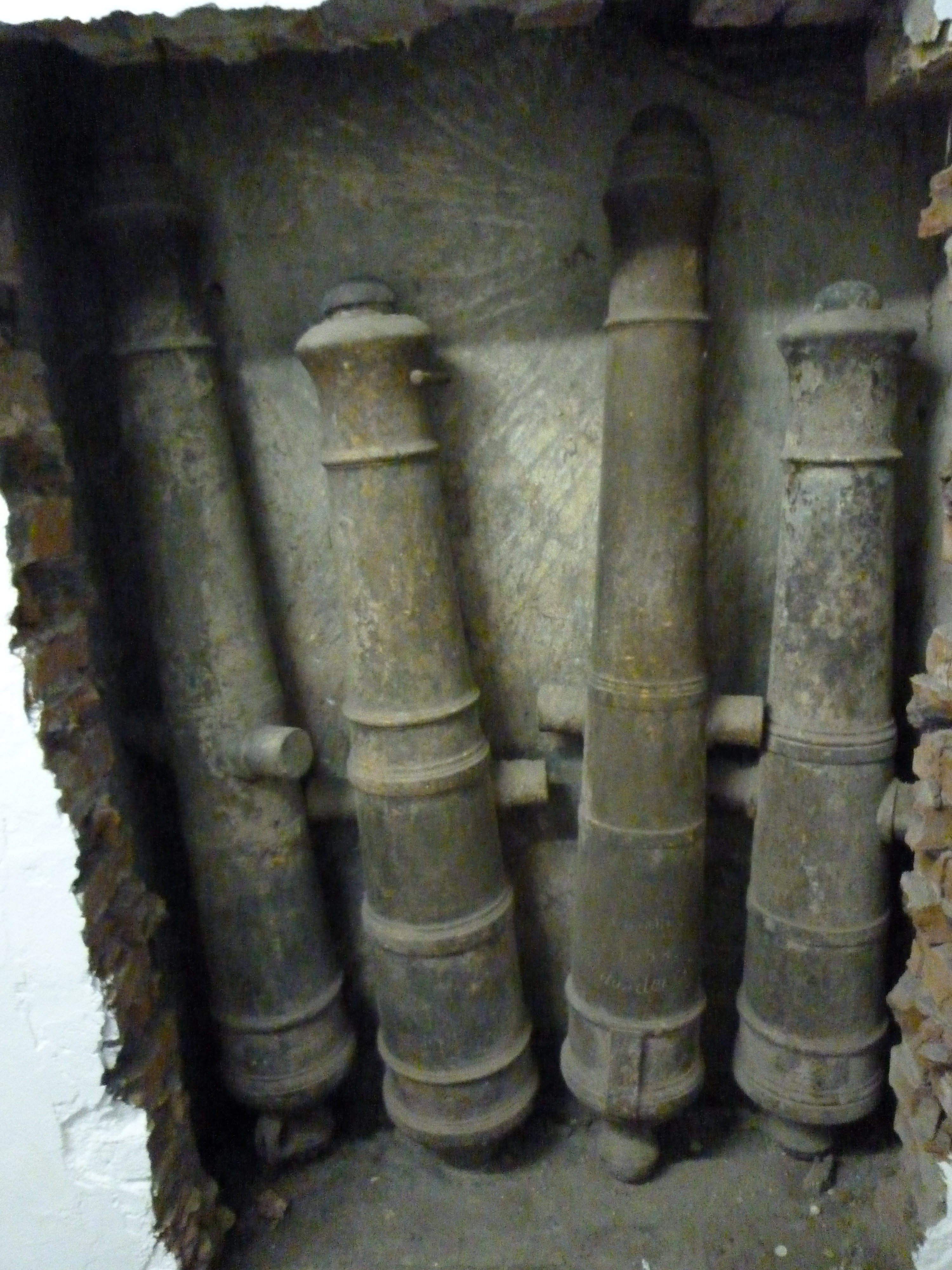
Four cannons found in basement of Apprentice Boys' Hall

Four cannons found in basement of Apprentice Boys’ Hall

There are many artefacts inside the building. In the basement, during recent renovation work, four cannons were found concealed behind a wall. There is no date on them. Many items are directly related to the organisation, going back to the Siege of Derry in July 1689, when thirteen apprentice boys shut the gates of the city against the oncoming army of the Catholic King James II of England and Ireland. The History of the Siege of Londonderry 1689, written in 1951 by Cecil Milligan, lists the 13 as: Henry Campsie, William Crookshanks, Robert Sherrard, Daniel Sherrard, Alexander  Irwin, James Steward, Roberet Morison, Alexander Cunningham, Samuel Hunt, James Spike, John Coningham, William Cairnes and Samuel Harvy, all of whom are remembered in various ways by the organisation.

Governor Lundy Effigy

Governor Lundy Effigy

It is hoped to open an extension to the museum within the next few weeks. It was interesting to see preparations already underway for making the huge effigy of Robert Lundy (Governor of Derry), regarded as a “traitor” for wishing to negotiate with King James during the Siege. The figure, stuffed with straw, will be set alight during the annual December celebrations marking the anniversary of the closing of the gates.  In August 1969, the Apprentice Boys’ parade around the walls of Derry sparked off three days of intensive rioting in the city, known as the Battle of the Bogside. The disturbances are widely seen as the start of the troubles in the North. But there is little about this period in either the videos or the displays. Admission to the exhibition costs £3 and tours should be booked with the museum in advance.

Routemaster bus in (London)Derry

Routemaster bus (RML2659) in (London)Derry

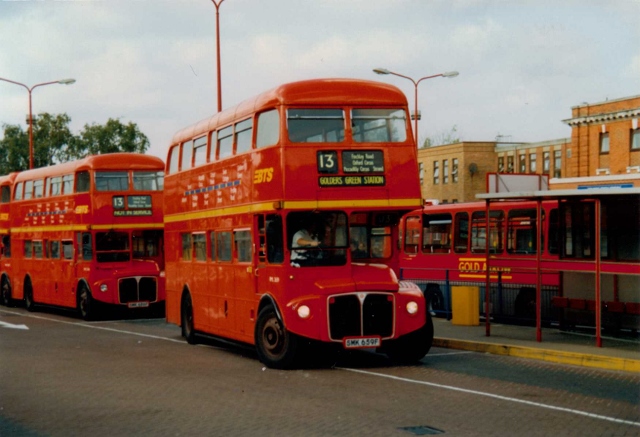
While walking through the centre of (London)Derry near the Diamond, the London link suddenly became very real when a familiar red Routemaster bus passed by on the tourist trail. The square windows in the middle of the upper and lower decks show that this was one of the elongated buses built by AEC at Park Royal, which could hold more passengers. They used the designation RML and based on the registration, the number for this bus (although it is no longer painted on the driver’s side) is 2659.

RML2659 at Golders Green: Photo ndl642m NonCommercial-NoDerivs 2.0 Generic Creative Commons Licence

RML2659 at Golders Green: Photo ndl642m NonCommercial-NoDerivs 2.0 Generic Creative Commons Licence

A quick check using a web search revealed that RML2659 registration number SMK659F was brought into service by London Transport in September 1967 and had seats for 72 passengers compared to 64 in the standard design. A further search shows it running on the number 38 route from Victoria to Leyton Green and based at Leyton garage in 1987. In 1995 the bus was operated by Borehamwood Transport on the number 13 route to Golders Green Station from Aldwych.

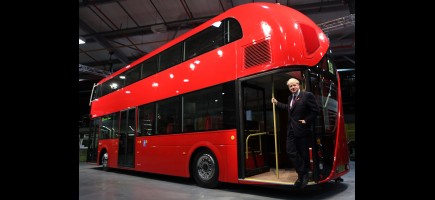
A friend has just reminded me that the new version of the Routemaster, the so-called “Boris bus” because Boris Johnson began the commissioning process as Mayor of London, has started rolling off the production line at the Wrightbus factory in Ballymena, a town we passed on the rail journey to Derry. A few vehicles each week are being delivered to London. The County Antrim company won a contract worth £180m to supply 600 of the vehicles to Transport for London over the next three years, which works out at £300,000 per bus. If you are driving along the M2 motorway you might spot some of the distinctively coloured vehicles being driven from Ballymena towards Belfast for the ferry to Britain.

Route 24, which Metroline operates between Pimlico and Hampstead Heath, will become the first to operate exclusively with new bus for London vehicles starting on Saturday 22nd June. It runs 24 hours a day from Hampstead Heath to Pimlico, via Camden, Trafalgar Square, Parliament Square and Victoria. During peak hours, 27 of the new buses (and five spares)will be in passenger service to carry the 28,000 people who use the route daily. After route 24, another route will be converted in the autumn.  In total around 90 new buses will be delivered to TfL in 2013.

New Routemasters leaving Wrightbus

New Routemasters leaving Wrightbus

The 600 buses represent a 200 per cent increase in the current hybrid bus fleet which is set to grow by a further 180 vehicles already on order and boosted by a commitment to deliver 600 conventional hybrids over the next three years.  When the final batch of new bus for London vehicles is delivered in 2016 more than 1,600 hybrid buses (representing around 20 per cent of London’s 8,500 strong bus fleet) will be in service on the streets of London.

Many components of the new bus, including engines, chassis, superstructure and seats, are manufactured in the UK.  The order of components from companies across the UK will also further stimulate the economy. The order represents the largest order of hybrid buses ever placed in Europe and will deliver significant environmental benefits, reducing CO2 emissions in the capital by capital by almost 20,000 tonnes a year. Transport for London has confirmed that independent emission testing of a prototype vehicle has shown that this is the cleanest and greenest bus of its type anywhere in the world.

Boris Johnson on a new Routemaster bus (Photo: London.gov.uk)

Boris Johnson on a new Routemaster bus (Photo: London.gov.uk)

The Mayor of London, Boris Johnson, said: “I am delighted that our first gleaming new buses have driven off the production line, through the gates of Wrightbus and are now London-bound.  These fabulous machines meld the very best in design, engineering and green engine technology.  I believe they will be hugely popular with passengers and they will be joined by hundreds more of their brethren in the coming years.”

Boris must be very interested in these buses because on Friday 10th May he returned to Northern Ireland to open a new plant in Antrim where the chassis of the vehicles is produced. Forty people are currently employed there but the BBC reports this is expected to increase to ninety. Boris also visited the main Wrightbus plant in Ballymena.

Update: On Saturday June 22nd, the first of the “Boris buses” entered service on route 24.

HSS STENA VOYAGER

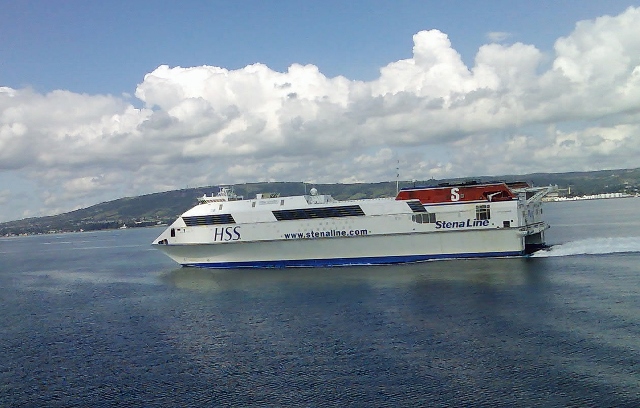
Stena HSS craft in Belfast Lough

Stena HSS craft in Belfast Lough

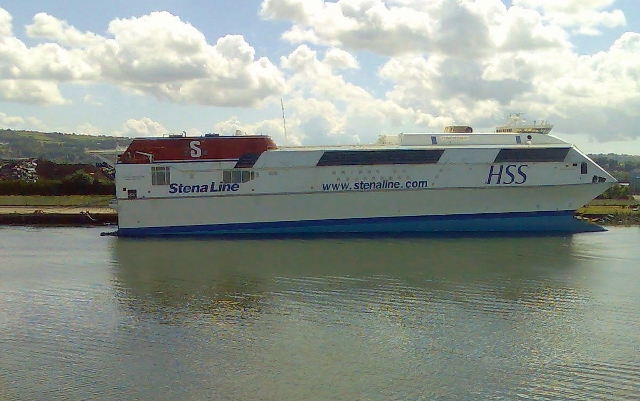
Built to compete with air travel on the short hop across the North Channel, the high-speed craft introduced by Stena Line in 1996 could do the the trip from Belfast to Stranraer in 85 minutes. But rising fuel costs meant a slower speed to reduce oil consumption and a journey time of two hours. The wash created by the craft entering Belfast Lough also caused problems for those walking along the shoreline in places like Holywood, Co.Down. ‘Stena Voyager’ and her sisters ‘Stena Explorer’ and ‘Stena Discovery’ took much of their technology from the world of aviation. They were described as being to the ferry industry what the jet plane was to aviation in the era of propeller aircraft. Now, preparations are being made for the departure from Belfast of the HSS ‘Stena Voyager’ on a one-way trip to the recycling yard in Sweden. The final journey was meant to take place this afternoon but the BBC (NI) reports it has been delayed until the weekend. The operation went ahead on Sunday (May 5th) and the vessel is now being towed away for “upphuggning” (that’s what the Swedish version is as you can see here). Sounds much nicer than being scrapped!

The vessels are each powered by the maritime versions of four GE Aviation gas turbines, fuelled by a light diesel oil with low sulphur content.  They have four Kamewa waterjets for propulsion. The HSS ferries were designed to allow quick turnarounds at port. Vehicles could be loaded via two of the four stern doors and park in a “U” configuration. When disembarking, vehicles drove straight off through the other two doors. When the HSS started operating in 1996, oil was just $18 a barrel. Fuel costs rose by 600% since the introduction of the ‘Stena Voyager’ and consequently slower running became the norm. In November 2011, the Voyager was withdrawn from service. With the earlier sale of the HSS ‘Stena Discovery’ to Venezuela, this leaves the ‘Stena Explorer’ as the remaining craft in service. Her deployment out of Holyhead is reduced to just one round trip a day, down from a peak of five, on a seasonal basis. The service to Dun Laoghaire will run until Tuesday September 10th and the crossing time is two and a quarter hours.

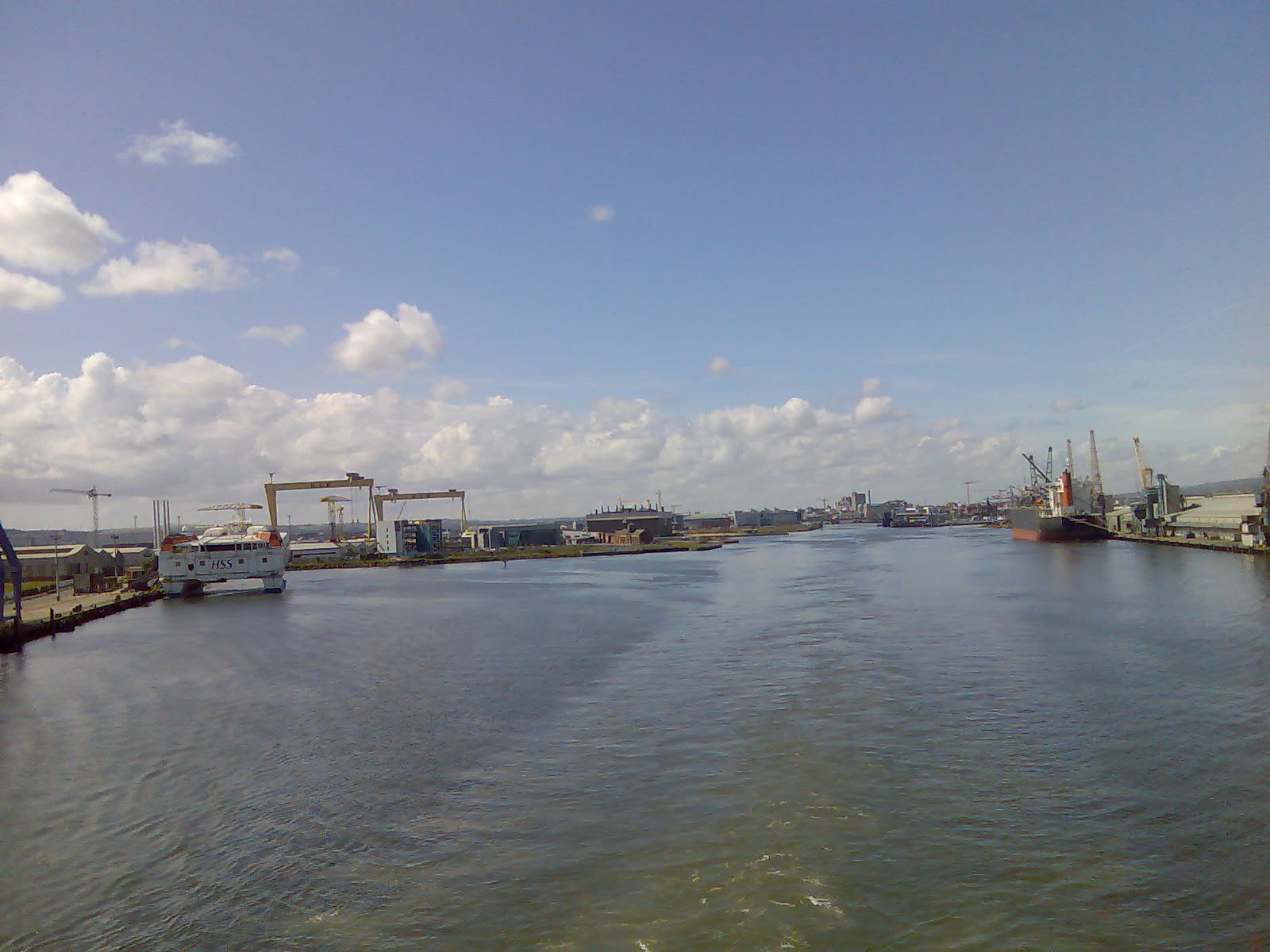
Belfast Port

Belfast Port

When the Stena Voyager was first introduced, the ferry was unique in its class and since its first sailing it carried over 17 million passengers and made over 45,000 sailings between Northern Ireland and Scotland. When commissioned by Stena Line, the HSS series of three ships, including the Stena Voyager, helped to revolutionise the look of the ferry industry. With its top speed of 40 knots, a high quality onboard travel experience for 1,500 passengers and its freight capacity of 375 vehicles, the HSS became an instant hit with customers. I used it on a number of occasions and found it very comfortable. In recent years, it was also fitted with wifi, which was an added bonus.

Stena Line’s Chief Operating Officer Michael McGrath said whilst the HSS class was a unique and highly innovative development, unfortunately the spiralling costs of operating the Stena Voyager had become all too high. “When the Voyager was first put into service fuel was approximately $20 per barrel and now the price is around $110 dollar, for a fuel hungry vessel this is simply untenable“, he said. “We live in different times now and we have to invest in more fuel efficient services for our freight and travel passengers. As a result we have now introduced two Superfast ferries on the service between Northern Ireland and Scotland and have constructed new ports in both Cairnryan and Belfast to give our customers one of the best ferry experiences on the Irish Sea.”

Stena HSS Craft in Belfast Port

Stena HSS Craft at Queen’s Island, Belfast

The Stena Voyager is being moved to the Öresundsvarvet shipyard in Landskrona, Sweden, where she will be recycled by Stena Line’s sister company, Stena Recycling. All of the Voyager’s various components will be recycled, as far as possible, helping the company to maintain its environmentally responsible reputation. Staffan Persson, MD Stena Recycling, said this would be a unique and interesting project. “There are many different types of material to recycle, and this will be done in several stages. The project requires highly experienced personnel and efficient recycling processes, which we possess. Recycling the large quantities of aluminium in the Stena Voyager will save up to 150 metric tonnes of carbon dioxide and the metal can be reused in the form of car parts or furniture for example“, he said.

The Stena Voyager was designed by another company in the Stena Sphere Group, Stena Teknik and at the time was one of the most revolutionary designed and constructed ships in the world.

CLOGHER VALLEY RAILWAY

CVR train in Main St Caledon (TG4 photo)

CVR train in Main St Caledon (TG4 photo)

The picture shows a train from the Clogher Valley Railway in the Main Street of the border village of Caledon, County Tyrone. In the middle you can see the clock tower of the courthouse. The train is number 6, called Erne.  It was built by Sharp, Stewart No. 3374 of 1887;  0-4-2 tank. It was in service until the railway closed on December 31st 1941 and was scrapped the following year.  The other engines were Caledon (1), Errigal (2), Blackwater (3), Fury (4), Colebrooke (5) and Blessingbourne (7), built by Hudswell, Clarke & co.

Jack Johnston

Jack Johnston

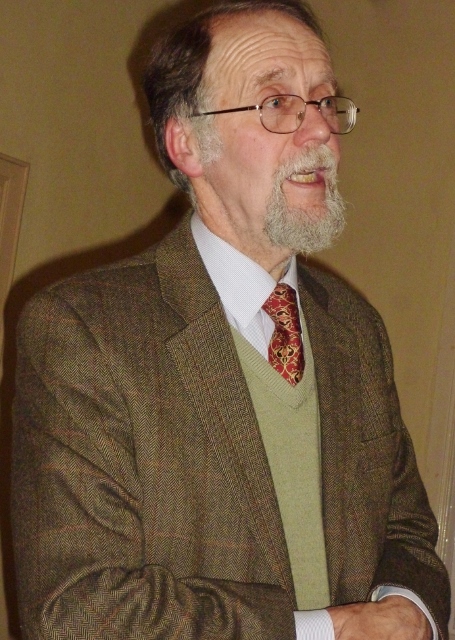
The story of the railway was told at the restored Caledon courthouse this evening by Jack Johnston, who has written extensively about the history of the Clogher Valley. He illustrated the talk with slides, many of them black and white pictures of the operation of the railway which had been taken in the last century. Jack is also President of the William Carleton Society, one of five groups along with Caledon Regeneration Partnership, Donaghmore Historical Society, Killeeshil and Clonaneese Historical Society and South Lough Neagh Regeneration Association taking part in the EU Peace III-funded “Shared History, Shared Future” project.

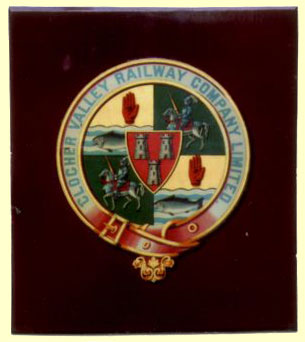
CVR Coat of Arms

CVR Coat of Arms

The 3ft gauge Clogher Valley Tramway was incorporated on 26th May 1884, the second project under the terms of the 1883 Act.  It opened for traffic on 2nd May 1887 linking Tynan in County Armagh and Maguiresbridge in County Fermanagh, both on the broad gauge Great Northern Railway, a distance of 37 miles.  The route covered the Clogher Valley in County Tyrone serving the towns of Caledon, Aughnacloy, Ballygawley, Augher, Clogher and Fivemiletown.  The railway followed public roads for much of its length and ran down the main streets of Caledon and Fivemiletown.

The railway had a dismal financial performance throughout its lifetime, belying the glowing picture of returns painted in its prospectus.  Nevertheless the Company had extremely ambitious plans for expansion aimed at providing access to the port of Newry and connections with the Cavan and Leitrim line.  None came to fruition however and the CVR remained a local line.

The Clogher Valley Railway lay within the six counties of Northern Ireland when partition occurred in 1922.  The new government in Belfast recommended the takeover of the CVR by the broad gauge Great Northern Railway.  The GNR refused to do this and the CVR retained its independence.  In 1927 however the directors were replaced by a Committee of Management appointed by Tyrone and Fermanagh county councils.

Clogher Valley Railway (TG4 picture)

Clogher Valley Railway (TG4 picture)

The Committee did much to revitalise the line with more and speedier services.  In 1932 a pioneering articulated passenger diesel railcar built by Walkers of Wigan was delivered, along with a diesel tractor unit which could tow a coach or a few wagons.  These were successful in cutting costs and speeding up the service but could only postpone the inevitable end of the basically uneconomic line. For almost all of its existence the railway made a loss and it needed a subsidy from local ratepayers. The greatest profit ever made by the company was in 1904, only £791.

Plaque on ceremonial wheelbarrow: cutting first sod in 1885.

Plaque on ceremonial wheelbarrow: cutting first sod in 1885.

It was around this time that my great-grandfather John McCann J.P., an auctioneer in Aughnacloy, became a director of the railway. He served on the board for a number of years, under the chairmanship of Hugh de Fellenberg Montgomery of Blessingbourne, Fivemiletown, I still have a season ticket belonging to him.

CHATHAM DOCKYARD

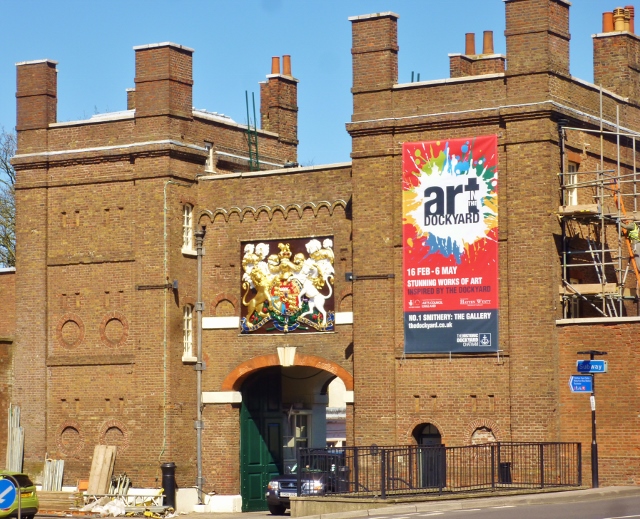
Chatham Historic Dockyard

Chatham Historic Dockyard

After leaving Rochester my walk brought me to nearby Chatham and one of the entrances to the historic dockyard. Unfortunately I did not have time for a visit and will have to return again at some stage. This yard established as a royal dockyard by Elizabeth I in 1567 provided some of the most important ships for the Royal Navy during its 410 years in operation, until its closure in 1984. At its height it employed over 10,000 on a 400 acre site, which is now run as a museum.

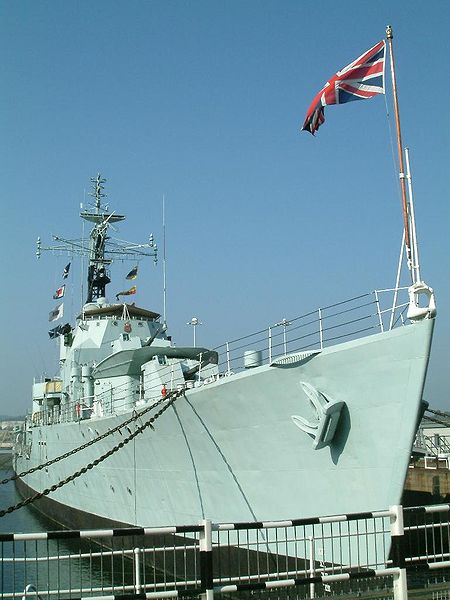
HMS Cavalier (Commons Wikimedia)

HMS Cavalier (Commons Wikimedia)

HMS Cavalier was the Royal Navy’s last operational Second World War destroyer and is now preserved at Chatham as a memorial to the 143 British destroyers and over 11,000 men lost at sea during the war.  Built in 1944 at Samuel White’s Isle of Wight yard, Cavalier served during the war in the Arctic and the Western Approaches before joining the British Pacific Fleet as the war came to a close. Refitted and modernized in 1957 she continued to play an active role as part of the Royal Navy’s Far East and Home fleets until she was decommissioned at Chatham in 1972.

The Victorian sloop HMS Gannet is also preserved there. Built on the River Medway in 1878, the ship recently underwent a £3m restoration. In a third dry dock you can take a tour through a submarine. HM Submarine Ocelot was the last warship built for the Royal Navy at Chatham Dockyard. An ‘O’ Class diesel electric submarine, she was launched in 1962 and saw service with Royal Navy throughout the height of the Cold War until she paid off in 1991.  A normal sized crew would consist of 69 submariners, but she could carry a maximum of 80.

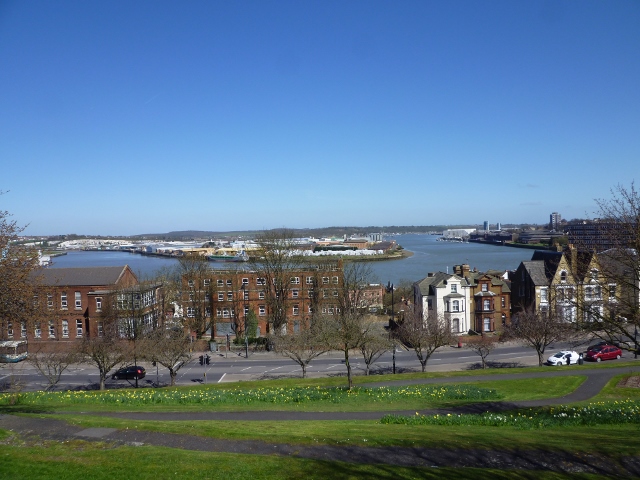
River Medway near Chatham

River Medway near Chatham

The dockyard also served as a film set for the BBC series “Call the Midwife”, when it was transformed into Polar Docks in London in the 1950s. Tours of the site are available. Close by near the bus station is the office of BBC Radio Kent.

ROCHESTER

Rochester Castle

Rochester Castle

Walking in Kent along the River Medway from Strood yesterday on our way to Gillingham, we entered the city of Rochester. The Castle dominated the skyline. The 12th Century keep (stone tower) is one of the best preserved in England or France. It was strategically positioned to prevent an invasion of the South-East coast in the medieval period. Beside it is the impressive Cathedral, confirming its status as a City. The bishopric is the second oldest in England after Canterbury.

Rochester Cathedral

Rochester Cathedral

Rochester is also associated with Charles Dickens, who lived nearby in the village of Higham at Gads Hill Place. There is a Dickens Centre devoted to his life and works. The writer had wished to be buried in the grounds of the Cathedral, but was instead interred at Poet’s Corner at Westminster Abbey in London.

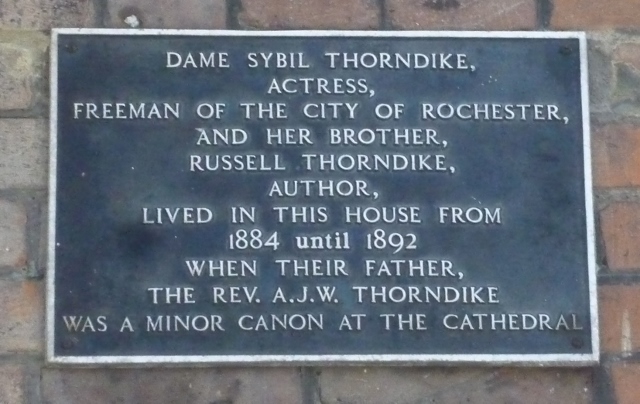
Another famous resident was the actress Dame Sybil Thorndike (1882-1976). As a young girl, she and her brother, the author Russell Thorndike, lived for eight years in one of the houses at Minor Canon Row when their father was a Minor Canon at Rochester Cathedral.

Plaque marks the house

Plaque at house

The house adjacent to Prior’s Gate is part of a terrace from the early Georgian period. If you would like to live there and have £850,000 to spare, you might be interested in the end of terrace house, the interior of which you can see on the Jackson-Stops page.

Thorndike house

Thorndike house