PRESS FREEDOM DAY

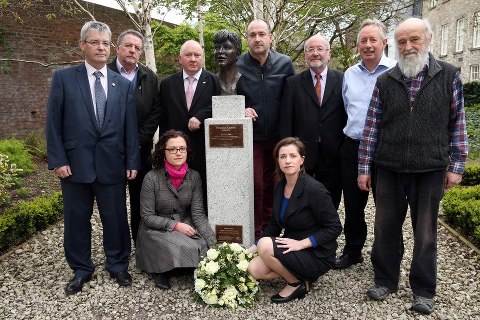
Wreath laid at Veronica Guerin statue

Wreath laid at Veronica Guerin statue

Representatives of journalists in Ireland have been marking world press freedom day. In Dublin the President of the National Union of Journalists Barry McCall demanded action to protect media plurality across Europe. He joined senior NUJ and Amnesty International Ireland figures in laying a wreath at the Veronica Guerin statue in Dublin Castle in memory of all the journalists who have been killed in the course of their work. He said: “It is our duty to ensure that each one of those journalists is remembered. Here in Ireland we know the pain felt by the murders of Martin O’Hagan and Veronica Guerin, both NUJ members committed to the highest principles of journalism. We salute those who have died in the cause of the truth. We also need to protect our ability to communicate the truth on a global basis and across all platforms in the future.”
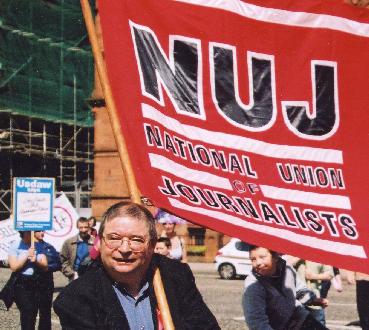
Martin O'Hagan at Belfast May Day March:            Photo © Kevin Cooper

Martin O’Hagan at Belfast May Day March:                          Photo © Kevin Cooper

The International Federation of Journalists (IFJ) who will hold their triennial Congress at Dublin Castle next month and the NUJ have also written to the embassies of the four countries in the world with the highest numbers of imprisoned journalists to demand their release. Signed by IFJ President Jim Boumelha the letters have been sent to the embassies of China, Iran, Turkey and Eritrea, to express the IFJ’s concern about the lack of press freedom in these countries, where journalists are routinely detained in violation of  their fundamental freedoms and human rights. As a sign of unity and solidarity, the IFJ is also calling on its affiliates to send similar letters to the embassies of the same countries in their regions. General Secretary Michelle Stanistreet has written on behalf of the NUJ.

This year the IFJ is marking world press freedom day by focusing on the issue of journalist safety and journalists imprisoned around the world. This reflects the ongoing concern over the numbers of our colleagues who continue to languish in prisons in many countries as a result of their profession. In Iran, according to the Association of Iranian Journalists (AoIJ), at least 24 journalists are currently in prison on charges of allegedly violating Iranian laws. In Turkey, the Turkish Union of Journalists, estimates that at least 66 journalists are currently in prison, awaiting trial on charges of allegedly isolating the Turkish penal code or anti-terror laws. The European Federation of Journalists is running a campaign with the Turkish Union of Journalists to ‘Set Journalists Free in Turkey’. In Eritrea, according to reliable sources, at least 18 journalists have been detained without charges since the authorities imposed a ban on independent media in September 2001. In China, it was reported in 2012 that potentially over 30 journalists were imprisoned, awaiting trial on charges of allegedly violating the Chinese penal code or anti-terror laws.

At a meeting of Dublin branch in Liberty Hall the NUJ President Barry McCall called for public support for the European Citizens Initiative which calls on the European Commission to bring forward measures to protect media pluralism and press freedom. Mr McCall said: “It is standard practice for governments and competition authorities to intervene when a firm becomes dominant in any sector. But the media industry is even more sensitive to such dominance as with it comes potentially immense political power and influence. This is why different standards and thresholds must be applied to this bulwark of democracy and why the NUJ is supporting the European Citizens’ Initiative aimed at gathering a million signatures to a petition calling on the European Commission to bring forward to protect media pluralism and press freedom. We need 9,000 signatures from Ireland to play our part in this critically important initiative. The NUJ will be campaigning to get its own members to sign up to the petition and we are calling on all trade unions, political parties, and the Irish people generally to get behind it so that we can prevent abuses of media power in this country in future.”

Irish Executive Council Cathaoirleach Gerry Curran told the branch that media freedom involved taking a stand in defence of journalism at home and abroad. Highlighting the fact that the NUJ will host the IFJ World Congress in Dublin next month he said the international focus on Ireland would give the NUJ a special role in highlighting the abuse of journalists throughout the world. NUJ Irish secretary Séamus Dooley joined Amnesty International Ireland in calling for the release of journalists like Ali Mahmoud Othman who are detained in Syria. Noeleen Hartigan, Programmes Director of Amnesty International Ireland, said: “Syria is now the world’s most dangerous place to be a journalist. Scores of journalists have been detained, tortured or killed over the last two years. Others, like Ali Mahmoud Othman are detained in secret locations. Together with the NUJ we are today calling for the release of all journalists detained solely for their work to tell the world what is happening in Syria today.”

Adrián Silva Moreno

Adrián Silva Moreno: Photo Proyecto Impunidad

In 2012, 84 journalists in 25 countries died while covering the news. On May 13, their names will be added to the Journalists’ Memorial at the Newseum in Washington DC. In Mexico, Adrián Silva Moreno, a freelance journalist and contributor to the newspaper Puntual, was shot to death while covering a raid of a warehouse near Tehuacan. Silva was leaving when his car was fired on by unknown gunmen.

In a ceremony at the Newseum on Wednesday it was revealed that the percentage of the world’s population that has access to a free press declined during 2012, according to an annual survey released by Freedom House, which has documented media independence since 1980. 197 countries were monitored. Of that total, 32 percent were “free;” 36 percent were “partly free;” and 32 percent were “not free.” In 2012, the press status in eight countries changed. Karin Karlekar, project director at Freedom House, said this marked the first time in history that all country changes were in a negative direction.  The worst of the worst countries for press freedom were Belarus, Cuba, Equatorial Guinea, Eritrea, Iran, North Korea, Turkmenistan and Uzbekistan. Three countries — Greece, Mali and Israel — changed from “free” to “partly free” Five countries — Egypt, Paraguay, Ecuador, Guinea-Bissau and Thailand — changed from “partly free” to “not free”. Norway and Sweden remain the most free in the world. Both have constitutions that guarantee press freedom. Newspaper readership is high, and internet access is widely available and unrestricted. For more information on the survey, visit www.freedomhouse.org. I am grateful to fellow blogger Darach MacDonald for bringing it to our attention on facebook.

Also in Dublin, the Irish section of the Association of European Journalists marked world press freedom day with a talk over lunch by the Chairman of the Irish Press Council, Dáithí O’Ceallaigh.  Press%20Council

DERRY’S WALLS

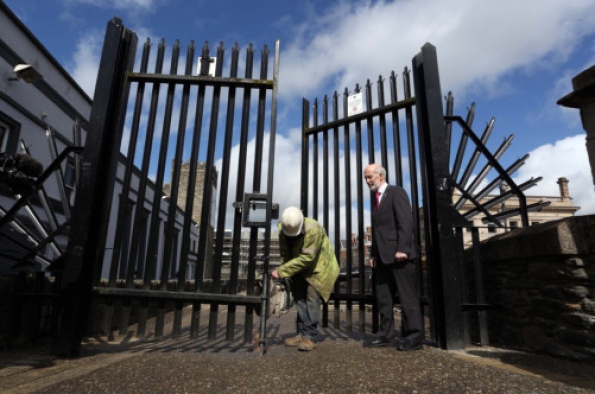
Removal of Security Gates: Photo Lorcan Doherty

Removal of Security Gates: Photo Lorcan Doherty

Derry’s walls are an integral part of the city and have survived for nearly four centuries. It’s the only remaining completely intact walled city in Ireland. With the progression of the peace process over the past fifteen years, the walls have become a tourist attraction, with guided walks daily. But the heavy metal security gates at sixteen locations  were a reminder of a troubled past. Now eleven of them are being removed.

Speaking during a visit to the walls, the NI Minister For Justice David Ford said he hoped the move would be welcomed by residents, businesses and visitors alike. He said in the year of Derry~Londonderry City of Culture, the walls would play a central role in the festivities and are a must see for any tourist visiting the city.  Derry has a real opportunity to show what the city has to offer.

He welcomed the removal of the gates for residents and tourists alike and described them as a blight on the historic walls.  The walls can now be enjoyed without the imposing structures that point to our past rather than our future, he added. Mr Ford thanked the local community, the PSNI and Derry City Council for their support and cooperation and said his department had invested £28,000 in providing additional CCTV coverage around the walls.

According to BBC Northern Ireland, Mr Ford said he hoped confidence could be built in the community so that people could feel safe and secure without the need for interface structures. “We obviously have to take account of the fact that there are small numbers of people in this city as there are elsewhere in Northern Ireland who are trying to drag us back,” he said, “but what I sense when I visit Derry is a very positive feel of people wanting to see movement forward, of the benefits of the City of Culture, of the Fleadh and all that coming forward and that is engaging with communities across Derry in a very positive way.”

Cannon from 1642 on Derry's Walls

Cannon from 1642 on Derry’s Walls

The mayor of Derry, Councillor Kevin Campbell, said the decision to remove the gates was about normalising the city. “It is about taking down symbols that have been here over thirty years,” he said. “There will still be a number of gates that are there to protect the Fountain, and you would obviously have to keep them there at the moment. But I think we have to be looking in the long term at having all those gates and barriers removed.”

DUP security spokesman Gregory Campbell also welcomed the removal of the gates, but warned against taking out the remainder. “It’s not just people in Londonderry, but tourists and visitors alike don’t like to see the aesthetics, the culture and history of the walls being encumbered by those gates which are a throwback to a previous era thankfully now past and I think everyone will welcome that,” he said.

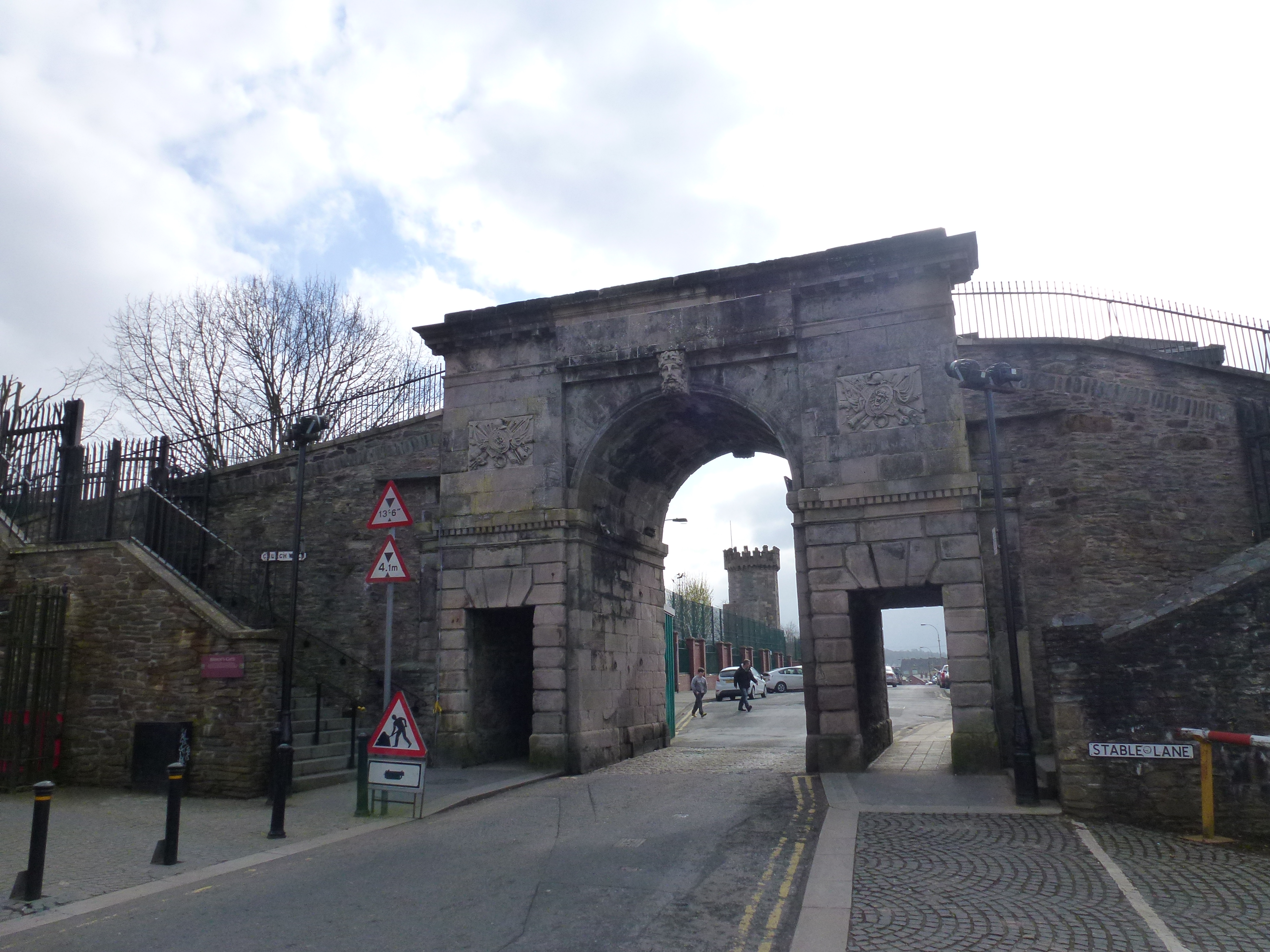
Bishop's Gate, Derry

Bishop’s Gate, Derry

Five security gates overlooking the loyalist Fountain Estate in the Bishop Street area including one at Bishop’s Gate will remain in place. Restoration work has been continuing along the walls and at several important buildings in the city centre, including the Guildhall and St Columb’s Cathedral. I saw some of these sights during a visit in March and I hope to travel to the city again by train next week to see the difference, now that the security gates are coming down.

Derry's Walls at the Guildhall

Derry’s Walls at the Guildhall

THE BIG HOUSE

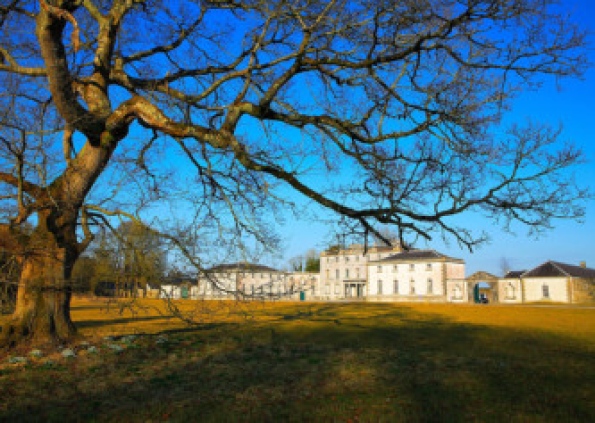
Strokestown House (Longford Leader)

Strokestown Park House

Since TV3 started up as an independent commercial television station in Ireland fifteen years ago, I have not watched many of its programmes. Its news operation has given experience to a new generation of young television reporters, some of whom have moved to other jobs, including positions in RTÉ News. I have occasionally watched Tonight with Vincent Browne, who has often interviewed a school colleague Peter Mathews TD on his programme. The TV3 Chief Executive since 2006 David McRedmond was also educated at the same school in Dublin. He reminded me a while ago that the Vincent Browne programme was available to watch online in the North for those without a suitable aerial. Last month under his stewardship the station opened a new HD studio  at its Ballymount headquarters in Dublin. It has been building up audience figures steadily.

Last night (Monday) I noticed there was a programme on TV3 devoted to “The Big House“, a subject in which I have some interest, having written about the Big House in Fermanagh and Monaghan. The four-part series is centred around Strokestown Park House in Strokestown, County Roscommon. Produced by Big Mountain Productions and co-funded by the BAI, it follows thirteen people as they live and work in Strokestown Park House as servants just as their ancestors did before them.

Lady's Bedroom, Strokestown Park

Lady’s Bedroom, Strokestown Park

Jeff Ford, TV3 Director of Content said: “I am extremely excited about this programme which brings alive a significant period of Irish history. For the first time ever, Irish cameras follow people who have a real connection to these beautiful houses, as they re-enact the lives of their ancestors.”  Director of Strokestown Park House John O’Driscoll said: “We are thrilled that Strokestown Park House has had the opportunity to come alive again with the filming of this exciting programme. The house is full of history and the programme allowed us to explore the lives of those who lived and worked in the house many years ago.”

Strokestown Park houses the Irish National Famine Museum, which is currently being redesigned and is partially open to the public. It is due to re-open fully by the end of May.

Front Hall, Strokestown Park

Front Hall, Strokestown Park

In the programmes, presenter Bryan Murray (who played Flurry Knox in The Irish RM) is on a journey to discover the controversial history of The Big House in Ireland and to tell the story of the servants, without whom these houses could not have functioned. For 100 years, life has stood still at Strokestown House, with every fixture and fitting remaining as it was. But the big house comes alive as in a social experiment, the series brings back the ancestors of men and women who lived and worked there, to bring to light a hidden history. By digging through the Strokestown Park archives and the census online the programme makers were able to trace the descendants of the Big House, and it is these thirteen people who they brought back to Strokestown to live and work exactly as their ancestors did.

Strokestown Park House

Strokestown Park House

We meet the Massey family from Hill of Down, Co Meath whose relative was the last butler at Strokestown Park House. PJ Massey has vivid memories of Butler Massey and is proud of this working heritage. The Frederick family from London has strong bonds to Strokestown as many of their female relatives worked at the house, while The Watters family’s connection to Lissadell House in Sligo dates back generations. Professor Mary Daly (UCD) said Ireland was now ready to look at this period of our history that as a country we systematically tried to blot from the landscape. Professor Diarmaid Ferriter (UCD) said we can still think about the big house as being a symbol of colonialism but we can also begin to understand that the big house story encapsulates so many different aspects of Irish history and the Irish experience. Professor Terence Dooley (NUI Maynooth), who gave a paper on ‘The big house in Carleton country, 1815-69″ at the William Carleton Summer School in Clogher in 2004 and wrote a book on The decline of the big house in Ireland (2001), is also a contributor to the series.

Castletown House

Castletown House

In one section of the first programme, Bryan Murray visits what is probably the finest example of the Irish Big House, Castletown House in Celbridge, County Kildare. In 1967 the house built in 1722 for Speaker William Connolly was purchased by Hon. Desmond Guinness of the Irish Georgian Society. Thankfully it has been preserved. In 1979 care of the house passed to the Castletown Foundation, a charitable trust which was established to own, maintain and to continue the restoration of the house. In 1994 the house with the exception of the contents, was transferred to State care and is now managed by the Office of Public Works. Professor Dooley in collaboration with Mary Heffernan of the OPW successfully established the OPW-NUIM Archive and Research Centre at Castletown, launched by President McAleese in November 2008.

Big House Contributor List:

PJ Massey – Butler Aged 50
Lives in Hill of Down, Co Westmeath
Married with two children Amanda and Patrick, grandfather to two children.  PJ is really into history and has a great knowledge of Irish history, famine, big house and the early 1900s. His hobbies are fishing and shooting, he makes hurls and wheels by hand and he works for Waterways Ireland. PJ’s connection to Strokestown is Thomas Massey – Strokestown’s last butler for 40 years. PJ and his and his nephew and niece are really excited about the experience and are welling with pride about their Uncle Tossy who was a huge part of the fabric of the house. PJ has will make for great television. The Massys will be to The Big House what the Winstons were to The Tenements.

Marie Gillooly – Housekeeper
Aged 46
Married with three children.
Lives in Roscommon  Marie left her job as a HSC manager to become a child minder as she felt this would give her a better quality of life.  She lives in Roscommon and is connected to the big house through many generations of her family. She has documented evidence and information of her great, great Grandmother, Biddy Bowens working there in 1851. In addition to this, almost 130 years later her mother, Mary Bowens, was employed as a nurse in Strokestown Park House to look after Madam Hales Pakenham Mahon and her husband Major Hales. She started work there on 5th October 1979 and finished in 1981 when Madam left for good to reside in a nursing home in England.   Marie is a bubbly fun loving woman and is really interested in her own family history and the history of Roscommon. She has spent a huge amount of her own time researching her family tree and is very contemplative and articulate about her experience.

Helen Burke – Cook
Aged 43
Helen owns Langs Bar and Restaurant in Grange, County Sligo, as well as the local undertakers, and lives with her family above the restaurant. She is a bubbly and attractive woman who is really enthusiastic about taking part in the programme. She is used to running a business that caters for a large amount of people so won’t be daunted by the prospect of cooking for everyone and will be able to draw some interesting comparisons. She is also really keen for the two teenage girls to have the experience. She wonders how they will cope without mobile phones.  Helen’s uncle John and his father both worked in Lissadell House. John also provides first-hand testimonials for the series.

Andy Frederick – Valet
Aged 44
Lives in Kingston, London. Andy used to go up to Strokestown House as a treat on a Friday to see his aunt Bessie who cooked there, his mother Marion also worked there when there were dinner parties at the house.  Andy works as a supervisor for an engineering company in London. He is very articulate and has vivid memories of going to visit his aunt who worked in the house.

Coby Frederick – Kitchen Boy
Aged 10
Lives in London. Coby is really into amateur dramatics so is really excited and not inhibited about the prospect of appearing in the series. He is very cute and articulate on camera. He also likes football, cricket, acting, drawing and writing stories.

Luca Frederick – Junior Footman
Aged 14
Lives in London. Luca hobbies include football, tennis and archery. He has been to Strokestown before but unlike Cody he is slightly more reserved – a bit of a moody teenager, which is in perfect contrast to his brother!

Patricia Rogers – Kitchen Maid
Aged 50
Catering Manager HSE
Patricia Rodger worked in Strokestown House on summer holidays when she was at school. She also picked fruit from the gardens. Her late father Joe Lyttle worked for 50 years for the Pakenham Mahons.

Rosemary Lyttle (Patricia’s sister) – Laundry Maid                                                                                                                                                                                                                    Aged 58  Nurse
Rosemary Lyttle was introduced to Strokestown House by her late father Joe Lyttle who worked for the Pakenhan,-Mahon’s for 50 years. Her main duties were to carry out chores given to her by the cook and on one occasion to deputize for the butler on his time off.

Ella Burke (Helen Burke’s Daughter) – Scullery Maid/ Junior House maid

Aged 15
3rd year of Junior Cert at Ursuline College, Sligo. Ella’s hobbies include speech and drama, music, friends and facebook. She is a typical teenage girl with interest in clothes and make up and social media, she also works part-time at her family’s Restaurant.

Robyn Lockhart (Ella’s Cousin) – Kitchen Maid
Aged 14
3rd year Junior Cert at Ursuline College, Sligo. Robyn’s hobbies include horse riding, music, friends and facebook. She is very close with her cousin Ella Burke(above) and isn’t looking forward to living without here mobile phone but is looking forward to seeing how young girls lived as servants. Both girls work at Lang’s Bar and Restaurant and Bar in the kitchen and as waiting staff. Robyn’s Granny, Kathleen, worked in Lissadell House.

BRIAN MCLAUGHLIN

Brian McLaughlin at Antrim Lions Breakfast

Brian McLaughlin at Antrim Lions Breakfast

I’m a winner: people who know me know what I’m about! I don’t like losing….. “. The interest in my previous post on Lions & Lions has encouraged me to devote another page to the breakfast talk given recently at the Dunadry Hotel to Antrim Lions Club and their guests by former Ulster Rugby head coach Brian McLaughlin, now Academy Schools Coach. This time I will tell it as he delivered it: punchy and with plenty of insights into the world of rugby, with which he has been intimately involved for many years.

Brian kicked off his life story by talking about the support he got from his parents (and I am typing this at my parents’ house in Dublin). His career has centred around sport. His father played hockey but his mother’s preference was for tennis and “she had a tennis racket in my hand from the age of three”. Tennis was his second love and he played at Comber, where he was reared. What he did not tell us last Thursday (and I would have loved to discuss it further with him) was that his grandfather (like Tommy Bowe) had a connection with County Monaghan, having moved from Ballybay in the 1920s to take over as manager of the Northern bank in Comber. His father, a keen Instonian, worked in the linen industry in Belfast and had a small business on Murray Street.

Brian said his parents had encouraged him every step of the way and they had never missed an Ulster game at Ravenhill when he was in charge. After the age of twelve he “always wanted to be a PE teacher” and his love of sport as a teenager seems to have left a trail of destruction behind in several broken windows!

Brian McLaughlin & Antrim Lions President Barry Warwick

Brian McLaughlin & Antrim Lions President Barry Warwick

He and his two brothers were sent to Regent House in Newtownards. David McMaster who coached rugby teams at the school for many years was an important influence and he has kept in contact with many of his school friends. He was a contemporary of Nigel Carr, “the hardest guy to play against”. Carr was later an Irish international and was a great player who showed “unbelievable spirit”, according to Brian. Nigel and two other international players were caught up in an IRA bomb at the border in April 1987 and although he escaped serious injury, his knee was affected and it ended his rugby career at the age of 27. Brian said he admired Carr’s resilience. He remembered doing speed and power training with him in the 1980s. Each acted as best man for the other at their weddings.

A third member of that Regent House team, who went on to star for Ireland, was Phillip Matthews, now a BBC rugby commentator. Along with McLaughlin he played in an Ulster schools’ cup final in 1977 when Regent House narrowly lost to Tommy Bowe’s alma mater, Royal School Armagh, 12-9. Carr broke his leg in the quarter final against Grosvenor (Belfast) and missed out on the final. He had seven knee operations during his time as a player to keep him active. But he missed out on any Lions tour (South Africa in 1986 did not happen, owing to apartheid) but did play against the Rest of the World in Cardiff in 1986.

During the 1986/87 season McLaughlin was captain of Ards. In 1987 they won the Ulster Senior Cup. In 1982 he took on his second teaching job at Wallace High School in Lisburn. He was also involved in club rugby with Malone and Instonians and the Ulster under-20s. When Eddie O’Sullivan got the Ireland under-21 coaching job, he brought in Brian McLaughlin in as his forwards coach.  They got on well and thought about rugby the same way. The side won triple crowns in 1996 and 1998. The 1996 team was captained by Tony McWhirter, who won 94 caps playing for Ulster and was a member of the European Cup winning side in 1999. Other rising stars from that era included Eric Miller, Girvan Dempsey and Malcolm O’Kelly, all of them coached by McLaughlin. He described O’Sullivan as a forward-thinking coach and said it was a huge decision for O’Sullivan to go off in 1997 for two years to the United States as an assistant coach. O’Sullivan was not long in the Ireland senior job in 2005 when he gave McLaughlin a shout to come and help higher up the line. Both remain good pals, according to Brian.

Michael Fisher & Brian McLaughlin

Michael Fisher & Brian McLaughlin

In the previous three years from 2002-2005 McLaughlin had been coaching Ballynahinch. He was full of praise for their young players who have come through like Willie Faloon (now Connacht) and Paddy McAllister (both Royal School Armagh) who he said was “dynamic” and he hoped would play for Ireland. He  described scrum half Paul Marshall (Methody) as a fantastic player, who was the fittest guy in Ulster: “a pocket-rocket”.  The late Nevin Spence, who died in a farm accident last September, was “a fantastic guy” and “an exceptional character”, who he said had shown “unbelievable determination” on the rugby pitch and who was an unbelievable loss for Ulster. He said he had stayed in contact with the Spence family, who lost two other members in the slurry-pit tragedy. Another Hinch player to make the grade with Ulster was a Cork man, Jerry Cronin from Mallow. He was signed up for Ballynahinch one night in the pub in Belfast, where he was working as a structural engineer. He is a “phenomenal character” according to McLaughlin and made his debut for Ulster in October 2010 against his home province of Munster. He was signed up by the Doncaster Knights in England eleven months ago and it remains to be seen if he returns to Ireland at some stage (Munster, perhaps?).

Antrim Lions Club
Antrim Lions Club

Funds raised from the breakfast went to Lions Club charities. You can find out more about Antrim Lions Club here.

FRANK GARDNER BBC

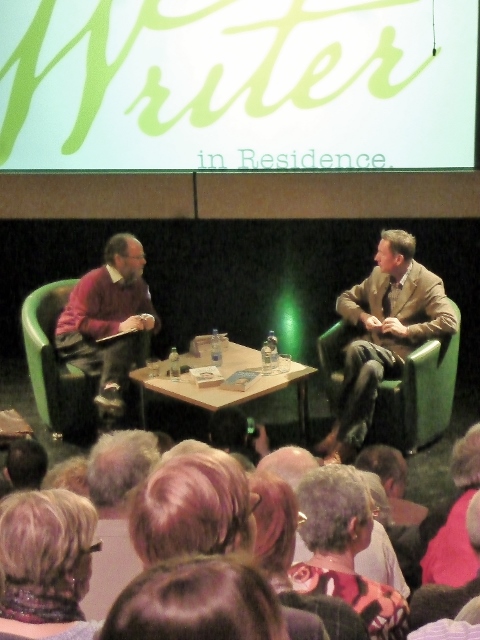
Malachi O'Doherty talks to Frank Gardner

Malachi O’Doherty talks to Frank Gardner

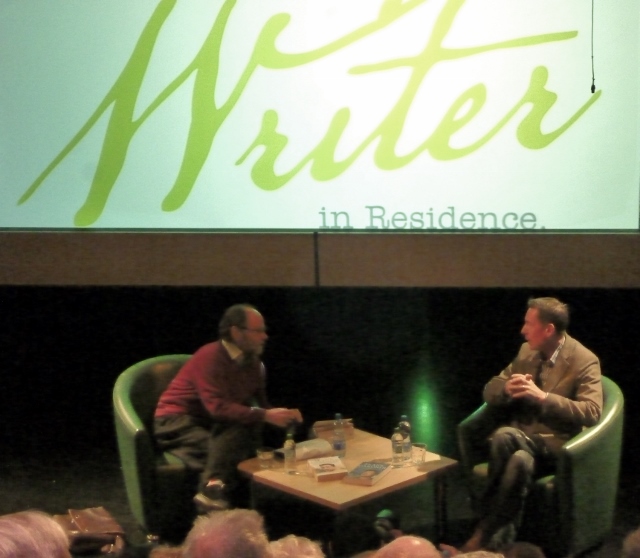
It was a packed audience at the BBC’s Blackstaff studio in Belfast as Malachi O’Doherty resumed his Louis MacNeice QUB Writer in Residence series of interviews with media personalities. His guest was the BBC’s Security Correspondent, Frank Gardner. Gardner almost lost his life in a gun attack nine years ago in Saudi Arabia, in which his cameraman was killed, 36 year-old Simon Cumbers from Navan in County Meath. A media fund has been set up to honour his memory.

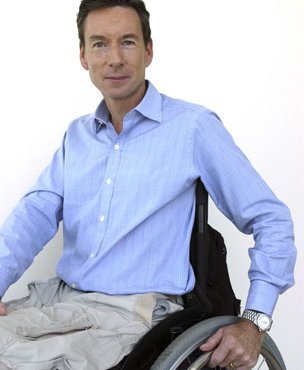
Simon Cumbers was murdered by gunmen while filming a report on an al-Qaeda militant’s house for BBC Television News in June 2004. The attackers opened fire on Simon and Frank Gardner in a suburb of Riyadh. Simon died at the scene and Frank Gardner, then 42, was seriously injured. He was shot six times at point-blank range. One of the bullets, apparently fired from a jeep, severed Gardner’s spinal nerves, leaving him partly paralysed in the legs and now dependent on a wheelchair. After 14 operations, seven months in hospital and months of rehabilitation, he returned to reporting for the BBC in mid-2005.

Frank Gardner, BBC

Frank Gardner, BBC

Gardner was educated at a private school in Kent, St Ronan’s in Hawkhurst and Marlborough College. His parents were both diplomats and he developed an interest in travel and exploration at an early age. He learned Arabic as a teenager and as a student at Exeter he went exploring with a friend. In the conversation with Malachi  he recalled his “daft” adventure through a jungle to a volcano, without a local guide: two explorers with just a biscuit to share to keep them sustained.

Recalling the attack in which he was wounded, Gardner said the gunmen drove off, leaving him bleeding in the dust. He remembers screaming for help. A crowd came out to look, but no-one lifted a finger to help him. There was no word of sympathy or comfort. This was very different from the welcome he had received in previous years while getting to know an Egyptian family from the backstreets of Cairo, with whom he stayed.

Malachi O'Doherty & Frank Gardner

Malachi O’Doherty & Frank Gardner

Gardner went back to Saudi Arabia earlier this year and made a documentary reflecting on why the Arab Spring has not happened in the Kingdom. He has worked with the BBC since 1995. Before that he spent nine years working in and around the Middle East region as an investment banker with Saudi International Bank and Robert Fleming from 1986-95. He became the Corporation’s first full-time Gulf correspondent in the late 1990s and set up an office in Dubai. In 2000 he was appointed Middle East correspondent in charge of the bureau in Cairo, but travelling widely throughout the region. In that role he covered the Palestinian intifada and reaction in the wake of the 11th September New York attacks.

CLOGHER VALLEY RAILWAY

CVR train in Main St Caledon (TG4 photo)

CVR train in Main St Caledon (TG4 photo)

The picture shows a train from the Clogher Valley Railway in the Main Street of the border village of Caledon, County Tyrone. In the middle you can see the clock tower of the courthouse. The train is number 6, called Erne.  It was built by Sharp, Stewart No. 3374 of 1887;  0-4-2 tank. It was in service until the railway closed on December 31st 1941 and was scrapped the following year.  The other engines were Caledon (1), Errigal (2), Blackwater (3), Fury (4), Colebrooke (5) and Blessingbourne (7), built by Hudswell, Clarke & co.

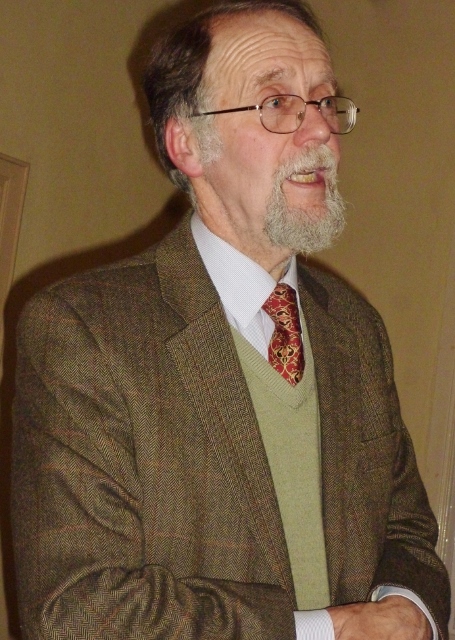
Jack Johnston

Jack Johnston

The story of the railway was told at the restored Caledon courthouse this evening by Jack Johnston, who has written extensively about the history of the Clogher Valley. He illustrated the talk with slides, many of them black and white pictures of the operation of the railway which had been taken in the last century. Jack is also President of the William Carleton Society, one of five groups along with Caledon Regeneration Partnership, Donaghmore Historical Society, Killeeshil and Clonaneese Historical Society and South Lough Neagh Regeneration Association taking part in the EU Peace III-funded “Shared History, Shared Future” project.

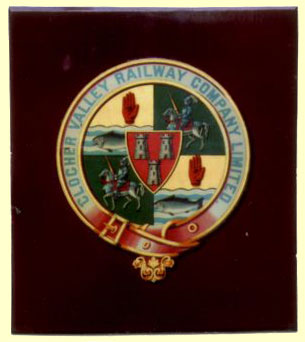
CVR Coat of Arms

CVR Coat of Arms

The 3ft gauge Clogher Valley Tramway was incorporated on 26th May 1884, the second project under the terms of the 1883 Act.  It opened for traffic on 2nd May 1887 linking Tynan in County Armagh and Maguiresbridge in County Fermanagh, both on the broad gauge Great Northern Railway, a distance of 37 miles.  The route covered the Clogher Valley in County Tyrone serving the towns of Caledon, Aughnacloy, Ballygawley, Augher, Clogher and Fivemiletown.  The railway followed public roads for much of its length and ran down the main streets of Caledon and Fivemiletown.

The railway had a dismal financial performance throughout its lifetime, belying the glowing picture of returns painted in its prospectus.  Nevertheless the Company had extremely ambitious plans for expansion aimed at providing access to the port of Newry and connections with the Cavan and Leitrim line.  None came to fruition however and the CVR remained a local line.

The Clogher Valley Railway lay within the six counties of Northern Ireland when partition occurred in 1922.  The new government in Belfast recommended the takeover of the CVR by the broad gauge Great Northern Railway.  The GNR refused to do this and the CVR retained its independence.  In 1927 however the directors were replaced by a Committee of Management appointed by Tyrone and Fermanagh county councils.

Clogher Valley Railway (TG4 picture)

Clogher Valley Railway (TG4 picture)

The Committee did much to revitalise the line with more and speedier services.  In 1932 a pioneering articulated passenger diesel railcar built by Walkers of Wigan was delivered, along with a diesel tractor unit which could tow a coach or a few wagons.  These were successful in cutting costs and speeding up the service but could only postpone the inevitable end of the basically uneconomic line. For almost all of its existence the railway made a loss and it needed a subsidy from local ratepayers. The greatest profit ever made by the company was in 1904, only £791.

Plaque on ceremonial wheelbarrow: cutting first sod in 1885.

Plaque on ceremonial wheelbarrow: cutting first sod in 1885.

It was around this time that my great-grandfather John McCann J.P., an auctioneer in Aughnacloy, became a director of the railway. He served on the board for a number of years, under the chairmanship of Hugh de Fellenberg Montgomery of Blessingbourne, Fivemiletown, I still have a season ticket belonging to him.

CALEDON AND ITS REGENERATION

Caledon Courthouse

Caledon Courthouse

For many years during the troubles in Northern Ireland the border village of Caledon in County Tyrone looked shabby, with many derelict and unused buildings along the main street. It looks very different nowadays, as the restored courthouse building testifies.

In 1984 the village was designated as a Conservation Area and six years later, this was reviewed and the boundary extended. DoE (NI) Planning Service produced a Conservation Area Guide to accompany the original designation, which included design guidance intended to help protect the historic fabric of the village.

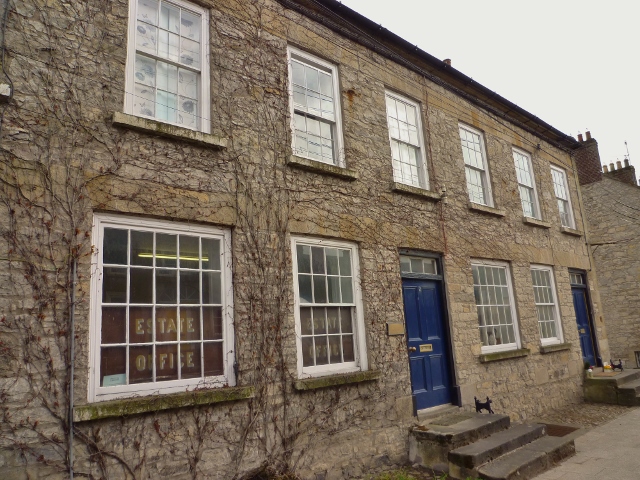
Caledon Estate Office

Caledon Estate Office

The Caledon Regeneration Partnership was formed in 1994 to take forward a planned social, economic and environmental regeneration strategy for the County Armagh village. It is made up of representatives from the local community, local authority and Caledon Estates Company, which has an office in the main street.

Beam Engine House, Caledon

Beam Engine House, Caledon

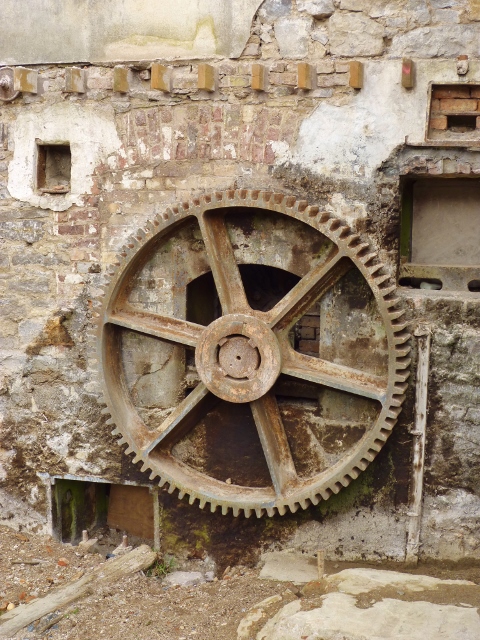
One of the projects being undertaken is the restoration of a beam engine and engine house. Last year a total of £220,000 in funding was secured to finance the first phase.  It is hoped that the engine will eventually be restored to a fully operational state, and become a tourist attraction for the area. The unique piece of equipment dates back to the early 1830s and is one of the earliest surviving steam engines in Ireland. It was once used to power the Caledon Flour Mill and then Caledon Woollen Mills.

Beam Engine House, Caledon

Beam Engine House, Caledon

William Beattie of Caledon Regeneration Partnership said he believed the beam engine is unique in these islands:-  “There are only about eight beam engines in Ireland, and this one is the only one which has a housed engine, making it a very important piece of industrial archaeology. This is the only relic remaining of Caledon’s once famous mill industry, which produced quality woollen garments until the 1930s. The mill, which was built in the early 1800s, was demolished in 1985. During the summer, wood and coal was used to power the beam engine, when the water-flow was not strong enough to move the wheel. The hope is to get the engine functioning again, and to create a viable tourism attraction which will also faithfully record the history of the village”, he said.

In addition a Grade B listed property, a former worker’s building on the Caledon Estate, which has lain derelict for years, has received funding worth £30,000 under the Historic Buildings Grant-Aid Scheme.

Caledon estate was bought from the seventh Earl of Cork for £94,400 in 1776 by James Alexander (later first Earl of Caledon), an East India Company Nabob. The Earls of Cork and Orrery had only acquired the estate by marriage from the Hamilton family in 1738, but during the forty years of ownership, they had made it into a by-word for fashionable landscape design, complete with a gate lodge decorated with statues and Latin epigrams, a hermitage and a bone house.

Gate Lodge Caledon Estate

Gate Lodge Caledon Estate

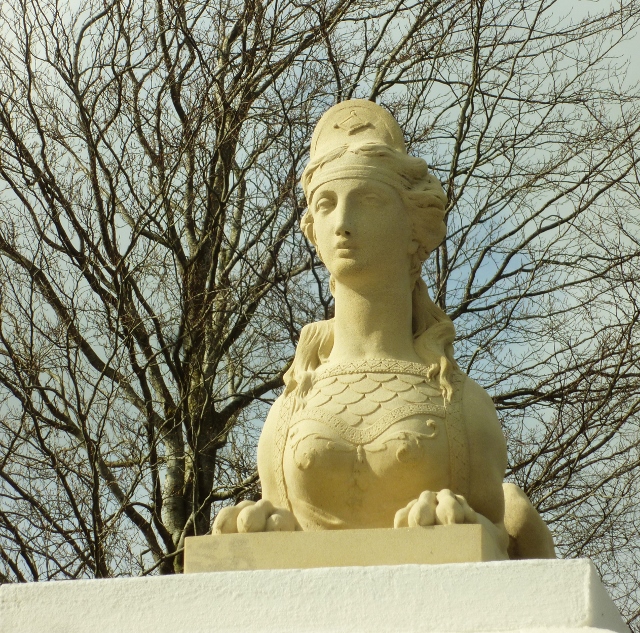
Sphinx Statue at Gate Lodge

Sphinx Statue at Gate Lodge

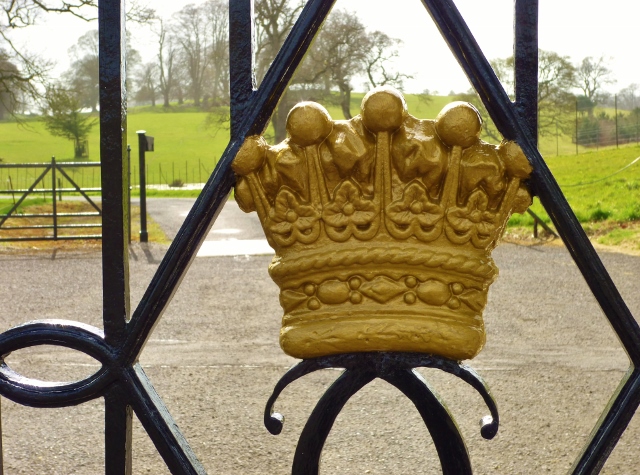
Detail on Gate

Detail on Gate

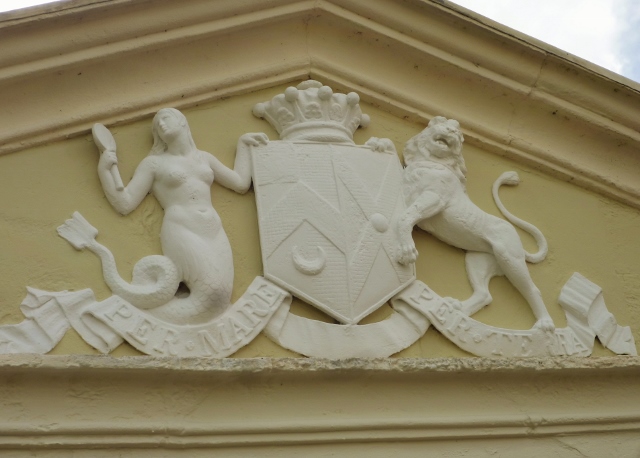
Pediment Relief: Coat of Arms

Pediment Relief: Coat of Arms

Caledon Regeneration is one of five groups taking part in the “Shared History, Shared Future” project under the Peace III programme run by Dungannon and South Tyrone Borough Council. On Thursday evening (25th April) at 7pm, the historian Jack Johnston of the William Carleton Society will give a talk on the Clogher Valley Railway. The narrow gauge line ran through the main street of the village until its closure in 1941.

CVR train in Main St Caledon (TG4 photo)

CVR train in Main St Caledon (TG4 photo)

.

CHATHAM DOCKYARD

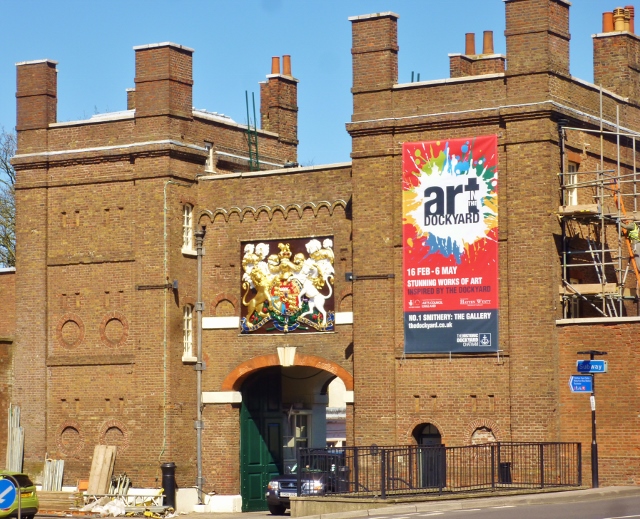
Chatham Historic Dockyard

Chatham Historic Dockyard

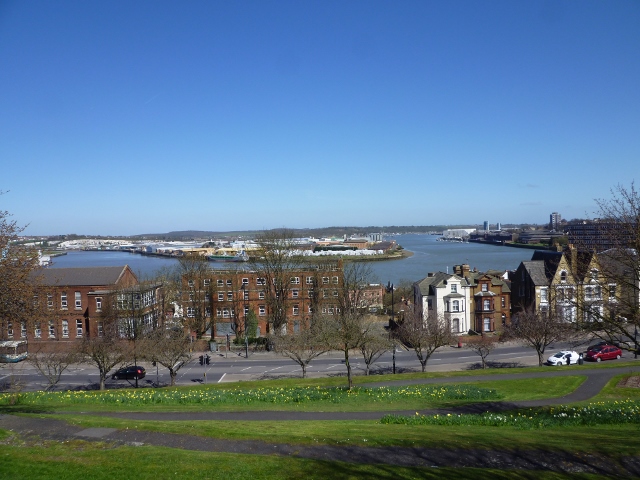
After leaving Rochester my walk brought me to nearby Chatham and one of the entrances to the historic dockyard. Unfortunately I did not have time for a visit and will have to return again at some stage. This yard established as a royal dockyard by Elizabeth I in 1567 provided some of the most important ships for the Royal Navy during its 410 years in operation, until its closure in 1984. At its height it employed over 10,000 on a 400 acre site, which is now run as a museum.

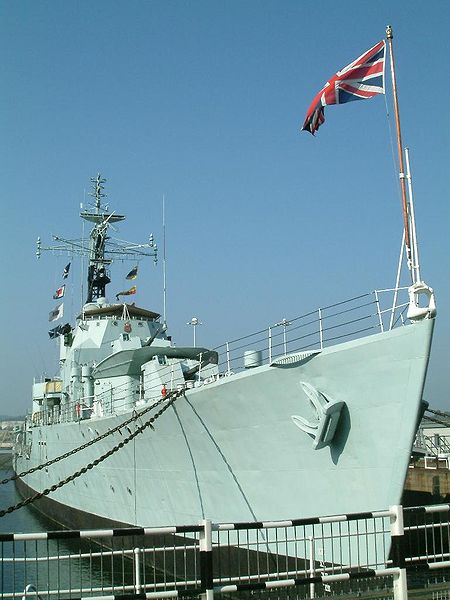
HMS Cavalier (Commons Wikimedia)

HMS Cavalier (Commons Wikimedia)

HMS Cavalier was the Royal Navy’s last operational Second World War destroyer and is now preserved at Chatham as a memorial to the 143 British destroyers and over 11,000 men lost at sea during the war.  Built in 1944 at Samuel White’s Isle of Wight yard, Cavalier served during the war in the Arctic and the Western Approaches before joining the British Pacific Fleet as the war came to a close. Refitted and modernized in 1957 she continued to play an active role as part of the Royal Navy’s Far East and Home fleets until she was decommissioned at Chatham in 1972.

The Victorian sloop HMS Gannet is also preserved there. Built on the River Medway in 1878, the ship recently underwent a £3m restoration. In a third dry dock you can take a tour through a submarine. HM Submarine Ocelot was the last warship built for the Royal Navy at Chatham Dockyard. An ‘O’ Class diesel electric submarine, she was launched in 1962 and saw service with Royal Navy throughout the height of the Cold War until she paid off in 1991.  A normal sized crew would consist of 69 submariners, but she could carry a maximum of 80.

River Medway near Chatham

River Medway near Chatham

The dockyard also served as a film set for the BBC series “Call the Midwife”, when it was transformed into Polar Docks in London in the 1950s. Tours of the site are available. Close by near the bus station is the office of BBC Radio Kent.

ROCHESTER

Rochester Castle

Rochester Castle

Walking in Kent along the River Medway from Strood yesterday on our way to Gillingham, we entered the city of Rochester. The Castle dominated the skyline. The 12th Century keep (stone tower) is one of the best preserved in England or France. It was strategically positioned to prevent an invasion of the South-East coast in the medieval period. Beside it is the impressive Cathedral, confirming its status as a City. The bishopric is the second oldest in England after Canterbury.

Rochester Cathedral

Rochester Cathedral

Rochester is also associated with Charles Dickens, who lived nearby in the village of Higham at Gads Hill Place. There is a Dickens Centre devoted to his life and works. The writer had wished to be buried in the grounds of the Cathedral, but was instead interred at Poet’s Corner at Westminster Abbey in London.

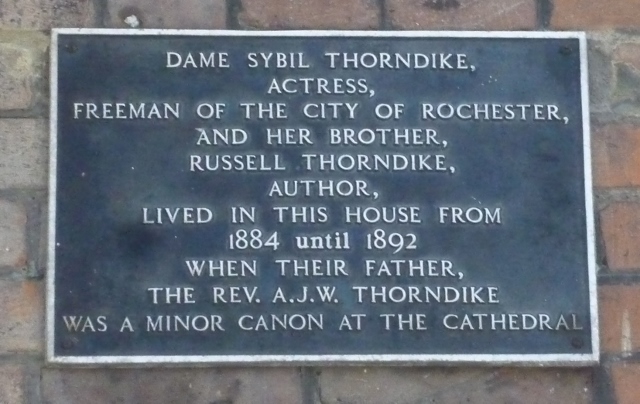
Another famous resident was the actress Dame Sybil Thorndike (1882-1976). As a young girl, she and her brother, the author Russell Thorndike, lived for eight years in one of the houses at Minor Canon Row when their father was a Minor Canon at Rochester Cathedral.

Plaque marks the house

Plaque at house

The house adjacent to Prior’s Gate is part of a terrace from the early Georgian period. If you would like to live there and have £850,000 to spare, you might be interested in the end of terrace house, the interior of which you can see on the Jackson-Stops page.

Thorndike house

Thorndike house

WFFW6 DAY THREE

Rochester Castle

Rochester Castle

DAY THREE: The walk began this morning at Strood station in Kent. Today’s section of the 43-mile route went for about nine miles. A nice section of it was along the River Medway and past Rochester as far as Gillingham, where AFC Wimbledon played Gillingham FC at Priestlands at 3pm. The match ended in a 2-2 draw. I was leaving just as the Dons scored the vital equaliser. Now it’s down to the wire next Saturday at Kingsmeadow if we are to avoid relegation back to the non-league Conference. The Gills took the League 2 title and are promoted to division one (the old division 3) next season.

Gillingham v AFC Wimbledon

Gillingham v AFC Wimbledon

My chosen charity apart from the AFCW Community fund is Diabetes UK and details of how to donate can be found in my JustGiving page or click the Sponsor me button at the top of the page. Or Text WFFW67 £5 to 70070 on your mobile. Thank you for your sponsorship. Michael Fisher, Belfast Lions Club.

JustGiving - Sponsor me now!