PTE THOMAS CARTHY

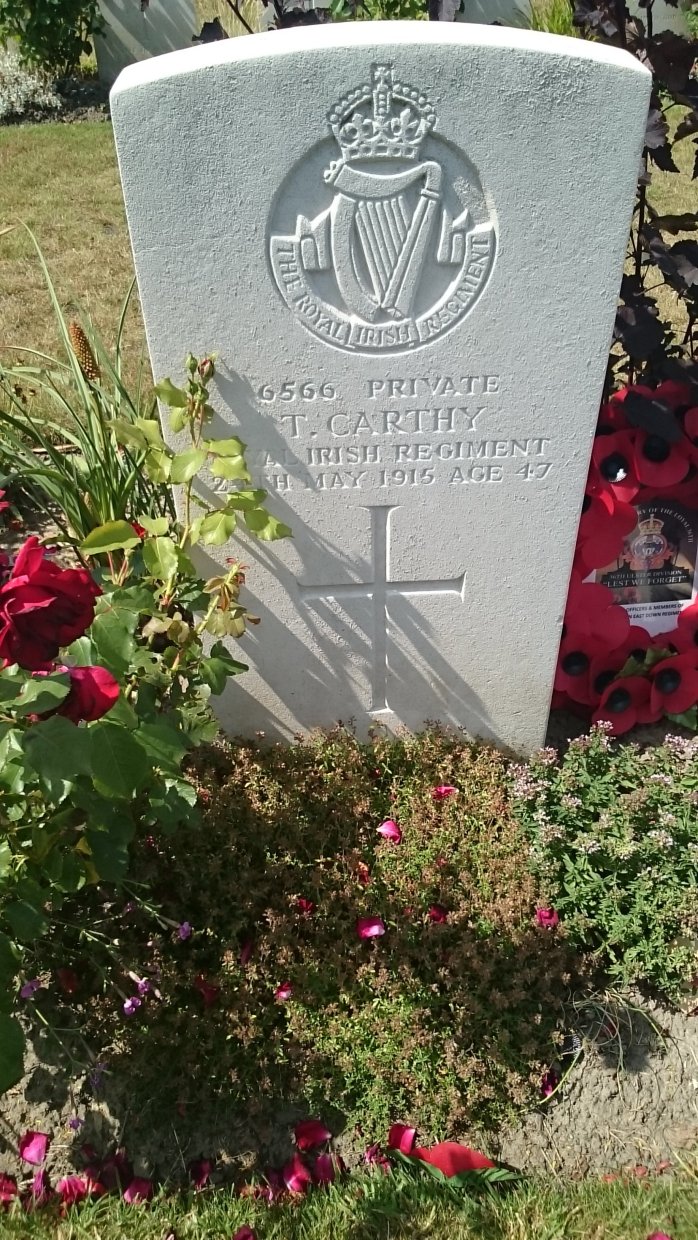
Grave of Pte Thomas Carthy

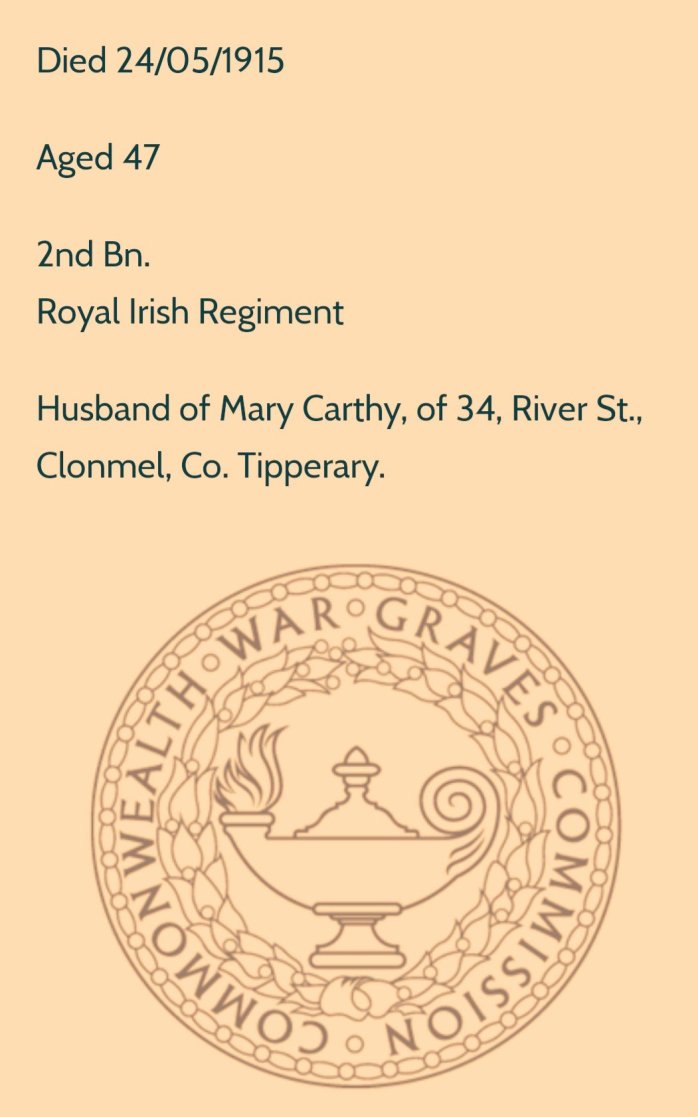
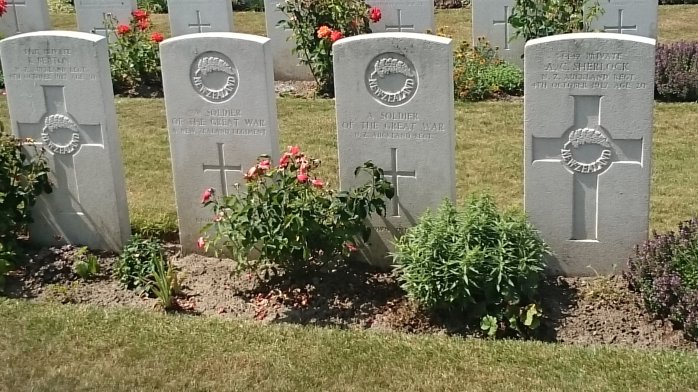
Private Thomas Carthy was from Clonmel, Co. Tipperary. He was the husband of Mary Carthy of 34 River Street. He was killed on May 24th 1915 aged 47.

CWGC details of Pte Carthy

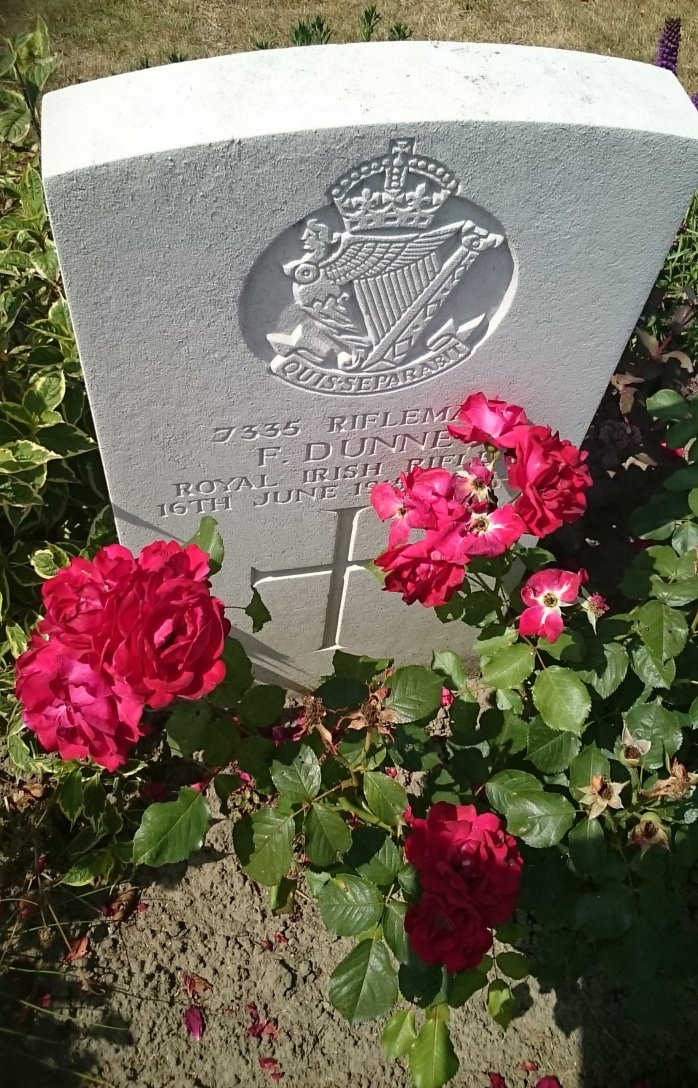
Private Carthy served with the Second Battalion, Royal Irish Regiment. He is buried in Poelkapelle Military Cemetery near Ieper. Another Irish grave I came across there was that of 7335 Rifleman Francis Dunne of the Royal Irish Rifles. He died on 16th June 1915 aged 29. The CWGC details do not reveal where he came from.

Grave of Rifleman F. Dunne

POELKAPELLE CEMETERY

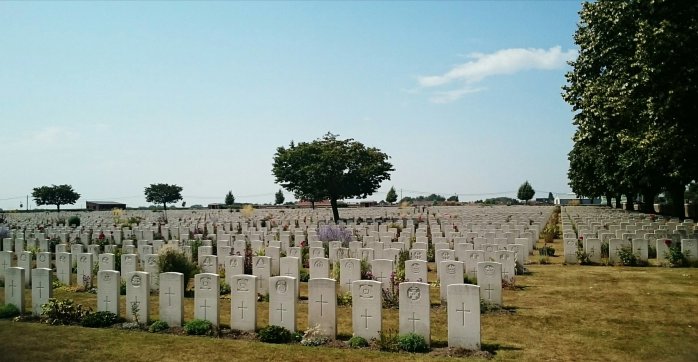
Poelkapelle Military Cemetery

Poelkapelle cemetery is the third largest Commonwealth Graves Commission cemetery in the Westhoek area near Ieper in Belgium.

New Zealand soldiers are buried at Poelkapelle

Among the soldiers buried there are some from New Zealand.

The great majority of the graves in this cemetery date from the last five months of 1917, and in particular October, but certain plots contain many graves of 1914 and 1915.

There are now 7,479 Commonwealth servicemen of the First World War buried or commemorated in Poelkapelle British Cemetery. Of the burials, 6230 are unidentified but special memorials commemorate eight casualties known or believed to be buried among them.

Other special memorials commemorate 24 servicemen buried by the Germans in other burial grounds in the area whose graves could not be located. There is also one burial dating from the Second World War.

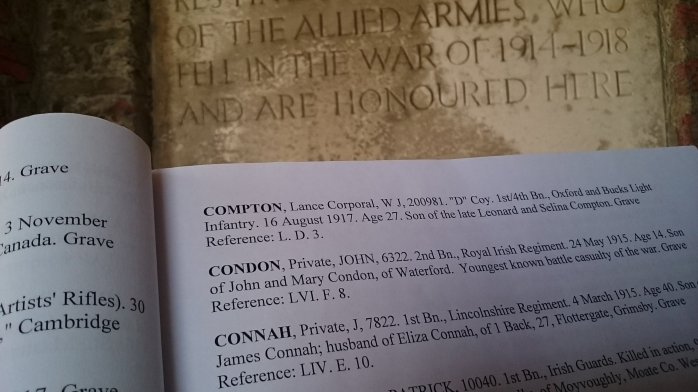
The cemetery was designed by Charles Holden. Among those buried in the cemetery is Private John Condon of the Royal Irish Regiment, who at 14 is thought to be the youngest battle casualty of the First World War commemorated by the Commonwealth Graves Commission.

PTE JOHN CONDON

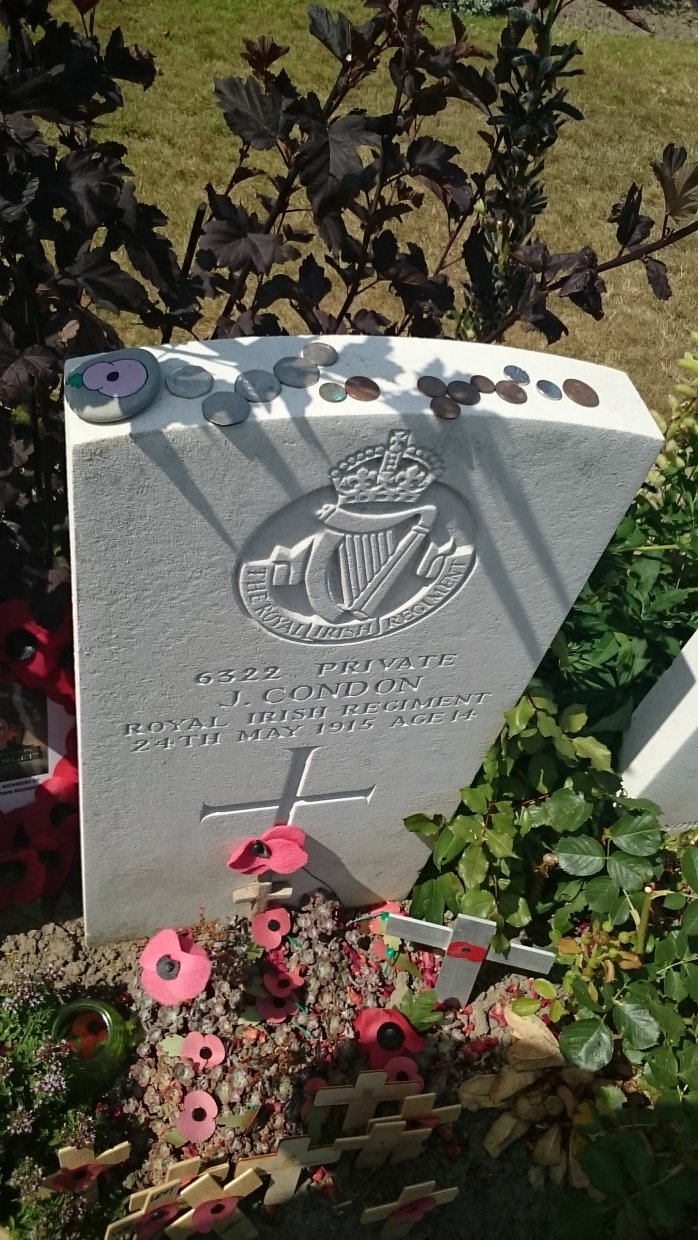
Grave of Private John Condon

The youngest soldier to be killed in the Great War of 1914-18 was 2622 Private John Condon, of the 2nd Battalion Royal Irish Regiment and came from Waterford in Ireland. Like a quarter of a million other boy soldiers from all over Ireland and Great Britain, John was underage. He arrived at the Western Front in March 1915 and two short months later he was dead. Killed in a German Gas attack at a place called Mouse Trap Farm near Ypres, Belgium on the 24th of May, a day they say when a greenish yellow mist crept from the German lines with deadly poison. John’s grave is in Poelkapelle Military Cemetery (CWGC) and is now reputedly the most visited grave on the entire Western Front for obvious reasons. There, amongst thousands of white headstones, there is usually an array of poppies, flags and wooden crosses around the final resting place of young John Condon and a gravestone that says it all. 6322 Private John Condon 24th May 1915 Age 14.

CWGC memorial book at the cemetery

FRANCIS LEDWIDGE

Francis Ledwidge (museum picture)

Visited the grave of Lance Corporal Francis Ledwidge, the poet from Slane, Co. Meath.

Visiting the grave of Lance Cpl Francis Ledwidge

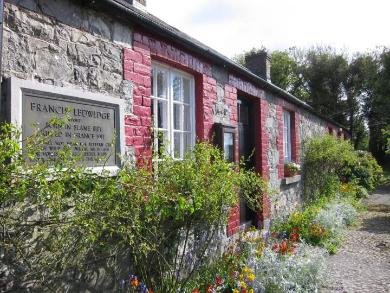
The cottage outside Slane where Ledwidge lived is now a museum

Francis Ledwidge was fatally wounded in 1917 at Boezinge near Ieper in Flanders. We also saw his grave nearby. Ledwidge was also known as a poet and came from Slane, Co. Meath.

Grave of Lance Corporal Francis Ledwidge

Ledwidge seems to have fitted into Army life well, and rapidly achieved promotion to Lance Corporal. In 1915, he saw action at Suvla Bay in the Dardanelles, where he suffered severe rheumatism. Having survived huge losses sustained by his company in the Battle of Gallilopoli, he became ill after a back injury on a tough mountain journey in Serbia (December 1915), a locale which inspired a number of poems.

Ledwidge was dismayed by the news of the Easter Rising, and was court-martialled and demoted for overstaying his home leave and being drunk in uniform (May 1916). He gained and lost stripes over a period in Derry (he was a corporal when the introduction to his first book was written), and then, returned to the front, received back his lance corporal’s stripe one last time in January 1917 when posted to the Western Front joining the 1st Battalion, Royal Inniskilling Fusiliers, part of the 29th Division.

A memorial with an Irish flag marks the spot where Ledwidge died

On 31 July 1917, a group from Ledwidge’s battalion of the Royal Inniskilling Fusiliers were road-laying in preparation for an assault during the Third Battle of Ypres, near the village of Boezinge, northwest of Ieper. While Ledwidge was drinking tea in a mud hole with his comrades, a shell exploded alongside, killing the poet and five others. A chaplain who knew him, Father Devas, arrived soon after, and recorded “Ledwidge killed, blown to bits.”

The poems Ledwidge wrote on active service revealed his pride at being a soldier, as he believed, in the service of Ireland. He wondered whether he would find a soldier’s death. The dead were buried at Carrefour de Rose, and later re-interred in the nearby Artillery Wood Cemetery (CWGC), Boezinge, (where the Welsh poet, Hedd Wyn, killed on the same day, is also buried). A stone tablet commemorates him in the Island of Ireland Peace Park, Messines (Mesen) in Belgium.

PRIVATE ROBERT HAMILTON

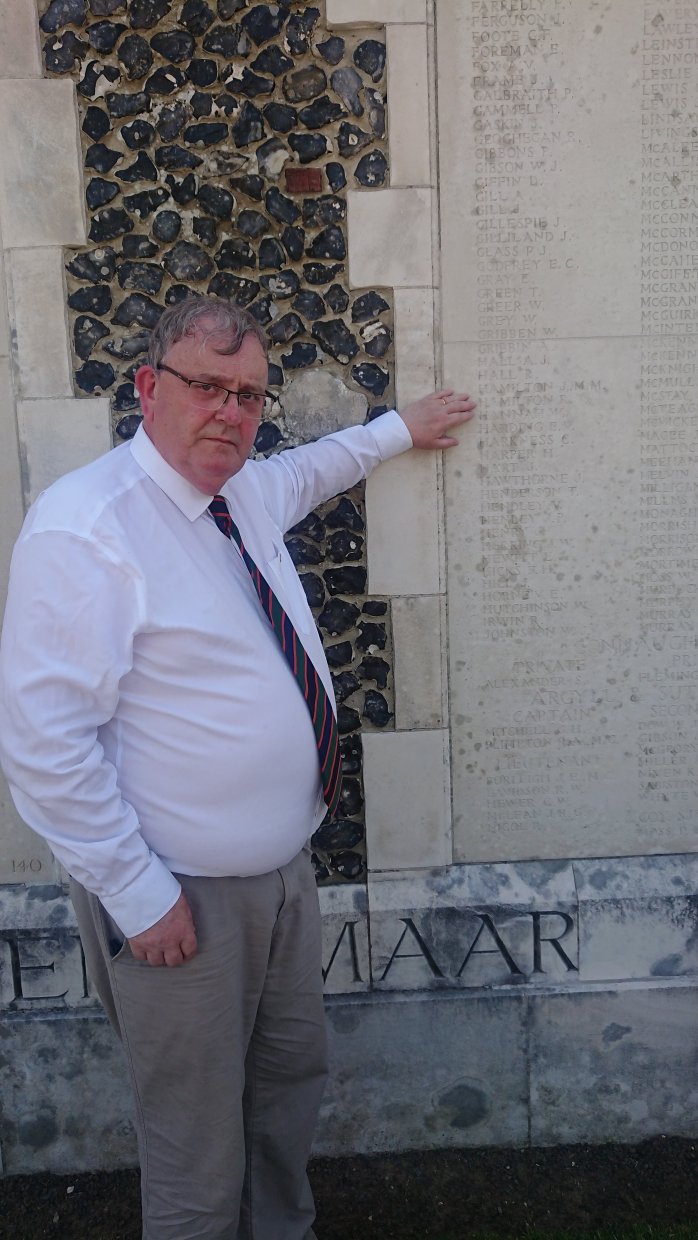
Name of Hamilton R. (Private) on panel 141 at Tyne Cot memorial. Our group visited the CWGC cemetery on July 25th 2019.

Pointing to the name of Pte Robert Hamilton

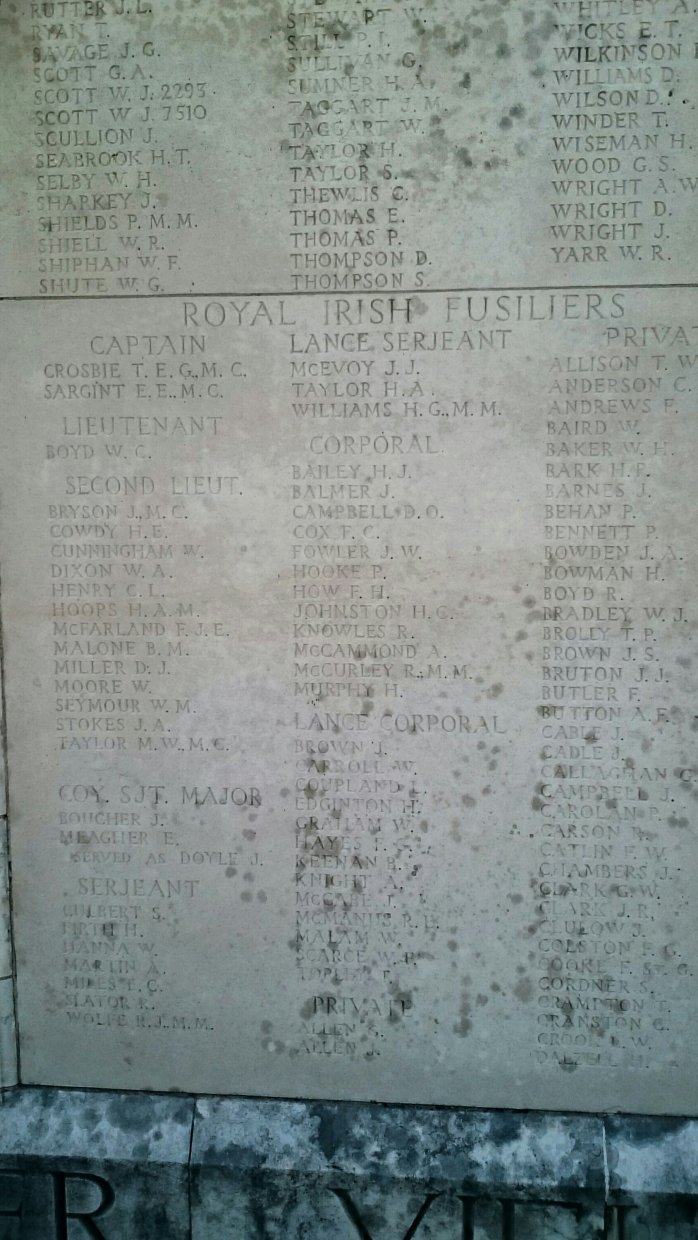
The panel with names of soldiers from the Royal Irish Fusiliers

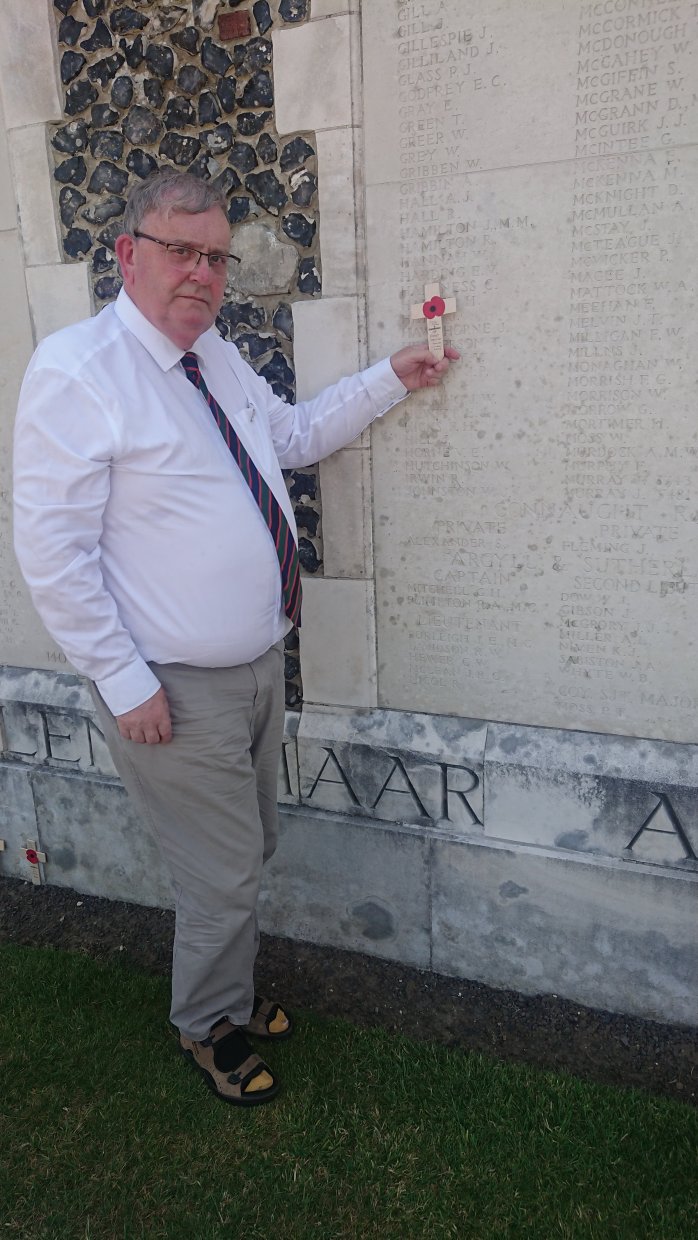
Our group at the Tyne Cot Memorial following a short prayer service led by Canon Andrea Wills (Foxford)

Placing a cross at the Tyne Cot Memorial in memory of Pte Robert Hamilton of Ballinode

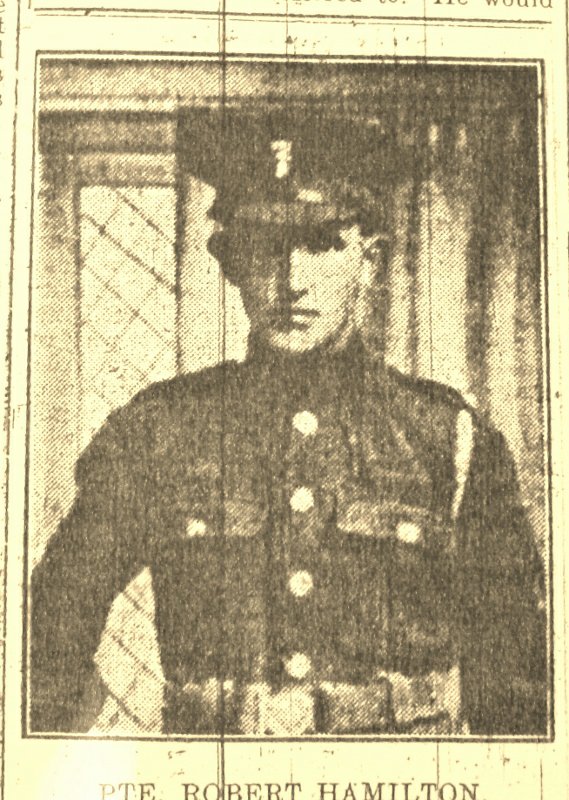
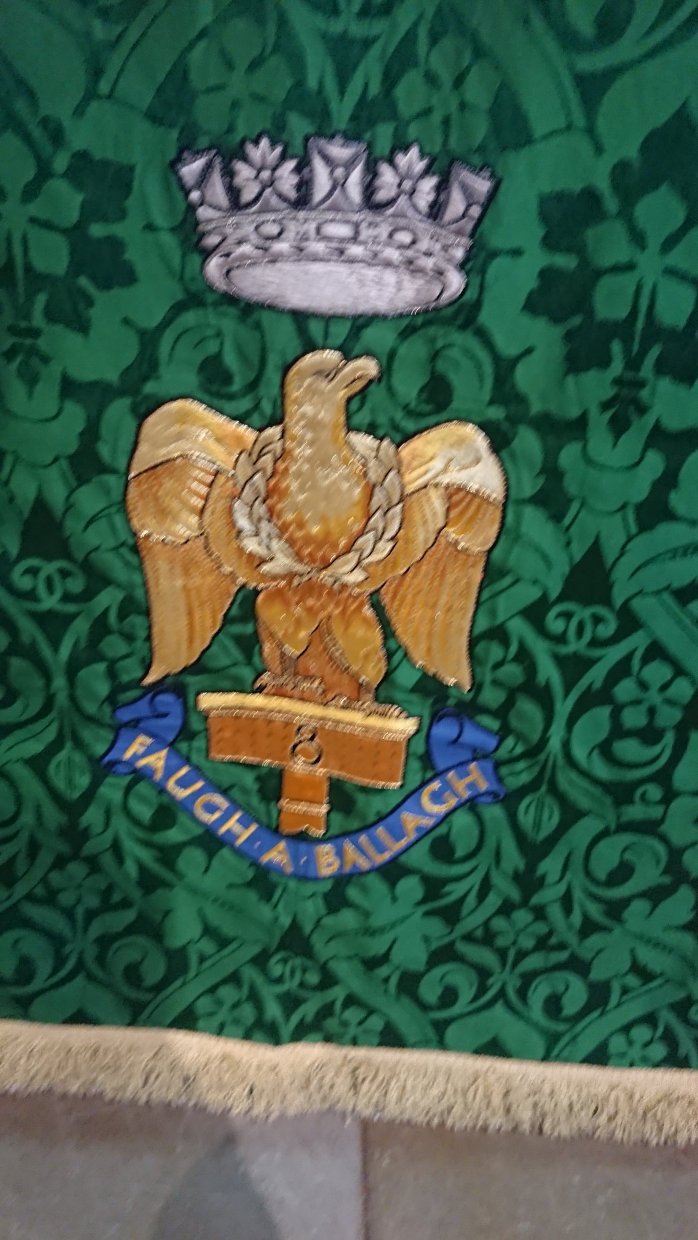
Private Robert Hamilton enlisted in Monaghan town in the Royal Irish Fusiliers (the ‘Faugh-a-Ballaghs’) when a recruitment party came to town in March 1915. He fought at the Battle of the Somme in July 1916 and was invalided at some stage so he would have returned home to Kilmore East. He left Ballinode on Easter Saturday at the end of March 1918 and returned to his unit on the western front in France, only to be killed in action three weeks later.

Private Robert Hamilton picture from The Northern Standard April 1918
There is also a plaque in his memory in St Dympna’s Church of Ireland church, Ballinode which has provided the springboard for a talk I gave to Tydavnet Historical Society on Friday 21st November 2014 in Ballinode. The talk would not have been possible without the research and interest shown by Marie McKenna and two distant Hamilton relations Ruby Heasty and Heather Stirratt and I acknowledge their assistance.

Plaque in St Dympna’s Church of Ireland Church, Ballinode, Co. Monaghan

ROYAL IRISH FUSILIERS

Royal Irish Fusiliers on panel 140

Panels 140 and 141 at Tyne Cot cemetery contains the names of members of the Royal Irish Fusiliers killed in World War One. They died mainly around the time of the Battle of Passchendaele in 1917.

Royal Irish Fusiliers on panel 141

Their remains were never recovered so they had no known graves and their names were listed here. Among them (and featured separately in my blog) is that of Private Hugh Dalzell from Belfast (bottom right of panel 140).

Dalzell H. (Private) on bottom right row panel 140 with memorial cross left by me.

On the next panel 141 there is the name of Private Robert Hamilton from Ballinode, Co. Monaghan (born in Clabby, Co. Fermanagh).

Hamilton R. (Private) is listed on panel 141

Bottom section of panel 140

Names of Privates from the Royal Irish Fusiliers on panel 140 right hand side

PTE HUGH DALZELL

Tyne Cot Memorial

Private Hugh Dalzell

9th Battalion Royal Irish Fusiliers

came originally from Newtonards, Co. Down. His family moved to Belfast. Missing in action 16th August 1917. He joined the British Army on 17th March 1916 and arrived in France on 30th June 1916, the day before the Battle of the Somme began.

He was posted to ‘D’ Company 9th Battalion, Royal Irish Fusiliers. He was killed on 16th August 1917 during the 3rd Battle of Langemark. Gone but not forgotten – Faugh a Ballagh!

Name Panels on Tyne Cot Memorial

During the Passchendaele 100 commemoration on 31st July 2017 I read out his name during a live BBC television broadcast from the Tyne Cot nemorial and cemetery.

TYNE COT R.IRISH RIFLES

dsc_09142018726172.jpg

Tyne Cot Cemetery

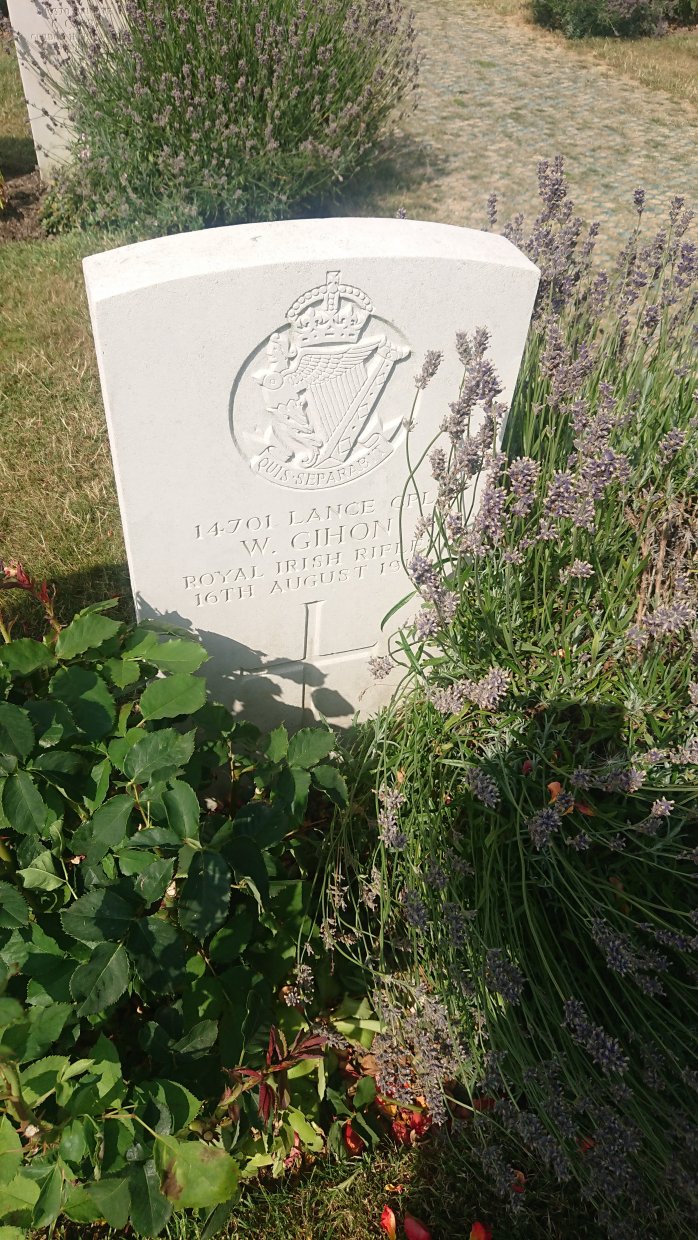
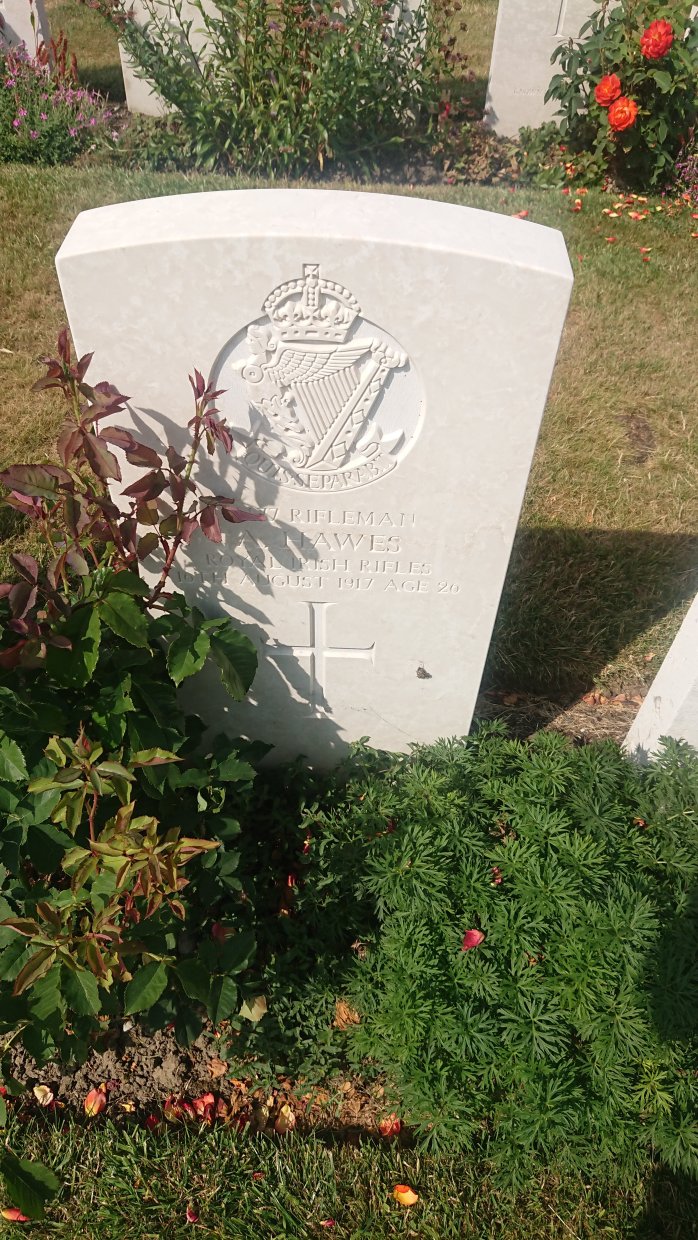
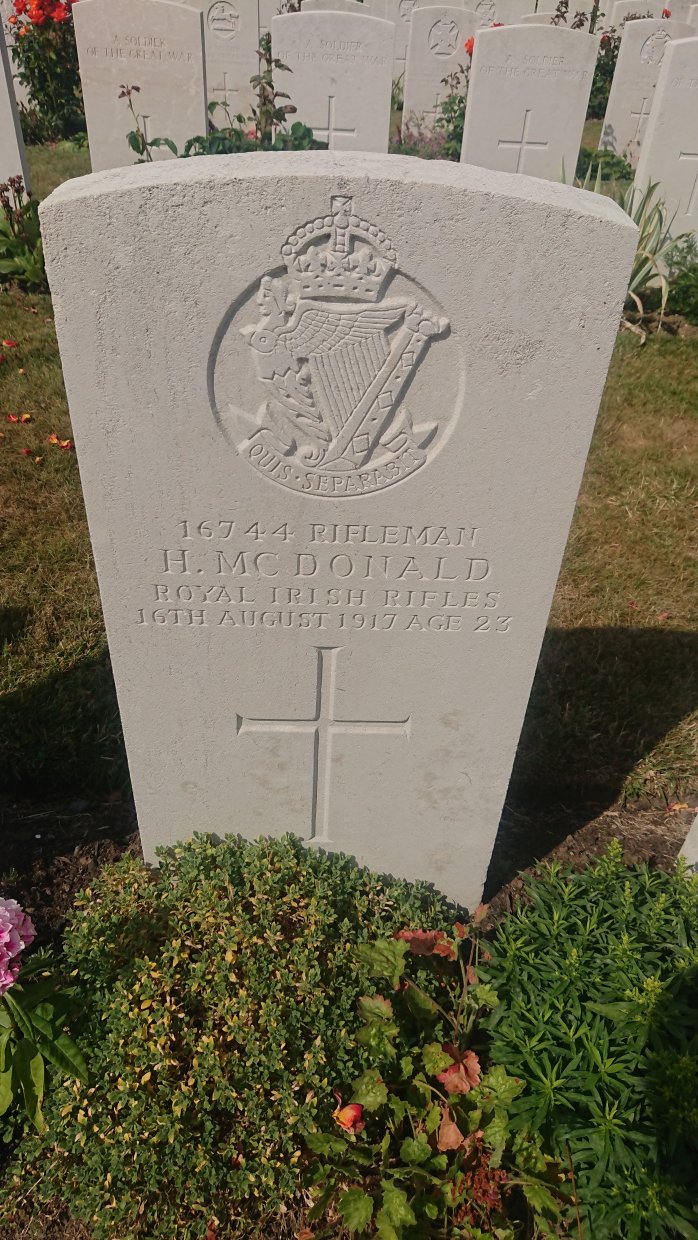
At Tyne Cot Cemetery, the graves can be seen of six members of the Royal Irish Rifles who died at the Battle of Passchendaele on 15th and 16th August 1917. I have now researched their background using the CWGC website and discovered that three came from Co. Down and one from Belfast. The fifth was from Luton and there are no details available for the sixth soldier, Rifleman W. Witterick. We will remember them.

Lance Corporal Samuel Coffey

COFFEY_SAMUEL

18/1063 Lance Corporal Samuel Coffey, 12th Battalion, Royal Irish Rifles. Died on 15th August 1917 (Passchendaele), aged 21. Son of John and Mary Coffey of Killyleagh Street, Crossbar, Co. Down.

Lance Corporal William Gihon

GIHON_WILLIAM

14701 Lance Corporal William Gihon, ‘B’ Company, 14th Battalion Royal Irish Rifles. Died on 16th August 1917 (Passchendaele), aged 24. Son of John and Jane Gihon of no.5 Adela Place, Antrim Road, Belfast.

Rifleman Arthur Hawes

HAWES_ARTHUR

41477 Rifleman Arthur Hawes, 13th Battalion, Royal Irish Rifles. Died on 16th August 1917 (Passchendaele), aged 26. Son of Thomas and Kate Hawes of 18 Dudley Street, Luton, England.

Rifleman Hugh McDonald

McDONALD_HUGH

16744 Rifleman Hugh McDonald, 13th Battalion, Royal Irish Rifles. Died on 16th August 1917 (Passchendaele), aged 23. Son of George Francis and Margret McDonald of Gallows Street, Dromore, Co. Down.

Lance Corporal Henry Greer Mills

MILLS_HENRY_GREER

18479 Lance Corporal Henry Greer Mills, 13th Battalion, Royal Irish Rifles. Died on 16th August 1917 (Passchendaele), aged 27. Son of John and Annie Mills of Marino, Holywood, Co. Down.

Rifleman W. Witterick

WITTERICK_W

42590 Rifleman W. Witterick, 14th Battalion, Royal Irish Rifles. Died on 16th August 1917 (Passchendaele).

Unknown soldier from the Royal Irish Rifles

TYNE COT MEMORIAL

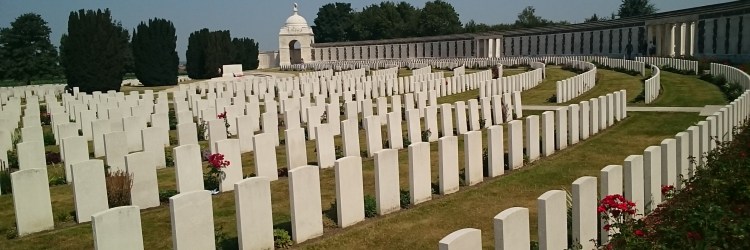
Tyne Cot memorial and cemetery

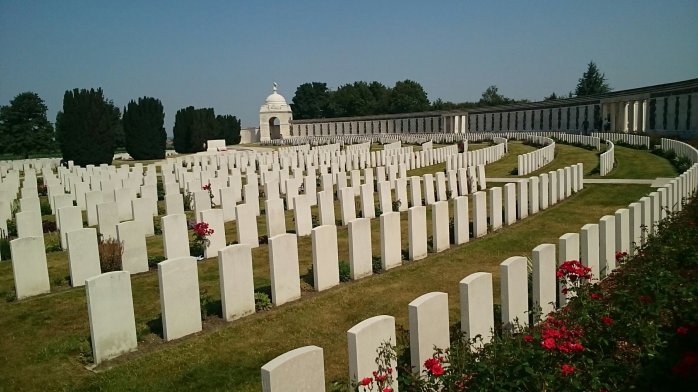
Tyne Cot Memorial bears the names of some 35,000 men of the British and New Zealand forces who have no known grave, nearly all of whom died between August 1917 and November 1918. This area on the Western Front was the scene of the Third Battle of Ypres, also known as the Battle of Passchendaele. It was one of the major battles of the First World War.

Cross of Sacrifice at Tyne Cot cemetery

  • It was designed by Sir Herbert Baker with sculpture by Joseph Armitage and Ferdinand Victor Blundstone. He designed many of the CWGC memorials and cemeteries in Belgium and France.
  • The memorial was unveiled by Australian soldier and veterans’ rights activist Sir Gilbert Dyett, on 20th June 1927.
  • The names are carved on the memorial on panels of Portland stone, set in high flint walls which have been built in a half circle.

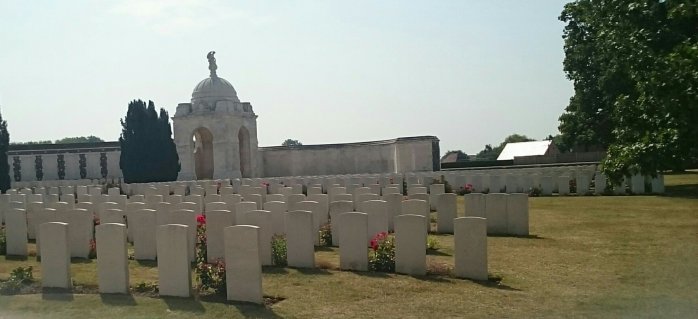
Tyne Cot cemetery

The memorial is a semi-circular flint wall 4.25 metres high and more than 150 metres long, faced with panels of Portland stone. There are three apses and two rotundas. The central apse forms the New Zealand Memorial and the other two, as well as the rotundas and the wall itself, carry the names of United Kingdom dead.

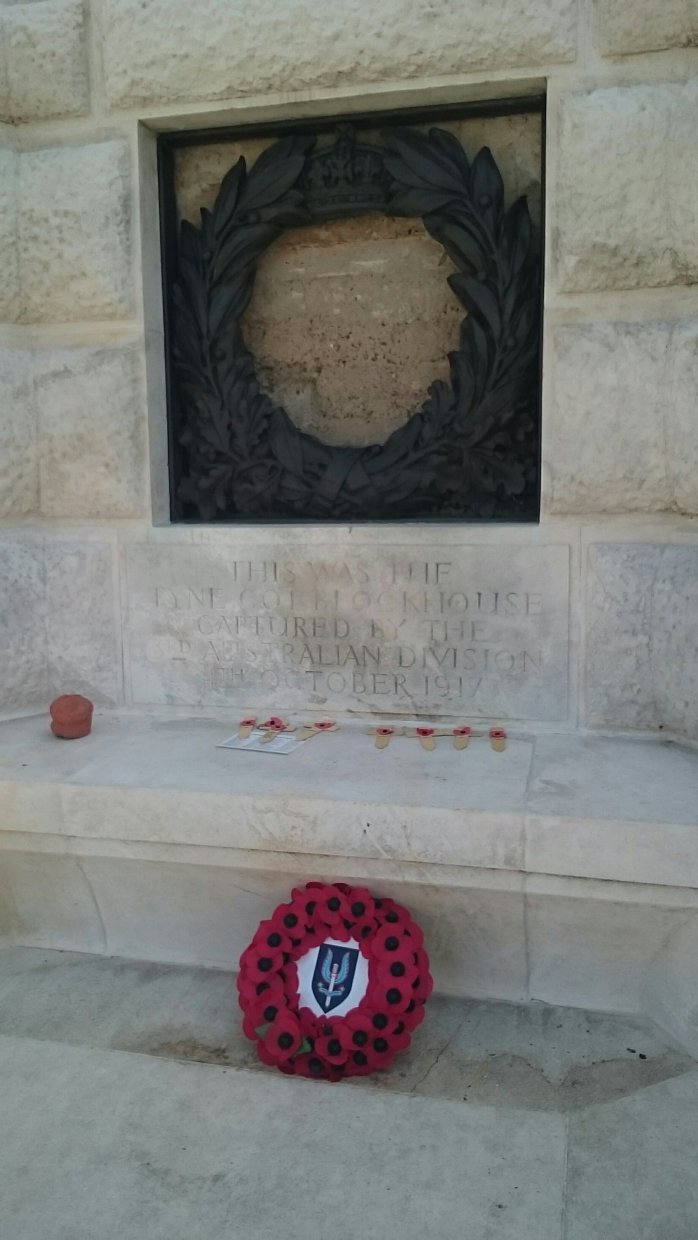
Australian Division memorial at Tyne Cot cemetery

Two domed arched pavilions mark the ends of the main wall, each dome being surmounted by a winged female figure with head bowed over a wreath. The following inscription is carved on the frieze above the panels which contain the names:

1914 – HERE ARE RECORDED THE NAMES OF OFFICERS AND MEN OF THE ARMIES OF THE BRITISH EMPIRE WHO FELL IN YPRES SALIENT, BUT TO WHOM THE FORTUNE OF WAR DENIED THE KNOWN AND HONOURED BURIAL GIVEN TO THEIR COMRADES IN DEATH – 1918

At each corner of the structure there are carved wreaths. Atop each of the pavilions is a winged figure in grief surmounting a globe. The globe itself is ringed with symbols including a Fleur-de-Lys, a shamrock, an anchor, a rose, an eagle and an oak leaf.

Tyne Cot memorial and cemetery

The sculptors Ferdinand Victor Blundstone and Joseph Armitage were commissioned to work with Baker on the memorial. Blundstone carved the angels surmounting the chapels and record building, and Armitage did the wreaths carried by the angels. There was concern about the fragile state of the sculptures and Blundstone arranged for them to be completed from a scaffold after they were hoisted into place.

Tyne Cot cemetery July 2017

Tyne Cot cemetery cross of sacrifice

HILL 62 SANCTUARY WOOD

Sanctuary Wood museum

In the last decade there has been a large increase in visitors to the Ypres Salient, and many have included a visit to the trenches at Sanctuary Wood, a few kilometres outside Ieper.

WWI shell and British Army cap badges

In the 1990s the trenches were covered in grass and the whole site was overgrown with undergrowth. Nowadays the ground around the trench line has been visited by so many pairs of feet that it is mostly bald with no grass or undergrowth.
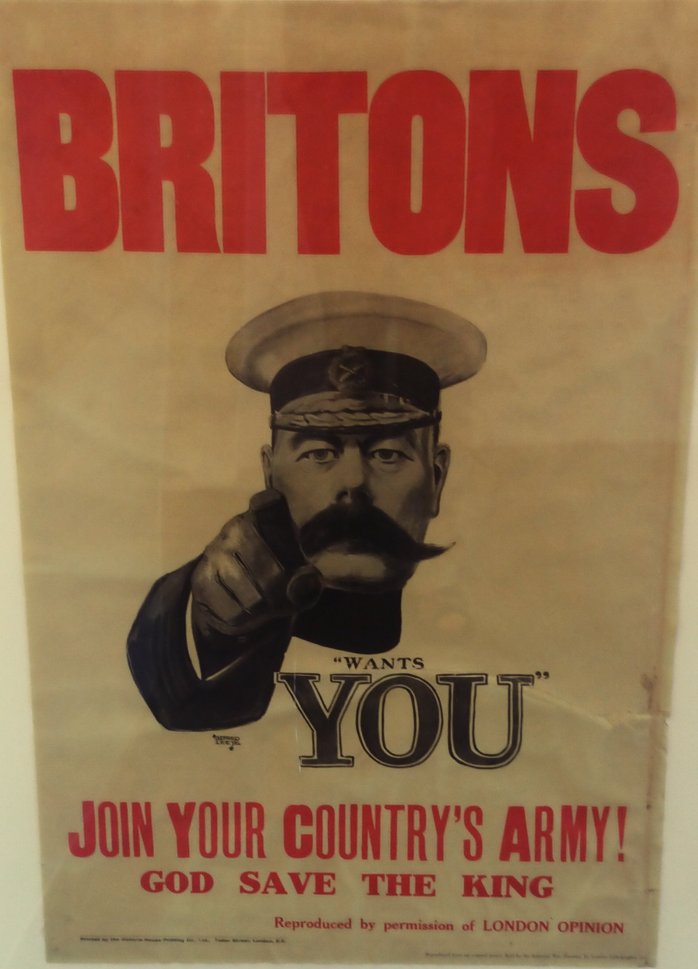
British Army WWI recruiting poster

The need for the preservation of battlefield areas makes for an interesting discussion. The natural desire to be allowed to walk freely amongst historical remains such as these trenches is one side of the argument, the possibility that they will be damaged in so doing is another.

Vickers machine gun

It’s been a topic of discussion for some years already by battlefield historians, local authorities and the people who live with the scarred landscape all around them.
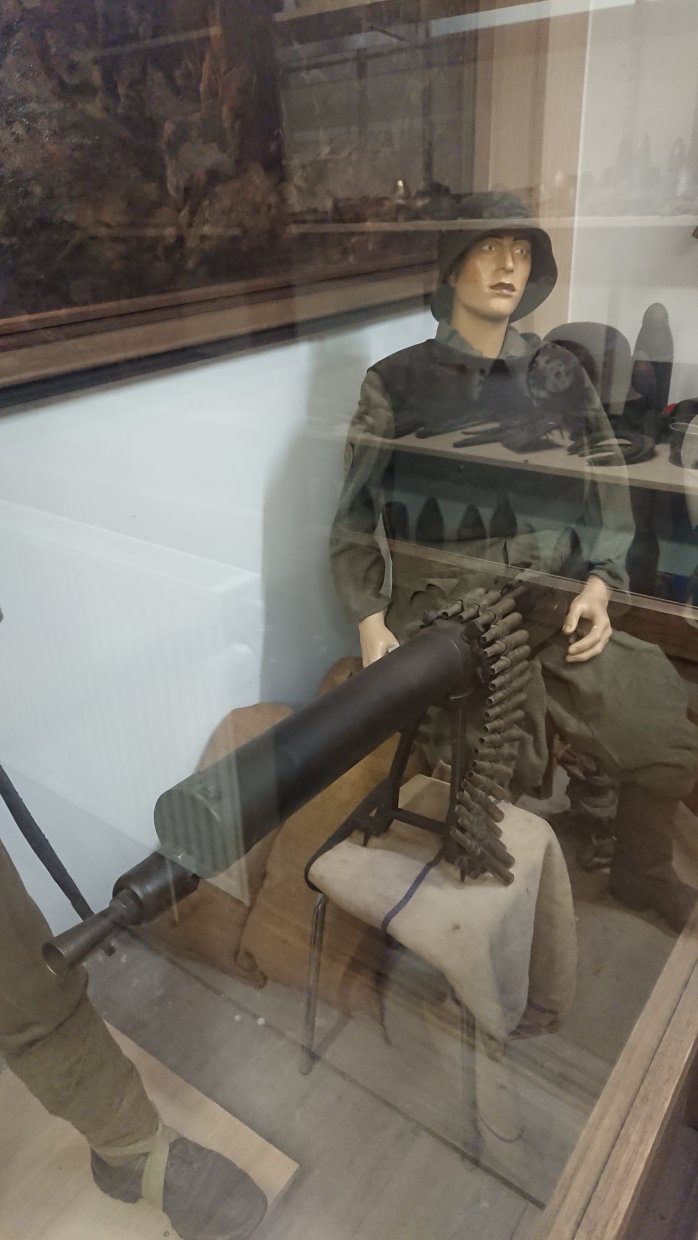
German machine gun

Sanctuary Wood is a fascinating example of how such war remains bring together the local people who own the ground and live with them daily, the people who come in their thousands each year to see them, historians who debate whether these trench remains are original or not, and the people who want to find ways to preserve endangered WW1 battlefield remains.

Belgian Royal Family Tree

The museum was developed by Jacques Schier, the grandson of the farmer who founded the museum and owned the site of the museum since before World War I. It has a unique collection of World War I items, including a rare collection of three-dimensional photographs, weapons, uniforms, decommissioned bombs and shells.

WWI British Army recruiting poster

On entering the museum through the café visitors will be in a room with display cases on tables in the centre of the room. Many interesting photographs are arranged on the walls. In this room you will find a large and rare collection of three dimensional photo images inside special viewing boxes. These 3D photographs were produced after the war and are absorbing and absolutely fascinating to look through.
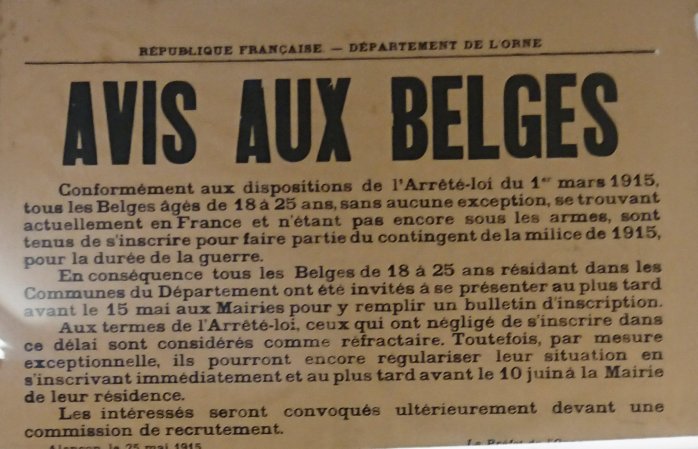
Calling on young Belgians 18-25 to enlist

The museum collection contains equipment removed from the battlefield in the vicinity of Sanctuary Wood. There are several German grave markers reclaimed from the battlefields. These were removed from their original burial location after the burials were presumably moved from outlying battlefield burial plots into a formal German military cemetery during the battlefield clearance after 1918.
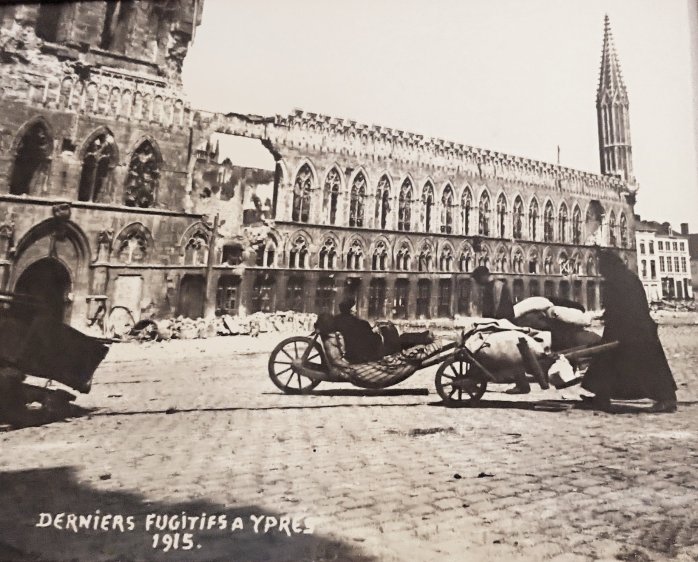
Last refugees in Ieper at the Cloth Hall 1915

Among the battlefield relics is a rare example of a British Army Cook’s Wagon. This was given a treatment of wood preserver in the 1980s by volunteers from the British Army’s Royal Corps of Transport serving near Antwerp.

Ruins of Ieper

In what was once a house, several rooms are dedicated to various displays of wartime memorabilia. They include some fascinating posters and pictures, including several showing the devastation of Ieper (Ypres) by the Germans during World War One.
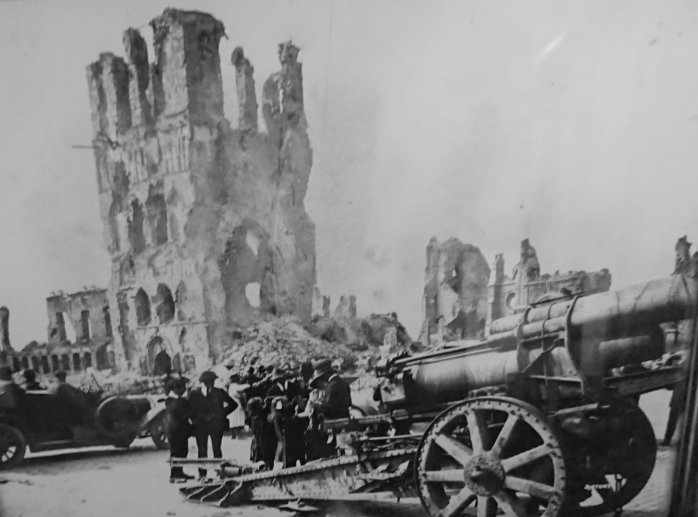
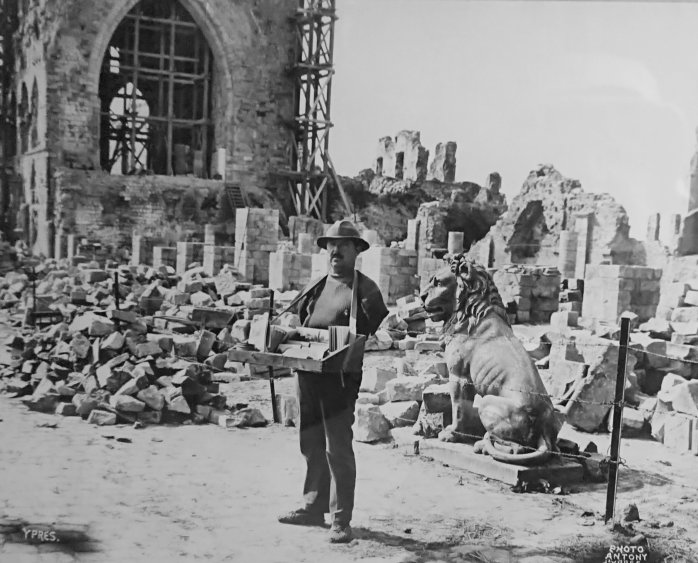
More pictures of the destruction in the centre of Ieper