ADAM CLARKE: LEADING METHODIST

John Wesley's Chapel, Bristol

John Wesley’s Chapel, Bristol

During a visit to Bristol, I went to visit an important place for the Methdist Church in Britain and Ireland. John Wesley established a new chapel in the city centre in 1739, when it became the first Methodist building in the world. It was called the “New Room” in the Horsefair. I referred to it in a previous blog.

Pulpit

Pulpit

The two-decker pulpit followed the custom of those days. The upper part was used for the sermon and the lower part for the rest of the service. The present upper part is a replica. The communion table is that which was used by Wesley. The people sat on plain benches. Wesley gave the clock. The Snetzler Chamber Organ of 1761 on the right hand side of the gallery, as you face the pulpit, was brought here in the present century. Wesley presided at eighteen Conferences here.

Upstairs is the Common Room, with quarters for the Methodist preachers who came to Bristol. The bedrooms contain displays about the history of the Church and the spreading of Methodist teachings to the USA and elsewhere.

On one of the walls, I found a portrait of another significant figure in Methodism, Adam Clarke. A note beside it said he was born in Ireland and on checking a reference book, I discovered he was from County Londonderry.

Adam Clarke

Adam Clarke

Clarke was born in Moybeg Kirley, a townland on the edge of Tobermore off the road towards Draperstown, in the parish of Kilcronaghan, gateway to the Sperrin Mountains. His father was a schoolmaster and farmer. John Wesley invited him to become a pupil at a seminary he established at Kingswood in Bristol. He went on to become an eminent scholar and theologian. He is best known for his commentary on the Bible: “The Holy Bible: containing the Old and New Testaments, according to the authorized translation; with all the parallel text and marginal readings. To which are added, notes and practical observations, designed as a help to a
correct understanding of the sacred writings” (1810-1837).

Thanks to a former Belfast TV news colleague David Blevins for pointing out that there is a memorial to Adam Clarke in Portrush, Co.Antrim. A biography, The Life of the Rev. Andrew Clarke (JW Etheridge, 1859) says in a footnote p.399 that:-

The Adam Clarke Memorial, (under the patronage of the Right Hon. the earl of Antrim, and John Crombie, Esq., J.P., D.L.,) is to consist of a “school, church, and minister’s house, at Port-Stewart, and an obelisk and statue at Port-Rush, near Coleraine.” The foundation stone of the obelisk was laid in September, 1857, with great public solemnities. The base is seven feet square and eight feet high, from which the monument will rise to a height of forty-two feet; which, taking the elevation of the site, will be equal to one hundred and twenty feet above the level of the sea. Close to the base will be the statue of Dr. Clarke, contributed by public offerings in America”.

The Francis Frith collection of photographs has an interesting picture of the obelisk beside the Methodist church at Portrush in 1897:
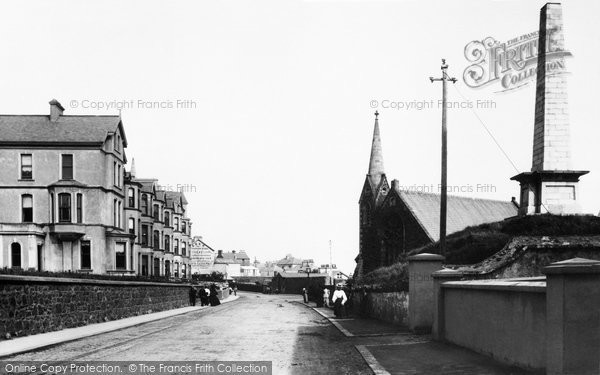
Photo of Portrush, Adam Clarke's Memorial 1897, ref. 40407

Reproduced courtesy of Francis Frith.

Willie Duffin has more recent photographs (2009) of the information plaques on the side of the obelisk and also a circular plaque on the wall of the church.
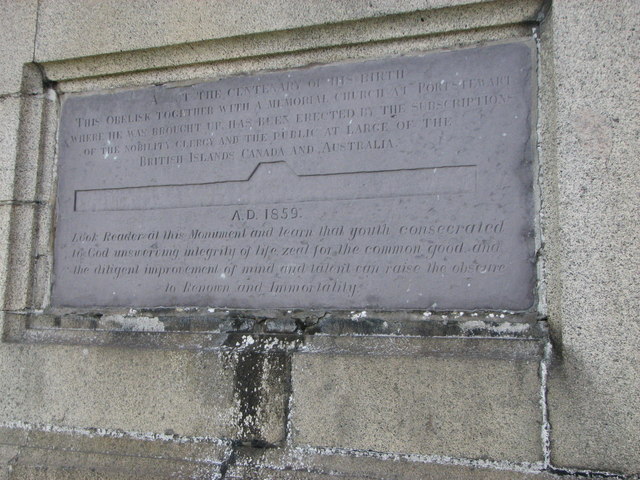
Adam Clarke Obelisk Plaque

Adam Clarke Obelisk Plaque © Copyright Willie Duffin and licensed for reuse under Creative Commons Licence

Adam Clarke Obelisk Plaque © Copyright Willie Duffin and licensed for reuse under Creative Commons Licence

Adam Clarke Obelisk Plaque © Copyright Willie Duffin and licensed for reuse under Creative Commons Licence

Adam Clarke Plaque © Copyright Willie Duffin and licensed for reuse under Creative Commons Licence

Adam Clarke Plaque on Church Wall           © Copyright Willie Duffin and licensed for reuse under Creative Commons Licence

S.S.GREAT BRITAIN

SS Great Britain

SS Great Britain

This is the story of Brunel’s ship, now preserved at Bristol Docks after being rescued from the Falkland Islands in 1970. Launched in 1843, she was the world’s largest ship and the first iron-hulled passenger vessel. Thousands flocked to her launch in Bristol. The ship became a huge success, travelling 32 times around the globe and clocking up nearly 1 million miles at sea.

Dundrum Bay 1846 But in 1846, a few years after the launch, there was a near disaster for the ship. The Dundrum Bay story of 1846 is featured in part of the exhibition in the former dock building alongside the preserved ship. The web page devoted to the ship’s designer, Isambard Kingdom Brunel, tells the story as follows:-

On 22nd September 1846, the Great Britain sailed from Liverpool on her fifth voyage with 180 passengers, the most that she had ever carried. Later that night while passing the coast of County Down, she ran aground in Dundrum Bay. It was a squally night with rain and Chicken Rock Light on the Isle of Man had not been sighted and the ship ran too far before turning up the Irish coast. There were no casualties and the passengers were embarked next day but the Great Britain was stuck fast and holed. It was nearly twelve months before the ship was towed back to Liverpool at the end of August 1847. The cost of repairs were estimated at £22,000 but the ship was under insured and the company did not have the resources to cover the difference. Consequently, the company was forced to sell its two famous ships the Great Western and the Great Britain“.

SS Great Britain

SS Great Britain

Entrance to the ship and dockside museum costs £12.95 (£10.95 concession over 60).

BATH TIME

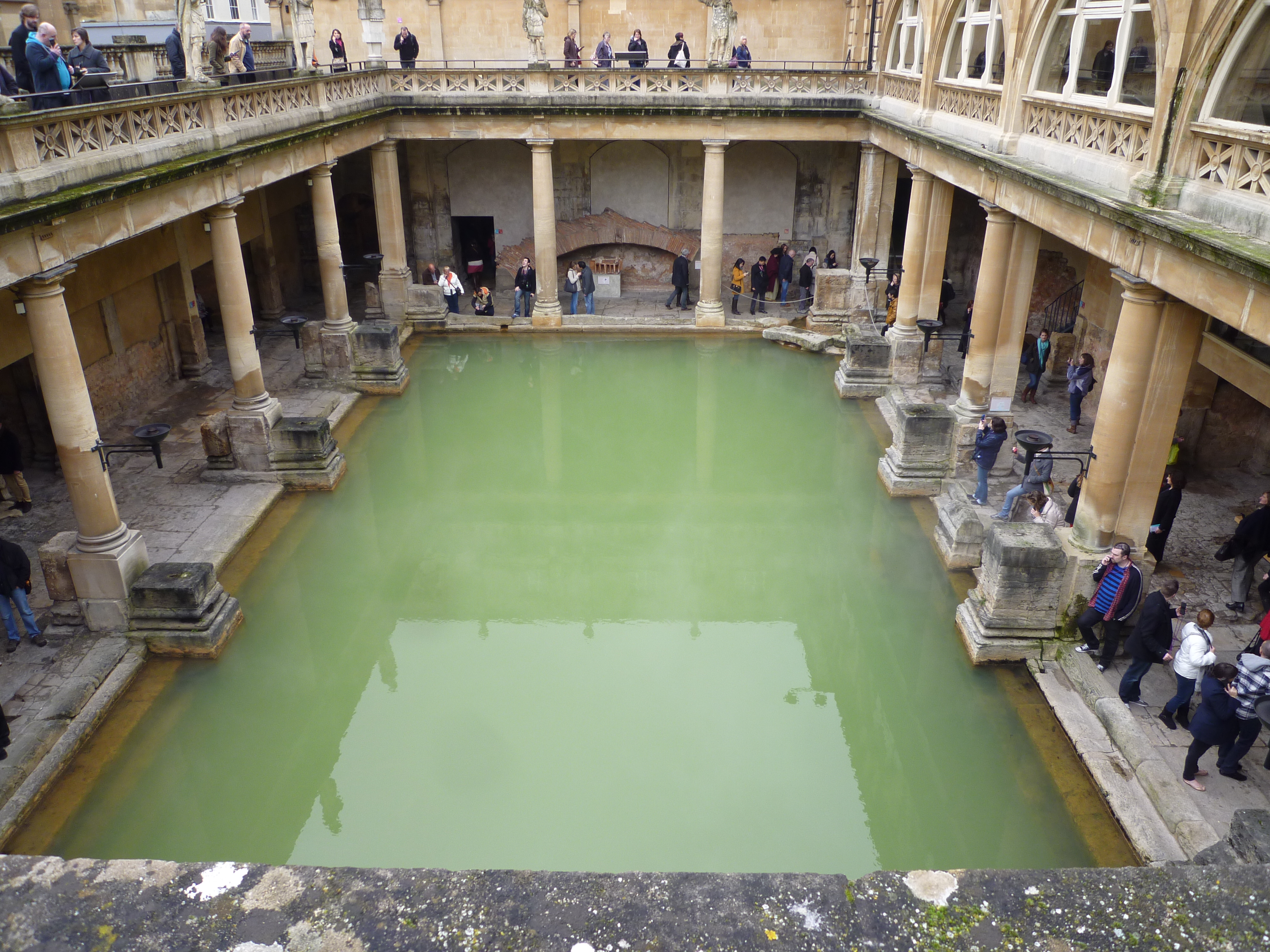
Roman Baths, Bath

Roman Baths, Bath

A very interesting visit to Bath to see the Roman Baths. The last time I was here was probably in 1975. Since then, more excavations have revealed further parts of the Roman complex. With the aid of a good audio guide, which was included in the admission price (£12.75 for adults), we spent two hours here. It’s easy to see why this is one of Britain’s top tourist attractions.  

Under floor heating!

Under floor heating!

Even on a dull day in March, there were queues to enter the complex, but the waiting time was not long. The Roman engineering and architectural skills were very similar to that in Pompeii, which I saw last August.

Bath Crescent

Bath Crescent

After visiting the Baths, it was time to see a bit more of Bath, including the famous Georgian Crescent and Bath Abbey, with its beautiful fan-vaulted roof and an impressive entrance door, where a Trident missile protest was being held.   

Bath Abbey entrance

Bath Abbey entrance


We took the train to and from Bristol. Less then a quarter of an hour’s journey for just over £2 each way on a group ticket (six travelling).  Very good value indeed for public transport.

BACK IN BRISTOL

Many years ago in 1975 I worked in Bristol for a few months on an attachment with the BBC regional newsroom. I haven’t been back to the city until today, and will spend a weekend there with friends. So I expect to notice some changes, in particular the area around the former docks.

Bristol was once an important centre in the slave trade, a past it probably wants to forget. Anti-slavery campaigners, inspired by non-conformist preachers such as John Wesley, started some of the earliest campaigns for abolition of the trade. The campaign itself proved to be the beginning of movements for reform and women’s emancipation.

John Wesley

John Wesley

Wesley founded the very first Methodist Chapel, The New Room in Broadmead in 1739, which is still in use in the 21st century. Wesley had come to Bristol at the invitation of George Whitfield. He preached in the open air to miners and brickworkers at Kingswood and Hanham, on the eastern outskirts of the city (Wikipedia). Bristol has an importance second only to London in the history of Methodism.

Bristol is also known as an important centre for the aircraft and aerospace industry. When I arrived here at St Augustine’s Reach, I was reminded that this was also a major city for shipbuilding. The area around the old harbour has been developed with bars and restaurants and is now a very lively place, compared to what it was like over 35 years ago!

St Augustine's Reach

St Augustine’s Reach

ONE DAY AT A TIME

One Day at a Time

One Day at a Time

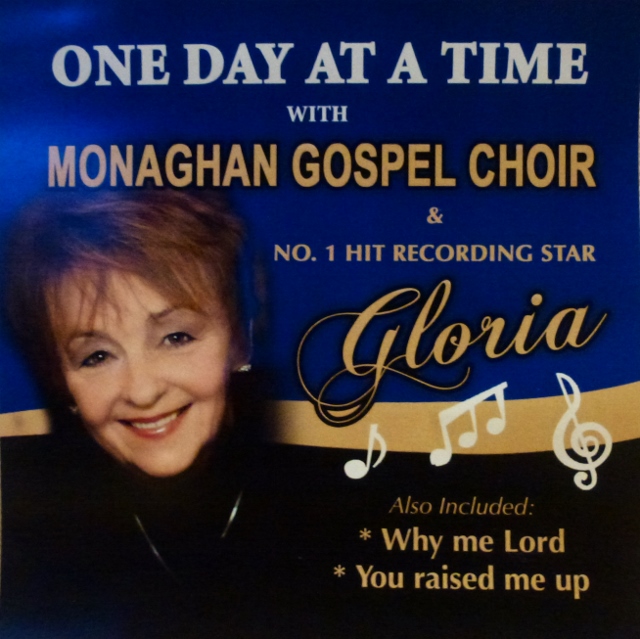
One of Ireland’s most popular country music singers, Gloria, has come out of retirement to record a fresh version of her chart-topping single “One Day at a Time”. She has teamed up with the Monaghan Gospel Choir, under the direction of David Drum. The choir was formed in 2007 and has just acquired new premises in Monaghan town (appropriately perhaps, a former gospel hall) for rehearsals.

The well-known country and Western-style Christian gospel song was written by Marijohn Wilkin and Kris Kristofferson. Under the watchful eye of Marijohn it was recorded in Nashville by Gloria who released it as a single in Ireland in August 1977. It remained in the Irish charts for 90 weeks in the top 30 until 1979 and was Number One from 30th September to 11th November in 1978. This made it the longest run by any song in Irish chart history and it still holds that record.

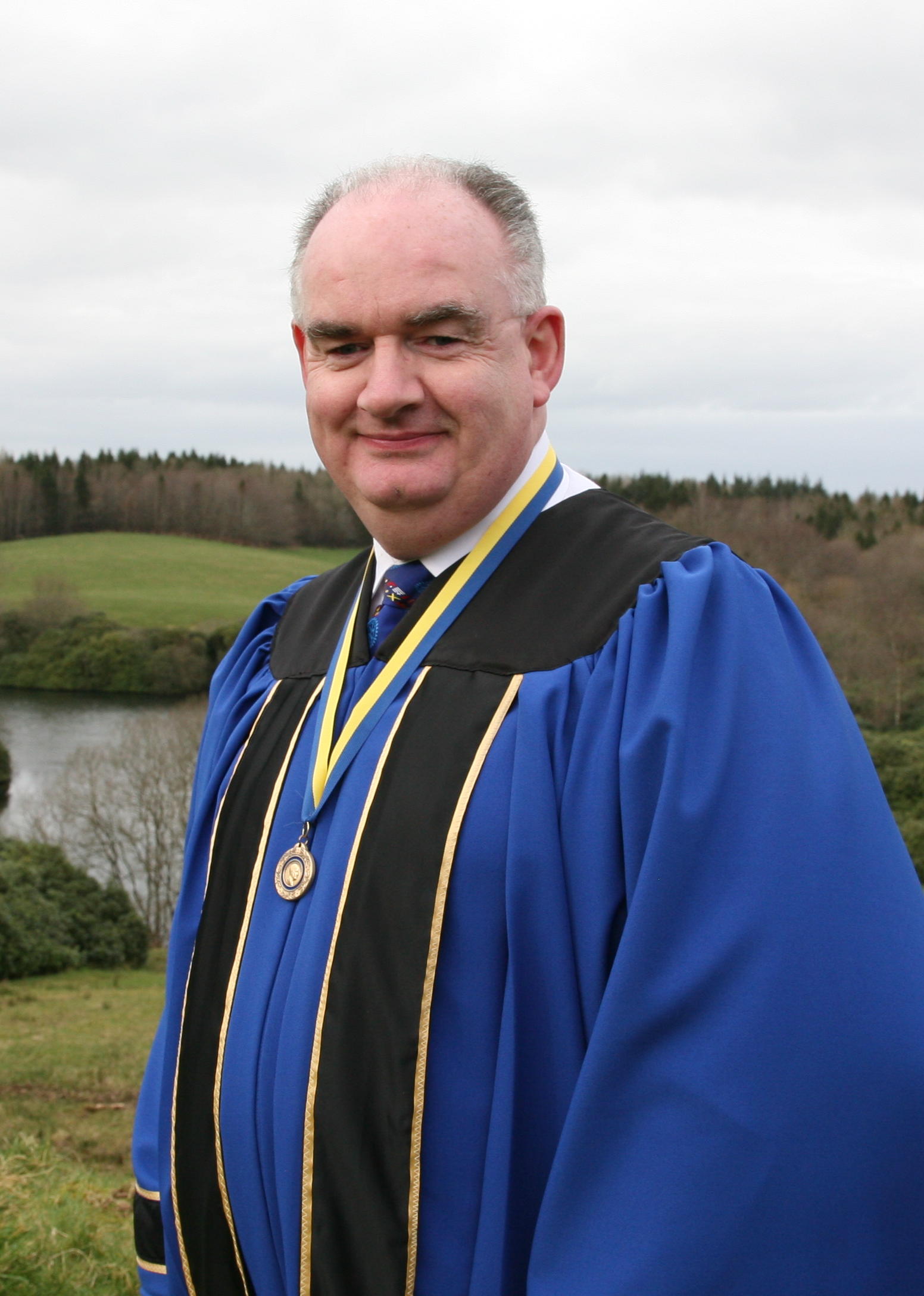
David Drum

David Drum

David Drum says that after nearly 40 years Gloria is delighted to re-release this Gospel Song along with the Monaghan Gospel Choir. He thanked the members of the choir for their work in this release and for their musical endeavours since their formation. He also thanked Gloria for the warm way she had embraced the request because, he said, songs like this never die, they just get better and more meaningful as the years go by.

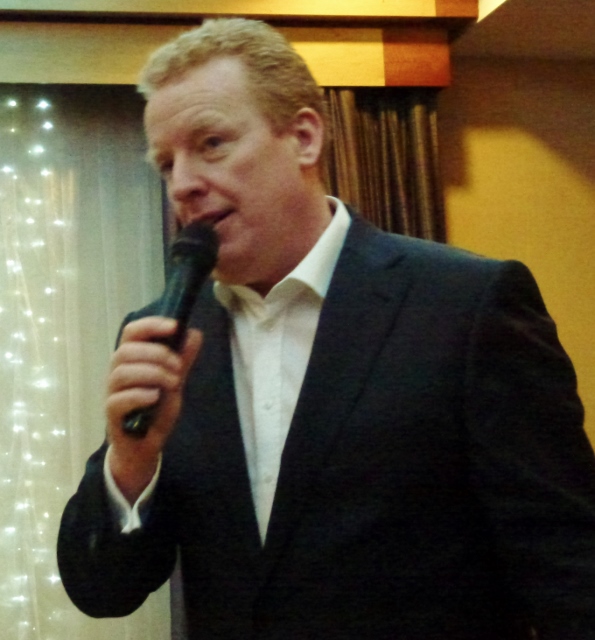
Joe Finnegan

Joe Finnegan, Northern Sound

The album was launched tonight at the Hillgrove Hotel in Monaghan. The Compere for the evening  was Joe Finnegan from Shannonside – Northern Sound FM. The CD which was recorded at Attic Studios in Monaghan can be purchased via the Choir’s website for €4.99. It will also be available through iTunes. The accompanist for the Choir is Seamus Mc Fadden, who also performed with Gloria in her band for over ten years.

Monaghan Gospel Choir has a membership of 80 people, male and female, divided into three sections, 40 Adults, 10 Junior Leaders, 30 juniors and they represent all parts of County Monaghan. They age from the youngest member aged 7 to 70 plus. The children are not performing tonight because of school commitments.

Gloria & Monaghan Gospel Choir

Gloria & Monaghan Gospel Choir

Gloria was born in Monaghan and lives in the parish of Tydavnet. Her first experience on stage was aged 10 when she danced and played accordion with her father’s showband. After leaving school, she found work playing piano with another band, but it was as a singer that she made her name in the 1970s. Gloria toured around Ireland singing alongside Johnny McEvoy during the early 1970s before breaking out on her own. When she released “One Day at a Time” originally, she was very popular in the dancehalls, along with her backing band, The Mississippi. Gloria retired in May 2001, when she turned 50.

AUSCHWITZ: A SURVIVOR

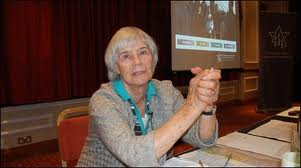
Kitty Hart-Moxon

Kitty Hart-Moxon

I am watching the story of a survivor of Auschwitz. Stephen Nolan on BBC1 Northern Ireland is talking to Kitty Hart-Moxon and hearing her “Story of a Lifetime”. She was sent to the Auschwitz labour camp in 1943 at the age of 16, where she survived for two years. She  was also imprisoned at other camps. Shortly after her liberation in April 1945 by American soldiers, she moved to England with her mother, where she married and dedicated her life to raising awareness of the Holocaust. She has written two autobiographies entitled I am Alive and Return to Auschwitz.

She was born Kitty Felix in 1926, in Bielsko in southern Poland. She had one brother, Robert, who was five years older. Her father operated an agricultural supply business. As a child, she represented Poland as part of the Youth Swimming Team in 1939. She won a bronze medal and was the youngest selected on the squad.

During a holiday when Kitty was 12, her parents decided to leave Bielsko because of the anti-Semitic mood that had swept the town, which was close to the borders with Germany and Czechoslovakia. To escape the danger, Kitty’s family moved to Lublin, in central Poland. They left on 24 August 1939. On September 1st 1939, Hitler’s Germany invaded Poland. A priest obtained false documents for her and her mother and the family split up to help their chances of survival. They blended in with a group of Poles heading for work in Germany and ended up at a rubber factory in Bitterfeld. They were rounded up with a number of other Jews and sent to Auschwitz.

Auschwitz

Auschwitz

Well over 1 million Jewish men, women and children died in Auschwitz/Birkenau. Other groups of people who died included Polish political prisoners, Soviet prisoners of war, gypsy families, homosexuals, people with disabilities and prisoners of conscience or religious faith (including several hundred Jehovah’s Witnesses). Kitty was 16 when she was taken to Birkenau. She witnessed the German soldiers sorting children and adults. Many were sent directly to the gas chambers. The buildings in this section now lie in ruins and for anyone who visits the site it is an emotional experience, reflecting on the mass murder that occurred. When I was there a few years ago, a group of orthodox Jews, some with Israeli flags, paused among the rubble to pray.

It was Kitty’s job at the concentration camp to sort through the mens’ jackets and remove all the valuables. In an exhibition there are piles of possessions, along with the hair removed from victims before they died and later used to make cloth. Block 25 was known as the death block. Female prisoners were held there before being taken to the gas chambers.

Kitty was fortunate to survive. Now she tells her story to others, to remind people about the genocide, in the hope that new generations can learn from the horrors of the past.

TERRY’S SUPER HEXAGON

Terry Cavanagh

Terry Cavanagh

A big night in London tonight for Terry Cavanagh from Tydavnet in County Monaghan, developer of Super Hexagon. It was in the running for a BAFTA video games award in the Best British game category. Terry is based in Cambridge and his parents were with him at the finals at the Hilton Hotel in the West End. Dara O Briain was compere. Here’s how The Guardian described the ceremony:-

10.31pm:

Now it’s time to turn to the award for British game. Not the game that best embodies Britishness (croquet? cricket? cluedo?) but the best game made by a Brit. A difficult award to judge this. The nominees are:

·  Forza Horizon ·  LEGO: The Lord of the Rings ·  Need for Speed Most Wanted · (these three are “hefty multiplatform blockbusters” according to the blog)

· Dear Esther · The Room ·  Super Hexagon (Terry’s game is among three independent creations, self-funded by their developers). These two different groups “exemplify the current tussle at the creative and commercial heart of the industry”, says the Guardian video games journalist, Simon Parkin.

10.34pm:

And the winner is: The Room, an iOS puzzle game that’s heavy on atmosphere and light on scarves.

The game, according to a BBC report, challenges players to solve puzzles in a 3D environment in order to reveal the secrets of a mysterious box. It was created by Guildford-based Fireproof Studios and had previously won Apple’s 2012 iPad game of the year.

Well done Terry, who no doubt might disagree strongly with that description of the category namely “the best game made by a Brit”!!    gamegames-awards-logo-2926

For a full list of the nominations in the nineteen categories, you can go to the BAFTA website here. The Best Game award went to Dishonored, as the BBC News technology section reports. This was the fifth year O’Briain acted as master of ceremonies. The Guardian said he took to the stage and opened his remarks “by expressing his dismay at continually being asked to defend video games in the role of ‘token’ game playing celebrity”.

Dara O Briain

Dara O Briain

GEORGE QUIGLEY RIP

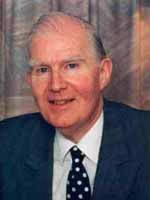
George Quigley

George Quigley

George Quigley had a vision for an all-island economy. It was not a matter of politics for him, but as a businessman he thought it made sense. I met him for interviews on a number of occasions in the different roles he performed so well. A former high-profile civil servant, he entered the private sector as Chairman of Ulster Bank from until 1989 until 2001. I wonder how he would have felt about some of their recent problems regarding IT systems!  Sir George also served as a non-executive director on the Main Board of Nat West bank and as Chair of the Royal Bank of Scotland Pension Fund. He also chaired Lothbury Property Trust. He was a director of the aerospace company Shorts (owned by Bombardier) and was appointed Chairman of the company in to succeed Sir Roy McNulty in May 1999.

He was a leading member of the Northern Ireland Economic Reform Group. ergNI consists of economists, accountants and businessmen based in Northern Ireland who wish to see a more successful and competitive NI economy, less dependent on a public sector subvention from taxpayers in Great Britain.  He led the debate about the benefits of introducing a lower rate of corporation tax in Northern Ireland that would match the Republic, which has this incentive to attract foreign direct investment.  He headed an industrial task force to examine the issue and claimed in 2006 a reduction from 30% to 12.5% would “double the growth rate of the local economy” and had the potential to create 180,000 jobs over 25 years.

Three years ago, Sir George along with the former Church of Ireland Primate Archbishop Robin Eames verified the decommissioning of weapons by the loyalist paramilitary group, the Ulster Defence Association. In a joint statement, the North’s First Minister Peter Robinson and deputy First Minister Martin McGuinness offered their condolences. They said he was “a strong advocate of mutual respect in building a cohesive and equal society“.

The Sinn Féin President Gerry Adams expressed his sadness and said “George was an experienced economist and a long-time advocate of the all-Ireland economy. Last year he participated in a Sinn Féin conference in Derry on the issue of uniting Ireland“. The former SDLP leader and Foyle MP Mark Durkan said “George Quigley was a man of energy, verve, compassion and humour. His warm instincts and sharp intelligence made him engaging and effective“.

Sir George Quigley (CBI picture)

Sir George Quigley (CBI picture)

Sir George played an active role in the Confederation of British Industry. Along with the late William Poole, he was a strong supporter of the IBEC-CBI Joint Business Council which promoted cross-border trade, business and transport co-operation. The Chairman of CBI Northern Ireland Ian Coulter described him as:-

a great man who achieved so much in his lifetime. He had an intellect and a sense of civic duty that set the standard and was passionate about securing the long term future of Northern Ireland. More recently he played a key role in championing the cause of Presbyterian Mutual Society depositors and effectively created the debate for a lower corporation tax in Northern Ireland. Most of all, Sir George will be remembered for the role he played within civic society. The term ‘business leader’ is overused – Sir George was one of the very few who actually was one.”

Elsewhere his roles in public life have included chairman of the NI Economic Council and the Royal Group of Hospitals and he conducted a review of the Parades Commission. He served on the Dearing Committee on the future of higher education in the UK (report published in 1997). In the Republic he had been president of the Economic and Social Research Institute and chairman of the board of the Institute of British-Irish Studies in University College Dublin. He was a member of the Royal Irish Academy.

William Poole (CBI picture)

William Poole (CBI picture)

Three months ago he told a Northern Ireland Assembly committee for finance and personnel how he had been invited some 13 years ago by the late William Poole, an official working for the CBI, and the then Northern Ireland officer of the ICTU, the late Terry Carlin, to meet them so that they could pick his brains on the matter of recruiting ex-prisoners. They felt that something needed to be done about the issue. Sir George told MLAs that before long, he found himself chairing a group of around 30 people consisting of the representatives of groups whose members had been involved with the IRA, INLA, UDA and UVF. There were also representatives of agencies with relevant interests, such as training, as well as employer and trade union representatives. Some of their meetings were held at the Ulster Bank when he was chairman.

Sir George was taken ill on Sunday as he attended his local Presbyterian church at Helen’s Bay in County Down. He was 83. I have had the privelege of dealing with all three men and talking to them at various stages about the Northern Ireland economy. Now they have departed for their eternal reward, but hopefully they have given encouragement for the future by their actions. The ICTU offices in Belfast are named after Terry Carlin. William Poole and George Quigley also deserve to be remembered in an appropriate manner.

May they all rest in peace.

ATHLONE: BORDER TOWN

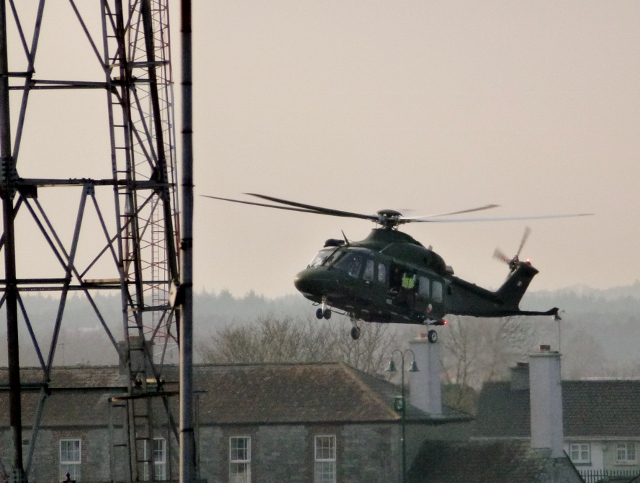
AgustaWestland AW139 Irish Air Corps Helicopter:Photo © Michael Fisher

AgustaWestland AW139 Irish Air Corps Helicopter:
Photo © Michael Fisher

An Irish Air Corps helicopter comes into land at an army barracks in a border town. But this is not near the state border between the Republic and Northern Ireland. As part of the peace process, Monaghan barracks has been demolished and is now an educational campus, with a new theatre.

My picture of an AgustaWestland AW139 was taken this afternoon in Athlone. It is one of six such aircraft in the Air Corps fleet. The observation point was from the Castle, looking across towards Custume Barracks. Until last year, it was the headquarters of Western command, but under reorganisation the 1,000 soldiers based there became part of what is now 2nd Brigade, with headquarters at Cathal Brugha Barracks in Dublin. The helicopter is providing an air ambulance service (Emergency Aeromedical Service) with air corps crew and one HSE paramedic on a trial basis until June. At the moment the EC-135 helicopter normally used is being rebuilt after an accident and the Westland helicopter operates from Baldonnel, Co. Dublin.

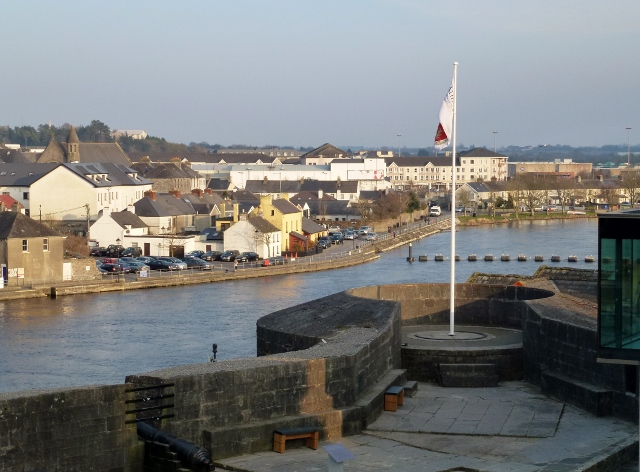
Athlone Castle & River Shannon

Athlone Castle & River Shannon

Athlone is an important gateway on the River Shannon. It is where Leinster (Longford, Westmeath) meets Connacht (Roscommon). The river, which has its source in Ulster (Shannon Pot) is the border between East and West. This is close to the centre of the island of Ireland. I remember passing this point on what was then the main Dublin to Galway Road when our family was heading to the West for a holiday in the 1960s. In those days the Castle was not open to the public, except for a small museum run by the Old Athlone Society. But the complex has now been developed and last week a new €4.3million visitor centre was officially opened.

Unfortunately my visit to the complex was only brief, as the last admissions are one hour before closing time, to enable visitors to take full advantage of the interactive displays. Thanks to a very helpful staff member, who wanted to give me an idea of the displays, I got a chance to look at the first gallery, featuring the early (Celtic) history of the town.  The new participatory experience has been developed by Event Communications, the same company which designed displays at Titanic Belfast and the Giant’s Causeway Visitor Centre in County Antrim.

Luan Gallery, Áth Luain

Luan Gallery, Áth Luain

The new Luan Gallery just across the road was closed. A pity, because I would like to have seen the controversial H-Block art work “Fragmens Sur Les Institutions Républicaines IV” by Longford artist Shane Cullen. At the opening of the exhibition three months ago, the former Fine Gael Minister for Justice Paddy Cooney criticised the display and called on the Town Council to get it removed. Perhaps he has forgotten his history.

IRA Statue, Athlone

IRA Statue, Athlone

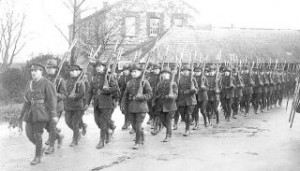
Only a few hundred metres away at the other end of the bridge there is a statue by Desmond Broe of an IRA volunteer in memory of members of the Athlone Brigade who lost their lives in the fight for independence. The same men who marched into the garrison (then Victoria Barracks) on February 28th 1922 to take it over from the British forces after the Anglo-Irish Treaty was signed. They were led by General Seán Mac Eoin,  accompanied by Brigadier George Adamson.

Free State soldiers march into Victoria (Custume) Barracks

Free State soldiers march into Victoria Barracks Photo:  IrishVolunteers.org

 Two months later Adamson was shot dead by anti-treaty forces. His is one of the names on the memorial, along with John Blaney, although the inscriptions on two sides written in Irish and English give the dates as 1916 (Easter Rising) to 1921. Athlone Castle was later renamed Adamson Castle in his honour. Thank you to a reader who drew my attention to the silent film of the event which was is copyright © British Pathe and can be previewed here. Well worth looking at to see the picture of Commandant General Mac Eoin (the “Blacksmith of Ballinalee”) addressing his troops.

Count John McCormack

Count John McCormack

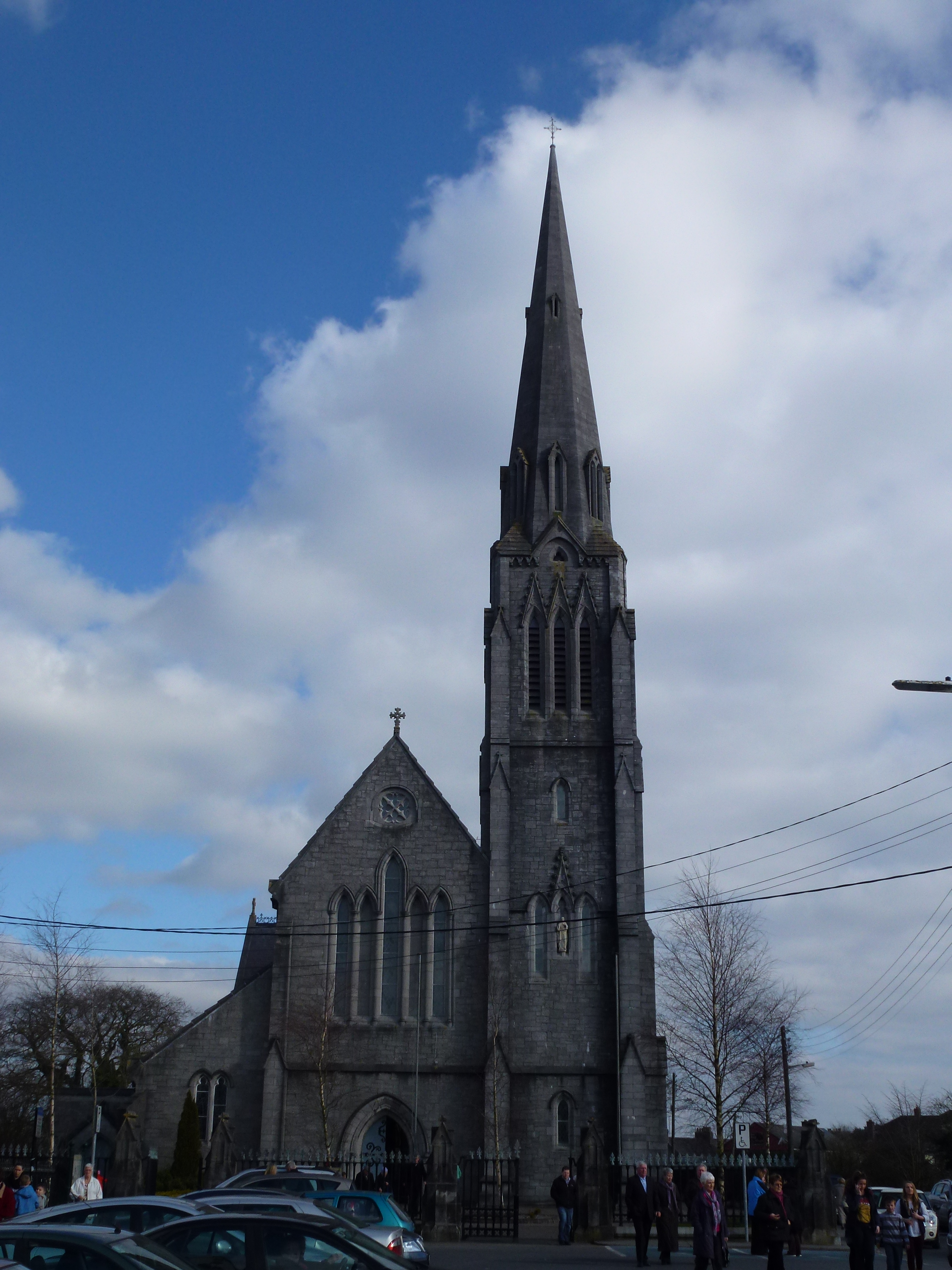
Another interesting statue along the bank of the River Shannon and close to the Luan Gallery is that of the internationally renowned tenor, Count  John McCormack. Born in Drumsna, he was baptised at St Mary’s Church in Athlone on 23rd June 1884. His parents were employed at the Athlone Woollen Mills. St Mary’s is on the Westmeath side of the town. At the moment, it is upgraded to a pro-Cathedral, following the fire at St Mel’s in Longford, which is undergoing a €30 million restoration. This means it serves as the seat for the Bishop of Ardagh and Clonmacnois, Dr Colm O’Reilly. Which reminds me of one other border in the town: the ecclesiastical one. The impressive church of St Peter and St Paul beside the Castle on the Roscommon side of the river is in the Diocese of Elphin, which stretches as far as Sligo. So there are plenty of interesting things to see and do here.

St Mary's Athlone

St Mary’s Athlone

If you want to go for a meal, there is a good selection of restaurants on both sides of the bridge. I lunched at the Olive Grove and sat at a table with a splendid view alongside the River, immediately opposite the Castle. When I went over to the Castle after the meal, I noticed that two cannons dating from the 18th Century were pointing across at the restaurant!  They are marked “GR” referring to the reign of George II. The lunch was very enjoyable and contained a range of fresh Irish products, including  Fivemiletown goat’s cheese from County Tyrone. It also had two main courses based on Silver Hill duck, from Emyvale in County Monaghan. It’s important to know the source of your food nowadays.

Cannon at Athlone Castle

Cannon at Athlone Castle

SS Peter & Paul, Athlone

SS Peter & Paul, Athlone

SUICIDE PREVENTION

Joan Freeman, Pieta House (Lucan)

Joan Freeman, Pieta House (Lucan)

The statistics make grim reading. Around 520 people a year in the Republic of Ireland take their own lives. The figures equate to ten deaths by suicide a week, and of those, eight are male. Joan Freeman from Pieta House in Lucan, County Dublin was the guest speaker at the Lions Clubs annual district convention at the Hodson Bay hotel near Athlone in County Roscommon. She revelaed that they were going to start up a campaign to “Mind your Males” and would be revealing more details in the near future.

Pieta House was founded by Joan, who was a practising psychologist seven years ago. Her own sister died by suicide. The group now has outreach centres in other parts of Dublin, including Tallaght and Finglas. It has also been working with Athlone and Roscommon Lions Clubs to set up a similar centre to serve the West of Ireland and has been running suicide awareness courses in Athlone.

At the moment there are no plans to extend the operation to Northern Ireland. At last year’s convention in Kilkenny, Lions heard about the work of PIPS when they were addressed by Philip McTaggart. The problems are the same on both sides of the border.

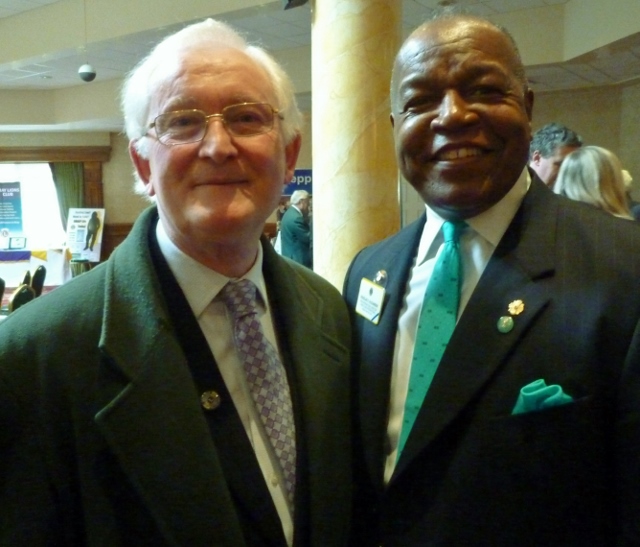
Christy Kenneally (Cork) and past international director Douglas Alexander (New York)

Christy Kenneally (Cork) and past international director Douglas Alexander (New York)

The subject was also dealt with in a very motivational speech by tv presenter and author Christy Kenneally from Cork.