MONAGHAN RAILWAY HERITAGE

Charles Friel RPSI at Monaghan Museum

Charles Friel RPSI at Monaghan Museum

Many years ago I interviewed Charles Friel for a ‘Northview’ programme on RTÉ Radio about railway heritage especially the old Great Northern Railway. Tonight he was giving a talk in Monaghan County Museum about the railway in County Monaghan.

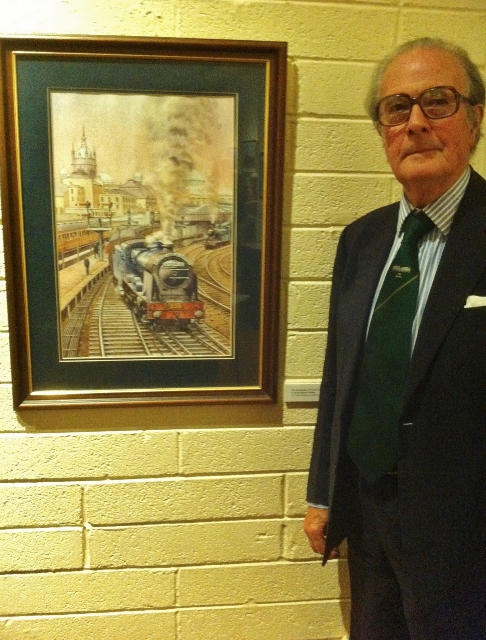
Lord O'Neill with one of the paintings: the Enterprise leaving Belfast

Lord O’Neill with one of the paintings: the Enterprise leaving Belfast

The talk coincided with the opening of an exhibition of railway paintings, the majority of which are on loan from Lord O’Neill of Shane’s Castle, Randalstown and President of the Railway Preservation Society of Ireland. Opening the display, he told the audience he would shortly be celebrating his 80th birthday with a trip on a special steam train excursion from Belfast!

Map showing former railway network in Co. Monaghan

Map showing former railway network in Co. Monaghan

BALLYGAWLEY BOMB REMEMBERED

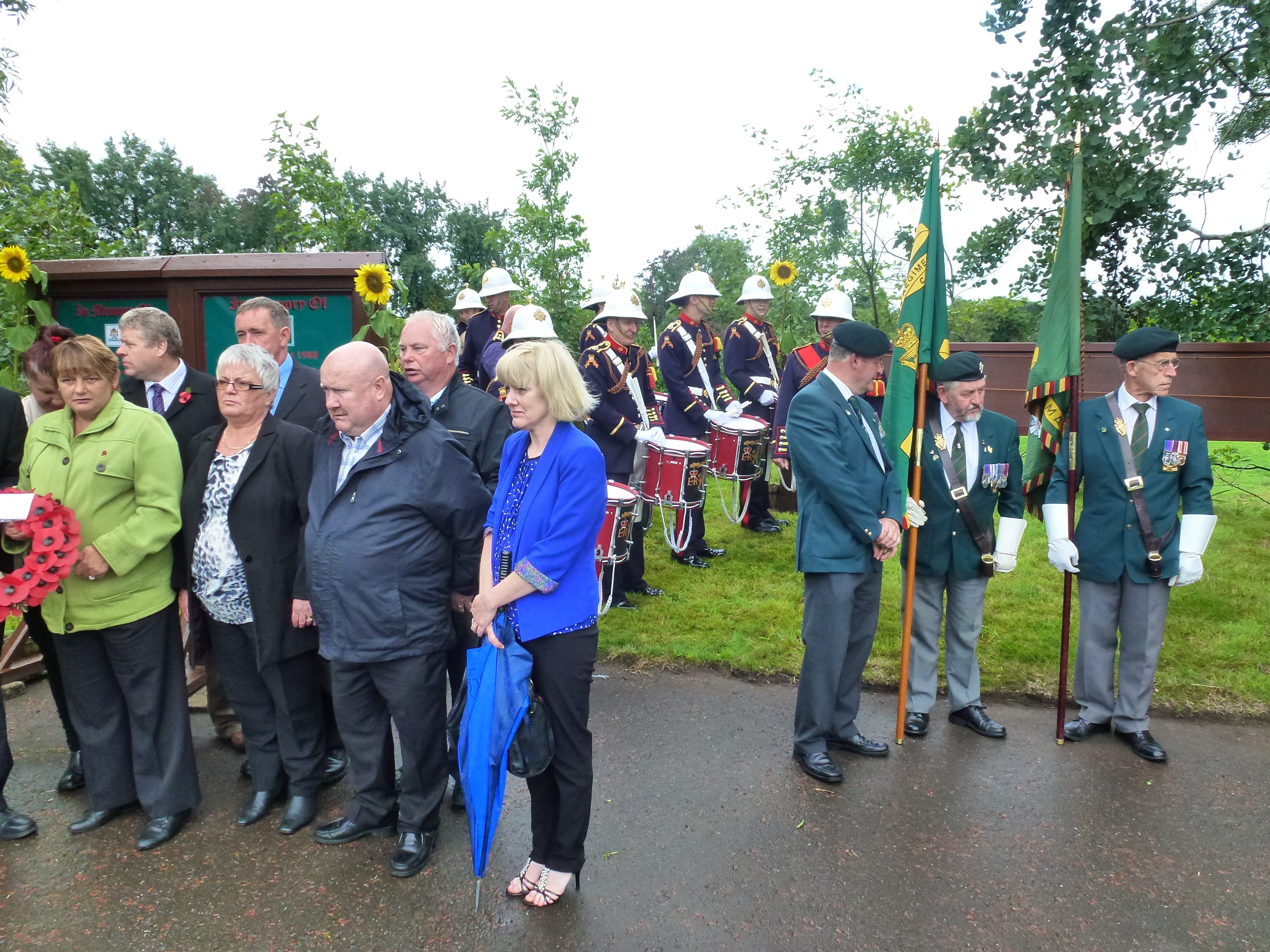
Ballygawley Bus Bomb Commemoration Photo: © Michael Fisher

Ballygawley Bus Bomb Commemoration Photo: © Michael Fisher

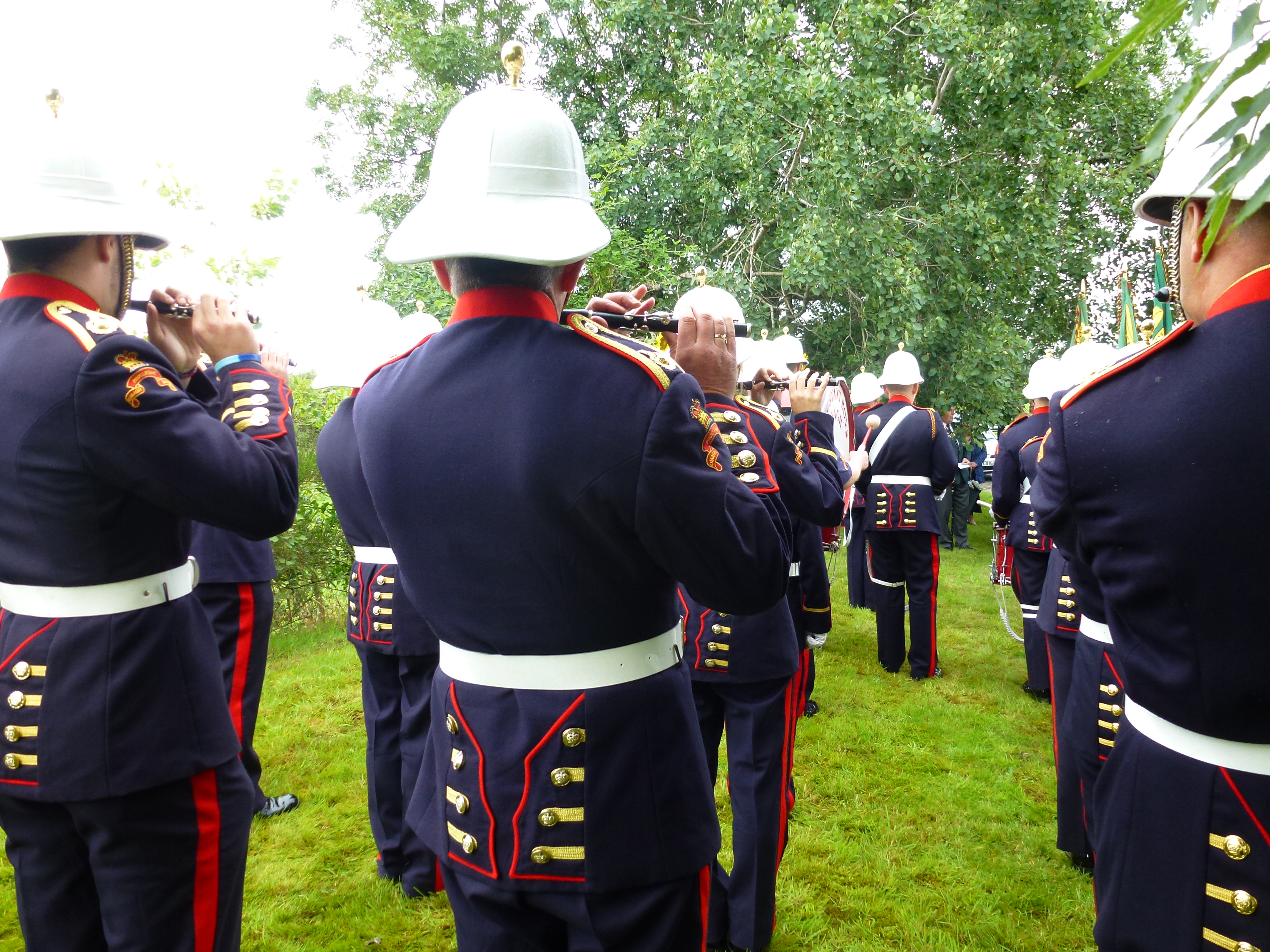
They stood and reflected as the Omagh Protestant Boys Flute Band played solemn music. For some of these women, the last time they were at this spot was 25 years ago. That night, 20th August 1988, they came across a scene of devastation, immediately after an IRA roadside bomb had exploded as a busload of soldiers went past on the main road from Ballygawley to Omagh. It became known as the Ballygawley bus bomb and was one of the worst losses of life sustained by the British Army during the troubles in Northern Ireland. Eight members of the Light Infantry between 18 and 21 were killed.

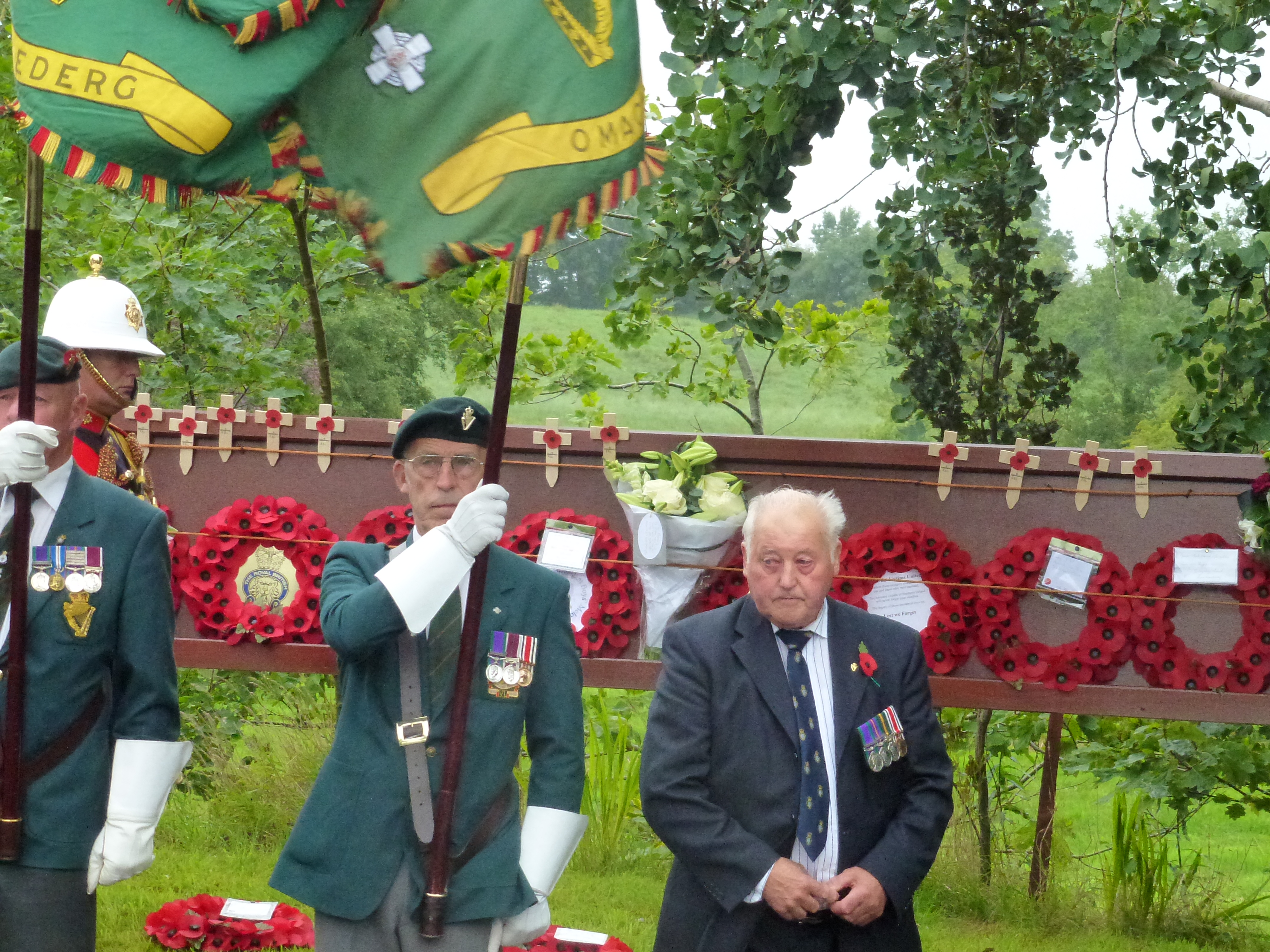
Ballygawley Bus Bomb Commemoration Photo: © Michael Fisher

Ballygawley Bus Bomb Commemoration Photo: © Michael Fisher

A witness who arrived at the scene said:-

“There were bodies strewn all over the road and others were caught inside the bus and under it. There were people running around stunned, screaming and bleeding, and shouting for someone to come to their aid.”  (Lost Lives, McKittrick et al, p.1141)

Ballygawley Bus Bomb Commemoration Photo: © Michael Fisher

Ballygawley Bus Bomb Commemoration Photo: © Michael Fisher

Immediately before the roadside service on Sunday, a local newspaper reporter asked these ladies from Derry about the reason for their presence. They trembled as memories of that dreadful night came back to them. They told how they were with the Star of the Valley band from Tullyally in Londonderry and had been travelling in a bus some distance behind the soldiers. They saw a flash and heard the explosion as the device blew the bus off the road.

One of the ladies explained how she had managed to make a 999 call to the emergency services but the initial response was one of caution, in case it turned out to be a trap. This lady then contacted a relative who worked at a British Army base in Derry and stressed to her the situation was not a hoax, but was unfortunately the real thing and asked her to contact the police.

Piper plays lament Photo: © Michael Fisher

Piper plays lament Photo: © Michael Fisher

The band members immediately helped to tend the injured, as did the Omagh Protestant Boys flute band, who like the Tullyally members had been returning from a parade in Portadown. One young soldier had managed to find his way across to a barn on the other side of the road, but he died at the scene. Ken Maginnis, an ex-UDR officer and then Ulster Unionist MP recalled how he along with others had found a young soldier who had managed to crawl away from the ruins of the bus and was in a barn on the other side of the road. He tried to reassure the Private he was now safe, but the young lad died at the scene. Mr Maginnis is now an independent member of the House of Lords and was among the gathering on Sunday.

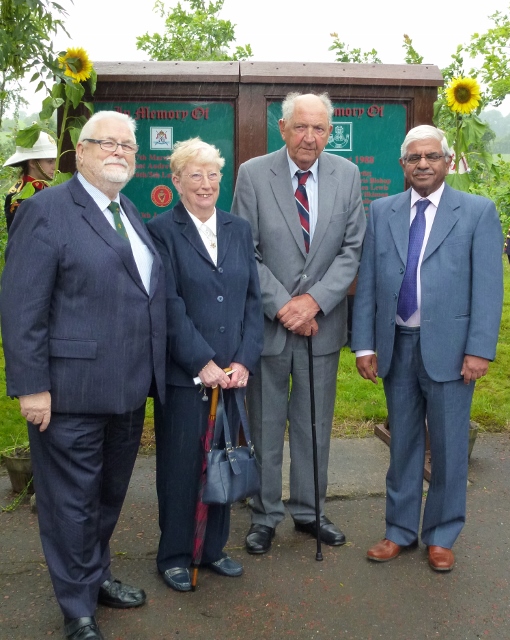
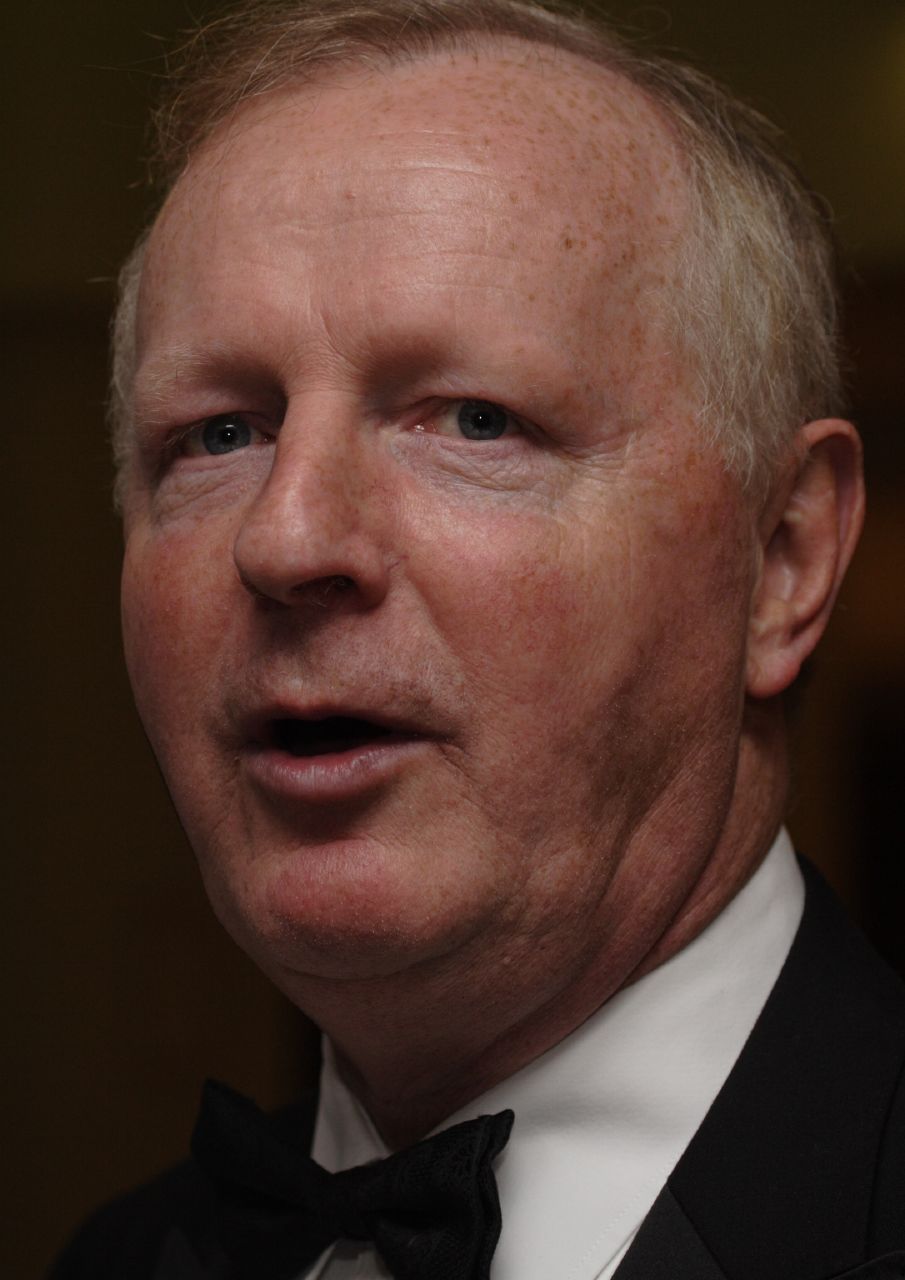
Lord Ken Maginnis, Dr Clifford McCord GP Aughnacloy & Dominic Pinto Omagh

Lord Ken Maginnis, Dr Clifford McCord GP Aughnacloy & Dominic Pinto Omagh

Other soldiers were taken for treatment initially at Tyrone County Hospital, where consultant surgeon Dominic Pinto and his colleagues worked through the night to deal with the injured. Dr Clifford McCord was then a GP in Aughnacloy. He tended to the injured soldiers, helped by Cllr Allan Rainey, who lives not far from the scene and who was one of the organisers of the roadside commemoration.

Cllr Paddy McGowan MBE, former fireman

Cllr Paddy McGowan MBE, former fireman

Another person who witnessed the immediate aftermath of the bomb was Fire Officer Paddy McGowan MBE. He remembers searching the field and hedges beside the bomb crater trying to find any other injured soldiers. This was before the area had been checked by the British Army for any further devices. He described the scene when he and his four colleagues from Omagh answered the emergency call as “pandemonium”. Now a councillor, he said the bombing had strengthened his resolve to oppose violence (Ulster Herald).

Dr Clifford McCord retired GP Aughnacloy & Cllr Allan Rainey MBE Photo: © Michael Fisher

Dr Clifford McCord retired GP Aughnacloy & Cllr Allan Rainey MBE Photo: © Michael Fisher

The roadside commemoration was followed by a service at Newtownsaville Church of Ireland church, led by John Irvine. Among the congregation was Michael Gallagher of the Omagh Support & Self-Help Group, whose son Aiden was one of the victims of the 1998 Omagh bomb.

BALLYGAWLEY BUS BOMB

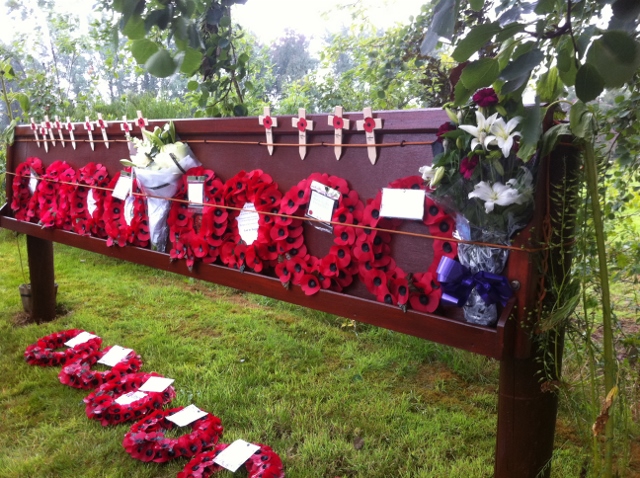
Ballygawley Bus Bomb Memorial

Ballygawley Bus Bomb Memorial Photo: © Michael Fisher

It was a simple and very dignified ceremony. As motorists were passing by on the main A5 Dublin to Derry road, they might have wondered what was going on at the side of the road at Curr, between Ballygawley and Omagh. People gathered there on Sunday morning to pay their respects to eight British soldiers who had been killed in what became known as the Ballygawley bus bomb, 25 years ago today on August 20th 1988.

Omagh Protestant Boys Flute Band Photo: © Michael Fisher

Omagh Protestant Boys Flute Band Photo: © Michael Fisher

The music by the Omagh Protestant Boys flute band set the mood. You can see my video on youtube here.

Ballygawley Bus Bomb Remembrance Photo © Michael Fisher

Ballygawley Bus Bomb Remembrance Photo © Michael Fisher

The soldiers were returning to their base in Omagh, having flown into RAF Aldergrove. They were being transported in an unmarked coach, driven by a soldier. Reports at the time suggested that although the A5 road was meant to be ‘out of bounds’ for military transport, diversion signs had been put in place and that was why the driver travelled that way from Ballygawley. But that claim was disputed at the inquest. A 200lbs roadside bomb consisting of Semtex and fertiliser exploded, killing eight members of the 1st Battalion, Light Infantry Regiment and injuring 28 of their colleagues.

Roll of Honour read out Photo: © Michael Fisher

Roll of Honour read out Photo: © Michael Fisher

In the brief commemoration at the scene of the blast, the Last Post was sounded and the Roll of Honour was read with the following names:-

Private Blair Bishop (19), Private Peter Bullock (21), Private Jayson Burfitt (19), Private Richard Greener (21), Private Alexander Lewis (18), Private Mark Norsworthy (18),  Private Stephen Wilkinson (18) and Private Jason Winter (19).

In addition, four UDR members killed in a landmine at Gort, Errigal Keerogue, near Ballygawley were also remembered. They died on July 13th 1983, 30 years ago. They were:- Private Ronald Alexander (19), Corporal Thomas Harron (25), Private John Roxborough (19) and Private Oswell Neely (20). 

A thirteenth name was added to the roll of honour, Lieutenant Andrew Somerville (20), a member of 15th/6th Lancers, killed in a landmine attack near Ballymacilroy, Ballygawley on March 27th 1973, 40 years ago.

Ballygawley Bus Bomb Commemoration Photo: © Michael Fisher

Ballygawley Bus Bomb Commemoration Photo: © Michael Fisher

FUNERAL OF KEVIN FEENEY RIP

Members of the Davy family await the arrival of the remains of Kevin Feeney

Members of the Davy family await the arrival of the remains of Kevin Feeney

Andrew Feeney lives in Australia and was in Melbourne when news reached him of his father’s sudden death. Another of Kevin’s four children was in Russia and apparently had difficulty with an exit visa as he was in the middle of a tour. Andrew spoke very movingly at the end of the funeral Mass at the Church of the Sacred Heart in Donnybrook, Dublin.

Fr Charlie Davy SJ

Fr Charlie Davy SJ

This wasn’t Kevin’s parish but the church of the Three Patrons in Rathgar is undergoing renovations and the interior has scaffolding erected for painting, so it would not have been able to handle the large crowd of mourners who gathered to say their farewells to Kevin and to sympathise with Kevin’s relatives and family led by his widow Geraldine, a member of the well-known Davy family. His brother-in-law Fr Charlie Davy SJ, Galway, Chair of the Pioneer Total Abstinence Association, was the chief celebrant of the Mass, along with nine other priests.

Andrew Feeney told the packed church he was “so proud to have had him (Kevin) as a father”. “We feel he went out on a high as he was at his happiest in Ballycotton” (his holiday home in County Cork), he said. One of his own great memories was attending the Italia 90 Ireland-Italy game with his father.

Remains of Kevin Feeney arrive at Sacred Heart Church

Remains of Kevin Feeney arrive at Sacred Heart Church

In an address at the end of the Mass, the President of the High Court Mr Justice Nicholas Kearns said that although Kevin had been fiercely competitive in the courtroom, he did not like the public spotlight. “He was a very, very private man, who put family and friends first”, he said. He told mourners the late Judge had a unique sense of humour and rarely lost his temper. He spoke of his great interest in sports: rugby, golf, hockey and cricket. “We’re all still in a state of disbelief at his sudden death,” Mr Justice Kearns continued. Family “always remained extremely close…he was devastated when (his brother) John died so tragically” (in a 1984 plane crash at Eastbourne in England).

Funeral of Kevin Feeney

Funeral of Kevin Feeney

He recalled that Kevin, who was 62, had exhibited a sense of justice at an early age. His brother Jim was 16 and Kevin 8 when Jim got a bicycle. “He protested with a placard outside his father’s study which read ‘No Bicycle. No Justice’.”
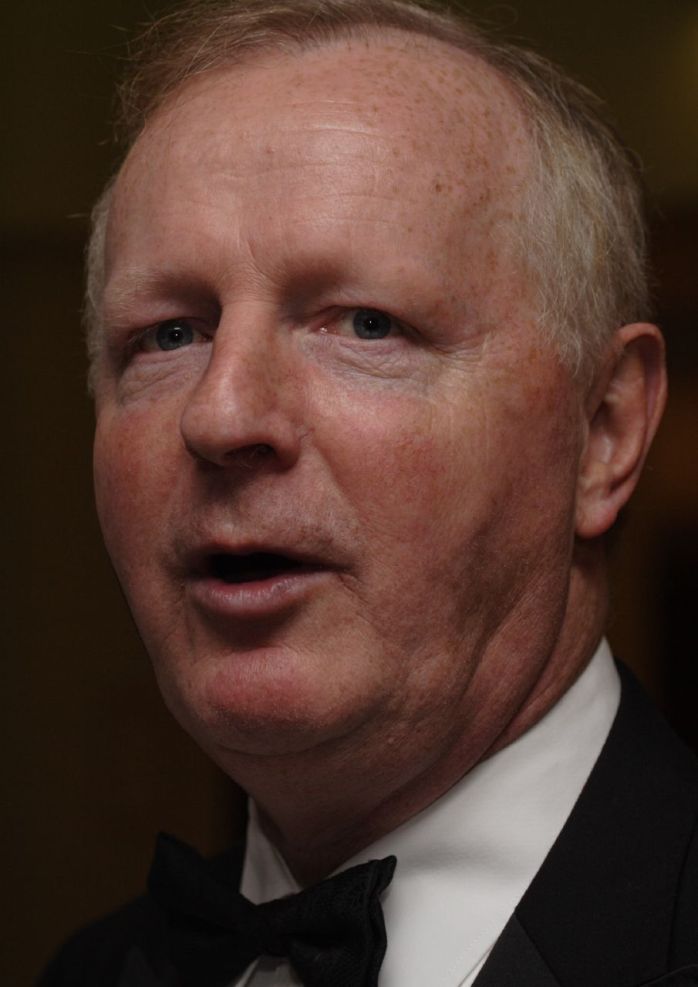
Kevin Feeney 1951-2013: Photo Peter Cuffe

Kevin Feeney 1951-2013: Photo Peter Cuffe

His “courtroom advocacy skills were superb” and when appointed to the High Court “he took over a difficult case list. He never complained about being overworked or under-resourced. As a lover of sport he was for many years a member of the Phoenix Cricket Club, where “he defended the wicket like the Spartans at Thermopylae”, usually coming into bat at number eight.
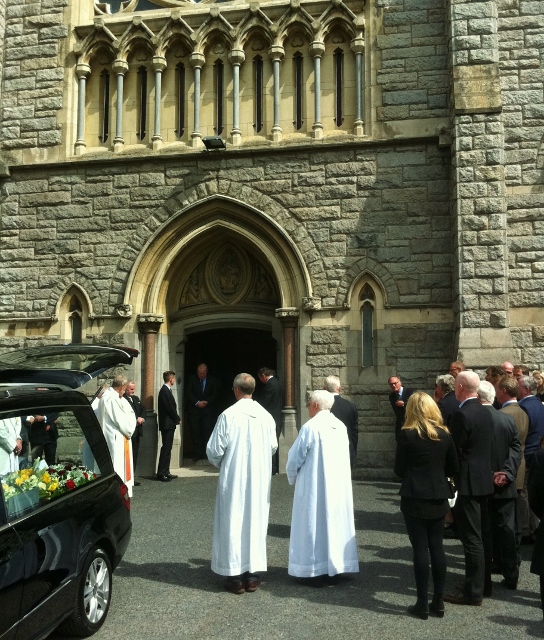
Kevin Feeney's funeral at Donnybrook Church

Kevin Feeney’s funeral at Donnybrook Church

Mr Justice Kearns then recalled a golfing trip to Scotland Kevin had organised for colleagues on the bench as part of an outing for the judiciary in the UK and Ireland. The estate car he hired was not large enough for four passengers and all their baggage and equipment. It resulted in one eminent Irish judge sitting on another’s knee while a third ended up sitting on a case in the boot!

Funeral of Kevin Feeney RIP

Funeral of Kevin Feeney RIP

The Irish Times website report carried the following details: “Chief mourners were Geraldine Feeney and their children Andrew, Peter, Kevin Barbara, and Justice Feeney’s brothers Jim and Peter. The President was represented by Cmdt James Galvin and the Taoiseach by Cmdt Mick Treacy. Government Ministers present included Frances Fitzgerald TD and Alex White TD.

A large contingent from the judiciary was led by Chief Justice Susan Denham, and former Chief Justice John Murray Other members of the Supreme Court there included Justices Adrian Hardiman, Frank Clarke, John MacMenamin, as well as Gerard Hogan and George Birmingham of the High Court, Katherine Delahunt and Alison Lindsay of the Circuit Court. Retired judges included Ronan Keane, Hugh O’Flaherty, Tom Finlay, Yvonne Murphy. Also there was NUI Chancellor Maurice Manning.

There too were former Attorneys General Peter Sutherland, Michael McDowell and John Rogers, as well as many from the Law Library, including senior counsel Garret Cooney, John O’Donnell, Eoin McCullagh, Conor Maguire, and David Andrews. Journalists there, present and former, included Mairead Ní Nuadhain, John O’Shea, Stephen O’Byrnes, Mike Burns, Ed Mulhall, Sam Smyth, Betty Purcell, Michael Fisher, Bride Rosney, Joe Little and Liz O’Donnell”.
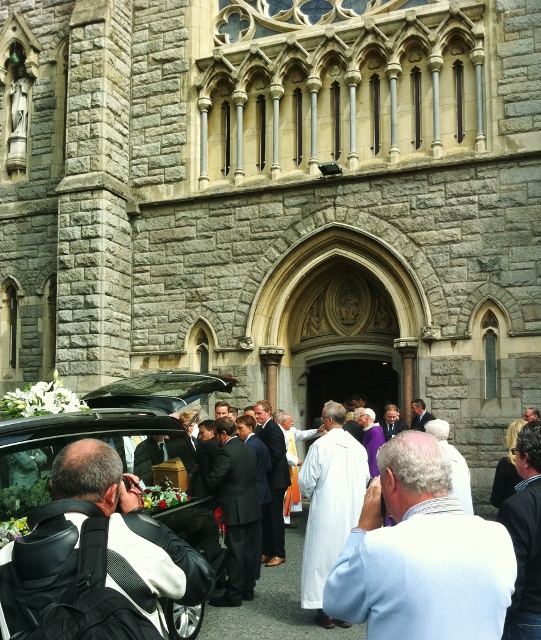
Funeral of Kevin Feeney at Sacred Heart Church, Donnybrook

Funeral of Kevin Feeney at Sacred Heart Church, Donnybrook

Kevin was in class with me when I attended Gonzaga College 1967-69. Among the former classmates to attend the funeral were Michael McDowell SC, Paul McNally, Denis Brennan, Bobby Becker, Michael Gaffney and Peter Mathews TD. Ar dheis Dé go raibh a hanam dílis.

BALLYGAWLEY & OMAGH

Market Street Omagh: Bomb Memorial

Market Street Omagh: Bomb Memorial Photo: © Michael Fisher

It was a journey I didn’t want to make. Fifteen years ago on this same Sunday, I left Tydavnet around 8am and headed for Omagh. I attended Mass at St Matthew’s, Garvaghey (the chapel associated with John Montague) and then made my way to the county town. Market Street was full of debris and the whole area was cordoned off as a police investigation got underway. This morning I repeated the journey, passing the chapel at Garvaghey at 8:30am and heading to the Sacred Heart church in Omagh for Sunday Mass.

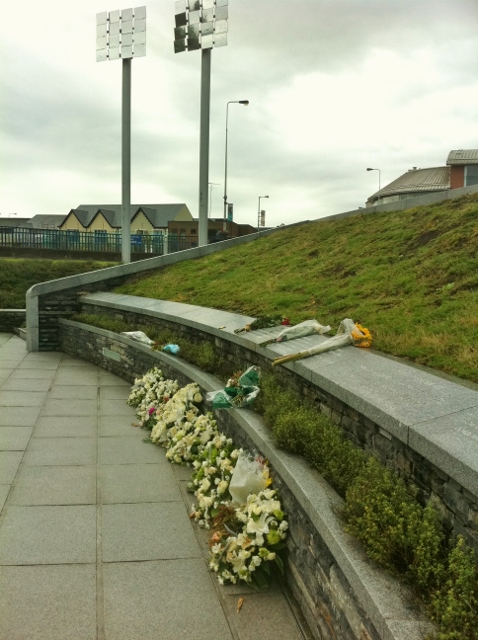
Omagh Bomb Memorial Park

Omagh Bomb Memorial Park

I was surprised that there was no mention of those who died in the 1998 bomb, although the priest did ask for prayers for those in Egypt and Syria. Perhaps the bomb victims were remembered at Mass last weekend. There was also a commemoration in the town on Thursday 15th, the exact day of the atrocity. This morning there was a very different view along Market Street, looking towards the Courthouse, as my first picture shows.

The previous afternoon in 1998, after coming home from the Tydavnet Show, which I was also at yesterday, the news had come through about a major bomb attack in Omagh, with several casualties. I headed off to Omagh that Saturday evening and reported from Tyrone County Hospital as the extent of the fatalities and the injuries became clear.

Dominic Pinto, former consultant surgeon, Tyrone County Hospital

Dominic Pinto, former consultant surgeon, Tyrone County Hospital

Some Spanish women were desperately trying to find out more information from the hospital staff. In the operating theatres, Dr Dominic Pinto, who I met later this morning at a separate commemoration for the victims of the Ballygawley bus bomb, and his colleagues were working non-stop trying to deal with the injured. Many had to be transferred to other hospitals for further treatment. Mr Pinto described the scene at the time:

When I came to the front of the hospital, it was absolutely quiet. What greeted me when I got into the main corridor was sheer pandemonium. This was not a major incident, but a major disaster of battlefield proportions. There were people lying in corridors of the    accident and emergency department, overflowing into the radiology department. Some 240    injured people arrived within the first 45 minutes“. (www.wesleyjohnston.com)

The Spanish connection later turned out to be a group of students who had been studying English in Buncrana and who had got caught up in the explosion during a trip to Omagh. One 12 year old Spanish boy Fernando Blasco Baselga from Madrid died as well as a 23 year-old teacher from Spain, Rocio Abad Ramos, also from Madrid.  Three young boys from Buncrana, Oran Doherty aged 8, 12 year-old Sean McLaughlin, and James Barker, also 12, were killed in the explosion. In April 2000, the body of James was re-buried in a small graveyard at his former school in England, St George’s in Weybridge. I remember visiting it in 2008 when I interviewed his father Victor.

Rest in Peace: Avril Monaghan

Rest in Peace: Avril Monaghan

Three generations of women from one family in County Tyrone were killed in the Omagh bomb: a 65 year old grandmother, Mary Grimes from Beragh, her 30 year old daughter Avril Monaghan who was expecting twins, and an 18 month-old granddaughter, Maura Monaghan from Aughindarragh in Augher. I remembered them as I visited the peaceful graveyard at the Forth Chapel, Ballynagurragh (St Macartan’s), where my McCann relatives are interred close to Avril’s grave.

British Legion Aughnacloy representative with Michael Gallagher & Stephen Gault

British Legion Aughnacloy representative with Michael Gallagher & Stephen Gault

Then at the Ballygawley bus bomb commemoration I met Michael Gallagher of the Omagh Support and Self Help Group. His 21 year-old son Aiden was killed in the Omagh attack. Michael went on to attend the service at Newtownsaville Church of Ireland church for the Ballygawley bus victims (eight British soldiers) and five other members of the security forces who had been killed in two other incidents in the surrounding area. Another victims’ campaigner to attend the Ballygawley commemoration was Stephen Gault, who was injured and who lost his father in the Enniskillen bomb on Remembrance Sunday in November 1987.

AUGHNACLOY RACES

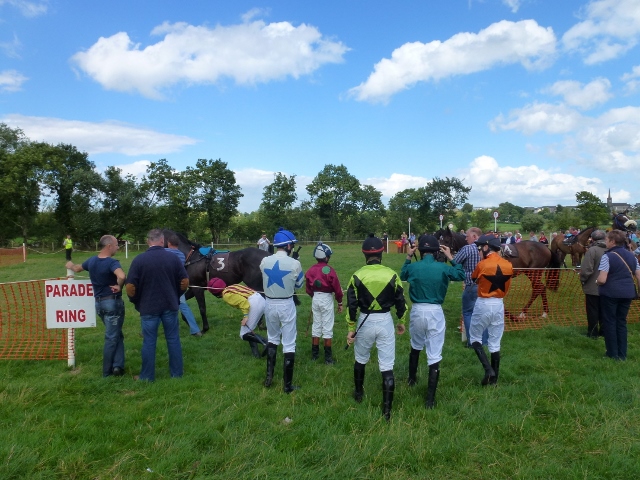
Aughnacloy Races at Ravella Photo: © Michael Fisher

Aughnacloy Races at Ravella Photo: © Michael Fisher

The track might not be as sophisticated as Down Royal or Downpatrick, but the setting is ideal for this annual event. Aughnacloy Horse and Pony Races are now in their eleventh year, held on land owned by the Steele family at Ravella, close to the border with County Monaghan. But the tradition of horse racing in the town is much older: my great grandfather John McCann JP of Hilton House in Aughnacloy was Secretary of the original race committee around 1910-20 (I will have to check my records to get the exact date).

Ready for the Off at Aughnacloy Races Photo: © Michael Fisher

Ready for the Off at Aughnacloy Races Photo: © Michael Fisher

The races had originally been scheduled to take place on June 1st but were cancelled following one of the wettest springs on record. Work was undertaken to get the course ready for the races to be rescheduled a fortnight later, but again the weather defeated the organisers and the event had to be postponed a second time.

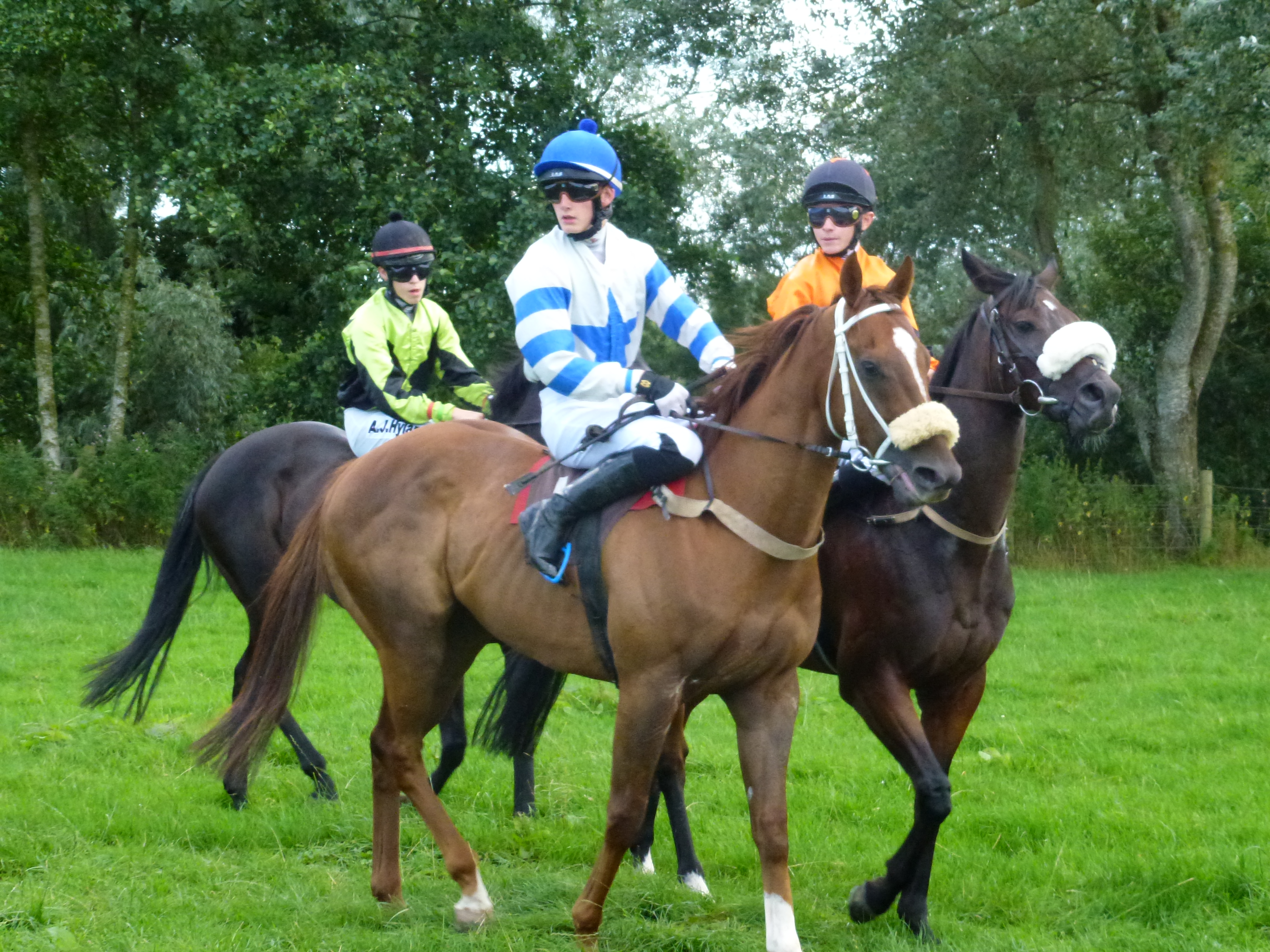
Jockeys line up for second race at Aughnacloy Races Photo: © Michael Fisher

Jockeys line up for second race at Aughnacloy Races Photo: © Michael Fisher

This afternoon jockeys and punters converged on Aughnacloy from all over Ireland, with the highlight of the day being the famous ‘Aughnacloy derby’, the fifth of the seven races on the card. Traditionally, the annual race meeting has been a breeding ground for up and coming jockeys, with the likes of Martin Harley, a previous winner at Aughnacloy, having taken the horseracing world by storm.

Martin McCarron, Secretary Aughnacloy Races and Michael Fisher

Martin McCarron, Secretary Aughnacloy Races and Michael Fisher

The committee secretary Martin McCarron was the announcer and when he spotted my presence, called me over to the microphone to do an interview, turning the tables on me! Earlier he had introduced the Mayor of Dungannon Councillor Sean McGuigan. He told him he had already attended sixty events since he assumed office in June. At the start of the month I welcomed him to Monaghan for the opening of the William Carleton summer school along with the Mayor of Monaghan Councillor Sean Conlon.

Mayor of Dungannon Cllr Sean McGuigan and Martin McCarron, Secreyary at Aughnacloy Races

Mayor of Dungannon Cllr Sean McGuigan and Martin McCarron, Secretary at Aughnacloy Races

Committee & Field Management Team: Chairperson Donald Magee; Secretary Martin McCarron; Treasurer Brian McKenna; President Peter McConnell; Assistant PR Officer John Morrison; Vice Chairman Eric Stansfield; Vice Secretary Stephen Watson; Vice Treasurer Benny McKenna; Joint Field Manager Des Sherry; Joe McMeel; Manuel Martins.

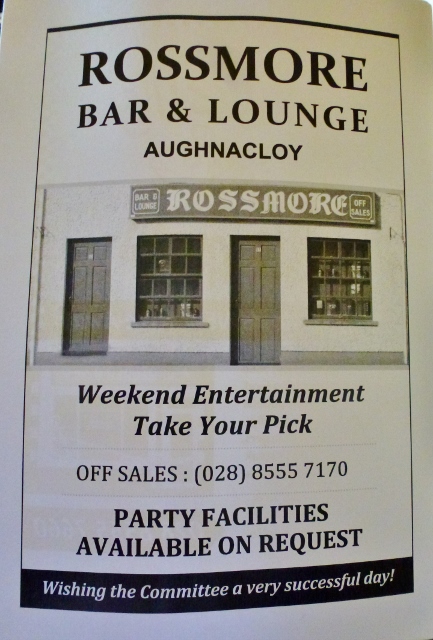
Aughnacloy Races Programme

Aughnacloy Races Programme

Advertisement for Rossmore Bar, Main Street Aughnacloy beside Ravella Road. This premises used to be owned by my great grandfather, John McCann, a native of Cloonycoppoge, Clogher.

Rossmore Bar advertisement

Rossmore Bar advertisement

MEETING OF THE WATERS

Meeting of the Waters: Photo © Michael Fisher

Meeting of the Waters: Photo © Michael Fisher

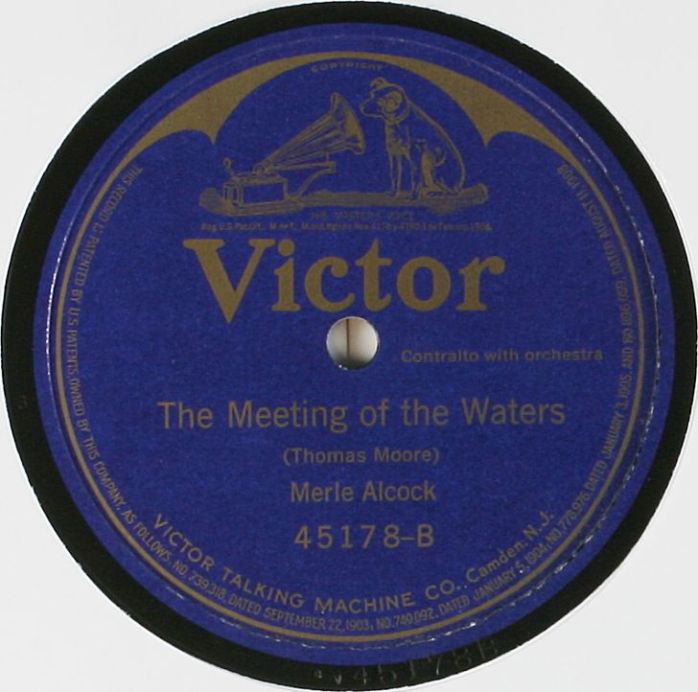
Heading home from the Parnell summer school on Wednesday afternoon, I decided to revisit a spot I had not been in for a while in the Vale of Avoca. It’s known as the Meeting of the Waters and it has been immortalised in Thomas Moore’s song. I have discovered on the website of the Library of Congress an old recording of the ballad. It was made in Camden, New Jersey in April 1919 by contralto Merle Alcock for Victor records. The harp is played by Francis J. Lapitino and the conductors are Charles Adams Prince and Josef Pasternack. Credits: Source of original recording: Department of Special Collections, Davidson Library, University of California, Santa Barbara. Inclusion of the recording in the National Jukebox, courtesy of Sony Music Entertainment.

Victor Record Label: The Meeting of the Waters

Victor Record Label: The Meeting of the Waters

Thomas Moore was born at Aungier Street in Dublin on May 28th 1779. He was educated at Trinity College. His time at Trinity came amidst the ongoing turmoil following the French Revolution and a number of his fellow students such as Robert Emmett were supporters of the United Irishmen movement, although Moore himself never was a member.

Thomas Moore, by Martin Shee c.1817. © National Gallery of Ireland

Thomas Moore, by Martin Shee. 1818. © National Gallery of Ireland

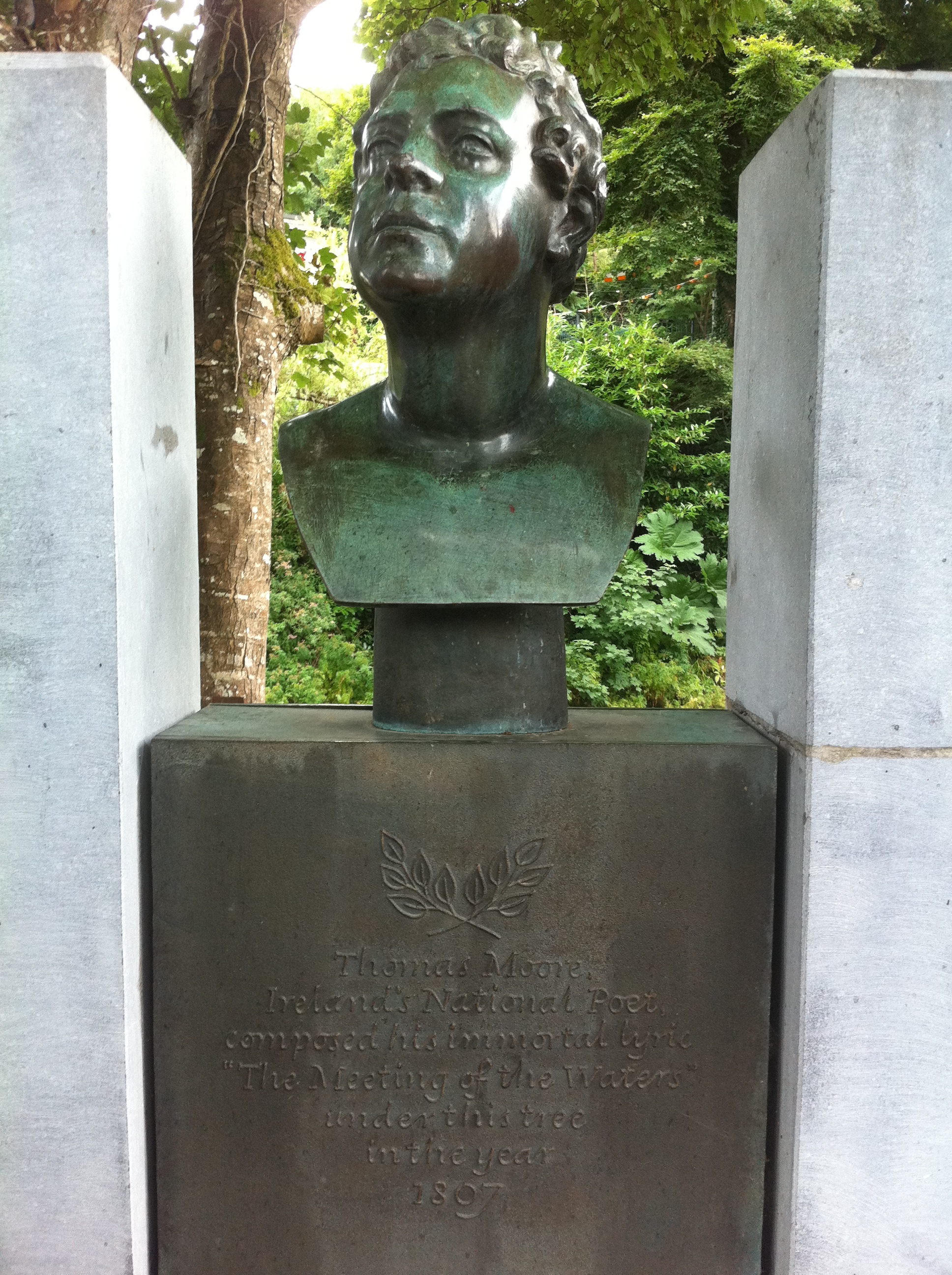
Moore is considered Ireland’s National Bard and is to Ireland what Robert Burns is to Scotland. He is commemorated in several places: by a plaque on the house where he was born, by busts at The Meeting of the Waters and at Central Park, New York, as well as by a large bronze statue near Trinity College Dublin. Many composers have set his poems to music. They include Gaspare Spontini, Robert Schumann, Hector Berlioz, Charles Ives, William Bolcom, Lori Laitman, Benjamin Britten and Henri Duparc.

Thomas Moore Bust at the Meeting of the Waters Photo:  © Michael Fisher

Thomas Moore Bust at the Meeting of the Waters Photo: © Michael Fisher

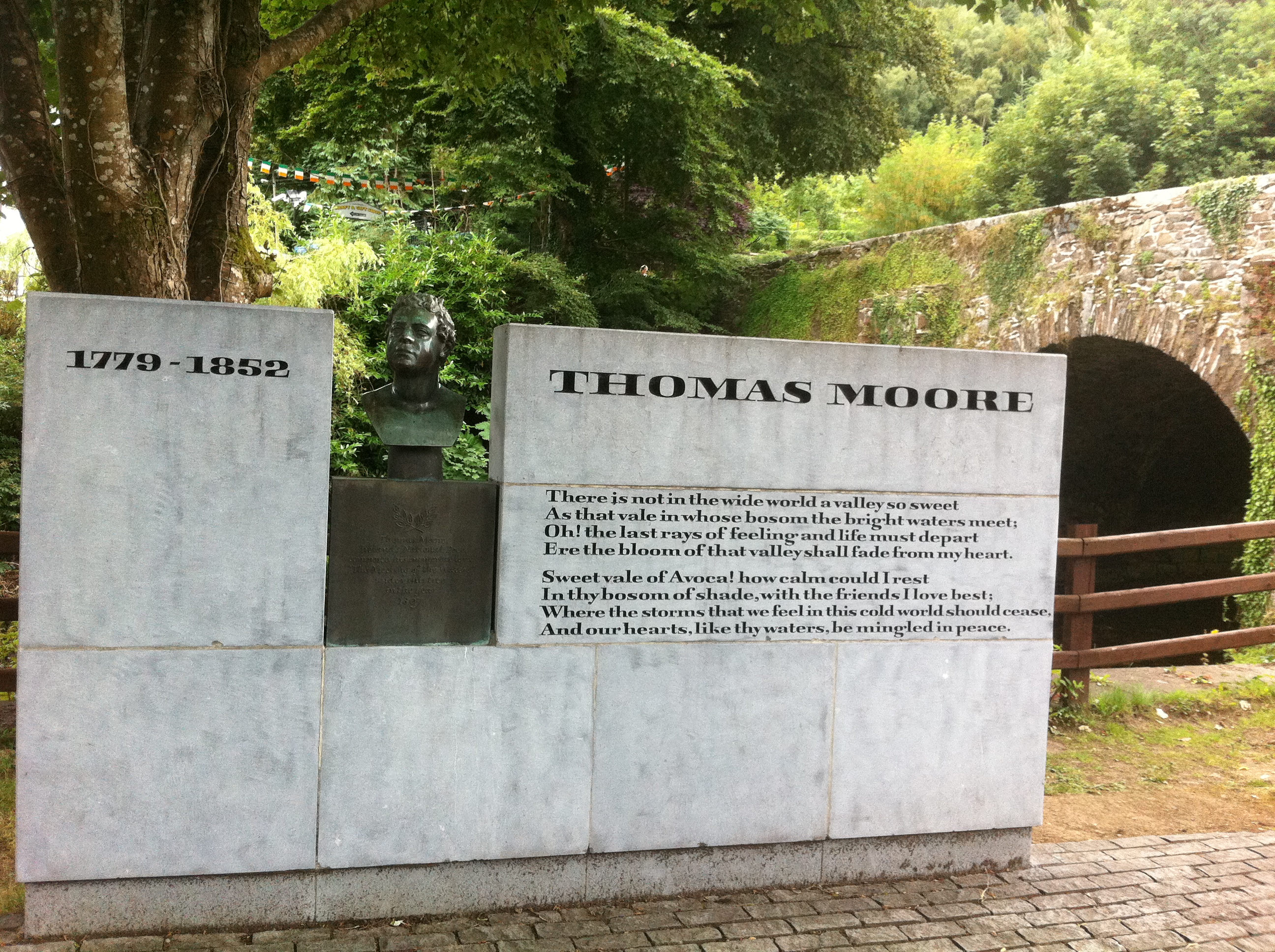
The Avoca River starts life as two branches, the Avonmore (Abhainn Mhór, meaning “Big River”) and the Avonbeg (Abhainn Bheag, meaning “Small River”). These join together at the Meeting of the Waters in the Vale of Avoca, which is considered a local beauty spot, and was celebrated by Thomas Moore in the following verses:

There is not in the wide world a valley so sweet, As the vale in whose bosom the bright waters meet; Oh, the last rays of feeling and life must depart, Ere the bloom of that valley shall fade from my heart.”

Thomas Moore Memorial Park, Meeting of the Waters Photo: © Michael Fisher

Thomas Moore Memorial Park, Meeting of the Waters Photo: © Michael Fisher

The village of Avoca is situated on the river. The Avoca flows into the Irish Sea at Arklow where it widens into a large estuary, giving the town its name in Irish: An t-Inbhear Mór (the big inlet).

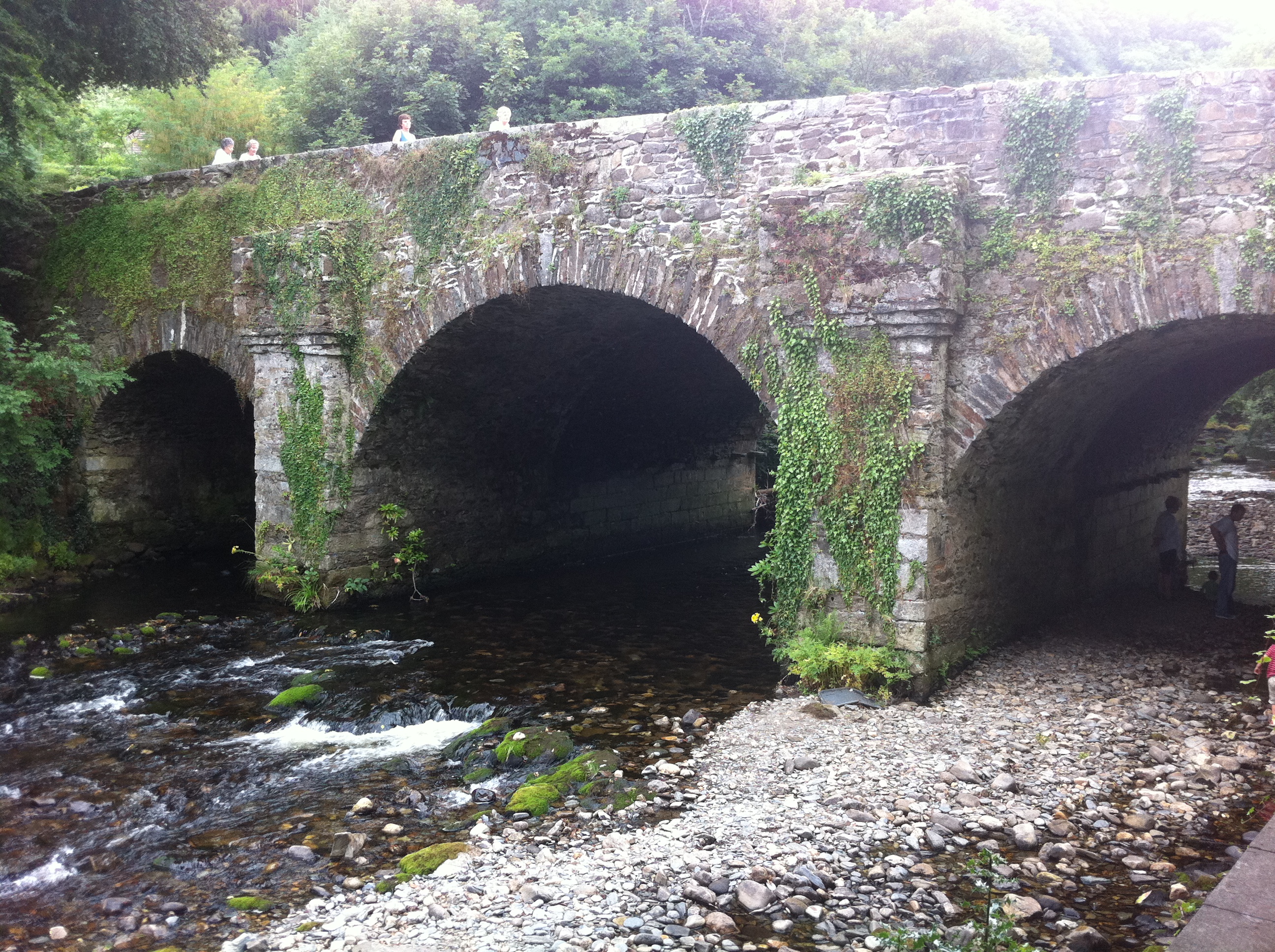
Bridge at Meeting of the Waters Photo: © Michael Fisher

Bridge at Meeting of the Waters Photo: © Michael Fisher

MR JUSTICE KEVIN FEENEY 1951-2013

Kevin Feeney: Photo Des Barry

Kevin Feeney: Photo Des Barry

“If God is as fair a judge as Kevin we are OK”. Searching the web for news about the sudden death yesterday of Mr Justice Kevin Feeney at his holiday home in County Cork, I came across this post on politics.ie from Eoin Corr. It seemed to me one of the most appropriate quotes for my former classmate at Gonzaga College 1967-69. I transferred from one Jesuit establishment in Wimbledon to another in Dublin when I was 15, having just completed ‘O’ levels, so I was the youngest in class. I didn’t know anyone at the time. Kevin was always welcoming and although I was not a great sportsman, I played rugby alongside him in the forward line.

Michael McDowell who I met yesterday in County Wicklow before the sad news came through about Kevin’s sudden death was a skilful debater and went on to become Attorney General. Kevin was one of the few who could successfully take him on, using his wit and always smiling. A smile that is captured well in Des Barry’s photograph.

Kevin Feeney: Photo Peter Cuffe

Kevin Feeney: Photo Peter Cuffe

At the L&H in UCD he demonstrated those same witty qualities in debates with a range of speakers, many of whom went on like him to become top lawyers. In addition to Michael McDowell, the L&H group included Adrian Hardiman, John McMenamin, Frank Clarke, William Early, Kevin Cross, Alison Lindsay and Mary Finlay. Some of our other classmates from Gonzaga also progressed to become successful lawyers, namely Tom Finlay, Michael Coghlan, Paul McNally and Barry Halton. Most of our class including Kevin joined the FCÁ in Collins Baracks at the same time in 1968 and some served a full five year term.

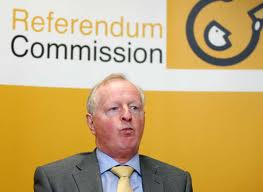
Kevin Feeney: Referendum Commission

Kevin Feeney: Referendum Commission

Kevin was described quite rightly yesterday as one of the greatest lawyers of his generation. He was educated at UCD and King’s Inns and qualified as a barrister in 1973. He was appointed to the High Court in 2006 and served as chair of the Referendum Commission last year. He was a member of the Courts Service Board. An older brother, John Feeney, was a journalist with the ‘Evening Herald’ who died in the Beaujolais air crash in England in November 1984 with eight others. John was also well-known as a left-wing student activist at UCD. I remember at school another brother, Peter Feeney, who was a year ahead of him in Gonzaga College. He is a former Head of Television Current Affairs and a former Head of Public Policy at RTE. Their father John Kevin Feeney was Professor of Gynaecology and Obstetrics in University College Dublin and Master of the Coombe Hospital in Dublin.

Kevin Feeney: Photo RTÉ News

Kevin Feeney: Photo RTÉ News

Kevin was married to Geraldine and had four adult children, Kevin (junior), Andrew, Peter and Barbara. My sympathy goes to all his family and relations. His funeral will be on Monday morning, according to the death notice in the Irish Times:-

FEENEY, Kevin T. (unexpectedly), August 14, 2013, beloved husband of Geraldine and loving father of Andrew, Peter, Kevin and Barbara, and brother of the late John. Deeply regretted by his brothers Jim and Peter, Andrew’s girlfriend Fiona, sisters-in-law, brothers-in-law, nieces, nephews, colleagues, relatives and friends.

May he rest in peace.

Reposing at his home on Sunday from 4pm until 7pm. Removal on Monday morning to the Church of the Sacred Heart, Donnybrook, arriving at 11.15am for Funeral Mass at 11.30am and then to Glasnevin Cemetery. 

Kevin Feeney

Kevin Feeney

Minister for Justice Alan Shatter paid the following tribute:-

I wish to express my deepest sympathy to Mr Justice Kevin Feeney’s wife Geraldine and his children on their sudden and very sad loss. Kevin was a judge of exceptional ability who graced the High Court bench with courtesy and good humour. Given his dedication to public  service, his death at such a young age is a loss for the entire country. He will be sadly missed by everyone who had the privilege of knowing him”. 

Attorney General Maire Whelan said Judge Feeney had served with great distinction in the High Court since his appointment. Ms Whelan said as a judge, he had combined enormous intellectual ability with a compassion and courtesy which left an abiding impression on litigant and lawyer alike.

His deft handling of the Criminal Assets Bureau cases was illustrative of his absolute professionalism and his mastery of a developing area of the law. As counsel, he acted in a series of landmark commercial actions, and he was unquestionably the leading defamation lawyer of his generation, making the sometimes recondite nature of libel law accessible for a jury. He brought the skills he acquired from his practice in the law library to the Bench, where his judgments were informed by his deep knowledge of the law, his robust common sense and his zeal for fairness“, she said.

Ms Whelan said the judge left a legal legacy of incalculable value in his body of reported case law, which would continue for many years to be the bedrock of jurisprudence in matters which concern the recovery of the proceeds of crime. “He was a man of great ability and integrity, and his sudden and unexpected death left a great void in the Irish legal community.

Kevin Feeney: Photo Irish Independent

Kevin Feeney: Photo Irish Independent

The president of the High Court, Nicholas Kearns, said everyone’s thoughts and prayers were with his colleague’s wife Geraldine and family. “I would just like to say we have all learnt with deep shock and sorrow of the death of Mr Justice Kevin Feeney,” he told the packed courtroom ahead of the court list hearings. He was a judge held in the highest esteem by the entire judiciary and legal profession and his many friends. Over the coming days many tributes, well deserved, will be made to him”, he said.

Ar dheis Dé go raibh a hanam dílis.
PARNELL SUMMER SCHOOL

Michael McDowell Photo: © Michael Fisher

Michael McDowell Photo: © Michael Fisher

I have known Michael McDowell for over 45 years since we went to school together when I returned to Dublin from Wimbledon in 1967. Peter Mathews TD was in the same year and the three of us along with half a dozen or so more classmates joined the FCÁ together, but only a few completed a five year term, including some full-time duties with the army. I have seen therefore at first hand how much Michael believes in the concept of service to the state and loyalty to the nation.

Update: Since writing this the sad news has emerged of the death of one of our classmates, High Court Judge Kevin Feeney, who was a keen tennis player and had served in the same FCÁ unit I referred to. May he rest in peace. Michael McDowell had earlier told me about the recent death of another well-known Dublin lawyer who served with us in the Military Police, James Gilhooly SC. My sympathy goes to both families.
Steohen Collins & Simon Harris TD Photo: © Michael Fisher

Steohen Collins & Simon Harris TD Photo: © Michael Fisher

It was therefore very interesting to hear him speak at Avondale House at the Parnell Summer School alongside the Wicklow/Carlow East  TD Simon Harris (from Michael’s former party Fine Gael, which I recall he joined at UCD) and Stephen Collins, Political Editor of the Irish Times, on the subject of public service. My former RTÉ News colleague Bryan Dobson chaired the session. This is how the Irish Times is reporting his speech:-

In the Chair: Bryan Dobson, RTÉ News Photo: © Michael Fisher

In the Chair: Bryan Dobson, RTÉ News Photo: © Michael Fisher

The former Justice Minister told the summer school Ireland was not a “failed state” and its people should not accept phoney reform in abolishing the Seanad. Addressing the theme ‘Parnell & Kennedy: Lost Leaders’ this afternoon, and taking a cue from JF Kennedy’s dictum; “Ask not what your country can do for you, ask what you can do for your country”, Mr Mc Dowell called for a new sense of patriotism and loyalty to the Constitution. He said some commentators seemed to enjoy wallowing in what he termed as a ‘middle-class self-hatred’ or negativity. “It is easy to be critical; it is hard to be constructive, especially during times of economic crisis,” he said.

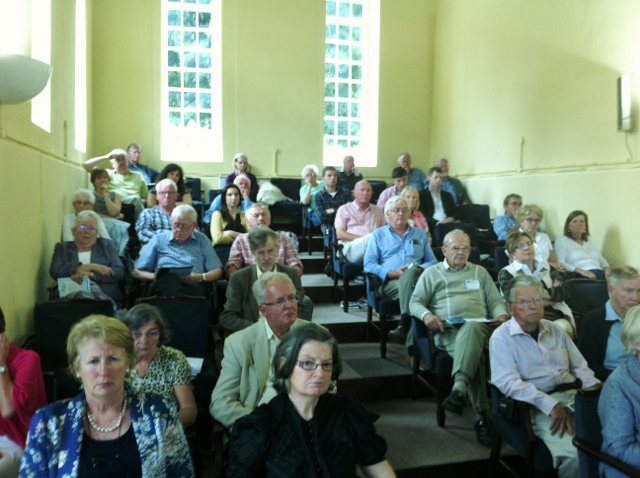
Audience at Parnell summer school Photo: © Michael Fisher

Audience at Parnell summer school Photo: © Michael Fisher

He recalled the 1998 amendment to the Constitution which he said redefined the nation as one which aspires to include all the people of Ireland, “in all the diversities of their identities and traditions”. “Those words are important” he said, arguing that the State had opened up its sense of patriotism and republicanism “to build and develop on this island a republican State which is not mainly or exclusively Catholic, but is open to all traditions and identities”. But he said “a particularly striking historical nonsense” was the belief by the “post-Marxist left” that republicanism equated with socialism, and a failure to deliver on socialism was a betrayal of the Republic. “The two ideals are not equivalents” he said.

He said loyalty to the State and the Constitution demanded loyalty to the institutions of government which “by and large have served the citizens well”. He also said the Constitution had not failed the people and the three pillars of government – legislature, the executive and the judiciary – were not failed institutions “in concept”.

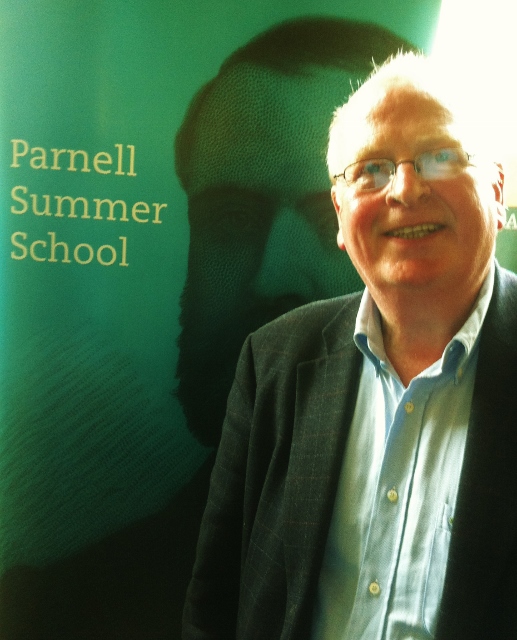
Felix Larkin, Academic Director Parnell Summer School  Photo: © Michael Fisher

Felix Larkin, Academic Director Parnell Summer School Photo: © Michael Fisher

Mr McDowell said proposals for reform may be worthy and legitimate only if they were motivated by a desire for improvement in the way the State functions. But he said the proposals to abolish the Seanad based on cost were “threadbare and illegitimate”. He said the actual cost of the Seanad was about €1.60 per year for each citizen and “abolitionists” wanted to postpone any supposed savings for three years – spending €14 million now on a referendum to achieve “small savings” in three years, he argued.

“Do we really want now to slam the door shut on non-TD expert participants in Government such as [former minister] James Dooge?” he asked. “Do we also want to turn down the possibility of having Northern voices such as Gordon Wilson or Seamus Mallon, or people such as Mary Robinson and Ken Whitaker in our parliament?” He suggested abolition of the Seanad was “a crude attempt to ride the wave of public disillusionment with phony reform based on phony cost arguments”.

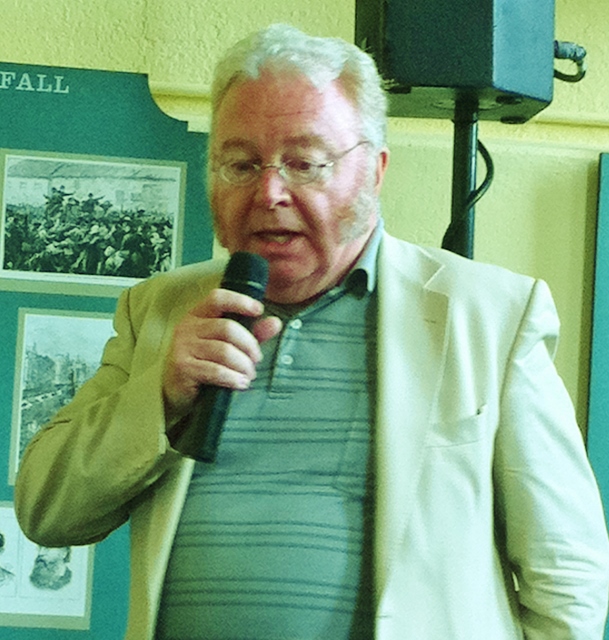
Michael McDowell at Parnell summer school Photo: © Michael Fisher

Michael McDowell at Parnell summer school Photo: © Michael Fisher

Mr McDowell said he believed loyalty to the State involved a duty on every citizen to participate and be responsible in shaping the democratic process, but “corrosive cynicism about politics” damaged democracy. “Our commentariat, in the last analysis, must acknowledge that we as citizens choose our politicians” he said, adding that politicians were not the enemy. “Politics is the process that we as citizens choose it to be. We should not cannibalise the Constitution in the name of reform,” he said.

Stephen Collins, Political Editor, Irish Times Photo: © Michael Fisher

Stephen Collins, Political Editor, Irish Times Photo: © Michael Fisher

HOOPS INTO FINAL

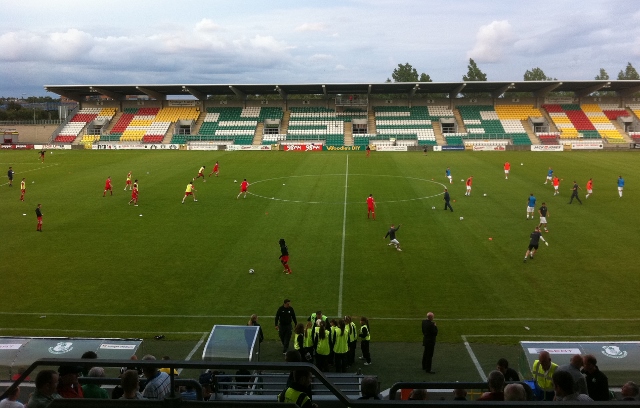
Pre-match warm-up at Tallaght

Pre-match warm-up at Tallaght

SHAMROCK ROVERS 3 SLIGO ROVERS 2 at Tallaght Stadium

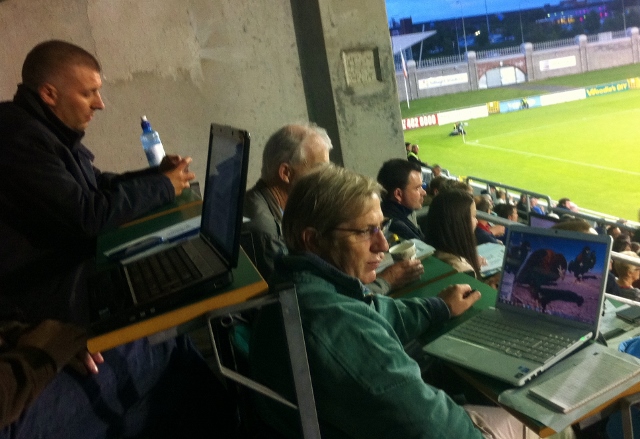
After suffering a 0-4 drubbing by Conan Byrne of St Patrick’s Athletic at Tallaght on Friday, Shamrock Rovers needed to pick themselves up again if they wanted to reach the EA Sports Cup final for the second year running against Drogheda United, current holders of the trophy. But the Hoops got off to the worst possible start. Rovers’ manager Trevor Croly had only just taken his seat in the press box in the middle of the stand when the visitors took the lead with their first attack after just over 30 seconds.

Shamrock Rovers manager Trevor Croly watched the match from the stand

Shamrock Rovers manager Trevor Croly (left) watched the match from the stand

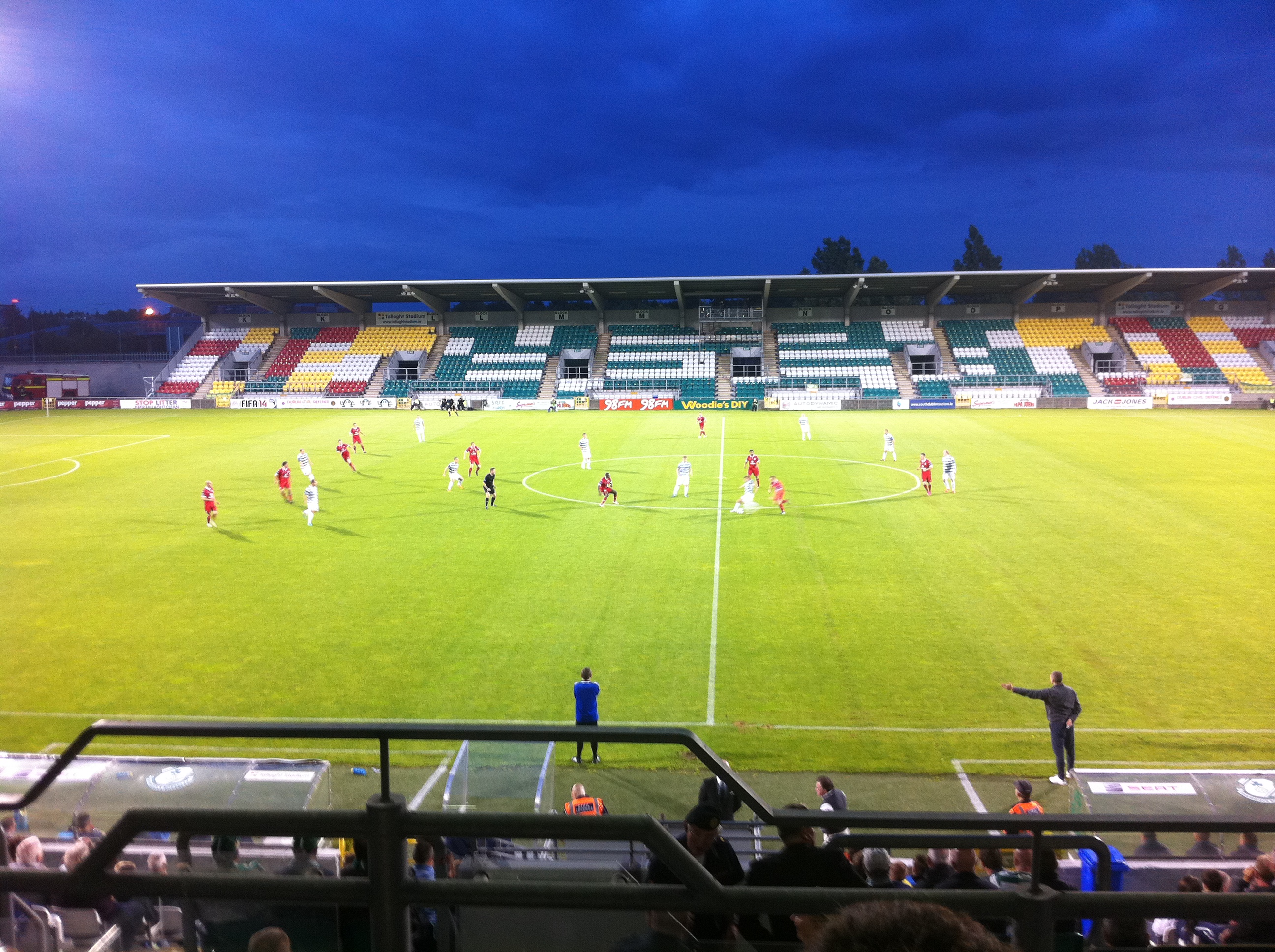
Kieran Djilali put the the visitors ahead, latching on to a clever pass from Rafaele Cretaro and striking his shot past Barry Murphy into the far corner of the net. In the tenth minute more sloppy defensive play meant Murphy had to get down smartly to push Seamus Conneely’s shot around the post for a corner.

Shamrock Rovers v Sligo Rovers © Michael Fisher

Shamrock Rovers v Sligo Rovers © Michael Fisher

The home fans were delighted in the 17th minute when Rovers produced an equaliser through Karl Sheppard. For Sligo, former Hoops’ striker Aaron Greene had two chances to put them ahead again, shooting wide from a free and then heading past the post from close range following a cross from Cretaro.

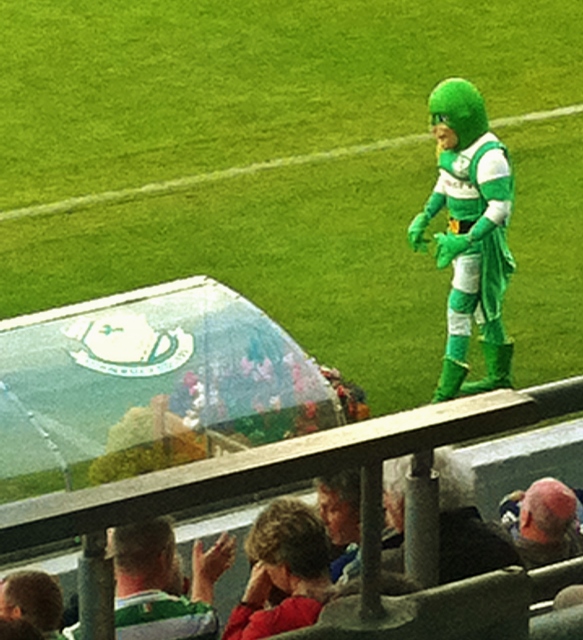
Hooperman in action at Tallaght

Hooperman in action at Tallaght

Hooperman did his best to encourage the home support and  it wasn’t long before the third goal arrived, edging Rovers in front. O’Connor’s free from just outside the box deflected off the wall but Evan McMillan’s clearance only got as far as Gary McCabe, who shot past Rogers into the top corner of the net in the 27th minute. Sligo boss Ian Baraclough was forced to replace Evan McMillan with Danny Ventre just before the end of a half that saw yellow cards for Murphy, Cretaro and the Reds’ captain Gavin Peers.

Shamrock Rovers v Sligo Rovers 2nd half

Shamrock Rovers v Sligo Rovers 2nd half

Gary McCabe got his second in the 71st minute giving Rovers a 3-1 advantage. But Sligo were not finished and with eight minutes left, substitute Anthony Elding who had come on for Rafaele Cretaro nodded home Greene’s deep centre. Then a Joseph Ndo strike from just inside the box was tipped over the bar by Murphy, as the visitors sought to bring the match to extra time. A late corner, for which keeper Gary Rogers travelled to the opposition box, was the last chance for Sligo but it failed to beat the first defender and it was the Setanta Cup holders Shamrock Rovers who progressed to another final.

Shamrock Rovers 3 Sligo Rovers 2

Shamrock Rovers 3 Sligo Rovers 2

Shamrock Rovers: Barry Murphy, Conor Powell, Derek Foran, Pat Sullivan, Conor McCormack, Gary McCabe (sub Thomas Stewart 85), Shane Robinson (captain), Richie Ryan, Ronan Finn, Sean O’Connor, Karl Sheppard.

Sligo Rovers: Gary Rogers, Alan Keane, Gavin Peers (captain), Evan McMillan (sub Danny Ventre 45+1), Jeff Henderson, David Cawley, Rafaele Cretaro (sub Anthony Elding 66), Joseph Ndo, Aaron Greene,  Kieran Djilali, Seamus Conneely.

Referee: Paul McLaughlin.

Happy Days for the Rovers fans

Happy Days for the Rovers fans