RURAL ELECTRICITY

Erecting first pole at Kilsallaghan, Co. Dublin 1946 Picture: ESB Archive

Erecting first pole at Kilsallaghan, Co. Dublin 1946       Picture: ESB Archive

Watching a film on television (RTE1) brought a glimpse of what it was like when the ESB rural electrification scheme began in Ireland over 66 years ago. The first pole was erected at Kilsallaghan in North County Dublin (now comes under Fingal County Council) on the road between St Margaret’s and The Naul in November 1946. Planning for the project had begun a few years earlier during the Second World War, or Emergency as it was known.

More details of the scheme that helped to transform Ireland can be found on a website about Tinryland in County Carlow and the important role played by one of its inhabitants, Paddy Dowling. It was among the first parishes to receive a connection to the national grid.

The film that prompted me to put down these thoughts is “Stella Days“, directed by Thaddeus O’Sullivan. Martin Sheen plays the scholar-priest and forward-thinking Father Barry, whose hopes of reappointment to Rome are dashed by the tenacious Bishop Hegarty (played by Tom Hickey), whose sole objective is to control the ‘hearts and minds’ of the dwindling population by building modernist churches designed to dominate horizons around the country.

The film is apparently based on a memoir about the establishment of a cinema by a Canon in a small Tipperary town in 1957, although I notice at the end the statement that all characters are fictitious. This experience portrayed of the local priest at the forefront of a community enterprise was not unique. At the start of the film, Fr Barry is shown with a cine camera in his hands, capturing the work of the ESB crews when they arrived in his parish. The sequence is then shown as a black and white clip from the film he had taken, with a sequence very similar to the picture above, which is from the ESB archive.

It reminded me immediately of the work done by a Clogher priest, the late Canon Benny Maguire, who was 96 when he died. In the homily at his funeral in Urbleshanny, Scotstown, four years ago on April 4th 2009, the then Bishop of Clogher Dr Joseph Duffy recalled how Fr Maguire brought Muintir na Tíre to Monaghan and following a very successful Rural Week, the group’s annual national assembly was held in St Macartan’s College in the summer of 1947.  As a result the parish of Tydavnet had the first rural electrification scheme in the county and his enthusiasm helped to establish the Tydavnet Show which has been such a success annually since then.  The development of the Our Lady of Fatima Hall at Knockatallon in November 1952 was another by-product, now the site of another community-run facility, the Sliabh Beagh Hotel. A predecessor of Canon Maguire as parish priest, Canon Kirk, also used a cine camera to record some of the activities in this rural area.
VESUVIUS LEGACY

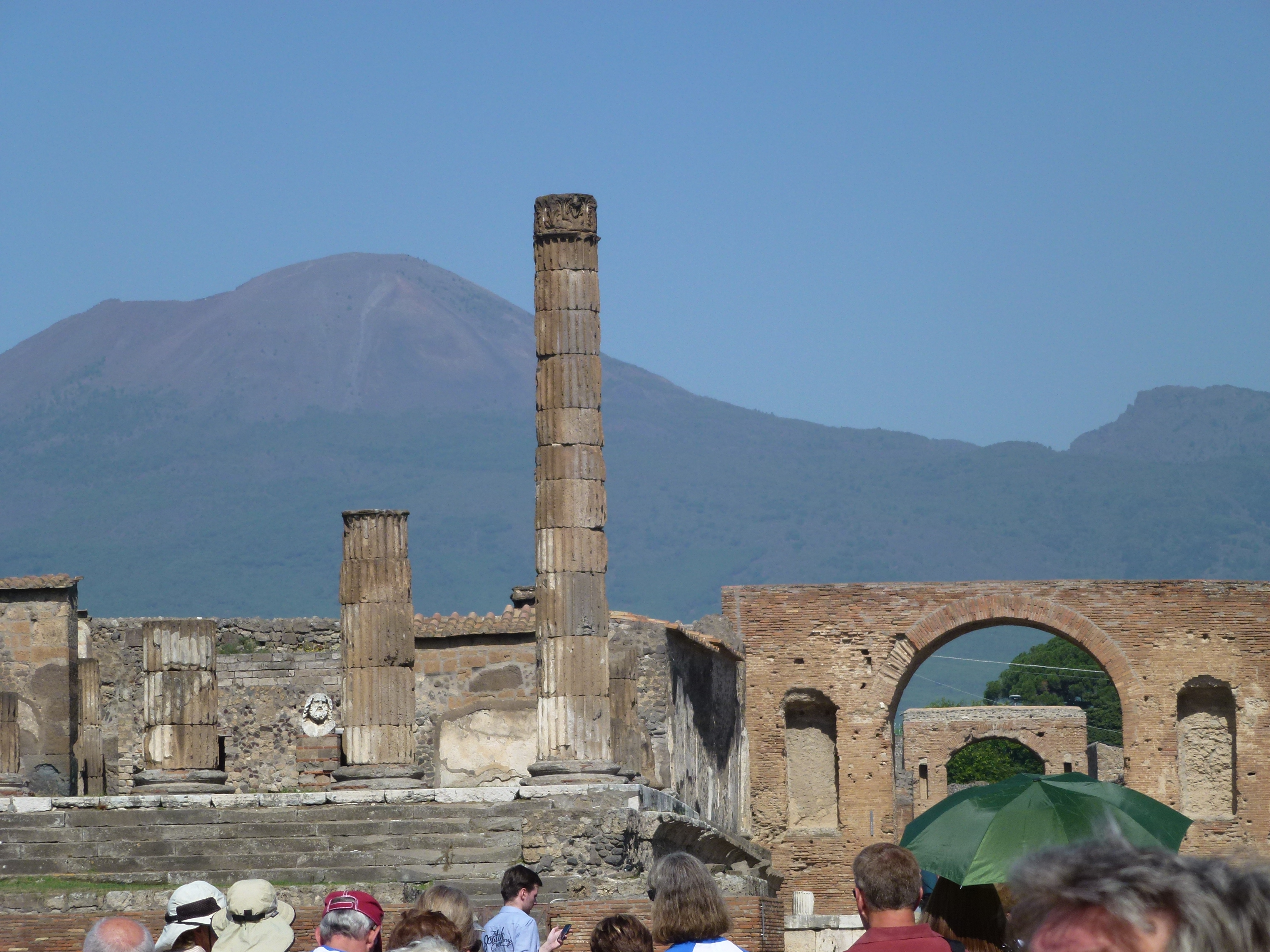
Pompeii and Mount Vesuvius

Pompeii and Mount Vesuvius

My summer sojourn for a fortnight on the Amalfi coast in Italy enabled me to visit Mount Vesuvius near Naples and to see the ruins of Pompeii, or at least part of the large site. Time did not permit a trip to nearby Herculaneum. But I watched with interest tonight a documentary on BBC2 about “The Other Pompeii: Life and Death in Herculaneum. Professor Andrew Wallace-Hadrill from Cambridge and Director of the Herculaneum Conservation Project presented the programme.  In it he follows the scientific investigation that aims to lift the lid on what life was like in the small Roman town of Herculaneum, moments before it was destroyed when Vesuvius erupted in 79AD.

Ten miles from Pompeii, twelve arched vaults at Herculaneum were found to contain the skeletons of over 340 people, just 10% of the local population, killed by the volcano. The finds included a toddler clutching his pet dog, a two-year-old girl with silver earrings and a boy staring into the eyes of his mother as they embraced in their last moment. Those found inside the vaults were nearly all women and children. Those found outside on the shoreline were nearly all men, in what appeared to be a selfless act on their part.

The documentary based on the research unravelled a surprising story of resilience, courage and humanity, with the local population going to their deaths not in the orgy of self-destruction often portrayed in Pompeii’s popular myth, but, much more like the passengers of the Titanic, it seems the ancient inhabitants of Herculaneum put women and children first.

Carbonised wooden cradle: Pompeii Exhibition: © British Museum

Carbonised wooden cradle: Pompeii Exhibition: © British Museum

The BBC programme and another related one broadcast last Wednesday on “Pompeii: The Mystery of the People Frozen in Time” coincide with the opening of a major exhibition at the British Museum. “Life and Death: Pompeii and Herculaneum” will run until the end of September and the normal admission price is £15.

Gold Bracelet in form of a coiled snake: Pompeii Exhibition: © British Museum

Gold Bracelet in form of a coiled snake: Pompeii Exhibition: © British Museum

EASTER SUNDAY

St Macartan's Cathedral, Monaghan

St Macartan’s Cathedral, Monaghan

A day for reflection and enjoyment in the company of family, so I will not venture into any lengthy diatribe today. It was my mother’s 93rd birthday, which she celebrated at home in Dublin. Meanwhile I was attending a birthday celebration in Monaghan for my first daughter, who had invited around her cousins, aunts and uncles. We were also fortunate to have our second daughter return home from London on an Easter break.

I attended Easter Sunday Mass at Saint Macartan’s Cathedral in Monaghan and there was a large attendance at the lunchtime service. I reflected on how my grandparents (on my mother’s side) would have attended the major liturgical events here sixty years ago and more. Since they lived at Tirkeenan beside the entrance to the Cathedral, they were frequent attenders at Mass, as my grandfather’s diaries from the time recorded.

I then took the opportunity to visit the graveyard at Latlurcan, where I had attended two funerals earlier this month. My aunt Marie and her husband and my uncle Finbarr Smyth are buried there. Finbarr died in an air crash in the Isle of Wight when I was five and living in London in November 1957. He had been flying out to Madeira on a holiday with Cosmo Meldrum, a friend from Sligo, where he was manager of the Yeats Country Hotel at Rosses Point. The Aquila Airways Short Solent flying boat G-AKNU (pictured here at Funchal Bay) crashed shortly after take-off at Southampton docks.

Short Solent G-AKNU taking off from Funchal Original Photo © J Arthur Dixon, via Wikipedia

Short Solent G-AKNU taking off from Funchal
Original Photo © J Arthur Dixon, via Wikipedia

During a holiday in Madeira in 2011 I discovered more details about the airline and the planes it used since 1949 to bring holidaymakers to the island, as it developed a tourist industry. There was a small exhibition about the flying boats beside the shop at the Madeira Story Centre museum in Funchal. Upstairs there was also a display that included a mock-up of part of the aircraft’s cabin, including the roof racks used to store luggage. Black-and-white archive film played on small monitors showing the planes taking off. It was an emotional experience. I notice that there is now a plaque at St Mary’s church in Brook, close to Chessel Down, containing the names of all those who died in the crash. At some stage I will go to visit it.

Short Solent Cabin Reconstruction, Madeira

Short Solent Cabin Reconstruction, Madeira

45 people died in the crash, seven of them members of the crew. May they rest in peace. Thirteen people managed to survive, among them a former British Army officer Major PW Colan, from Cloyne in County Cork. British commercial flying-boat operations ceased ten months later on 30th September 1958 when Aquila Airways withdrew its Madeira service. The flying boats for passenger traffic were a variation of the Sunderlands which provided important service from Lough Erne and other RAF bases in the Second World War. They were built by Short Brothers and Harland in Belfast.

MARIE CURIE BELFAST

Marie Curie collection Belfast

Marie Curie collection Belfast

Five years ago on Good Friday, one of our neighbours in Belfast lost her battle with cancer and passed away. Liz Reid was 49 when she died in the care of the Marie Curie staff at the hospice in Knock. Her husband John later praised the outstanding work done by the care teams. To thank them for the support given to Liz during her last months, John helped to raise funds for Marie Curie by taking part in events such as the Belfast Marathon with his family. John is a well-known architect in Belfast and another project he helped to organise for the charity was a Titanic-themed dinner in the former Harland and Wolff drawing offices.

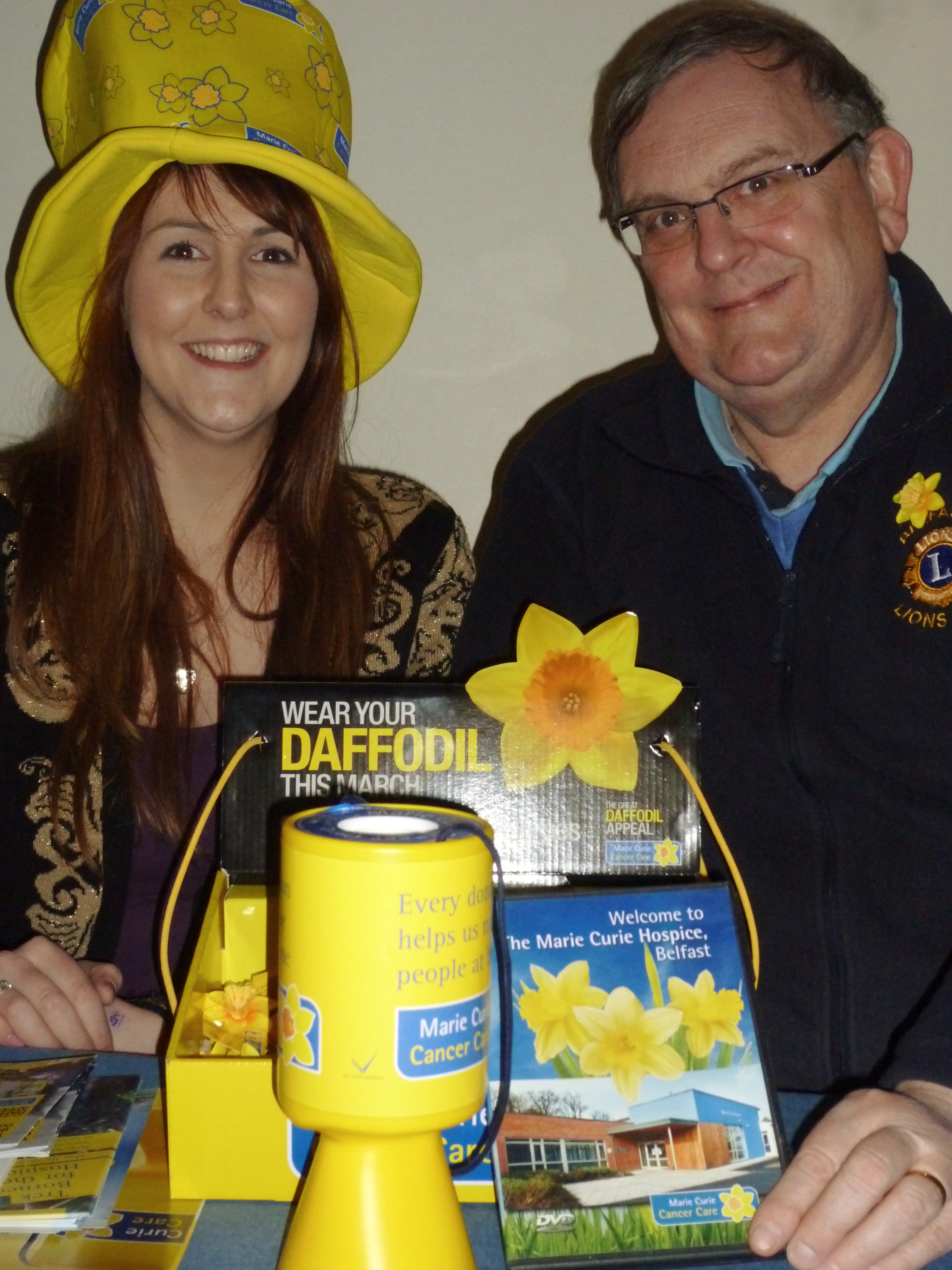
Grace Smyth & Michael Fisher, Belfast Lions Club

Grace Smyth & Michael Fisher

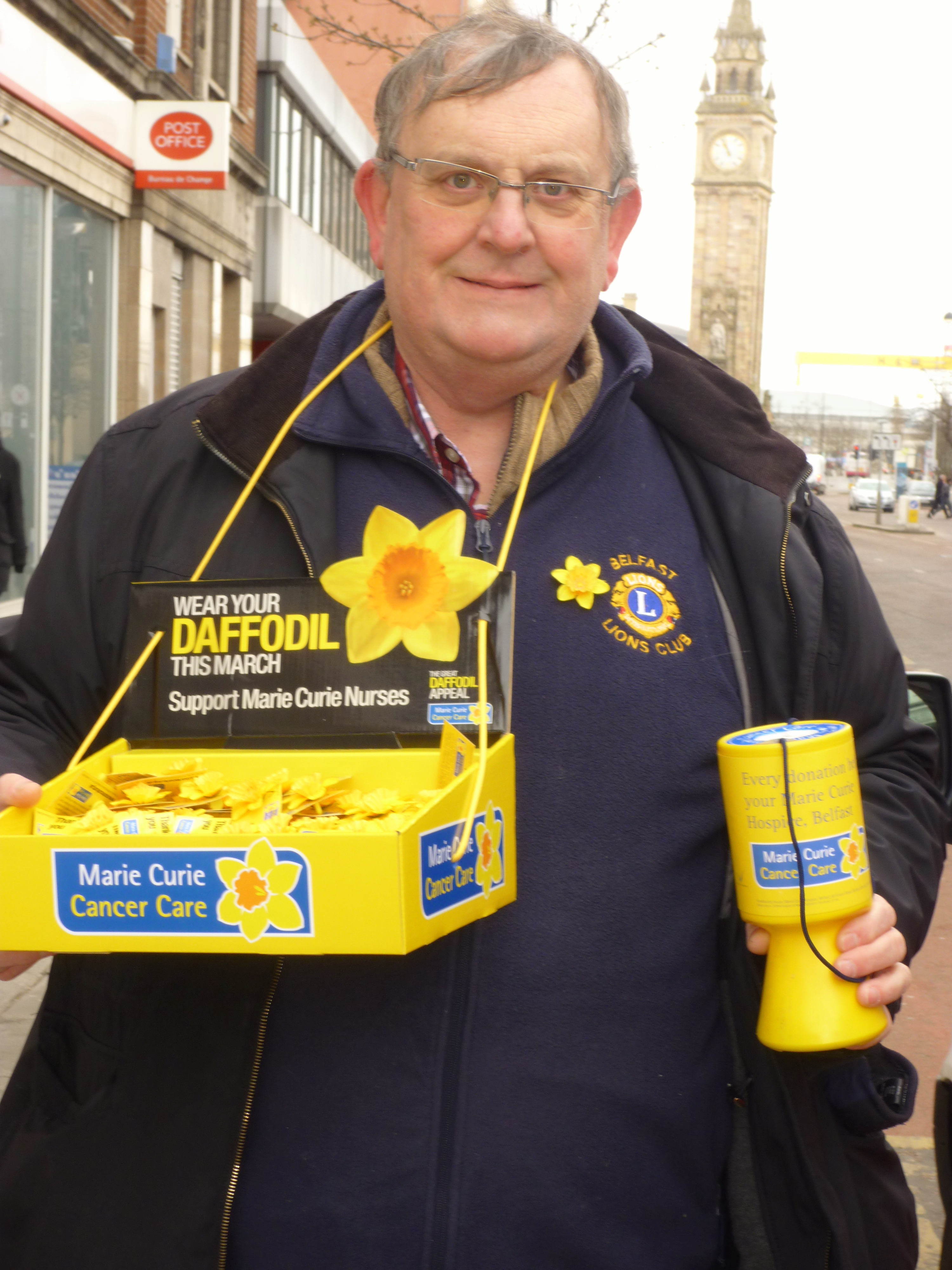
John was also interviewed for a video which Marie Curie fundraiser Grace Smyth showed to members of Belfast Lions Club at their monthly meeting at the start of March. So it was very appropriate that this morning myself and my wife, a former Marie Curie home care nurse, joined a few dozen people in Belfast city centre to help collect for the annual daffodil appeal.

A working agreement was reached in November last year by Marie Curie and the Lions Clubs multiple district for Lions in Britain and Northern Ireland to assist with the Great Daffodil Appeal. Marie Curie do great work, particularly at the hospice in Knock in the East of the city. I hope if you saw anyone collecting in Belfast or elsewhere, you were able to give your support. Thank you. More details of the collection and the charity can be found here.

Daffodil Appel: Marie Curie

Daffodil Appeal: Marie Curie

Belfast Lions Club

Belfast Lions Club

CAROLYN’S FAREWELL

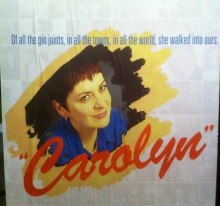
Carolyn's Farewell

Carolyn’s Farewell

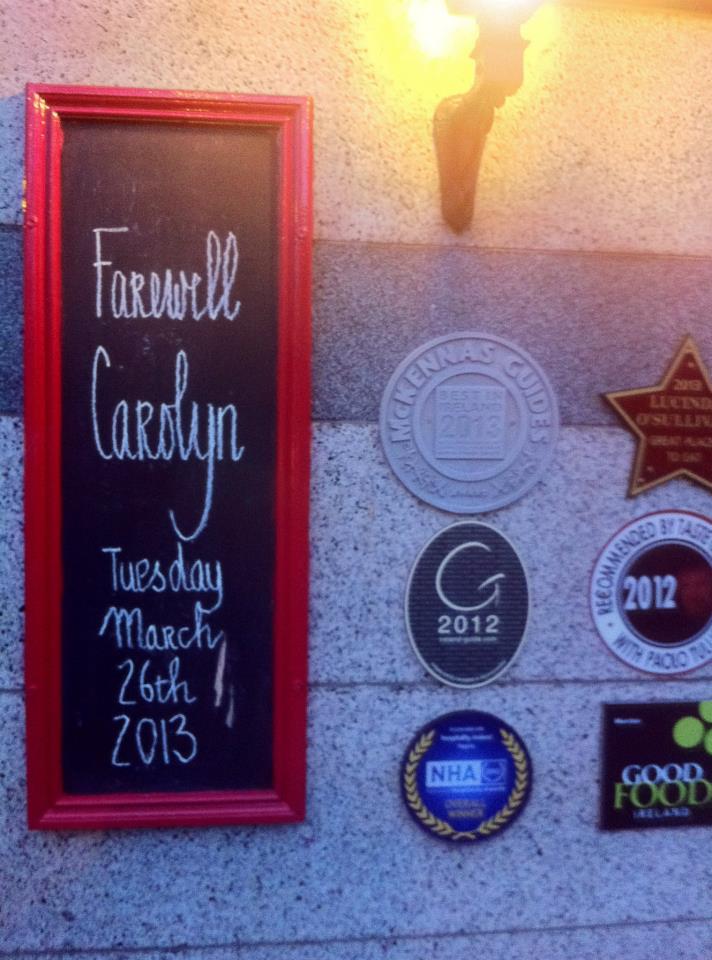
The popularity of my last blog, one of the most widely read since I started on New Year’s Day, can be attributed not so much to the content but rather to the subject: my younger sister Carolyn. She finishes on Thursday after completing around 35 years’ service to RTÉ mainly in the News and Current Affairs department. Last night her colleagues gathered at O’Connell’s in Donnybrook to say farewell. Those who are of a certain generation might remember it better as Madigan’s, frequented by RTÉ staff both at lunchtimes and in the evenings.

Sign at main entrance

Sign at main entrance

Star Quality

Star Quality

Tom and his staff made guests feel very welcome when they arrived. Some of Carolyn’s  colleagues had put in a great effort to decorate the tables and surrounding area with photographs, including some provided by my youngest brother of Carolyn in her early days. When the video rolled, threatening to open wide the Fishergate files, it asked the question: where did it all start? or words to that effect. But I never heard any mention of London, her birthplace! Like my other two brothers, she was born when my father was working there, first of all as London Editor of the Irish Press and then as Editor of the Catholic Herald newspaper.

In a recent interview with Eileen Dunne, he said that he believed his best work as a journalist had been his coverage from Rome of Vatican II. He began his career in public service broadcasting in September 1967, when he was appointed deputy Head of News at RTÉ in Dublin. His fellow Derryman, Jim McGuinness, who had also been in the Irish Press, had helped to persuade him to return to Ireland at a time when he was working as a freelance and had just finished writing his first book entitled “The Church in Transition”. The publisher was Geoffrey Chapman, who lived a few streets away from us in Wimbledon, in the Sacred Heart parish which the Jesuits will leave later this year.

Carolyn Fisher &  Miriam O'Callaghan

Carolyn Fisher & Miriam O’Callaghan

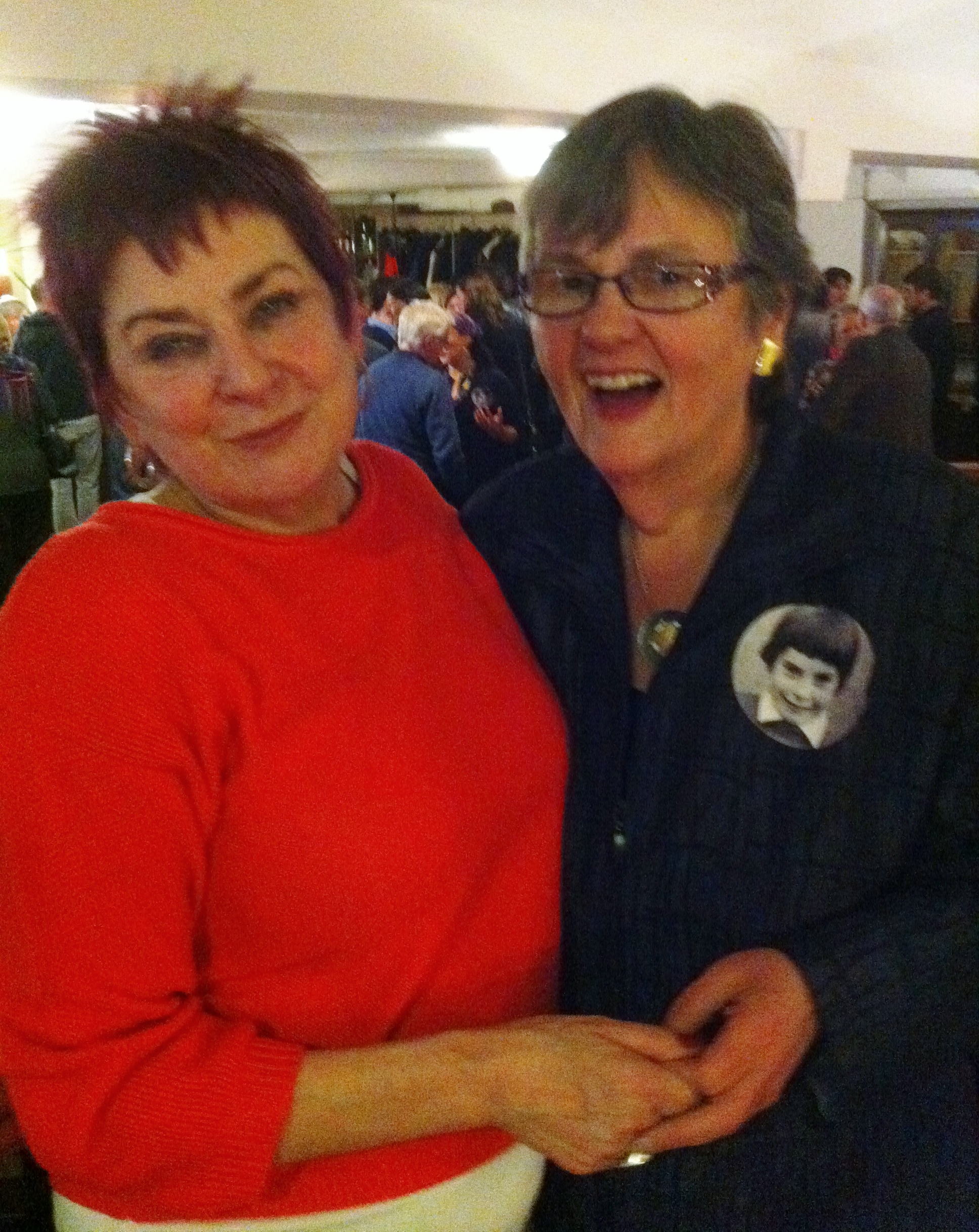
Miriam O’Callaghan acted as the MC for the speeches, which began with Director of News Kevin Bakhurst, followed by the Managing Editor Current Affairs TV David Nally, whose memories of Carolyn with her spiky hair went back to his student days. A contemporary from UCD days recalled how Carolyn (History, Politics) and her friend Mags brightened up the corridors of Belfield. Now Carolyn’s son Sam has followed her footsteps in Belfield and is currently doing an MA in Archives and Record Management. In the punk rock days, “record” might well have referred to singles, and LPs, of which my brother built up an extensive  collection!

Peter Feeney who I remember from schooldays in Gonzaga College (his brother was in the same class) also spoke in very complimentary terms about Carolyn. Like David, he also mentioned the role my father had played in RTÉ.

Carolyn Fisher and Bride Rosney

Carolyn Fisher and Bride Rosney

Among the attendance was Carolyn’s former boss, Bride Rosney. I happened to meet her in Belfast last Saturday, when she accompanied the former President Mary Robinson, now appointed to a major new role with the UN. Both were attending the celebration for the life of Inez McCormack.

Carolyn bids farewell

Carolyn bids farewell

Carolyn joined RTÉ about a year or so before I did. So I reckon she has spent some 35 years there. I worked there for 31 years and my father for 16 years. So between the three of us, we have contributed over 80 years’ service to public service broadcasting in Ireland as well as a few years to the BBC. It was perhaps appropriate that the new Director of News Kevin Bakhurst (ex BBC News) should be the first to be called on to address the farewell gathering. It marked an important chapter in our family history.

Kevin Bakhurst speech

Kevin Bakhurst speech

GRAND CANAL QUAY DUBLIN

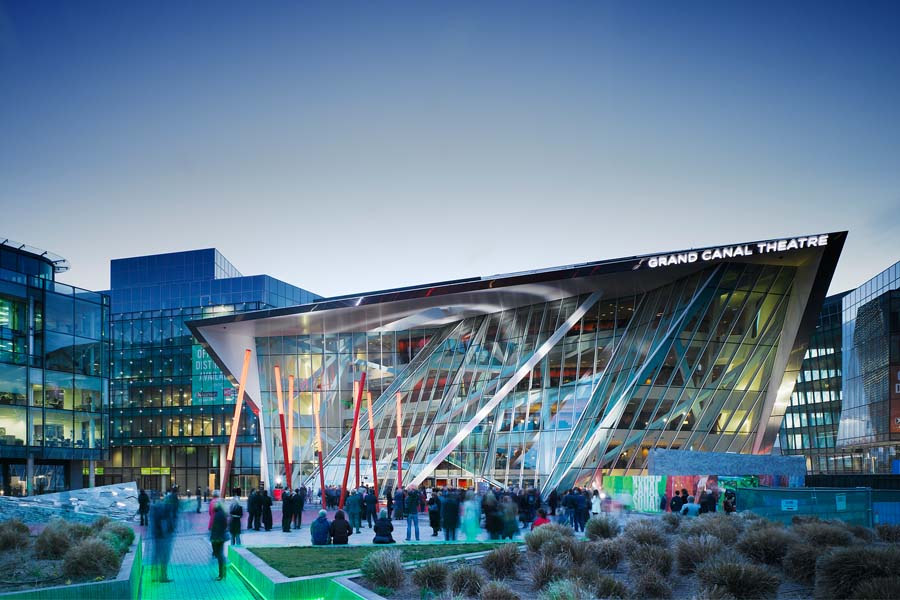
Grand Canal Theatre: Photo: Arup/Ros Cavanagh

Grand Canal Theatre: Photo: Arup/Ros Cavanagh

Just as the old dockside at Bristol has been rejuvenated through projects such as the M-Shed and the SS Great Britain, so too in Dublin. The Jeanie Johnston Tall Ship and Famine Museum is located at Custom House Quay. Through the Docklands Development Authority (DDA), a number of regeneration projects were initiated during the boom time of the Celtic Tiger economy. The  Convention Centre was built at Spencer Dock. On  the southern side of the River Liffey, the area around Grand Canal Dock has been transformed, with the building of an iconic theatre, seating over 2,000.

It was designed by the internationally renowned architect from New York, Daniel Liebeskind and was his first such project. Last year he was awarded the contract for designing a conflict resolution centre on part of the site of the former high security Maze prison outside Lisburn. His other projects have included  the Jewish Museum in Berlin and the redevelopment of the World Trade Centre site in Manhattan.

The consultants for the Grand Canal Theatre were Arup, for whom my daughter works in London. Arup were appointed to provide acoustic design and technical theatre systems, as well as civil, structural, building services and traffic engineering. Ove Arup, a Danish engineer, began his connection with Dublin in the late 1940s when he was invited by the architect Michael Scott to join him in the construction of Donnybrook bus garage for CIÉ. It was the first building in the world to have a concrete shell roof, lit by natural light from one end to the other. Arup’s Dublin office, its first overseas one, was set up in 1946 to work on the project.

BGE Grand Canal Theatre

BGE Grand Canal Theatre

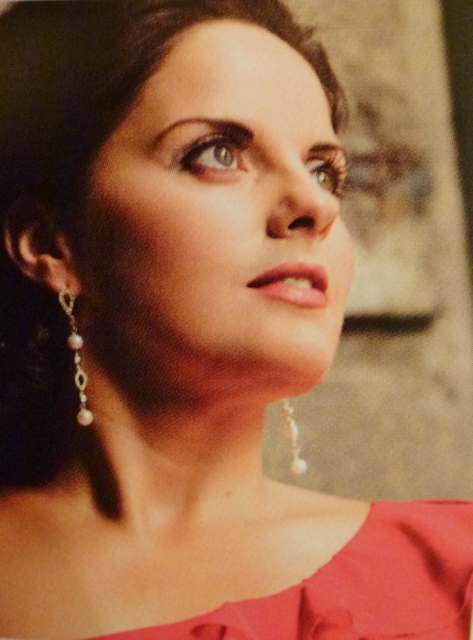
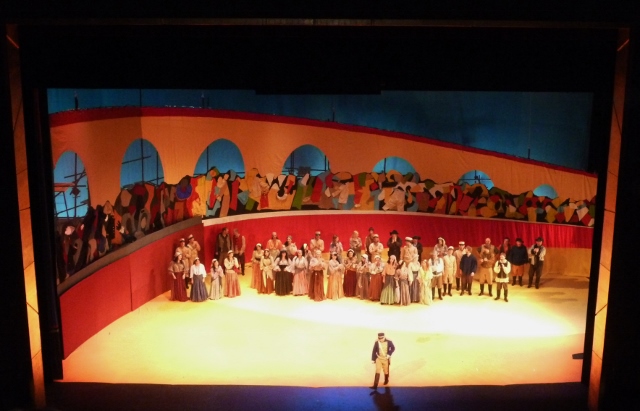
The Grand Canal Theatre opened in March 2010 with a performance of Swan Lake by the Russian State Ballet. It has been designed to take large shows including operas, concerts and musicals. Now following a commercial deal for the naming rights, it is referred to as the Bord Gáis Energy (BGE) Theatre. My first visit there was last night to watch a performance of Bizet’s opera Carmen by the Moscow State Opera, with a guest performance in the role of Micaëla by leading Irish soprano Celine Byrne from Naas.

Celine Byrne

Celine Byrne

Carmen programme

Carmen programme

I look forward to returning to the theatre at some stage in the future. For a list of forthcoming shows and information about ticket prices, check the BGE Theatre website.P1100735 (640x411)

ADRIAN: ADVENTUROUS ARTIST

Adrian Margey

Adrian Margey

Adrian Margey is a young artist who comes from Kilrea in County Derry. This is also the home village of the former Northern Ireland soccer international and now Sunderland manager, Martin O’Neill, as well as the well-known journalist and writer Paddy Agnew, the Irish Times Rome correspondent (thanks to Seamus Martin for pointing this out!).

I first met Adrian when he was a student of Communications, Advertising and Marketing at the University of Ulster, where my daughter was also studying. He graduated with a BSc Honours in 2007 (see Class Notes). In 2005 he was awarded a scholarship under the Washington Ireland programme and spent two months as an intern in the USA.

Queen's University © Adrian Margey

Queen’s University by Night © Adrian Margey €1200

He juggled his studies with a burgeoning career as a visual artist. Since graduating, he has exhibited widely. His pictures include contemporary depictions of familiar Ulster landmarks and Irish traditional musicians and dancers. He received funding in 2010 from the Arts Council of Northern Ireland to run a series of high profile solo exhibitions, which have been well received.

Iconic Dunluce © Adrian Margey

Iconic Dunluce © Adrian Margey €2550

The Guild Hall, Derry City © Adrian Margey

The Guild Hall, Derry City © Adrian Margey €645 SOLD

In 2011 he developed two new bodies of work which went on show at the Radisson Hotel, Limavady at the end of August and at the Culloden Hotel, Cultra. For St Patrick’s weekend 2013, he is holding his first exhibition in the Republic of Ireland, at the Radisson Blu Hotel at St Helen’s on the Stillorgan Road in South Dublin, close to where I am wrote this article. Admission is free and around seventy works are on sale, some of which were purchased on the opening evening.

Sorrento Terrace (Dalkey)  © Adrian Margey €695 SOLD

Sorrento Terrace (Dalkey) © Adrian Margey €695 SOLD

I notice from Adrian’s website that he has painted some Dublin scenes specially for the exhibition, some of them featuring the Ha’penny Bridge across the River Liffey, Trinity College Dublin and others of the Bray area in County Wicklow, including Bray Head and the Sugar Loaf mountain.

Carrickfergus Castle  © Adrian Margey €495

Carrickfergus Castle © Adrian Margey €495

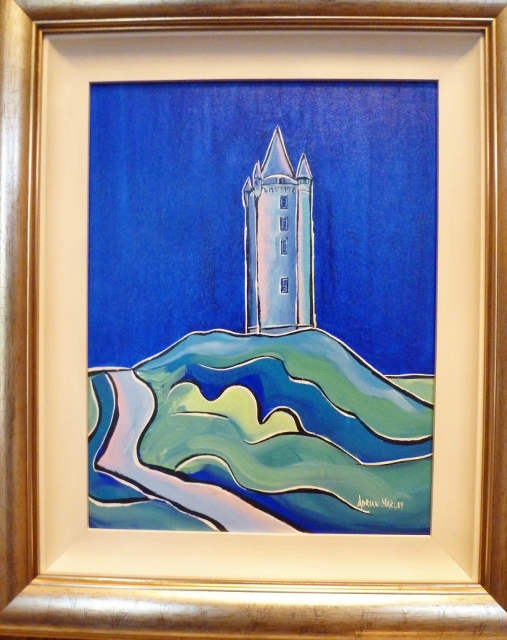
Scrabo Tower  © Adrian Margey €475 SOLD

Scrabo Tower © Adrian Margey €475 SOLD

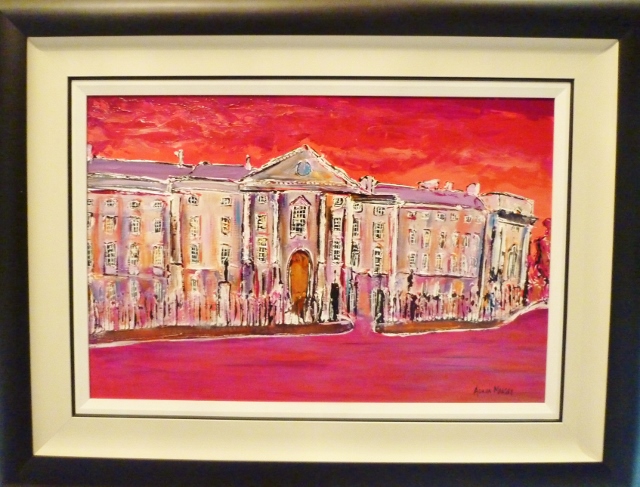
It all adds up to a very colourful exhibition, which remains open until Monday afternoon (18th). One of the largest pictures (and therefore more expensive) is entitled “Time Stands Still at Trinity College”. It might appeal to a TCD graduate or someone connected with the College, or perhaps a collector who likes pictures of famous buildings in Dublin. The price tag is €895. When Adrian exhibited his work last year at my local parish hall, St Brigid’s in South Belfast, I did not get an opportunity to visit the display. So I am pleased to have been able to catch up with him on my original “home” ground at the bottom of Foster Avenue in Mount Merrion parish.

Trinity College © Adrian Margey €895

Trinity College © Adrian Margey €895

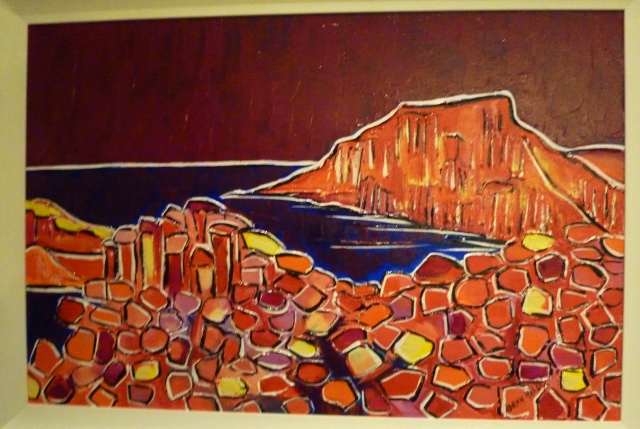
Causeway Trinity College © Adrian Margey €795

Causeway © Adrian Margey €795

BRISTOL BUILT BY BRUNEL

Brunel's original station

Brunel’s original station

Look around you in Bristol and the influence of one man is clear to see: the engineer, Isambard Kingdom Brunel (1806-59). If you arrive by train at Temple Meads station, you will see on your right hand side as you leave the main entrance to walk down to the main road the original station built by Brunel for the Great Western Railway of which he was chief engineer. Opened in 1840, it served the route to London Paddington and continues to do so. I noticed there is now also a connection run by South Western trains to London Waterloo, taking an hour longer but possibly cheaper, depending on the time of travel.

Brunel's station

Brunel’s station

Brunel built his railway using a broad gauge  measuring 7 feet 0 14 inches. This helped to provide additional comfort for passengers but made construction more expensive. Later a standard gauge was introduced of  4 feet 8 12 inches, although in Ireland a slightly wider gauge was chosen of 5 feet 3 inches. Temple Meads station is now owned by Network Rail and is one of the busiest railway hubs outside London.  It is operated under a franchise by First Great Western, who provide the majority of trains to London, along with local services and routes to destinations such as Cardiff, Southampton, Portsmouth and Weymouth.

Clifton Suspension Bridge

Clifton Suspension Bridge

One of Brunel’s best known projects is the Clifton Suspension Bridge, spanning the gorge above the River Avon and linking Clifton in Bristol with Leigh Woods in North Somerset, a National Trust property. With a span of over 700 feet, this made it the longest span of any bridge in the world at the time of its construction, which started in 1831. Brunel did not live to see its completion in 1864, five years after his death. Work had been suspended for a number of years owing to a lack of funding. At the bottom of the cliff where there is a winding path up to the level of the bridge, there is a derelict building. It still carries the sign “Clifton Rocks Railway”.

Clifton Rocks Railway

Clifton Rocks Railway

This was a water-powered funicular railway to take visitors up to the top of the cliff.  I have just noticed that I was passing the site almost to the day that coincided with the 120th anniversary of its opening. It closed in 1934 and during the second world war it was used a a secret transmission base for the BBC. I never realised that when I was working for the BBC in Bristol! The information can be found on the website of the trust which is trying to restore the railway, the top entrance to which is located beside the Avon Gorge Hotel. Details of the trust’s open days can be found here.

SS Great Britain

SS Great Britain Stern

The other significant project for which Brunel is known is the construction of the SS Great Britain. Brunel had become convinced of the superiority of propeller-driven ships over paddle wheels. After tests, he incorporated a large six-bladed propeller into his design for the 322-foot Great Britain, which was launched in 1843. She is considered to be the first modern ship, being built of metal rather than wood, powered by an engine rather than wind or oars, and driven by propeller rather than paddle wheel. She was the first iron-hulled, propeller-driven ship to cross the Atlantic Ocean. Her maiden voyage was made in August and September 1845, from Liverpool to New York. In 1846, she ran aground at Dundrum Bay, off the County Down coast. She was salvaged and then re-entered service  for the route to Australia. The ship was also used to carry troops such as the 57th Regiment of Foot, along with their horses and supplies, heading to the Crimean campaign.

SS Great Britain Dundrum Bay 1846

SS Great Britain Dundrum Bay 1846

There are a number of statues dotted throughout Britsol. I saw one for the Irish orator and MP Edmund Burke, one of Queen Victoria and another for Edward Colston, a businessman and benefactor. But I did not see any memorial for Brunel, apart from his works. There is one at Temple in London. So reader, if you seek his monument, look around you, or as the Latin inscription  on the tomb of Sir Christopher Wren at St Paul’s Cathedral states ” LECTOR SI MONUMENTUM REQUIRIS CIRCUMSPICE“.

ADAM CLARKE: LEADING METHODIST

John Wesley's Chapel, Bristol

John Wesley’s Chapel, Bristol

During a visit to Bristol, I went to visit an important place for the Methdist Church in Britain and Ireland. John Wesley established a new chapel in the city centre in 1739, when it became the first Methodist building in the world. It was called the “New Room” in the Horsefair. I referred to it in a previous blog.

Pulpit

Pulpit

The two-decker pulpit followed the custom of those days. The upper part was used for the sermon and the lower part for the rest of the service. The present upper part is a replica. The communion table is that which was used by Wesley. The people sat on plain benches. Wesley gave the clock. The Snetzler Chamber Organ of 1761 on the right hand side of the gallery, as you face the pulpit, was brought here in the present century. Wesley presided at eighteen Conferences here.

Upstairs is the Common Room, with quarters for the Methodist preachers who came to Bristol. The bedrooms contain displays about the history of the Church and the spreading of Methodist teachings to the USA and elsewhere.

On one of the walls, I found a portrait of another significant figure in Methodism, Adam Clarke. A note beside it said he was born in Ireland and on checking a reference book, I discovered he was from County Londonderry.

Adam Clarke

Adam Clarke

Clarke was born in Moybeg Kirley, a townland on the edge of Tobermore off the road towards Draperstown, in the parish of Kilcronaghan, gateway to the Sperrin Mountains. His father was a schoolmaster and farmer. John Wesley invited him to become a pupil at a seminary he established at Kingswood in Bristol. He went on to become an eminent scholar and theologian. He is best known for his commentary on the Bible: “The Holy Bible: containing the Old and New Testaments, according to the authorized translation; with all the parallel text and marginal readings. To which are added, notes and practical observations, designed as a help to a
correct understanding of the sacred writings” (1810-1837).

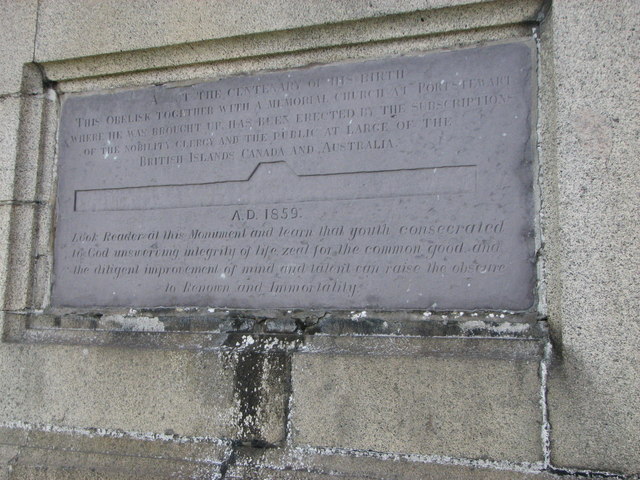
Thanks to a former Belfast TV news colleague David Blevins for pointing out that there is a memorial to Adam Clarke in Portrush, Co.Antrim. A biography, The Life of the Rev. Andrew Clarke (JW Etheridge, 1859) says in a footnote p.399 that:-

The Adam Clarke Memorial, (under the patronage of the Right Hon. the earl of Antrim, and John Crombie, Esq., J.P., D.L.,) is to consist of a “school, church, and minister’s house, at Port-Stewart, and an obelisk and statue at Port-Rush, near Coleraine.” The foundation stone of the obelisk was laid in September, 1857, with great public solemnities. The base is seven feet square and eight feet high, from which the monument will rise to a height of forty-two feet; which, taking the elevation of the site, will be equal to one hundred and twenty feet above the level of the sea. Close to the base will be the statue of Dr. Clarke, contributed by public offerings in America”.

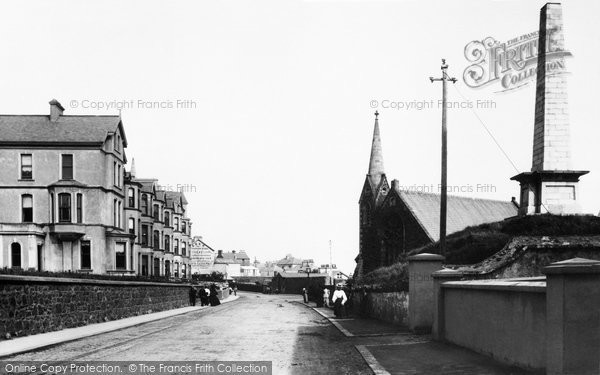
The Francis Frith collection of photographs has an interesting picture of the obelisk beside the Methodist church at Portrush in 1897:

Photo of Portrush, Adam Clarke's Memorial 1897, ref. 40407

Reproduced courtesy of Francis Frith.

Willie Duffin has more recent photographs (2009) of the information plaques on the side of the obelisk and also a circular plaque on the wall of the church.

Adam Clarke Obelisk Plaque

Adam Clarke Obelisk Plaque © Copyright Willie Duffin and licensed for reuse under Creative Commons Licence

Adam Clarke Obelisk Plaque © Copyright Willie Duffin and licensed for reuse under Creative Commons Licence

Adam Clarke Obelisk Plaque © Copyright Willie Duffin and licensed for reuse under Creative Commons Licence

Adam Clarke Plaque © Copyright Willie Duffin and licensed for reuse under Creative Commons Licence

Adam Clarke Plaque on Church Wall           © Copyright Willie Duffin and licensed for reuse under Creative Commons Licence

BATH TIME

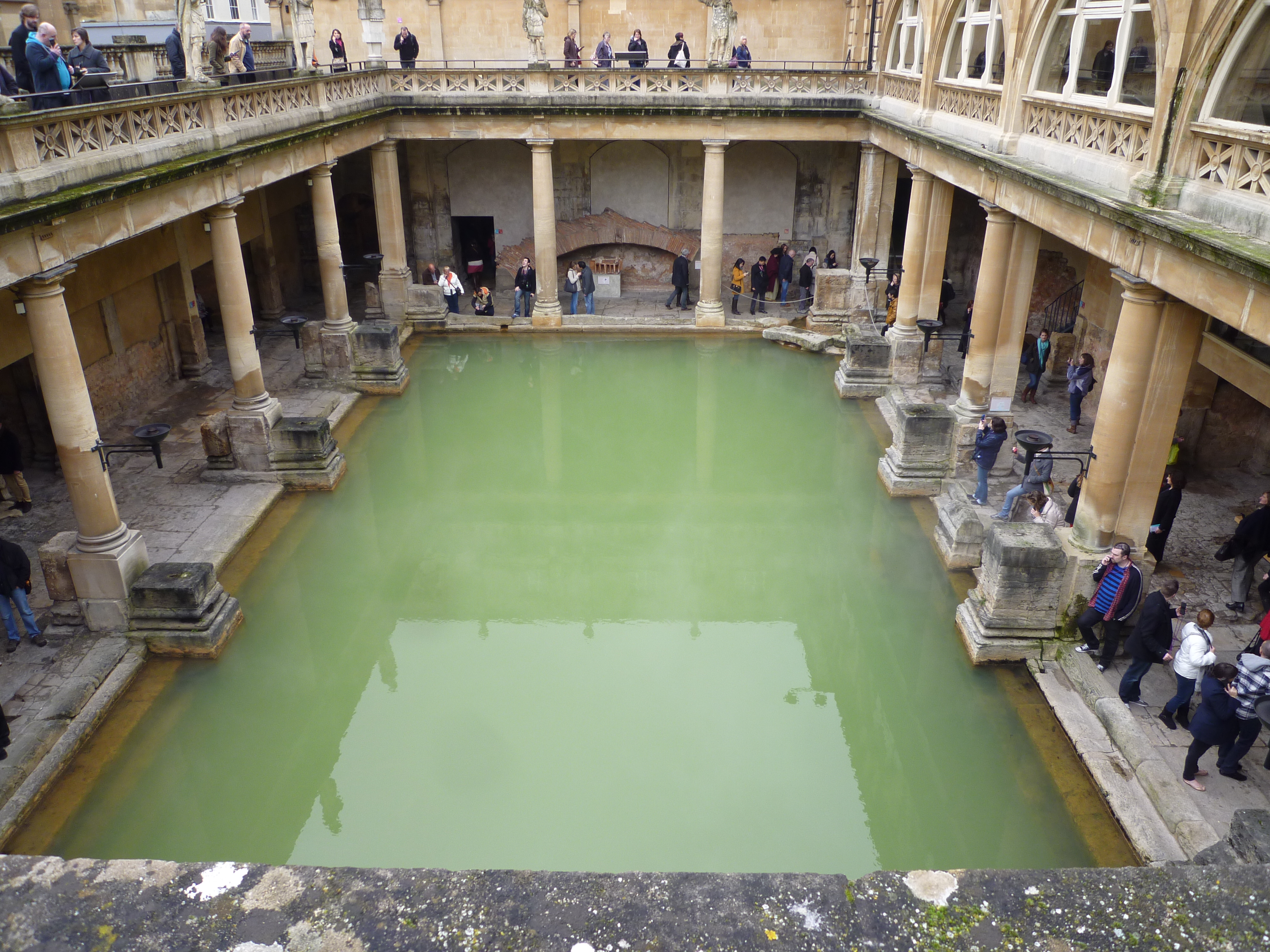
Roman Baths, Bath

Roman Baths, Bath

A very interesting visit to Bath to see the Roman Baths. The last time I was here was probably in 1975. Since then, more excavations have revealed further parts of the Roman complex. With the aid of a good audio guide, which was included in the admission price (£12.75 for adults), we spent two hours here. It’s easy to see why this is one of Britain’s top tourist attractions.  

Under floor heating!

Under floor heating!

Even on a dull day in March, there were queues to enter the complex, but the waiting time was not long. The Roman engineering and architectural skills were very similar to that in Pompeii, which I saw last August.

Bath Crescent

Bath Crescent

After visiting the Baths, it was time to see a bit more of Bath, including the famous Georgian Crescent and Bath Abbey, with its beautiful fan-vaulted roof and an impressive entrance door, where a Trident missile protest was being held.   

Bath Abbey entrance

Bath Abbey entrance


We took the train to and from Bristol. Less then a quarter of an hour’s journey for just over £2 each way on a group ticket (six travelling).  Very good value indeed for public transport.